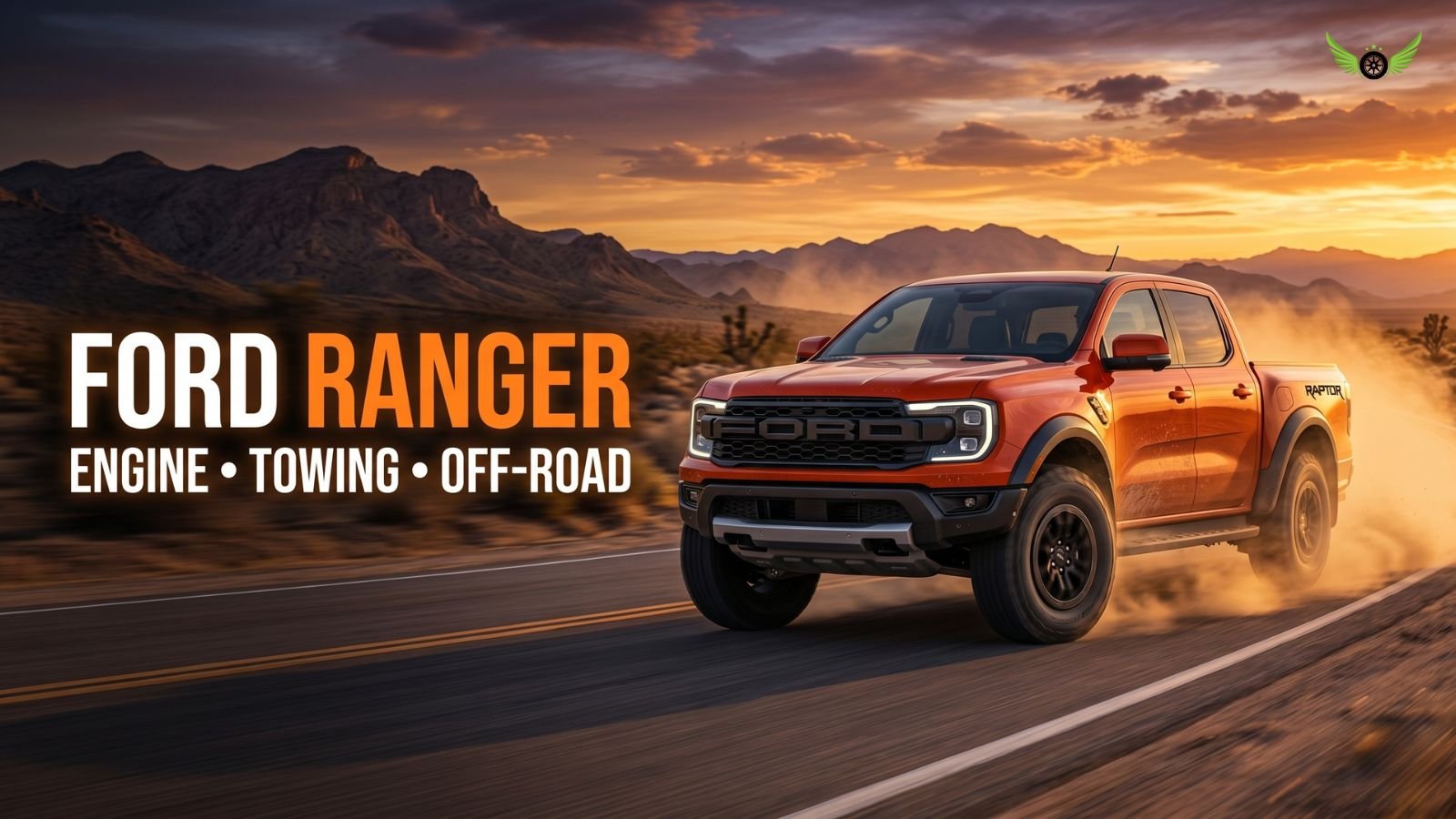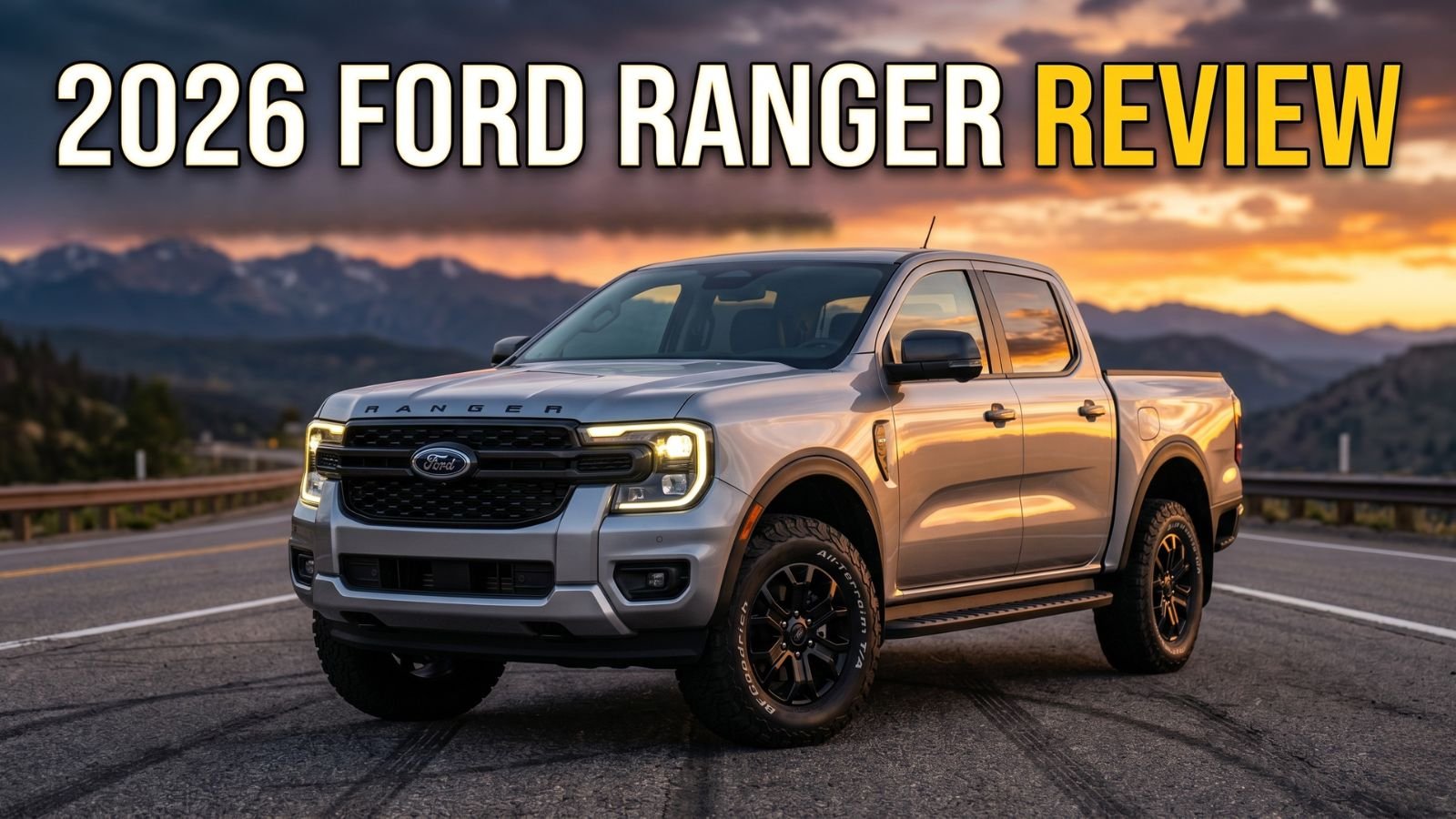
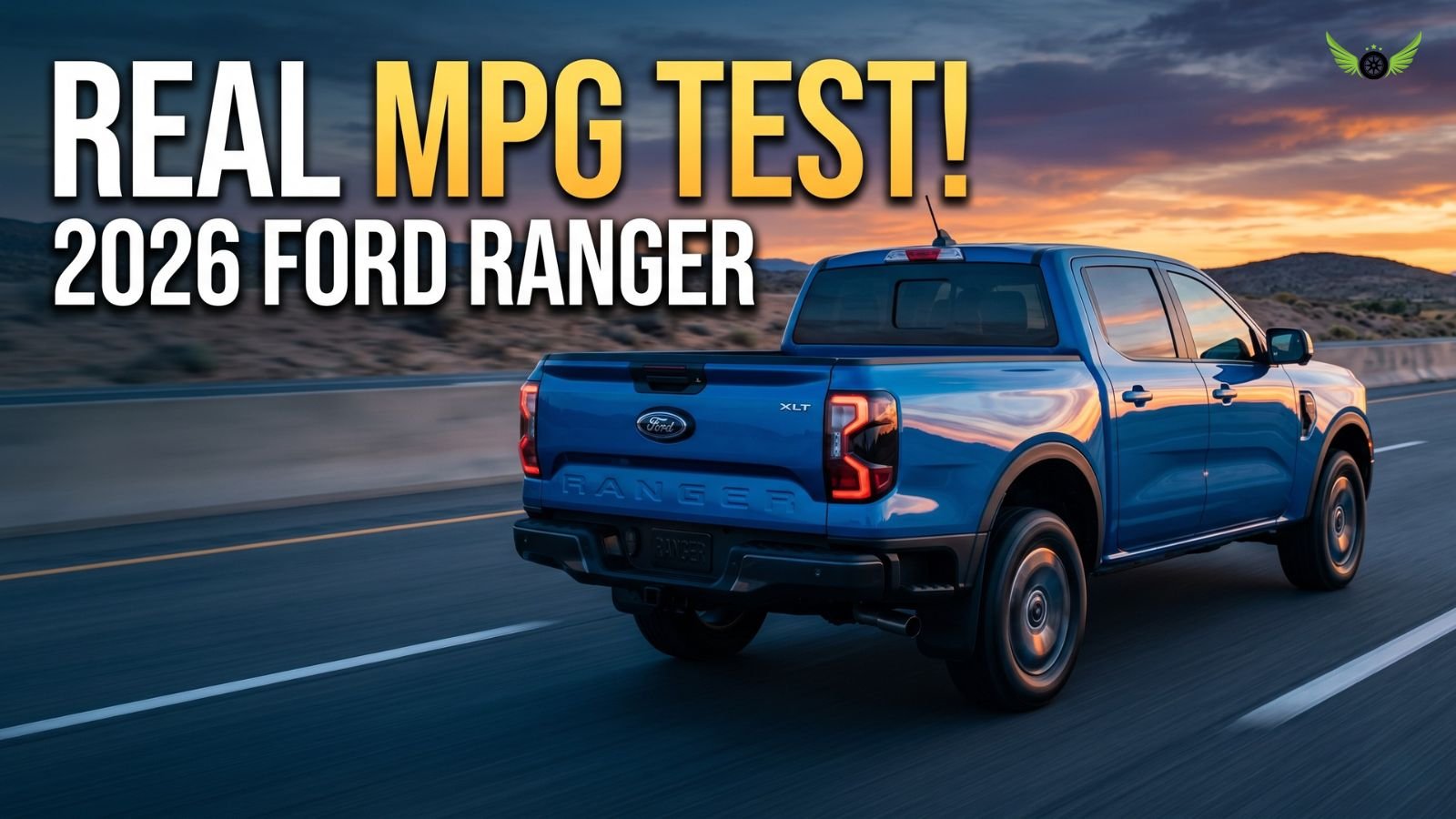
The 2026 Ford Ranger delivers competitive fuel economy for a mid-size truck while still maintaining strong towing capability and turbocharged performance. Fuel efficiency varies depending on engine choice, drivetrain configuration, tire setup, and driving conditions. The standard 2.3L EcoBoost remains the most fuel-efficient setup in the lineup, while the available V6 engines focus more on towing power and acceleration.
Rear-wheel-drive 2.3L EcoBoost models are rated at approximately 21 mpg city and 26 mpg highway. Four-wheel-drive configurations are rated around 19 mpg city and 24 mpg highway because of the additional drivetrain weight. The available 2.7L EcoBoost V6 delivers approximately 19 mpg city and 23 mpg highway, while the Ranger Raptor is rated around 16 mpg city and 18 mpg highway because of its larger tires, wider suspension setup, and high-performance tuning.
Compared to older Ranger generations, the latest Ford Ranger also improved daily-driving comfort through better suspension tuning, improved cabin insulation, and more stable highway handling. The truck feels easier to drive in urban traffic than most full-size pickups while still providing strong towing and hauling capability for everyday use.
This guide covers real Ford Ranger MPG results, highway fuel economy, fuel costs, daily driving comfort, and long-distance driving behavior using verified 2026 USA-market specifications and real-world owner-focused driving data.
Ford Ranger Fuel Economy Ratings
The 2026 Ford Ranger offers multiple engine and drivetrain combinations with different fuel economy levels depending on towing use, drivetrain setup, tire configuration, and driving conditions. The standard 2.3L EcoBoost remains the most fuel-efficient setup in the lineup, while the V6 models focus more on towing strength and stronger acceleration.
2.3L EcoBoost MPG Ratings
The standard 2.3L EcoBoost Ford Ranger delivers the best overall fuel economy in the lineup while still maintaining strong towing capability and daily driving performance. The engine produces 270 horsepower and 310 lb-ft of torque.
Configuration | City MPG | Highway MPG | Combined MPG |
2.3L EcoBoost RWD | 21 | 26 | 23 |
2.3L EcoBoost 4WD | 20 | 24 | 22 |
Many USA owners report real-world fuel economy between 20–23 mpg during mixed driving depending on traffic conditions, tire setup, weather, and cargo weight.
The 2.3L EcoBoost remains the best overall setup for buyers focused on commuting, lower fuel costs, and balanced truck capability.
2.7L V6 Fuel Consumption
The available 2.7L EcoBoost V6 produces 315 horsepower and 400 lb-ft of torque. This engine focuses more on towing performance and stronger highway acceleration than maximum fuel economy.
Engine Configuration | City MPG | Highway MPG | Combined MPG |
2.7L EcoBoost V6 4WD | 19 | 23 | 20 |
Ranger Raptor 4WD | 16 | 18 | 17 |
Real-world fuel economy for the 2.7L EcoBoost V6 commonly falls into the 18–21 mpg combined range depending on towing weight, driving habits, highway speed, and payload load.
Many buyers still prefer the V6 because it delivers smoother highway passing power and stronger towing response compared to the standard 2.3L EcoBoost engine.
RWD vs 4WD MPG Difference
Four-wheel-drive Ford Ranger models typically lose around 1–2 mpg compared to rear-wheel-drive versions because of additional drivetrain weight and increased rolling resistance.
Drivetrain Configuration | EPA MPG Rating |
2.3L EcoBoost RWD | 21 city / 26 highway |
2.3L EcoBoost 4WD | 20 city / 24 highway |
2.7L EcoBoost V6 4WD | 19 city / 23 highway |
Ranger Raptor 4WD | 16 city / 18 highway |
Rear-wheel-drive models provide the best overall Ford Ranger MPG results for buyers focused mainly on commuting and highway driving. Four-wheel-drive models are better suited for towing, snow driving, off-road use, and rough-road conditions despite the slightly lower MPG ratings.
Real-World Ford Ranger MPG
Official EPA ratings provide a good baseline, but real-world Ford Ranger MPG changes depending on traffic conditions, highway speed, towing weight, tire setup, weather, and payload load. The 2026 Ford Ranger generally stays close to EPA estimates during steady highway driving, while city traffic and heavy hauling reduce fuel economy more noticeably.
City MPG from Real USA Owners
Many USA owners report real-world city fuel economy between 18–22 mpg on the standard 2.3L EcoBoost depending on traffic conditions, idle time, cargo weight, and tire setup.
The 2.3L EcoBoost RWD model usually delivers the best city efficiency because of lower drivetrain weight. Four-wheel-drive models commonly return slightly lower MPG during stop-and-go driving.
The available 2.7L EcoBoost V6 usually delivers around 17–20 mpg during urban driving. The additional torque improves acceleration and towing response, but fuel consumption increases faster during aggressive driving and heavy traffic.
Ranger Raptor owners commonly report around 14–17 mpg during city driving because of the truck’s 33-inch tires, wider suspension setup, and performance-focused engine tuning.
Highway Fuel Economy Results
The Ford Ranger performs most efficiently during steady highway driving. Many owners report highway fuel economy close to official EPA estimates when driving between 65–75 mph.
Configuration | Real Highway MPG |
2.3L EcoBoost RWD | Around 24–27 mpg |
2.3L EcoBoost 4WD | Around 22–25 mpg |
2.7L EcoBoost V6 | Around 20–23 mpg |
Ranger Raptor | Around 16–19 mpg |
The standard 2.3L EcoBoost remains the best overall option for long highway commutes because it balances Ford Ranger Fuel Economy, turbocharged performance, and lower fuel costs better than the larger V6 engines.
Real MPG While Carrying Heavy Load
Fuel economy drops noticeably when the Ford Ranger carries heavy cargo or tow trailers regularly. Payload weight, trailer size, road elevation, tire type, and highway speed all affect real-world MPG results.
Many owners report the 2.3L EcoBoost dropping into the 15–18 mpg range during moderate towing or full-bed hauling situations.
The 2.7L EcoBoost V6 usually maintains smoother power delivery under heavier loads because the additional torque reduces engine strain during uphill towing and highway acceleration.
Heavy towing, aggressive acceleration, steep terrain, and oversized off-road tires can reduce real-world fuel economy further, especially on Ranger Raptor models.
Ford Ranger Daily Driving Comfort
The 2026 Ford Ranger feels more refined during daily driving than older Ranger generations because of improved suspension tuning, better steering calibration, and stronger cabin insulation. The latest model balances truck capability with everyday usability more effectively during commuting, highway driving, and rough-road travel.
Ride Comfort on Rough Roads
The standard Ford Ranger suspension handles broken pavement, expansion joints, potholes, and uneven city roads more smoothly than previous Ranger models. The updated rear suspension tuning reduces harsh impacts during daily driving while still maintaining towing and payload capability.
Many USA drivers report that the XLT and Lariat trims provide the best balance between comfort and truck stability because they use less aggressive tire setups compared to FX4 and Raptor models.
FX4-equipped models feel slightly firmer because of their off-road shocks and all-terrain tires, but they still remain comfortable for commuting and highway use.
The Ranger Raptor delivers the smoothest rough-road ride quality in the lineup because of its FOX Live Valve suspension system and longer suspension travel. Rough pavement, washboard roads, and uneven surfaces feel significantly more controlled compared to standard trims.
Cabin Noise at Highway Speed
Cabin insulation improved noticeably on the latest Ford Ranger. Wind noise and road noise remain controlled during normal highway driving, especially on XLT and Lariat trims equipped with highway-oriented tires.
The standard 2.3L EcoBoost stays relatively quiet during steady cruising speeds, while the available 2.7L EcoBoost V6 feels smoother during highway acceleration and overtaking situations.
Ranger Raptor models create more tire noise at highway speed because of their aggressive 33-inch all-terrain tires, although overall cabin comfort still remains strong for an off-road-focused truck.
Highway crosswind stability also improved compared to older Ranger generations because of the truck’s wider track and revised suspension setup.
Visibility and Parking Experience
The Ford Ranger is easier to maneuver in urban areas than most full-size trucks because of its smaller size, lighter steering feel, and tighter overall footprint.
The upright seating position provides strong forward visibility, while large side mirrors improve lane visibility and trailer awareness during highway driving.
Available driver-assistance and parking features include:
- 360-degree camera system
- Front parking sensors
- Rear parking sensors
- Blind Spot Information System
- Rearview camera
- Trailer coverage monitoring
These systems improve parking confidence, trailer maneuvering, and low-speed visibility in tighter urban areas and crowded parking lots.
Ford Ranger Long-Distance Driving Experience
The 2026 Ford Ranger feels more comfortable during long-distance driving than older Ranger generations because of improved seat support, smoother suspension tuning, and better highway stability. The latest model also delivers more controlled highway behavior during long interstate trips compared to many traditional mid-size trucks.
Road Trip Comfort and Seat Support
The Ford Ranger provides supportive front seats designed to reduce fatigue during long highway drives. XLT and Lariat trims feel noticeably more comfortable for extended travel because of their upgraded seat cushioning, quieter cabin setup, and better interior materials.
Many USA drivers report that the Ranger maintains stable highway composure without excessive bouncing or rear-end movement over uneven pavement. The updated suspension tuning also reduces harsh impacts from expansion joints and rough road surfaces during long trips.
The available 2.7L EcoBoost V6 improves highway comfort further because the engine delivers smoother acceleration and less strain during overtaking situations compared to the standard 2.3L EcoBoost.
Ranger Raptor models absorb rough pavement extremely well because of their FOX Live Valve suspension system, although the aggressive all-terrain tires create more tire noise during extended highway driving.
Fuel Range on Full Tank
Most 2026 Ford Ranger models use an 18-gallon fuel tank. Actual driving range changes depending on engine choice, drivetrain setup, towing load, highway speed, weather conditions, and tire configuration.
Configuration | Estimated Highway Driving Range |
2.3L EcoBoost RWD | Around 460–470 miles |
2.3L EcoBoost 4WD | Around 430–450 miles |
2.7L EcoBoost V6 | Around 400–420 miles |
Ranger Raptor | Around 320–360 miles |
The standard 2.3L EcoBoost provides the best overall highway driving range because of its stronger fuel economy ratings.
Best Engine for Long Highway Driving
The 2.7L EcoBoost V6 is the best overall engine for long highway driving because it delivers smoother passing power, stronger acceleration at highway speed, and lower engine strain during long-distance cruising.
Drivers who regularly travel interstate highways with passengers, cargo, or trailers often prefer the V6 because the additional torque makes uphill driving and highway merging feel more effortless.
The standard 2.3L EcoBoost remains the better option for buyers focused mainly on Ford Ranger MPG and lower fuel costs during daily commuting and long-distance travel.
The Ranger Raptor is less focused on maximum highway efficiency because its suspension setup, tire configuration, and performance tuning are designed mainly for off-road capability rather than long-distance fuel economy.
Is the Ford Ranger Fuel Efficient Enough?
The 2026 Ford Ranger delivers competitive fuel economy for a mid-size truck while still maintaining strong towing capability, turbocharged performance, and daily driving comfort. The standard 2.3L EcoBoost remains the most fuel-efficient setup in the lineup, while the V6 models focus more on towing strength and stronger highway acceleration.
Compared to most gasoline-powered mid-size trucks, the Ford Ranger balances fuel economy and truck capability well for buyers who need both commuting practicality and hauling capability.
Fuel Cost Compared to Other Mid-Size Trucks
The standard Ford Ranger 2.3L EcoBoost delivers around 22–23 mpg combined in real-world mixed driving, which keeps fuel costs competitive within the mid-size truck segment.
Mid-Size Truck | Combined MPG | Estimated Annual Fuel Cost* |
Ford Ranger 2.3L EcoBoost | Around 22–23 mpg | Around $2,250–$2,500 |
Toyota Tacoma 2.4L Turbo | Around 21–23 mpg | Around $2,350–$2,650 |
Chevrolet Colorado 2.7L Turbo | Around 20–22 mpg | Around $2,400–$2,700 |
Nissan Frontier 3.8L V6 | Around 20–21 mpg | Around $2,450–$2,750 |
*Estimated fuel cost based on approximately 15,000 miles of annual driving and average USA regular fuel prices.
The Ford Ranger remains one of the better choices for buyers who want balanced fuel economy without sacrificing towing capability, payload strength, or highway performance.
Best Ford Ranger Model for Daily Commuting
The 2.3L EcoBoost XLT RWD is the best overall Ford Ranger model for daily commuting because it balances fuel economy, highway comfort, ownership cost, and everyday usability better than the heavier V6 and Raptor models.
The standard 2.3L EcoBoost engine delivers enough power for highway merging, overtaking, urban traffic, and long-distance driving while still maintaining strong real-world Ford Ranger MPG results for a mid-size truck.
Many daily drivers also prefer the XLT trim because it adds:
- Better interior materials
- More driver-assistance technology
- Improved cabin comfort
- Better highway refinement compared to the base XL trim
Buyers living in snow-heavy areas or regularly driving rough roads may benefit more from the 4WD configuration, although fuel economy drops slightly compared to rear-wheel-drive models.
Add Your Heading Text Here
Lorem ipsum dolor sit amet, consectetur adipiscing elit. Ut elit tellus, luctus nec ullamcorper mattis, pulvinar dapibus leo.