Yamaha FJR1300ES performance is the reason this big sport-tourer has survived more than two decades with only careful updates: a 1,298cc inline-four with a huge spread of torque, a tall sixth gear for quiet highway cruising, and a chassis that stays composed two-up with luggage. The point of Yamaha FJR1300ES performance is effortless speed — roll-on passing power without downshifting, a stable 80 mph cruise, and a fuel range that crosses states between stops.
This guide separates tested figures from spec-sheet claims: dyno numbers come from named magazine tests, top-speed figures are labelled by market, and fuel economy compares Yamaha’s official estimate with what testers recorded.
Yamaha FJR1300ES Engine Performance and Power Delivery
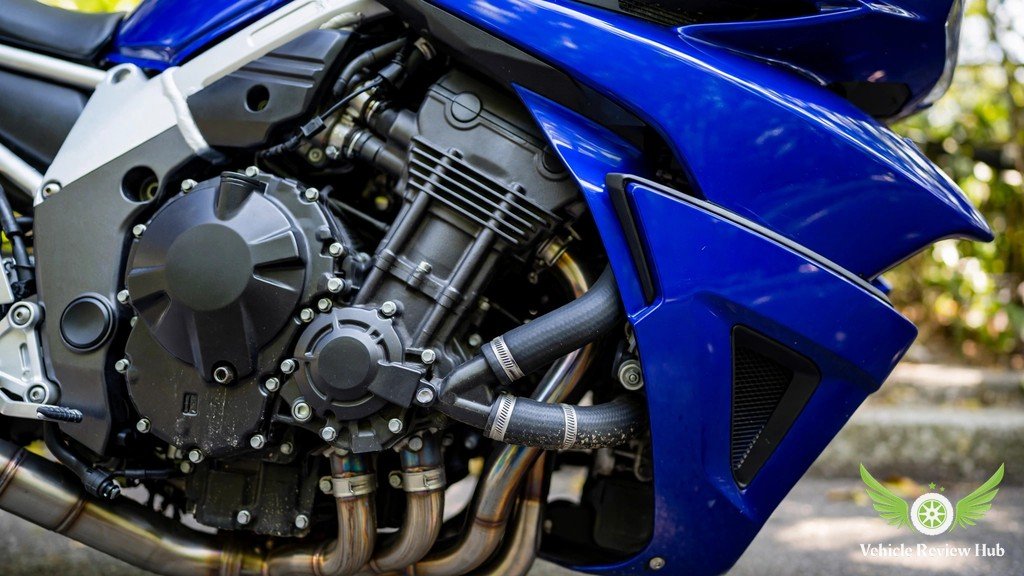
The heart of Yamaha FJR1300ES performance is a liquid-cooled, DOHC, 16-valve inline-four displacing 1,298cc, with a 79.0 x 66.2 mm bore and stroke and a 10.8:1 compression ratio. Yamaha’s chip-controlled throttle (YCC-T) meters fuel injection, and the engine redlines at a low 9,000 rpm — low for an inline-four, and the reason Yamaha FJR1300ES performance stays unstressed at highway speed. Yamaha itself publishes torque (101 lb-ft at 7,000 rpm on recent US spec sheets) but declines to quote a horsepower figure, so every horsepower number below is a tested rear-wheel figure, not a factory claim.
Dyno Results 127.2 HP Motorcycle.com and 129.7 HP Rider Compared
Two respected US dyno tests frame Yamaha FJR1300ES performance, and they agree closely. Motorcycle.com’s 2014 FJR1300ES review reports 127.2 hp at 8,100 rpm and 88.8 lb-ft at 6,800 rpm, noting the run was made on the mechanically identical FJR1300A the previous year. Rider magazine’s 2013 test recorded 129.7 hp at 8,000 rpm and 91.2 lb-ft at 7,100 rpm on the Jett Tuning dyno, with more than 75 lb-ft on tap from 3,500 rpm to the 9,000 rpm redline. The service intervals show what that engine costs to keep healthy. The 2.5 hp gap is normal dyno-to-dyno variation, not a model-year change. For Yamaha FJR1300ES performance, the useful takeaway is the shape of the curve, not the peak: huge midrange torque that makes the bike feel fast without revving hard.
| Test source | Rear-wheel horsepower | Rear-wheel torque |
|---|---|---|
| Motorcycle.com (2014 ES review, A-model dyno run) | 127.2 hp @ 8,100 rpm | 88.8 lb-ft @ 6,800 rpm |
| Rider (2013 test, Jett Tuning dyno) | 129.7 hp @ 8,000 rpm | 91.2 lb-ft @ 7,100 rpm |
| Yamaha factory claim (recent US spec) | Not published | 101 lb-ft @ 7,000 rpm (crank) |
Six-Speed Transmission, Assist and Slipper Clutch and D-Mode Delivery
Yamaha FJR1300ES performance changed in character, more than in output, with the 2016 update. That year brought a six-speed gearbox — fitted into the existing cases, so ground clearance and weight barely changed — plus a lighter-pull assist-and-slipper clutch that also smooths aggressive downshifts. The 2014–2015 ES used a five-speed gearbox; sixth gear drops highway rpm noticeably and is a clear reason to prefer a 2016-on bike. Final drive is a shaft in every year, which suits the touring mission of Yamaha FJR1300ES performance and removes chain maintenance. D-Mode offers Sport and Touring throttle maps; both deliver full power, only the response differs. Neither mode changes peak output, so for Yamaha FJR1300ES performance, D-Mode is a delivery choice, not a power upgrade.
Yamaha FJR1300ES Top Speed and Acceleration
Top speed is where Yamaha FJR1300ES performance reporting gets sloppy online, so this section keeps every figure labelled. The honest position: no verified, instrumented US top-speed or quarter-mile test of a stock current-generation FJR1300ES exists from a major American outlet — only a UK spec listing, an older American run on a different-generation bike, and aggregator repetition. Treat any site quoting a precise 0–60 time for this bike with suspicion unless it names its test.
MCN Lists 154 MPH Top Speed and 11.6 Second Quarter Mile in the UK
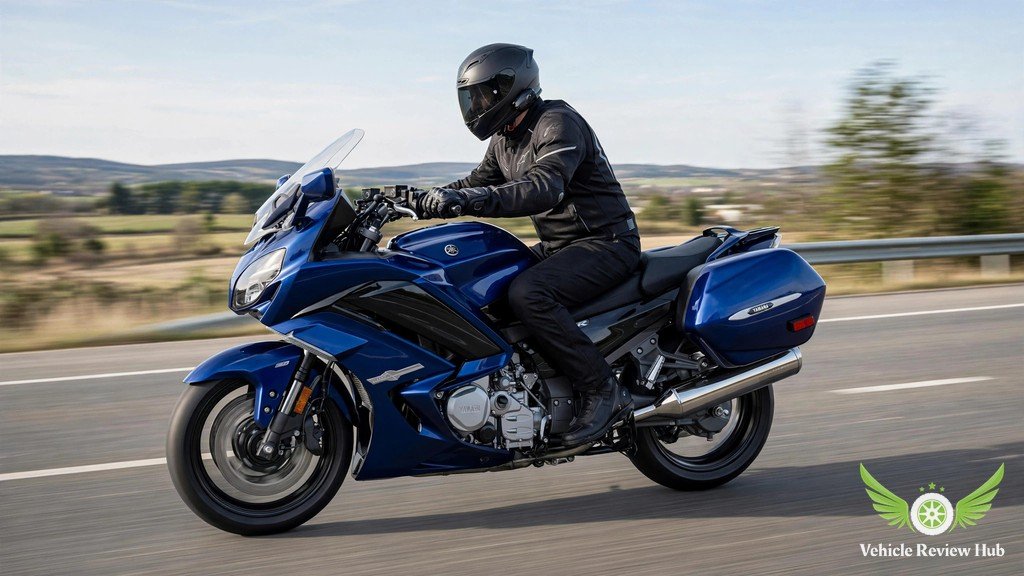
MCN’s UK spec listing for the 2013–2015 FJR1300 gives a 154 mph top speed, and its 2001–2012 listing pairs the same 154 mph figure with an 11.6-second quarter mile. Those are UK-market spec-listing figures, not GPS-verified runs on a US-spec ES, and this guide presents them that way when discussing Yamaha FJR1300ES performance. They are plausible for Yamaha FJR1300ES performance — a 127-plus rear-wheel horsepower bike at a claimed 642 lb will reach the mid-150s — but plausible is not tested. Older American evidence for Yamaha FJR1300ES performance points the same way: Cycle World’s early-2000s test of the lighter original FJR ran 10.95 seconds at 123.29 mph, but that was a different generation, not a current ES result. The fair summary is that the FJR is a genuinely fast touring motorcycle whose exact top speed has never been properly instrumented in the US press.
Why No US Instrumented Top Speed Test Exists and Figures Need Labels
The absence of a US test for Yamaha FJR1300ES performance is not mysterious. American magazines judge it on touring competence — comfort, range, handling with luggage — and rarely chase a top speed no owner will use. Yamaha FJR1300ES performance in the real world is measured at legal speeds: how quickly it passes at 70 mph, how stable it feels at 85 mph two-up, and how little vibration reaches the bars. Aggregator sites listing a 2.7-second 0–60 time cite no test or methodology, and this guide does not repeat that figure as fact. When comparing Yamaha FJR1300ES performance with rivals, insist on the same standard used here: named tester, named bike, named conditions — or the figure gets labelled as an estimate.
Yamaha FJR1300ES Mileage and Fuel Economy
Fuel economy is the most practical chapter of Yamaha FJR1300ES performance, because it decides how far apart fuel stops fall on a tour. Yamaha’s official estimate is conservative, and testers consistently beat it — but the spread between gentle highway cruising and hard back-road riding is wide, so a single MPG number misleads buyers judging Yamaha FJR1300ES performance. This section gives the official figure, the tested range, and the tank math behind both.
Official Yamaha 36 MPG Estimate and 6.6-Gallon Tank
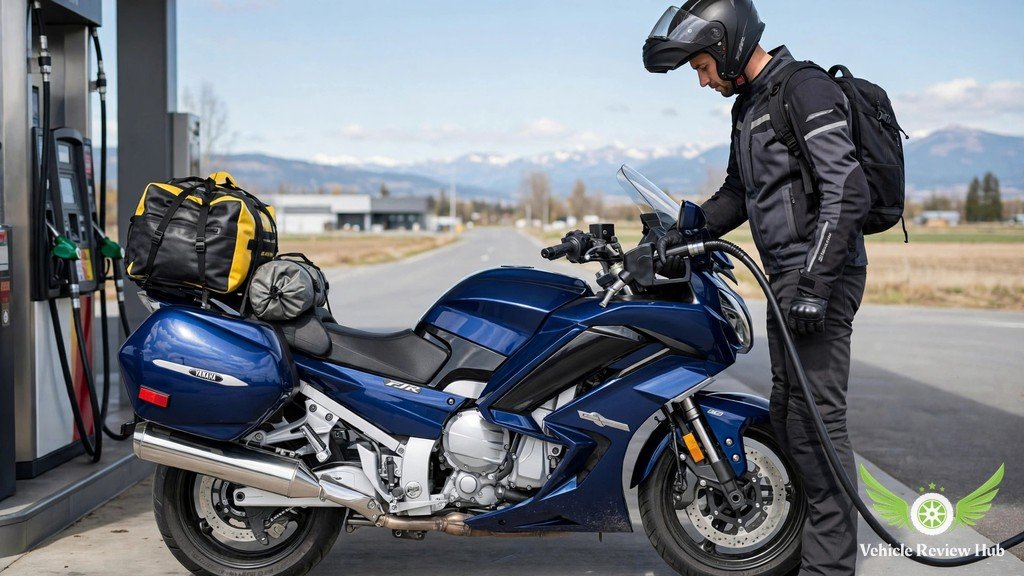
Yamaha rates the FJR1300ES at 36 mpg with a 6.6-gallon tank, implying about 238 miles to empty on paper. Footnote: Rider’s test notes put the low-fuel warning at the last 1.3 gallons, so usable range before the light is closer to 5.3 gallons, roughly 190 miles at the official figure. The 36 mpg estimate itself is a conservative combined figure for Yamaha FJR1300ES performance, and it is the number to use for worst-case trip planning. Yamaha FJR1300ES performance at a steady highway cruise is better than 36 mpg in every independent test below, but city riding, headwinds and a loaded bike will pull it back toward, sometimes below, the official number.
Rider Tested 40.8 MPG Average and RevZilla 40 to 41 MPG Actual
For Yamaha FJR1300ES performance, Rider’s 2013 test recorded 40.8 mpg on average, with a 48.4 mpg high and a 35.6 mpg low, and an estimated range of 269 miles — the 269-mile figure in this guide’s outline comes from that test. Rider’s 2014 ES road test of Yamaha FJR1300ES performance was a little thirstier at 37.2 mpg on average (40.9 high, 34.3 low), showing how much riding style moves the number. RevZilla’s 2016 ES long-term review adds real-world texture to Yamaha FJR1300ES performance: its longest single tank ran 210 miles, and no fill ever exceeded 5.2 gallons, which works out to roughly 40 mpg on that highway run — consistent with the 40 to 41 mpg real-world band. The honest planning rule for Yamaha FJR1300ES performance is therefore 37–41 mpg mixed, 40-plus on a gentle highway cruise, and fuel stops every 200–230 miles rather than at the theoretical 269-mile maximum.
| Source | MPG recorded | Range implication |
|---|---|---|
| Yamaha official estimate | 36 mpg | ~238 miles (6.6 gal) |
| Rider 2013 test (avg / high / low) | 40.8 / 48.4 / 35.6 mpg | 269 miles estimated |
| Rider 2014 ES road test (avg) | 37.2 mpg | ~245 miles (6.6 gal) |
| RevZilla 2016 long-term (longest tank) | ~40 mpg implied | 210 miles on 5.2 gal fill |
Yamaha FJR1300ES Real-World Riding Performance
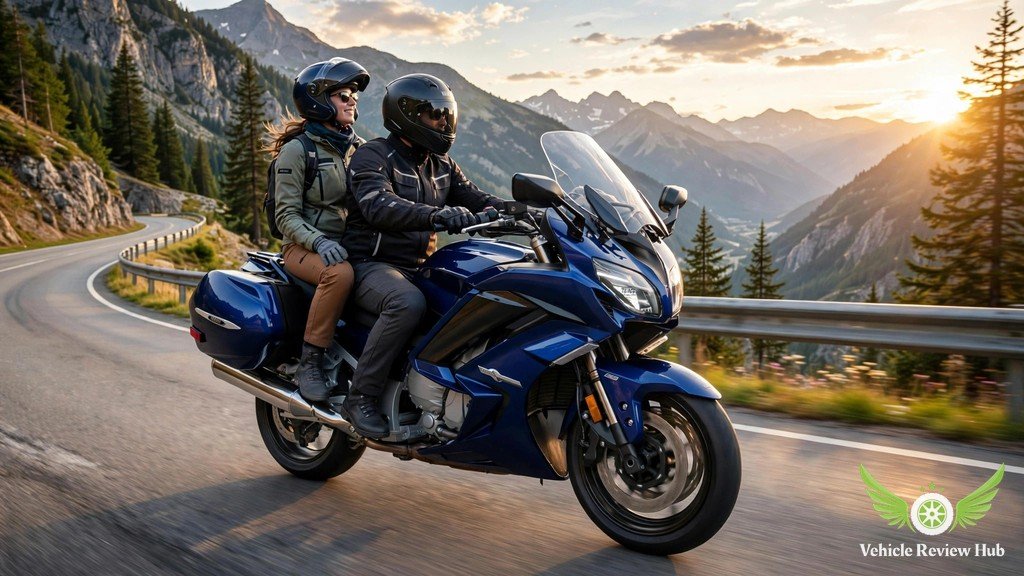
On the road, Yamaha FJR1300ES performance feels less like a sportbike and more like a locomotive: quiet, smooth, and deceptively quick. The low redline and deep torque mean the bike rarely needs more than half throttle normally, and the fairing and adjustable windscreen keep wind pressure off the rider at highway speed. Reviewers consistently describe the same Yamaha FJR1300ES performance character — a motorcycle that covers ground fast without feeling busy — and that character, more than any single number, is what owners actually buy.
City Riding, Traffic Performance and Everyday Acceleration
In town, Yamaha FJR1300ES performance is competent rather than effortless. At a claimed 642 lb (and 663–669 lb on Rider’s test scales for the 2013 and 2014 bikes), the FJR is heavy at parking-lot speeds, and its full fairing and wide bars need attention in tight gaps. What saves Yamaha FJR1300ES performance in town is the torque: from 2,000 rpm there is already more than 60 lb-ft available, so pulling away from lights and merging into traffic needs no clutch slip and no downshift. Traction control, standard from 2013, keeps wet-city launches tidy, and the 31.7-inch seat helps shorter riders manage the weight at stops. For pure city commuting a lighter bike makes more sense; the FJR’s city manners are acceptable, not a selling point.
Highway Riding, Overtaking Ability and 269 Mile Tested Range
The highway is where Yamaha FJR1300ES performance earns its reputation. In sixth gear the engine turns just over 3,000 rpm at 60 mph, so Yamaha FJR1300ES performance at cruise is quiet and vibration-free, and a roll-on from 70 to 90 mph for an overtake is a twist of the wrist rather than a gearbox exercise. Cruise control, standard since 2013, holds speed without hand fatigue, and the electrically adjustable windscreen (5.1-inch range on the 2016 bike) tunes wind protection without stopping. The 269-mile tested range is a best case at the 40.8 mpg average; plan fuel stops at 200–230 miles. Two-up with luggage, the bike’s stability at speed is repeatedly praised in road tests of Yamaha FJR1300ES performance, and that composure is the real highway performance story; comfort and luggage detail sit in the riding impressions.
The video below, from MotorcycleDaily, is a first ride of the 2016 Yamaha FJR1300A and FJR1300ES — the six-speed bike covered in this guide.
Yamaha FJR1300ES Handling, Braking and Stability
Handling is the surprise chapter of Yamaha FJR1300ES performance. A 642 lb touring bike has no right to feel agile, yet road tests call the FJR the sportiest-feeling bike in its class, with quick steering and a planted chassis on rough back roads. The ES model’s electronic suspension is central to Yamaha FJR1300ES performance: it firms up damping for a loaded, spirited ride or softens it for a long highway day, without tools.
Electronic Suspension Settings, Chassis, Tires and Cornering Lights
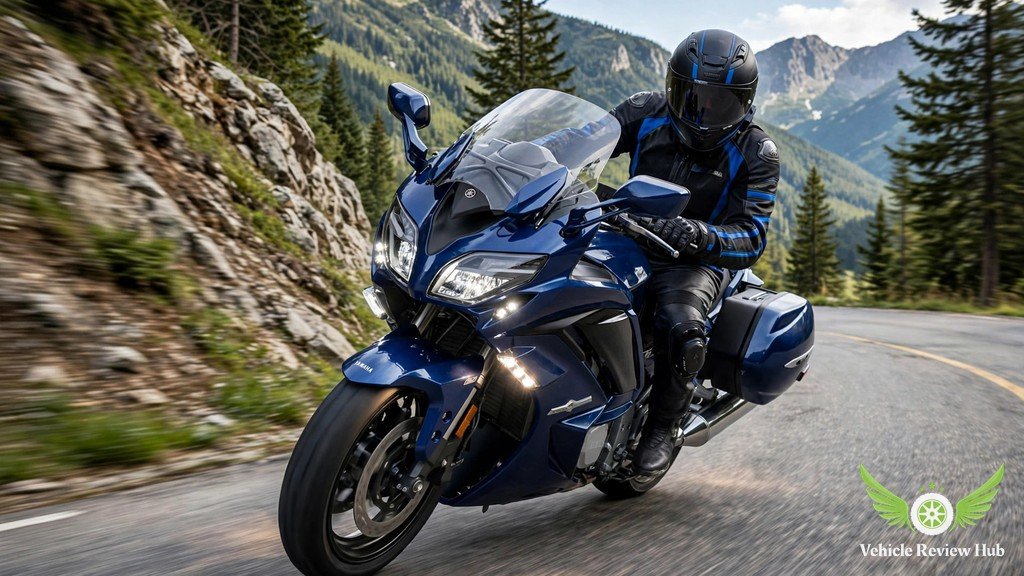
The ES adds electronically adjustable suspension over the base A model: on the 2016 bike, a 43 mm inverted fork with electronically adjustable rebound and compression damping (5.3 inches of travel) and a single rear shock with electronically adjustable spring preload, rebound and compression damping (4.9 inches of travel). Ultimate Motorcycling’s 2016 buyer’s guide notes three preload and three damping settings with seven fine-tuning steps — far more adjustability than the manually adjusted A model. The aluminium twin-spar frame, 60.8-inch wheelbase, 26-degree rake and 120/70ZR17 front and 180/55ZR17 rear tires give Yamaha FJR1300ES performance its stable-but-willing steering, and the 448 lb load capacity covers two riders plus luggage. ES-only LED cornering lights, introduced for 2016, sense lean angle and switch on additional lights progressively through a turn — a genuine night-riding benefit the base A model lacks.
320mm Front and 282mm Rear Discs With Linked UBS Braking and ABS
Braking on the FJR1300ES is a linked Unified Brake System (UBS) with ABS: dual 320 mm front discs with four-piston calipers and a single 282 mm rear disc. The linked system distributes braking force front and rear, helping a loaded touring bike stop straight and stable; ABS is standard in every year covered here. For Yamaha FJR1300ES performance, the braking story is competence under load rather than racetrack feel — reviewers rate the system effective and predictable, with the usual touring-bike caveat for Yamaha FJR1300ES performance that a 640-plus lb bike needs a firm squeeze and a longer distance than a sportbike. Tire choice matters as much as the brakes: the 180-section rear wears faster two-up, and loaded pressures preserve stopping distance and handling.
Yamaha FJR1300ES Performance Compared With Other Sport Tourers
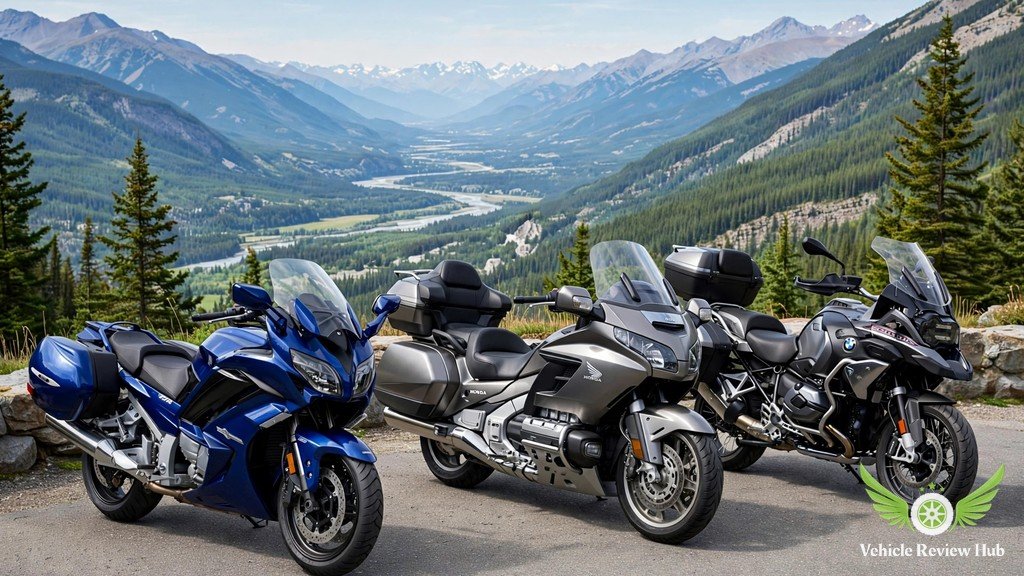
Yamaha FJR1300ES performance sits in the middle of the modern sport-touring class on paper and near the top on value. The class has shrunk — Honda’s ST1300 and Kawasaki’s Concours 14 are gone from the US market — so the live rivals are BMW’s twins. Against them, Yamaha FJR1300ES performance trades outright power and technology for simplicity, proven reliability, and a far lower price.
Yamaha FJR1300ES vs BMW R 1300 RT and K 1600 GT
Against the 2026 BMW R 1300 RT, listed at a $22,499 base price in RevZilla’s review, the FJR gives up modernity — the BMW has a 1,300cc ShiftCam boxer twin making a claimed 145 hp and 110 lb-ft, a 620 lb wet weight, and a far deeper electronics suite — but Yamaha FJR1300ES performance on tested rear-wheel output (127–130 hp) is close enough that the real-world gap is smaller than the spec sheets suggest, and a used FJR costs a fraction of the BMW’s price. The BMW K 1600 GT is a different animal: a 1,649cc inline-six making a claimed 160 hp and 132.7 lb-ft, a 756 lb wet weight, a 7.0-gallon tank, and a 2024 MSRP of $24,292 per Motorcycle.com’s spec page. The six is smoother and stronger, but it carries over 100 lb more than the FJR and costs far more. For Yamaha FJR1300ES performance, the verdict against both BMWs is consistent: less ultimate thrust and tech, more money left over, and a simpler machine to own.
| Model | Engine / claimed power | Wet weight | Price reference |
|---|---|---|---|
| Yamaha FJR1300ES | 1,298cc inline-four / 127–130 hp tested (rear wheel) | 642 lb claimed | $18,299 (2024, last US year) |
| BMW R 1300 RT (2026) | 1,300cc boxer twin / 145 hp claimed | 620 lb claimed | $22,499 base |
| BMW K 1600 GT (2024) | 1,649cc inline-six / 160 hp claimed | 756 lb | $24,292 MSRP |
Is the Yamaha FJR1300ES Suitable for Experienced Riders and Touring?
Yamaha FJR1300ES performance is best suited to experienced riders who tour — and the experience requirement is about weight, not power. The throttle is friendly and Yamaha FJR1300ES performance delivery is linear, so a careful newer rider would not be surprised by the engine; but a 642 lb bike with a 31.7-inch seat demands confidence at stops, in parking lots and on loose surfaces — confidence that comes from miles. For touring, the answer is an easy yes: shaft drive, 6.6 gallons, hard cases, cruise control, heated grips and a fairing that works at speed are exactly the touring checklist, and the long production run means parts and knowledge are easy to find. Riders who mostly commute or ride tight city streets will find it heavy; riders who cross states will find it hard to beat at its used price.
Yamaha FJR1300ES Performance: Frequently Asked Questions
These questions cover the numbers buyers actually ask about Yamaha FJR1300ES performance, each answer labelled by source so tested figures are never confused with estimates.
How much horsepower does the Yamaha FJR1300ES make?
Yamaha does not publish horsepower. Independent rear-wheel dyno tests recorded 127.2 hp (Motorcycle.com) and 129.7 hp (Rider), so a realistic Yamaha FJR1300ES performance figure is 127–130 rear-wheel horsepower, against a factory torque claim of 101 lb-ft at the crank.
What is the top speed of the Yamaha FJR1300ES?
MCN’s UK spec listing gives 154 mph, but that is a listing figure, not a GPS-verified US test. No verified instrumented US top-speed test of a stock current-generation FJR1300ES exists, so 154 mph should be treated as a plausible listing figure for Yamaha FJR1300ES performance rather than a tested result.
What is the quarter-mile time of the Yamaha FJR1300ES?
MCN’s UK listing for the early FJR pairs 154 mph with an 11.6-second quarter mile. Cycle World’s early-2000s test of the lighter original FJR ran 10.95 seconds at 123.29 mph, but that was a different generation, not a current ES result.
What MPG does the Yamaha FJR1300ES get?
For Yamaha FJR1300ES performance, Yamaha estimates 36 mpg. Rider’s tests recorded 40.8 mpg on average (2013) and 37.2 mpg (2014 ES), and RevZilla’s long-term highway running implied roughly 40 mpg. Plan on 37–41 mpg in mixed riding.
How far can the Yamaha FJR1300ES go on a tank?
With a 6.6-gallon tank, the theoretical maximum for Yamaha FJR1300ES performance at Rider’s 40.8 mpg average is 269 miles. In practice, with the low-fuel warning at the last 1.3 gallons, plan fuel stops every 200–230 miles; RevZilla’s longest real tank was 210 miles.
Does the Yamaha FJR1300ES have a six-speed gearbox?
Yes, from 2016 onward, paired with an assist-and-slipper clutch. The 2014–2015 ES used a five-speed gearbox, so the gearbox is a quick model-year check on a used bike.
What is D-Mode on the Yamaha FJR1300ES?
D-Mode offers Sport and Touring throttle maps; both deliver full power, Sport sharpens response and Touring softens it. It changes delivery, not peak output, and it is standard from 2013.
Is the Yamaha FJR1300ES faster than the BMW R 1300 RT?
On tested output, no: the BMW’s claimed 145 hp beats the FJR’s tested 127–130 rear-wheel hp, and the BMW is lighter. The FJR closes much of the gap with its torque and costs far less, especially used, so the comparison comes down to budget rather than outright speed.
Is the Yamaha FJR1300ES good for long-distance touring?
Yes. Shaft drive, a 6.6-gallon tank, hard side cases, cruise control, heated grips, an adjustable windscreen and a stable highway character make Yamaha FJR1300ES performance genuinely touring-focused, provided the rider is comfortable managing 642 lb at low speed.