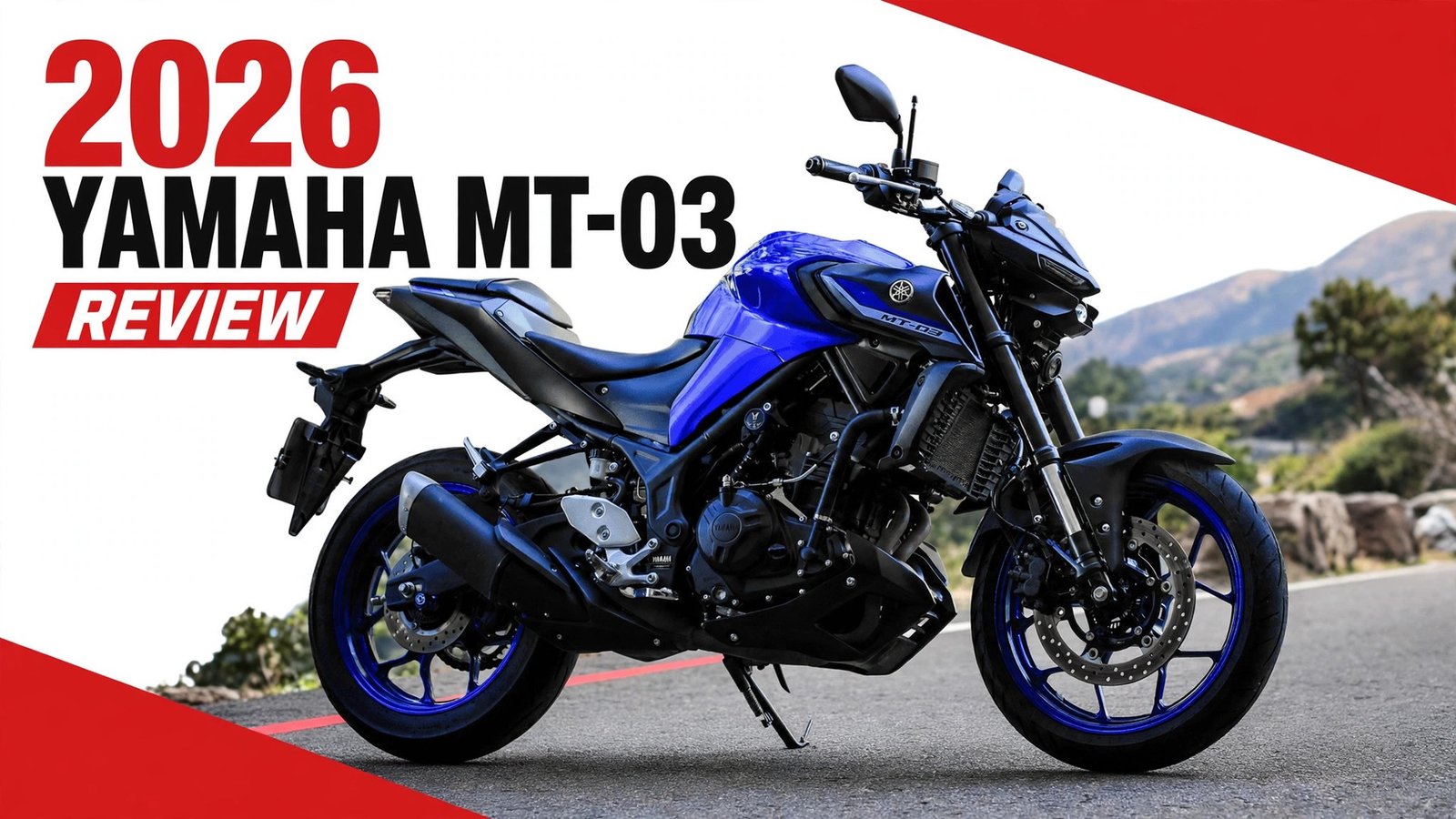
If you want a small motorcycle that looks like a proper streetfighter, costs less than five thousand dollars, and is genuinely easy to ride, the Yamaha MT-03 deserves a hard look. This Yamaha MT-03 review covers the current 2026 model and every US model year back to 2020: the price by year, the 321cc twin, the weight and seat height, the LCD dash, and what reviewers actually say about riding it. The MT-03 is the naked YZF-R3: same engine and frame, wider bars. What it offers is light weight, a low seat, friendly manners, and a price that undercuts most rivals, which is why this Yamaha MT-03 review rates it highly.
One thing to get straight before anything else in this Yamaha MT-03 review: it concerns the 321cc twin Yamaha has sold in the United States since 2020. An older, unrelated 660cc single also wore the MT-03 name in the 2000s, and it has nothing in common with this bike beyond the badge.
Yamaha MT-03 Overview and Model-Year Updates
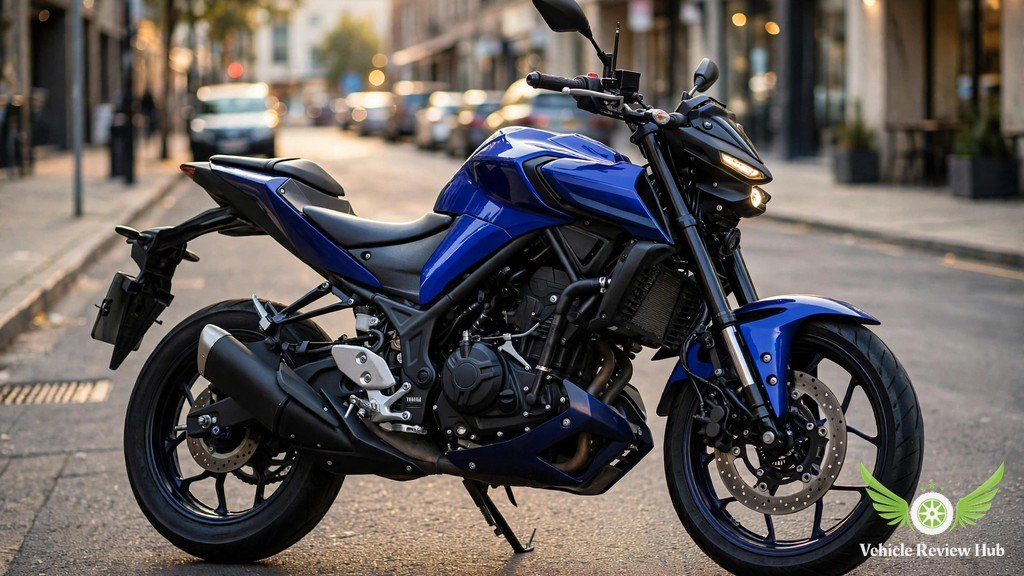
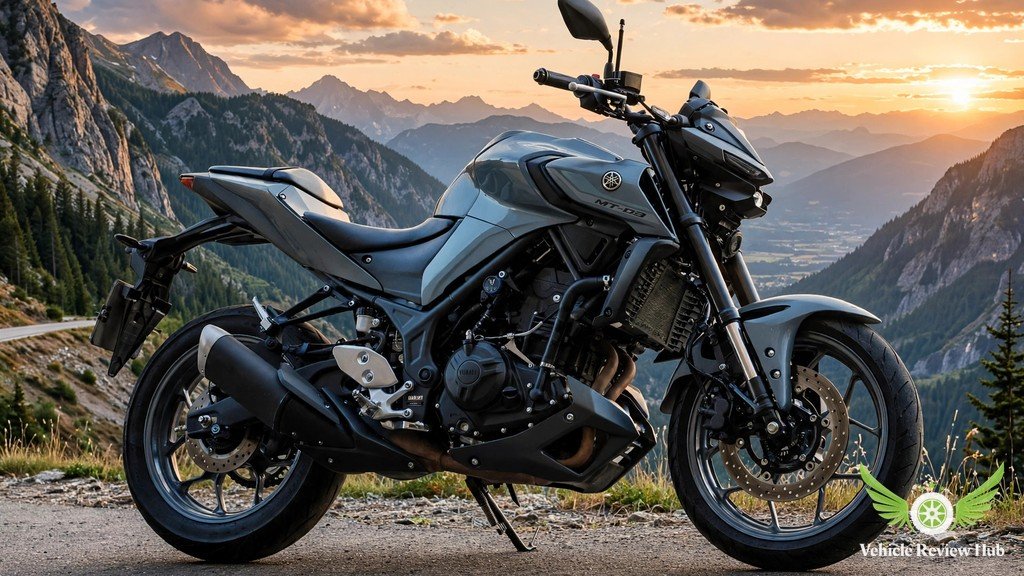
The MT-03 is the smallest MT naked, below the MT-07. It takes the YZF-R3’s proven 321cc twin and steel diamond frame, removes the fairing, and fits a wide flat handlebar and a single aggressive LED headlight. The result feels familiar to anyone who has ridden an R3, but far less committed, a difference this Yamaha MT-03 review keeps coming back to.
What Is the Yamaha MT-03 and Who Is It Designed For?
The MT-03 is Yamaha’s entry point into the MT naked range, aimed at new riders, shorter riders, and returning riders who want a real motorcycle without a big price tag or a tall seat. At 373 pounds wet with a 30.7-inch seat height, it is one of the lightest and lowest full-size motorcycles on sale in the United States. Reviewers at launch noted its class-lowest price and seat, a finding this Yamaha MT-03 review agrees with. The upright position, light clutch, and forgiving engine are why this Yamaha MT-03 review recommends it first to new riders.
Europe 2016, US Launch in 2020 and the 2025 Update Explained
The MT-03 story starts in Europe, where Yamaha launched the naked 321cc twin in 2016 as the unfaired sibling of the YZF-R3. Yamaha Motor USA announced it for the US market on October 2, 2019, for early 2020, as Cycle News reported at launch. From 2020 through 2024, the US bike barely changed. The 2025 update, detailed in this Yamaha MT-03 review’s design section, added an assist-and-slipper clutch, a new LCD panel with Y-Connect, a USB-A socket, a redesigned tail, and slimmer seat and side covers. Yamaha held the price at $4,999, and the 2026 model carries the same specification, which is why this Yamaha MT-03 review treats the 2025 and 2026 bikes as mechanically identical.
Yamaha MT-03 Engine and Specifications
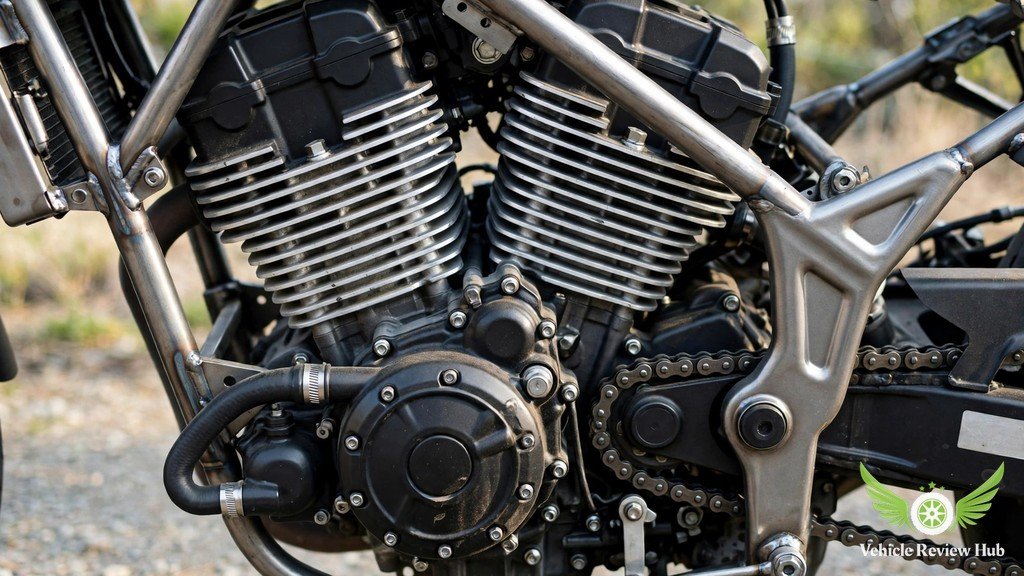
321cc Parallel-Twin Engine, Torque and Six-Speed Transmission
Yamaha publishes no horsepower figure for this twin in the United States, so quoted output comes from independent reporting: around 42 horsepower at 10,750 rpm and roughly 21.7 lb-ft of torque at 9,000 rpm. That is modest in absolute terms, but, as this Yamaha MT-03 review calculates, the MT-03 weighs only 373 pounds, so the power-to-weight ratio is respectable for the class. Reviewers call it eager down low with a rewarding top end, and forgiving of a wrong gear. The six-speed gearbox shifts positively, with fifth and sixth as overdrives. The companion MT-03 performance figures cover tested acceleration and top speed, including the caveat that some figures come from non-US tests, a distinction this Yamaha MT-03 review keeps explicit.
Fuel economy matters more than horsepower here. Yamaha rates the 2020–2024 bikes at 56 mpg and the 2025–2026 bikes at 62 mpg. With a 3.7-gallon tank, theoretical range is roughly 207 miles on earlier bikes and 229 miles now. Plan fuel stops around 180 miles, as this Yamaha MT-03 review advises.
Weight 373 lb, Seat Height 30.7 Inches, KYB Fork and Braking Specifications
The MT-03’s chassis numbers explain much of its appeal. Wet weight is 373 pounds, seat height 30.7 inches, wheelbase 54.3 inches. The steel diamond frame uses a 37mm KYB inverted fork (5.1 inches, non-adjustable) and a linkage-assisted rear shock (4.9 inches, seven-step preload). Dunlop Sportmax GPR-300 tires, 110/70-17 front and 140/70-17 rear, wrap cast aluminum wheels, completing a chassis package this Yamaha MT-03 review rates as honest rather than flashy. Braking is a single 298mm front disc with a two-piston caliper and a 220mm rear disc with a single-piston caliper, both with standard ABS. Note the front brake carefully: some older spec tables list a four-piston caliper, but Yamaha’s current specification, the 2026 MT-03 review data, and MCN’s hands-on description all agree on a single two-piston caliper, which is what this Yamaha MT-03 review uses throughout.
| Specification | 2026 Yamaha MT-03 |
|---|---|
| Engine | 321cc liquid-cooled parallel twin, DOHC, 4 valves per cylinder |
| Bore x stroke / compression | 68.0 x 44.1mm / 11.2:1 |
| Power / torque (widely reported) | About 42 hp at 10,750 rpm / about 21.7 lb-ft at 9,000 rpm |
| Transmission / clutch | 6-speed, wet multiplate with assist-and-slipper clutch |
| Front suspension | 37mm KYB inverted fork, non-adjustable, 5.1 in travel |
| Rear suspension | Linkage-assisted single shock, 7-step preload, 4.9 in travel |
| Front / rear brakes | 298mm disc, 2-piston caliper / 220mm disc, single-piston caliper, ABS |
| Wet weight / seat height | 373 lb / 30.7 in |
| Wheelbase / fuel capacity | 54.3 in / 3.7 gal |
| Fuel economy (estimated) | 62 mpg |
| Warranty | 1-year limited warranty |
Yamaha MT-03 Price and Market Availability
The MT-03 has always been priced as an entry-level motorcycle, and this Yamaha MT-03 review counts its price history as one of its strongest selling points. The US launch price in 2020 was $4,599, held through 2021 before a $200 step to $4,799 for 2022 and another $200 step to $4,999 for 2023, where it has stayed, including through the 2025 update. Destination is extra and has risen, from $425 on the 2020 bike to about $600 on 2025 listings, putting a new 2025 bike near $5,599 before tax and title. The companion MT-03 buying guide breaks down used prices by year, using the same ladder this Yamaha MT-03 review uses.
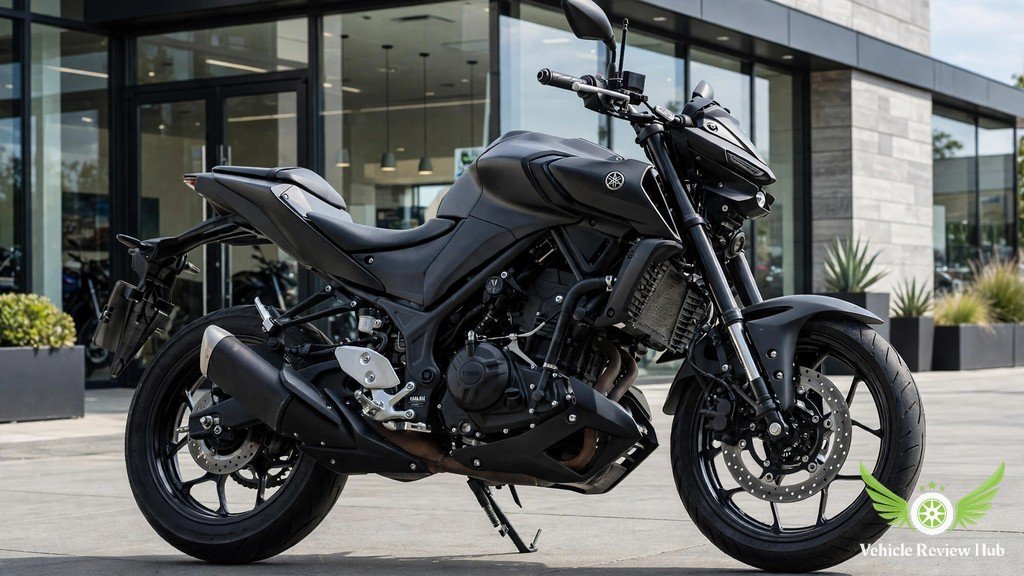
Yamaha MT-03 Price by Year in the USA: 2020 to 2026
| Model year | US MSRP | Notes |
|---|---|---|
| 2020 | $4,599 | Launch year |
| 2021 | $4,599 | Carryover specification |
| 2022 | $4,799 | Price step |
| 2023 | $4,999 | Price step |
| 2024 | $4,999 | Midnight Cyan and Matte Stealth Black |
| 2025 | $4,999 | 2025 updates; price unchanged |
| 2026 | $4,999 | Carryover |
Team Yamaha Blue, Ice Storm and Matte Stealth Black Colours for 2025-2026
For 2025 and 2026, Yamaha offers the MT-03 in three colours, and this Yamaha MT-03 review lists them plainly: Team Yamaha Blue, Ice Storm, and Matte Stealth Black. Team Yamaha Blue is the signature look. Ice Storm is muted grey-blue; Matte Stealth Black is the dark option. Colour choice is purely cosmetic. Used buyers should know the 2020 colours: Ice Fluo and Midnight Black; later years added Cyan Storm and Midnight Cyan. If a seller describes a colour you do not recognize, check the model year first, a tip this Yamaha MT-03 review includes because colour is a useful clue to a used bike’s age.
Availability in the United States is straightforward. The MT-03 is a regular part of Yamaha’s US lineup, sold through Yamaha dealers nationwide, and the 2026 model is listed on Yamaha’s US site at $4,999. There is no grey-import puzzle: the MT-03 is officially imported with a one-year warranty, a fact this Yamaha MT-03 review confirms. The faired sibling’s story is covered in our YZF-R3 review, which shares the same engine family but is a different motorcycle with clip-on bars and full bodywork.
Yamaha MT-03 Design, Features and Technology
The MT-03’s styling follows the MT family’s “Dark Side of Japan” language: a mass-forward stance, wide-shouldered tank cover, sharp air scoops, and a single slanted LED headlight. Full LED lighting is standard, a plus this Yamaha MT-03 review notes.
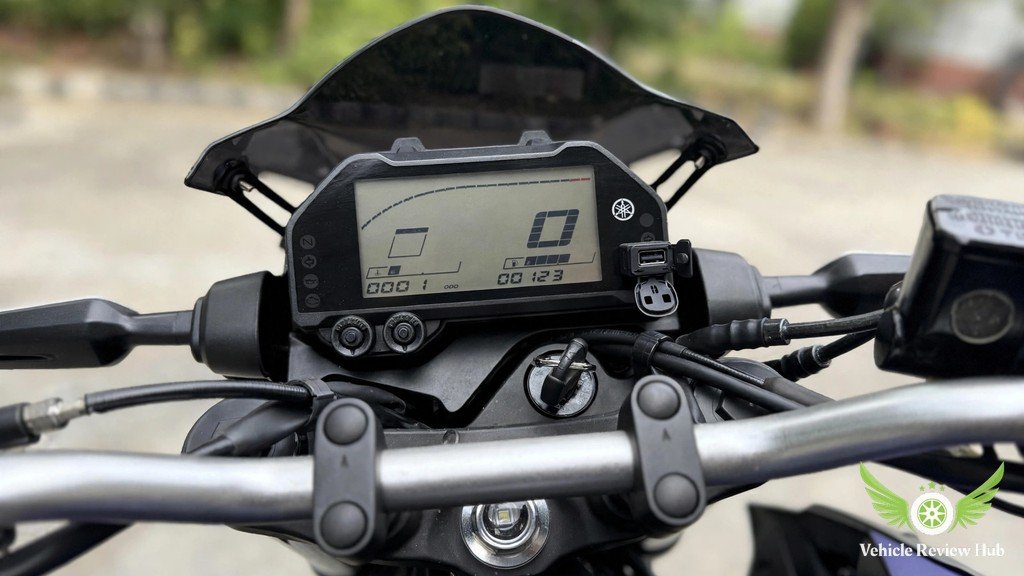
Styling, LED Lighting and LCD Display: Why It Is Not a TFT
The MT-03’s instrument panel is a simple LCD display, and this Yamaha MT-03 review stresses that this is true on every US model year, including the updated 2025 and 2026 bikes. This deserves emphasis: Yamaha’s larger nakeds use TFT screens, and some listings carelessly describe the MT-03’s dash as a TFT. It is not. The 2025 redesign gave it a clearer LCD panel, still monochrome, showing speed, rpm, fuel, gear, and trip data. For a beginner bike, the simple LCD is the right call: readable in sunlight, showing everything a new rider needs, a simplicity this Yamaha MT-03 review counts as a plus.
Y-Connect Connectivity, USB Socket and Assist and Slipper Clutch From 2025
The 2025 update brought three meaningful equipment additions, detailed in Ultimate Motorcycling’s 2025 first look. First, Y-Connect smartphone connectivity, linking the bike to Yamaha’s app for call, email, and text notifications, ride data, and a parked-location record. Second, a USB-A charging socket beside the display. Third, the assist-and-slipper clutch: the assist function lightens the lever pull, and the slipper function reduces rear-wheel chatter on aggressive downshifts. Pre-2025 MT-03s have none of these three as standard, a split this Yamaha MT-03 review flags for used buyers.
Equally important is what the MT-03 does not have, on any year. There is no traction control, no riding modes, no six-axis IMU, no cornering ABS, and no ride-by-wire throttle. The ABS is conventional and cannot be switched off. Some buyers will see that as a weakness. Most reviewers agree a 42-horsepower, 373-pound bike needs no rider aids, and their absence keeps the price down. If you want the electronic safety net, step up to a bigger bike: the MT-07 review covers Yamaha’s next naked up, which adds ride-by-wire and traction control from 2025 at a much higher price, a step this Yamaha MT-03 review leaves to the MT-07 itself.
Yamaha MT-03 Riding Experience and Comfort
On the road, the MT-03’s defining quality is how easy it is. The 30.7-inch seat lets most riders put both feet flat at a stop, the 373-pound weight means you can paddle it around a parking lot without worry, and the upright handlebar gives you leverage the faired R3’s clip-ons cannot match. Rider Magazine noted the flat handlebar sits about an inch and a half higher and three-quarters of an inch farther back than the R3’s bars, so you sit upright with neutral wrists. RevZilla’s first ride reached a similar conclusion, calling it tossable and nimble, with a pothole-compliant fork softer than the R3’s, findings this Yamaha MT-03 review agrees with.
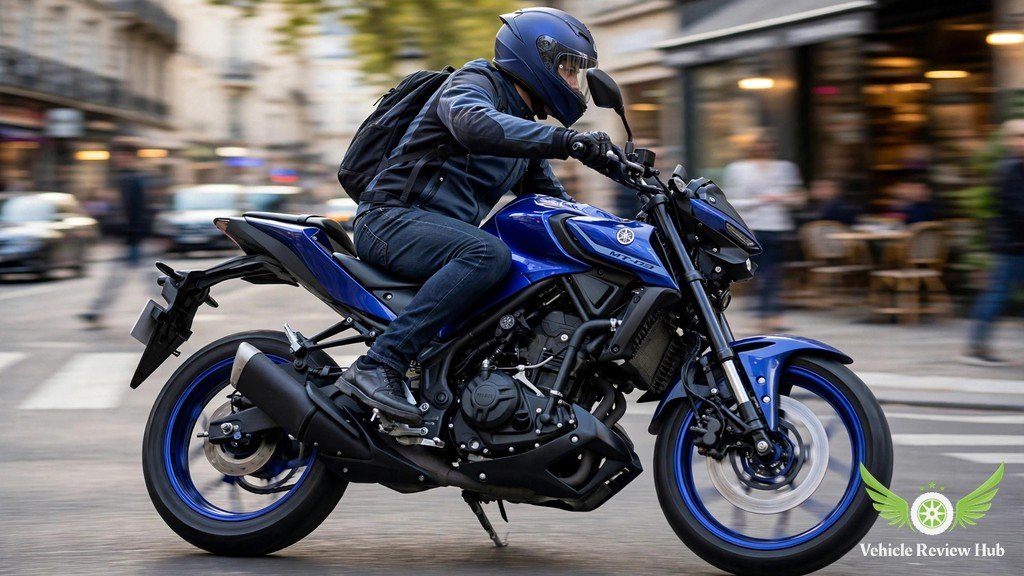
Riding Position, Handling and Low-Speed Maneuverability
Handling is where the MT-03 earns its keep, and this Yamaha MT-03 review puts chassis feel ahead of outright power. The short wheelbase, light weight, and wide bars make it flickable in traffic and fun on a twisty road. MCN calls the tubular steel chassis effectively a naked R3, agile at low speed. The brakes draw the most consistent criticism: the single two-piston front caliper needs a solid pull and gives little feedback, and Cycle News’s tester, at 185 pounds, found the brakes lacking in outright power even though delivery is smooth and progressive. Rider Magazine suggested aftermarket sintered pads would likely solve the problem, and this Yamaha MT-03 review agrees that pads are the one upgrade worth budgeting for.
Watch Rider Magazine’s 2020 first-ride video below, filmed on the Austin launch ride, the same upright ride this Yamaha MT-03 review describes.
City Riding, Highway Comfort and Everyday Practicality
In the city, the MT-03 is close to ideal. The light clutch, forgiving engine, and low seat make stop-and-go traffic painless, the upright position gives you a good view over cars, and the narrow body slips through gaps a faired bike cannot. Parts are widely available. Long-term running costs are covered in our MT-03 reliability and maintenance guide, which this Yamaha MT-03 review recommends reading before buying used.
On the highway, the story is more mixed, and an honest Yamaha MT-03 review has to say so. The engine will hold highway speed, and RevZilla’s testers found the highway manners better than expected for a 300-class naked, but there is no wind protection at all, and sustained speeds above 60 mph become tiring. Overdrive top gears cannot fix the aerodynamics. For short highway stints and weekend rides under 60 mph, the MT-03 is perfectly happy, and this Yamaha MT-03 review recommends a small windscreen for longer highway runs.
Yamaha MT-03 Review: Pros, Cons and Verdict
After weighing the price, the specification, and what reviewers actually experienced on the road, the MT-03 comes out as one of the strongest beginner bikes on sale in the United States. Its strengths are the things that matter most to a new rider: price, weight, seat height, and forgiveness. Its weaknesses are things you can live with or fix cheaply: brakes that want better pads, soft suspension, and no wind protection, a balance this Yamaha MT-03 review endorses.
Main Advantages and Limitations of the Yamaha MT-03
The advantages start with value, and this Yamaha MT-03 review puts price first for a reason. At $4,999, the MT-03 is one of the cheapest full-size motorcycles from a major manufacturer, and the price has barely moved since launch. The light weight and low seat help riders who cannot flat-foot taller bikes. The 321cc twin is smooth, eager, and forgiving. Full LED lighting, standard ABS, and from 2025 Y-Connect and a USB socket round out the equipment. The limitations: a front brake that needs better pads, soft suspension, no wind protection or rider aids, a one-year warranty, and cramped ergonomics for taller riders, so a test sit is essential, advice this Yamaha MT-03 review repeats deliberately.
Who Should Consider the Yamaha MT-03 as a First or Second Bike?
The MT-03 makes most sense for three buyers, and this Yamaha MT-03 review names them plainly. First, the new rider who wants a real motorcycle and values a low seat, light weight, and a forgiving engine above outright speed. Second, the shorter rider: the 30.7-inch seat is genuinely confidence-inspiring. Third, the experienced rider who wants a cheap, light second bike for commuting and short weekend rides. If you fall into any of those groups, buy the 2025 or 2026 bike for the same $4,999. Tall riders and highway commuters should look at the MT-07 instead. The final word of this Yamaha MT-03 review is simple: for the money, there is no easier or more honest way into motorcycling than this little naked Yamaha.
Yamaha MT-03 Review: Frequently Asked Questions
Common MT-03 buyer questions, answered from the verified data in this Yamaha MT-03 review.
How much does a Yamaha MT-03 cost in the USA?
According to this Yamaha MT-03 review, the 2026 Yamaha MT-03 costs $4,999 before destination and dealer fees, the same sticker since 2023. The 2020 and 2021 price was $4,599, and the 2022 price was $4,799. Destination is extra: $425 on the 2020 bike and about $600 on 2025 listings, putting a new 2025 bike near $5,599 before tax and title, figures this Yamaha MT-03 review verified against published sources.
What engine does the Yamaha MT-03 have?
The MT-03 has a 321cc liquid-cooled parallel-twin engine with dual overhead cams and fuel injection, the same engine family as the YZF-R3’s twin. Widely reported output is around 42 horsepower at 10,750 rpm and about 21.7 lb-ft of torque at 9,000 rpm; Yamaha publishes no US horsepower figure for this engine, a fact this Yamaha MT-03 review states plainly rather than papering over.
Is the Yamaha MT-03 good for beginners?
Yes, the MT-03 is one of the best beginner motorcycles on sale. It weighs only 373 pounds, has a low 30.7-inch seat , has a light clutch and a forgiving engine, and comes with standard ABS. At $4,999, its price is among the lowest for a full-size motorcycle from a major brand, which is why this Yamaha MT-03 review recommends it first.
Does the Yamaha MT-03 have a TFT display?
No. The MT-03 has an LCD instrument display on every US model year, including the updated 2025 and 2026 bikes. The 2025 redesign gave it a new, clearer LCD panel with Y-Connect, but the display is still LCD, not a full-colour TFT. Any listing claiming a TFT on an MT-03 is describing another model or market, a trap this Yamaha MT-03 review explicitly warns against.
Does the Yamaha MT-03 have traction control or riding modes?
No. No US MT-03 has traction control, riding modes, a six-axis IMU, cornering ABS, or ride-by-wire throttle. The ABS is a conventional system and cannot be switched off. Yamaha added a slipper clutch and Y-Connect for 2025, but no rider aids, a gap this Yamaha MT-03 review notes honestly.
What is the difference between the Yamaha MT-03 and the YZF-R3?
The MT-03 and YZF-R3 share the same 321cc twin engine and steel diamond frame, but the MT-03 is a naked bike with a wide flat handlebar, an upright riding position, and a single LED headlight, while the R3 is fully faired with clip-ons. The MT-03 is easier at low speed and in traffic; the R3 is better on the highway thanks to wind protection, a contrast this Yamaha MT-03 review draws throughout.
Is the Yamaha MT-03 fast enough for highway riding?
The MT-03 holds highway speed, but it is no natural highway bike. With no wind protection, sustained riding above 60 mph is tiring; reviewers recommend a small windscreen. It is happiest in the city, on back roads, and on short highway hops, which is the honest verdict of this Yamaha MT-03 review.
Should I buy a Yamaha MT-03 or a Yamaha MT-07?
Buy the MT-03 if you are a new or shorter rider, want the lowest seat and lightest weight, or want to spend around $5,000. Buy the MT-07 for more power, ride-by-wire with traction control, and more highway capability, if you accept its $8,599 price and taller 31.7-inch seat, a choice this Yamaha MT-03 review frames as first bike versus second bike.