If you want a liter-class naked bike with superbike DNA at a Japanese price, a used Yamaha MT-10 is one of the smartest buys in the class. This Yamaha MT-10 buying guide gives you the direct answer first: a clean gen-1 bike from 2017–2021 typically asks $8,500–$11,000 in the United States, while a used gen-2 bike from 2022 onward typically asks $10,500–$14,500, against a $14,999 MSRP for a brand-new 2026 model. That spread is the whole story of this Yamaha MT-10 buying guide: the standard bike gives you the same 998cc crossplane engine as the SP, minus the Öhlins suspension, for several thousand dollars less. This Yamaha MT-10 buying guide covers used prices by generation, insurance and running costs, a full inspection checklist, model-year differences, and the standard-versus-SP decision.
Yamaha MT-10 Price and Market Availability
The standard MT-10 has been sold in the US since 2017, when it arrived as the FZ-10, and it took the MT-10 name from 2018 onward. This Yamaha MT-10 buying guide starts with prices because they set every other decision.
What Does a Used Yamaha MT-10 Cost in the USA by Generation?
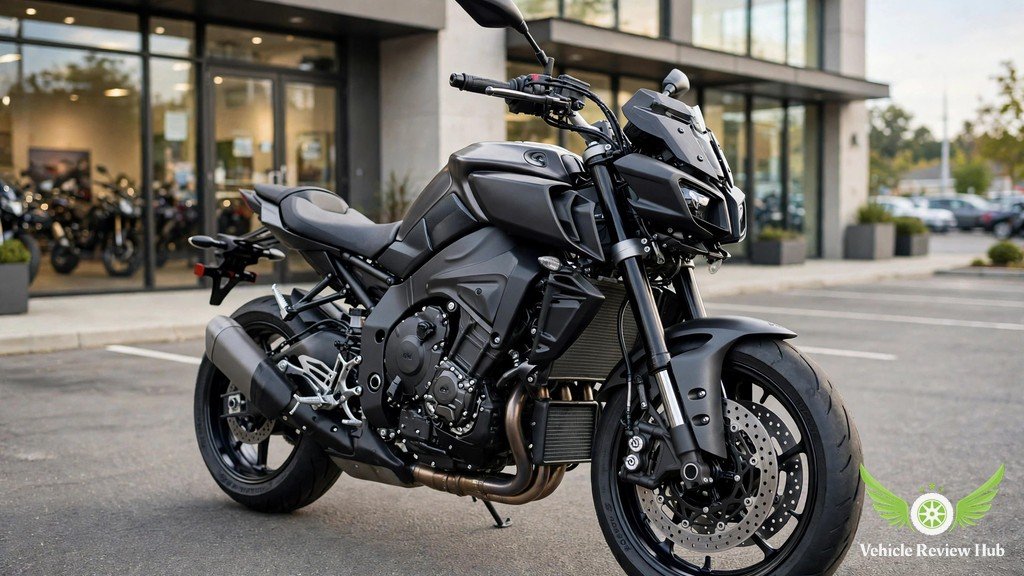
Used prices split cleanly by generation in this Yamaha MT-10 buying guide, because the 2022 redesign changed the bike’s electronics, display, and styling enough to hold a clear premium. Total Motorcycle’s 2026 specification listing confirms the current $14,999 figure, the 467-pound wet weight, and the 36-mpg estimate.
| Model year | New MT-10 MSRP (USA) | Generation |
|---|---|---|
| 2017 (as FZ-10) | $12,999 | Gen-1 |
| 2022 | $13,999 | Gen-2 redesign |
| 2023 | $14,199 | Gen-2 |
| 2024 | $14,499 | Gen-2 |
| 2025 | $14,999 | Gen-2 |
| 2026 | $14,999 | Gen-2 (current) |
Observed asking prices back up the used ranges in this Yamaha MT-10 buying guide. A 2017 FZ-10 with 1,400 miles asked $10,995, a 2019 asked $9,997, and a 2020 asked $10,990. Gen-2 prices run higher: a 2022 asked $10,999, another with 1,987 miles asked $12,499, and a 2,855-mile 2022 with a Graves exhaust asked $12,699. A 2023 with a Yamaha extended warranty to 2028 asked $12,499, a mint 2024 asked $12,999, and a nearly new 2025 asked $14,499. As a working rule in this Yamaha MT-10 buying guide, budget roughly $8,500–$11,000 for a gen-1 bike, $10,500–$13,000 for a 2022–2023, and $12,500–$14,500 for a 2024–2025, with the exact figure set by mileage, condition, service records, and extras.
Is the Yamaha MT-10 Available Through Official US Dealers?
Yes. This Yamaha MT-10 buying guide confirms the standard MT-10 is an official US model, available through any authorized Yamaha dealer. Yamaha’s MT-10 page lists the 2026 model at $14,999 MSRP in Ice Storm. New-bike pricing leaves little room to maneuver — destination runs $775 and the factory warranty is just one year — so this Yamaha MT-10 buying guide recommends one written new-bike quote before you finalize any used purchase, because a discounted leftover can sit surprisingly close to a used gen-2 price.
Yamaha MT-10 Insurance and Ownership Costs
In this Yamaha MT-10 buying guide, purchase price is only the first line of the budget. A liter-class naked bike costs more to insure, feed, and maintain than a middleweight, so this section of the Yamaha MT-10 buying guide covers insurance and everyday running expenses.
What Affects Motorcycle Insurance Premiums for a Liter-Class Naked Bike?
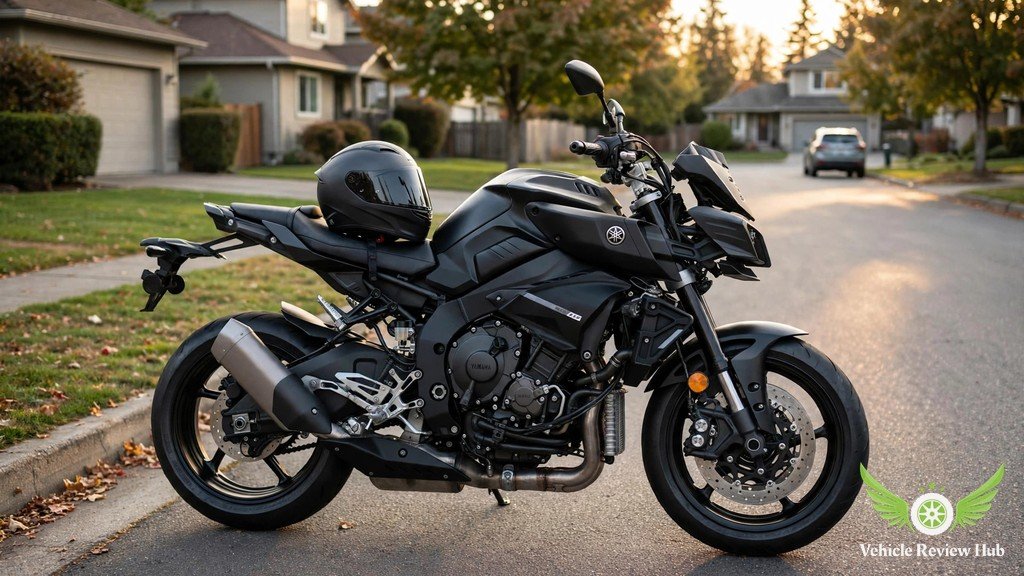
In this Yamaha MT-10 buying guide, insurers price a 998cc, roughly 160-horsepower naked bike as a high-performance machine, and the standard MT-10 is no exception. Published 2025 industry ranges put full coverage for sport bikes at roughly $1,500–$3,500 per year, with riders under 25 facing $3,000–$7,000. The 2025 insurance cost breakdown behind those ranges also lists standard and naked bikes at $900–$2,200 for full coverage, so the MT-10 can land on either side depending on how a given carrier classifies it. A clean record, a safety course, a garage, and bundling can cut 10–25% off the premium. This Yamaha MT-10 buying guide advises quotes from at least three carriers, for the exact VIN, before you buy.
How to Estimate Fuel, Maintenance, Parts and Other Ownership Expenses
Yamaha estimates 36 mpg for the gen-2 bike, worth roughly 160 miles on the 4.5-gallon tank, while the gen-1 bike’s claimed figure was 30 mpg, worth about 135 miles. The MT-10 maintenance schedule sets engine oil every 4,000 miles, an air filter at 24,000 miles, and the valve-clearance check at 26,600 miles under the US manual. A routine oil service is inexpensive, but the valve service is labor-heavy and can run into the high hundreds of dollars, so a bike near 26,600 miles without that service on record should be priced accordingly. Tires are the other recurring cost in this Yamaha MT-10 buying guide: a fitted 120/70-17 front and 190/55-17 rear pair typically costs a few hundred dollars and lasts roughly 3,000–6,000 miles. Overall, this Yamaha MT-10 buying guide puts annual running costs, excluding insurance, in the $800–$1,500 range for a typical street rider.
How to Inspect a Used Yamaha MT-10
Inspection is where a good Yamaha MT-10 buying guide earns its keep, because the MT-10’s most expensive parts are easiest to overlook, and gen-1 and gen-2 bikes hide different problems. Bring a flashlight and insist on seeing the bike cold: a seller who refuses a cold start is telling you everything you need to know. Work through the checks below, alongside RevZilla’s used-bike buying checklist, and walk away from any bike that fails the title, frame, or cold-start tests.
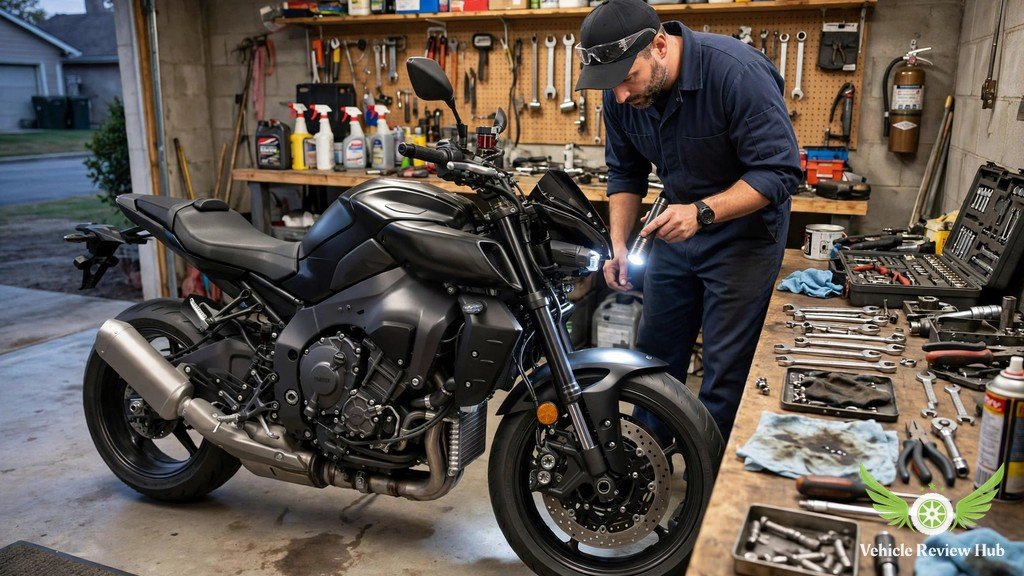
Checking the Engine, Cold Start, Service Records and Maintenance History
Start with the paperwork, not the engine, says this Yamaha MT-10 buying guide. Match the 17-digit VIN on the steering headstock to the title, check for liens and salvage branding, and ask for a vehicle history report. Then, in this Yamaha MT-10 buying guide, check the service records against the known intervals: oil changes every 4,000 miles, with the valve-clearance check due at 26,600 miles under the US manual. Note one disagreement: UK guides quote 24,000 miles, the European 40,000-km figure, while the US manual lists 26,600 miles — for a US bike, use the US figure. Next, feel the exhaust pipes to confirm the engine is genuinely cold, then start it yourself. It should fire promptly, settle into a smooth idle, and show no warning lights — LCD dash for gen-1, 4.2-inch TFT for gen-2. Listen for rattles, watch for smoke, and cycle through the ride modes to confirm the electronics respond without errors. Look underneath for fresh oil, coolant, or fork-oil leaks, and ask whether the bike has been tracked. This Yamaha MT-10 buying guide treats missing service answers as a price reduction, not a detail.
Inspecting the Frame, Tires, Brakes, Chain and KYB Suspension
The rolling chassis, as this Yamaha MT-10 buying guide stresses, tells you how the bike was really treated. Sight down the bike to check wheel, fork, and bar alignment, and inspect the aluminum Deltabox frame for dents, cracks, or fresh paint hiding crash repairs. Check the tire date codes, as this Yamaha MT-10 buying guide recommends, and replace tires older than five years regardless of tread depth. On the brakes, inspect the dual 320mm front discs for scoring or warping and check pad thickness — braided steel lines are an SP feature, not standard on this bike. The chain should be clean and tensioned, with unhooked sprocket teeth. The KYB suspension deserves its own careful pass in this Yamaha MT-10 buying guide, because it is the main hardware difference from the SP: look for oil weeping on the fork tubes and shock body, and push down on both ends to check damping feels controlled.
Yamaha MT-10 Model Years and Features to Compare
Yamaha launched the bike in the US for 2017 as the FZ-10, renamed it MT-10 from 2018, and redesigned it for 2022 with a six-axis IMU, TFT display, and standard quickshifter.
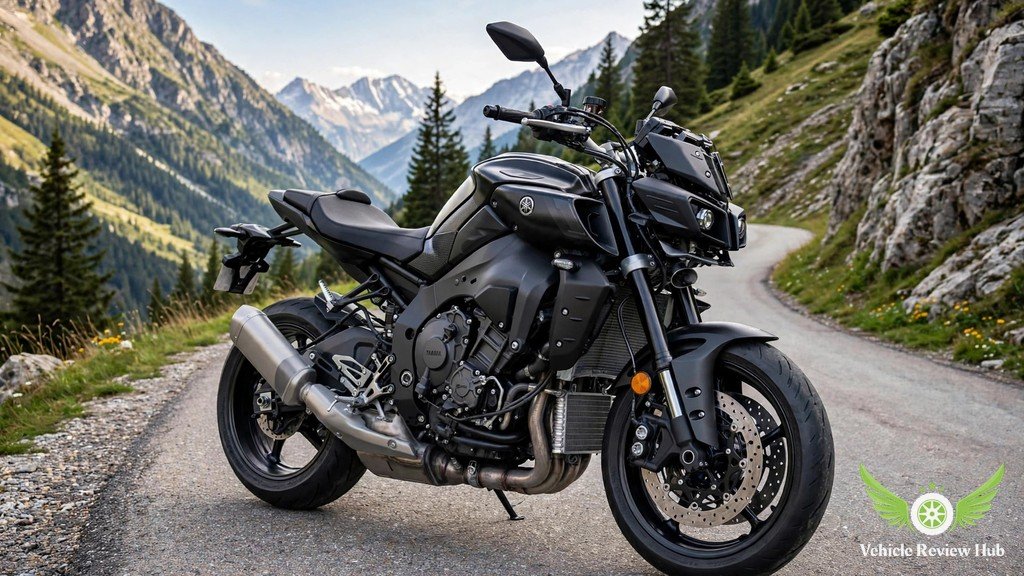
Comparing Gen-1 2017-2021 Models With 2022-On Redesign Versions
The gen-1 bike, the starting point of this Yamaha MT-10 buying guide, arrived at $12,999 with the R1-derived 998cc crossplane engine, 463 pounds wet, a 32.5-inch seat, and a 55.1-inch wheelbase. Its electronics were simpler: an LCD dash, three D-Mode maps, wheel-speed traction control rather than an IMU, ABS, and cruise control — but no lean-sensitive aids and no standard quickshifter. The gen-2 bike, from 2022 onward, weighs 467 pounds wet, sits at a 32.9-inch seat height on a 55.3-inch wheelbase, and adds the full IMU suite, the 4.2-inch TFT, four ride modes, and the up-down quickshifter, plus a reshaped tank, twin-eye LED headlights, and a claimed 36 mpg against the gen-1 bike’s 30-mpg claim. Colors mark the years: Armor Gray/Matte Raven Black (gen-1), Cyan Storm (2022), Matte Raven Black (2023), Midnight Cyan (2024), Ice Storm (2025–2026). The MT-10 review and the performance figures are worth reading alongside this Yamaha MT-10 buying guide. One recall belongs in every gen-1 negotiation: NHTSA campaign 20V814, the nationwide front brake switch recall from late 2020, names the 2017–2020 MT-10 among 18,203 bikes. The 20V814 brake switch record confirms the model list and the free switch replacement; gen-2 bikes are not part of that campaign. Always check any bike by VIN.
Which Features Matter Most: IMU, TFT Display and Up-Down Quickshifter?
Three features define the gen-2 bike in this Yamaha MT-10 buying guide. First, the six-axis IMU drives lean-sensitive traction control, slide control, wheelie control, engine-brake management, and cornering ABS, which make a 160-horsepower naked far more forgiving. Second, the 4.2-inch TFT display controls ride modes and the Yamaha Variable Speed Limiter, and a glitchy display should raise questions about crash damage. Third, the up-down quickshifter, standard from 2022, transforms everyday riding on a bike this quick, and it was only an accessory on gen-1 bikes. This Yamaha MT-10 buying guide says a gen-1 bike at the right price is still a strong buy if the recall is done and the service history is clean, but the gen-2 electronics are worth paying for in rain or daily commuting.
Yamaha MT-10 vs MT-10 SP: Which One to Buy in the USA
This is the decision every reader of this Yamaha MT-10 buying guide faces. The standard MT-10 and the SP share the same 998cc CP4 engine, Deltabox frame, six-axis IMU electronics on gen-2 bikes, and TFT display. The SP adds, notes this Yamaha MT-10 buying guide, Öhlins semi-active suspension, braided brake lines, a polished swingarm, and a color-matched lower fairing. If you ride twisty roads hard, the SP is worth the premium; if you mostly commute, the standard bike gives you nearly the same motorcycle for less.
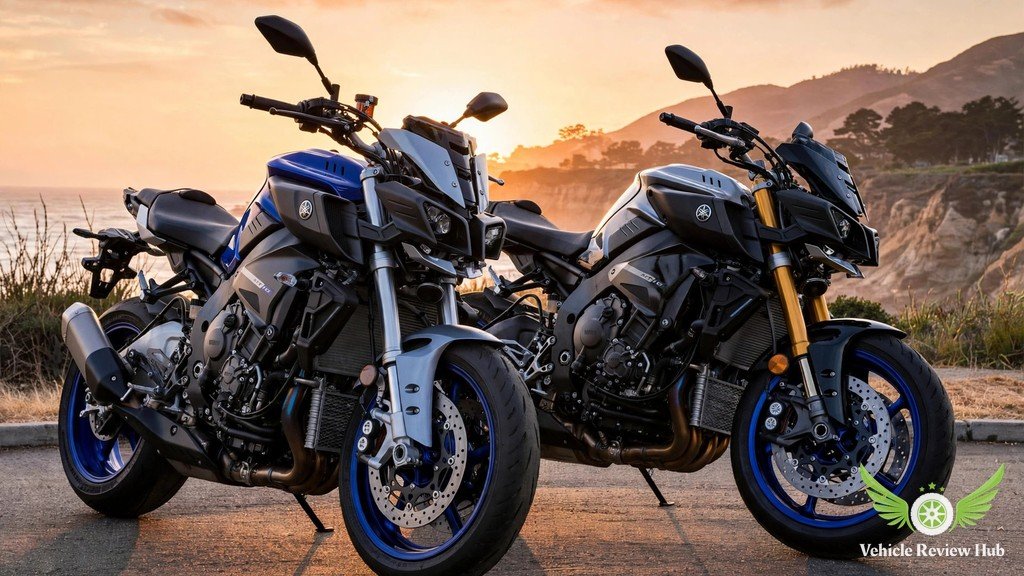
Price Premium $2,500 to $3,000, KYB vs Ohlins Semi-Active Suspension
The SP premium in this Yamaha MT-10 buying guide has stayed close to the $2,500–$3,000 band for most years, as the table below shows, except 2025, when the gap narrowed to $2,300.
| Model year | MT-10 SP MSRP | Standard MT-10 MSRP | SP premium |
|---|---|---|---|
| 2022 | $16,899 | $13,999 | $2,900 |
| 2023 | $17,199 | $14,199 | $3,000 |
| 2024 | $16,999 | $14,499 | $2,500 |
| 2025 | $17,299 | $14,999 | $2,300 |
| 2026 | $17,499 | $14,999 | $2,500 |
The suspension difference is the heart of this Yamaha MT-10 buying guide. The standard bike uses a fully adjustable 43mm KYB fork and KYB rear shock, which any suspension shop can service cheaply. Do not mix up the dyno figures: an older Rider test of the standard MT-10 recorded about 138.5 rear-wheel horsepower, while Cycle World’s SP tests recorded about 134.4–134.5, but those come from different bikes, dynos, and days, and both trims share essentially the same tune — so this Yamaha MT-10 buying guide rates the suspension as the deciding factor, not the spec sheet. Shoppers comparing the two trims should also read the MT-10 SP review and the SP buying guide before deciding.
MT-09 SP as a Cheaper Yamaha Alternative to Compare
If the liter bike’s weight, insurance, and fuel bills give you pause, the MT-09 SP is the cheaper Yamaha alternative this Yamaha MT-10 buying guide says to test first. The 2025 MT-09 SP lists at $12,499 with an 890cc triple, 428 pounds wet, a claimed 48 mpg, a KYB fork with an Öhlins rear shock, and Brembo brakes. The 2025 MT-09 SP specification listing confirms those figures. It gives up roughly 40 horsepower and the crossplane-four character, but it is lighter, cheaper to insure, and easier to ride fast. Riders stepping up from a middleweight like the YZF-R7 should ask whether they need liter-class power at all — the MT-09 SP splits the difference honestly.
Is Buying a Used Yamaha MT-10 Worth It?
For most experienced riders, this Yamaha MT-10 buying guide says yes, provided the bike passes inspection. The used standard MT-10 gives you a proven CP4 engine, a full IMU suite on gen-2 bikes, and strong dealer support, at a price leaving room for tires and insurance.
Benefits and Risks of Buying a Gen-1 or Gen-2 MT-10 Used
The benefits in this Yamaha MT-10 buying guide are clear: a reliable Japanese inline-four, strong dealer support, and gen-2 electronics matching far more expensive European bikes. The risks are mostly manageable. A gen-1 bike without proof of the 20V814 brake switch fix should have it done before money changes hands. Crash damage hides under fresh paint, so inspect frame and fork alignment. Cycle World’s long-term FZ-10 verdict, recorded after more than 13,000 miles on a gen-1 bike, is the closest thing to an ownership report card for this motorcycle.
None of these risks should put you off the MT-10 — they are reasons to inspect carefully, which is the whole point of this Yamaha MT-10 buying guide.
US-Market Alternatives: BMW S 1000 R, Tuono V4 and Z H2
Before you sign, this Yamaha MT-10 buying guide says to compare the used standard MT-10 against three realistic alternatives. The BMW S 1000 R is the closest rival: a 999cc inline-four with about 170 horsepower, listed around $15,190 for 2025. The Aprilia Tuono V4 is the wilder Italian option: the 2025 Tuono V4 first look lists the lineup from $16,299 with a 1099cc V4 making 180 horsepower, with the Factory at $19,699. The Kawasaki Z H2 SE is the supercharged outlier: a 998cc supercharged naked at $18,899 retail for 2025, heavier at 531.4 pounds curb weight. Between those poles, the used MT-10 in this Yamaha MT-10 buying guide occupies a sweet spot: Japanese reliability at a price well below the Europeans.
Yamaha MT-10 Buying Guide: Frequently Asked Questions
The answers below in this Yamaha MT-10 buying guide cover the questions that actually change a purchase decision.
What is a fair price for a used Yamaha MT-10?
As a working guide in this Yamaha MT-10 buying guide, expect roughly $8,500–$11,000 for a gen-1 bike from 2017–2021, $10,500–$13,000 for a 2022–2023, and $12,500–$14,500 for a 2024–2025.
Is the Yamaha MT-10 sold in the USA?
Yes. This Yamaha MT-10 buying guide confirms the standard MT-10 has been an official US model since 2017, when it arrived as the FZ-10, and the 2026 model lists at $14,999 MSRP.
What is the difference between gen-1 and gen-2 MT-10 models?
Gen-1 bikes (2017–2021) use an LCD dash, wheel-speed traction control without an IMU, and no standard quickshifter, while gen-2 bikes (2022 onward) add a six-axis IMU, a 4.2-inch TFT, four ride modes, and a standard up-down quickshifter.
How much does insurance cost for a Yamaha MT-10?
Published 2025 ranges put full coverage for sport bikes at roughly $1,500–$3,500 per year, according to this Yamaha MT-10 buying guide, with riders under 25 facing $3,000–$7,000. Get quotes for the exact VIN before you buy.
What is the valve clearance interval on the MT-10?
The valve-clearance check in this Yamaha MT-10 buying guide is due at 26,600 miles under the US maintenance schedule, with engine oil every 4,000 miles and an air filter at 24,000 miles. UK guides quote 24,000 miles, the European 40,000-km figure; US owners should use 26,600 miles.
Does the MT-10 have any recalls?
Yes. NHTSA campaign 20V814, the nationwide front brake switch recall from late 2020, names the 2017–2020 MT-10 among 18,203 bikes: a faulty switch can leave the brake light on or cancel cruise control, and dealers replace it free. Gen-2 bikes are not part of that campaign. Campaign 25V248 is a separate Hawaii-only filing covering certain 2022–2024 standard MT-10 bikes: a throttle position sensor issue fixed free with an ECU reprogram and TPS replacement. Always check by VIN, since it is a distributor filing, not a nationwide recall.
Is the standard MT-10 worth the savings over the MT-10 SP?
For most riders, yes. In this Yamaha MT-10 buying guide, the SP premium runs $2,500–$3,000 in most years (narrowing to $2,300 in 2025), and it buys Öhlins semi-active suspension, braided lines, and exclusive styling — not more power, since both trims share the same tune.
What should I check on the KYB suspension before buying?
Look for oil weeping on the fork tubes and shock body, confirm the fork and shock adjustments change damping feel, and push down on the front and rear, as this Yamaha MT-10 buying guide directs, to check damping feels controlled. Budget for a fork service if the seals weep.
Is the MT-10 good for beginners?
No. This Yamaha MT-10 buying guide is blunt: a 998cc, roughly 160-horsepower naked bike at 467 pounds is for experienced riders. Beginners should start smaller.