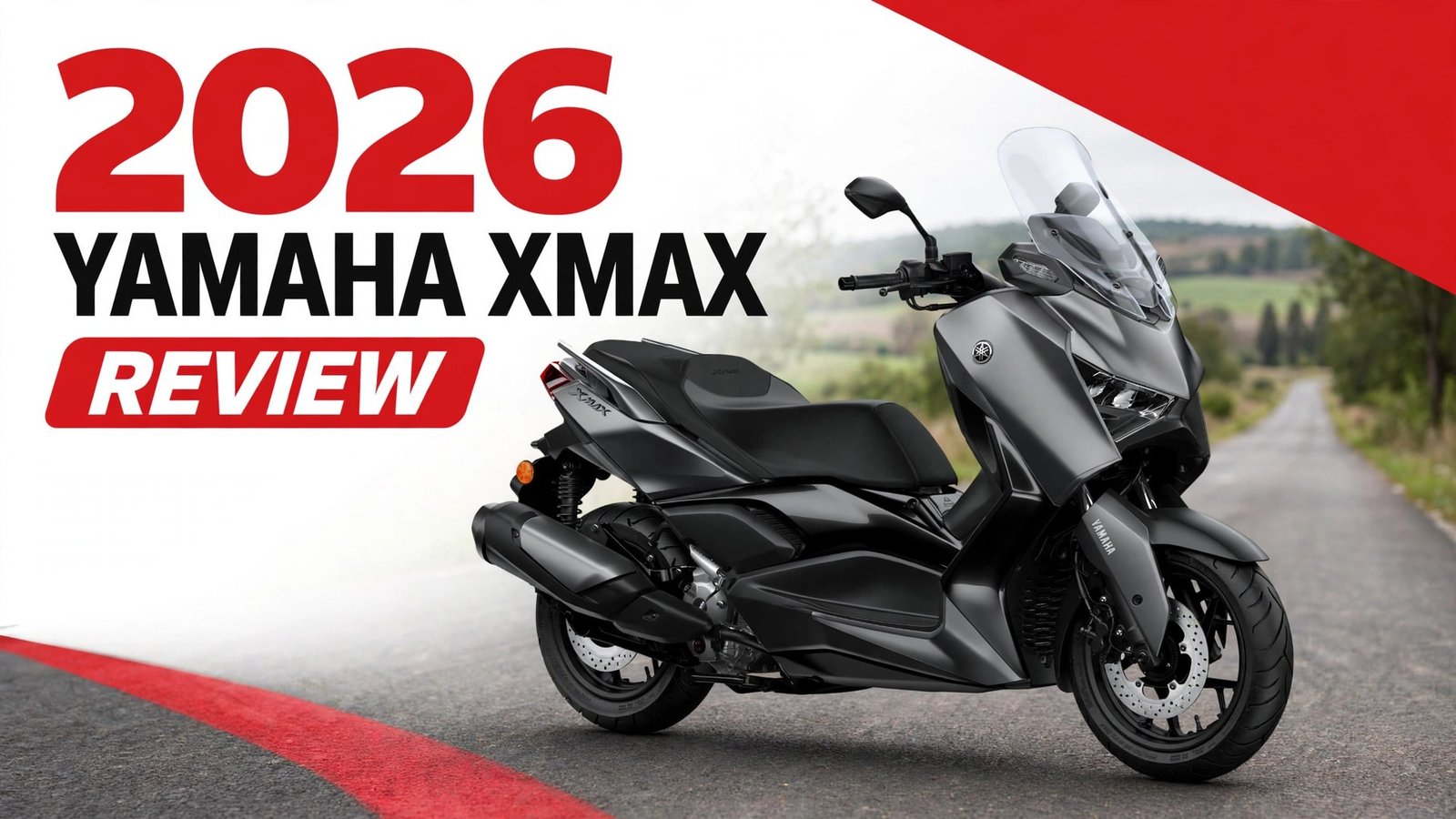
The Yamaha XMAX is the maxi-scooter for riders who want motorcycle-sized comfort without a clutch or gears. This Yamaha XMAX review covers the current US model: a 292cc single-cylinder scooter with a fully automatic CVT, a 31.3-inch seat, underseat room for two full-face helmets, and a 2026 price of $6,399. It is big enough for highway work, this Yamaha XMAX review finds, and small enough for city traffic, and frugal enough that Yamaha estimates 73 mpg from its 3.4-gallon tank. This Yamaha XMAX review explains what you get for the money, what changed in the 2023 redesign and the 2025 update, and where the scooter still falls short.
Yamaha XMAX Overview and Model-Year Updates
The XMAX sits at the top of Yamaha’s US scooter range. With a 60.6-inch wheelbase and a 397-pound wet weight, it is closer in size to a small motorcycle than to a 125cc scooter. That size is the point, this Yamaha XMAX review argues: Yamaha built the XMAX for daily commuters, passengers, and freeway speeds without strain.
What Is the Yamaha XMAX and Who Is It Designed For?
The XMAX is a maxi-scooter, blending scooter convenience with motorcycle capability. There is no clutch lever and no foot shifter: twist the throttle and the CVT automatic does the rest. Storage lives under the seat, the floorboards are flat and roomy, and the riding position is upright with feet forward. This Yamaha XMAX review sees it as ideal for year-round commuters, new riders stepping up from a smaller scooter, and experienced motorcyclists wanting a simpler second machine. A motorcycle endorsement is still required in most US states, this Yamaha XMAX review notes, because the 292cc engine puts it in motorcycle territory, this Yamaha XMAX review reminds readers.
US Launch 2018, 2023 Redesign and 2025 Update Explained
Yamaha introduced the XMAX in the US as a 2018 model at $5,599 in Vivid White, with first bikes arriving in October 2017. MotorcycleDaily’s 2018 launch report covered the announcement, and the formula has barely changed since. The first major change came for 2023. webBikeWorld’s 2023 overview details the redesign: X-shaped LED headlights and taillights, high-mounted LED front indicators, a reshaped seat, and a two-part panel with a 3.2-inch LCD above a 4.2-inch TFT display. This Yamaha XMAX review treats these three eras as the key to buying right.
Yamaha XMAX Engine and Specifications
The XMAX runs a 292cc liquid-cooled single-cylinder engine with Yamaha’s Blue Core design, fuel injection, and a single overhead camshaft operating four valves. Yamaha USA publishes no horsepower figure, and this Yamaha XMAX review states that plainly: the often-quoted 27.6 hp at 7,250 rpm is a European-market figure, not a US specification. This Yamaha XMAX review finds the engine smooth, quiet, and strong enough for freeway speeds with a passenger aboard.
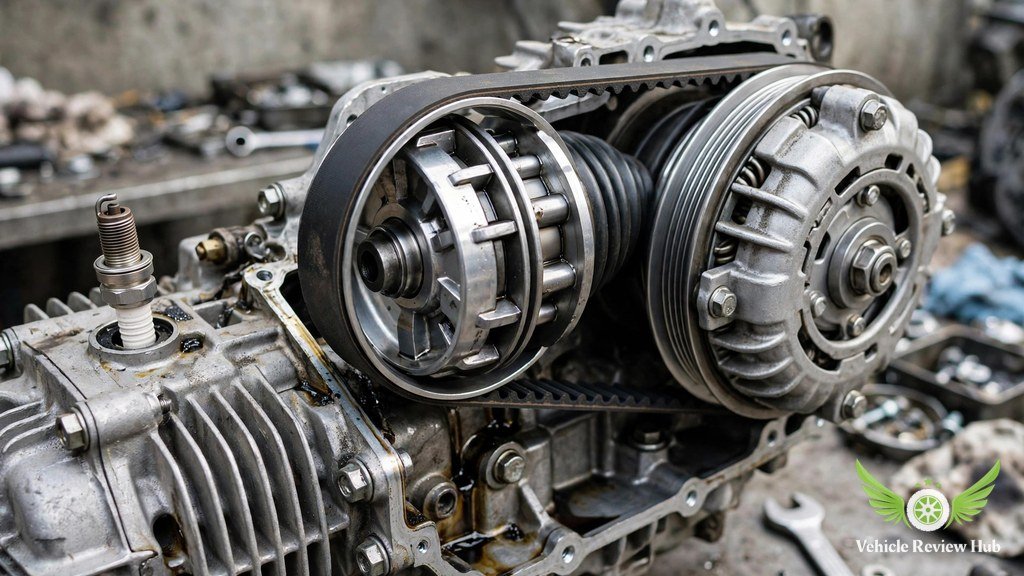
292cc Blue Core Engine, CVT Automatic and V-Belt Drive
The engine’s character is relaxed rather than sporty. A 292cc single with a 70.0mm bore and 75.9mm stroke and a 10.9:1 compression ratio delivers power low in the rev range, suiting a scooter that lives between traffic lights and freeway on-ramps. There is no clutch lever, no foot shifter, and no engine-braking control beyond closing the throttle, which makes the XMAX genuinely easy for a new rider in stop-and-go traffic, this Yamaha XMAX review emphasizes. That ease of use is a recurring theme in this Yamaha XMAX review. The V-belt final drive is another low-maintenance choice: unlike a chain, it needs no lubrication or adjustment, and it runs quietly. The belt itself is a wear item — see our guide to XMAX maintenance and reliability. For this Yamaha XMAX review, the key point is that the drivetrain asks very little of its owner between services.
Weight 397 lb, Seat Height 31.3 Inches, Dimensions and Storage
The XMAX weighs 397 pounds wet, with a 31.3-inch seat height, a 60.6-inch wheelbase, and an 86.0-inch overall length. Rake is 26.5 degrees with 3.7 inches of trail, and ground clearance is 5.3 inches — figures that explain the planted, stable feel at speed, this Yamaha XMAX review notes. TotalMotorcycle’s 2026 spec listing confirms these dimensions, and this Yamaha XMAX review uses those figures throughout. Storage is where the XMAX embarrasses many motorcycles: the underseat compartment holds two full-face helmets, and the lockable front pocket takes a phone and small items. The 15-inch front wheel and 14-inch rear wheel are larger than the tiny wheels on most small scooters, helping the XMAX roll over potholes without nervousness, this Yamaha XMAX review notes.
| Specification | 2026 Yamaha XMAX |
|---|---|
| Engine | 292cc liquid-cooled single, SOHC, 4 valves, fuel injected |
| Transmission | Automatic CVT, V-belt final drive |
| Wet weight | 397 lb |
| Seat height | 31.3 inches |
| Wheelbase | 60.6 inches |
| Fuel capacity | 3.4 gallons |
| Front suspension / travel | 33mm telescopic fork, 4.3 inches |
| Rear suspension / travel | Dual shocks, 3.1 inches |
| Front brake / rear brake | 267mm disc / 245mm disc, ABS |
| Tires | 120/70-15 front, 140/70-14 rear (Dunlop Scoot Smart) |
Yamaha XMAX Price and Market Availability
The 2026 Yamaha XMAX costs $6,399 in Midnight Black, the only color Yamaha lists for the US market this year. Dealer listings put destination at around $650, so a realistic out-the-door figure before tax and registration is roughly $7,050, before dealer fees or accessories. This Yamaha XMAX review considers that a fair trade.
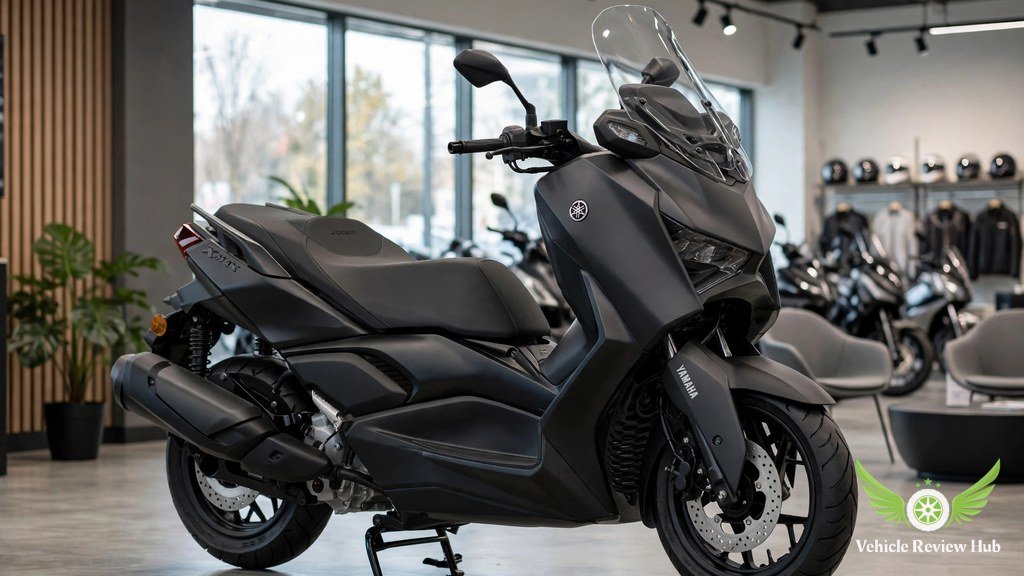
Yamaha XMAX Price by Year in the USA: 2023 to 2026
Prices rose by $100 in most years, with a $300 jump for the 2023 redesign year and a $200 jump for the 2025 update year. A 2024 model listed at $6,199 MSRP, although one dealer advertised a discounted $5,999 total price — check whether a listing shows MSRP or a sale price before comparing, this Yamaha XMAX review advises. The full ladder below anchors this Yamaha XMAX review’s pricing section, because it explains the used market too. The detailed used-price picture is covered in our XMAX buying guide, and this Yamaha XMAX review recommends reading it before shopping used.
| Model year | US MSRP | Color |
|---|---|---|
| 2018 | $5,599 | Vivid White |
| 2019 | $5,599 | Matte Black |
| 2020 | $5,699 | Shadow Gray |
| 2021 | $5,699 | Matte Midnight Blue |
| 2022 | $5,799 | Not confirmed |
| 2023 | $6,099 | Granite Gray |
| 2024 | $6,199 | Gray |
| 2025 | $6,299 | Midnight Black |
| 2026 | $6,399 | Midnight Black |
Midnight Black Colour and Official US Dealer Availability
Yamaha sells the XMAX through its official US dealer network, and availability is generally good, this Yamaha XMAX review found — this is a regular production model, not a limited edition. The single-color strategy for 2025 and 2026 (Midnight Black only) limits choice: lighter colors need leftover 2023–2024 stock or the used market. This Yamaha XMAX review suggests pricing extended coverage at purchase time rather than after the first year expires.
Yamaha XMAX Design, Features and Technology
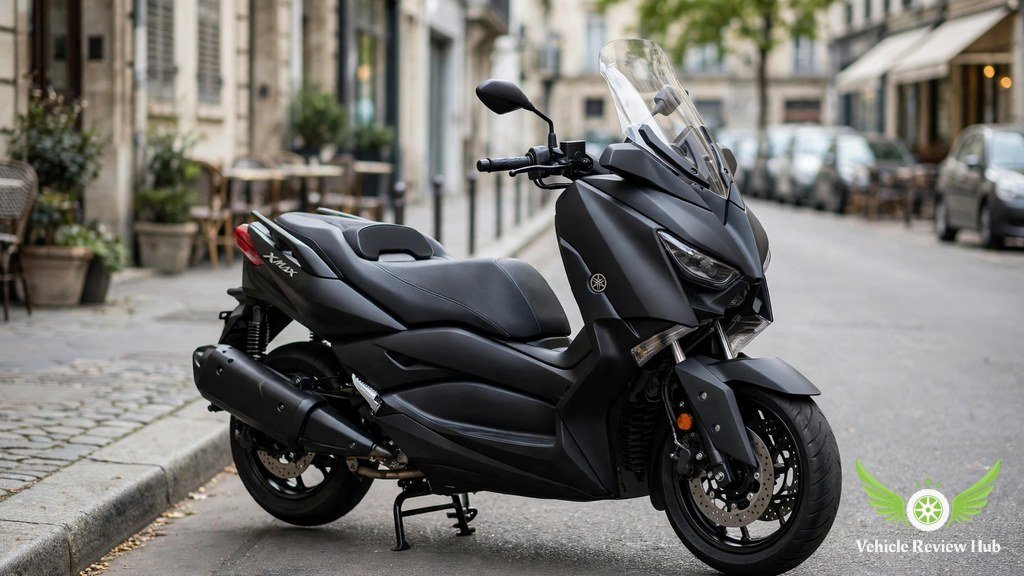
The XMAX looks like a small motorcycle at first glance, and that is deliberate. The full fairing, stepped seat, and tall windscreen give it a road presence smaller scooters lack, and the X-shaped LED headlights from 2023 give the front end a distinctive signature at night. This Yamaha XMAX review covers both eras, because most used bikes come from one or the other, this Yamaha XMAX review notes.
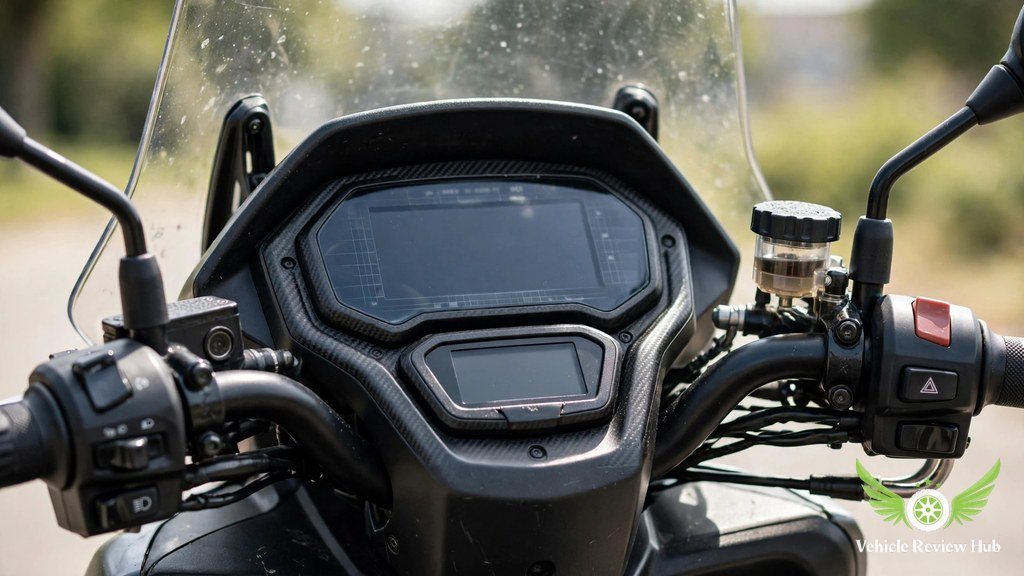
TFT Display, Y-Connect, Garmin Navigation and Smart Key Features
From 2023, the XMAX carries a two-part panel: a 3.2-inch LCD speedometer above a 4.2-inch full-color TFT infotainment display. The 2025 update merged the two displays into a single integrated panel with updated LCD backlighting, which reads more cleanly in bright sunlight, this Yamaha XMAX review notes. Yamaha’s own 2025 announcement is the best source for the full update list, and Cycle World’s first look at the 2025 model covers the same changes independently. This Yamaha XMAX review leans on both sources for the 2025 details.
Electric Windscreen From 2025, Traction Control and ABS
The headline 2025 feature is the electronically adjustable windscreen, moving through roughly 4 inches of stepless vertical travel at the touch of a switch on the left handlebar. Traction control and ABS have been standard since the US launch. Traction control watches for rear-wheel slip on wet roads or loose surfaces, and the 2025 update optimized its mapping, though the basic function is unchanged. Braking comes from a 267mm front disc and a 245mm rear disc with ABS. Full LED lighting rounds out a safety package complete by scooter standards, even without the lean-sensitive electronics on Yamaha’s larger motorcycles. That gap is noted honestly in this Yamaha XMAX review, not hidden.
Yamaha XMAX Riding Experience and Comfort
On the road, the XMAX feels like a small motorcycle with scooter manners. The riding position is upright and roomy, with a stepped seat giving the rider a supportive perch and the passenger a raised view. At parking-lot speeds the 397-pound weight is noticeable, but the low 31.3-inch seat and narrow seat waist mean most riders can get both feet down. This Yamaha XMAX review rates that low-speed confidence as one of the bike’s best traits.
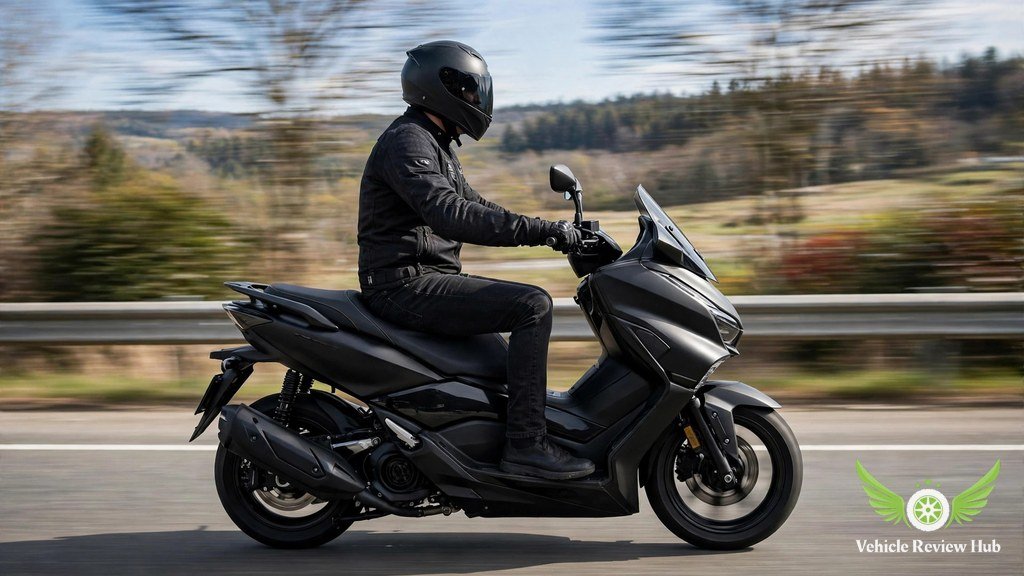
Riding Position, Handling and Low-Speed Maneuverability
Handling is stable rather than sharp, and that is the right priority here. The long 60.6-inch wheelbase, 15-inch front wheel, and 26.5-degree rake all push toward straight-line composure, and the XMAX tracks confidently at freeway speeds where smaller scooters feel busy. The suspension is softly tuned: it absorbs city potholes well but feels underdamped if pushed hard on a twisty road. That is a fair trade for a commuter, and this Yamaha XMAX review accepts it as such. Low-speed maneuverability is better than the dimensions suggest: the steering lock is generous, the CVT throttle response is gentle at small openings, and the absence of a clutch means one less thing to manage in stop-and-go traffic. New riders should still respect the weight, but the low seat and balanced feel make the XMAX easy to manage at walking pace, this Yamaha XMAX review concludes.
City Riding, Highway Comfort and Two Full-Face Helmet Storage
Around town, the XMAX is in its element. The CVT makes traffic painless, the underseat storage means no top case for daily errands, and fuel economy — Yamaha estimates 73 mpg, with owners typically reporting 68–72 mpg mixed — keeps running costs low. On the highway, the fairing and windscreen do real work: wind protection is good for a scooter, the engine sits comfortably at freeway speeds, and the seat stays comfortable well beyond an hour. The top-speed and acceleration results from independent tests are covered in our performance analysis, and this Yamaha XMAX review’s short version is that the XMAX holds freeway pace without strain. For a daily rider, this Yamaha XMAX review argues that single feature can matter more than any specification on paper.
For a long-term owner’s perspective, the video below is a 2021 review of a 2018 XMAX after three years of riding. It predates the 2023 redesign, so the TFT and electric windscreen do not feature, but the riding, storage, and ownership impressions carry over to the current bike:
Yamaha XMAX Review: Pros, Cons and Verdict
After weighing the specifications, the price history, and the ownership picture, this Yamaha XMAX review lands in a clear place: the XMAX is one of the best all-round commuters Yamaha sells in the United States.
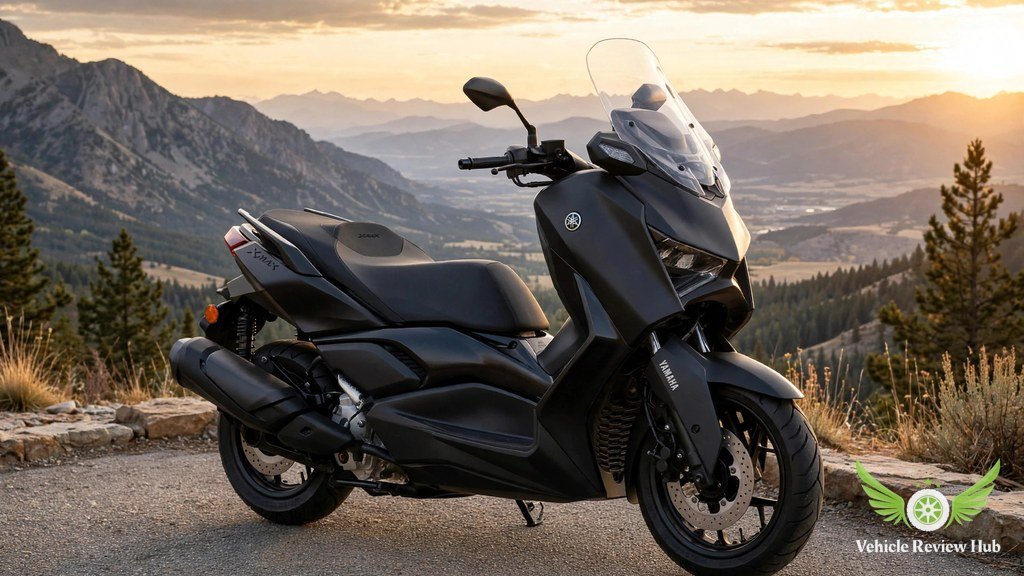
Main Advantages and Limitations of the Yamaha XMAX
Advantages: highway capability from a 292cc engine; fully automatic CVT with no clutch or gears; underseat storage for two full-face helmets; 73 mpg Yamaha estimate with a 3.4-gallon tank for roughly 248 miles of range; TFT with Y-Connect and Garmin from 2023; electric windscreen, USB-C, and integrated panel from 2025; a low 31.3-inch seat on a stable, planted chassis, this Yamaha XMAX review summarizes.
Limitations: only one color (Midnight Black) for 2025–2026; a 1-year warranty that is short by car standards; Yamaha USA publishes no horsepower figure, so comparisons rely on European figures and independent tests; softly tuned suspension is comfort-first rather than sporty; and at 397 pounds, it is heavier than smaller scooters to manage at a standstill. This Yamaha XMAX review lists them plainly.
Who Should Consider the Yamaha XMAX Over Smaller Scooters?
Choose the XMAX over a smaller scooter if your riding regularly includes freeway miles, a passenger, or a week’s commuting between fill-ups. Riders whose trips stay within city limits may be better served by a smaller Yamaha such as the Yamaha MT-03 at $4,999, or by a small Honda scooter. If you want more power and presence, the step up is substantial: Suzuki’s Burgman 400 costs $8,799 for 2025, about $2,400 more than the XMAX, and BMW’s C 400 GT sits at $8,445. The verdict of this Yamaha XMAX review is simple: at $6,399, the 2026 XMAX is the sweet spot of Yamaha’s scooter range — big enough for real roads, simple enough for every day.
Frequently Asked Questions
These are the questions buyers ask most often about the Yamaha XMAX, answered directly from the facts covered in this Yamaha XMAX review.
What is the Yamaha XMAX?
The Yamaha XMAX is a 292cc maxi-scooter sold in the United States since the 2018 model year, with a fully automatic CVT, a 31.3-inch seat, underseat room for two full-face helmets, and standard traction control and ABS.
How much does a new Yamaha XMAX cost?
The 2026 Yamaha XMAX costs $6,399 in Midnight Black, plus destination — dealer listings put destination at around $650. The 2025 model cost $6,299, the 2024 model $6,199, and the 2023 redesign year $6,099, up gradually from the $5,599 launch price of 2018, this Yamaha XMAX review notes.
Is the Yamaha XMAX good for highway riding?
Yes. The 292cc engine, long 60.6-inch wheelbase, 15-inch front wheel, and full fairing make the XMAX stable and comfortable at freeway speeds, including with a passenger. Independent tests put its top speed around 89 mph, ample for US freeway traffic, and this Yamaha XMAX review covers the full test picture in our performance analysis.
What is the Yamaha XMAX’s fuel economy and range?
Yamaha estimates 73 mpg for the current XMAX, and owners typically report 68–72 mpg in mixed riding. With a 3.4-gallon tank, that works out to roughly 230–248 miles between fill-ups, this Yamaha XMAX review calculates, depending on freeway use.
How much storage does the Yamaha XMAX have?
The underseat compartment holds two full-face helmets, the XMAX’s standout practical feature, this Yamaha XMAX review finds. There is also a lockable front pocket for a phone and small items, with a 12-volt outlet on 2018–2024 models and a USB-C socket from 2025.
Does the Yamaha XMAX have a TFT display?
Yes, from the 2023 redesign. The XMAX has a 4.2-inch full-color TFT infotainment display paired with a 3.2-inch LCD speedometer, with Y-Connect connectivity and Garmin turn-by-turn navigation via the free StreetCross app. The 2025 update merged the two screens into one integrated panel, this Yamaha XMAX review notes.
Is the Yamaha XMAX fully automatic?
Yes. The XMAX uses a CVT automatic transmission with a V-belt final drive. There is no clutch lever, no foot shifter, and no gears to change — you twist the throttle and ride, with no chain to lubricate or adjust — simplicity this Yamaha XMAX review rates highly.
Does the Yamaha XMAX have traction control and ABS?
Yes, both are standard on every US model year. Traction control limits rear-wheel slip on wet or loose surfaces, and ABS is fitted to the 267mm front and 245mm rear disc brakes. The 2025 update optimized traction-control mapping, but the basic function is unchanged, this Yamaha XMAX review confirms.
What colors does the Yamaha XMAX come in?
The 2026 XMAX comes only in Midnight Black in the United States, as did the 2025 model. Earlier colors included Vivid White, Matte Black, Shadow Gray, Matte Midnight Blue, and Granite Gray.
What changed on the Yamaha XMAX for 2025?
The 2025 update added an electronically adjustable windscreen with about 4 inches of stepless travel, an integrated TFT and LCD instrument panel with updated backlighting, a USB-C socket, a lighter muffler, a redesigned front end with integrated turn signals, and optimized traction-control mapping. The engine and chassis were unchanged, this Yamaha XMAX review stresses.
How does the Yamaha XMAX compare to the Suzuki Burgman 400?
The Burgman 400 is bigger, heavier, and more expensive — $8,799 for 2025 against the XMAX’s $6,299 that year — with a 400cc engine and more presence. The XMAX counters with a lower price, lighter weight, better fuel economy, and a more modern TFT and connectivity package. For daily commuting, this Yamaha XMAX review rates the XMAX the better value; the Burgman suits riders prioritizing size and touring comfort.