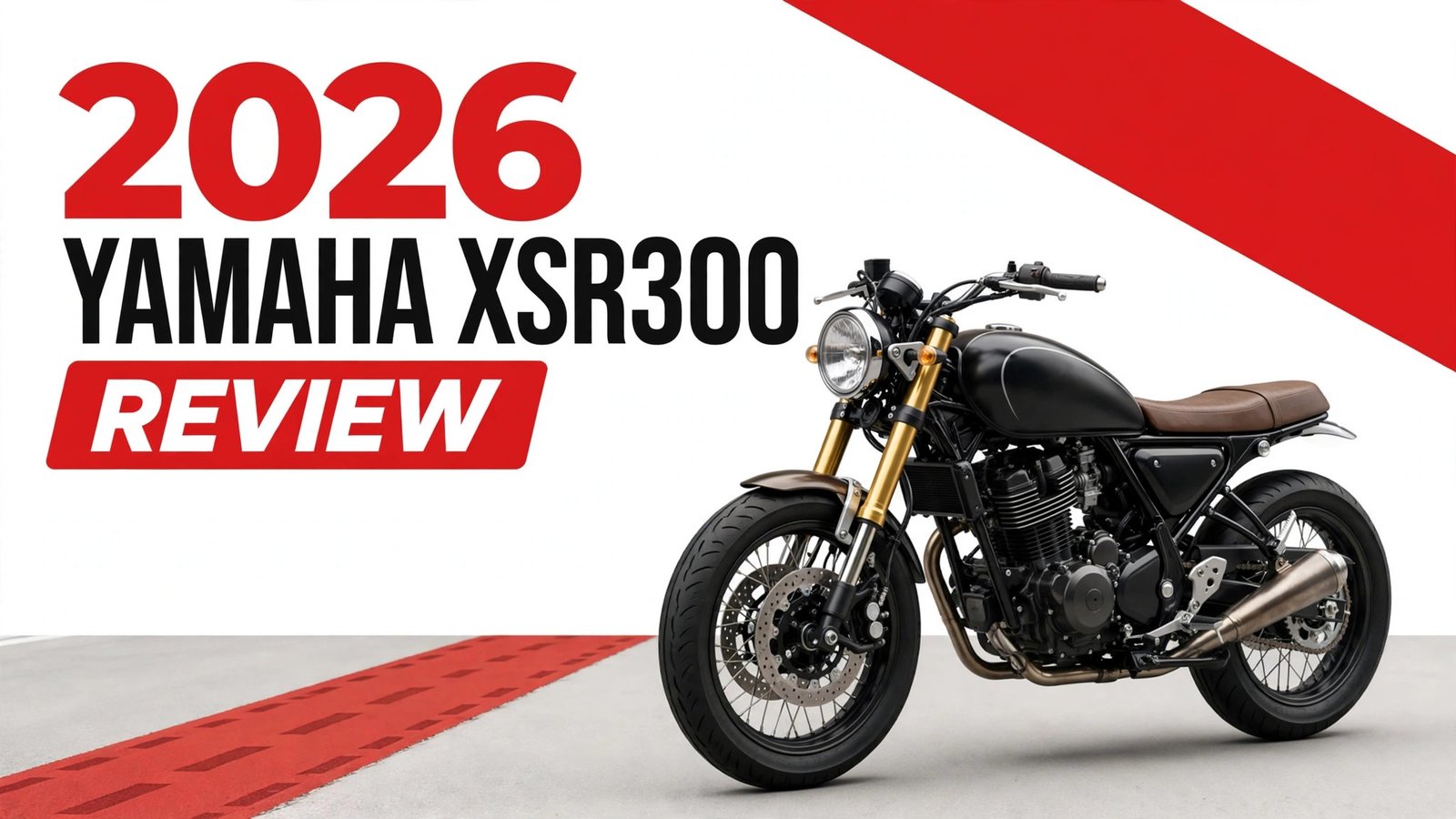
First, the direct answer this Yamaha XSR300 review exists to give: the Yamaha XSR300 does not exist. Yamaha has never listed, priced, built, sold, or tested it in any market. Every price, spec sheet, road test, and listing under this name traces to a render, a copied spec page, a mislabeled bike, a custom build, or a scam. This Yamaha XSR300 review explains what the name actually refers to and what you should buy instead.
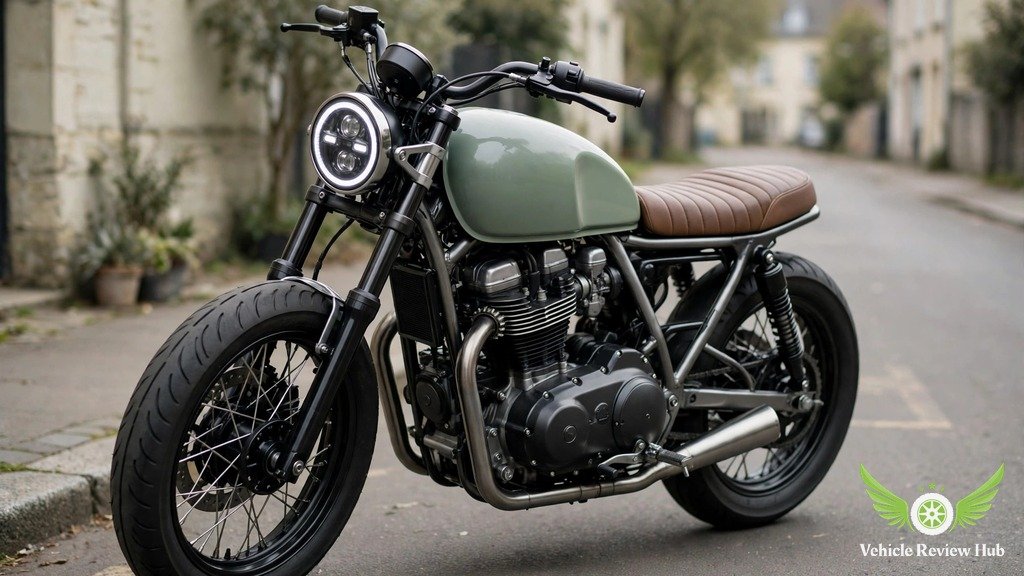
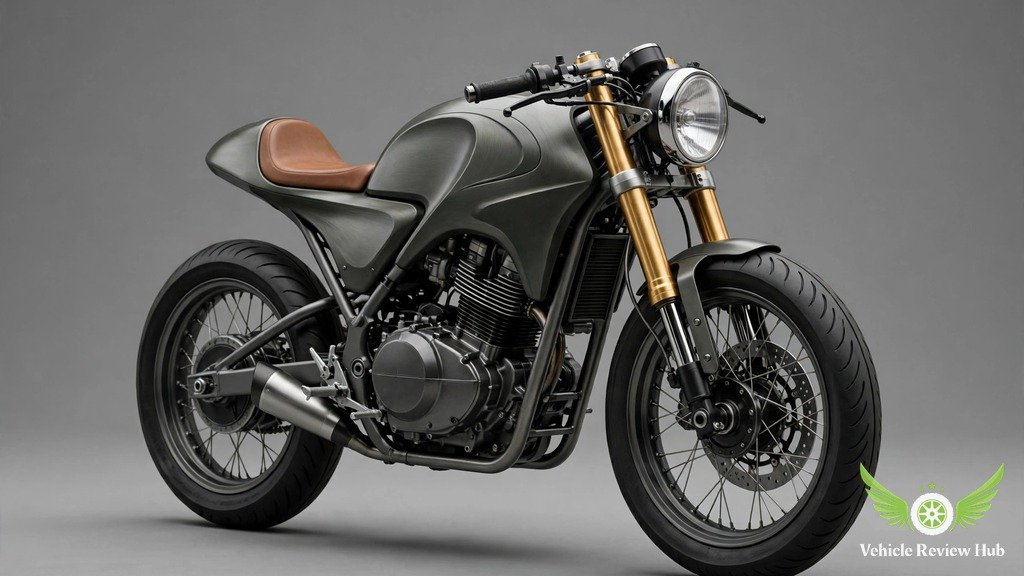
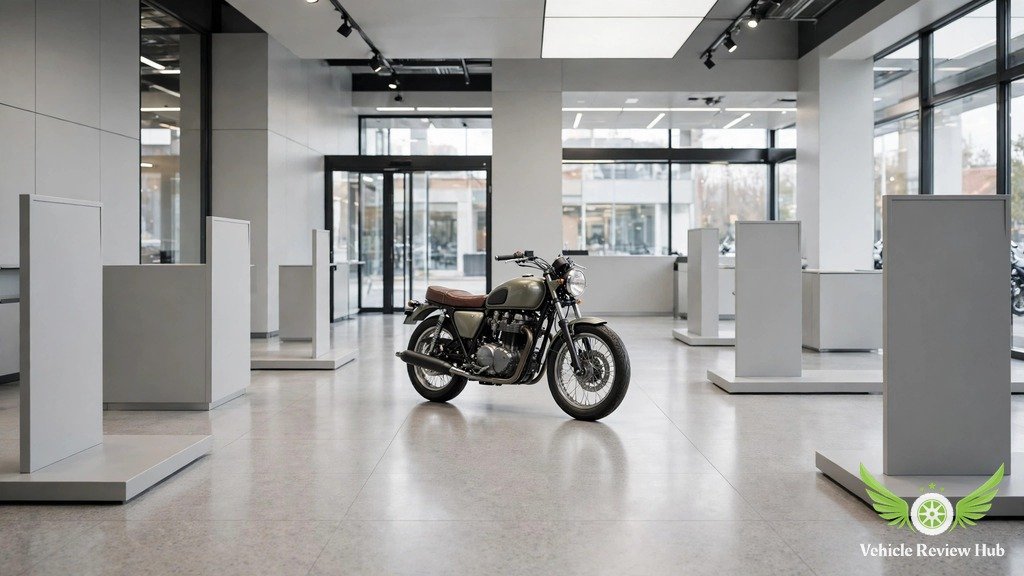
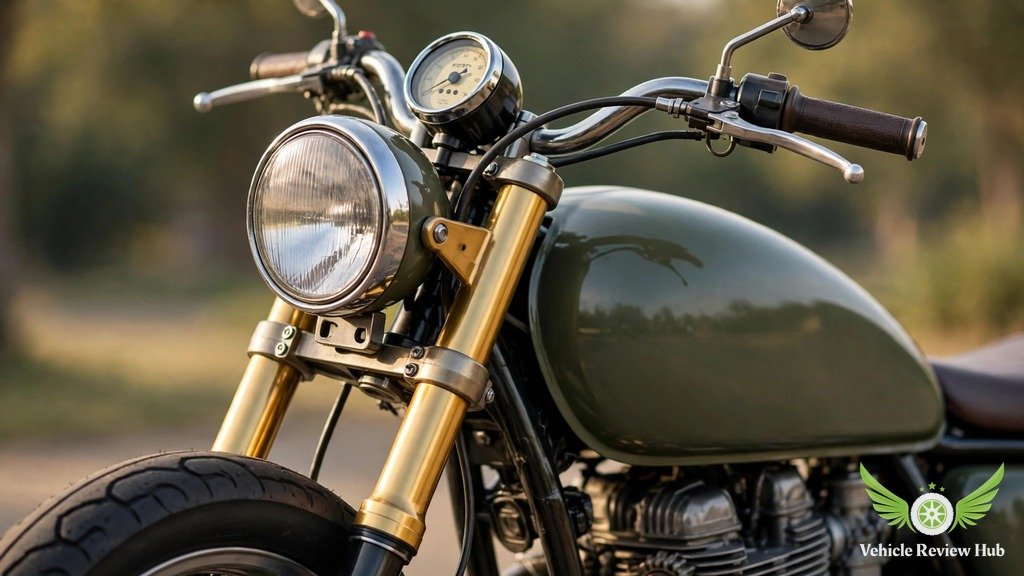
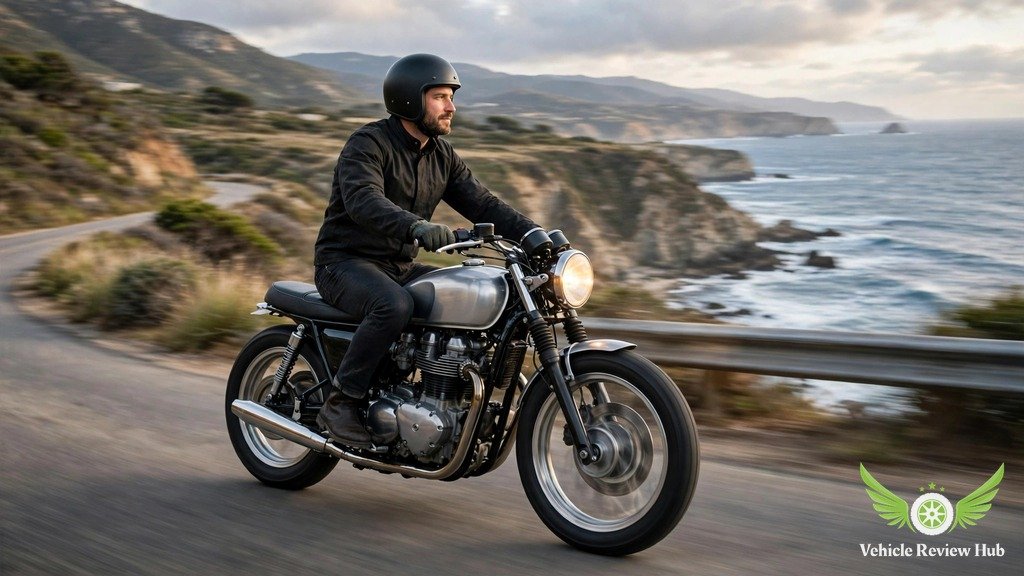
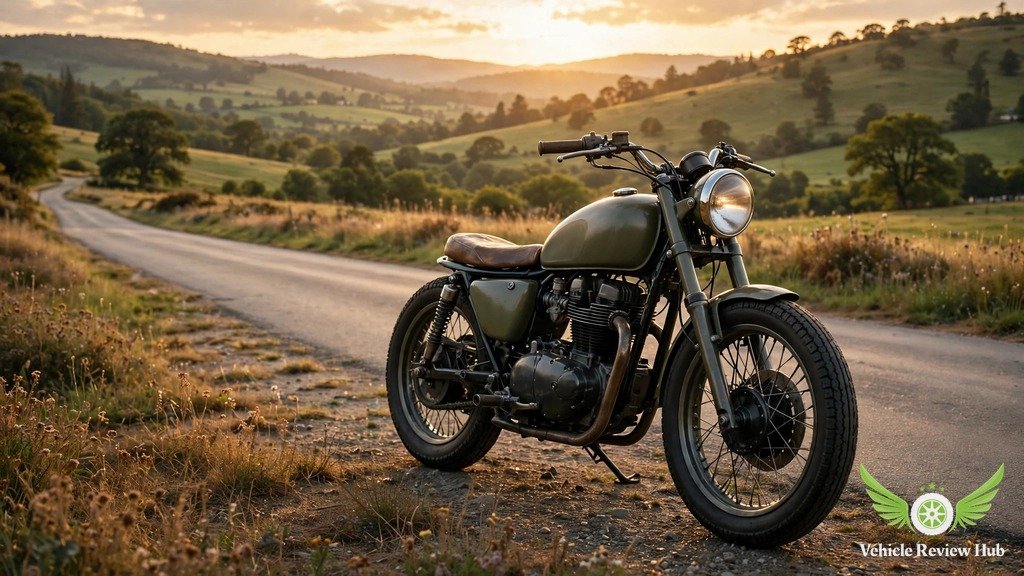
One warning before we go further, so nothing in this Yamaha XSR300 review misleads you: every image here is an illustrative render, not a photograph of a real XSR300. There is no real XSR300 to photograph. The pictures show what a small retro Yamaha in this style could look like. They are not product photos.
Yamaha XSR300 Overview and Model-Year Updates
There is no model-year history to report in this Yamaha XSR300 review. A real motorcycle accumulates model years, price changes, and recall records. The XSR300 has none of those, because Yamaha never put it into production.
Does the Yamaha XSR300 Exist? What Yamaha Global Actually Lists
No. This Yamaha XSR300 review found no XSR300 on Yamaha’s global or United States model pages, and no Yamaha press release, manual, or certification filing for it. A real motorcycle leaves a paper trail of announcements, specs, certification, and VIN patterns. The XSR300 has none of these. Its trail is magazine artwork and reporting about that artwork.
XSR Lineup Explained: XSR900, XSR700, XSR155 and XSR125 Only
Yamaha’s real XSR family has exactly four members, and this Yamaha XSR300 review lists them so the gap is visible. The XSR900 (United States, 890cc triple) and XSR700 (United States, 689cc twin) are covered in our XSR900 review and XSR700 review. Below them sit the real XSR155 and XSR125. There is no 300 in it.
| Model | Real motorcycle? | Engine | Where it is sold |
|---|---|---|---|
| Yamaha XSR900 | Yes | 890cc triple | USA and other markets |
| Yamaha XSR700 | Yes | 689cc twin | USA and other markets |
| Yamaha XSR155 | Yes | 155cc single | Asia and Latin America |
| Yamaha XSR125 | Yes | 125cc single | Europe |
| Yamaha XSR300 | No — render only | No bike, no engine | Nowhere |
| Family total | Four real models | — | No 300 in any market |
Yamaha XSR300 Rumours, Renders and Specifications Claims
Everything published about an XSR300 comes from two waves of artwork, and this Yamaha XSR300 review traces both Neither wave involved Yamaha announcing a motorcycle.
Young Machine 2016 Render and the RD350 Successor Story
The original story, this Yamaha XSR300 review found, dates to 2016, when Japanese magazine Young Machine published a rendering of a retro-styled cafe racer and called it the Yamaha XSR300, with a smaller XSR250 for certain Asian markets. Indian Autos Blog reported it at the time. The same report stated the point that matters most: Yamaha had not officially confirmed the motorcycle. Read the original Young Machine XSR300 rendering coverage, credited to Young Machine via TMCBlog.
Young Machine’s render came wrapped in a second story: that Yamaha would revive the legendary RD350 with this bike. The RD350 is a genuine cult machine: Japan 1973, India 1983–1989. ZigWheels reported the suggestion that the XSR300 could carry that legacy, in its RD350 successor report. But a magazine suggesting a name is not a manufacturer confirming a product, and this Yamaha XSR300 review notes that Yamaha has confirmed nothing in the decade since.
A later wave of artwork, this Yamaha XSR300 review found, kept the idea alive. Indonesian designer Julak Sendie Design drew XSR250 and XSR300 renders based on the real XSR155. BikeDekho presented them as an independent designer’s work, not a Yamaha project, in its Julak Sendie XSR300 renders article. ZigWheels also covered a separate 2020 render set from Iwanbanaran, stating plainly that the XSR300 was “still far from reality” in its XSR300 renders report. Honest coverage always says “render.”
Why Aggregator Spec Pages Copy MT-03 and R3 Figures as XSR300 Specs
If the bike never existed, why do its specification pages look detailed? Because they are MT-03 and YZF-R3 figures with the name changed. This Yamaha XSR300 review compared the circulating numbers against real MT-03 platform data, and they match exactly: the 321cc twin, 42 PS and 29.6 Nm outputs, six-speed gearbox, and diamond frame all come from the R3 and MT-03 family. Aggregator sites generate pages for plausible model names, fill them with the closest platform’s numbers, and never disclose the substitution.
Spot a copied page with three checks, and this Yamaha XSR300 review recommends all three. First, look for a Yamaha source link; a copied page points to other aggregators or nothing. Second, look for a price with a market attached. Third, look for a test by a named journalist; the XSR300 has none. A page failing all three checks is a mirror of a rumour, not a source.
| What you see online | What it actually is |
|---|---|
| Young Machine 2016 “XSR300” image | Magazine render, never a Yamaha announcement |
| Julak Sendie XSR300 renders | Independent artwork based on the XSR155 |
| XSR300 “spec sheet”, 321cc, 42 PS | MT-03 and R3 figures, relabeled |
| XSR300 “for sale” listing | Mislabeled bike, custom build, or scam |
| XSR300 road test | No test exists — no bike exists |
Yamaha XSR300 Price and Market Availability
Price is where the story falls apart fastest, and this Yamaha XSR300 review is blunt: there is no price because there is nothing to price. A price is a manufacturer’s statement for a market and model year; the XSR300 has none.
Why There Is No XSR300 Price in Any Market
Search for an XSR300 price, as this Yamaha XSR300 review did, and you will find numbers, but none survives scrutiny. Quoted figures are 2016 speculation, copied MT-03 prices, or pricing-model inventions. None names a Yamaha price list, dealer bulletin, or launch announcement, because none exists. A price without a source is not a price. It is a guess wearing a currency symbol.
Contrast that with a real price ladder. The table below gives the MT-03’s United States MSRP by year, and every figure is MT-03 platform data, not XSR300 data. If someone quotes you an XSR300 price, ask which Yamaha price list it came from. This Yamaha XSR300 review recommends asking that question every time.
| Model year | MT-03 US MSRP (platform data, not XSR300 data) |
|---|---|
| 2020 | $4,599 |
| 2021 | $4,599 |
| 2022 | $4,799 |
| 2023–2026 | $4,999 |
| XSR300, any year | No price — the model does not exist |
Is the Yamaha XSR300 Available in the USA?
No. The XSR300 is not available in the United States or anywhere else, as this Yamaha XSR300 review confirms. Yamaha’s United States XSR range is the XSR900 and the XSR700. There is no XSR300 to order, because importing a new model requires manufacturer certification and a real vehicle. A render cannot be imported, and a mislabeled MT-03 imported under its own name is still an MT-03.
United States buyers should be careful with marketplace listings, and our XSR300 buying guide walks through the checks. A listing calling a motorcycle an XSR300 while showing MT-03 bodywork, an R3 fairing, or XSR155 proportions is mislabeled. A genuine motorcycle has a VIN decoding to a real model and a matching title. The XSR300 has none of those, so treat any listing using the name as a reason to walk away.
Yamaha XSR300 Design, Features and Technology Discussion
With no motorcycle to describe, this section of the Yamaha XSR300 review keeps two things apart: what the renders show (artwork) and what fans expect (MT-03 platform speculation).
What the Renders Show and Why They Are Not Real Product Photos
Across both render waves, this Yamaha XSR300 review notes, the imagined XSR300 follows the XSR formula faithfully. The Young Machine render showed a cafe racer form with the bigger XSR bikes’ headlamp, taillamp, tank, seat, and radiator cover, plus an R25 and R3 exhaust canister. The Julak Sendie renders showed a muscular tank, gold inverted fork, linked monoshock, and the faired bikes’ alloy wheels. The 2020 renders showed a flat bench seat, round headlamp and tail light, high bars, and punched body panels.
But, as this Yamaha XSR300 review stresses, a render is not a product photo: no number plate, dealer background, rider, road grime, or production details like wiring runs or warning labels. They show one angle in perfect light. Real product photos come with a launch event, a press kit, multiple angles, a specification sheet, and a price. The XSR300 renders came with a magazine caption and a question mark. A single studio-style drawing is an idea, not a product.
Features Fans Expect From the MT-03 Platform, Labelled as Speculation
What would a real XSR300 offer if Yamaha built one? Nobody knows, but fans reasonably expect it would borrow the MT-03 platform, since every render and rumour points there. The following expectations are speculation, not XSR300 data, and this Yamaha XSR300 review labels them as such. On the MT-03 platform, a retro version would likely use the 321cc twin shared with the YZF-R3, six-speed gearbox, steel diamond frame, and single front disc with ABS. Those are MT-03 platform data, not XSR300 data.
The rest of the expectation list, this Yamaha XSR300 review notes, follows the same rule. MT-03 platform data includes a 373-pound wet weight, 30.7-inch seat, 54.3-inch wheelbase, and 3.7-gallon tank, plus an LCD display every United States model year, and Y-Connect, USB-A, and an assist-and-slipper clutch from 2025 onward. Verify those figures on Yamaha’s own MT-03 specifications page. A retro version might not keep them all. Fans also hope for a round headlamp, teardrop tank, and bench seat. Those hopes are reasonable, but they are still hopes, not specifications.
Yamaha XSR300 Riding Experience and Comfort Expectations
No one has ridden an XSR300, so this section of the Yamaha XSR300 review contains no riding impressions — only a labeled MT-03 platform proxy, plus the closest real XSR you can watch being ridden.
MT-03 Platform Riding Experience as a Labelled Proxy, Not XSR300 Testing
Start, as this Yamaha XSR300 review does, with what is documented: MT-03 platform data, not XSR300 data, describes a light, friendly twin at 373 pounds wet, with a low 30.7-inch seat and compact 54.3-inch wheelbase. Cycle World measured 37.07 rear-wheel horsepower at 10,590 rpm and 20.22 pound-feet at 9,010 rpm on a 2020 MT-03; factory output is widely reported as 41.4 horsepower at 10,750 rpm and 21.8 pound-feet at 9,000 rpm. Official platform fuel economy is 56 mpg for 2020–2024 and an estimated 62 mpg for 2025–2026, with a 3.7-gallon tank.
What would that platform feel like in retro clothing? That is expectation, not experience, and this Yamaha XSR300 review labels it as such. A retro version would likely trade the MT-03’s bars for a retro bar, add a bench-style seat, and keep the same light steering and modest power: an easy, unintimidating ride. None of this is a test result.
The video below, included in this Yamaha XSR300 review, shows a review of the genuine XSR155, the smallest motorcycle in Yamaha’s actual XSR range. It is not an XSR300, because no XSR300 exists to film.
Why No Journalist Has Ever Road-Tested an XSR300
Road tests require a motorcycle, and, as this Yamaha XSR300 review notes, the XSR300 has never provided one. Press launches, fleet loans, and dealer demonstrators are how journalists get motorcycles, and Yamaha has never supplied an XSR300 through any of those channels. That is why every “XSR300 review” online is a discussion of renders, a relabeled MT-03 or R3 review, or an automated page with no ride behind it.
The absence of testing, this Yamaha XSR300 review notes, also means no XSR300 reliability record, no long-term ownership data, and no verified performance figure. Quoted XSR300 figures like 0–60 in 5.11 seconds and a 108 mph top speed come from a MotoStatz test of a non-United States motorcycle with an aftermarket exhaust. They are MT-03 platform-adjacent data, not XSR300 data and not a stock United States test. Quoting them as XSR300 results would be mislabeling, and this Yamaha XSR300 review exists to stop exactly that.
Yamaha XSR300 Review: Pros, Cons and Verdict
A verdict on a nonexistent motorcycle feels strange, but the verdict in this Yamaha XSR300 review is not about a motorcycle. It is about an idea,
Advantages of the Idea and Limitations of a Model That Does Not Exist
The idea has real advantages, and this Yamaha XSR300 review does not pretend otherwise. A small retro Yamaha would fill the gap between the 155 and the 700. The renders are attractive, the MT-03 platform is proven and affordable, and a retro version would likely be light, easy, and cheap to run.
The limitations, this Yamaha XSR300 review finds, are absolute and outweigh the idea’s appeal for any buyer today. You cannot buy, finance, insure, order parts for, or get warranty support for a motorcycle that does not exist. Our XSR300 reliability coverage explains why that absence matters, and our XSR300 performance coverage separates platform numbers from myth. A motorcycle you cannot buy has no pros as a purchase, however good it looks in a drawing.
Who Is Waiting for an XSR300 and What They Should Buy Instead?
Three groups of riders, this Yamaha XSR300 review finds, are waiting for this bike, and each has a real Yamaha to buy today. If you want the retro look above all, buy the XSR700 or XSR900: both are real, sold in the United States, and deliver the family styling with genuine performance. Yamaha’s own XSR900 model page and XSR700 specifications page confirm both are current production models. If you want the small, light, affordable twin the renders promised, buy the MT-03 itself at its current $4,999 United States MSRP, covered in our MT-03 review.
The verdict of this Yamaha XSR300 review is simple: stop waiting for a motorcycle Yamaha has never announced, stop paying premiums for borrowed-name listings, and buy the real motorcycle matching the reason you wanted it. Ten years of Yamaha silence is the answer; the smartest move is to enjoy the real XSR family instead.
Yamaha XSR300 Review: Frequently Asked Questions
This Yamaha XSR300 review deals with a rumour, not a motorcycle, so its questions differ. All answers follow one rule: if Yamaha has not said it, built it, or sold it, it is not presented as fact.
Does the Yamaha XSR300 exist?
No. This Yamaha XSR300 review found Yamaha has never listed, announced, built, or sold an XSR300 in any market. The name comes from renders and fan artwork, not Yamaha.
Is there a Yamaha XSR300 price?
No. This Yamaha XSR300 review found no XSR300 price in any market or currency, because there is no motorcycle to price. Quoted numbers are speculation or copied MT-03 figures; none traces to a Yamaha price list.
Can I buy a Yamaha XSR300 in the USA?
No. The XSR300 is not sold in the United States or anywhere else, as this Yamaha XSR300 review confirms. Yamaha’s United States XSR range is the XSR900 and the XSR700.
What is the Young Machine XSR300 render?
It is a 2016 rendering, this Yamaha XSR300 review notes, by Japanese magazine Young Machine of a retro-styled cafe racer, presented as a possible XSR300 and a smaller XSR250 variant. Yamaha never confirmed it as a production plan.
Why do some websites list XSR300 specifications?
Because, as this Yamaha XSR300 review found, aggregator sites generate pages for plausible model names and fill them with the closest real platform’s figures. Here the figures are MT-03 and R3 data, relabeled with the XSR300 name.
Is the XSR300 the successor to the RD350?
No. The RD350 successor story, this Yamaha XSR300 review notes, was a suggestion in Young Machine’s coverage, not a Yamaha announcement. Yamaha has never announced a four-stroke retro twin as its successor.
What is the closest real motorcycle to an XSR300?
The MT-03 is closest mechanically, this Yamaha XSR300 review finds,, as the render platform, with the 321cc twin. The XSR155 is closest in styling as a genuine XSR family member — though a 155, not a 300.
Has anyone ever ridden or tested an XSR300?
No. This Yamaha XSR300 review found no journalist has ever road-tested an XSR300. Any claimed test describes a render or relabeled MT-03/R3 test.
Are XSR300 listings on marketplace sites real?
No listing using the XSR300 name, this Yamaha XSR300 review found, describes a genuine XSR300. Such listings show mislabeled bikes, custom builds, or scams. Check the VIN and title: a real motorcycle decodes to a real model, and the XSR300 decodes to nothing.
Will Yamaha ever build an XSR300?
Yamaha has never announced plans to build one, and this Yamaha XSR300 review cannot predict a future announcement. Ten years since the first render have brought no announcement, prototype, or filing.
What should I buy instead of waiting for an XSR300?
Buy the XSR700 or XSR900, this Yamaha XSR300 review advises, for genuine XSR retro styling, or buy the MT-03 for the affordable 321cc twin. Both give you a warranty, parts, and resale market.
Is there an XSR300 vs XSR155 comparison?
There is no meaningful comparison, this Yamaha XSR300 review notes, because only one side of it exists. The XSR155 is real, with real specs and reviews. The XSR300 has none, so any “comparison” is just the XSR155 next to a drawing.