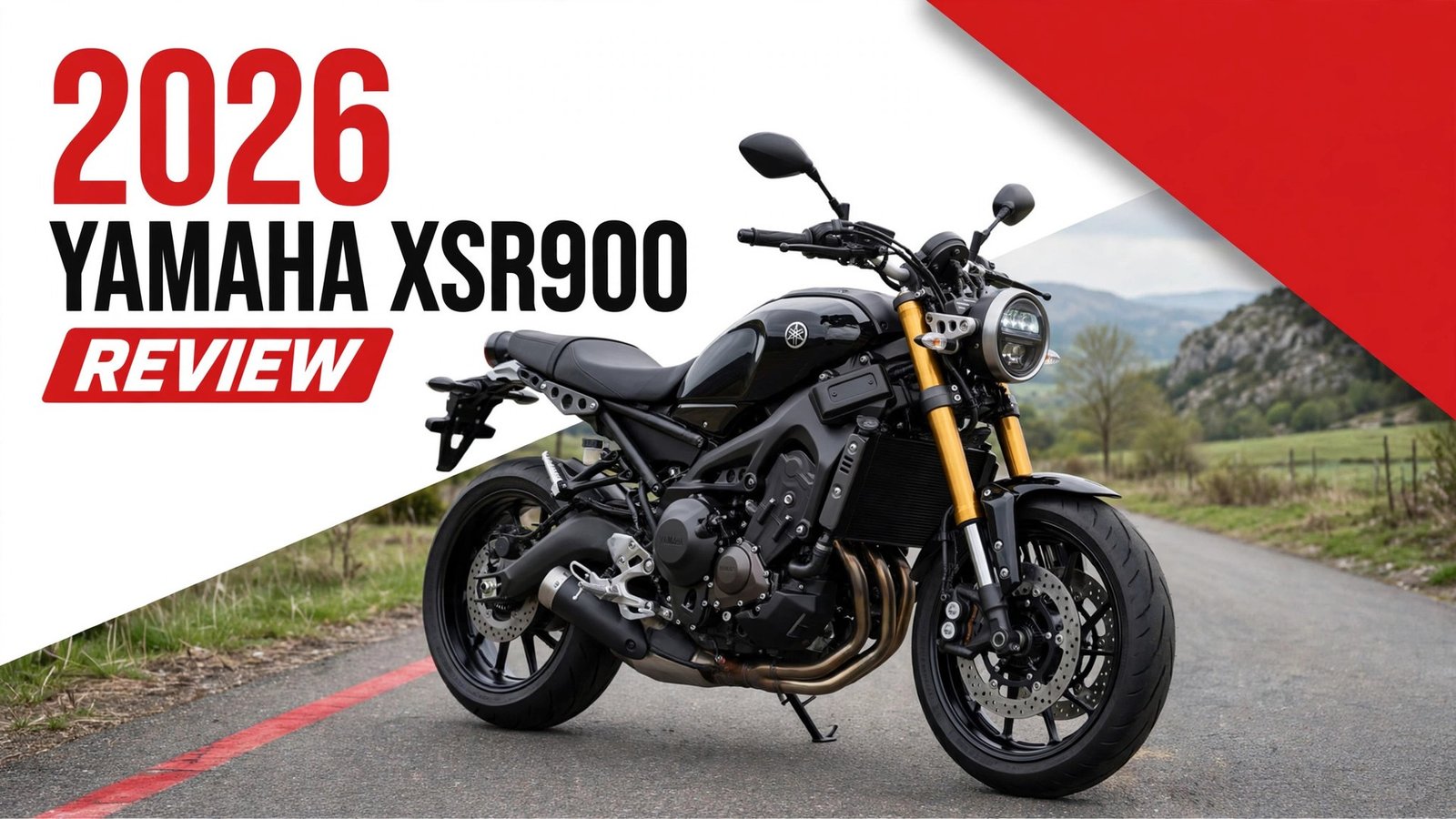
The Yamaha XSR900 is Yamaha’s retro-styled middleweight with a thoroughly modern heart, and this Yamaha XSR900 review answers the questions buyers ask first: what it costs, what its 890cc triple delivers, and whether the heritage look is worth choosing over the sharper MT-09. This Yamaha XSR900 review covers the 2022 redesign that made the bike what it is today, the 2025 electronics and TFT update, and the 2026 price and colours, with every figure tied to a published source. The short version: at $10,599 for 2026, this Yamaha XSR900 review finds a premium retro roadster that trades a little outright aggression for a lot of character, and the trade is an easy one to defend.
Yamaha XSR900 Overview and Model-Year Updates
The XSR900 has always been the thinking rider’s alternative in Yamaha’s lineup, and this Yamaha XSR900 review traces how it grew from a styling exercise on the old FZ-09 platform into a fully developed motorcycle in its own right. This Yamaha XSR900 review follows three stages: the 2016 launch bike, the full 2022 redesign, and the 2025 technology update that brought the current dashboard and electronics.
What Is the Yamaha XSR900 and Who Is It Designed For?
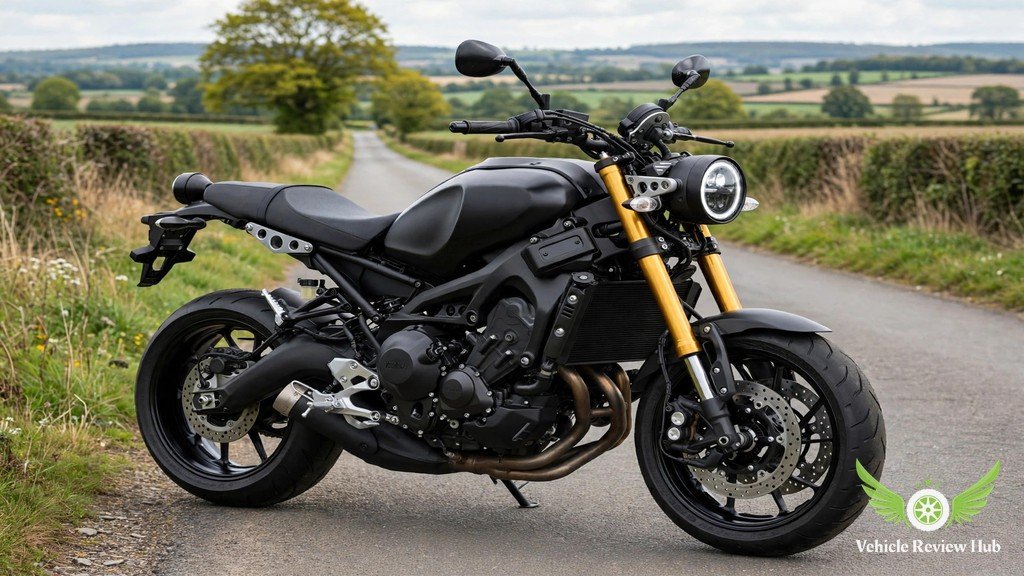
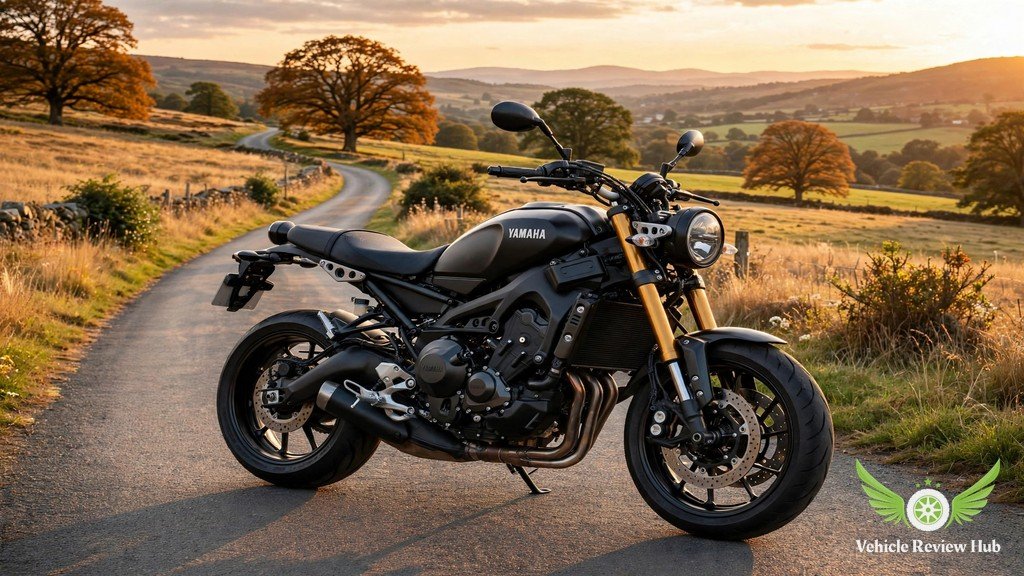
The XSR900 is Yamaha’s Sport Heritage flagship: a naked motorcycle that borrows its engine, frame and electronics from the MT-09 family but dresses them in retro-inspired bodywork with a round LED headlight, a teardrop tank and heritage paint. It is designed for riders who want modern performance without modern-looking bodywork, and this Yamaha XSR900 review rates that positioning as the bike’s whole point. It suits experienced riders, returning riders and customizers — Yamaha even fitted a tubular steel subframe on the 2022 bike to ease tail modifications. It is not a beginner bike, and this Yamaha XSR900 review is plain about that: 117 hp in a 425 lb chassis demands respect, whatever the gentle retro looks suggest. The standard MT-09 review covers the sharper, more aggressive sibling for riders who prefer that character.
Launched 2016 on the FZ-09 Platform, 2022 Redesign and 2025 Update Explained
The original XSR900 arrived in the USA in March 2016 on the FZ-09 platform at $9,490, or $9,990 in 60th Anniversary Yellow. It used the 847cc FZ-09 triple, weighed 430 lb wet, and carried a 32.7-inch seat and 3.7-gallon tank. Mechanically it was of its time: no IMU, no lean-sensitive aids, no cruise control, no TFT, no quickshifter, round digital instrument, conventional ABS. Then came the 2025 update: 5-inch TFT, new fully adjustable KYB rear shock, third-generation quickshifter, Back Slip Regulator, variable speed limiter. The 2026 bike carries that package forward unchanged apart from colours and price, which this Yamaha XSR900 review covers in the price section below.
Yamaha XSR900 Engine and Specifications
The engine is the reason the XSR900 works as more than a styling exercise, and this Yamaha XSR900 review puts its numbers in context before anything else. This Yamaha XSR900 review also settles the specification figures buyers argue about, so the rest of the article can use them without hedging.
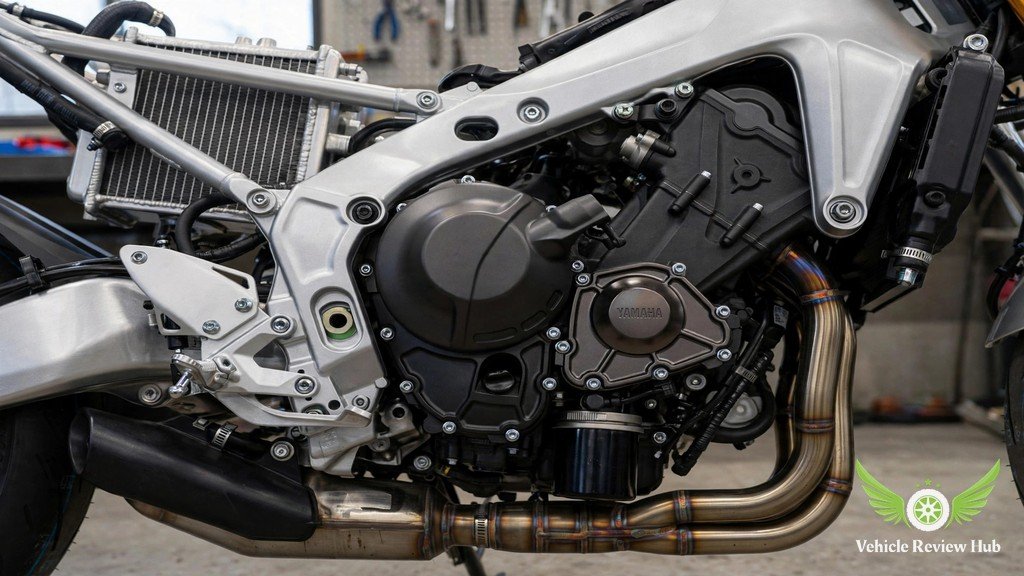
890cc CP3 Engine, Torque and Six-Speed Transmission
The current XSR900 uses Yamaha’s 890cc CP3 engine: liquid-cooled DOHC inline triple, crossplane crankshaft, 78.0 x 62.1mm, 11.5:1 compression, YCC-T ride-by-wire. Yamaha’s European figures claim 117 hp at 10,000 rpm and 68.6 lb-ft at 7,000 rpm, and this Yamaha XSR900 review notes plainly that Yamaha publishes no US horsepower figure, so American buyers should treat the European claim as the factory number, not a US certification. Independent testing backs up the claim: Cycle World’s dyno test measured 105.97 hp at 9,970 rpm and 63.49 lb-ft at 7,030 rpm at the rear wheel. An up-and-down quickshifter has been standard since the 2022 redesign, upgraded to Yamaha’s third-generation unit for 2025, and this Yamaha XSR900 review counts it as one of the bike’s best features: clutchless shifts in both directions that work under acceleration and deceleration alike. The performance write-up covers the figures behind that engine.
Weight 425 lb, Seat Height 31.9 Inches, KYB Suspension and Braking Specifications
At a claimed 425 lb wet, the 2022-on XSR900 is light for its power, and this Yamaha XSR900 review finds that weight is the single number that explains how approachable the bike feels despite its output. Seat height is 31.9 inches, wheelbase 58.9 inches, tank 3.7 gallons, official estimate 49 mpg. Suspension is fully adjustable KYB: 41mm inverted fork (preload, compression, rebound; 5.1 inches) and KYB rear shock (preload, rebound; 5.4 inches). The 2025 bike adds a KYB monoshock with high- and low-speed compression damping and revised linkage. Braking is a pair of 298mm front discs with radial-mount four-piston calipers and a Brembo radial master cylinder, backed by a 245mm rear disc, all with lean-sensitive ABS on 2022-on bikes. Two things this Yamaha XSR900 review states explicitly to prevent confusion: the XSR900 has no Öhlins rear shock, no Stylema calipers and no Smart Key — those are MT-09 SP features, and the MT-09 SP is a different motorcycle with different hardware. Wheels are 10-spoke spin-forged aluminum wearing S22 tires, 120/70ZR17 front and 180/55ZR17 rear. webBikeWorld’s 2023 overview lists the same 425 lb weight, 31.9-inch seat and 3.7-gallon tank.
| Specification | 2022-on Yamaha XSR900 |
|---|---|
| Engine | 890cc liquid-cooled CP3 inline triple, 6-speed |
| Power / torque | 117 hp @ 10,000 rpm / 68.6 lb-ft @ 7,000 rpm (EU claim; no US hp published) |
| Weight / seat / wheelbase | 425 lb wet (claimed) / 31.9 in / 58.9 in |
| Fuel tank / economy | 3.7 gal / 49 mpg official estimate |
| Suspension | KYB 41mm USD fork, fully adjustable, 5.1 in; KYB rear shock, 5.4 in |
| Brakes / tires | Dual 298mm front discs, radial-mount calipers, Brembo master, lean-sensitive ABS; S22 120/70ZR17 + 180/55ZR17 |
Yamaha XSR900 Price and Market Availability
Price is where the XSR900 makes its case most quietly, and this Yamaha XSR900 review gives the full year-by-year ladder rather than a single sticker figure. This Yamaha XSR900 review treats the ladder as the honest way to judge the bike, because a 2022 bike and a 2026 bike are very different motorcycles at very different prices.
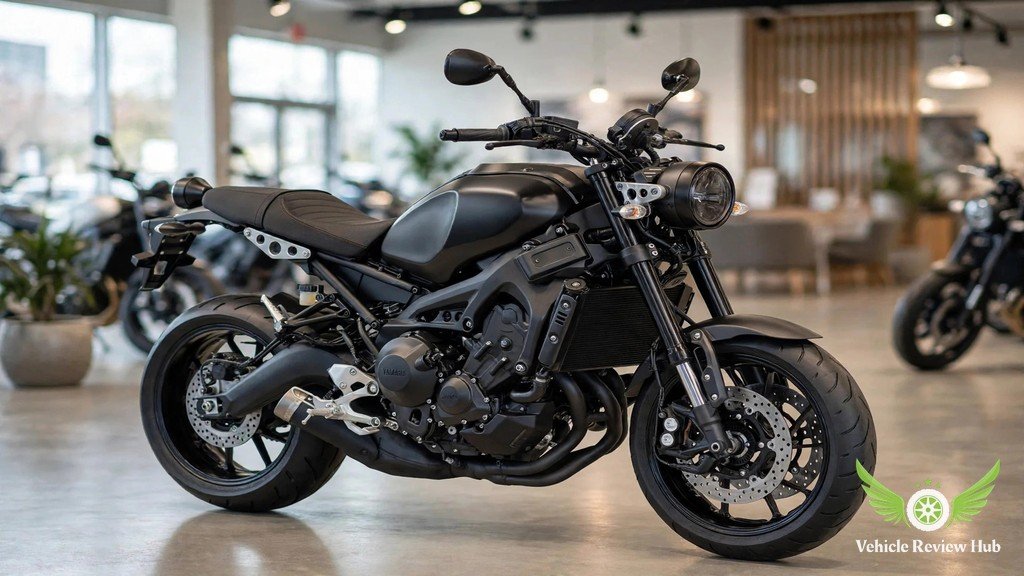
Yamaha XSR900 Price by Year in the USA: 2022 to 2026
The redesigned XSR900 launched for 2022 at $9,999, and this Yamaha XSR900 review notes that price was widely praised at the time as strong value for a bike with a full IMU electronics suite. The 2025 update thus arrived with only a $300 increase over 2024, and 2026 holds the same $10,599 sticker. For context, this Yamaha XSR900 review notes the 2026 MT-09 costs $10,899, so the retro XSR900 currently undercuts its sharper sibling by $300, while the smaller MT-07 sits at $8,599. As with all Yamaha pricing, MSRP excludes destination charges, tax, title and dealer fees, and this Yamaha XSR900 review advises buyers to confirm the out-the-door figure before comparing deals.
| Model year | US MSRP | What changed |
|---|---|---|
| 2022 | $9,999 | Full redesign |
| 2023 | $10,199 | Carried over |
| 2024 | $10,299 | Carried over |
| 2025 | $10,599 | 5-in TFT, new shock, BSR |
| 2026 | $10,599 | Carried over |
Raven and Heritage White Colours for 2026 and Official US Availability
The 2026 XSR900 is available in the USA in Raven and Heritage White at $10,599, arriving at dealers in January 2026. This Yamaha XSR900 review notes the colour story across the redesign era for used buyers: the 2022 bike came in Legend Blue with gold fork legs and gold wheels plus Raven, the 2025 bike added Legend Red alongside Raven Black, and 2026 simplifies the range to Raven and Heritage White. Availability has never been the problem for this model — unlike some limited retro specials, the XSR900 is a regular Yamaha USA model sold through official dealers with a one-year limited factory warranty, and this Yamaha XSR900 review confirms there is no need for grey imports or special orders.
Yamaha XSR900 Design, Features and Technology
Design is where the XSR900 earns its keep, and this Yamaha XSR900 review separates the styling from the electronics because the two changed on different schedules. This Yamaha XSR900 review also warns used buyers about the single most common misdescription: a 2022–2024 bike advertised with 2025 electronics.
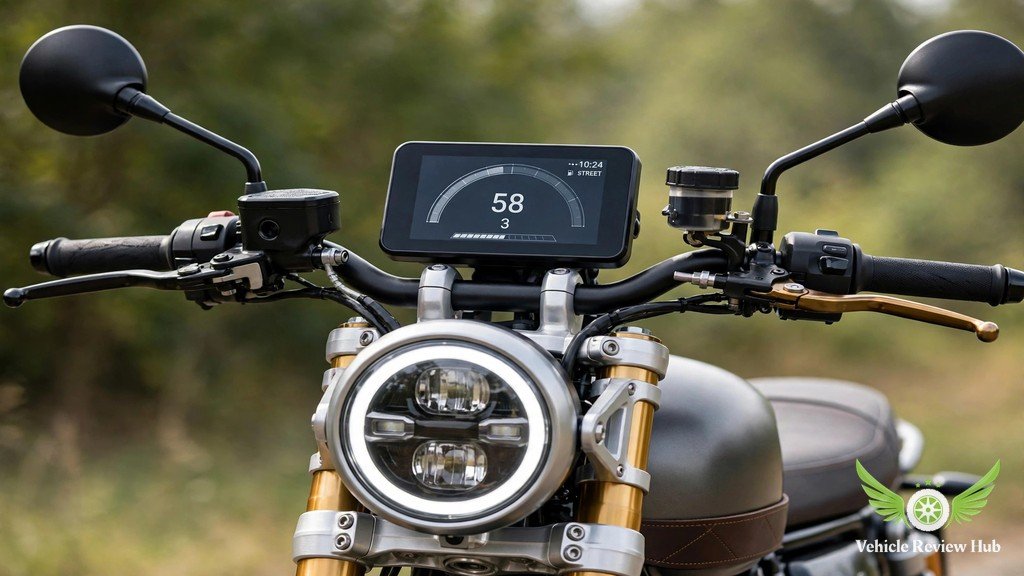
Retro Styling, LED Lighting and TFT Display: 3.5-Inch Then 5-Inch From 2025
The styling follows Yamaha’s Faster Sons idea: teardrop tank with knee cutouts, exposed aluminum frame, bar-end mirrors, machined headlight stays, forged brake pedal and hidden passenger pegs, all under a round LED headlight. The 2022 redesign sharpened that look with 1980s Grand Prix inspiration, drawing on Yamaha’s Sunauto racing colours for the Legend Blue bike, and this Yamaha XSR900 review finds the result ages better than most retro attempts because the detailing is genuine rather than bolted on. The display is where buyers must check the year: 2022–2024 bikes have a 3.5-inch TFT, while 2025-on bikes have a 5-inch TFT with a bespoke XSR900 theme, an emulated analog tachometer and four selectable layouts. Any 2022–2024 bike advertised with a 5-inch display has been modified or misdescribed, and this Yamaha XSR900 review advises treating that claim as a red flag rather than a bonus.
Six-Axis IMU, Cruise Control, Y-Connect and Third-Generation Quickshifter
The 2022 redesign brought a six-axis IMU feeding lean-sensitive traction control, Slide Control, Lift Control and Brake Control with lean-sensitive ABS, each adjustable or switchable off. Cruise control arrived with the same redesign, a comfort feature that still surprises buyers on a retro naked, and this Yamaha XSR900 review counts it as a genuine long-distance asset rather than a gimmick. Yamaha Ride Control offers Sport, Street and Rain modes, plus two customizable modes from 2025. Smartphone connectivity is a 2025 feature, not a 2022 one: the 5-inch TFT pairs with Y-Connect for call alerts and music control, with optional Garmin StreetCross navigation and a dash-mounted USB-C port. The 2025 electronics also add Back Slip Regulator, which limits rear-wheel lockup during aggressive engine braking, and the Yamaha Variable Speed Limiter, which caps top speed at a rider-set figure. The 2025 first look confirms the same update list, including joystick switchgear, self-canceling signals, new seat, new handlebar bend, 14-position Brembo clutch lever and rubber-mounted pegs. TopSpeed’s account of the 2025 update lists the same changes: new five-inch TFT, new switchgear, new quickshifter, updated electronics, new monoshock, new USB port and updated ergonomics.
Yamaha XSR900 Riding Experience and Comfort
On the road, the XSR900 feels like a sports bike that learned manners, and this Yamaha XSR900 review draws on published road tests and owner accounts rather than an invented personal test. This Yamaha XSR900 review finds the riding experience is where the retro-versus-modern argument is settled in the bike’s favour.
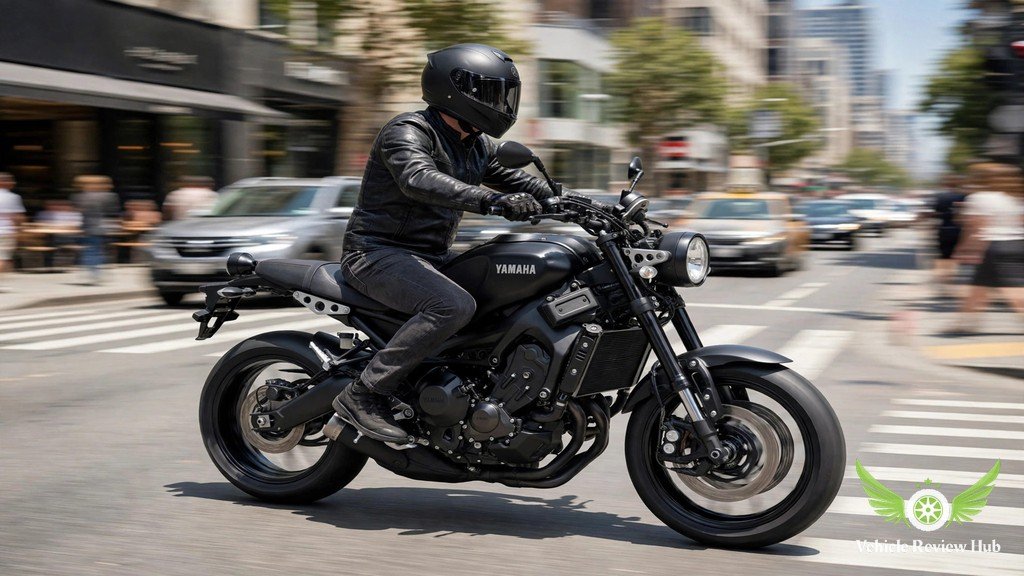
Riding Position, Handling and Low-Speed Maneuverability
The riding position is upright and roomy: wide bars, a 31.9-inch seat and comfort-set footpegs, with the 2025 bike’s revised bend, new seat and rubber-mounted pegs refining the layout. At 425 lb with a low centre of gravity, the bike changes direction easily, and reviewers praise its low-speed manners — filtering, tight turns and parking are where a new owner’s confidence is built, and this Yamaha XSR900 review notes the light clutch and smooth low-rev triple manners help enormously here. Handling is sharper than the retro looks promise: the die-cast frame, longer 58.9-inch wheelbase and stiffer suspension tune give stability without dullness, and the S22 tires grip predictably. Braking matches: the Brembo radial master cylinder and radial-mount calipers give strong, feel-rich stopping with lean-sensitive ABS backup, and this Yamaha XSR900 review rates the brakes as a clear strength. Watch Motorcycle.com’s 2022 first-ride review of the redesigned bike:
City Riding, Highway Comfort and Everyday Practicality
In the city, the XSR900 is in its element: clean low-rev triple pull, quickshifter shifts without clutch work, and an upright, commanding position. Fuel economy is a genuine strength for a 117 hp bike, and this Yamaha XSR900 review separates the figures: Yamaha’s official estimate is 49 mpg with the 3.7-gallon tank, which implies roughly 180 miles of range, while independent testing has recorded lower real-world figures that the performance write-up covers in detail. On faster roads, the bike cruises comfortably at highway speeds, and cruise control earns its keep on long straights, but this Yamaha XSR900 review is plain about the limit: there is no fairing and no windscreen, so sustained high-speed riding brings wind fatigue, and the firm, flat seat divides opinion on longer days. The 2025 seat redesign aims at exactly that complaint, though this Yamaha XSR900 review advises taller riders to test the reach to the bars and the legroom before buying. As everyday transport it is practical within limits: easy to park and cheap to fuel for its class, but luggage options are limited and the retro tail was never designed for touring.
Yamaha XSR900 Review: Pros, Cons and Verdict
Weighing everything above, this Yamaha XSR900 review finds a bike that justifies its price on quality and character but not on value alone. This Yamaha XSR900 review sets out what it does better than its rivals, and where it asks too much.
Main Advantages and Limitations of the Yamaha XSR900
The advantages start with the engine: the CP3 triple’s broad, linear torque makes the bike fast without being frantic, and this Yamaha XSR900 review counts that flexibility as the bike’s best feature. Second is the chassis and electronics package — fully adjustable KYB suspension, six-axis IMU aids, cruise control and a quickshifter — equipment that embarrasses many retro rivals at this price. Third is the styling and finish: machined stays, embossed aluminum underplate and careful detailing give a premium feel the price does not fully explain. Limitations are equally clear. Wind protection is minimal, the seat firm, and the 3.7-gallon tank limits range. Reliability reporting is thin — the oft-quoted owner rating comes from a tiny sample — so this Yamaha XSR900 review treats long-term dependability as encouraging but not proven, and the reliability write-up covers the evidence honestly.
Who Should Consider the Yamaha XSR900 Over the MT-09?
This Yamaha XSR900 review recommends the XSR900 to riders who value character and finish over outright aggression: the rider who wants MT-09 performance in a package that draws compliments at every stop, who likes the idea of a bike that looks at home outside a café and a canyon alike. The MT-09 remains the better pick for riders who want the sharpest handling, the most aggressive ergonomics and the latest naked-bike attitude, and this Yamaha XSR900 review says so plainly rather than pretending the two bikes are interchangeable. The smart buy in this Yamaha XSR900 review is a 2025-on bike: the 5-inch TFT, Y-Connect, third-generation quickshifter and new rear shock justify the premium over earlier bikes, while a 2022–2024 bike is the value pick for riders who do not care about the screen. Overall, this Yamaha XSR900 review rates the XSR900 as the most complete retro middleweight on sale — fast, refined, beautifully finished, and honest about what it is.
Yamaha XSR900 Review FAQs
The questions buyers ask most often, answered from the verified figures above, so this Yamaha XSR900 review stays consistent throughout.
How much does a Yamaha XSR900 cost in the USA?
In this Yamaha XSR900 review, the 2026 bike costs $10,599 in Raven or Heritage White. The ladder runs $9,999 (2022), $10,199 (2023), $10,299 (2024), and $10,599 (2025 and 2026).
What engine does the Yamaha XSR900 have?
The 2022-on bike in this Yamaha XSR900 review uses an 890cc liquid-cooled CP3 inline triple, European-claimed at 117 hp and 68.6 lb-ft. Yamaha publishes no US horsepower figure. The 2016–2021 bike used an 847cc triple.
How much does the Yamaha XSR900 weigh?
The 2022-on bike weighs a claimed 425 lb wet, with a 31.9-inch seat, 58.9-inch wheelbase and 3.7-gallon tank. The 2016 bike weighed 430 lb wet with a 32.7-inch seat.
Does the Yamaha XSR900 have a TFT display?
Yes. The 2022–2024 bikes have a 3.5-inch TFT, while 2025-on bikes have a 5-inch TFT with Y-Connect, Garmin StreetCross navigation and USB-C. Any 2022–2024 bike advertised with a 5-inch display has been modified or misdescribed.
Does the Yamaha XSR900 have cruise control and a quickshifter?
Yes, both standard since the 2022 redesign. Cruise control arrived with the IMU electronics suite, and the up-and-down quickshifter became Yamaha’s third-generation unit for 2025.
What is Back Slip Regulator on the XSR900?
Back Slip Regulator, added for 2025, works with the slipper clutch to limit rear-wheel lockup during aggressive engine braking. The same update added the Yamaha Variable Speed Limiter, which caps top speed at a rider-set figure.
Does the Yamaha XSR900 have Öhlins suspension or Stylema brakes?
No. The XSR900 uses fully adjustable KYB suspension and radial-mount four-piston calipers with a Brembo radial master cylinder. Öhlins, Stylema and Smart Key are MT-09 SP features, not XSR900 features.
Is the Yamaha XSR900 sold in the USA?
Yes. The standard XSR900 is a regular Yamaha USA model sold through official dealers, most recently in Raven and Heritage White for 2026 at $10,599. The XSR900 GP is a separate model not sold in the USA.
How often does the Yamaha XSR900 need servicing?
Yamaha schedules routine service every 4,000 miles on the CP3 platform, with valve-clearance checks at 26,600 miles in US manuals. Confirm the intervals in your own bike’s manual.
Is the Yamaha XSR900 reliable?
Early evidence is encouraging but thin: the oft-quoted owner reliability rating for 2022-on bikes comes from a very small sample of owners, so this Yamaha XSR900 review treats it as a positive sign rather than proof. The reliability write-up covers the evidence, common wear items and recall checks in full.
What are the Yamaha XSR900’s main rivals?
The key rivals are the Kawasaki Z900RS, the Triumph Speed Twin 1200 and the Triumph Trident 660 at the lower end. This Yamaha XSR900 review finds the Yamaha’s case rests on its triple engine, its IMU electronics suite and its price rather than pure heritage appeal.
Who should buy a Yamaha XSR900?
Experienced riders who want modern performance with retro styling, returning riders, and customizers. New riders should look smaller first; riders wanting the sharpest handling should compare the MT-09.