The short answer in this Yamaha YZF-R9 review is that Yamaha finally built the middleweight supersport fans spent years asking for: a street-legal, faired sportbike with the 890cc CP3 triple from the MT-09, a dedicated supersport chassis, and a $12,499 starting price. Announced on October 9, 2024, and in US dealerships from March 2025, the R9 slots between the YZF-R7 and the YZF-R1, and it has already won Cycle World’s Best Sportbike of 2025. This Yamaha YZF-R9 review covers the price by year, the full specifications, the electronics, and what reviewers actually say about riding it.
Yamaha YZF-R9 Overview and Model-Year Updates
Yamaha pitched the R9 as a new breed of performance street bike: true supersport ability without racer commitment. That positioning runs through this whole Yamaha YZF-R9 review, because it explains nearly every engineering choice.
What Is the Yamaha YZF-R9 and Who Is It Designed For?
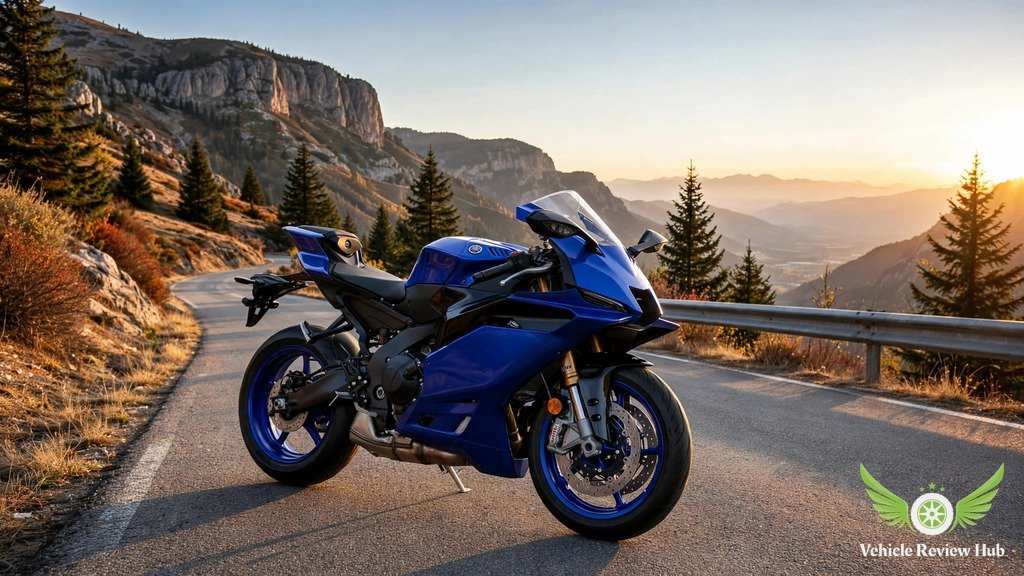
The YZF-R9 is a fully faired, street-legal supersport motorcycle built around Yamaha’s 890cc CP3 inline-triple, with its own Deltabox frame, faired bodywork with winglets, and suspension settings rather than a naked bike’s parts. Yamaha’s launch statement described a machine equally at home on a race circuit and on canyon roads or urban streets, and the riding impressions later in this Yamaha YZF-R9 review back that claim up. Think of the R9 as the answer to the gap left when the YZF-R6 departed the street lineup: it keeps the supersport look and track-day ability but trades peaky four-cylinder power for a triple that pulls hard from low revs, so riders stepping up from a YZF-R7 get a big performance jump without literbike prices. This Yamaha YZF-R9 review treats it first as a street bike you can ride every day.
Announced October 2024, On Sale March 2025 and 2026 70th Anniversary Edition
Yamaha Motor Corporation, USA announced the all-new 2025 YZF-R9 on October 9, 2024, and Yamaha’s announcement confirmed the facts that still define the bike: the 890cc CP3 engine, the dedicated supersport chassis, the full electronics suite, and a $12,499 MSRP, with dealer arrivals from March 2025 in Team Yamaha Blue, Matte Raven Black, and Intensity White/Redline. For 2026 the R9 returns essentially unchanged, as this Yamaha YZF-R9 review notes: Yamaha’s December 2025 release confirms Team Yamaha Blue continues at $12,499 MSRP, joined by a 70th Anniversary Edition in Red and White at $12,899. The anniversary bike is a cosmetic celebration, not a mechanical upgrade, so the choice between 2025 and 2026 comes down to color and availability, and this Yamaha YZF-R9 review found no mechanical running change since the debut.
Yamaha YZF-R9 Engine and Specifications
The engine is the heart of the R9’s appeal, and the chassis numbers explain why it handles the way it does. This section of the Yamaha YZF-R9 review puts the verified figures in one place.
890cc CP3 Engine, Six-Speed Gearbox and Third-Generation Quickshifter
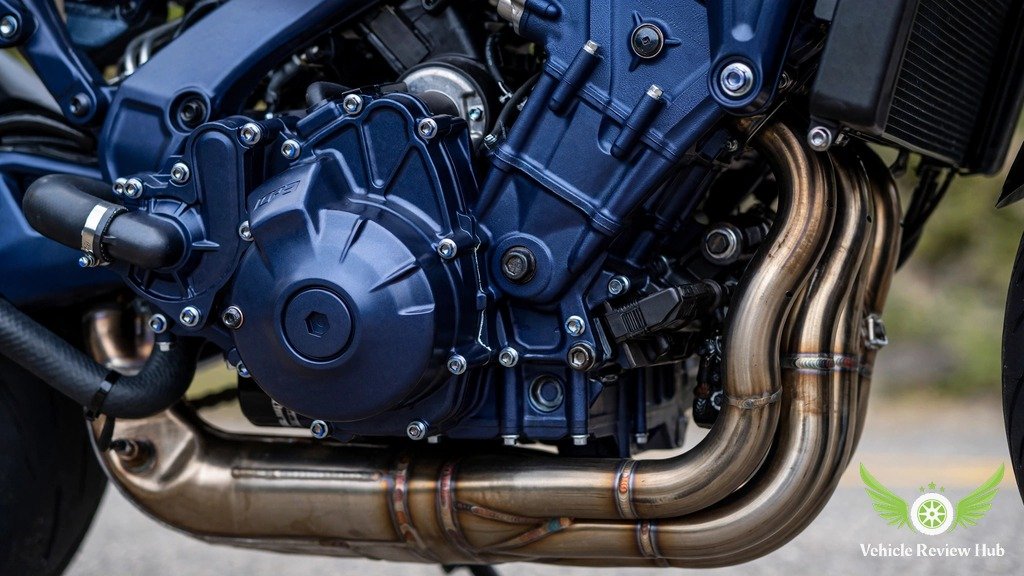
The R9 uses Yamaha’s renowned CP3 powerplant: an 890cc liquid-cooled, DOHC inline three-cylinder with four valves per cylinder, a 78.0 x 62.1 mm bore and stroke, and an 11.5:1 compression ratio. Yamaha claims 117 hp at 10,000 rpm and 68.6 lb-ft of torque at 7,000 rpm, and this Yamaha YZF-R9 review stresses that those are factory claimed figures, not rear-wheel dyno results. What matters on the road is the character: the CP3 is a crossplane triple with a broad, torquey delivery and its own ECU tune and gear ratio. The six-speed gearbox has a multiplate assist-and-slipper clutch and Yamaha’s third-generation quickshifter, working up and down the box. Fueling runs through Yamaha Chip Controlled Throttle (YCC-T), the ride-by-wire system that also enables cruise control and the power delivery modes, and Yamaha’s official fuel economy estimate of 48 mpg works out to roughly 178 miles from the 3.7-gallon tank. This Yamaha YZF-R9 review notes that figure is arithmetic from Yamaha’s numbers, not a tested range.
Weight 430 lb, Seat Height 32.7 Inches, Frame and Brake Specifications
Yamaha lists the R9’s wet weight at 430 lb and its seat height at 32.7 inches, this Yamaha YZF-R9 review confirms, with a 55.9-inch wheelbase, 22.6 degrees of rake, and 3.7 inches of trail. The frame is a gravity-cast aluminum Deltabox twin-spar unit, and Yamaha claims it is the lightest aluminum frame ever fitted to one of its supersport models, with a near 50/50 weight distribution; this Yamaha YZF-R9 review attributes both claims to Yamaha, since neither is independently measured. Compared with the old R6, the R9 runs about three degrees more rake, a 0.8-inch lower seat, and a 1.8-inch longer wheelbase, which is why reviewers describe it as calmer in the first part of a turn. Suspension is fully adjustable KYB at both ends, with a 43 mm inverted front fork offering 4.7 inches of travel and a KYB rear shock, while braking comes from Brembo Stylema monoblock calipers, a radial master cylinder, dual 320 mm discs, and stainless steel lines. The wheels are 17-inch cast aluminum units wearing Bridgestone Battlax Hypersport S22 tires. The table below is the reference for the numbers quoted elsewhere.
| Specification | Yamaha YZF-R9 |
|---|---|
| Engine | 890cc liquid-cooled DOHC inline triple, 4 valves per cylinder |
| Bore x stroke / compression | 78.0 x 62.1 mm / 11.5:1 |
| Claimed power / torque | 117 hp @ 10,000 rpm / 68.6 lb-ft @ 7,000 rpm |
| Gearbox / clutch | 6-speed, assist-and-slipper clutch, 3rd-gen quickshifter |
| Wet weight / seat height | 430 lb / 32.7 inches |
| Wheelbase / rake / trail | 55.9 in / 22.6 degrees / 3.7 in |
| Front suspension / brakes | 43 mm KYB fork, fully adjustable / Brembo Stylema, dual 320 mm discs |
| Fuel capacity / economy estimate | 3.7 gallons / 48 mpg (Yamaha estimate) |
| Warranty | 1-year limited factory warranty |
Yamaha YZF-R9 Price and Market Availability
Price is one of the R9’s strongest arguments, and it has barely moved since launch. This part of the Yamaha YZF-R9 review lays out the year-by-year US pricing.
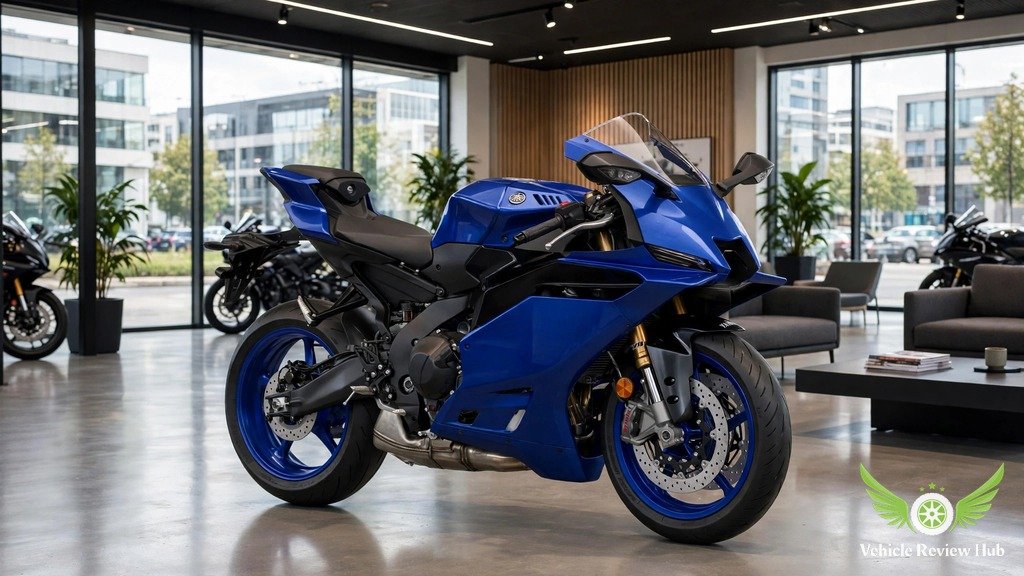
Yamaha YZF-R9 Price by Year in the USA: 2025 and 2026
The 2025 Yamaha YZF-R9 launched at $12,499 MSRP, and the 2026 standard model holds that price, with the only step being the 2026 70th Anniversary Edition at $12,899. Those MSRP figures exclude destination charges, taxes, and dealer fees, this Yamaha YZF-R9 review notes. At launch, the R9 undercut the Suzuki GSX-R750 at $13,149 and sat barely above the Aprilia RS 660 at $11,549 and the Honda CBR600RR at $12,199, according to Motorcycle.com’s launch coverage. This Yamaha YZF-R9 review recommends checking current dealer stock before assuming a used bargain exists, because the bike is still nearly new and used prices sit close to new MSRP.
| Model year | US version | MSRP |
|---|---|---|
| 2025 | YZF-R9 (all colors) | $12,499 |
| 2026 | YZF-R9 Team Yamaha Blue | $12,499 |
| 2026 | YZF-R9 70th Anniversary Edition Red and White | $12,899 |
| 2027 | YZF-R9 base (dealer listings) | $12,499 (carried over) |
Colours by Year and Official US Dealer Availability
The 2025 color range was Team Yamaha Blue, Matte Raven Black, and Intensity White/Redline, and all three arrived with the March 2025 dealer launch, while for 2026 Yamaha’s official lineup narrows to two choices: Team Yamaha Blue at the standard price and the 70th Anniversary Edition in Red and White at $12,899. Buyers who want Matte Raven Black or Intensity White/Redline need remaining 2025 stock or the used market, and this Yamaha YZF-R9 review flags that narrowing because color often decides the choice between model years. Availability runs through Yamaha’s nationwide network of official US dealers; the R9 is a regular production model, not a limited allocation special. This Yamaha YZF-R9 review suggests confirming color availability with a dealer before traveling.
Yamaha YZF-R9 Design, Features and Technology
The R9 was designed as a proper R-series bike from the start, not adapted from a naked platform. This section of the Yamaha YZF-R9 review covers the aerodynamics, braking hardware, and electronics suite that justify the price.
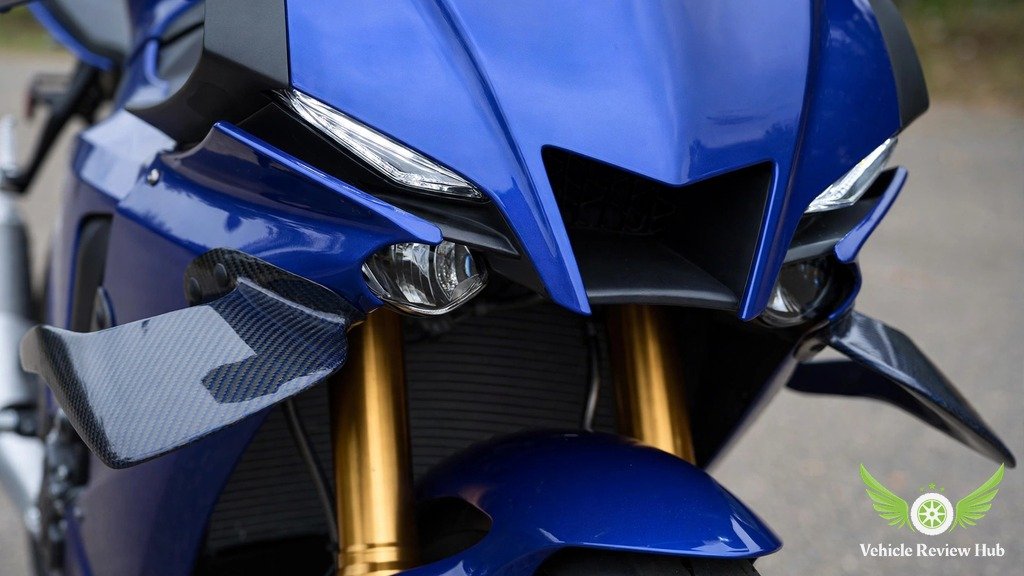
MotoGP Winglets, Brembo Stylema Brakes and Lightest Supersport Frame
The bodywork is next-generation R-series styling, with a signature M-shaped front duct, an R-series tail wing, and MotoGP-inspired functional winglets. Yamaha says the winglets add downforce and that the R9 is the most aerodynamic Yamaha model ever offered, but no independent downforce figure has been published, so this Yamaha YZF-R9 review reports both as the manufacturer’s statements rather than measured facts. The braking package is genuinely top shelf, this Yamaha YZF-R9 review finds, with Brembo Stylema monoblock calipers gripping dual 320 mm front discs through a radial master cylinder and stainless steel lines, while the gravity-cast aluminum Deltabox frame is, per Yamaha, the lightest aluminum frame the company has ever fitted to a supersport. With the near 50/50 weight distribution Yamaha claims, the chassis is why this Yamaha YZF-R9 review calls the bike confidence-inspiring rather than intimidating.
Six-Axis IMU, YRC Modes, Cruise Control and 5-Inch TFT Features
The electronics suite is built around a six-axis inertial measurement unit based on the YZF-R1 superbike’s system, driving nine-mode lean-sensitive traction control, three-mode slide control, three-mode lift control, and lean-sensitive brake control with ABS, each adjustable or switchable off. The R9 also offers a rear ABS-off function for track riding, two-level engine brake management, a back slip regulator, launch control, four power delivery modes, and Yamaha Ride Control (YRC) presets plus a variable speed limiter. All of it is managed through a full-color five-inch TFT display with four street themes and a track theme, with Y-Connect smartphone connectivity and Garmin StreetCross navigation. RevZilla’s first look at the launch bike likewise highlighted the street-friendly side of the package, and cruise control is standard. The practical result, as this Yamaha YZF-R9 review stresses, is a bike that lets a newer rider lean on the electronics and lets an experienced rider turn them down or off.
Yamaha YZF-R9 Riding Experience and Comfort
This section of the Yamaha YZF-R9 review leans on what reviewers actually reported from the saddle.
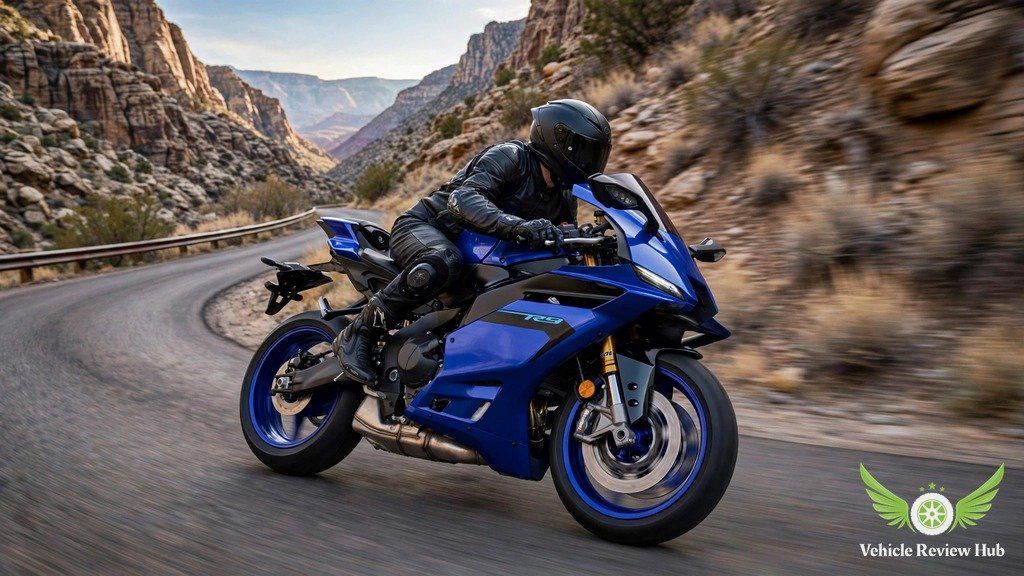
Riding Position, Handling and Low-Speed Maneuverability
Yamaha describes the riding position as a dedicated supersport position with a short reach to the clip-ons and ample legroom, and reviewers found that description honest. Rider magazine’s first ride tester, skeptical after owning R3, R7, and R6 machines, reported feeling immediately confident on the R9 and described the bike as stable, comfortable, and predictable as the pace increased. The longer wheelbase and extra rake make the R9 lazier in the initial part of a turn than the R6, this Yamaha YZF-R9 review notes, a deliberate trade for stability, while light steering and the 430 lb wet weight keep low-speed maneuvering easy. This Yamaha YZF-R9 review notes shorter riders should still sit on one before buying, since 32.7 inches is not low by naked-bike standards.
Street Riding, Track Days, Highway Comfort and Everyday Practicality
On the street, this Yamaha YZF-R9 review finds the R9’s case strong: the triple pulls cleanly from low revs, the quickshifter makes town riding effortless, and cruise control makes longer rides practical. Wind protection from the full fairing is a real step up from the MT-09 SP. For track days, the R9 needs nothing essential added: adjustable suspension, track-grade brakes, a rear ABS-off function, and launch control. Highway comfort is the weakest discipline, but the fairing and cruise control make a weekend trip realistic. This Yamaha YZF-R9 review recommends the video below as a useful companion to the written test.
The video above is Rider magazine’s 2025 Yamaha R9 Review, filmed at Sonoma Raceway, and it matches the written first ride that this Yamaha YZF-R9 review draws on.
Yamaha YZF-R9 Review: Pros, Cons and Verdict
After weighing the price, the specification, and the riding reports, this Yamaha YZF-R9 review lands on a clear verdict: the R9 is Yamaha’s most complete middleweight supersport.
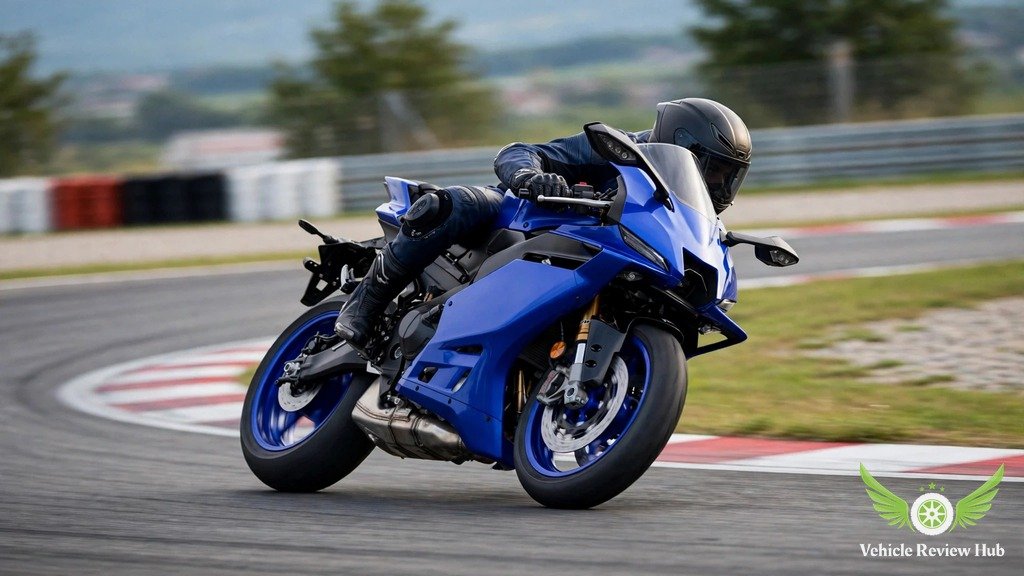
Main Advantages and Limitations: Cycle World Best Sportbike of 2025
The headline endorsement is real. Cycle World named the Yamaha YZF-R9 its Best Sportbike in its Ten Best Bikes of 2025, praising the CP3’s accessible power, the fully adjustable suspension, the track-ready braking package, and the full suite of rider aids. MCN’s Best Sportsbike award for 2025 went to the R9 as well, beating the Ducati Panigale V2, the Honda CBR600RR, and the Kawasaki ZX-6R, and the R9 won the 2025 World Supersport championship in its debut season. This Yamaha YZF-R9 review treats that racing debut as strong supporting evidence. The advantages stack up: a $12,499 price, a torquey engine, top-shelf brakes and suspension, and cruise control as standard. The limitations are honest: no long-term reliability data yet, a 32.7-inch seat, a 3.7-gallon tank, and a narrower 2026 color choice. This Yamaha YZF-R9 review lists them because a review that only praises is not a review at all.
Who Should Consider the Yamaha YZF-R9 Over the MT-09 SP?
This is the comparison most buyers face, because the two bikes share the 890cc CP3 engine and sit almost on top of each other in price. For 2026, the MT-09 SP costs $12,699, just $200 more than the standard R9, while the R9’s 70th Anniversary Edition at $12,899 sits $200 above the SP. The SP counters with an Öhlins rear shock and an upright naked riding position. Choose the R9 for wind protection, a supersport riding position, and track-day readiness out of the box, and choose the MT-09 SP for upright ergonomics and an easier city ride. This Yamaha YZF-R9 review frames the choice that way because price and power barely separate the two. Beyond Yamaha, the R9 suits riders stepping up from a 300 or 700 class sportbike and experienced riders wanting a track-day bike that is still pleasant on the road home. For everyone in the middle, this Yamaha YZF-R9 review recommends a test ride.
Frequently Asked Questions About the Yamaha YZF-R9
These direct answers cover the questions buyers ask most often about the R9, and if you are still deciding after reading this Yamaha YZF-R9 review, they should settle the remaining details.
How much does the Yamaha YZF-R9 cost in the USA?
The Yamaha YZF-R9 costs $12,499 MSRP for the 2025 model and the 2026 standard model, while the 2026 70th Anniversary Edition costs $12,899. Those prices exclude destination charges, taxes, and dealer fees. This Yamaha YZF-R9 review uses MSRP throughout because out-the-door prices vary by dealer.
What engine does the Yamaha YZF-R9 have?
The YZF-R9 has an 890cc liquid-cooled CP3 inline three-cylinder engine with double overhead camshafts and four valves per cylinder, a unique ECU tune, a six-speed gearbox, an assist-and-slipper clutch, and a third-generation quickshifter, as this Yamaha YZF-R9 review notes.
How much horsepower does the Yamaha YZF-R9 make?
Yamaha claims 117 hp at 10,000 rpm and 68.6 lb-ft of torque at 7,000 rpm for the YZF-R9. Those are factory claimed figures at the crankshaft, not rear-wheel dyno results. This Yamaha YZF-R9 review reports the claimed figures because Yamaha does not publish a rear-wheel number.
How heavy is the Yamaha YZF-R9 and how tall is the seat?
The YZF-R9 weighs 430 lb wet and has a 32.7-inch seat height. This Yamaha YZF-R9 review notes the narrow seat helps riders reach the ground, but shorter riders should sit on one at a dealer first.
Is the Yamaha YZF-R9 good for beginners?
The R9 is approachable for a supersport, thanks to its torquey triple, adjustable electronics, and predictable handling, but it is not a beginner bike. With 117 claimed horsepower and a supersport riding position, it suits riders with a season or two of experience, ideally stepping up from a smaller sportbike. This Yamaha YZF-R9 review points new riders to the R3 or R7 first.
Is the Yamaha YZF-R9 a replacement for the YZF-R6?
Yamaha insists the R9 is not a direct replacement for the R6: the R9 is heavier, longer, and less extreme in geometry, with a torque-rich triple instead of a peaky four-cylinder. It fills the gap the R6 left, but it is built for street accessibility first and track capability second. This Yamaha YZF-R9 review agrees with Yamaha’s framing here.
What colors does the Yamaha YZF-R9 come in?
The 2025 YZF-R9 came in Team Yamaha Blue, Matte Raven Black, and Intensity White/Redline. For 2026, Yamaha offers Team Yamaha Blue at $12,499 and the 70th Anniversary Edition in Red and White at $12,899. Buyers wanting the 2025-only colors need remaining 2025 stock or the used market, this Yamaha YZF-R9 review notes.
Does the Yamaha YZF-R9 have cruise control and a quickshifter?
Yes, both are standard, this Yamaha YZF-R9 review confirms, along with a six-axis IMU, lean-sensitive rider aids, launch control, and a five-inch TFT display with smartphone connectivity and Garmin navigation.
What is the Yamaha YZF-R9 fuel range?
Yamaha estimates 48 mpg for the YZF-R9, and with a 3.7-gallon tank that works out to roughly 178 miles of theoretical range. Treat 150 to 180 miles per tank as a planning band, not a tested figure. This Yamaha YZF-R9 review bases that band on Yamaha’s estimate.
Is the Yamaha YZF-R9 good for track days?
Yes, this Yamaha YZF-R9 review confirms. The R9 was launched at Sonoma Raceway, won the 2025 World Supersport championship in its debut season, and arrives track-ready with adjustable KYB suspension, Brembo Stylema brakes, and a rear ABS-off function.
Should I buy the Yamaha YZF-R9 or the MT-09 SP?
Buy the R9 for a faired supersport with wind protection and track-day readiness, and buy the MT-09 SP for upright naked ergonomics and city comfort. The two share the CP3 engine, and for 2026 the SP costs $12,699 against the R9’s $12,499, so the choice is about position and styling, not price or power. This Yamaha YZF-R9 review comes down on the R9 for riders who want the fairing.
Did the Yamaha YZF-R9 win any awards?
Yes. Cycle World named the YZF-R9 its Best Sportbike in the Ten Best Bikes of 2025 awards, MCN named it the Best Sportsbike of 2025, and Rider magazine named it a finalist for its 2025 Motorcycle of the Year. Those awards, plus the 2025 World Supersport title, make the R9 one of the most decorated middleweights of recent years, and this Yamaha YZF-R9 review treats them as a genuine buying signal — a verdict this Yamaha YZF-R9 review shares.