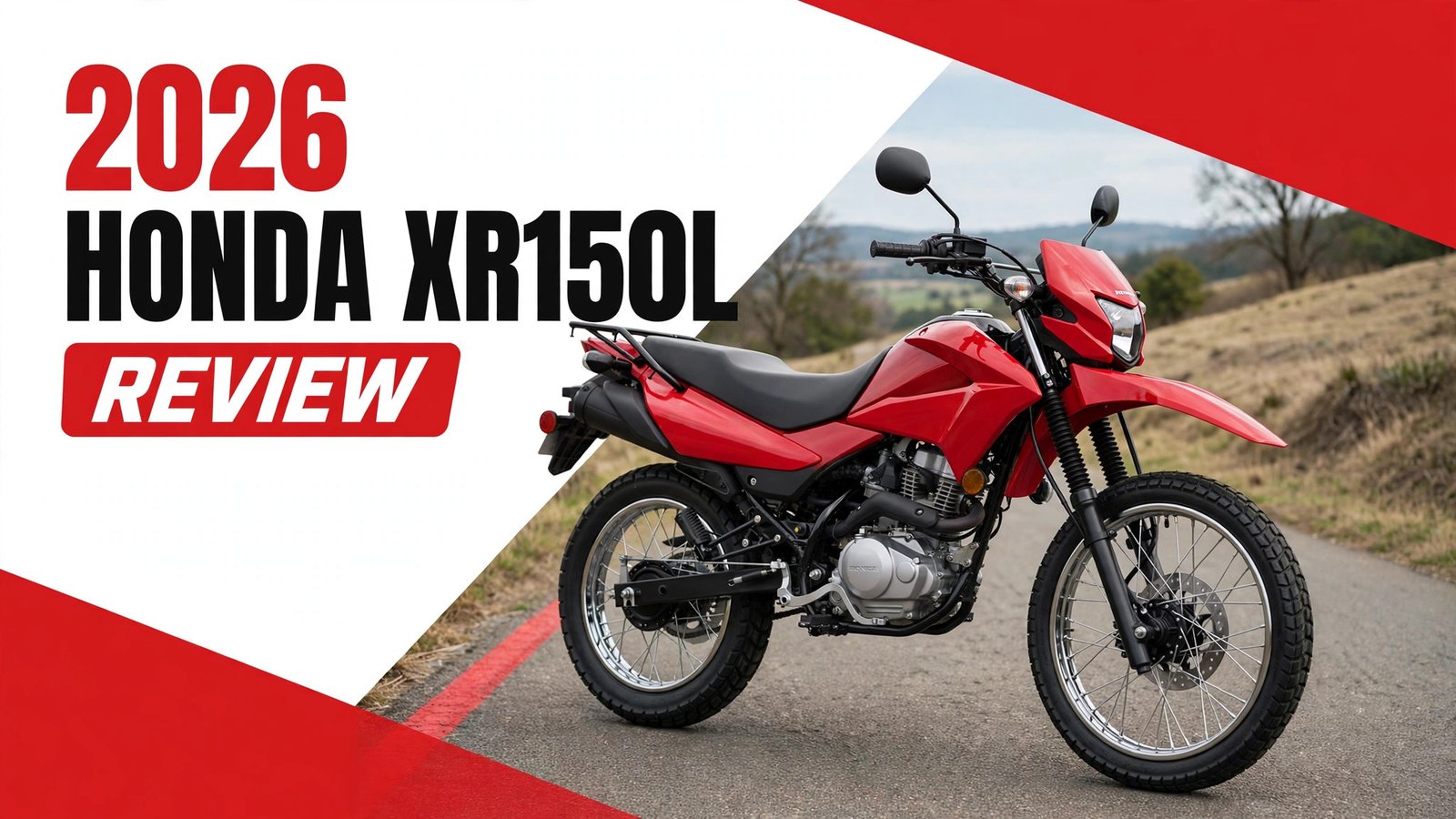
Short answer: this Honda XR150L review finds the cheapest full-size dual-sport Honda sells in the United States, and one of the simplest motorcycles on sale at any price. The 2026 model costs $3,399 plus destination, weighs 282 pounds, and pairs a 149cc air-cooled, carbureted single with a five-speed gearbox, a 32.8-inch seat, and no electronics worth naming. It is a town bike, a trail bike, and a farm bike — but it is not a freeway bike, and this Honda XR150L review says so plainly.
The XR150L reached the United States for 2023, years after it became a familiar sight in Asia and Latin America. Honda changed almost nothing for its American debut, and that restraint is the whole point of this Honda XR150L review: a motorcycle refined over a decade abroad, sold here at a price no other full-size dual-sport can match.
Honda XR150L Overview and Model-Year Updates
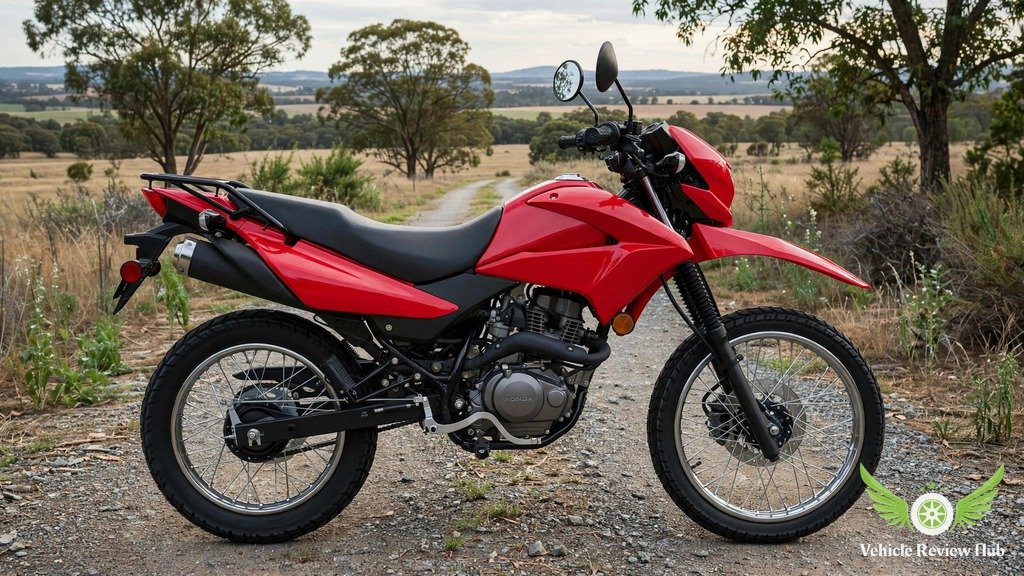
The XR150L is a full-size dual-sport in the old sense: steel frame, long-travel suspension, 19/17-inch spoked wheels, and an engine simple enough to fix with basic tools. It is street-legal, with lights, mirrors, turn signals, and a license-plate light, plus a rear luggage rack and folding passenger pegs as standard. That combination is what this Honda XR150L review keeps returning to: one inexpensive motorcycle for the commute, the trailhead, and the ranch.
What Is the Honda XR150L and Who Is It Designed For?
The XR150L is designed for riders who want motorcycling at its most accessible: new riders learning on a light, forgiving bike, and experienced riders wanting a cheap second motorcycle for short trips. Honda pitched it at beginners, but launch coverage found experienced riders just as keen, buying it as a runabout alongside bigger bikes — a reaction this Honda XR150L review understands, since the bike asks so little of its owner. Its limits, as this Honda XR150L review stresses, are equally plain: about 11 rear-wheel horsepower and a realistic 55 to 60 mph cruising speed suit surface streets, back roads, and trails — not daily freeway riding.
Long History Abroad Since 2014 and US Launch in 2023 Explained
The road-legal XR150L was launched in Asia in 2014, and in Australia and New Zealand it served as an off-road-only farm bike — a history RevZilla’s 2023 first ride documents. The wider XR150 platform family reaches back to 2003, which is why parts availability is deep. Honda announced the bike for the United States in March 2023 and held its press launch that June in Solvang, California, where journalists rode pavement, a sandy dirt course, and a short stretch of US 101, per Expedition Portal’s first ride. For 2024, 2025, and 2026 the bike stayed essentially the same motorcycle, with only colours, graphics, and small trim changes separating the years — a continuity this Honda XR150L review treats as a virtue.
Honda XR150L Engine and Specifications
The engine is the least modern part of the motorcycle, and deliberately so. A 149.2cc air-cooled single with a two-valve overhead-cam head, a 22mm Keihin carburetor, and a manual choke, it is one of the few new motorcycles still sold with a carburetor in the US. There is no fuel injection, no ride-by-wire, and nothing digital beyond the ignition. That simplicity is the core of this Honda XR150L review: fewer systems to fail, cheaper parts, and maintenance any home mechanic can learn.
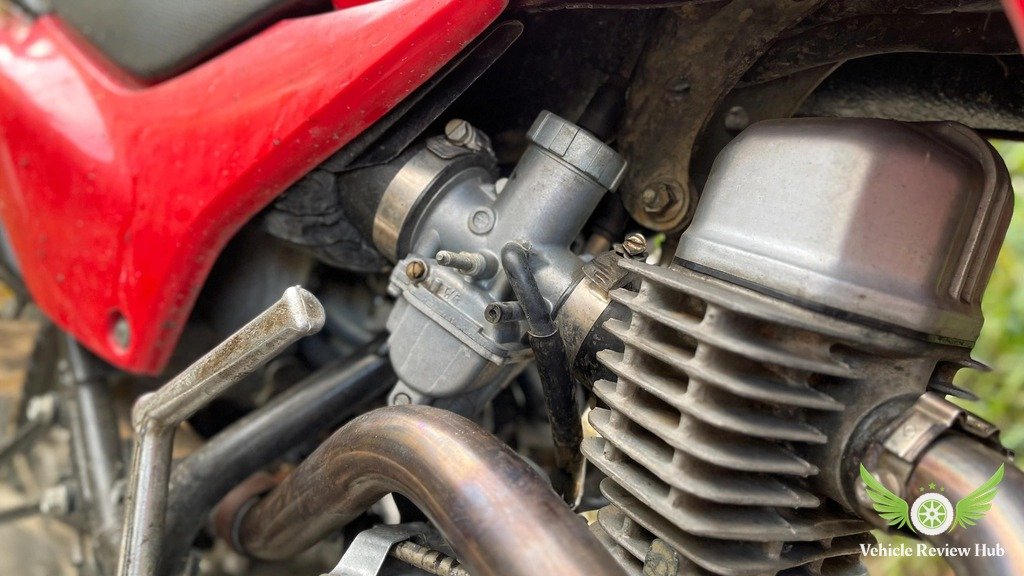
149cc Air-Cooled Carbureted Engine and Five-Speed Gearbox
The single displaces 149.2cc from a 57.3mm bore and 57.8mm stroke, runs a 9.5:1 compression ratio, and drives the rear wheel through a five-speed gearbox and a #428 chain with 17/49-tooth sprockets. Honda USA publishes no horsepower or torque figure for the American model, so this Honda XR150L review quotes only labelled measured and foreign-market figures. Cycle World’s dyno test measured 10.8 horsepower at 7,600 rpm and 8.3 lb-ft of torque at 6,000 rpm at the rear wheel, with the bike weighing 283 pounds on its scales — one pound over Honda’s claimed weight. In international markets the same engine is claimed at 12.14 horsepower at 7,750 rpm and 9.22 lb-ft at 6,000 rpm at the crankshaft, while US emissions paperwork cited by GearJunkie puts output around 12.5 horsepower. The gap between those numbers is drivetrain loss and measurement method, not a different engine, and this Honda XR150L review uses the dyno figure for comparisons. The gearbox earns consistent praise — light clutch, smooth shifting, ratios well matched to the narrow powerband — and this Honda XR150L review notes riders must work the gears constantly on hills: first gear on steep trails, fifth only when the road flattens.
Weight 282 lb, Seat Height 32.8 Inches and Specification Details
At 282 pounds ready to ride, the XR150L is light enough to pick up after a tip-over, and the 32.8-inch seat is the lowest in its class according to GearJunkie — one tester with a 31-inch inseam flat-footed it. Ground clearance is 9.6 inches and wheelbase 53.5 inches in the specification set behind this Honda XR150L review, and the steel frame uses a 31mm telescopic fork with 7.1 inches of travel and a Pro-Link single shock with preload adjustment and 5.9 inches of travel. Fuel capacity is 2.8 gallons including a 0.7-gallon reserve, with Honda’s standard one-year transferable warranty. The table below gathers key specifications from Honda’s dealer specification sheets and launch reviews behind this Honda XR150L review.
| Specification | Honda XR150L (US model) |
|---|---|
| Engine | 149.2cc air-cooled OHC single, 22mm carburetor |
| Power (labelled) | 10.8 hp @ 7,600 rpm rear wheel (dyno); 12.14 hp @ 7,750 rpm foreign crank claim |
| Transmission | Five-speed manual, #428 chain, 17T/49T sprockets |
| Curb weight / seat height | 282 lb / 32.8 inches |
| Suspension travel | 7.1 in front, 5.9 in rear (preload-adjustable) |
| Brakes | 240mm front disc, 110mm rear drum, no ABS |
| Wheels / tires | 19-in front / 17-in rear spoked; 90/90-19 front |
| Fuel capacity | 2.8 gallons including 0.7-gallon reserve |
| Warranty | One-year transferable limited warranty |
Honda XR150L Price and Market Availability
The XR150L’s price is its headline, and it has climbed steadily without leaving budget territory. The 2023 bike launched at $2,971 plus a $300 destination charge, with each model year since adding roughly $100 to $200. Even the 2026 bike at $3,399 undercuts every other full-size dual-sport from a major brand in the US — the central buying fact of this Honda XR150L review.
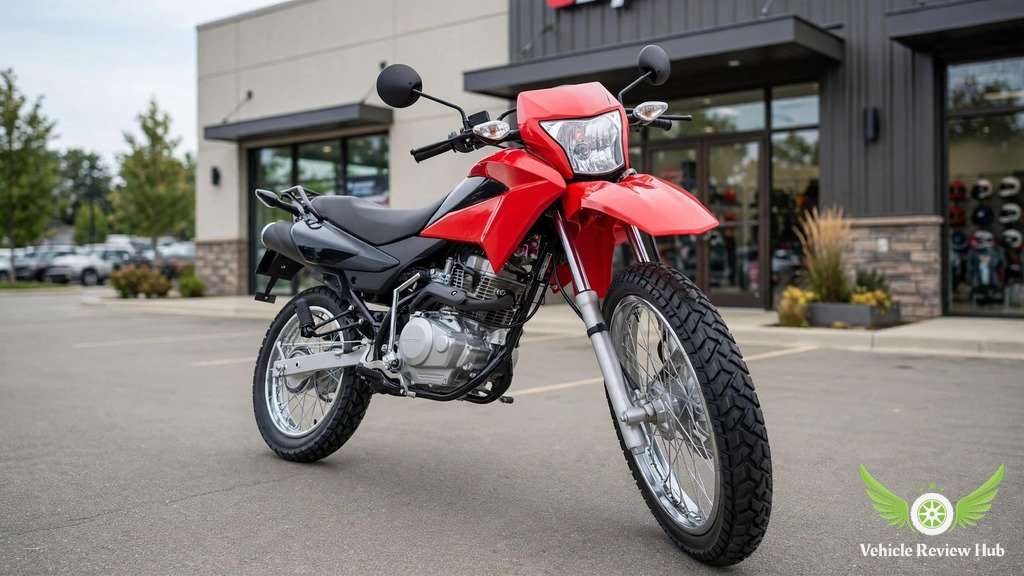
Honda XR150L Price by Year in the USA: 2023 to 2026
The price walk in this Honda XR150L review is short and fully verified: 2023 at $2,971 (RevZilla and every launch outlet); 2024 at $3,099 (Dirt Bike Magazine’s 2024 test); 2025 at $3,299 (Honda dealer sheets); and 2026 at $3,399, a $100 increase over 2025 (TopSpeed). Destination has stayed around $300, so a 2026 bike costs about $3,699 before tax and dealer fees — though some dealers add far more in freight and preparation, so confirm the out-the-door price. Leftover 2025s advertised from $2,999 to $3,299 in late 2026 can beat a new 2026 on price with no mechanical difference.
Colours by Year: Black and White, Then Gray, and US Dealer Availability
Colours: Black and White for 2023 and 2024, then White and Gray from 2025 onward, with updated graphics. The 2025 refresh brought black fork tubes, swingarm, and hubs — trim only. The XR150L is a regular Honda USA model sold through dealers nationwide, and its decade of foreign-market production means parts are easy to find. That availability is a quiet strength this Honda XR150L review notes: a budget bike is only cheap if it stays cheap to keep.
Honda XR150L Design, Features and Technology
The design brief was evidently “everything needed, nothing extra.” The XR150L has a high front fender, a fork-mounted headlight cowl with a 60/55W halogen bulb, a one-piece stepped dual seat, a rear luggage rack with grab handles, folding passenger pegs, a high-mounted exhaust, and wire-spoke wheels. There is no fairing, no windscreen, no TFT display, and no rider aid of any kind — a deliberate absence this Honda XR150L review counts as a feature for riders learning brake and throttle control without electronic help.
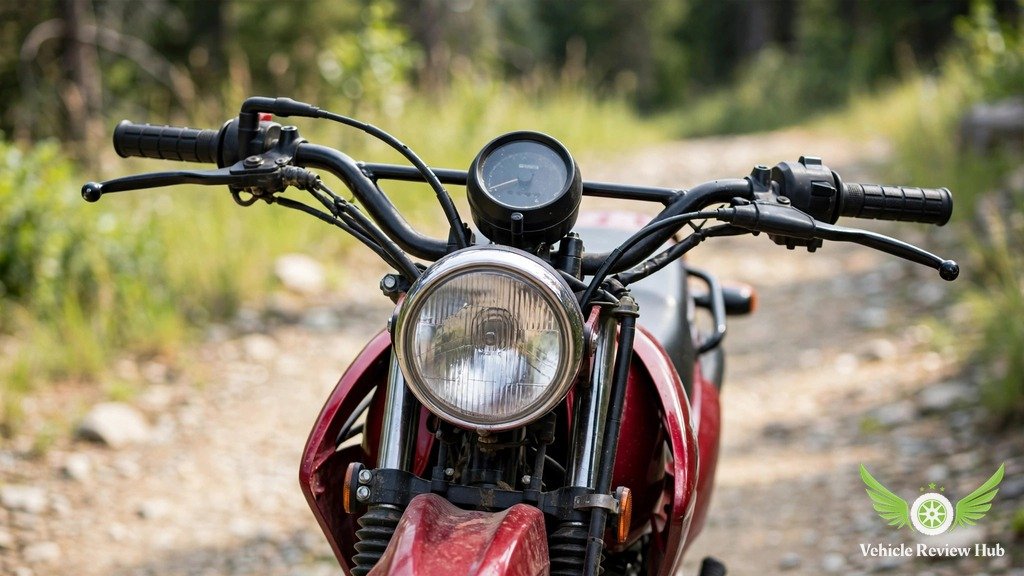
Simple Dual-Sport Design, Electric Start Only and No Fuel Gauge
Starting is by electric button only, with no kick starter backup, so a flat battery means a push start or a jump. The carbureted engine needs its manual choke on cool mornings, warms up quickly, and idles quietly — cold-start behaviour this Honda XR150L review notes. The instrument cluster is basic: speedometer and warning lights, no fuel gauge at all. Instead, the 2.8-gallon tank includes a 0.7-gallon reserve reached by a petcock, so the fuel strategy in this Honda XR150L review is simple: reset the trip meter at every fill-up and switch to reserve when the engine stumbles. Treat the reserve as the warning system, because the bike gives no other one.
Front Disc and Rear Drum Brakes, and Why There Is No ABS
Braking is a single 240mm front disc with a two-piston caliper and a 110mm rear drum, with no ABS on any year. At this price and power level, a drum rear brake is cheap, durable, and easy to service, and the absence of ABS keeps the price down while letting new riders learn brake feel. Testers found the front brake strong but touchy before the pads bedded in, while the rear drum is, in Dirt Bike Magazine’s words, decidedly old school. The honest assessment of this Honda XR150L review is that the brakes suit the bike’s speed: adequate and predictable at town and trail pace, with no margin for freeway stops.
Honda XR150L Riding Experience and Comfort
On the move, the XR150L feels like its numbers suggest: light, upright, and unhurried. The riding position is neutral, the bars fall naturally to hand, and the stepped seat is thick and cushy enough for an hour or two. Around town it threads traffic and parks anywhere; on dirt roads it feels planted and forgiving. That ease is the riding story of this Honda XR150L review: a motorcycle that flatters beginners instead of intimidating them.
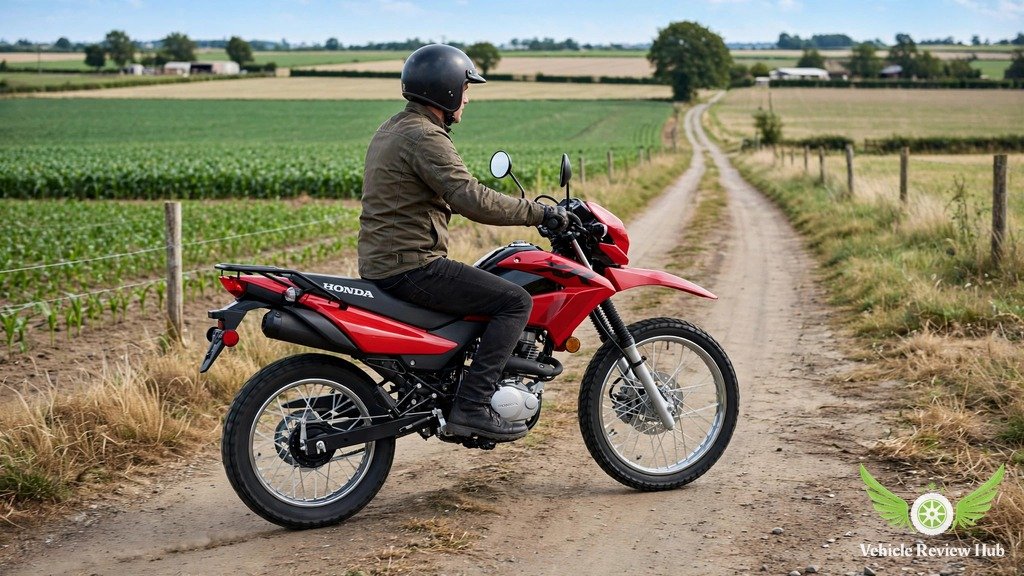
Riding Position, Handling and Low-Speed Maneuverability
At 282 pounds with a 53.5-inch wheelbase, the XR150L changes direction with almost no effort, and low-speed maneuverability, a highlight of this Honda XR150L review, is a genuine strength: U-turns, parking-lot practice, and tight switchbacks are all easy. The soft, non-adjustable 31mm fork soaks up broken pavement, cattle guards, and potholes, while the preload-adjustable rear shock holds up better over bumps. Handling on pavement is neutral and predictable on the stock dual-sport tires, which grip well on pavement and hardpack but bog down in deep sand. This Honda XR150L review finds the chassis honest: it tells the rider exactly what it can and cannot do, and rewards riding within its limits.
Farm Use, Trails, Town Riding and Everyday Practicality
Farm use is where the XR150L’s foreign history shows: in Australia and New Zealand it worked as a farm bike, and the American bike keeps that character — a rack for supplies, a usable passenger seat, and an engine that tolerates dust and heat. On trails it climbs steep single-track in first gear and handles hardpack confidently, though deep sand and mud expose its limits. In town, where this Honda XR150L review finds the bike at its happiest, the light clutch, slick gearbox, and torque from just over 2,000 rpm make for clean pull-aways in traffic. Everyday practicality is helped by the rack and passenger pegs — launch coverage even called it a grocery getter — and by trivial fuel costs. That farm-first character is central to this Honda XR150L review’s verdict. The video below, a comparison with a full XR150L walkaround and riding verdict against a rival budget dual-sport, matches this Honda XR150L review’s findings on the bike’s strengths and freeway limits.
Honda XR150L Review: Pros, Cons and Verdict
The XR150L is not the best at any single thing, but it is the best value in its class for a rider whose riding fits its envelope — undercutting every rival on price, weighing less than all of them, and carrying a decade of parts. Its weaknesses are real but plainly stated: small engine, no freeway ability, older-era suspension and brakes. This Honda XR150L review recommends it without hesitation to beginners, returning riders, and anyone wanting a second bike for town, trail, and farm work.
Main Advantages and Limitations of the Honda XR150L
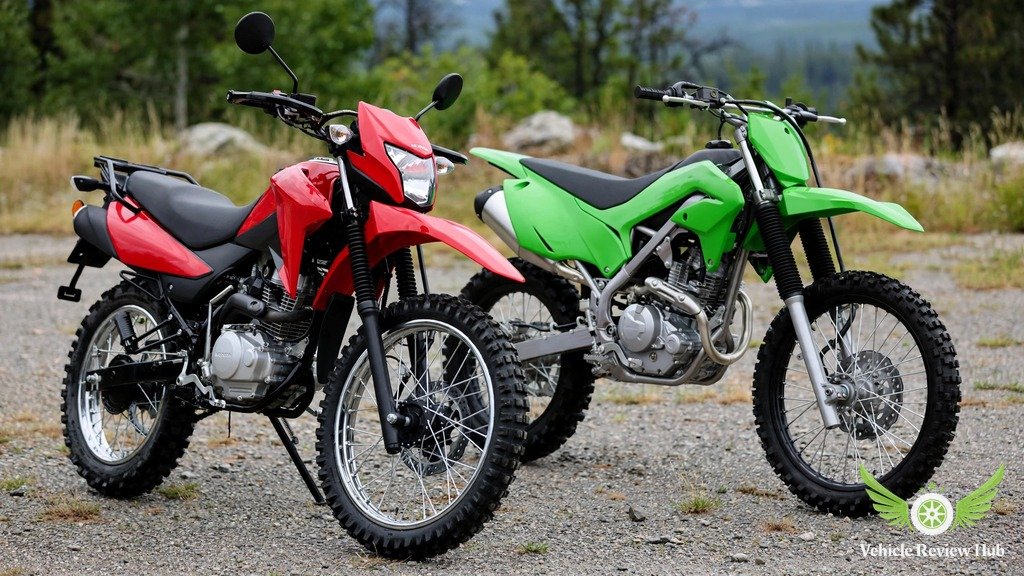
The advantages, as this Honda XR150L review tallies them, are: a $3,399 price, 282-pound weight, a 32.8-inch seat, Honda reliability, a carbureted engine any shop can service, standard rack and passenger pegs, and fuel economy that makes running costs trivial — the full list this Honda XR150L review weighs against the drawbacks below. The limitations are equally clear: about 11 rear-wheel horsepower, a realistic 55 to 60 mph cruising speed with 70 mph only downhill, soft non-adjustable fork, rear drum brake, no fuel gauge, no ABS, and a carburetor needing choke on cold mornings. None of these limitations changes the verdict of this Honda XR150L review, but all should shape the purchase decision — especially the speed limit, which rules the bike out for daily freeway commutes.
Who Should Consider the Honda XR150L Over the KLX230?
The Kawasaki KLX230 is the obvious rival, and the comparison is decided mostly by price and power. The KLX230 S costs $5,000 without ABS and $5,300 with ABS for 2025, and $5,200 for the 2026 S, against the XR150L’s $3,399 — a gap of roughly $1,600 to $1,900 before destination. For that money the Kawasaki buys a fuel-injected 233cc single making a claimed 17 horsepower and more suspension travel, while the Honda answers with lighter weight, lower seat, and simpler maintenance. Choose the KLX230 if freeway links, stronger acceleration, or fuel injection matter to you; choose the XR150L if price, weight, seat height, and simplicity matter more, or if the bike is a second motorcycle for short trips, as this Honda XR150L review finds many buyers use it. Riders wanting more highway ability should also look at the standard CRF300L review, and riders wanting a larger Honda twin should read the Honda NX500 review. For everyone else, this Honda XR150L review names the XR150L the default choice in the budget dual-sport class.
Honda XR150L Review FAQs
Questions buyers ask before spending money on an XR150L, answered from verified prices and specifications in this Honda XR150L review. If your question is not here, the rule of thumb from this Honda XR150L review still applies: buy the bike for town, trail, and farm use, not for the freeway.
How much does a Honda XR150L cost?
The 2026 Honda XR150L costs $3,399 plus about $300 destination, the headline price in this Honda XR150L review. Earlier years were cheaper, as this Honda XR150L review’s price walk shows: $2,971 in 2023, $3,099 in 2024, and $3,299 in 2025, all plus destination.
When did the Honda XR150L come to the USA?
The XR150L reached the United States for 2023, announced in March with a press launch that June in Solvang, California. The road-legal model had been sold in Asia since 2014, and the wider XR150 platform family dates to 2003, as this Honda XR150L review documents above.
How much horsepower does the Honda XR150L make?
Honda USA publishes no horsepower figure. Cycle World’s dyno test measured 10.8 horsepower at 7,600 rpm at the rear wheel, while the same engine is claimed at 12.14 horsepower at 7,750 rpm in international markets, measured at the crankshaft — the two figures this Honda XR150L review quotes, labels attached.
What is the Honda XR150L top speed?
Realistically, 55 to 60 mph sustained, with 70 mph reachable only downhill. RevZilla’s tester squeezed only 60 mph fully tucked and pinned on the freeway, and SlashGear topped 70 mph just once, in a full tuck downhill with a tailwind while drafting — the evidence behind this Honda XR150L review’s speed verdict.
What MPG does the Honda XR150L get?
Real-world testing cited in this Honda XR150L review lands well above 70 mpg in mixed use, with RevZilla’s first ride recording over 76 mpg. Honda’s test-cycle claim of over 123 mpg, which produces the often-quoted 346-mile tank range, is a laboratory figure — this Honda XR150L review treats 200 to 250 miles per tank as realistic on the 2.8-gallon tank.
Does the Honda XR150L have ABS?
No. The XR150L uses a 240mm front disc and a 110mm rear drum with no ABS on any model year, as documented in this Honda XR150L review. The absence keeps the price down and lets new riders learn brake feel directly, but buyers wanting ABS should look at the KLX230 instead.
What is the Honda XR150L seat height?
Seat height is 32.8 inches, the lowest in its class according to GearJunkie, and a tester with a 31-inch inseam flat-footed it comfortably — a major reason this Honda XR150L review recommends the bike to shorter and newer riders.
Is the Honda XR150L good for beginners?
Yes. The engine is forgiving, the weight is low, the clutch is light, the seat is low, and the price is the lowest in its class. A beginner riding mostly in town and on easy trails will find it one of the best learner bikes sold in the US — the core recommendation of this Honda XR150L review.
Should I buy the Honda XR150L or the Kawasaki KLX230?
Buy the XR150L for price, weight, seat height, and simplicity; buy the KLX230 for fuel injection, roughly 17 claimed horsepower, and stronger acceleration. The price gap is roughly $1,600 to $1,900 before destination — the whole argument of this Honda XR150L review’s verdict section.
What colours does the Honda XR150L come in?
Black and White for 2023 and 2024, then White and Gray from 2025 onward, with updated graphics. Colour is the main visible difference between model years, since the motorcycle itself barely changed — a point this Honda XR150L review stresses for used shoppers.