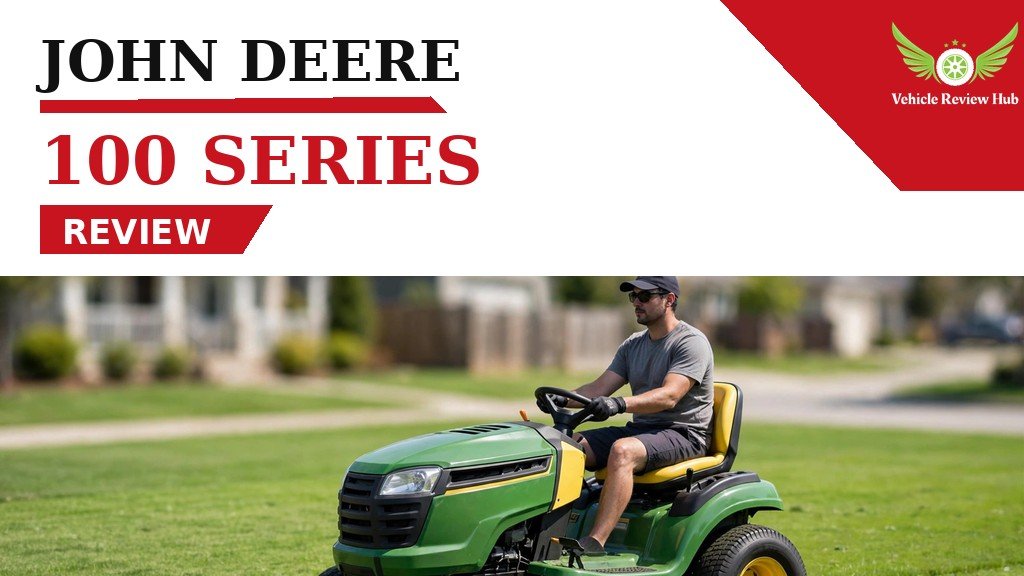
The short answer to this John Deere 100 Series review is simple: if you mow roughly half an acre to two acres of lawn and want a comfortable, easy-to-drive riding mower from a dealer network that actually stocks parts, the 100 Series is the default choice in its price class. Prices run from about $2,399 for the entry S100 to about $3,599 for the top S180, every model uses a gasoline engine and a hydrostatic transmission with side-by-side foot pedals, and every one carries the same 2-year or 120-hour bumper-to-bumper warranty.
This John Deere 100 Series review covers the seven models in the outline — the S100, S120, S130, S140, S160, S170 and S180 — with their engines, decks, transmissions, new and used prices, and the differences that actually matter when you choose. One note on scope: the wider retail range also lists an S110 between the S100 and S120, but the outline for this guide covers the seven models above, and that is the lineup compared here.
John Deere 100 Series Review, Models and Price
The 100 Series is John Deere’s residential lawn-tractor line, built in Greeneville, Tennessee, for homeowners rather than farms or commercial crews. The step up the range is easy to follow: more horsepower, a wider deck, and a heavier transmission as the price rises. This section of the John Deere 100 Series review walks through what each model adds and what each one costs.
S100, S120, S130, S140, S160, S170 and S180 Features
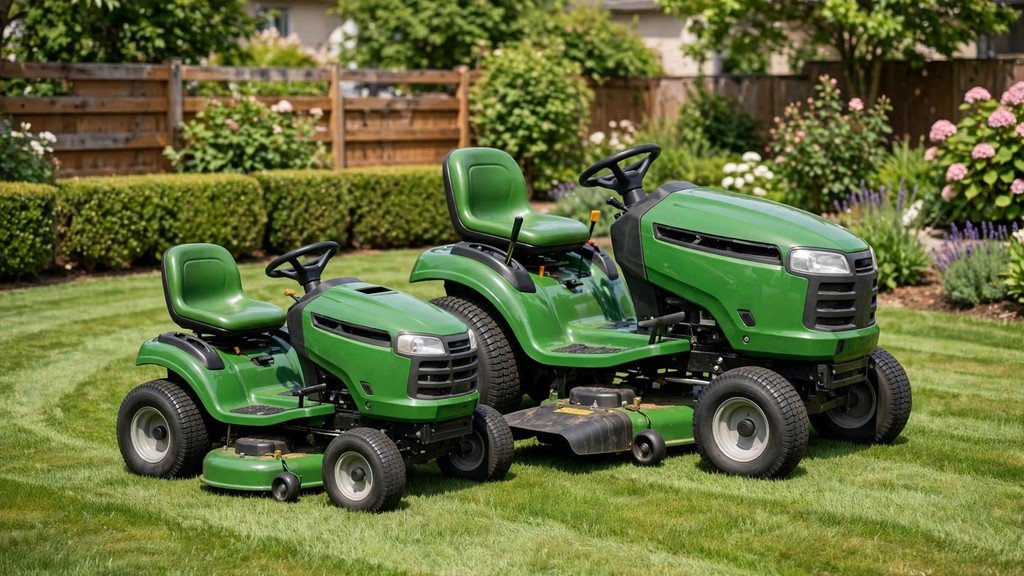
The entry S100 runs a 17.5 hp single-cylinder Briggs & Stratton engine, a 42-inch Edge mower deck, and a manual blade engagement lever. It is the simplest machine in the line and the right size for a smaller lawn. The S120 steps up to a 22 hp V-twin engine, the Easy Change 30-second oil-change system, and a 15-inch open-back seat, while keeping the 42-inch deck. The S130 keeps that same 22 hp V-twin and 42-inch deck but adds an electric PTO switch for blade engagement, cruise control, and a standard front bumper.
The S140 keeps the 22 hp V-twin but moves to a 48-inch deck, which is the big practical jump for a larger lawn. The S160 brings a 24 hp V-twin Extended Life Series engine on the same 48-inch deck. The S170 adds the heavy-duty K46 hydrostatic transaxle to that package, and the S180 tops the range with the same 24 hp engine and K46 transaxle but a 54-inch deck for the biggest lawns. Every model in this John Deere 100 Series review uses a hydrostatic transmission with side-by-side pedals, so there is no gear lever to learn and no clutch to wear out.
The video below is a dealer walkaround of the S100, the entry model — useful for seeing the size, seat, and deck before you compare it with the V-twin models:
New Prices, Used Prices and Model Differences
New prices vary by dealer and by model year, so treat the table below as widely published starting prices in late 2026 rather than a single fixed price list. The pattern is consistent even where individual dealers differ: the S100 starts near $2,399 and the S180 near $3,599, with roughly $100 to $300 steps between models. For example, one dealer comparison lists the S120 at $2,699 and the S130 at $2,799, while another dealer lists the S120 at $2,799 and the S130 at $3,099 — the same machines, different asking prices, which is why this John Deere 100 Series review quotes ranges and tells you to confirm the out-the-door price with your dealer.
| Model | Engine | Deck | Transmission | Starting price (late 2026) |
|---|---|---|---|---|
| S100 | 17.5 hp single-cylinder | 42 in. | TLT200 hydrostatic | $2,399 |
| S120 | 22 hp V-twin | 42 in. | TLT200 hydrostatic | $2,699 |
| S130 | 22 hp V-twin | 42 in. | TLT200 hydrostatic | $2,799 |
| S140 | 22 hp V-twin | 48 in. | TLT200 hydrostatic | $2,799 |
| S160 | 24 hp V-twin ELS | 48 in. | TLT200 hydrostatic | $3,099 |
| S170 | 24 hp V-twin ELS | 48 in. | K46 heavy-duty hydrostatic | $3,199 |
| S180 | 24 hp V-twin ELS | 54 in. | K46 heavy-duty hydrostatic | $3,599 |
| Full range | 17.5–24 hp gasoline | 42–54 in. | Hydrostatic throughout | $2,399–$3,599 |
Used prices hold up well because the badge carries weight with second owners. A concrete recent example: a 2025 S100 with just 5 hours was listed by a dealer at $2,299, barely below its new price. As a rule of thumb, one S120 buyer’s guide puts clean recent examples at roughly 65 to 75 percent of new, with older or higher-hour machines falling further. Condition, hours, and deck state move the price more than the model year does, and the full buying math is worked through in the ownership-cost figures.
John Deere 100 Series Engine, Horsepower and Specifications
Horsepower numbers on lawn tractors confuse buyers because every brand measures a little differently, but the 100 Series ladder is honest about what you get. The engines are all gasoline Briggs & Stratton units built for homeowner duty, and the differences between them show up in smoothness and staying power on longer mows, not just in the headline number. This section of the John Deere 100 Series review separates the engine facts from the deck, transmission, and warranty facts.
Engine Power, Single-Cylinder vs. V-Twin and Fuel Capacity
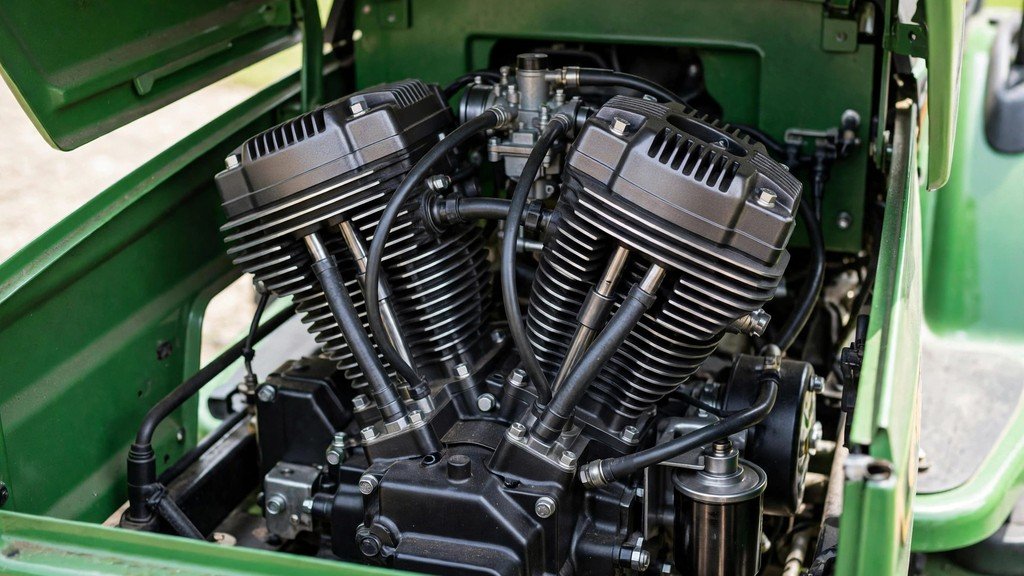
The S100 uses a 17.5 hp single-cylinder engine, model 31R977, displacing 500 cc. It is a simple, proven unit with full-pressure lubrication and an oil filter, and it is plenty for a flat lawn under an acre and a half. The S120, S130 and S140 share a 22 hp V-twin, model 44N677, displacing 724 cc. Two cylinders run smoother and handle longer sessions better, which is why the V-twin models feel less strained when the grass is thick or the lawn is bigger. The S160, S170 and S180 use a 24 hp V-twin Extended Life Series engine, model 44U877, which adds durability features for owners who mow more often or tow attachments.
Fuel capacity is 2.4 gallons across the models whose spec sheets publish it, including the S100 and S130, with a mechanical gauge you can read from the seat. That tank is good for roughly two to three typical mowing sessions on a smaller lawn, and it means the fuel conversation on this John Deere 100 Series review is about convenience, not range anxiety. All models run on regular unleaded gasoline, and none of them needs diesel, a diesel exhaust fluid tank, or any of the heavy equipment that belongs on a farm tractor.
Mower Deck Width, Transmission, Speed and Warranty
Deck width is the second decision after engine power. The 42-inch decks on the S100, S120 and S130 cut with two blades and fit through a standard garden gate. The 48-inch decks on the S140, S160 and S170 use three blades, and the 54-inch deck on the S180 also uses three blades for the widest cut in the line. Cutting height runs from 1 inch to 4 inches in 13 positions, adjusted in quarter-inch steps with a spring-assisted hand lever.
Every model uses a hydrostatic transmission with side-by-side foot pedals: press forward to go forward, press back to reverse, with no gears to shift. The S100 through S160 use the TLT200 transaxle, while the S170 and S180 use the heavier-duty K46 transaxle, which is the right match for bigger decks and heavier towing. Top forward speed is 5.5 mph and reverse is 3.2 mph. The warranty is the same across the line and worth repeating in this John Deere 100 Series review: 2 years or 120 hours, bumper to bumper, whichever comes first. How these specs translate into mowing time and fuel use is covered in the performance figures.
John Deere 100 Series Mower Decks and Attachments
The deck is where cut quality lives, and John Deere’s Edge cutting system is the same idea across the line: a stamped-steel, deep-dome deck that lifts grass before cutting it, with a wash port for cleaning underneath. The differences between models are width, blade count, and the small features that make deck care easier. This section of the John Deere 100 Series review covers all three deck sizes and the attachments most owners actually buy.
42-Inch, 48-Inch and 54-Inch Cutting Decks
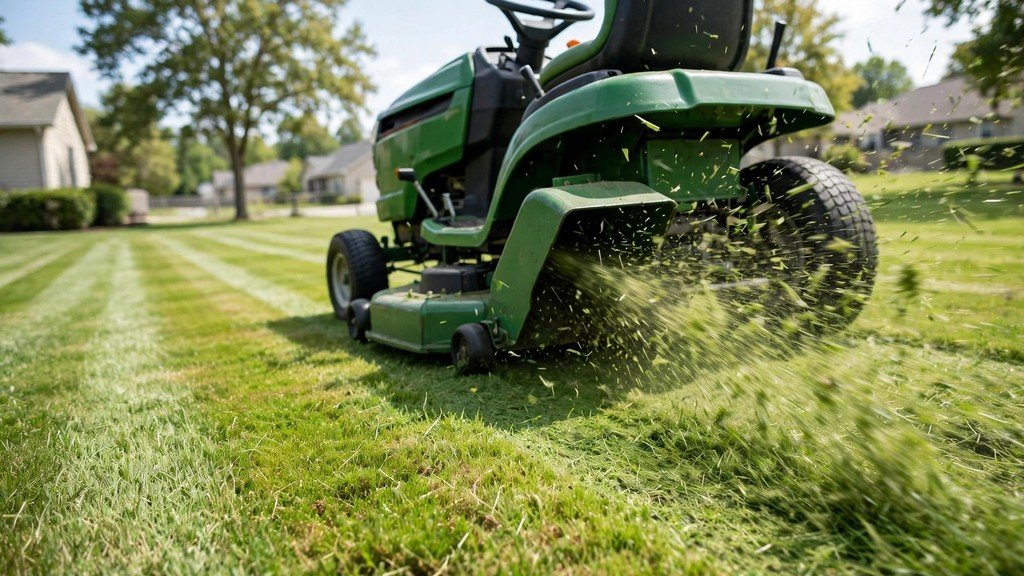
The 42-inch deck is the right choice for a lawn with gates, trees, flower beds, and tight corners. It cuts with two blades, turns tightly, and stores in a smaller shed. The 48-inch deck adds a third blade and roughly 15 percent more cut per pass on open ground, which is a real time saving on a two-acre lawn but a liability in a fenced garden where it will not fit through the gate. The 54-inch deck on the S180 is for wide, open lawns where passes are long and obstacles are few.
All three decks share the same cutting-height range of 1 to 4 inches and the same side-discharge standard setup. Anti-scalp wheels help on uneven ground, and the wash port lets you hose out clippings without tipping the machine. One honest caution from this John Deere 100 Series review: a wider deck is not automatically better. Measure your narrowest gate and your tightest turn before you pay for width you cannot use.
Baggers, Mulching Kits, Tow Carts and Snow Attachments
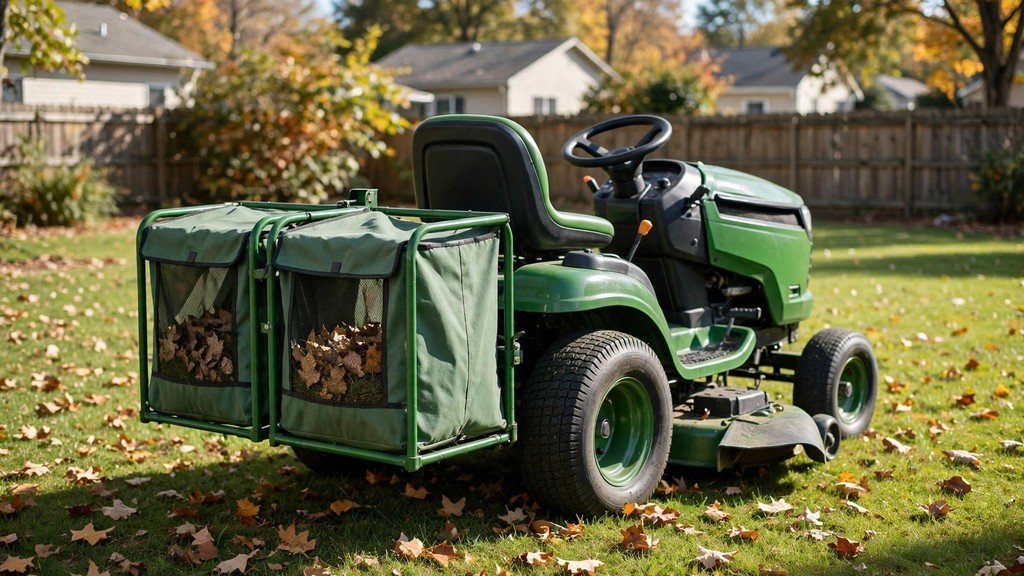
Most owners add one of three things first. A twin-bag rear bagger collects clippings for a clean finish and for leaf cleanup in fall. A MulchControl kit lets you switch between mulching and side discharge, which returns nutrients to the lawn and skips bagging on lighter cuts. A tow cart turns the tractor into a yard hauler for soil, mulch, firewood, and debris. How bagging and mulching change blade and belt wear is explained in the maintenance checklist.
Winter attachments extend the machine past mowing season. A front blade clears light snow from a driveway, and a 44-inch snow blower handles deeper snow, though neither turns a lawn tractor into a dedicated snow machine. Other options include a dethatcher, an aerator, a spreader, and a lawn roller. When you price attachments, remember this John Deere 100 Series review’s rule: buy the bagger or blade you will actually use every season, not the full catalog on day one.
John Deere 100 Series vs. Other Riding Lawn Mowers
Comparison shopping inside the 100 Series is simpler than comparing brands, because the machines share a frame, a deck design, and a warranty. The real choice is how much engine, deck, and transmission your lawn actually needs. This section of the John Deere 100 Series review compares the models against each other, then briefly against the wider riding-mower market.
S100 vs. S120 vs. S130: Main Differences
The S100 versus S120 decision is engine and comfort: single-cylinder versus V-twin, manual blade lever versus the Easy Change oil system and a 15-inch open-back seat. For a flat lawn under an acre and a half, the S100 is enough machine and the price saving is real. For thicker grass, longer sessions, or a lawn approaching two acres, the S120’s V-twin runs smoother and is worth the step. The S130 adds electric blade engagement, cruise control, and a front bumper to the S120’s package for a modest premium. This John Deere 100 Series review calls the S130 the sweet spot of the three for most buyers, because the electric PTO and cruise control are the two features owners notice every single mow.
Against other brands at this price, the closest rivals are the Cub Cadet XT1 and XT2 lines, the Toro TimeCutter range, and Husqvarna’s residential tractors. They offer similar deck sizes and horsepower for similar money, and some undercut Deere on price. Where this John Deere 100 Series review sees Deere win is dealer coverage, parts availability, and resale value — the three things that matter after the first season, when the bargain brand’s nearest dealer is an hour away.
S140 vs. S170 vs. S180: Which Model Fits Your Lawn?
The S140 is the value pick for a bigger lawn: the same 22 hp V-twin as the S130, but a 48-inch deck that cuts mowing time on open ground. The S170 keeps that 48-inch deck but upgrades to the 24 hp Extended Life Series engine and the heavy-duty K46 transaxle, which is the better match if you tow a cart, run a bagger, or mow slopes. The S180 is the same machine with a 54-inch deck, and it only makes sense on a wide, open lawn where the extra width never meets a gate post. This John Deere 100 Series review puts it plainly: buy the S140 for value, the S170 for workload, and the S180 only for acreage.
If your lawn is bigger than about three acres, steeply sloped, or needs a loader, you have outgrown the 100 Series. The step up inside Deere is the X300 Select Series or the X700 Signature Series for garden-tractor work, and the 1025R compact utility tractor if you need a loader and a backhoe. New and used prices across the whole range are compared in the ownership-cost figures before you decide.
John Deere 100 Series Review: Frequently Asked Questions
These are the questions buyers actually ask before choosing a 100 Series tractor, answered directly from the specs, prices, and comparisons in this guide.
What is the John Deere 100 Series?
This John Deere 100 Series review defines it as Deere’s residential lawn-tractor line: seven models from the S100 to the S180, all gasoline powered, all hydrostatic, built for homeowners mowing roughly half an acre to two acres or more.
How much does a John Deere 100 Series tractor cost?
This John Deere 100 Series review puts widely published starting prices in late 2026 at about $2,399 for the S100, $2,699 for the S120, $2,799 for the S130 and S140, $3,099 for the S160, $3,199 for the S170, and $3,599 for the S180, with individual dealers varying by $100 to $300.
Which 100 Series model is best for one acre?
This John Deere 100 Series review recommends the S100 or S120 for about an acre of fairly flat lawn: the 42-inch deck fits gates and turns tightly, and the S120’s V-twin is worth it if the grass is thick or the lawn is closer to two acres.
Which 100 Series model is best for two acres or more?
This John Deere 100 Series review recommends the S140 for value on two acres, the S170 if you tow or mow slopes, and the S180 only for wide, open ground where a 54-inch deck never meets a gate post.
Should I buy the S100 or the S120?
This John Deere 100 Series review says buy the S100 for a smaller, flatter lawn and a lower price, and the S120 for a bigger lawn or thicker grass: the V-twin engine, Easy Change oil system, and better seat are worth the step up.
What engines do 100 Series tractors use?
This John Deere 100 Series review lists a 17.5 hp single-cylinder Briggs & Stratton on the S100, a 22 hp V-twin on the S120, S130 and S140, and a 24 hp V-twin Extended Life Series engine on the S160, S170 and S180.
Are John Deere 100 Series tractors hydrostatic?
Yes — this John Deere 100 Series review confirms every model uses a hydrostatic transmission with side-by-side foot pedals: press forward to go forward, press back to reverse, with no gears to shift.
How fast does a 100 Series tractor go?
This John Deere 100 Series review lists a top forward speed of 5.5 mph and a reverse speed of 3.2 mph, which is standard for the class and fast enough for mowing and transport around a property.
What size mower decks are available?
This John Deere 100 Series review lists three Edge deck sizes: 42 inches with two blades on the S100, S120 and S130; 48 inches with three blades on the S140, S160 and S170; and 54 inches with three blades on the S180.
What is the warranty on a 100 Series tractor?
This John Deere 100 Series review reports a 2-year or 120-hour bumper-to-bumper warranty across the line, whichever comes first, handled through John Deere dealers.
How big is the fuel tank?
This John Deere 100 Series review lists a 2.4-gallon gasoline tank on the models whose spec sheets publish it, including the S100 and S130, with a gauge readable from the seat.
Can a 100 Series tractor handle snow and towing?
This John Deere 100 Series review says yes within limits: a front blade or 44-inch snow blower handles driveway snow, and a tow cart hauls soil, mulch, and firewood, but neither turns a lawn tractor into a dedicated snow or utility machine.
What attachments fit the 100 Series?
This John Deere 100 Series review lists the twin-bag rear bagger, MulchControl kit, tow carts, front blade, 44-inch snow blower, dethatcher, aerator, spreader, and lawn roller as the common options.
How much is a used 100 Series tractor worth?
This John Deere 100 Series review cites a recent dealer example of a 5-hour 2025 S100 listed at $2,299, and notes that clean recent examples generally ask roughly 65 to 75 percent of new, with older or higher-hour machines falling further.
Is the S110 part of the 100 Series lineup?
This John Deere 100 Series review covers the seven outline models from the S100 to the S180, and notes that the wider retail range also lists an S110 with a 19 hp engine and 42-inch deck sitting between the S100 and S120.