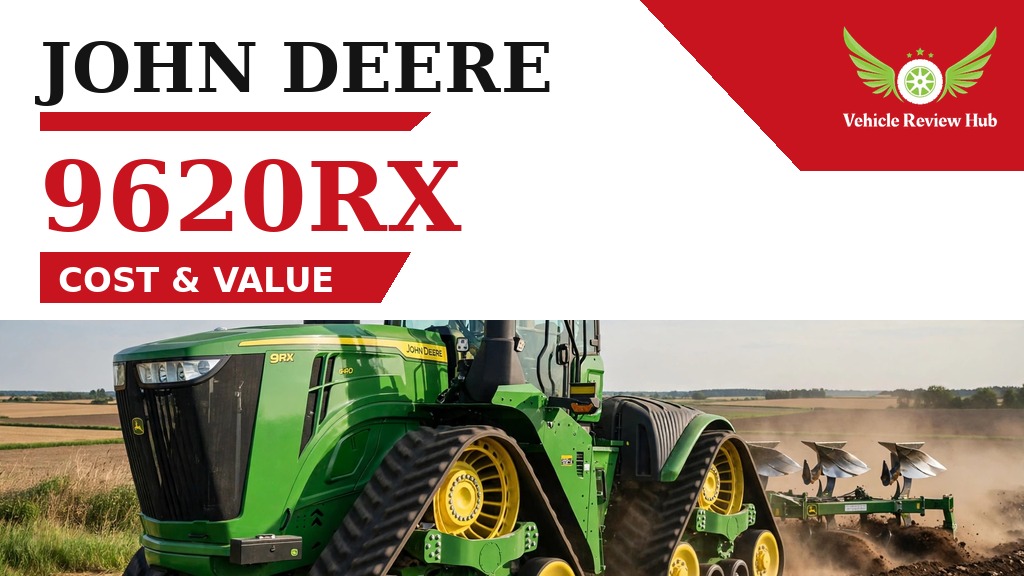
The short answer on John Deere 9620RX ownership cost is that this tractor is the most expensive used four-track Deere to run in its generation, and the purchase price is only the first bill. A clean used 9620RX costs roughly $405,000 to $460,000 in October 2026, and over five years at 600 hours a year you should budget about $601,000 more in fuel, maintenance, repairs, tracks, insurance, and depreciation. That figure is the heart of John Deere 9620RX ownership cost: diesel alone eats more than half of it, and a single set of track belts can cost as much as a good used row-crop tractor. This guide works through every line of John Deere 9620RX ownership cost from verified dealer listings, the dealer spec sheet, and the current diesel price, with estimates labeled wherever no firm figure exists.
The 9620RX is the flagship of Deere’s original four-track 9RX family, built from 2016 through 2021 in Waterloo, Iowa, and it is a used-only machine now. It pairs a 620-horsepower Cummins QSX15 with an 18-speed PowerShift and four Camso rubber tracks, and it was built for the biggest tillage, seeding, and scraper work. This John Deere 9620RX ownership cost guide assumes a mid-hour used machine bought for around $410,000 and run 600 hours a year — adjust the fuel, repair, and depreciation lines for your own hours and price.
John Deere 9620RX Total Cost of Ownership
John Deere 9620RX ownership cost breaks into two kinds of money: cash you spend every year on fuel, service, and repairs, and depreciation, which is the value the tractor quietly loses while you own it. Both belong in John Deere 9620RX ownership cost, because a buyer who counts only fuel and filters will badly underestimate what five years with this machine really costs.
Fuel, Routine Maintenance and Track Operating Expenses
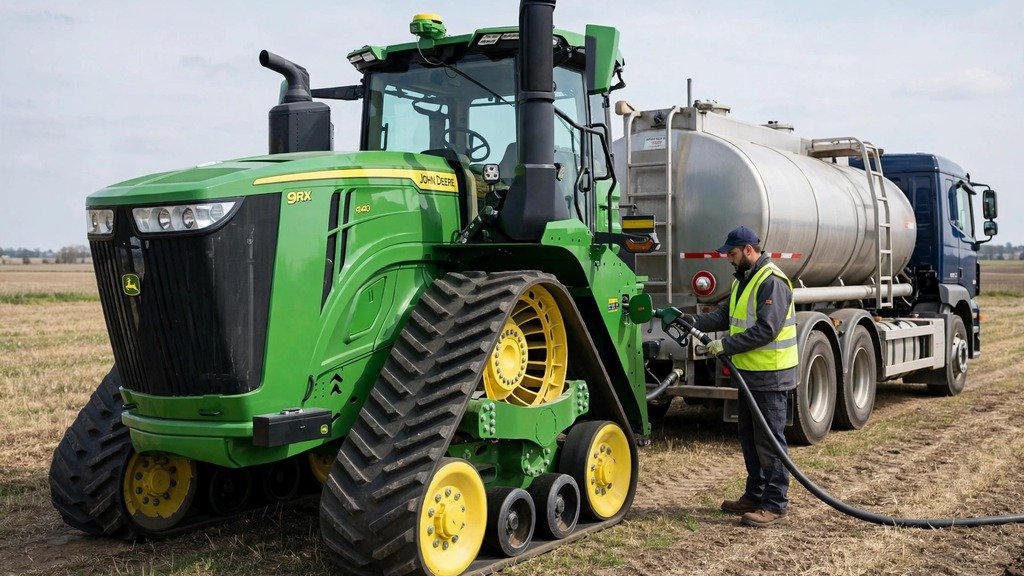
Fuel is the largest single line in John Deere 9620RX ownership cost, and it is not close. A 620-horsepower engine doing heavy draft work burns roughly 17 gallons per hour on average across a mixed season of tillage, seeding, and transport (estimate, based on owner reports and the engine’s size). At 600 hours a year that is about 10,200 gallons a year. The EIA weekly diesel update put the U.S. on-highway average at $6.276 per gallon in the week of October 19, 2026, which puts annual fuel at roughly $64,000 and five-year fuel at about $320,000 — the dominant line in John Deere 9620RX ownership cost. One owner-reported data point keeps that estimate honest: a UK owner running a 2016 9620RX on plough work reported 50 to 60 litres per hour, roughly 13 to 16 gallons per hour, so a 17-gallon mixed-season average is realistic rather than generous.
Routine maintenance is the second predictable line in John Deere 9620RX ownership cost. Engine oil and filters fall every 500 hours, transmission and hydraulic oil every 1,500 hours, and coolant at 6,000 hours, with daily track and fluid checks on top. Dealer quotes put a 500-hour service at $1,800 to $3,000 and a 1,500-hour transmission service at $3,000 to $5,000 (estimates), so a five-year routine-maintenance allowance of $15,000 covers the scheduled visits with room for filters, grease, and fluids. DEF is a small but separate line: the Cummins meets Final Tier 4 with DOC, DPF, and SCR aftertreatment, so it consumes diesel exhaust fluid, and $3,600 over five years covers it. Tracks are the wild card inside routine operating expense: belts last a reported 3,000 to 5,000-plus hours depending on roading, ballast, and tension discipline, and a full set of four belts at $10,000 to $15,000 or more each installed (estimate) means a $40,000 track reserve over five years is prudent, not pessimistic. Our 9620RX maintenance and common problems guide covers the service schedule and the issues that drive these numbers.
Repairs, Unexpected Costs and Five-Year Budget
Repairs are where John Deere 9620RX ownership cost separates careful buyers from unlucky ones. Everything on a 620-horsepower four-track machine costs more than the same job on a row-crop tractor: a single track belt, a hydraulic pump, a CommandCenter display, or a round of aftertreatment sensors each runs into four or five figures at dealer rates. A repair reserve of $45,000 over five years (estimate) covers the usual run of sensor faults, guidance glitches, hydraulic leaks, and one serious surprise without pretending the machine will never break. The expensive failures on these tractors are almost always the ones ignored for a season, so the cheapest repair strategy in John Deere 9620RX ownership cost is fixing small problems the week they appear.
| Five-year cost line (600 hrs/year) | Basis | Amount |
|---|---|---|
| Diesel fuel | 17 gph avg (est.) x 3,000 hrs x $6.276/gal (EIA, Oct 19, 2026) | $320,076 |
| DEF | Estimate, five years | $3,600 |
| Routine maintenance | 500-hour and 1,500-hour services, filters, fluids (est.) | $15,000 |
| Repair reserve | Sensors, hydraulics, electronics, one major surprise (est.) | $45,000 |
| Track belt reserve | Full set at $10,000–$15,000+ per belt installed (est.) | $40,000 |
| Insurance | About $3,500/year (est.) | $17,500 |
| Depreciation | $410,000 purchase to ~$250,000 residual after five years (est.) | $160,000 |
| Five-year total (including depreciation) | All lines above; purchase price itself excluded | $601,176 |
Cash operating lines alone — fuel, DEF, maintenance, repairs, tracks, and insurance — come to about $441,000 over five years.
John Deere 9620RX Insurance and Financial Considerations
Insurance and finance are the lines buyers most often forget in John Deere 9620RX ownership cost, and they are not small on a machine worth more than $400,000.
Equipment Insurance and Liability Coverage
Equipment insurance for a 9620RX typically runs about $3,500 a year (estimate) for full coverage on a $410,000 machine, and it should be quoted on agreed value rather than depreciated book value, because book value can lag the real market by tens of thousands of dollars. Confirm the policy covers the track system specifically — belts are the most damage-prone part of the machine and some farm policies treat them as wear items rather than insured components. Liability coverage matters as much as physical damage: a 54,000-pound articulated tractor on public roads and near hired help carries real third-party exposure, so carry liability limits that match the rest of the farm operation rather than the minimum a lender accepts. If the tractor is financed, the lender will also require loss-payee status and proof of coverage before funding, and any gap between the loan balance and the insured value in the first two years is worth a gap discussion with your agent.
Storage, Theft and Damage Protection
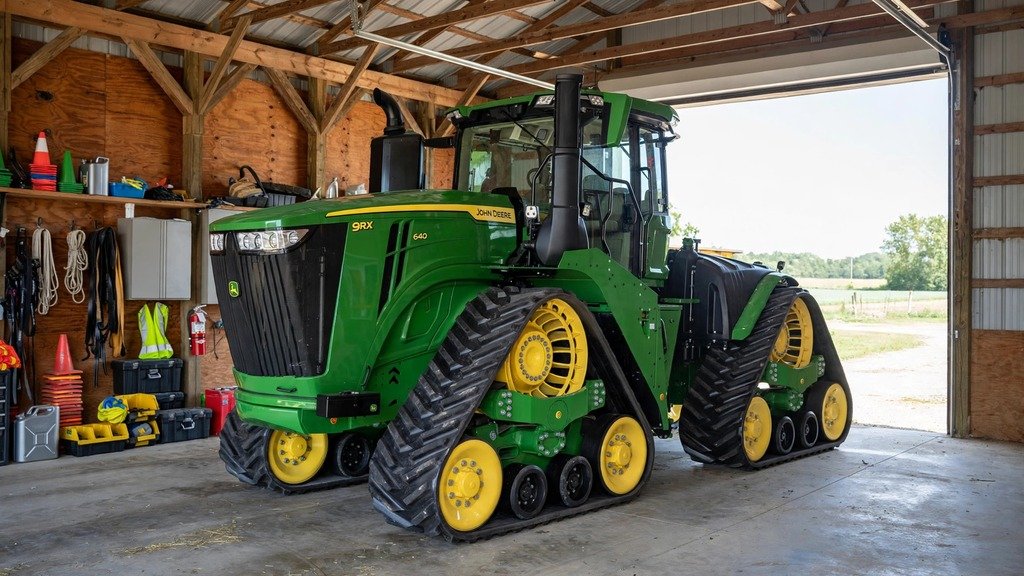
Storage is the cheapest insurance in John Deere 9620RX ownership cost. A 9620RX measures 300.7 inches long without the hitch and 323.5 inches with it, so it needs a genuinely large shed bay — but indoor storage pays back three ways: it slows rubber belt aging, it protects the CommandCenter electronics and cab from weather, and it cuts theft risk sharply. Remove receivers when the tractor sits, lock the shed, and record every serial number — engine, chassis, guidance hardware — in a file your insurer can use. For buyers comparing the smaller sibling, our 9570RX ownership cost guide runs the same insurance and storage math on the 570-horsepower model.
John Deere 9620RX Depreciation and Resale Value
Depreciation is the quietest line in John Deere 9620RX ownership cost and one of the largest. Four-track flagships lose value fastest in their first years and then flatten out, which is exactly why buying used at three to five years old is the value play — the first owner absorbed the steep part of the curve.
How Model Year, Hours, Track Condition and Equipment Affect Price
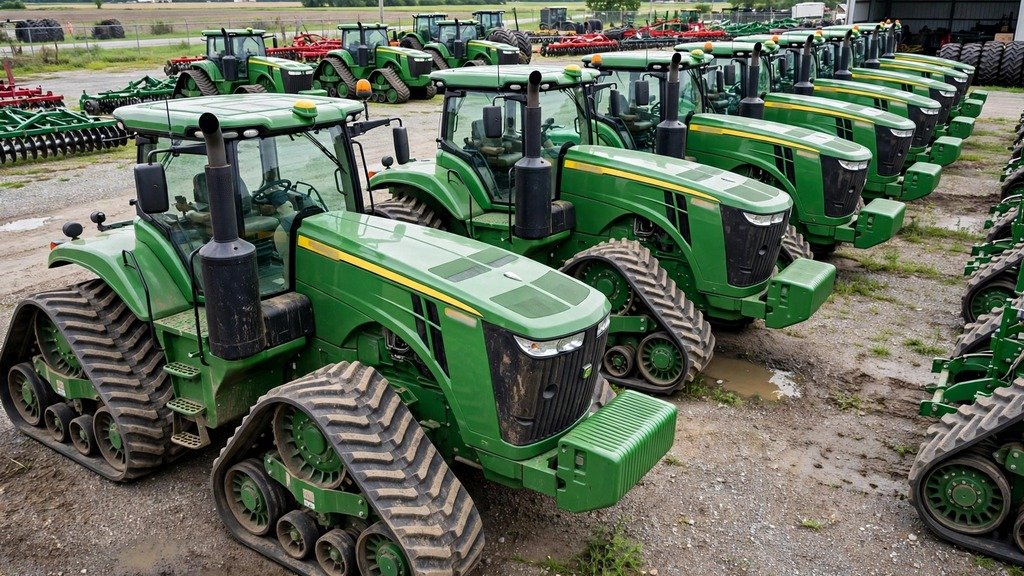
Current October 2026 dealer listings show where John Deere 9620RX ownership cost meets the real market. A 2021 with 1,810 hours at Papé Machinery in Colfax, Washington, lists at $459,999 with 36-inch tracks but no PTO or three-point hitch. A 2020 with 2,245 hours at Van Wall in Story City, Iowa, lists at $404,900. A 2019 with 1,509 hours at Van Wall in Carroll, Iowa, lists at $410,000. Hours move price in John Deere 9620RX ownership cost, but track condition moves it nearly as much: a machine with fresh belts can command $30,000 to $40,000 more than an identical-hour machine needing a full set, because every buyer prices the belt job into the offer. Equipment matters too — the Papé machine’s missing PTO and hitch narrow its buyer pool even at low hours, while a 115-gpm dual-pump machine with six SCVs, guidance, and ActiveCommand Steering holds value better. TractorHouse listings for the 9620RX show the same pattern across the country: low-hour, well-optioned, good-track machines cluster at the top of the range, and high-hour or rough-track machines fall well below it.
| Verified listing (Oct 2026) | Hours | Asking price | Notable equipment |
|---|---|---|---|
| 2021, Papé Machinery, Colfax, WA | 1,810 | $459,999 | 36-in tracks, no PTO or 3-pt hitch |
| 2020, Van Wall, Story City, IA | 2,245 | $404,900 | 30-in tracks, guidance-ready, ACS |
| 2019, Van Wall, Carroll, IA | 1,509 | $410,000 | Well-optioned, low hours |
Private Sale, Dealer Trade-In and Resale Preparation
When it is time to sell, John Deere 9620RX ownership cost hands you a choice between money and convenience. A private sale typically nets 5 to 10 percent more than a dealer trade-in (estimate), because the dealer must recondition, warranty, and retail the machine — but a private sale means fielding calls, hosting inspections, and handling transport for a 54,000-pound tractor. Either way, resale preparation pays: a full service with records, a fresh track tension and alignment check, current software, a detailed cab, and honest photos of belt condition will move the price more than any advertising. The single most valuable resale document in John Deere 9620RX ownership cost is a complete service history — buyers pay for proof, and a machine with gaps in its records sells at a discount no matter how clean it looks. Our 9520RX ownership cost guide shows how the smaller sibling’s resale curve compares.
Buying a Used John Deere 9620RX
Buying a used 9620RX well is mostly a matter of refusing to fall in love with horsepower before checking tracks, hours, and history. The machine is the flagship of its family — 620 rated horsepower from the Cummins QSX15 and the e18 18-speed PowerShift — so the buying checks that matter for John Deere 9620RX ownership cost are the same ones, with bigger numbers attached.
Inspection Checklist, Service History and Repair Records
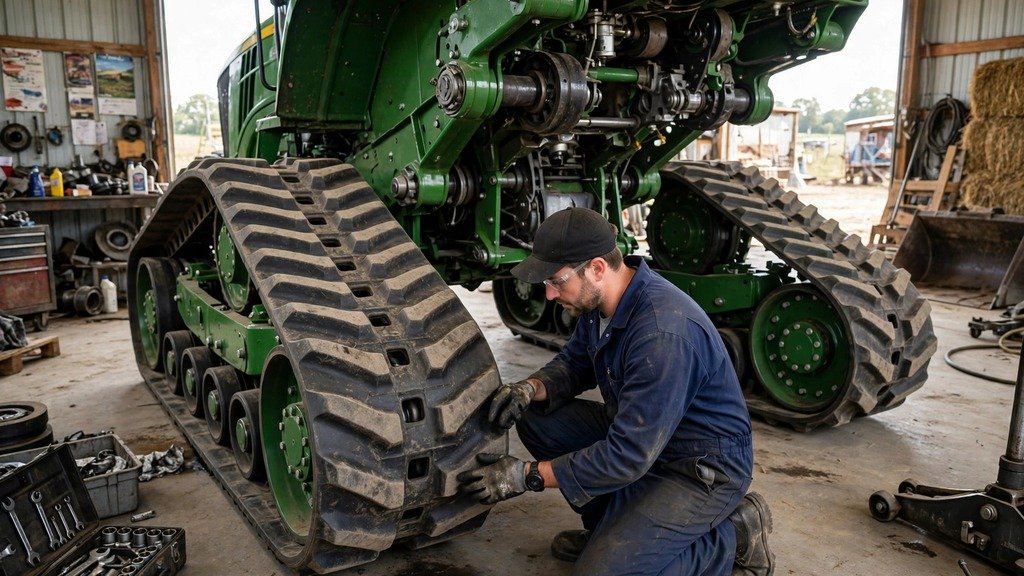
Start any used 9620RX inspection with the tracks: tread depth, chunking, cuts, guide-lug wear, alignment, and tension on all four corners, plus idlers, mid-rollers, and drive sprockets. Then verify hours against the machine’s electronic records rather than the dash, and match the engine serial number to the Cummins QSX15 plate — the smaller 9470RX and 9520RX used Deere’s 13.5-liter PowerTech, so a mislabeled listing is a real risk on this family. Demand the complete service history: 500-hour engine services, the 1,500-hour transmission service, any track replacement with dates and hours, and every software update. Test the park brake and neutral-start system, run every SCV through its full stroke, shift the e18 through AUTO and manual modes, and check the CommandCenter for stored codes. On recalls, no 9620RX-specific CPSC safety recall could be verified for this guide, so treat any recall claim as reported rather than confirmed and run the serial number through Deere’s serial-number lookup or call Deere at 800-537-8233 before buying. The dealer spec sheet for the 9620RX confirms the Cummins engine, the 620-horsepower rating, and the hydraulic figures used in this guide. The video below shows a 9620RX at work with a Bednar Atlas cultivator — a useful reminder of what a healthy machine of this model should do in the field:
Price Negotiation and Comparison with Newer 9RX Models
Negotiation on a 9620RX starts from the belt condition, not the asking price. Price a full belt set before you offer — at $10,000 to $15,000 or more per belt installed, a worn set is a $40,000-plus negotiating lever, and sellers know it. Hours, missing PTO or hitch equipment, and gaps in service records are the next three levers, in that order. Against the newer 9RX models, the math in John Deere 9620RX ownership cost is straightforward: a newer 9RX 710, 770, or 830 brings the JD18 engine, a 21-speed transmission, and DEF-free operation, but at roughly three to four times the price of a clean used 9620RX, with new-machine depreciation still ahead of it. Against the 9570RX, the 9620RX costs roughly $50,000 to $100,000 more used for 50 more horsepower and the same PTO rating, cab, and track system — worth it only if your implements genuinely need the extra power. For most heavy-tillage and large-seeding operations, the 9620RX is the value flagship: the most horsepower per used dollar in the first-generation four-track family, provided you buy on track condition and service history rather than on hours alone. Our 9620RX review and specs guide covers the full specification, and the 9620RX performance and fuel usage guide breaks down consumption by job.
Frequently Asked Questions About John Deere 9620RX Ownership Cost
Buyers weighing a used 9620RX ask the same core questions: what it costs to buy, what five years of running really adds up to, what engine it has, how long the tracks last, and whether it holds its value. The answers below draw on verified dealer listings, the dealer spec sheet, and the current diesel price, with estimates labeled wherever no firm figure exists.
How much does a used John Deere 9620RX cost?
John Deere 9620RX ownership cost starts with a purchase price of roughly $405,000 to $460,000 for clean mid-hour machines in October 2026: a 2019 with 1,509 hours at $410,000, a 2020 with 2,245 hours at $404,900, and a 2021 with 1,810 hours at $459,999. Hours, track condition, and equipment move the price more than model year does.
What is the five-year ownership cost of a 9620RX?
John Deere 9620RX ownership cost over five years at 600 hours a year comes to about $601,176, including an estimated $160,000 of depreciation. Cash operating costs alone — fuel, DEF, maintenance, repairs, tracks, and insurance — come to about $441,000. The purchase price itself is separate; part of it comes back at resale.
What engine does the John Deere 9620RX have?
John Deere 9620RX ownership cost includes the Cummins QSX15, a 14.9-liter (912 cu in) inline six rated at 620 horsepower at 2,100 rpm with about 670 horsepower maximum under boost, and 335 horsepower at the PTO. The smaller 9470RX and 9520RX used Deere’s 13.5-liter PowerTech instead, so verify the engine badge and serial plate on any used machine.
Does the 9620RX use DEF?
Yes. John Deere 9620RX ownership cost includes diesel exhaust fluid, because the Cummins meets Final Tier 4 with DOC, DPF, and SCR aftertreatment. Deere family specifications list a 31.7-gallon DEF tank, though one dealer page lists 22 gallons, so confirm the tank size on the machine you are buying.
How much fuel does a 9620RX use per hour?
John Deere 9620RX ownership cost planning should assume roughly 17 gallons per hour on average across a mixed season (estimate), higher in heavy tillage and lower in transport. At the October 2026 diesel average of $6.276 per gallon, that is roughly $64,000 a year at 600 hours.
How much does it cost to replace 9620RX tracks?
John Deere 9620RX ownership cost budgeting should allow $10,000 to $15,000 or more per belt installed at dealer rates (estimate), so a full four-belt set runs $40,000 to $50,000 or more. Camso remanufactured tracks cost roughly 40 percent less than new and are worth pricing.
How long do 9620RX tracks last?
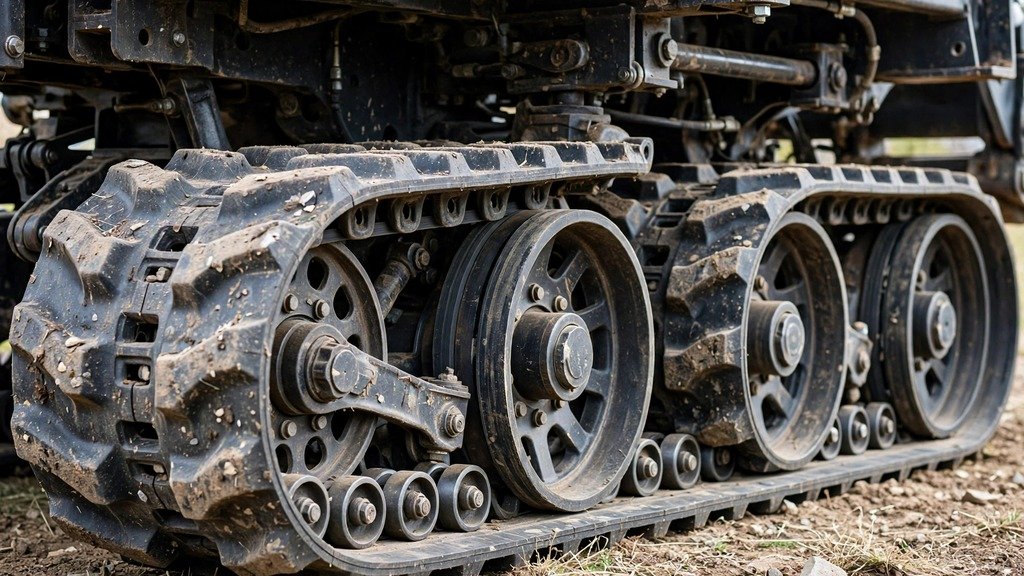
John Deere 9620RX ownership cost depends heavily on belt life, which owners report at 3,000 to 5,000-plus hours depending on roading, ballast, and tension discipline. Road travel wears belts far faster than field work, so minimizing road miles is the cheapest way to extend belt life.
What warranty comes with a used 9620RX?
John Deere 9620RX ownership cost assumes no remaining factory warranty: the original base coverage has expired on every used 9620RX by now. Paid PowerGard extended protection and dealer-certified used programs are the coverage options to ask about, and a documented service history matters more than any remaining warranty claim.
Is a used 9620RX a good buy?
Often yes. John Deere 9620RX ownership cost makes sense for farms running large tillage tools, big air seeders, or scraper work, where 620 horsepower on four tracks earns its keep. The deal-breakers are worn tracks, unverified hours, and missing PTO or hitch equipment — buy on inspection and records, not on the listing headline.
What should I check before buying a used 9620RX?
John Deere 9620RX ownership cost starts with inspection: all four belts and undercarriage components, verified electronic hours, the Cummins engine serial plate, complete service records, a full operating test of steering, hydraulics, and the e18 transmission, and a serial-number recall check through your Deere dealer.
How does the 9620RX compare with newer 9RX models on cost?
John Deere 9620RX ownership cost is far lower than a newer 9RX 710, 770, or 830, which cost roughly three to four times as much to buy and still face new-machine depreciation. The newer machines bring the JD18 engine and DEF-free operation, but the used 9620RX delivers flagship four-track capability for a fraction of the capital.
Does a 9620RX hold its resale value?
John Deere 9620RX ownership cost benefits from a resale curve that flattens after the early years: a machine bought used at $410,000 with good tracks and full records should still command roughly $250,000 after five more years and 3,000 more hours (estimate). Track condition and service history protect resale value more than any other factor.