What does it really cost to own a 2026 BMW iX for five years? The short answer on BMW iX ownership cost: about $117,800 over five years according to CarEdge — with depreciation as the biggest slice, and electricity and maintenance costing a fraction of a gasoline SUV’s. In this guide, we break down BMW iX ownership cost in full: total running expenses, insurance rates, depreciation and resale value, battery longevity, and whether the iX is worth buying in 2026 — so you can see exactly where every dollar of BMW iX ownership cost goes. Our 2026 BMW iX review covers the model lineup, specs, and trims in detail.
BMW iX Total Ownership Cost
BMW iX ownership cost starts with the big picture: purchase price plus everything you spend to keep it running, minus what it’s worth when you sell. Getting this full picture matters more for EVs than for gasoline cars, because the savings and the risks sit in very different places.
Electricity, Maintenance, Repairs & Other Running Expenses
| 5-Year Cost Category | Amount (CarEdge) | Share |
|---|---|---|
| Depreciation | $64,439 | 55% |
| Insurance | $30,555 | 26% |
| Financing interest | $16,328 | 14% |
| Maintenance & repairs | $3,697 | 3% |
| Electricity (“fuel”) | $2,785 | 2% |
| 5-year total | $117,804 | 100% |
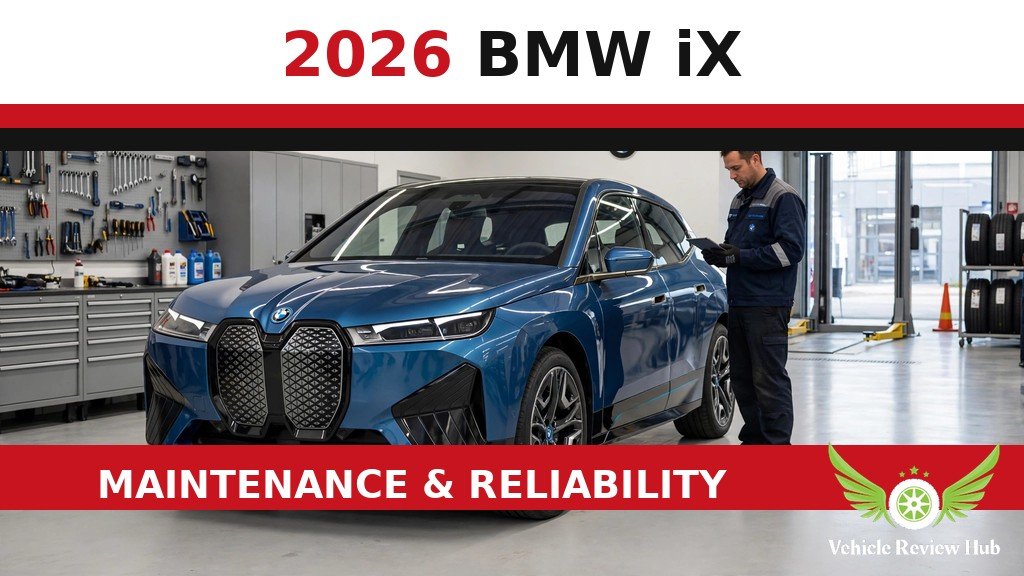
The striking thing about BMW iX ownership cost is how small the running costs are: electricity and maintenance together are just 5% of the five-year total. At average US electricity rates, a full charge costs roughly $15–$20 — about 5–6 cents per mile, less than a third of a gasoline X5’s fuel cost (see our BMW iX mileage guide for detailed efficiency and charging figures). Maintenance runs about $739 per year — our BMW iX maintenance cost breakdown covers every service item — and the first three years are complimentary under BMW Ultimate Care.
Home Charging Equipment and Long-Term EV Ownership Costs
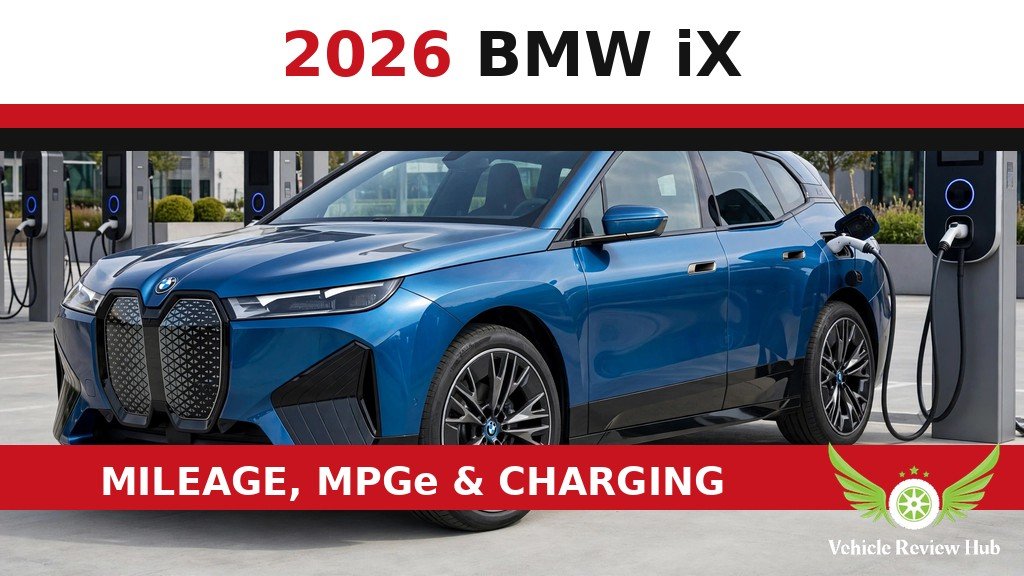
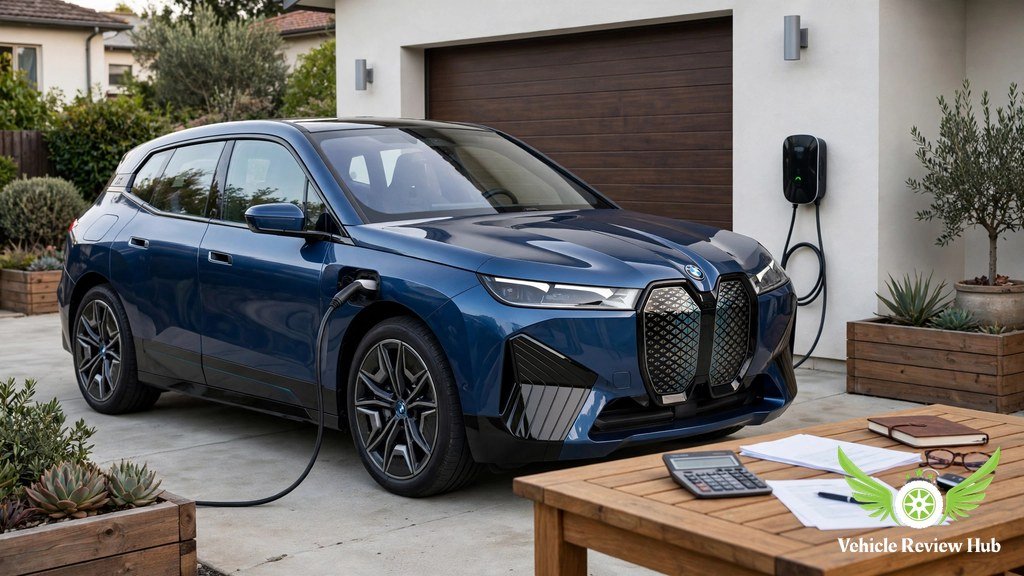
The one upfront ownership expense unique to EVs is home charging gear. A quality Level 2 home charger costs $400–$700, plus $500–$1,500 for installation depending on your electrical panel and wiring distance. Many utilities offer rebates that cut this substantially, and some BMW dealers bundle installation quotes at purchase.
Amortized over years of ownership, it’s trivial: charging at home on off-peak rates can drop your per-mile cost to 3–4 cents. Time-of-use electricity plans sweeten BMW iX ownership cost further — many utilities charge under $0.10/kWh overnight, cutting annual charging bills to $300–$500 for 12,000 miles. A Level 2 charger also adds convenience you can’t price: every morning starts with a full battery, no gas-station stops ever. Public fast charging costs more (typically $0.30–$0.50/kWh), so the home setup pays for itself within the first year for most drivers. Factor in the 1,000 kWh of free fast charging BMW includes, and year-one energy costs can be near zero.
BMW iX Insurance Cost
Insurance is the second-biggest slice of BMW iX ownership cost — and it’s higher than average for the segment.
Factors That Affect BMW iX Insurance Rates
Why is insuring an iX expensive? Three reasons: high replacement value ($75,000–$112,000), costly specialized parts (the curved display, sensors, and aluminum/carbon body panels), and expensive battery-related repair procedures. Insuraviz data puts the iX at $3,272 per year for a 40-year-old married male with a clean record — ranking 35th of 41 midsize luxury SUVs. The Zebra’s broader sample averages $4,845 per year, while CarEdge estimates $6,111 per year. Realistically, most owners pay $3,300–$6,100 annually depending on profile.
EV-specific factors matter too: insurers price in battery damage risk, and the iX’s advanced driver-assistance sensors raise repair costs after even minor collisions. On the plus side, strong safety ratings and anti-theft tech earn discounts with some carriers. Bundling home and auto policies, telematics programs, and low-mileage discounts can shave 10–20% off — meaningful when insurance is a quarter of total BMW iX ownership cost.
How Location, Trim & Driver Profile Affect Premiums
Your ZIP code swings premiums enormously — dense urban areas with higher theft and claim rates can cost double a suburban or rural rate. Trim matters: the M70’s $111,500 MSRP and performance hardware cost more to insure than the $75,150 xDrive45. Driver profile is the biggest lever: age, driving record, credit score, annual mileage, and multi-policy bundling each move the needle.
To control this part of BMW iX ownership cost, shop quotes from at least three insurers (Progressive, Nationwide, and USAA frequently quote lowest for the iX), raise deductibles if you can self-insure small claims, and ask specifically about EV discounts. Re-shopping every 12–18 months is the single most effective tactic — loyalty rarely pays in insurance.
BMW iX Resale Value & Depreciation
Depreciation dominates BMW iX ownership cost — 55% of the five-year total. Here’s the honest picture.
Expected Depreciation and Used Electric Vehicle Market Trends
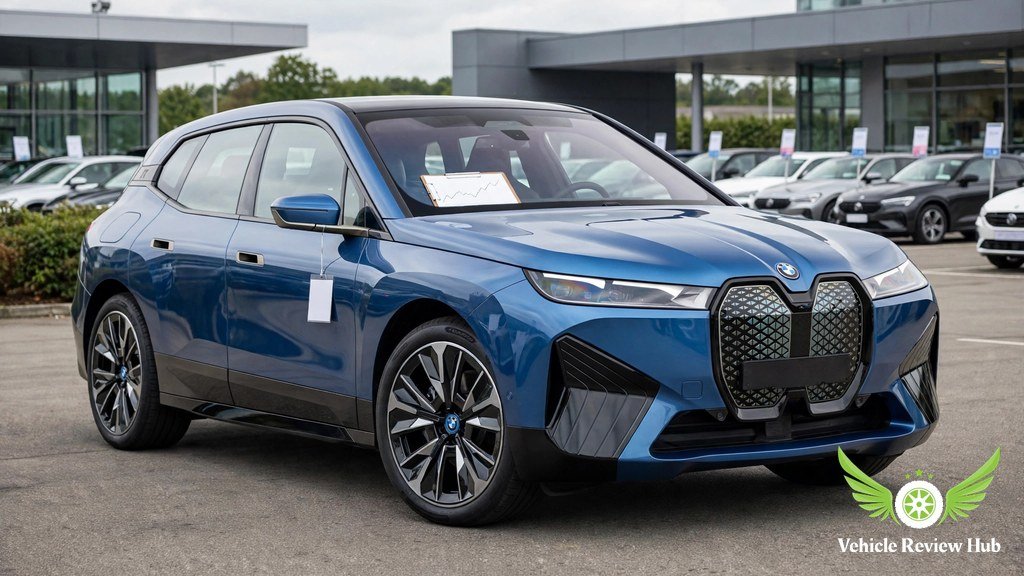
The iX depreciates like most luxury EVs: steeply. iSeeCars data shows 46.7% depreciation after 3 years ($40,021 resale) and 69.3% after 5 years ($23,066 resale) — worse than the 61.1% average for luxury electric midsize SUVs. CarEdge is slightly more optimistic: $64,439 of depreciation over 5 years from a $104,592 average transaction price, leaving a $40,153 residual (38% retention). KBB lands in the middle at $54,541 over five years.
Why the variance? EV depreciation has been volatile — Tesla’s price cuts cratered used values across the segment, and rapid tech improvements make older EVs feel dated. The iX holds up better than mass-market EVs thanks to low volume and strong brand cachet: early-2026 trade-in data shows $54,000–$60,000 for xDrive50s and $70,000–$80,000 for M60s. Still, buying new means accepting the steepest depreciation curve in the luxury world — leasing often makes more financial sense. One silver lining for buyers: steep early depreciation makes the iX a certified pre-owned bargain, and federal used-EV tax credits (where eligible) can push BMW iX ownership cost even lower on the secondary market.
How Battery Health and Technology Updates Can Affect Resale Value
Battery health is the new mileage. Buyers increasingly ask for battery health reports, and a well-maintained pack (20–80% charging habits, mostly Level 2) commands a premium. BMW’s 8-year/100,000-mile battery warranty transfers to subsequent owners, which supports used values — a 4-year-old iX still carries 4 years of battery coverage.
Technology aging cuts the other way: each model year brings more range and better software, making older cars feel dated faster than gasoline equivalents. Keeping software updated and maintaining full service records protects your resale value. The 2026 refresh (more range, lower entry price) will pressure 2022–2024 used values — good news for used buyers, a headwind for early owners.
BMW iX Long-Term Ownership Experience
Beyond the numbers, what is long-term BMW iX ownership cost and experience really like?
Battery Warranty, Battery Degradation & Post-Warranty Considerations
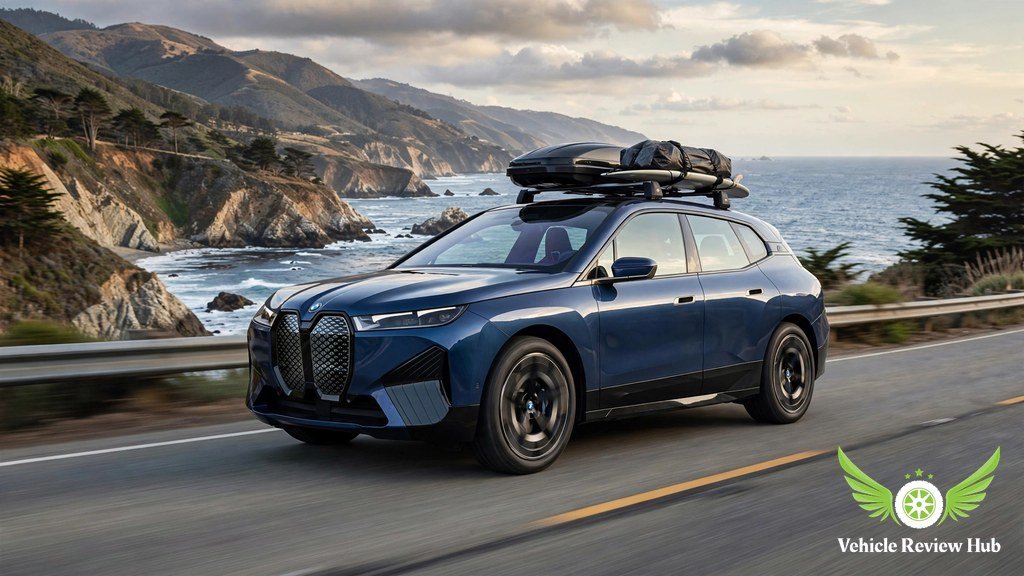
BMW warrants the high-voltage battery for 8 years or 100,000 miles against excessive capacity loss — one of the stronger warranties in the segment. Industry data shows average EV battery degradation of about 2.3% per year, implying roughly 85–90% capacity at 150,000 miles for a well-cared-for iX. The liquid-cooled pack, generous buffer, and heat pump all support longevity.
Post-warranty, a full battery replacement would cost $15,000+ — but it’s exceptionally rare, and module-level repairs are getting cheaper. The realistic post-warranty risks are the same as any aging luxury car: air suspension components, the 12V system, and electronic modules. An extended warranty for years 4–8 is worth pricing; for many owners, the fuel and maintenance savings versus a gasoline SUV more than cover it.
High-Mileage BMW iX Ownership and Potential Repair Risks
High-mileage iX data is still emerging (the model launched for 2022), but the signs are good: the motors and single-speed gearboxes have minimal wear items, regenerative braking preserves the friction brakes, and fleet examples of the related i4 show healthy longevity. Expect suspension bushings and shocks around 80,000–100,000 miles, tires every 25,000–35,000 miles, and a 12V battery every 3–5 years.
The biggest high-mileage wildcard is electronics, not the drivetrain — which is why software updates and prompt attention to warning messages matter so much. Budget-conscious long-term owners should also note that tires remain the biggest recurring expense: the iX’s weight and torque mean a $1,200–$1,800 set every 25,000–35,000 miles, a real line item in decade-long BMW iX ownership cost. Owner satisfaction remains the iX’s trump card: Consumer Reports ranks it #1 among all EVs tested, and long-term owners consistently praise the quiet cabin, predictable range, and low running costs.
Watch a real BMW iX owner’s 10-month ownership review, including real operating costs:
Is the BMW iX Worth Buying in 2026?
The final verdict on BMW iX ownership cost: expensive to buy, cheap to run.
Who Should Buy or Lease the BMW iX?
Buy if you drive a lot (high mileage amortizes the purchase price and maximizes fuel savings), can charge at home (unlocking the lowest per-mile costs), and plan to keep the car 6+ years (riding out the steep early depreciation). Lease if you want the latest tech every 3 years, drive average miles, or want to sidestep depreciation risk entirely — BMW’s lease programs on the iX are frequently aggressive, and the $75,150 xDrive45 leases particularly well.
Consider a certified pre-owned 2022–2024 iX if value is the priority: someone else absorbed the steepest depreciation, you still get balance of the battery warranty, and prices in the $45,000–$60,000 range represent remarkable value for a $90,000+ vehicle.
Pros, Cons & Final Long-Term Ownership Verdict
Ownership pros: tiny running costs (5–6 cents/mile energy, $739/year maintenance); 3 years of free servicing; 8-year battery warranty; #1 owner satisfaction; strong safety; Supercharger access.
Ownership cons: steep depreciation (55% of 5-year cost); above-average insurance ($3,300–$6,100/year); expensive tires and out-of-warranty electronics; software quirks on early cars.
For context on total BMW iX ownership cost, the breakeven versus a gasoline X5 typically arrives around year 3–4 of ownership: by then, cumulative fuel and maintenance savings ($8,000–$12,000) start offsetting the iX’s higher purchase price and faster depreciation. Drive it longer, and the advantage keeps growing.
Verdict: BMW iX ownership cost rewards the informed buyer. The purchase price is steep and depreciation is real — but once it’s in your driveway, it costs less to run than almost anything in its class. Buy the xDrive45, charge at home, maintain the battery well, and the iX delivers a decade of quiet luxury for less than the gasoline alternative. For most luxury SUV shoppers in 2026, that’s a compelling equation.
FAQs About BMW iX Ownership Cost
Quick answers to the most common questions about BMW iX ownership cost, insurance, and resale.
What is the BMW iX ownership cost over 5 years?
CarEdge estimates BMW iX ownership cost at $117,804 over five years: $64,439 depreciation, $30,555 insurance, $16,328 financing interest, $3,697 maintenance, and $2,785 electricity. KBB’s cost-to-own estimate is similar at $115,894.
How much does BMW iX insurance cost?
Typically $3,300–$6,100 per year depending on driver profile, location, and trim. Insuraviz quotes $3,272/year for a 40-year-old married male; broader averages run $4,800–$6,100. Shop multiple insurers to control this cost.
What is the BMW iX resale value after 5 years?
Data varies by methodology: iSeeCars shows ~31% retention ($23,066), CarEdge ~38% ($40,153). Expect 30–40% of original MSRP after five years — typical for luxury EVs, worse than gasoline rivals.
How long does the BMW iX battery last?
The battery is warranted 8 years/100,000 miles. Average degradation of ~2.3% per year suggests 85–90% capacity at 150,000 miles with good charging habits.
Is the BMW iX cheaper to own than a BMW X5?
To run, yes — dramatically: ~$1,000/year in energy plus $739/year maintenance versus $2,500+/year in fuel and $1,200–$1,500/year maintenance for the X5. Over a decade, that running-cost gap is the heart of the BMW iX ownership cost advantage. But the iX depreciates faster, so total BMW iX ownership cost depends on how long you keep it.
Should I buy or lease the BMW iX in 2026?
Lease if you want to avoid depreciation risk and always drive the latest tech; buy if you drive high miles, charge at home, and keep cars long-term. A certified pre-owned 2022–2024 iX is the value sweet spot.
BMW iX ownership cost tells a two-part story: a steep purchase price and sharp depreciation on one side, and some of the lowest running costs in the luxury world on the other. For the buyer who charges at home and keeps the car for years, the math works — and the driving experience is the reward.