How much does a 2026 BMW 8 Series really cost to maintain in the USA, and is it reliable? The short answer: budget around $1,000 to $1,500 per year for the first five years, rising past $2,000 per year once the factory warranty ends. The 840i with its B58 inline-six is one of BMW’s most reliable modern engines, while the M850i’s twin-turbo V8 costs noticeably more to run and demands stricter maintenance. According to our experience studying owner reports and service data, BMW 8 Series reliability ranks above average for the luxury GT class — but repair bills run well above mainstream cars. This guide breaks down the real BMW 8 Series maintenance cost, the service schedule, common problems, warranty coverage, and how to keep long-term costs under control.
BMW 8 Series Maintenance Schedule & Service Requirements
BMW uses condition-based servicing, but the official intervals still matter. Here is what the 2026 BMW 8 Series actually requires, and when each service is due.
Routine Maintenance and Major Service Intervals
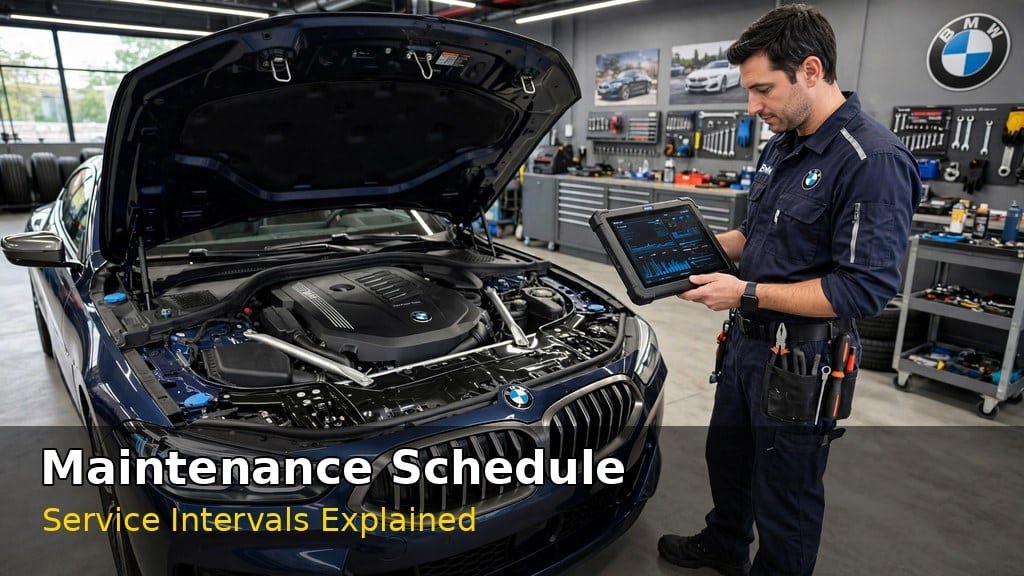
Every new BMW 8 Series includes BMW Ultimate Care: complimentary scheduled maintenance for 3 years or 36,000 miles. During this period, oil services, filters, and inspections cost you nothing at the dealer — a real saving worth roughly $1,500 to $2,000.
The core schedule is straightforward. Engine oil and filter: about every 10,000 miles or 12 months with BMW-approved synthetic oil. Brake fluid: every 2 to 3 years regardless of mileage. Engine air filter and cabin microfilter: roughly every 20,000 to 30,000 miles. Spark plugs: around 60,000 miles. Coolant is long-life but should be inspected at every service — cooling health matters enormously on these cars.
One debated item is the ZF 8-speed automatic’s fluid. BMW markets it as “lifetime fill,” but according to our experience talking with independent BMW specialists, a fluid and filter change around 60,000 miles ($400 to $700) is cheap insurance for a transmission that would otherwise cost many thousands to rebuild. Short-trip drivers should also change oil closer to 7,500 miles, since the condition-based system can stretch intervals further than is ideal for engine longevity.
Tires, Brakes & Other High-Cost Wear Items
Wear items are where BMW 8 Series maintenance cost surprises many owners. The staggered performance setup (245/35R20 front, 275–285/30R20 rear) cannot be rotated, and rear tires typically last just 20,000 to 30,000 miles. A quality replacement set runs $1,200 to $2,000 or more.
Brakes are the other big one. Owners widely report earlier-than-expected pad and rotor wear, especially on the heavier M850i with its larger M brakes. Expect $800 to $1,500 per axle at a dealer for pads and rotors. Smaller items add up too: a 12V battery replacement with required dealer registration runs $400 to $600, and an alignment after new tires is always wise on a car this precise. Budget at least $1,500 per year for wear items alone once you are out of the complimentary maintenance period.
BMW 8 Series Maintenance & Repair Costs
Routine service is only half the story. Here is what owners actually pay year by year — and where the surprise bills come from.
Routine Service Costs vs Unexpected Repairs
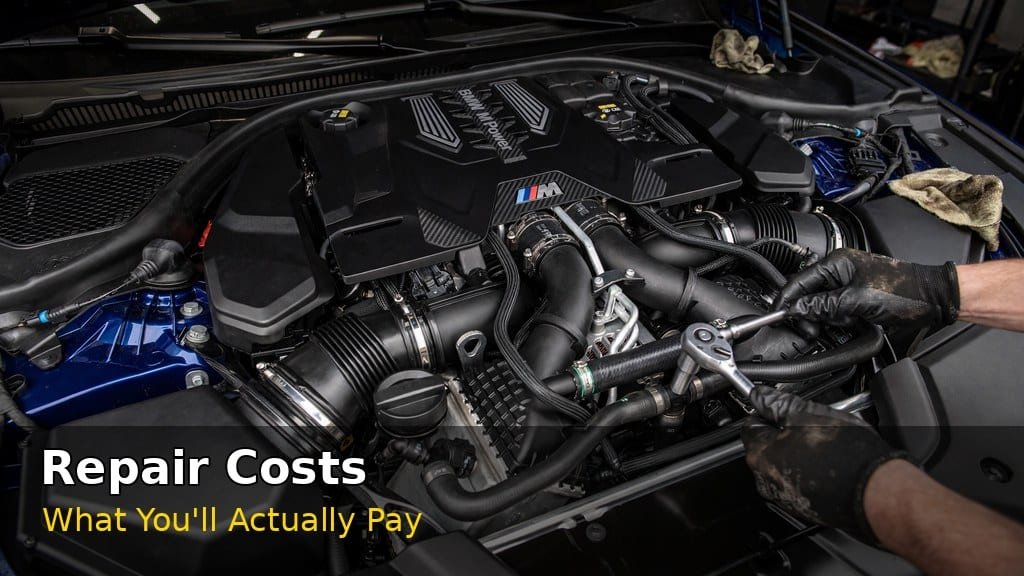
RepairPal data puts the average BMW annual repair cost near $1,000, versus about $652 across all vehicles. Over the first 10 years, BMW models average roughly $16,021 in maintenance and repairs, with a 47.26% chance of needing at least one major repair in that span.
| Year | Major Repair Probability | Average Annual Cost |
|---|---|---|
| 1 | 4.68% | $687 |
| 2 | 7.68% | $785 |
| 3 | 8.70% | $975 |
| 4 | 15.41% | $1,228 |
| 5 | 22.09% | $1,470 |
| 6 | 24.97% | $1,907 |
| 7 | 26.79% | $2,105 |
| 8 | 35.34% | $2,201 |
| 9 | 38.30% | $2,289 |
| 10 | 47.26% | $2,374 |
Two jumps stand out: costs climb after year 3 when complimentary maintenance ends, then again around year 6 as wear components need replacement. Model-specific data for the closely related M8 Coupe shows a similar curve, from about $772 in year one to $2,434 by year ten. Unexpected repairs — cooling system parts, suspension components, electronic modules — typically run $500 to $2,500 per incident, which is why the probability column matters as much as the averages.
How Engine and Model Choice Affect Maintenance Costs
Your engine choice is the single biggest factor in BMW 8 Series maintenance cost. The 840i’s B58 3.0-liter inline-six is widely considered one of BMW’s most reliable modern engines: simpler, cooler-running, and cheaper to service. Industry analyses peg typical M850i ownership around $1,500 to $2,000 per year in maintenance alone.
The M850i’s N63 4.4-liter twin-turbo V8 brings more of everything: more oil capacity, more heat, pricier parts, and a known appetite for oil if service intervals are stretched. It also burns roughly $800 to $1,000 more in premium fuel per year than the six-cylinder. KBB-style five-year ownership estimates for an M850i xDrive Gran Coupe land near $156,082 all-in, with depreciation doing most of the damage. According to our experience, an 840i driven normally will cost its owner roughly $800 to $1,000 less per year in combined fuel and service than a V8 model. Convertibles add one more variable: the power roof mechanism is another system that can need expensive attention with age.
BMW 8 Series Reliability & Common Problems
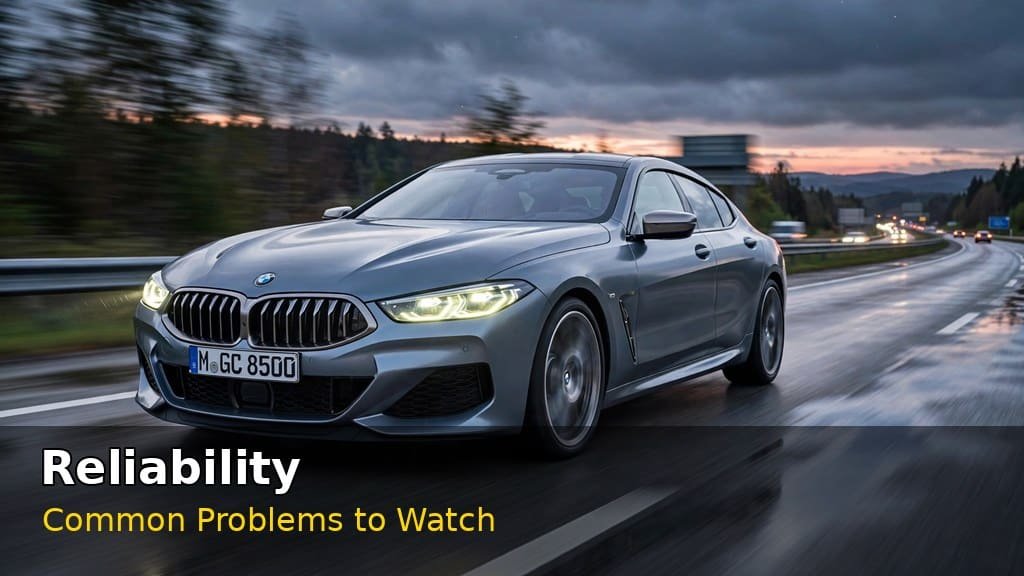
So how reliable is the BMW 8 Series in the real world? The data says above average for its class — with a handful of well-documented weak spots to watch.
Engine, Transmission & xDrive System Reliability
The B58 inline-six in the 840i has earned a genuinely strong reputation among technicians and owners alike, with many examples passing 150,000 miles on strict oil-change discipline. Its timing chain lives at the back of the engine, so prevention (clean oil, no stretched intervals) beats cure.
The N63 V8 in the M850i is a different ownership proposition. It runs hot by design, and heat is the enemy of gaskets, seals, and plastic cooling parts. The well-known issue is oil consumption: engines with stretched service histories can start drinking oil. The fix is discipline — 7,500 to 10,000-mile oil changes with approved synthetic, and checking the level regularly between services.
The ZF 8-speed automatic is one of the most reliable gearboxes in the industry; failures are rare when fluid is serviced around 60,000 miles despite BMW’s “lifetime” claim. The xDrive all-wheel-drive system is generally robust, though owners should know that a past recall covered rear drive shafts that did not meet durability requirements — one more reason to verify recall completion on any used example.
Electrical, Technology & Other Reported Issues
Like most modern luxury cars, the BMW 8 Series’ most common complaints are electronic rather than mechanical. iDrive infotainment glitches and spurious warning lights top owner reports; most are resolved with software updates, so keeping the car’s software current is genuine preventive maintenance, not a nicety.
The 48V mild-hybrid starter-generator system was subject to a recall for battery cables that may not have been secured sufficiently during production. Cooling systems deserve special attention: plastic thermostat housings, expansion tanks, and hose connectors can crack and leak with heat cycling — a $500 to $900 water-pump or thermostat job is typical if caught early, far more if overheating damages the engine. Adaptive suspension delivers a superb ride but its dampers are expensive to replace out of warranty. And as noted, early brake wear is widely reported — treat brakes as a scheduled expense, not a surprise. For context, J.D. Power ranked BMW 4th of 14 luxury brands in dependability (184 problems per 100 vehicles), and the 8 Series itself scores around 85/100 for quality and reliability — strong for the segment.
BMW 8 Series Warranty, Recalls & Service Updates
What BMW covers, for how long — and how to confirm every recall on your specific car has actually been completed.
Factory Warranty and Available Protection Options
| Coverage | Term |
|---|---|
| Basic limited warranty | 4 years / 50,000 miles |
| Powertrain warranty | 4 years / 50,000 miles |
| Corrosion perforation | 12 years / unlimited miles |
| Roadside assistance | 4 years / unlimited miles |
| Complimentary maintenance (Ultimate Care) | 3 years / 36,000 miles |
The basic warranty covers defects in materials and workmanship — parts and labor — but not wear items like brake pads, wiper blades, or filters, and not damage from accidents or neglected maintenance. It is fully transferable, which helps resale.
Beyond year four, BMW offers extended vehicle service contracts, and certified pre-owned examples (under 6 years / 60,000 miles) get an additional year of unlimited-mile coverage after the original warranty plus a rigorous inspection. According to our experience, an extended plan is worth serious consideration if you plan to keep an M850i past the factory term, given V8 repair costs; for a well-maintained 840i, many owners self-insure and come out ahead. Read any third-party contract’s exclusions carefully — “wear and tear” definitions vary enormously.
How to Check Recalls and Vehicle-Specific Service Information
Checking recalls takes two minutes: enter the 17-digit VIN at nhtsa.gov/recalls, or ask any BMW dealer to run the VIN through their system. Do this before buying any used 8 Series — and confirm the work was actually performed, not just that a recall exists.
Notable 8 Series campaigns to verify include: the EGR cooler leak (potential fire risk), the brake-pedal ball-head connection, curtain airbag propellant, the steering-gear retaining ring, 48V starter-generator battery cables, rear drive-shaft durability, and overheating engine-starter electrical contacts. None of these are reasons to avoid the car — all have fixes — but an unperformed recall is a red flag about how the car was maintained. Pair the VIN check with a pre-purchase inspection by an independent BMW specialist; the $200 or so it costs is the best money in this entire buying process.
BMW 8 Series Long-Term Reliability
What should you expect after year five? The honest picture of an aging 8 Series — and how to keep one healthy past 100,000 miles.
Expected Ownership Challenges as the Vehicle Ages
The cost curve tells the story: average annual spend rises from about $1,470 in year five to roughly $1,907 in year six and $2,374 by year ten, while the chance of a major repair climbs from 22% to 47%. This is normal for a complex luxury GT, not a sign of a “bad” car.
Physically, heat and time attack the same suspects: plastic cooling components, valve-cover and oil-pan gaskets (the V8 especially), and suspension bushings and dampers. Adaptive dampers that felt magical at 30,000 miles can feel tired — and costly — at 90,000. Electronics age too: modules, sensors, and the 48V system benefit from diagnostic scans at each service to catch faults early. Convertible owners should exercise the roof regularly and keep its seals conditioned. According to our experience, the dividing line is service history: 8 Series examples with complete dealer or specialist records age gracefully, while neglected ones turn expensive with little warning.
How to Reduce Long-Term Repair Costs
Five habits separate affordable long-term ownership from painful bills. First, move to a reputable independent BMW specialist after the warranty ends — labor rates run 20 to 40% below dealers with equal expertise. Second, insist on OEM or OE-supplier parts, especially for cooling and brakes; cheap aftermarket parts are a false economy here. Third, be proactive rather than reactive: transmission fluid around 60,000 miles, cooling-system inspections at every service, and oil every 7,500 to 10,000 miles.
Fourth, consider an extended warranty before the factory 4-year/50,000-mile coverage expires if you plan to keep the car long-term — prices only rise afterward. Fifth, never skip the pre-purchase inspection on a used example, and favor cars with documented oil-change history above all else. Based on user feedback across owner forums, diligent maintenance is the single biggest predictor of a trouble-free 8 Series — more than model year, mileage, or even engine choice.
BMW 8 Series Maintenance FAQs
Quick answers to the questions owners and shoppers ask most about BMW 8 Series maintenance cost and reliability.
How much does BMW 8 Series maintenance cost per year?
Expect roughly $700 to $1,000 per year while under complimentary maintenance, $1,200 to $1,500 per year in years four and five, and $2,000 or more per year after year six. The M850i V8 typically runs $1,500 to $2,000 annually — noticeably more than the 840i.
Is the BMW 8 Series reliable?
Yes, by luxury-GT standards. It scores around 85/100 for quality and reliability, and BMW ranked 4th of 14 luxury brands in J.D. Power dependability. The 840i’s B58 inline-six is exceptionally well regarded; the M850i’s V8 is reliable only with strict maintenance.
What are the most common BMW 8 Series problems?
The most reported issues are infotainment and electrical glitches, cooling-system leaks from plastic components, earlier-than-expected brake wear, and oil consumption on V8 models with stretched service intervals. Adaptive suspension repairs can also be costly out of warranty.
How often does the BMW 8 Series need servicing?
Follow the condition-based system as a minimum: engine oil about every 10,000 miles or 12 months, brake fluid every 2 to 3 years, spark plugs near 60,000 miles, and a transmission fluid change around 60,000 miles despite the “lifetime fill” claim.
Does BMW cover maintenance for free?
Yes — BMW Ultimate Care covers all factory-scheduled maintenance for 3 years or 36,000 miles at no charge, including oil services, filters, and inspections. Wear items like tires and brake pads are not included.
Should I buy an extended warranty for a BMW 8 Series?
If you plan to keep the car beyond 4 years or 50,000 miles, it is worth serious thought — especially for the M850i, where a single major repair can exceed the plan’s cost. For a well-maintained 840i, many owners skip it and budget the equivalent amount instead.