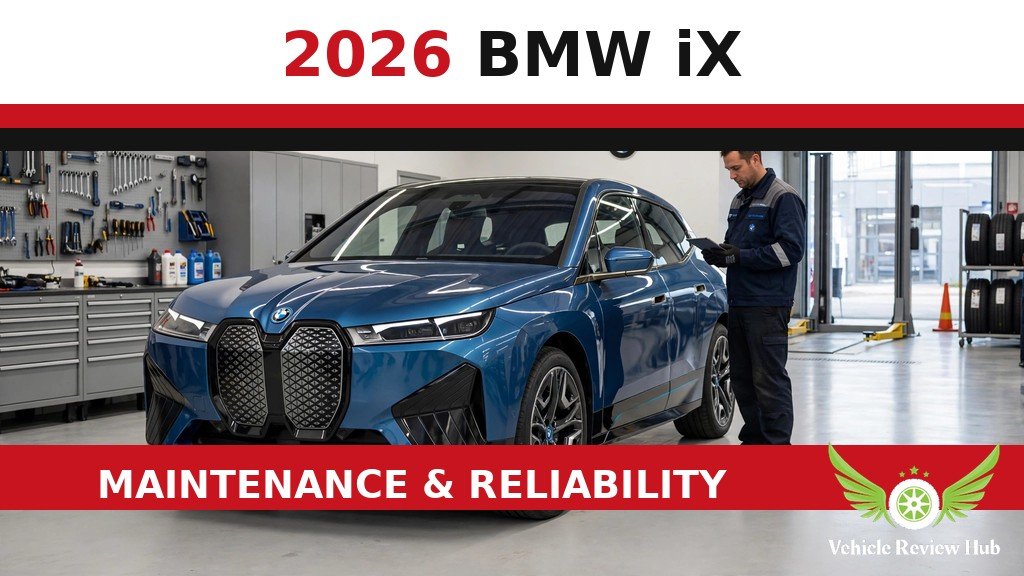
Is the 2026 BMW iX expensive to maintain? The short answer on BMW iX maintenance cost: about $739 per year over the first five years according to CarEdge — roughly half what a gasoline BMW X5 costs to service, thanks to the simpler electric drivetrain. In this guide, we break down BMW iX maintenance cost in full: the routine service schedule, warranty coverage, repair costs versus gasoline luxury SUVs, reliability and common problems, recalls, and long-term ownership expectations.
Below, we cover every angle of 2026 BMW iX ownership — from scheduled service intervals and warranty coverage to repair cost comparisons, reliability data, and practical tips for keeping your iX running strong for the long haul.
BMW iX Maintenance Schedule & Routine Service Requirements
Electric vehicles need far less routine service than combustion cars — no oil changes, no spark plugs, no transmission fluid. The BMW iX takes that simplicity further with long service intervals.
Tires, Brakes, Cabin Filters & Essential EV Maintenance
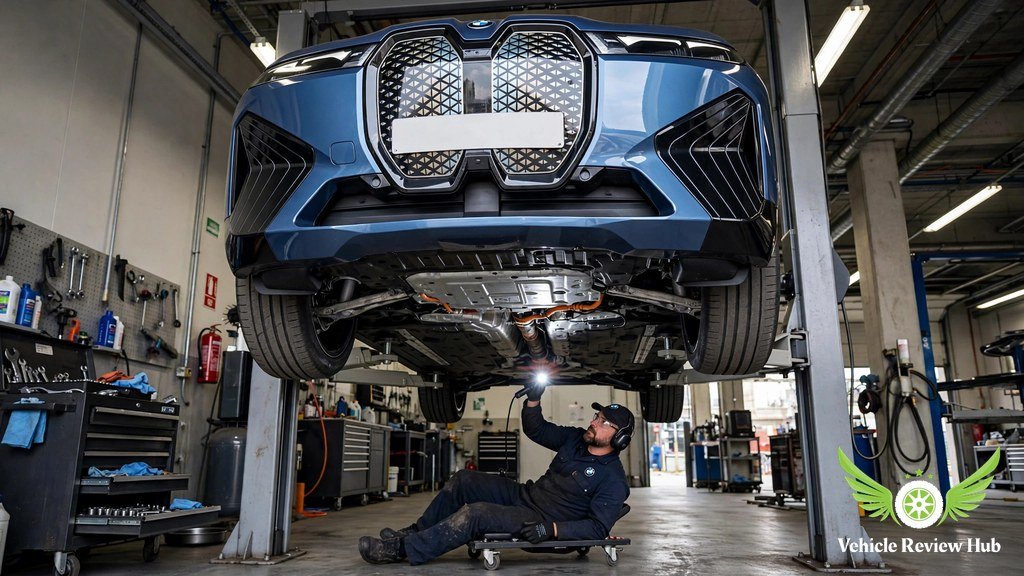
The BMW iX service schedule calls for inspections roughly every 2 years or 20,000 miles (intervals vary slightly by market and driving conditions). What actually gets done: tire rotation and inspection, brake fluid flush (typically every 2 years), cabin microfilter replacement, wiper blades, and a multi-point inspection of the high-voltage system, cooling circuits, and 12V battery. Regenerative braking means the friction brakes see far less use — many EV owners go 80,000+ miles on original pads. Fewer brake jobs is one of the quiet drivers of low BMW iX maintenance cost over a decade of ownership.
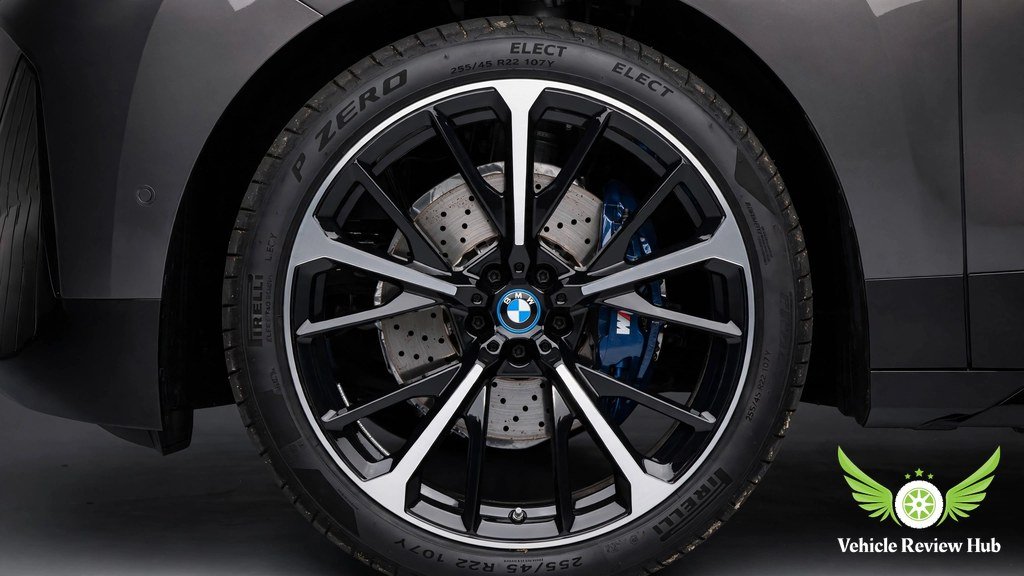
Tires are the biggest consumable: the iX’s weight (5,567–5,849 lbs) and instant torque wear tires faster than a comparable gasoline SUV, especially with the larger 21–23-inch wheels. Budget for a set every 25,000–35,000 miles depending on driving style. Cabin filters are inexpensive and easy; the 12V auxiliary battery (yes, EVs still have one) typically needs replacement every 3–5 years. Smooth, efficient driving habits extend both tire life and range — our BMW iX mileage guide explains how driving style affects real-world efficiency.
BMW Complimentary Maintenance and Warranty Coverage
Every new BMW iX includes BMW Ultimate Care: 3 years or 36,000 miles of complimentary scheduled maintenance, covering the services above. The new-vehicle warranty runs 4 years/50,000 miles, and the high-voltage battery carries its own 8-year/100,000-mile warranty against excessive capacity loss. BMW also includes 24/7 roadside assistance and 1,000 kWh of free DC fast charging. Coverage applies across the full iX lineup, whose trims and standard features are detailed in our 2026 BMW iX review for context on what the warranty covers.
That means BMW iX maintenance cost is effectively $0 for the first three years beyond tires and incidentals. Once the complimentary period ends, a typical annual service visit runs $200–$400 at a BMW dealer — mostly inspections, filters, and brake fluid. Independent EV shops often charge 20–30% less for the same work, giving owners a real choice on ongoing BMW iX maintenance cost after year three — a meaningful advantage over gasoline rivals whose first services start at $200–$400 each. After Ultimate Care expires, you can extend coverage with BMW’s maintenance plan upgrades.
BMW iX Maintenance & Repair Costs
What does BMW iX maintenance cost once you’re paying out of pocket? The data is encouraging — and it gets better the longer you own the car, since the biggest savings versus gasoline vehicles compound every year you skip oil changes, emission repairs, and transmission services.
Routine Service Costs Compared with Gasoline Luxury SUVs
| Vehicle | Avg. Annual Maintenance (0–5 yrs) | 10-Year Total (CR data) |
|---|---|---|
| BMW iX (EV) | $739 | ~$9,500–$11,000* |
| BMW X5 (gas) | ~$1,200–$1,500 | ~$11,000–$15,991* |
| Tesla Model X (EV) | ~$580 (Tesla avg) | ~$4,035* |
*10-year figures from Consumer Reports’ brand-level surveys and CarEdge model data; individual results vary.
CarEdge estimates BMW iX maintenance cost at $3,697 in maintenance and repairs after 5 years — well below the $15,991 10-year average for BMW’s gasoline lineup. Consumer Reports’ 2025 maintenance survey puts BMW at $11,000 over 10 years ($1,700 in years 0–5, $7,800 in years 6–10), versus Tesla’s $4,035. The iX, as an EV, should land at the lower end of BMW’s range: no oil, no emissions systems, no turbochargers to fail. Cross-check these figures against RepairPal’s BMW iX repair estimates, which compile independent repair and service pricing data for comparison.
Tires, Suspension, Electronics & Other Potential Repair Expenses
The big-ticket variables in BMW iX maintenance cost are tires and electronics. A set of 21- or 22-inch EV-rated tires runs $1,200–$1,800 installed, and the iX’s weight means you’ll buy them more often than on a lighter car. Air suspension components (if equipped) can cost $1,500+ per corner out of warranty. The curved display and sensor suite are expensive to replace if damaged — windshield replacement with camera recalibration can exceed $1,500.
The high-voltage battery is the elephant in the room, but it’s a caged one: covered for 8 years/100,000 miles, and real-world EV battery data shows 85–90% capacity retention at 150,000+ miles with normal care. For buyers worried about post-warranty exposure, BMW’s extended warranty and third-party EV warranties can cap BMW iX maintenance cost for years 4–8 at a predictable monthly figure — worth pricing against the car’s strong reliability record on hardware. Out-of-warranty battery replacement would be very expensive ($15,000+), but it’s exceptionally rare — and battery repair (module-level replacement) is getting cheaper every year.
BMW iX Reliability & Common Problems
How reliable is the BMW iX? The picture is mixed but trending positive — and reliability directly shapes BMW iX maintenance cost, since the most common complaints (software) are fixed free under warranty or via over-the-air updates rather than paid repairs.
Battery, Electric Motor, Charging & High-Voltage System Reliability
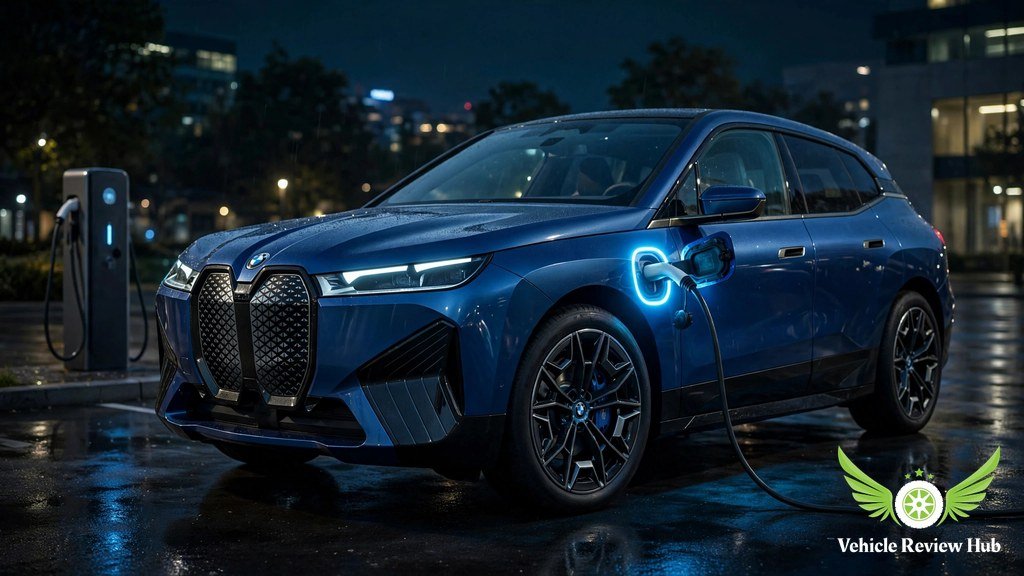
The core electric drivetrain has proven robust. BMW’s fifth-generation eDrive motors (current-excited synchronous, no rare-earth magnets in the rotor) have shown few mechanical failures in owner reports. The high-voltage battery has had two notable issues: a 2022 recall for potential battery overheating on early cars, and the 2025 software recall affecting the battery control unit (more below). Both were addressed free of charge.
Charging-system complaints center on the Combined Charging Unit on certain early models (recalled) and occasional charge-port door glitches. The standard heat pump and battery preconditioning have been reliable. Overall, the high-voltage hardware earns good marks — the problems are overwhelmingly in software, not hardware. That hardware durability is the foundation of low long-term BMW iX maintenance cost: the expensive parts rarely break, and the troublesome parts are fixed with free updates.
Software, Electronics & Other Reported BMW iX Issues
Software is the iX’s Achilles’ heel. Owner forums and reviewers report infotainment glitches, failed over-the-air updates, My BMW app connectivity problems, spurious warning messages from control units, and occasional black screens — usually resolved by a dealer software reboot. The 12V auxiliary battery can cause cascading electronic weirdness when it weakens, a common EV trait.
What Car?’s 2025 UK reliability survey scored the iX 81% (25th of 27 electric SUVs), with the most common faults being battery pack (10%), electric motor (10%), infotainment (10%), and steering (10%) — though notably, 100% of repairs were covered at £0 under warranty. Edmunds owner reviews are mixed: many love the ride and range, while others cite hard-to-use controls and software problems. The trend is clear: 2022–2023 cars had the most issues; 2024+ models with updated software are markedly better.
BMW iX Recalls, Software Updates & Service History
Staying on top of recalls is part of BMW iX maintenance cost management — they’re always free, but only if you know about them.
How to Check VIN-Specific Recalls and Service Campaigns
The biggest iX recall to date came in June 2025: BMW recalled 70,852 EVs in the US (25,280 of them iX models from 2022–2024) for drive-motor software that could falsely detect a “double-isolation condition” and shut down the high-voltage system while driving — a sudden power-loss risk. BMW reported 43 warranty claims and no accidents or injuries; the fix is a software update performed at the dealer or over the air.
Earlier recalls include the 2022 high-voltage battery overheating concern and the Combined Charging Unit campaign. To check your specific vehicle, enter the 17-digit VIN at nhtsa.gov/recalls — it takes 30 seconds and shows every open recall. BMW also notifies owners by mail, and your dealer can run a VIN check during any service visit. Always verify recall completion when buying a used iX.
Why Software Updates Matter for BMW iX Ownership
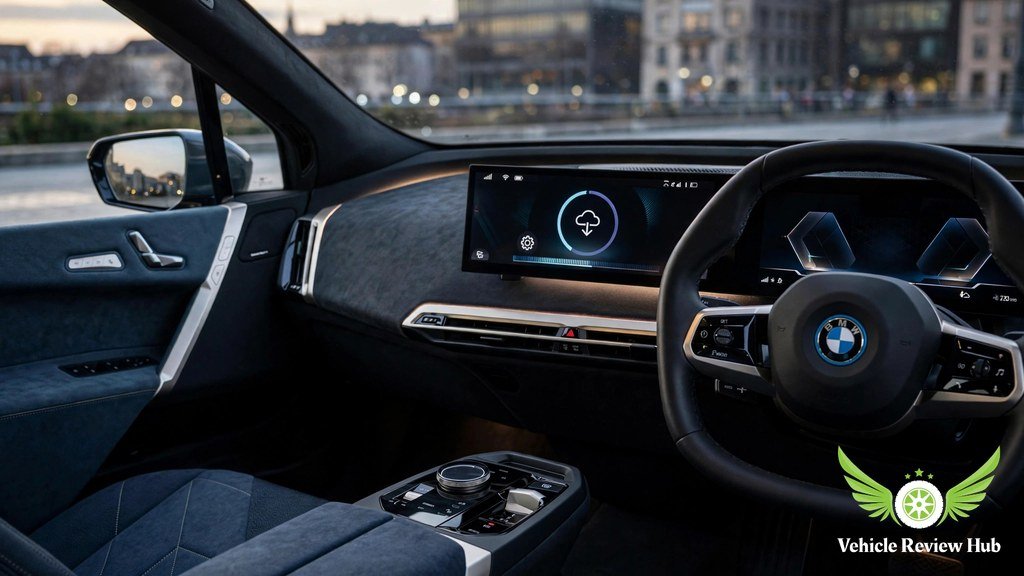
The iX receives over-the-air (OTA) software updates that fix bugs, improve charging curves, and occasionally add features — essentially free maintenance. But failed OTA updates are themselves a known complaint, so it’s worth confirming at each service that the car is on the latest iDrive version. Many of the early software gremlins (infotainment freezes, phantom warnings) were resolved by updates, which is why 2024+ cars score better on reliability.
Treat software like maintenance: keep updates current, don’t ignore persistent warning messages, and let the dealer handle anything that doesn’t clear after a restart. This discipline keeps BMW iX maintenance cost low by catching small electronic issues before they strand you.
Watch this detailed breakdown of real BMW iX problems, recalls, and reliability issues from an owner:
BMW iX Long-Term Reliability
Can you keep a BMW iX for 10 years and 150,000 miles — and what does BMW iX maintenance cost look like at high mileage? The early evidence says yes to the first question, and encouraging things about the second, with a few caveats.
Battery Life and High-Mileage Ownership Expectations
EV batteries degrade slowly: industry data suggests 85–92% capacity retention at 150,000 miles for well-managed packs. The iX’s large buffer, liquid cooling, and 8-year/100,000-mile warranty provide strong protection. High-mileage examples are still rare (the iX launched as a 2022 model), but the related BMW i4 and iX3 fleets show healthy battery longevity.
Beyond the battery, the motors and single-speed transmissions have minimal wear items. Expect the usual long-term needs: suspension bushings and shocks around 80,000–100,000 miles, a 12V battery every 3–5 years, and eventual air-conditioning service for the battery cooling circuit. The electronics — not the drivetrain — are the long-term wildcard, making extended warranties worth considering past year 6.
How Proper Charging and Maintenance Can Support Long-Term Ownership
Battery-friendly habits directly protect your investment: keep daily charging between 20–80% (use 100% only before long trips), prefer Level 2 home charging over frequent DC fast charging, precondition the battery in extreme weather, and avoid leaving the car at 100% or near 0% for days. These habits are the single biggest lever on long-term BMW iX maintenance cost — a healthy battery avoids the only truly catastrophic repair bill.
Follow the service schedule, rotate tires religiously (the iX eats them), keep software updated, and address warning lights promptly. Do that, and the iX’s simple drivetrain should deliver a decade of quiet, low-cost motoring — with total BMW iX maintenance cost far below any gasoline equivalent. For the full picture of total long-term ownership costs beyond service alone, see our BMW iX ownership cost breakdown, which covers depreciation, insurance, and charging expenses over five years. Keep every service receipt and software update record too: a documented maintenance history protects resale value, and buyers pay a premium for used EVs with verified battery health and a clean recall record.
FAQs About BMW iX Maintenance Cost
Quick answers to the most common questions about BMW iX maintenance cost, reliability, and ownership.
How much does BMW iX maintenance cost per year?
CarEdge estimates BMW iX maintenance cost at $739 per year over the first five years ($3,697 total including repairs). The first 3 years/36,000 miles of scheduled maintenance are complimentary under BMW Ultimate Care.
Is the BMW iX reliable?
Mostly yes, with software caveats. Consumer Reports ranks the iX #1 among EVs for owner satisfaction, but What Car?’s 2025 survey scored it 81% with software and electronics as the main complaint areas. 2024+ models with updated software are notably better than early 2022–2023 cars.
What are the most common BMW iX problems?
Software glitches (infotainment freezes, failed OTA updates, spurious warnings), 12V battery issues, charge-port quirks, and the 2025 drive-motor software recall (25,280 iX units, fixed via update). Hardware failures of the battery and motors are rare.
Has the BMW iX been recalled?
Yes — most significantly in June 2025 for drive-motor software that could cause sudden power loss (fixed by software update, no injuries reported). Check your VIN at nhtsa.gov/recalls for all open recalls.
How long does the BMW iX battery last?
The battery is warranted for 8 years/100,000 miles. Industry data suggests 85–92% capacity retention at 150,000 miles with good charging habits (20–80% daily, mostly Level 2 charging).
Is BMW iX maintenance cheaper than a gas BMW X5?
Yes, significantly. BMW iX maintenance cost runs about $739/year versus $1,200–$1,500/year for a gasoline X5 — no oil changes, fewer brake jobs, and fewer wear items overall. Over 10 years, the savings run into the thousands.
BMW iX maintenance cost is one of the car’s quiet strengths: $739 a year, three years of free servicing, an 8-year battery warranty, and a drivetrain with a fraction of the moving parts of a gasoline SUV. Watch the software, mind the tires, keep the battery between 20–80%, and the iX should be one of the cheapest luxury vehicles you’ll ever maintain — proof that going electric can be as kind to your wallet as it is to the driving experience.