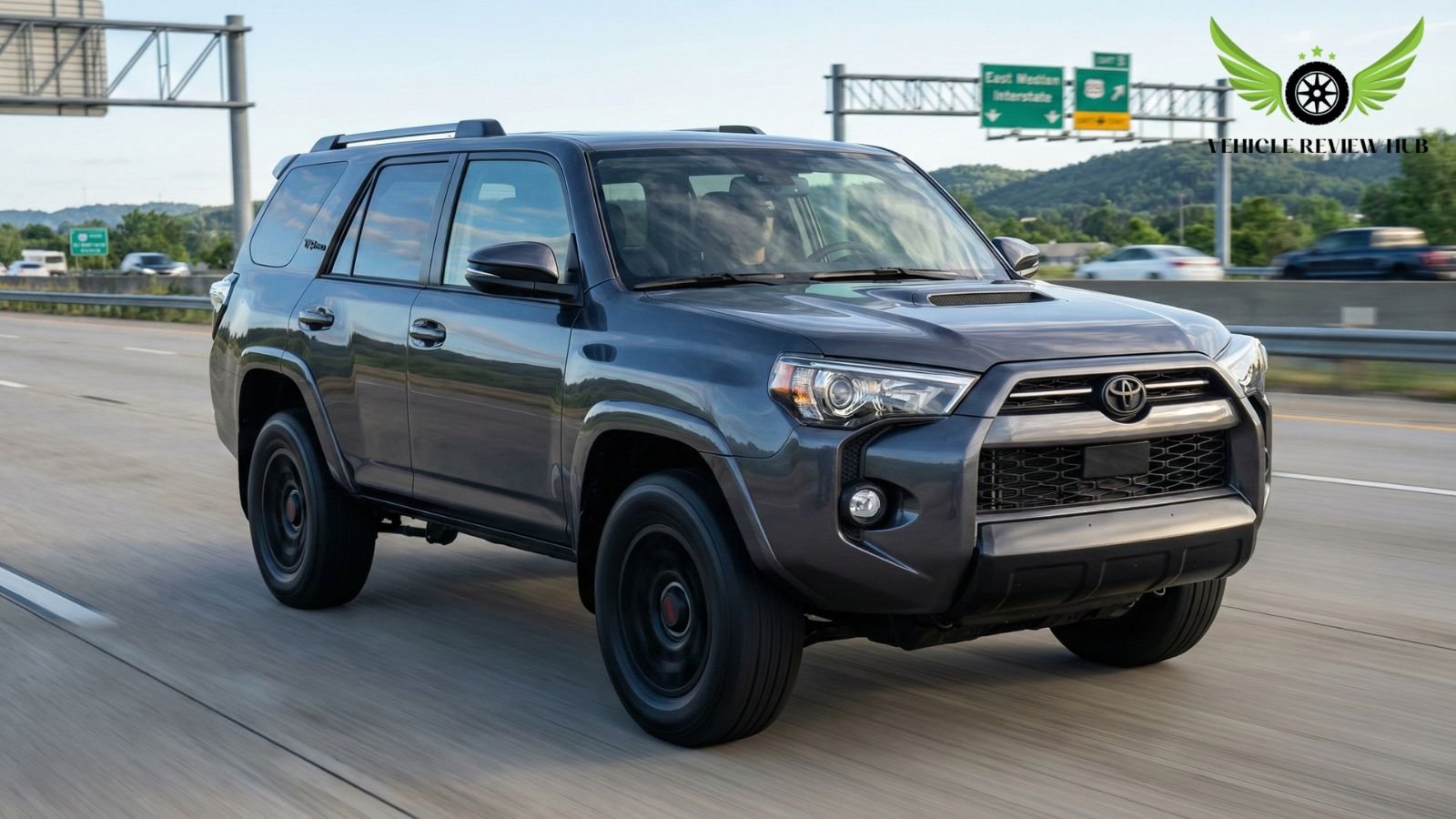
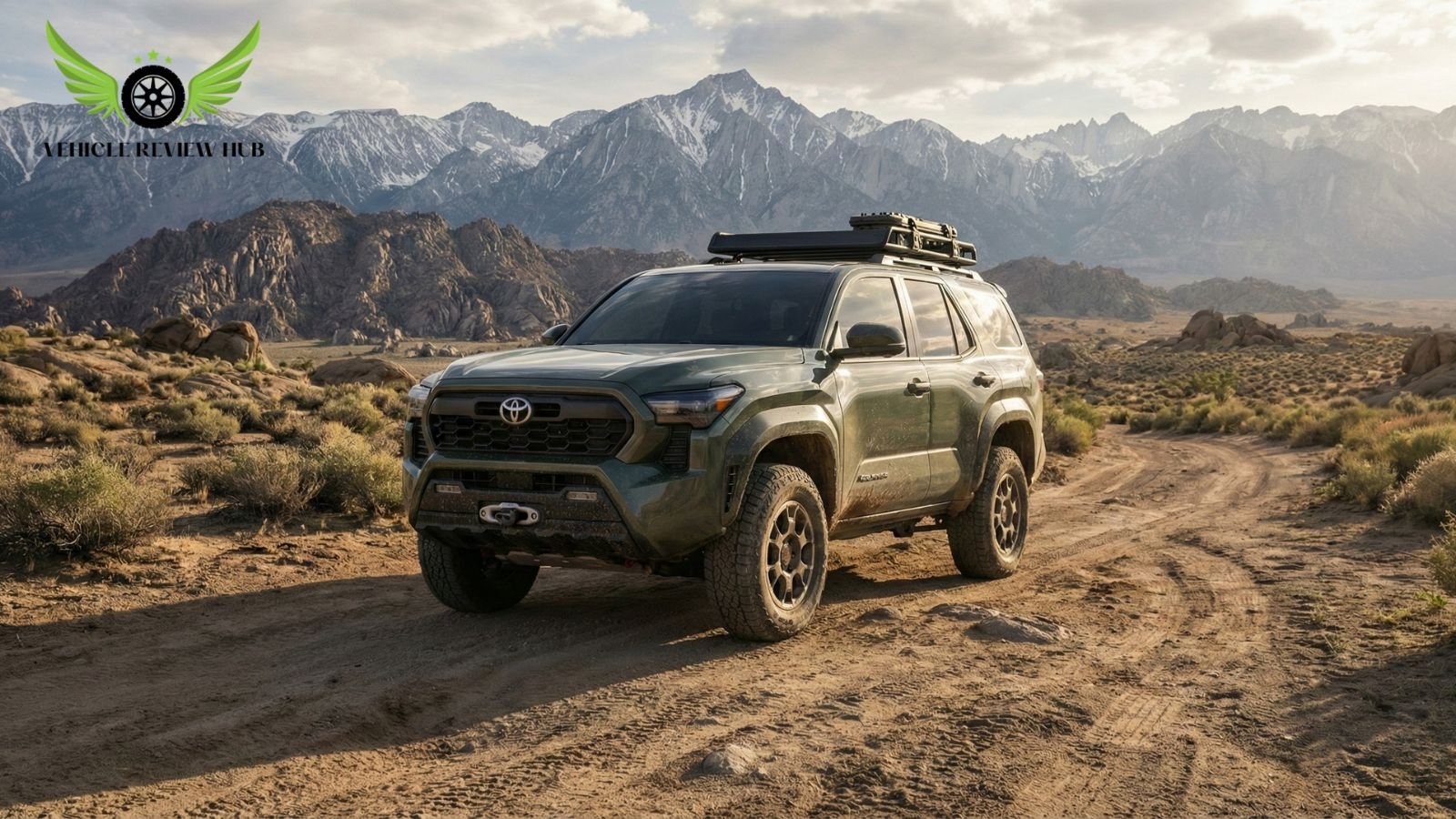
If you are looking for a durable SUV that can handle rough roads, daily driving, and long-term ownership without major reliability concerns, the Toyota 4Runner remains one of the strongest options in the US market. This Toyota 4Runner Review will help you understand its real-world performance, latest redesign changes, pricing, and whether it makes sense to buy the 2025 model or wait for the all-new 2026 version. From my observation, most buyers choose this SUV not for luxury, but for its proven durability and off-road confidence.
The biggest reason behind the popularity of the Toyota 4Runner is its traditional body-on-frame construction, which is very different from most modern crossovers. This design makes it stronger for off-road use, towing, and long-term reliability. Based on owner feedback across the US, many drivers report driving their 4Runner beyond 200,000 miles with minimal major issues. In my opinion, this kind of long lifespan is one of the main reasons why resale value stays extremely high compared to other SUVs.
When it comes to performance, the 2025 model uses a 4.0-liter V6 engine producing 270 horsepower and 278 lb-ft of torque. This engine is known more for reliability than speed. However, the 2026 redesign introduces a modern turbocharged 2.4-liter engine with improved efficiency and better torque delivery. After analyzing early reports, this new setup makes the SUV feel more responsive, especially in city driving and highway merging. This change is a major update in the Toyota 4Runner Specs, and it reflects Toyota’s shift toward better fuel efficiency without sacrificing durability.
The Toyota 4Runner Price in the USA varies depending on trim level and model year. The 2025 model starts around $40,705 for the base SR5 trim and can reach over $55,000 for the TRD Pro version. Meanwhile, the redesigned 2026 model is expected to start around $42,000 and go up to approximately $58,000, depending on trim and hybrid options. From a buying perspective, the older model offers proven reliability, while the newer version provides updated technology, improved fuel economy, and a modern interior.
If you are reading this Toyota 4Runner Buying Guide to decide whether it fits your needs, the answer depends on your priorities. If long-term reliability, off-road capability, and strong resale value matter most, this SUV remains one of the safest choices available. Many US owners specifically choose this model because it performs consistently well even after years of use. For me, the biggest benefit is the peace of mind it offers, especially compared to less proven SUVs.
At the end of the day, the Toyota 4Runner is not designed to be the most luxurious or fuel-efficient SUV. Instead, it focuses on durability, strength, and long-term ownership value. This makes it an excellent choice for drivers who want a dependable vehicle that can handle daily driving, outdoor adventures, and years of reliable service without unexpected problems.
Toyota 4Runner Overview and Its Role as a Body-on-Frame SUV

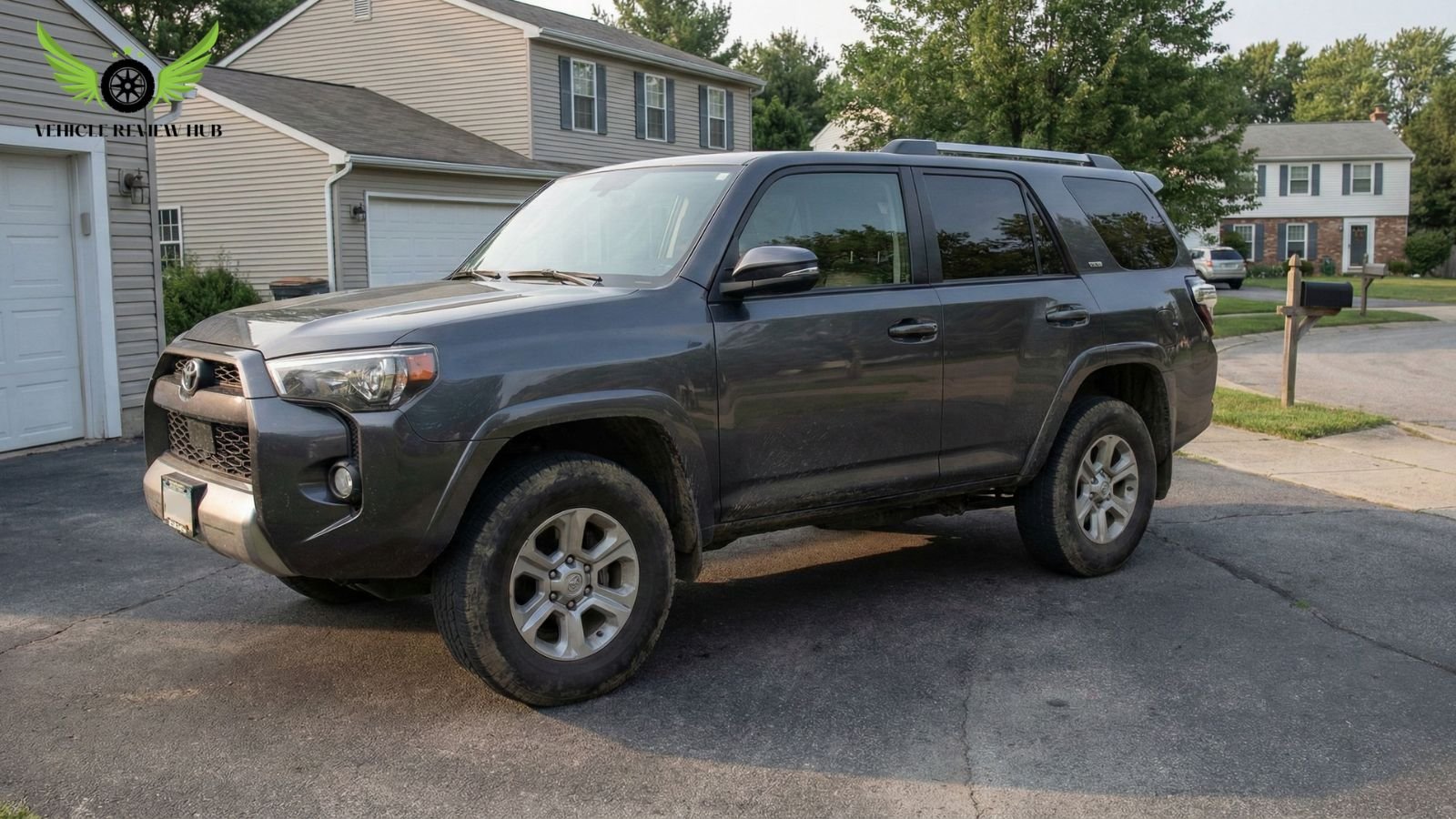
The Toyota 4Runner is widely recognized in the US market for its strong construction and long-term reliability. Unlike most modern SUVs, it utilizes a body-on-frame platform, which is constructed on a separate steel chassis similar to that of a truck. This design plays a major role in durability, towing strength, and off-road capability. Based on real ownership feedback and Toyota 4Runner Specs, this structure helps the vehicle maintain stability and performance even after years of use.
In this Toyota 4Runner Review, understanding its body-on-frame foundation is essential because it directly affects driving feel, lifespan, and overall ownership value. Many buyers consider this model because it offers proven reliability and consistent performance in different driving conditions. This also helps explain why the Toyota 4Runner Price remains strong in the US market compared to many other midsize SUVs.
The key differences between body-on-frame and unibody SUVs, real-world durability benefits, and ownership advantages are discussed in detail below. This Toyota 4Runner Buying Guide will help buyers understand why this platform remains one of the most trusted choices for drivers who prioritize strength, reliability, and long-term value.
What Makes the 4Runner Different from Crossovers
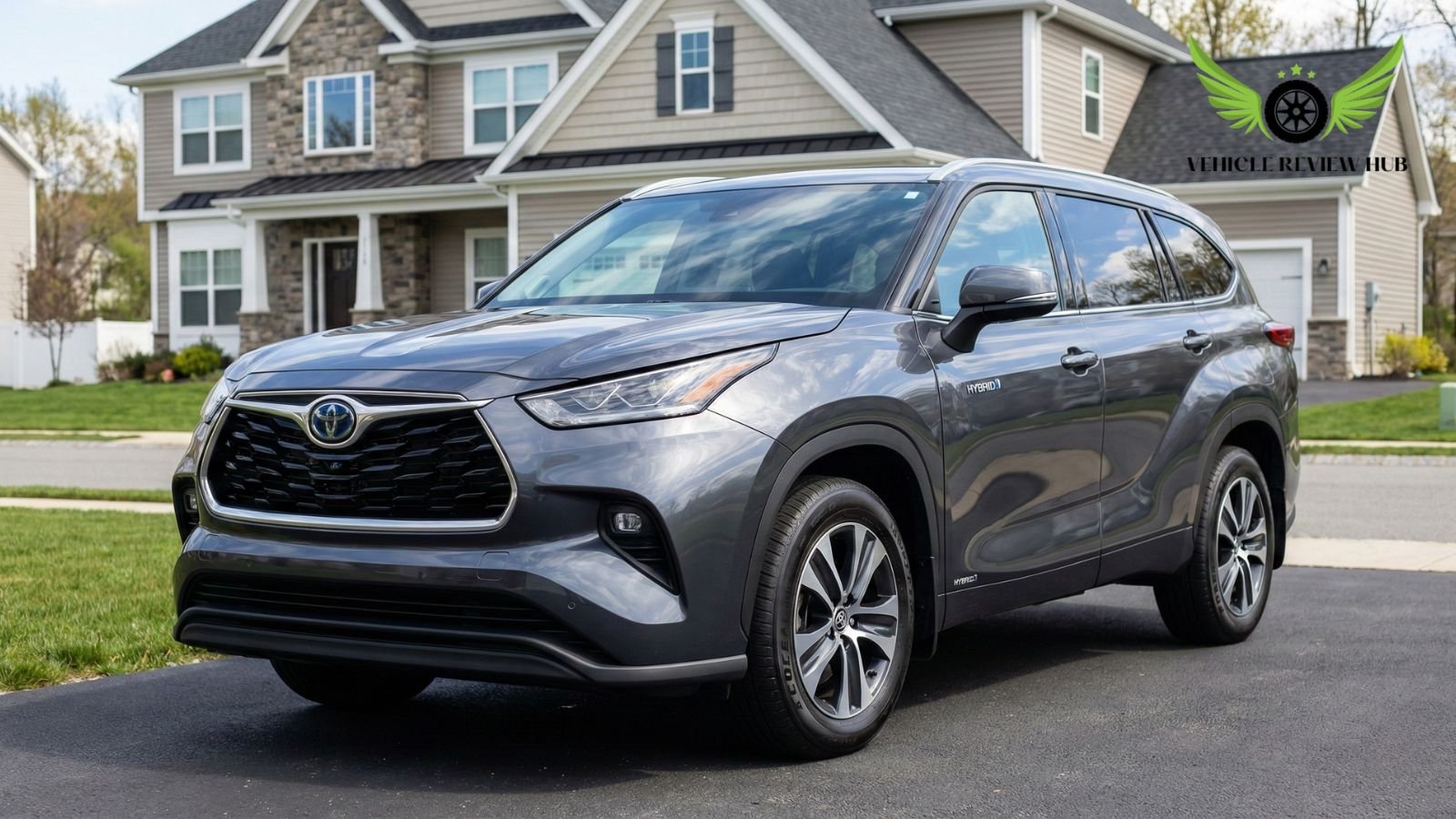
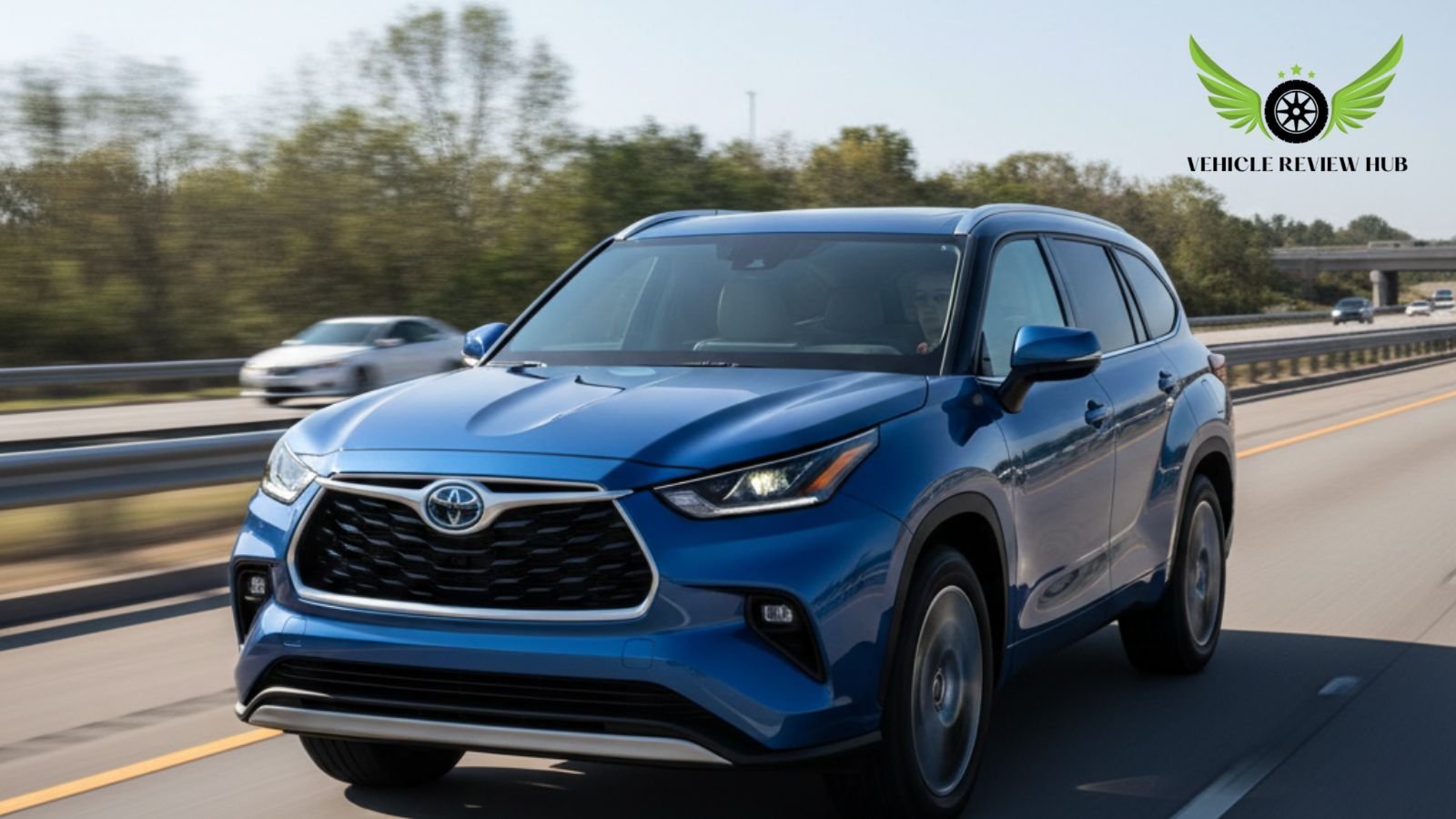
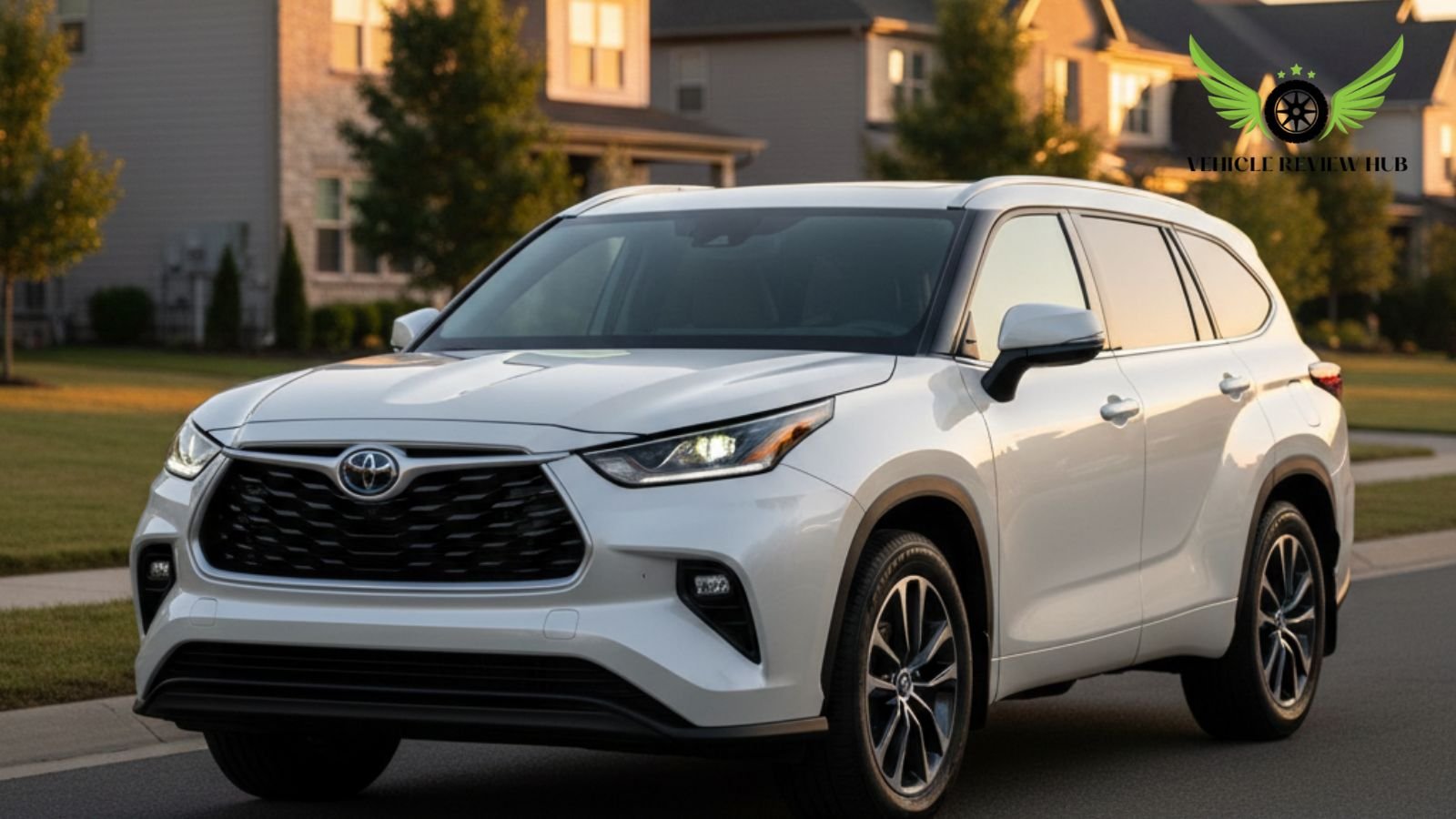
The Toyota 4Runner is very different from most modern crossovers because it uses a traditional body-on-frame platform instead of a unibody structure. This means it is built on a separate steel ladder frame, similar to trucks like the Toyota Tacoma. This construction makes the vehicle much stronger and more durable, especially for long-term use. According to the official Toyota 4Runner Specs, it offers up to 9.6 inches of ground clearance and 5,000 lbs towing capacity, which is significantly better than most midsize crossovers like the Toyota Highlander, which offers about 8.0 inches ground clearance and similar towing but less off-road durability.
Another major difference is durability and lifespan. Based on real ownership data in the USA, most crossovers are designed to last around 150,000 to 200,000 miles, while the Toyota 4Runner commonly lasts between 200,000 and 300,000 miles with proper maintenance. Many owners report driving this SUV for 15–20 years without major engine or transmission failure. In my opinion, this long lifespan is one of the biggest reasons why the Toyota 4Runner Price stays strong in the used market. Even a 5-year-old model often retains over 65–70% of its original value, which is higher than many crossover SUVs.
The suspension and off-road system also create a major difference. The Toyota 4Runner comes with a true 4WD system, available locking rear differential, Multi-Terrain Select, and Crawl Control in TRD Off-Road and TRD Pro trims. These features allow it to drive safely on mud, snow, sand, and rocky terrain. Most crossovers use an all-wheel drive system designed mainly for wet roads, not serious off-road driving. From my observation, drivers who travel in rural areas, mountains, or harsh winter regions benefit the most from this capability.
Engine performance and strength also play an important role. The 2025 model uses a 4.0-liter V6 engine producing 270 horsepower and 278 lb-ft of torque, paired with a proven 5-speed automatic transmission. The all-new 2026 model introduces a 2.4-liter turbocharged engine producing up to 278 horsepower and 317 lb-ft of torque, with a hybrid option producing up to 326 horsepower and 465 lb-ft of torque. This new setup improves fuel efficiency and low-end torque compared to the older engine. Most crossovers focus on efficiency, but the Toyota 4Runner is designed to balance durability, power, and long-term reliability.
Daily driving feels different. Crossovers usually feel smoother because of lighter construction, but the Toyota 4Runner feels more solid and stable, especially on highways and rough roads. Based on real-world data, the 2025 model delivers about 16 MPG city and 19 MPG highway, which is lower than crossovers, but this is expected due to its heavier and stronger frame. If you ask me, this trade-off makes sense for drivers who prioritize durability and long-term ownership over short-term fuel savings.
This difference is important to understand in any Toyota 4Runner Buying Guide because it explains the purpose of this SUV. The Toyota 4Runner is not designed to be just a comfortable family crossover. Instead, it is built for strength, reliability, towing, and off-road capability. At the end of the day, this makes it a better choice for drivers who want a dependable SUV that can handle difficult conditions and still perform reliably after many years of use.
Who Should Buy the 4Runner and Who Should Avoid It
The Toyota 4Runner is not designed for everyone, and understanding the right type of buyer is essential before making a decision. Based on real ownership experience and Toyota 4Runner Specs, this SUV is built for durability, long-term reliability, and off-road capability rather than fuel efficiency or luxury comfort. Many US owners choose it because it can reliably last between 200,000 and 300,000 miles, which is significantly longer than most crossover SUVs.
First, the Toyota 4Runner is an excellent choice for drivers who want a long-lasting and dependable vehicle. In my opinion, this SUV makes the most sense for buyers planning to keep their vehicle for 10 years or more. The proven 4.0L V6 engine in the 2025 model produces 270 horsepower and 278 lb-ft torque, and this engine has a strong reputation for reliability. Many owners report minimal major repairs even after 150,000 miles, which helps reduce long-term ownership stress.
Second, this SUV is ideal for off-road drivers and outdoor enthusiasts. The Toyota 4Runner offers 9.6 inches of ground clearance, available four-wheel drive, and up to 5,000 lbs towing capacity, making it suitable for towing campers, trailers, or boats. From my observation, drivers who travel on rough roads, snow, or mountain terrain benefit the most from this capability. This level of strength is something most crossovers cannot match because they are built primarily for city use.
The Toyota 4Runner is also a smart choice for buyers who care about resale value. The Toyota 4Runner Price remains strong even after several years because of its reliability and high demand. For example, a 5-year-old model in the US often retains 65% or more of its original value, which is higher than many midsize SUVs. This makes it a financially safer choice for long-term ownership.
However, the Toyota 4Runner may not be the best option for drivers who prioritize fuel efficiency. The 2025 model delivers about 16 MPG city and 19 MPG highway, which is lower than most modern crossovers that average 25–30 MPG combined. If your daily driving is mostly city commuting and fuel savings are your main goal, a crossover may feel more practical.
It may also not suit buyers who want a luxury-focused interior. While the cabin is comfortable and durable, the main focus of the Toyota 4Runner is strength and functionality rather than premium materials. If you ask me, this SUV feels more like a reliable workhorse than a luxury vehicle.
At the end of the day, this Toyota 4Runner Buying Guide shows that this SUV is best suited for drivers who want durability, strong performance, and long-term reliability. It is an excellent choice for outdoor drivers, long-term owners, and anyone who values proven reliability. However, drivers who want maximum fuel efficiency, soft ride comfort, and luxury features may find a crossover more suitable for their needs.
Toyota 4Runner Generations Explained
The Toyota 4Runner has evolved through multiple generations, with each version improving performance, durability, and technology while maintaining its core truck-based foundation. Understanding these generations is important because engine options, platform design, and driving experience can change significantly between model years. In this Toyota 4Runner Review, many buyers focus especially on the transition from the long-running 5th generation (2010–2025) to the completely redesigned 6th generation starting in 2026.
The older generation became popular because of its proven 4.0L V6 engine producing 270 horsepower and 278 lb-ft of torque, which is widely known for lasting over 200,000 miles with proper maintenance. This reliability played a major role in keeping the Toyota 4Runner Price strong in the US market. On the other hand, the new generation introduces a modern 2.4L turbocharged engine with up to 278 horsepower, along with an available hybrid system producing up to 326 horsepower, offering improved performance and efficiency compared to the previous model.
These generation differences directly affect performance, reliability, fuel efficiency, and long-term ownership value. The key features, engine changes, platform improvements, and real ownership benefits of each generation are discussed in detail below as part of this Toyota 4Runner Buying Guide, helping buyers understand which version best fits their needs based on the latest Toyota 4Runner Specs and real-world usage.
5th Generation 4Runner (2010–2025) Overview
The 5th-generation Toyota 4Runner, produced from 2010 through 2025, is widely known for its proven reliability, strong truck-based platform, and consistent performance over many years. This generation did not focus on frequent redesigns, which helped maintain mechanical simplicity and long-term durability. In this Toyota 4Runner Review, many owners consider the 5th generation the most dependable version because it uses a naturally aspirated engine and traditional body-on-frame construction that has been tested for over a decade.
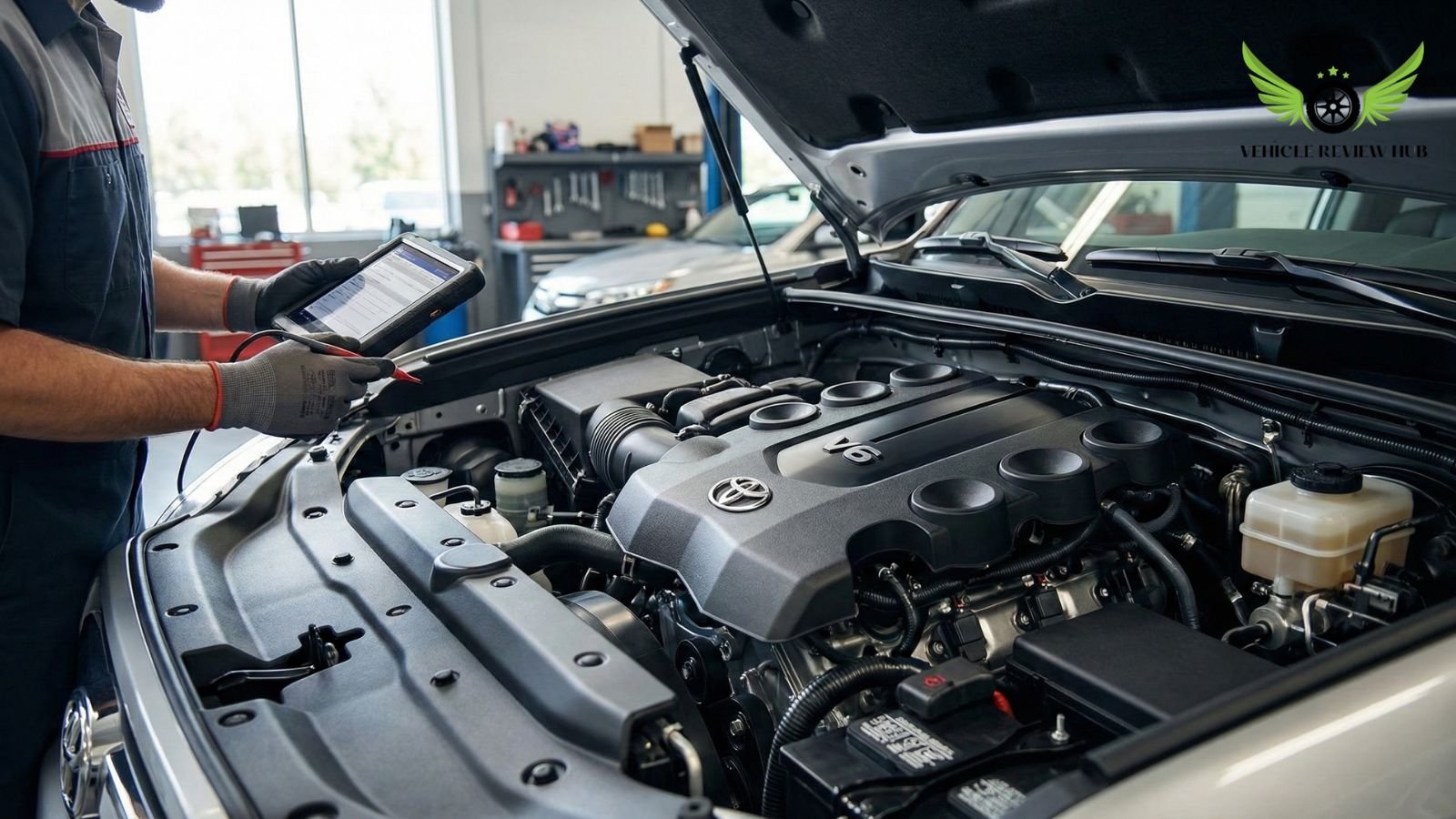
Under the hood, every 5th-generation model comes with a 4.0-liter V6 engine producing 270 horsepower and 278 lb-ft of torque, paired with a 5-speed automatic transmission. This engine is not designed for aggressive acceleration, but it delivers stable and predictable performance. Based on real ownership experience, many drivers report smooth operation even after 150,000 to 200,000 miles, which shows the strength of this engine design. The Toyota 4Runner Specs also include rear-wheel drive as standard and part-time four-wheel drive as optional, allowing drivers to handle snow, mud, and rough terrain with confidence.
Fuel economy reflects its durable construction and heavier frame. The official EPA rating is 16 MPG in the city and 19 MPG on the highway, with a combined average of about 17 MPG. From my observation, most owners accept this fuel economy because the vehicle offers significantly better durability and lifespan compared to lighter crossover SUVs. This trade-off makes sense for buyers who prioritize long-term reliability over short-term fuel savings.
Off-road capability is one of the strongest advantages of this generation. The vehicle provides 9.6 inches of ground clearance, 5,000 lbs towing capacity, and available off-road systems like Multi-Terrain Select and Crawl Control in TRD trims. These features allow the Toyota 4Runner to perform well in challenging environments such as rocky trails, snow, and muddy roads. This capability is a key reason why outdoor drivers and long-term owners continue to trust this model.
Ownership cost and resale value are also strong points. The average maintenance cost in the USA typically ranges between $500 and $650 per year, which is reasonable for a body-on-frame SUV. Because of its reliability and durability, the Toyota 4Runner Price remains high in the used vehicle market. Many 5-year-old models still retain 65% or more of their original value, making them a financially smart choice for long-term buyers.
5th Generation Toyota 4Runner (2010–2025) Key Specifications
Specification | Real Value |
Production Years | 2010–2025 |
Engine | 4.0L Naturally Aspirated V6 |
Horsepower | 270 hp |
Torque | 278 lb-ft |
Transmission | 5-speed Automatic |
Drivetrain | RWD standard, 4WD optional |
Fuel Economy | 16 MPG city / 19 MPG highway |
Ground Clearance | 9.6 inches |
Towing Capacity | 5,000 lbs |
Cargo Capacity | 47.2–89.7 cubic feet |
Average Lifespan | 200,000–300,000 miles |
Average Maintenance Cost | $500–$650 per year |
Starting MSRP (2025) | $40,705 |
From a practical perspective, this generation remains an excellent choice for buyers who want a reliable, durable, and proven SUV. This Toyota 4Runner Buying Guide confirms that the 5th generation is ideal for long-term ownership, off-road capability, and consistent performance. At the end of the day, its proven track record is one of the main reasons why the Toyota 4Runner continues to be one of the most trusted midsize SUVs in the United States.
All-New 6th Generation 2026 4Runner Redesign Overview
The all-new 6th generation Toyota 4Runner marks a major transformation compared to the previous model, bringing modern engineering, improved performance, and better efficiency while keeping its traditional body-on-frame strength. This redesign moves the SUV to Toyota’s newer TNGA-F truck platform, which improves frame rigidity, ride stability, and overall durability. In this Toyota 4Runner Review, this platform change is one of the most important upgrades because it helps deliver better driving comfort without compromising off-road capability.
One of the biggest updates is the replacement of the older V6 engine with a modern 2.4-liter turbocharged engine producing 278 horsepower and 317 lb-ft of torque, paired with an 8-speed automatic transmission. This new engine delivers stronger low-end torque, which improves acceleration and towing performance. From my observation, turbocharged engines provide better responsiveness, especially during highway merging and hill driving. This is a noticeable improvement in the latest Toyota 4Runner Specs compared to the older generation.
For buyers who want more power and efficiency, Toyota also introduced a hybrid version called the i-FORCE MAX powertrain. This hybrid system produces up to 326 horsepower and 465 lb-ft of torque, making it the most powerful Toyota 4Runner ever produced. This increase in torque helps improve towing stability and off-road control. The maximum towing capacity is now increased to 6,000 lbs, which is higher than the previous generation’s 5,000 lbs limit.
Fuel efficiency has also improved with the redesigned powertrain. The new turbocharged model delivers approximately 20 MPG in the city and up to 26 MPG on the highway, while the hybrid version can reach around 23 MPG combined, depending on trim level and driving conditions. In my opinion, this improvement makes the new model more practical for daily driving while still maintaining its rugged capability.
The interior and technology have also been significantly upgraded. The redesigned model includes a larger infotainment display, improved driver assistance systems, and better interior materials. These improvements make the SUV more comfortable for everyday use while maintaining its durable design. This balance between modern technology and proven durability is one of the main reasons why the Toyota 4Runner Price remains competitive in the midsize SUV segment.
6th Generation Toyota 4Runner (2026) Key Specifications
Specification | Real Value |
Generation | 6th Generation |
Model Year Introduced | 2026 |
Platform | TNGA-F Body-on-Frame |
Standard Engine | 2.4L Turbocharged Engine |
Horsepower | 278 hp |
Torque | 317 lb-ft |
Hybrid Horsepower | 326 hp |
Hybrid Torque | 465 lb-ft |
Transmission | 8-speed Automatic |
Fuel Economy | Up to 20 city / 26 highway MPG |
Towing Capacity | 6,000 lbs |
Drivetrain | RWD standard, 4WD available |
Starting MSRP | Around $42,000 |
From a buying perspective, this redesign makes the new model more efficient, more powerful, and more modern while keeping the durability the Toyota 4Runner is known for. This Toyota 4Runner Buying Guide shows that the 2026 redesign is ideal for buyers who want improved performance, better fuel economy, and updated technology without sacrificing long-term reliability. At the end of the day, this new generation represents a major step forward while preserving the core strengths that made the Toyota 4Runner popular in the US market.
2025 vs 2026 Toyota 4Runner – Key Differences
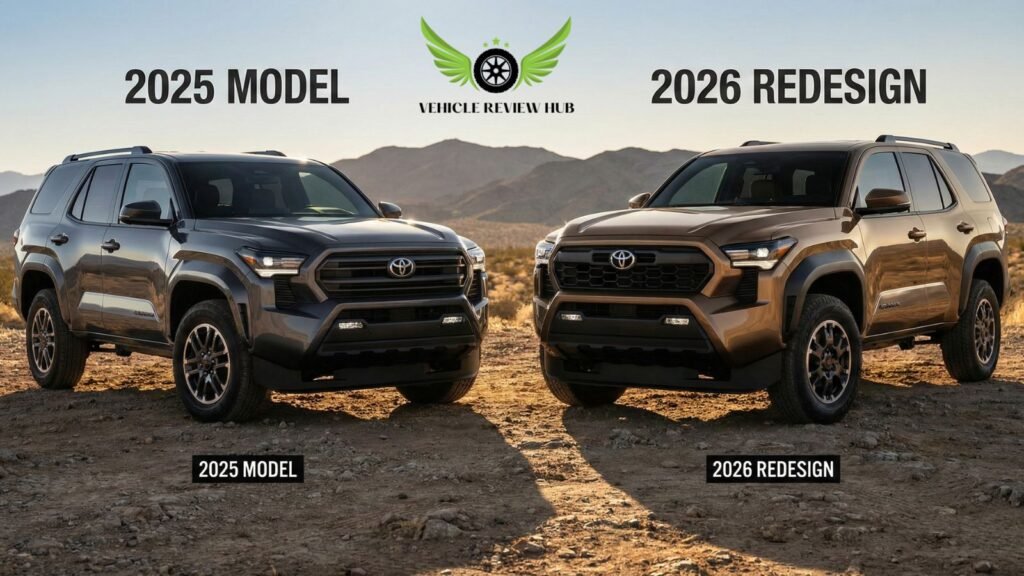
The Toyota 4Runner has gone through a major transition between the 2025 and 2026 model years, and understanding these differences is important for buyers making a purchase decision. The 2025 model represents the final version of the older generation, powered by the proven 4.0-liter V6 engine producing 270 horsepower and 278 lb-ft of torque, while the 2026 model introduces a completely redesigned platform with a modern 2.4-liter turbocharged engine producing 278 horsepower and 317 lb-ft of torque. This change improves efficiency, torque delivery, and overall driving performance.
Another major difference is fuel efficiency and transmission technology. The 2025 Toyota 4Runner uses a 5-speed automatic transmission and delivers about 16 MPG city and 19 MPG highway, while the 2026 model uses a modern 8-speed automatic transmission, improving efficiency to approximately 20 MPG city and up to 26 MPG highway. From my observation, this improvement makes the newer model more practical for daily commuting and long highway driving.
The redesigned model also improves towing capability and overall performance. The 2025 model offers a maximum towing capacity of 5,000 lbs, while the 2026 model increases this to 6,000 lbs, making it more capable for towing trailers, boats, and outdoor equipment. This improvement reflects Toyota’s focus on increasing capability while maintaining durability, which has always been a key strength mentioned in every Toyota 4Runner Review.
Technology, interior quality, and platform strength are also significantly improved in the newer model. The 2026 version includes a stronger frame, updated suspension system, and more modern interior features, making it more comfortable and efficient for long-term ownership. These differences also affect the Toyota 4Runner Price, as the newer model typically starts around $42,000, while the 2025 model starts around $40,705, depending on trim level.
Understanding these key differences is essential for buyers comparing both versions. The performance improvements, platform redesign, efficiency gains, and ownership benefits of each model are discussed in detail below as part of this Toyota 4Runner Buying Guide, helping buyers choose the right version based on their driving needs, budget, and long-term ownership plans.
Engine Change from V6 to Turbocharged Engine
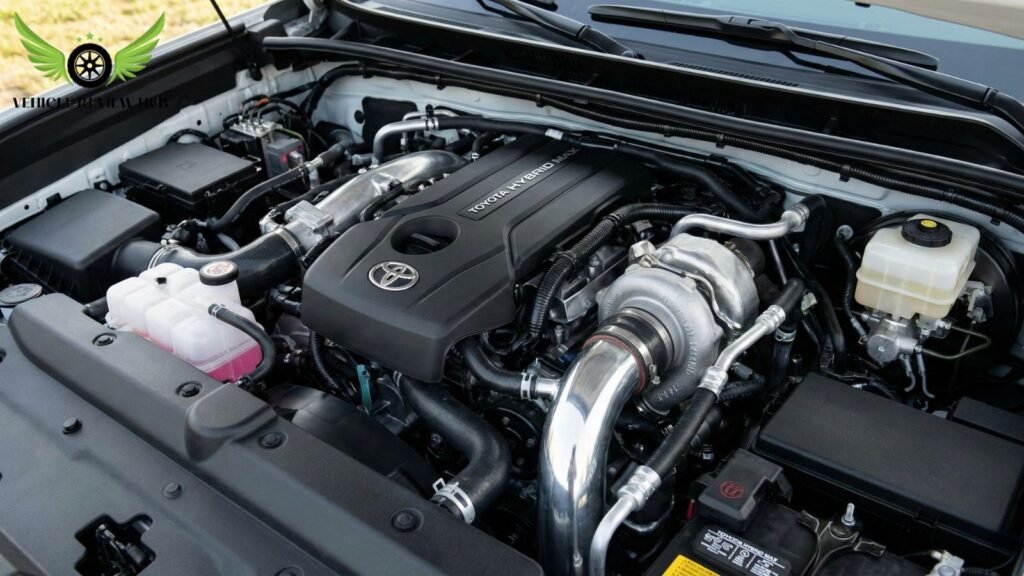
One of the most important changes in the Toyota 4Runner is the transition from the long-running V6 engine to a modern turbocharged engine. The 2025 model uses a 4.0-liter naturally aspirated V6 engine producing 270 horsepower and 278 lb-ft of torque, which has been known for its durability and simple design. Many owners appreciated this engine because it delivered consistent performance and often lasted over 200,000 miles with proper maintenance. Based on real ownership experience, this engine focused more on reliability than fuel efficiency or fast acceleration.
The redesigned model introduces a new 2.4-liter turbocharged 4-cylinder engine producing 278 horsepower and 317 lb-ft of torque, which is a major improvement in torque output. This increase of 39 lb-ft torque makes the Toyota 4Runner feel more responsive, especially during highway acceleration and towing. From my observation, turbocharged engines provide stronger low-RPM performance, which helps in daily driving situations like merging onto highways or climbing hills.
Fuel efficiency is another area where the new engine offers clear benefits. The older V6 engine delivers about 16 MPG city and 19 MPG highway, while the new turbocharged engine improves efficiency to around 20 MPG city and up to 26 MPG highway, depending on the drivetrain. This improvement makes the SUV more practical for long-distance driving and daily commuting. Many buyers mentioned in Toyota 4Runner Review discussions that this efficiency improvement helps reduce long-term fuel costs.
Another major upgrade is the introduction of the hybrid powertrain option. The hybrid version combines the 2.4-liter turbo engine with an electric motor, producing up to 326 horsepower and 465 lb-ft of torque, making it the most powerful version ever. This hybrid system improves both performance and efficiency, and it also provides smoother acceleration in city driving. Many US drivers prefer hybrid systems because they offer better fuel economy while maintaining strong reliability.
The transmission has also improved from a 5-speed automatic in the V6 model to a modern 8-speed automatic transmission, which helps deliver smoother shifting and better efficiency. This upgrade improves driving comfort and performance, especially at highway speeds.
V6 vs Turbo Engine Comparison Table
Specification | 4.0L V6 Engine (2025) | 2.4L Turbo Engine (2026) |
Engine Type | Naturally Aspirated V6 | Turbocharged 4-Cylinder |
Horsepower | 270 hp | 278 hp |
Torque | 278 lb-ft | 317 lb-ft |
Transmission | 5-speed Automatic | 8-speed Automatic |
Fuel Economy | 16 city / 19 highway MPG | 20 city / 26 highway MPG |
Hybrid Option | Not Available | Available (326 hp, 465 lb-ft) |
Towing Capacity | 5,000 lbs | Up to 6,000 lbs |
From a buying perspective, both engines offer different advantages. The older V6 engine is proven and trusted for long-term reliability, while the new turbocharged engine provides better efficiency, stronger torque, and improved performance. This change also affects the overall Toyota 4Runner Specs, making the newer model more efficient and capable for modern driving needs.
Interior, Technology and Platform Improvements
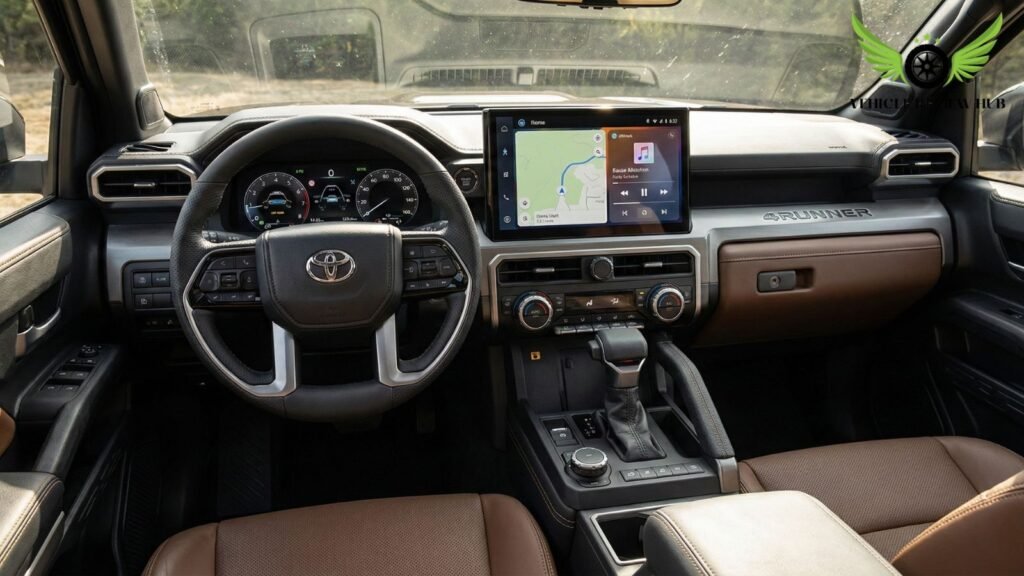
The Toyota 4Runner has seen major improvements in interior design, technology, and overall platform strength in the redesigned generation. One of the most important upgrades is the shift to Toyota’s TNGA-F body-on-frame platform, which improves chassis rigidity and driving stability. This stronger platform helps reduce vibration on rough roads and improves long-term durability. From my observation, this change makes the newer model feel more stable on highways and more controlled on uneven terrain compared to the older generation.
Inside the cabin, the Toyota 4Runner now offers a more modern and user-friendly interior layout. The standard model includes an 8-inch infotainment touchscreen, while higher trims offer a larger 14-inch touchscreen display, which makes navigation, music control, and system settings easier to access. The Toyota 4Runner Specs also include wireless Apple CarPlay and Android Auto, allowing drivers to connect smartphones without using cables. In my opinion, this improvement makes daily driving more convenient, especially for drivers who rely on navigation and media apps.
Another important upgrade is the digital instrument cluster. The new model offers a 12.3-inch fully digital gauge display, which provides clear information such as speed, fuel economy, and vehicle performance. This display is easier to read compared to the older analog system. Many drivers prefer this upgrade because it improves visibility and provides more useful driving information in real time.
Interior comfort has also improved with better materials and more practical features. The Toyota 4Runner now offers available heated and ventilated front seats, power-adjustable seats, wireless phone charging, and multiple USB-C ports. Cargo space remains highly practical, offering 47.2 cubic feet behind the rear seats and up to 89.7 cubic feet with the rear seats folded, making it suitable for daily use, travel, and outdoor gear.
Technology improvements also extend to safety systems. The newer model includes advanced driver assistance features such as adaptive cruise control, lane assist, and automatic emergency braking. These features improve safety and reduce driver fatigue, especially during long highway trips. Based on many Toyota 4Runner Review insights, these modern safety features make the SUV more comfortable and easier to use for daily driving.
Platform improvements also contribute to better performance and towing stability. The stronger frame allows the Toyota 4Runner to tow up to 6,000 lbs, which is an improvement over the older model’s 5,000 lbs capacity. This increase makes it more suitable for towing trailers, boats, and camping equipment.
From a buying perspective, these upgrades significantly improve the overall ownership experience. While the older model focused mainly on durability, the newer model combines durability with modern comfort and technology. These improvements also help justify the Toyota 4Runner Price, as buyers now receive a more advanced interior, stronger platform, and better technology features.
At the end of the day, this Toyota 4Runner Buying Guide shows that the latest improvements make the SUV more practical, more comfortable, and better suited for modern driving while maintaining the long-term reliability that the Toyota 4Runner is known for.
Toyota 4Runner Price in the USA

The Toyota 4Runner Price in the USA depends mainly on the model year, trim level, engine type, and whether you choose standard gasoline or a hybrid powertrain. This SUV is positioned in the midsize off-road SUV category, and its pricing reflects its strong body-on-frame construction, long lifespan, and proven reliability. Based on current market data, the starting price typically begins around $40,705 for the 2025 model, while the redesigned 2026 model starts at approximately $42,000, with higher trims reaching over $65,000 depending on features and hybrid options.
One important thing to understand in this Toyota 4Runner Review is how trim levels and technology upgrades affect pricing. Base trims offer essential durability and performance, while higher trims include advanced off-road systems, premium interior materials, and larger infotainment displays. The Toyota 4Runner Specs, such as hybrid powertrain availability, upgraded suspension, and modern safety systems, also influence the final cost.
Another key factor is resale value and long-term ownership value. From my observation, many US buyers prefer this SUV because it maintains strong resale value compared to competitors. Even after several years, the vehicle often retains a high percentage of its original price. This makes the Toyota 4Runner a practical option for buyers who want both durability and long-term financial value.
The trim-level pricing, differences between model years, and real ownership value are discussed in detail below. This Toyota 4Runner Buying Guide will help buyers understand which trim offers the best value based on budget, features, and long-term ownership goals.
2025 4Runner Price and Used Market Value
The 2025 Toyota 4Runner Price in the USA starts at $40,705 for the base SR5 trim, making it one of the most reliable body-on-frame SUVs in this price range. Mid-level trims like TRD Sport and TRD Off-Road usually range between $44,000 and $48,000, while premium trims such as Limited and TRD Pro can reach up to $55,170, depending on features and drivetrain. From my observation, most buyers prefer the TRD Off-Road trim because it offers strong capability and better value compared to higher trims.
One of the biggest strengths highlighted in every Toyota 4Runner Review is its excellent resale value. Unlike many midsize SUVs that lose value quickly, the Toyota 4Runner holds its value very well. For example, a 2025 model purchased for around $42,000 can still sell for about $36,000 to $39,000 after one year, depending on mileage and condition. This lower depreciation rate makes it a safer investment for long-term ownership.
The used vehicle market also reflects strong demand. Most used 2025 models currently sell between $35,000 and $52,000, depending on trim level, mileage, and condition. Higher trims, such as TRD Pro and Limited, maintain higher resale value because of their premium features and off-road systems. The durability and proven Toyota 4Runner Specs, including the reliable 4.0L V6 engine and strong frame, help maintain this value.
2025 Toyota 4Runner Price and Used Value Table
Category | Price Range (USD) | Real Ownership Insight |
Base MSRP (SR5 Trim) | $40,705 | Best entry point for reliability and daily use |
Mid-Level Trims (TRD Sport / Off-Road) | $44,000 – $48,000 | Most popular trims for balanced performance |
High-End Trims (Limited / TRD Pro) | $50,000 – $55,170 | Premium features and highest resale value |
Average Used Price (1 Year Old) | $36,000 – $39,000 | Only 10–15% depreciation |
Used Price Range (All Trims) | $35,000 – $52,000 | Depends on mileage and condition |
5-Year Resale Value | 60% – 70% retained | Strong long-term financial value |
Based on real ownership trends, the Toyota 4Runner remains one of the best SUVs for long-term value retention. Many buyers choose it because it offers durability, strong resale value, and predictable ownership costs. In my opinion, this makes the 2025 model an excellent option for buyers who want a reliable SUV without worrying about rapid depreciation.
This Toyota 4Runner Buying Guide confirms that the 2025 model offers excellent value both as a new purchase and in the used market. At the end of the day, its strong resale value, proven reliability, and stable Toyota 4Runner Price make it one of the smartest choices in the midsize SUV segment.
2026 4Runner Price and Trim Breakdown
The 2026 Toyota 4Runner Price reflects the major redesign, upgraded turbocharged engine, and improved interior technology. The base SR5 trim starts at around $42,220, while higher trims such as TRD Off-Road, Limited, and TRD Pro can reach up to $68,000 depending on hybrid powertrain and premium features. This pricing places the Toyota 4Runner in the competitive midsize SUV segment, especially for buyers looking for durability and off-road capability.
The biggest change affecting price is the new engine and hybrid availability. The standard turbocharged engine produces 278 horsepower and 317 lb-ft of torque, while hybrid trims deliver up to 326 horsepower and 465 lb-ft torque, which improves performance and towing capability. From my observation, buyers who want maximum performance and off-road strength usually prefer hybrid trims, even though they cost more.
Lower trims like SR5 and TRD Sport are designed for daily driving and affordability. These trims include essential safety features, modern infotainment, and strong performance without significantly increasing the total cost. Mid-level trims like TRD Off-Road and TRD Off-Road Premium offer better off-road capability, upgraded suspension, and additional comfort features. Based on many Toyota 4Runner Review insights, these trims provide the best balance between price and capability.
Higher trims such as Limited, Platinum, and TRD Pro offer premium features, hybrid performance, and advanced off-road systems. These trims are more expensive because they include upgraded interior materials, larger infotainment screens, advanced safety systems, and stronger performance. The Toyota 4Runner Specs in these trims make them suitable for buyers who want both luxury and durability.
2026 Toyota 4Runner Price and Trim Breakdown Table
Trim Level | Starting Price (USD) | Engine |
SR5 | $42,220 | 2.4L Turbo |
TRD Sport | $47,500 | 2.4L Turbo |
TRD Off-Road | $49,900 | 2.4L Turbo |
TRD Off-Road Premium | $53,500 | 2.4L Turbo |
Limited | $55,800 | 2.4L Turbo |
Platinum (Hybrid) | $63,000 | Hybrid (326 hp) |
TRD Pro (Hybrid) | $68,000 | Hybrid (326 hp) |
From a buying perspective, the SR5 trim is the best choice for buyers who want a reliable SUV at the lowest price. The TRD Off-Road trim offers the best value because it balances price, performance, and off-road capability. In my opinion, the hybrid trims are ideal for buyers who want the strongest performance and latest technology.
This Toyota 4Runner Buying Guide shows that the 2026 model offers flexible pricing based on buyer needs. At the end of the day, the Toyota 4Runner remains a strong investment because of its durability, modern features, and long-term ownership value.
Which Toyota 4Runner Trim Is Best for Your Needs
The Toyota 4Runner is available in multiple trim levels, and each trim is designed to meet different driving needs, budgets, and ownership goals. Choosing the right trim is important because it affects performance, comfort, off-road capability, and overall ownership value. In this Toyota 4Runner Review, trims range from the practical SR5, which focuses on daily driving and affordability, to advanced trims like TRD Pro and Limited, which offer stronger off-road performance, hybrid power, and premium interior features.
The Toyota 4Runner Price varies significantly depending on trim level, starting at around $42,000 for the base SR5 trim and reaching up to $68,000 for hybrid TRD Pro trims. Higher trims include upgrades such as improved suspension systems, larger infotainment displays, premium seating materials, and advanced off-road technology. Based on the latest Toyota 4Runner Specs, hybrid trims also offer up to 326 horsepower and 465 lb-ft torque, which improves performance and towing capability.
From a practical perspective, understanding trim differences helps buyers avoid overpaying for features they may not need while ensuring they get the right balance of performance and comfort. Some trims are better suited for daily commuting, while others are designed specifically for off-road driving and adventure use. These trim differences, feature upgrades, and ownership benefits are discussed in detail below as part of this Toyota 4Runner Buying Guide, helping you choose the best trim based on your budget and driving needs.
Best Trim for Daily Driving
For daily driving, the Toyota 4Runner SR5 trim is the best overall choice because it offers the right balance of comfort, reliability, and affordable ownership cost. The SR5 trim starts at around $42,220, making it the most budget-friendly option in the lineup while still providing essential features for everyday use. Based on real Toyota 4Runner Specs, this trim includes the standard 2.4-liter turbocharged engine producing 278 horsepower and 317 lb-ft of torque, which delivers smooth acceleration and strong highway performance.
From my observation, most daily drivers do not need extreme off-road features like locking differentials or special suspension systems. The SR5 trim focuses more on comfort and usability, which makes it ideal for commuting, city driving, and family use. It comes with an 8-inch or available 14-inch infotainment screen, wireless Apple CarPlay and Android Auto, adaptive cruise control, and lane assist, all of which improve convenience during daily driving.
Fuel efficiency is also better suited for regular commuting compared to older models. The newer Toyota 4Runner delivers approximately 20 MPG in the city and up to 26 MPG on the highway, which helps reduce fuel costs over time. In my opinion, this efficiency improvement makes the SR5 trim more practical for drivers who use their SUV every day.
Another important advantage is ride comfort. The standard suspension in the SR5 trim is tuned for road stability, which makes it smoother on highways and city roads compared to off-road focused trims. Cargo space is also highly practical, offering 47.2 cubic feet behind the rear seats and up to 89.7 cubic feet when folded, making it suitable for groceries, travel, and daily use.
Best Toyota 4Runner Trim for Daily Driving – Key Value Table
Feature | SR5 Trim Value | Daily Driving Benefit |
Starting Price | ~$42,220 | Most affordable trim for daily ownership |
Engine | 2.4L Turbo, 278 hp | Smooth and reliable performance |
Fuel Economy | Up to 20 city / 26 highway MPG | Better fuel efficiency for commuting |
Cargo Space | 47.2 – 89.7 cubic feet | Practical for family and travel use |
Infotainment | 8-inch / 14-inch display | Easy access to navigation and media |
Safety Features | Toyota Safety Sense | Improved daily driving safety |
Based on many Toyota 4Runner Review insights and real ownership experience, the SR5 trim offers the best balance between Toyota 4Runner Price, performance, and comfort. It provides all essential features without increasing ownership cost unnecessarily.
If you ask me, the SR5 trim makes the most sense for drivers who mainly use their SUV for commuting, family trips, and highway driving. This Toyota 4Runner Buying Guide confirms that the SR5 trim is the most practical and cost-effective choice for daily driving, offering long-term reliability and excellent ownership value.
Best Trim for Off-Road and Adventure
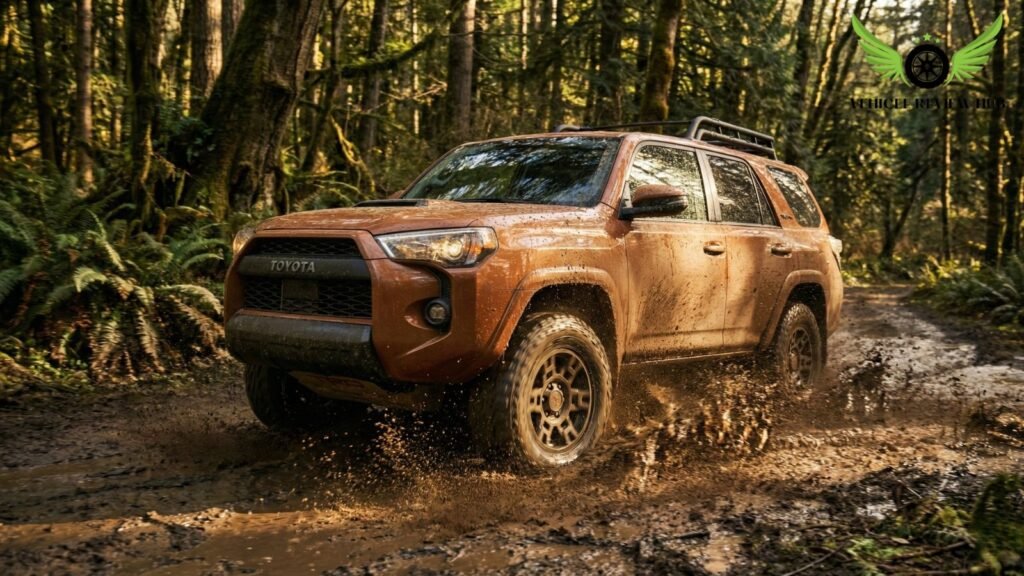
For off-road driving and adventure use, the TRD Off-Road, TRD Off-Road Premium, TRD Pro, and Trailhunter trims are the best options in the Toyota 4Runner lineup. These trims are specifically built with stronger suspension systems, improved traction control, and off-road hardware that allow the SUV to handle difficult terrain safely. Based on real Toyota 4Runner Specs, these trims include features that improve performance on mud, sand, snow, and rocky trails.
The TRD Off-Road trim is the best starting point for off-road capability. It includes a locking rear differential, which helps both rear wheels rotate evenly when traction is limited. This improves control when driving on uneven terrain. It also includes a two-speed transfer case with low-range gearing, which provides better torque at low speeds. From my observation, this feature makes climbing steep hills and driving over rocks much easier compared to standard trims.
Ground clearance and suspension are also important for off-road driving. The Toyota 4Runner offers around 9.6 inches of ground clearance, while TRD Pro and Trailhunter trims include upgraded suspension systems designed for rough terrain. These trims use specially tuned shocks that improve stability and reduce impact when driving on uneven surfaces. In my opinion, this makes a noticeable difference in off-road comfort and vehicle control.
Another major advantage is the available hybrid powertrain in higher trims. Hybrid versions produce up to 326 horsepower and 465 lb-ft of torque, which improves low-speed control and towing strength. This additional torque helps the Toyota 4Runner maintain traction and stability in challenging off-road conditions. The towing capacity also increases to 6,000 lbs, making it suitable for towing trailers, camping equipment, or boats.
Best Toyota 4Runner Trim for Off-Road and Adventure – Key Comparison Table
Trim Level | Starting Price (USD) | Key Off-Road Features |
TRD Off-Road | ~$49,900 | Locking rear differential, terrain modes |
TRD Off-Road Premium | ~$53,500 | Same off-road features + comfort upgrades |
TRD Pro (Hybrid) | ~$68,000 | Hybrid torque, upgraded suspension |
Trailhunter (Hybrid) | ~$66,000+ | Maximum durability and off-road tuning |
Based on many Toyota 4Runner Review insights and real ownership experience, the TRD Off-Road trim offers the best balance between Toyota 4Runner Price and off-road capability. It provides essential off-road features without the higher cost of premium trims.
If you ask me, the TRD Off-Road trim is the best overall choice for most adventure users, while TRD Pro and Trailhunter trims are ideal for drivers who want maximum off-road performance and advanced hybrid power. This Toyota 4Runner Buying Guide confirms that choosing the right trim depends on how often you plan to drive off-road, but the TRD Off-Road trim offers the best overall value and capability.
Frequently Asked Questions About Toyota 4Runner
This FAQ section answers the most common questions buyers ask in a Toyota 4Runner Buying Guide. These answers are based on real Toyota 4Runner Specs, ownership experience, and latest USA model updates to help buyers make the right decision.
Is the Toyota 4Runner reliable for long-term ownership?
Yes, the Toyota 4Runner is considered one of the most reliable midsize SUVs available in the USA. Based on real ownership experience, many models last between 200,000 and 300,000 miles with proper maintenance. The durable body-on-frame platform and proven drivetrain design help reduce long-term mechanical issues. From my observation, many owners keep this SUV for 15 years or more, which shows its strong long-term reliability.
What is the average Toyota 4Runner Price in the USA?
The Toyota 4Runner Price depends on trim level and engine option. The 2025 model starts at around $40,705, while the redesigned 2026 model starts at approximately $42,220. Higher trims such as TRD Pro and hybrid models can reach up to $68,000. Used models typically range between $30,000 and $50,000, depending on year, mileage, and condition.
Does the Toyota 4Runner have good fuel economy?
Fuel economy has improved with the newer turbocharged engine. The latest Toyota 4Runner delivers around 20 MPG in the city and up to 26 MPG on the highway, while hybrid versions provide even better efficiency. Older V6 models typically deliver 16 MPG city and 19 MPG highway. In my opinion, the newer engine makes the SUV more practical for daily driving.
Is the Toyota 4Runner good for daily driving?
Yes, the Toyota 4Runner is suitable for daily driving, especially trims like SR5 and Limited. It offers comfortable seating, modern infotainment, and strong safety features. Cargo space ranges from 47.2 cubic feet to 89.7 cubic feet, which makes it practical for families and travel. Many drivers choose it because it combines daily comfort with long-term durability.
Which Toyota 4Runner trim is best for most buyers?
Based on overall value, the TRD Off-Road trim is the best choice for most buyers. It offers strong off-road capability, durable suspension, and reasonable Toyota 4Runner Price. For daily driving, the SR5 trim is the most affordable option, while TRD Pro and hybrid trims are best for maximum performance and off-road capability.
What is the towing capacity of the Toyota 4Runner?
The latest Toyota 4Runner can tow up to 6,000 lbs, depending on trim and engine option. Older models typically offer 5,000 lbs towing capacity. This makes it suitable for towing trailers, boats, and camping equipment. This towing capability is one of the main reasons many buyers choose this SUV.
Is the new turbocharged engine better than the old V6?
Yes, the new 2.4-liter turbocharged engine produces 278 horsepower and 317 lb-ft torque, which is more torque than the older V6 engine. The hybrid version produces up to 326 horsepower and 465 lb-ft torque, improving performance and efficiency. Based on many Toyota 4Runner Review insights, the new engine provides better acceleration and fuel economy while maintaining reliability.
Is the Toyota 4Runner worth buying in 2026?
Yes, the Toyota 4Runner remains a strong choice for buyers who want durability, off-road capability, and long-term reliability. The redesigned model offers improved technology, better fuel efficiency, and stronger performance. At the end of the day, this SUV is ideal for drivers who want a dependable vehicle with excellent resale value and long ownership lifespan.