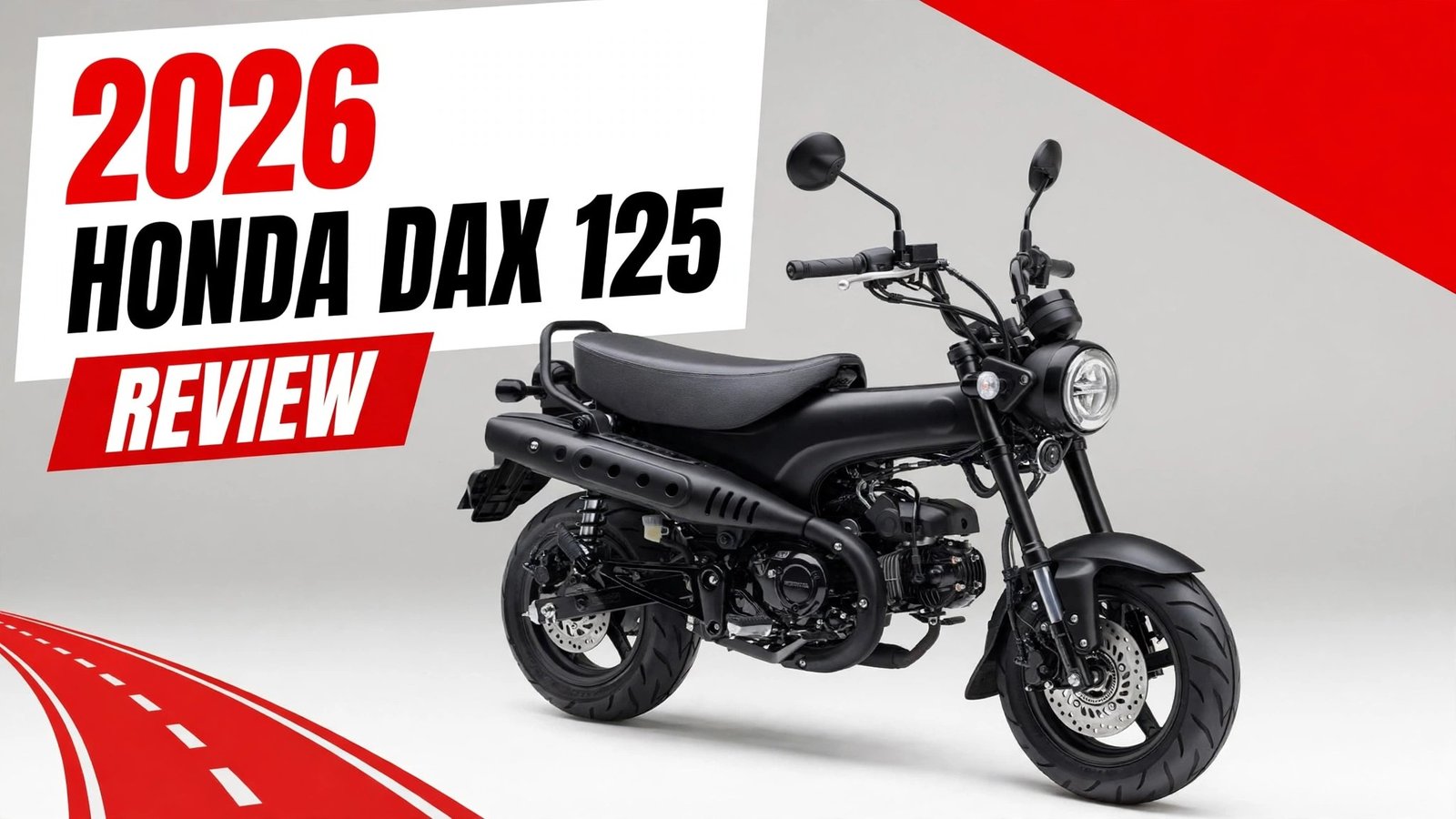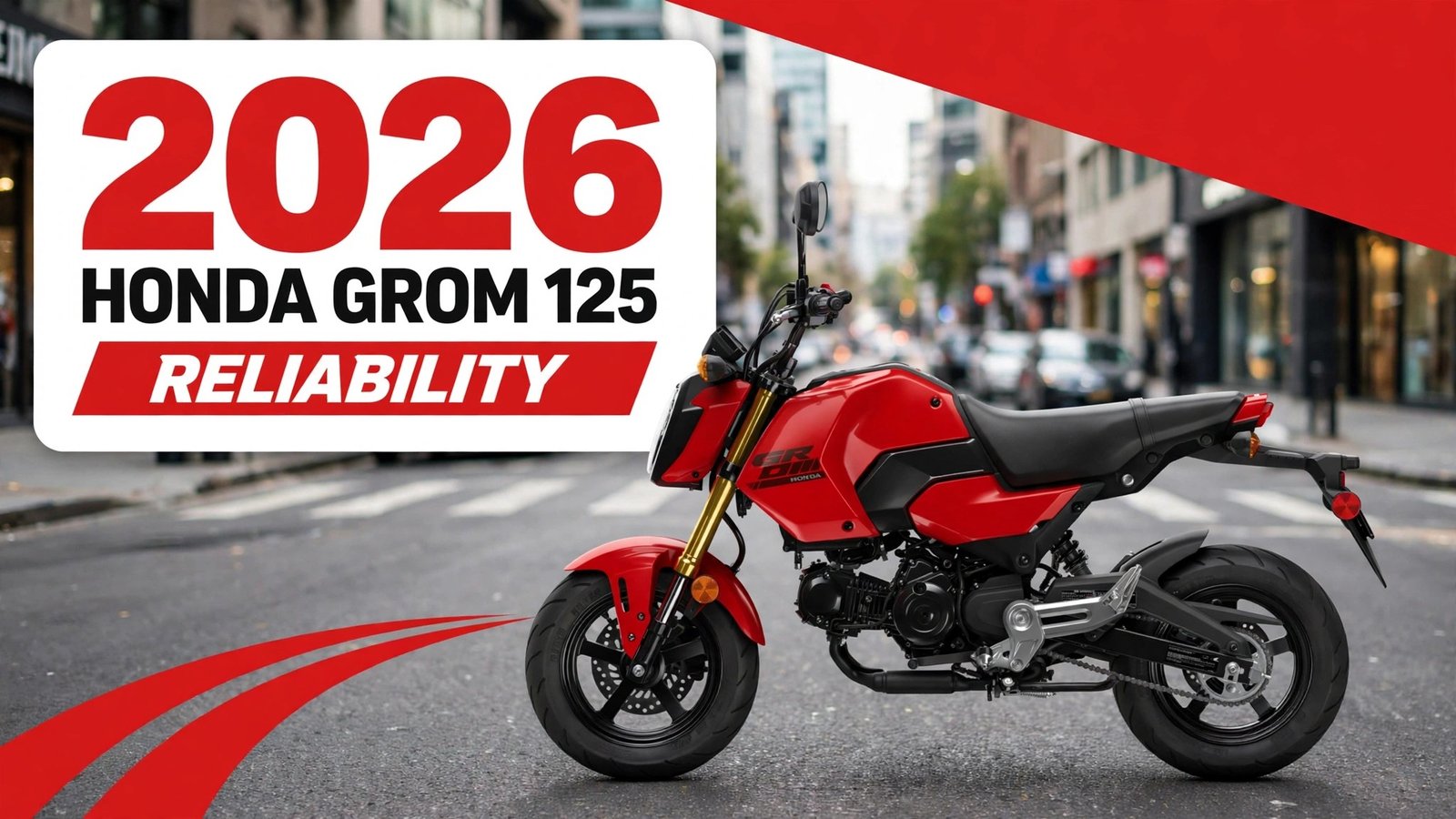
Short answer: Honda Grom 125 reliability is one of the strongest selling points of the little Honda, with one condition: the verdict applies to stock bikes kept on Honda’s schedule. A stock Grom ridden on city streets, serviced at Honda’s intervals, and never modified is a genuinely durable machine with cheap consumables and parts support everywhere. A modified Grom, a neglected Grom, or an early bike with an open fuel-pump recall is a different machine, and this Honda Grom 125 reliability guide judges each of those honestly.
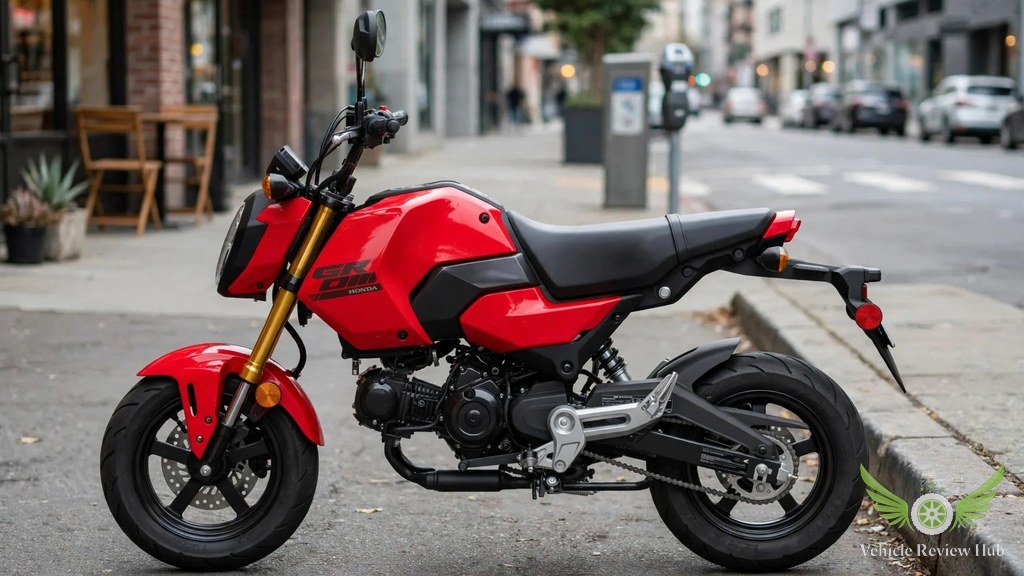
The frame for this Honda Grom 125 reliability guide is the current bike: the 2026 Grom at $3,599, the Grom SP at $3,699, and the Grom ABS at $3,799, each plus a $300 destination charge. The SP is styling only — Matte Black Metallic paint and an under-cowl — and the ABS trim adds front-wheel ABS only, plus an IMU; the rear brake has no ABS on any trim. The engine is a 124cc air-cooled single with a five-speed gearbox on 2022-and-newer bikes, and this Honda Grom 125 reliability guide never calls it liquid-cooled: a circulating dealer brochure misprint says so, while Honda’s own spec pages say air-cooled. For the full model story, see our Honda Grom 125 review.
Honda Grom 125 Reliability Overview
The overview of Honda Grom 125 reliability starts with why the bike earns its reputation: a simple, low-stress engine and almost nothing electronic to fail. The 2026 engine is a 124cc air-cooled SOHC two-valve single, 50.0 by 63.1 mm, 10.0:1 compression, fed by PGM-FI through a 24 mm throttle body, five-speed gearbox, #420 chain, 15T/38T. It does its work at city speeds rather than at sustained freeway revs, and that low-stress life is the foundation of Honda Grom 125 reliability — and its limit, because sustained full-throttle freeway running is the hardest life this small air-cooled single can live.
Shockingly Durable in Stock Form per RevZilla
Shockingly durable in stock form per RevZilla is the doc heading, kept verbatim, and this Honda Grom 125 reliability guide labels it honestly: the exact wording is doc-sourced, but the substance is verified in RevZilla’s 2025 coverage — low service and consumable costs, excellent parts availability, and extensive do-it-yourself forum support. That combination is what makes Honda Grom 125 reliability practical: when something wears out, the part is cheap, stocked, and forum-documented. Owner reports commonly describe 20,000 to 30,000 miles on basic maintenance, with some well-kept examples past 50,000 miles — owner-reported figures, not a Honda lifespan claim.
Modified Bikes Tell a Different Story: Judge Stock Only
Modified bikes tell a different story: judge stock only, and this Honda Grom 125 reliability guide applies that rule without exception. Big-bore kits, reflashes and tunes, stretched swingarms, and aftermarket exhausts all change the loads on engine, frame, and electrics — a modified bike’s reliability is the builder’s work, not Honda’s. A big-bore kit raises heat and stress on an air-cooled single never designed for it; a reflash can remove Honda’s fueling safeguards; a stretched swingarm changes chain geometry. None of that makes a modified Grom a bad purchase — it makes it a build, judged on the builder’s receipts, not as a stock Grom.
Honda Grom 125 Common Problems and Wear Items
Honda Grom 125 reliability has a short problem list. There is no chronic engine failure, no recurring electrical fault, and no model-year lemon to avoid across the whole line. The real issues are two early-bike fuel-pump recalls, one live emissions stop-sale, and ordinary wear items — chain, tires, fork seals, brake pads, and battery. Judge a used Grom by whether its recall work is documented and its wear items were kept up.
Fuel Pump Recalls 14V-672 and 16V-661 on Early Bikes
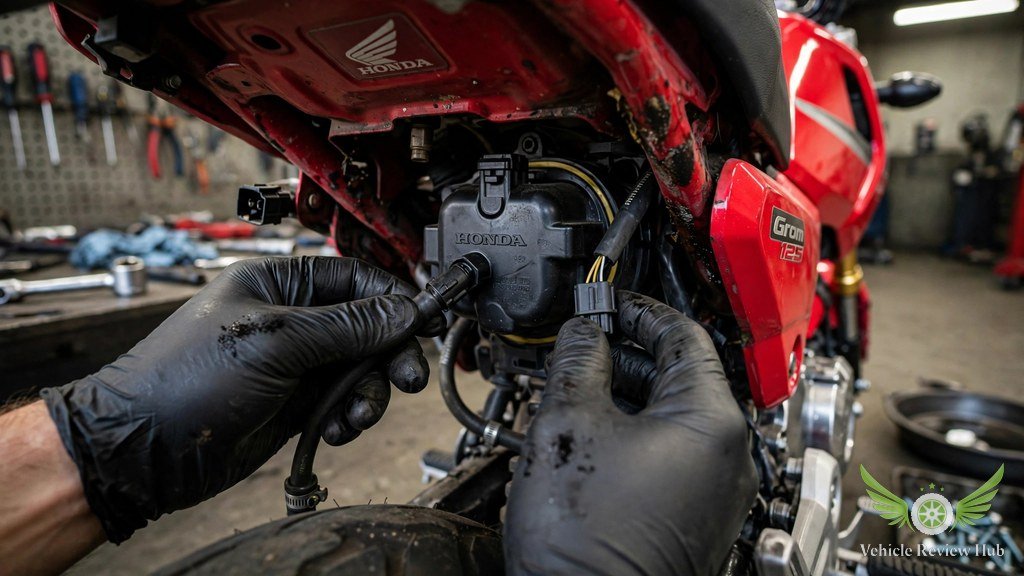
Fuel pump recalls 14V-672 and 16V-661 on early bikes are the most important recall story in Honda Grom 125 reliability, — never collapsed into one. Recall 14V-672 came first, in October 2014: the resin bracket inside the Spec-A fuel pump could swell and seize the impeller, and the remedy replaced Spec-A pumps with aluminum-bracket Spec-C pumps. Recall 16V-661 followed in September 2016, Honda numbers KC3 and KC4, and it SUPERSEDES 14V-672: the resin inlet cover could also swell and seize the impeller, stalling the engine. The 16V-661 population is 2014–2015 Grom 125s, 17,643 units, within VIN ranges MLHJC6114E5000001–E5007923 and MLHJC6119F5100001–F5107062, with a free metal-inlet-cover pump assembly as remedy. The re-repair rule is the trap: bikes whose 14V-672 remedy parts were installed more than 100 days after the parts’ production date are NOT excluded from 16V-661. A 14V-672 repair therefore does NOT clear 16V-661 — every 2014–2015 bike needs BOTH statuses checked by VIN. Ultimate Motorcycling’s fuel-pump recall report confirms the same figures. Always run the VIN through Honda’s recall lookup before buying. Separately, the August 7, 2025 emissions stop-sale on 2020 and 2022–2026 Groms is a different fuel-permeation matter with its own VIN gate, covered in our Honda Grom 125 buying guide; and no handlebar-clamp, drive-gear, or grip recall names the Grom. The video below is a live Grom oil-and-service session — a workshop livestream, not a Honda service film.
Chain, Sprockets, Tires, Fork Seals, Brakes and Electrical Checks
Beyond the recalls, Honda Grom 125 reliability comes down to this wear-item checklist. The chain is a #420 on a 15-tooth front and 38-tooth rear sprocket on 2022-and-newer bikes: check slack, stiff links, kinks, and hooked teeth, replacing chain and sprockets together. 12-inch tires wear faster than a full-size bike’s tires and deserve a tread and age check at every service. Fork seals wear in city grime, brake pads work the 220 mm front and 190 mm rear discs, and the ABS trim’s front-wheel sensor needs care during wheel work. Electrics: LCD dash and gear indicator (2022+), IMU (ABS trim), and the battery — the most common no-start cause on a bike that sits.
Honda Grom 125 Maintenance Schedule and Servicing
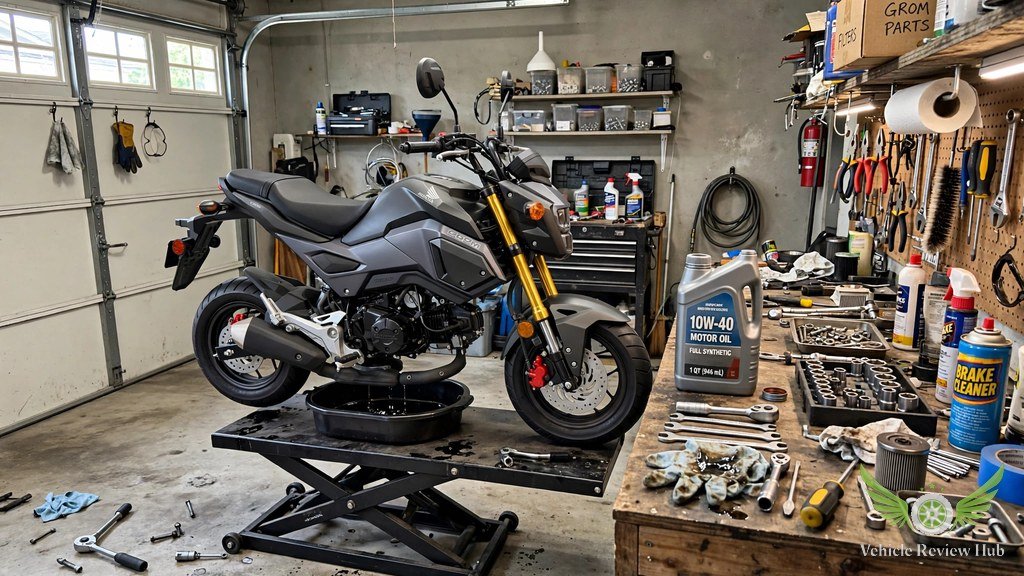
Honda Grom 125 reliability is a schedule, not a hope. Honda’s manuals set the work in miles: initial service at 600 miles, then steps every 4,000 miles, with the chain checked far more often and brake fluid on a two-year clock. Two traps sit inside it: pre-2022 bikes have no spin-on oil filter at all, and the low-quality 2,500/5,000-mile guide cycle found online is rejected in favor of Honda’s 4,000-mile manual cycle.
| Service item | Interval (Honda manual) | What Honda requires |
|---|---|---|
| Initial service | 600 miles | Oil, chain, idle |
| Engine oil | Every 4,000 miles | Replace; SAE 10W-30, JASO MA |
| Valve clearances | Every 4,000 miles | Inspect; per year manual |
| Spark plug | Per manual cycle | Inspect, replace (NGK CPR6EA-9) |
| Air cleaner | 12,000 miles (2022+ schedule) | Replace; 10,000 miles earlier |
| Drive chain | Every 300 miles | Inspect and lubricate |
| Brake fluid | Every 2 years | Replace; DOT 4 recommended |
| Summary | Short ladder, small jobs | Most work is home-garage |
One more manual detail matters for Honda Grom 125 reliability: this road bike has an odometer, so intervals are provable from the dash, unlike the off-road CRF-F line. A service logbook is therefore far more meaningful on a Grom: claimed mileage can be checked against odometer and log together. A readable version of the manual ladder is published in this Grom maintenance schedule summary. For the riding story behind the schedule, see our Honda Grom 125 performance guide.
First Service at 600 Miles, Then 4,000-Mile Intervals
First service at 600 miles, then 4,000-mile intervals is the ladder this Honda Grom 125 reliability guide stands behind — Honda’s manual cycle. At 600 miles: oil replaced, chain and idle checked; then every 4,000 miles the oil is replaced and the valves are inspected, with the spark plug on its manual cycle and the air cleaner at 12,000 miles on the 2022-and-newer schedule (10,000 miles in earlier manuals). The oil grade is SAE 10W-30 meeting API SG or higher and JASO MA; the oil-change quantity is 1.0 US quart (0.9 liter) per the 2015 manual, and total capacity is about 1.1 liters per third-party schedule summaries. The 2,500/5,000-mile guide cycle found on some schedule sites is rejected: Honda’s manuals run the 4,000-mile cycle. Valve clearances are inspected every 4,000 miles; this Honda Grom 125 reliability guide deliberately prints no clearance numbers, because the only figure found in drafting belonged to a different Honda model’s manual — set clearances to your year manual’s spec, never to a forum number.
Pre-2022 Bikes Have No Oil Filter: Strainer and Spinner
Pre-2022 bikes have no oil filter: strainer and spinner is the filter truth this Honda Grom 125 reliability guide keeps straight. The 2014–2020 Grom has no spin-on element: its strainer screen and centrifugal filter (the spinner) are cleaned, not replaced, marked in the 8,000-mile column of the 2014–2020 manual extract; Honda recommends a mechanic for that cleaning. The 2022-and-newer bike trades the spinner for a conventional filter on the manual cycle. Never order a spin-on filter for a pre-2022 Grom — and a pre-2022 bike with no strainer and spinner cleaning on record has a gap worse than a missed oil change.
Honda Grom 125 Tires, Brakes and Suspension Maintenance
Honda Grom 125 reliability in the chassis is about three small systems: tires, disc brakes, and simple suspension. None is complicated, but all wear in ways easy to miss on a bike this small.

Chassis numbers: 31 mm inverted fork, 3.9 inches of travel; single rear shock, 4.1 inches; seat 30.0 inches; wheelbase 47.2 inches; tank 1.6 gallons; 2026 base 224 pounds, ABS 227 pounds.
Chain Inspection and Lube Every 300 Miles
Chain inspection and lube every 300 miles is the most frequent job on the Honda Grom 125 reliability schedule. Every 300 miles, Honda requires the chain inspected and lubricated, and on a bike ridden in city grime that interval is a maximum: a chain coming back caked in grit should be cleaned and lubed after the ride, because a dry chain wears sprockets, stretches unevenly, and eventually jumps. Slack is set per the year manual — the 2018 extract gives 20 to 30 mm, and this Honda Grom 125 reliability guide labels that as a 2018-extract figure.
Brake Pads, Suspension Linkage and Bearing Checks
Brake pads, suspension linkage and bearing checks close the chassis side of Honda Grom 125 reliability. Disc brakes: check pad thickness, lever feel, and fluid level, replace the fluid every two years, and protect the ABS trim’s front-wheel sensor during wheel work — a damaged sensor is an ABS fault, not a pad job. Suspension and bearings: dry fork seals, smooth fork travel, a shock rebounding without bouncing, and wheel, steering-head, and swingarm bearings checked for play.
Honda Grom 125 Maintenance and Ownership Costs
Honda Grom 125 reliability is cheap to maintain — but this Honda Grom 125 reliability guide will not invent a servicing-cost dollar figure, because no published figure exists. The shape of the costs is honest: small quantities of oil, one air filter at long intervals, a chain and sprocket set at long intervals, small cheap tires, and pads rather than discs and calipers.

The purchase price sets the frame. A new 2026 Grom is $3,599 plus $300 destination, the SP $3,699 plus $300, the ABS $3,799 plus $300, per Honda’s Grom page. Fuel is the smallest line: a few dollars per 1.6-gallon fill, and Honda’s EPA-procedure estimate of 160.5 MPG is a comparison figure with Honda’s own disclaimer, not a promise — real-world tested economy runs roughly 97 to 115 MPG, and this Honda Grom 125 reliability guide keeps the estimate and the tested range separate rather than averaging them.
| Cost area | What to expect | Reliability note |
|---|---|---|
| Routine servicing | Small oil quantity, long-interval filter | Mostly home-garage work |
| Tires and tubes | 12-inch size | Check tread and age |
| Chain and sprockets | #420 chain, 15T/38T (2022+) | Replace sprockets with the chain |
| Recall work | Free where applicable | Confirm by VIN first |
| Summary | Low running costs | No published cost figure exists |
Fuel, Routine Servicing, Tires and Replacement Parts
Fuel, routine servicing, tires and replacement parts are the four lines of Honda Grom 125 reliability costs. Fuel is a few dollars per 1.6-gallon fill. Routine servicing is oil at every 4,000-mile step, valves inspected at the same step, chain work every 300 miles, and strainer and spinner cleans on pre-2022 bikes or a filter change on 2022-and-newer bikes. Tires and parts are similar: small, common, cheap 12-inch tires, and inexpensive Honda pads, seals, cables, and grips with an enormous aftermarket.
One-Year Transferable Limited Warranty Included
One-year transferable limited warranty included is the warranty truth this Honda Grom 125 reliability guide states plainly. Honda backs the Grom with a transferable, one-year included, unlimited-mileage limited warranty, plus optional HondaCare — not the CRF-F six-month term, and never extended to two years here. Transferability matters for Honda Grom 125 reliability in the used market: a bike still inside its year carries its warranty to the next owner — check the in-service date, never assume cover.
How to Keep a Honda Grom 125 Reliable
Keeping Honda Grom 125 reliability intact is mostly about habits, not mechanical skill. An owner with basic tools can do every job on its schedule except the strainer and spinner cleaning Honda recommends a mechanic for: chain, air filter, oil at the 4,000-mile steps, and proper storage between seasons.

Two hard rules belong in any Honda Grom 125 reliability guide. First, never buy on story: a Grom’s reliability is proven by VIN recall status, service log, and visible condition, in that order. Second, never let the small size fool you into skipping the schedule — the 4,000-mile steps are short, and a missed valve inspection on a small air-cooled single matters more than on a big liquid-cooled bike. See the Honda Grom 125 review for price, specs, and riding experience.
Preventive Maintenance, Records and Regular Inspections
Preventive maintenance, records and regular inspections are the three habits that keep Honda Grom 125 reliability intact. Preventive maintenance means doing the 300-mile chain job and the 4,000-mile service on time. Records mean keeping logbook, dealer receipts, and recall paperwork together — on a bike with an odometer, log and dash corroborate each other. Regular inspections mean a monthly walk-around: tires, chain, fork seals, pads and fluid, battery terminals, and panel fasteners.
The Fixed Pump Carries a Green Paint Mark: Check for It
The fixed pump carries a green paint mark: check for it is the doc heading, kept verbatim — and this Honda Grom 125 reliability guide labels it honestly: the mark could not be verified in the 16V-661 bulletin extracts found during drafting. Owner guides mention a green paint mark on the replaced pump, but the bulletin extracts reviewed here describe the metal-inlet-cover remedy and VIN ranges, not a paint mark, so this Honda Grom 125 reliability guide does not ask any buyer to rely on the mark alone. The reliable check is dealer paperwork plus VIN status: ask the dealer to show the 16V-661 repair record for the bike’s VIN, and confirm both statuses through Honda’s recall lookup first.
Honda Grom 125 Reliability FAQs
Direct answers to the Honda Grom 125 reliability questions owners and used buyers ask most.
Is the Honda Grom 125 reliable?
Yes, says this Honda Grom 125 reliability guide — in stock form, kept on Honda’s schedule, with low service costs and excellent parts availability.
What are the common problems on a Honda Grom 125?
Two early-bike fuel-pump recalls, one live emissions stop-sale on 2020 and 2022–2026 bikes, and ordinary wear — chain, tires, fork seals, pads, and battery — says this Honda Grom 125 reliability guide.
What are the Grom fuel pump recalls 14V-672 and 16V-661?
14V-672 (October 2014) replaced swelling resin-bracket Spec-A pumps with aluminum-bracket Spec-C pumps, says this Honda Grom 125 reliability guide. 16V-661 (September 2016, KC3/KC4) supersedes it for 2014–2015 bikes, 17,643 units, with a free metal-inlet-cover pump.
Does a 14V-672 repair clear the 16V-661 recall?
No, says this Honda Grom 125 reliability guide. Bikes whose 14V-672 remedy parts were installed more than 100 days after the parts’ production date are included in 16V-661 and need the pump replaced again.
How often does a Grom need servicing?
First service at 600 miles, then every 4,000 miles for oil and valve inspection, says this Honda Grom 125 reliability guide. Chain every 300 miles, brake fluid every two years, air cleaner at 12,000 miles (2022+).
What oil does a Grom take, and how much?
SAE 10W-30 meeting API SG or higher and JASO MA, says this Honda Grom 125 reliability guide. Oil-change quantity is 1.0 US quart (0.9 liter) per the 2015 manual; total capacity about 1.1 liters.
Does a pre-2022 Grom have an oil filter?
No spin-on filter, says this Honda Grom 125 reliability guide. Pre-2022 bikes use a strainer screen and centrifugal spinner, cleaned rather than replaced; Honda recommends a mechanic for that cleaning. The 2022-and-newer bike uses a conventional filter.
What are the Grom valve clearances?
Inspect them every 4,000 miles and set them to your year manual’s spec, says this Honda Grom 125 reliability guide. This Honda Grom 125 reliability guide deliberately prints no clearance numbers — the only figure found in drafting belonged to a different Honda model’s manual.
How long do Honda Groms last?
Owner reports commonly describe 20,000 to 30,000 miles on basic maintenance, with some well-kept examples past 50,000 miles, says this Honda Grom 125 reliability guide.
Does the Grom have a warranty when bought used?
Honda’s new-bike warranty is one year, transferable, unlimited-mileage, limited, says this Honda Grom 125 reliability guide — so a recent used bike may still carry term. Check the in-service date rather than assuming cover.
Is a modified Grom as reliable as a stock Grom?
No, says this Honda Grom 125 reliability guide. Big-bore kits, reflashes, and stretched swingarms change the loads Honda designed for, so a modified bike’s reliability is the builder’s work.
How do I check the fixed fuel pump on a 2014–2015 Grom?
Ask the dealer to show the 16V-661 repair record for the bike’s VIN and confirm both recall statuses through Honda’s recall lookup, says this Honda Grom 125 reliability guide. Do not rely on a green paint mark alone.