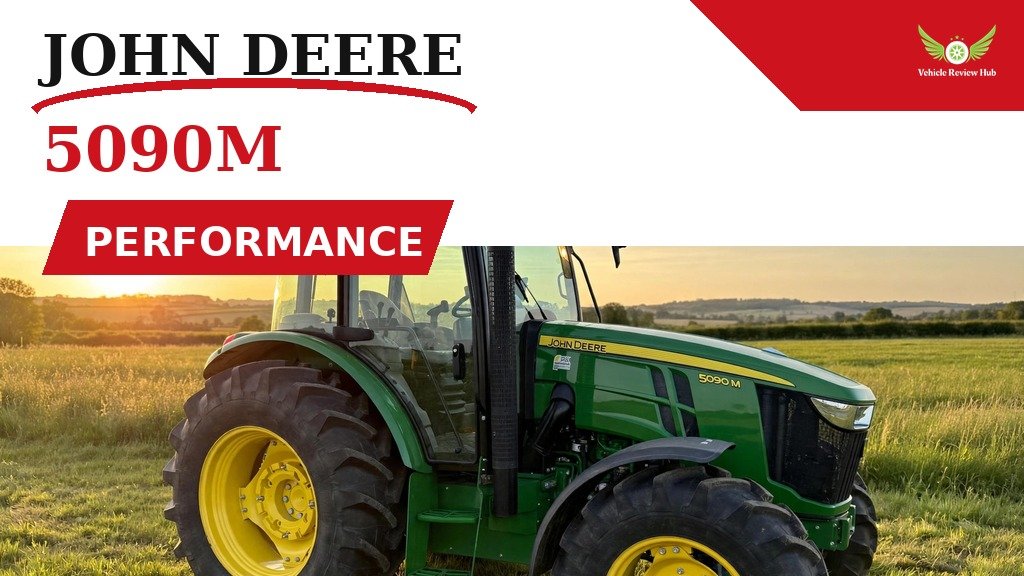
The short answer on John Deere 5090M performance: this 90-horsepower 5M Series utility tractor pairs a 4.5-liter PowerTech diesel making 75 PTO horsepower with a choice of three gear transmissions, a 3,027-pound-capacity 540M loader, and a cab that owners describe as one of the quietest in the class. Fuel use is load-dependent — roughly 1.5 gallons per hour doing light chores and 4 to 5.5 gallons per hour under a full PTO load — with the 35.4-gallon tank typically covering a full 10- to 12-hour workday. Trade-offs: it burns DEF (DOC/SCR aftertreatment), it weighs nearly 9,000 pounds in cab form, and the premium over the 5090E buys refinement more than raw power.
This guide breaks down John Deere 5090M performance task by task — fieldwork, loader work, hay season, and hauling — with realistic fuel numbers, honest handling impressions, and the transmission and setup choices that matter most for American farms and large properties.
John Deere 5090M Fuel Consumption and Runtime
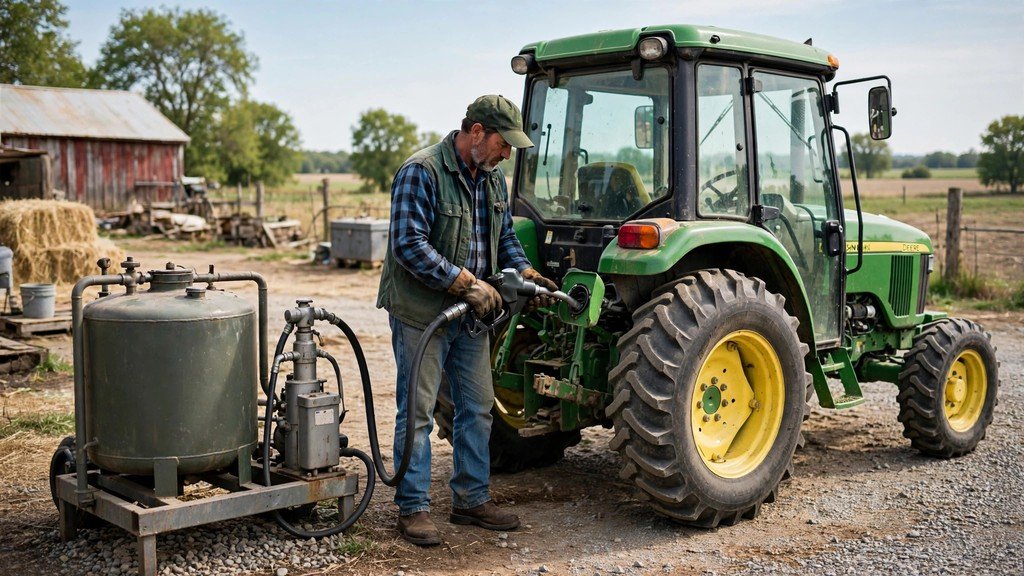
Fuel is the first question every buyer asks about John Deere 5090M performance, and the honest answer is that a 90-horsepower utility tractor’s appetite depends almost entirely on the load. The PowerTech PWL 4-cylinder runs a turbocharger with air-to-air aftercooling and cooled EGR, and Nebraska-test fuel-efficiency math for modern diesels lands near 0.06 gallons per horsepower-hour at rated load — which puts a full 75-PTO-horsepower pull at about 4.5 gallons per hour. Light work at part throttle burns a fraction of that. The figures below are typical ranges drawn from owner reports and test-data math, not laboratory figures.
Fuel Use During Fieldwork, Loader Work and Idling
Owners consistently describe the 5090M as thrifty for its size when it is worked sensibly and thirsty only when it is asked for everything it has. A long-term owner on TractorByNet who compared his 5090M against his 5090E runs the M-machine 500 to 600 hours a year across three cab tractors and considers its fuel use fair for the class. The pattern that emerges from owner reports on John Deere 5090M performance matches the physics: horsepower-hours per gallon is roughly constant, so gallons per hour tracks the load.
The table below collects typical fuel figures by task — practical ranges, not engineering data.
| Task | Typical Engine Speed | Typical Fuel Use (gal/hr) |
|---|---|---|
| Idling and light yard chores | 900–1,400 rpm | 1.0–1.8 |
| Loader work, feeding, material handling | 1,500–2,000 rpm | 2.5–4.0 |
| Mowing, tedding, light hay work | 1,700–2,100 rpm | 3.0–4.5 |
| Heavy tillage, baling, full PTO load | 2,000–2,400 rpm | 4.0–5.5 |
| Blended real-world average | Mixed farm work | ~2.5–3.5 |
At those rates, the standard 35.4-gallon tank covers a genuine full day: roughly 10 to 14 hours of mixed work, or about 8 hours of continuous full-load PTO duty. An optional 42.4-gallon high-capacity tank (field-installed kit) stretches that further for operations that run dawn to dusk. Our 5090M ownership cost guide turns these John Deere 5090M performance fuel figures into annual budgets.
Factors Affecting Fuel Economy and Runtime per Tank
Engine speed dominates John Deere 5090M performance fuel economy. The 540E economy PTO is the single biggest fuel saver on the tractor: it delivers 540 rpm at the PTO at just 1,716 engine rpm instead of 2,400, so mowing, tedding, and other moderate-PTO jobs burn noticeably less — a defining trait of John Deere 5090M performance in real farm use. Owners who match gear and rpm to the load — using the PowrQuad’s powershift steps or the Powr8’s eight speeds per range — consistently report better numbers than those who run wide open out of habit.
Ballast and tires matter for John Deere 5090M performance too: a properly ballasted tractor (up to the 11,510-pound maximum permissible weight) converts power to pull instead of wheel slip, and radial tires in the correct pressure range cut rolling resistance. The DEF system adds a small running cost — the 3.17-gallon DEF tank feeds the SCR catalyst, and DEF consumption typically runs a few percent of diesel use — but there is no DPF parked-regen cycle to interrupt work. Cold weather, short-trip chores, and oversized implements all push consumption toward the top of the ranges above; steady, loaded, correctly geared work sits at the bottom.
John Deere 5090M Performance for Farm and Property Work
John Deere 5090M performance centers on a simple formula: 89.3 rated horsepower (92.8 maximum with the 4 percent power boost), 75 PTO horsepower, and 277 lb-ft of torque peaking at just 1,600 rpm with a 30 percent torque rise. That torque curve is what owners feel in the field — when the engine is pulled down under load, torque rises instead of collapsing, so the tractor lugs through tough spots without a downshift. The power bulge holds output at or above rated horsepower all the way down to 1,750 rpm. For implements, the electrohydraulic 540/540E/1,000 PTO and a heavy-duty Category 2 hitch (convertible to Category 1) handle the full 90-horsepower implement class.
Tillage, Mowing, Hay Work and Material Handling
Hay season is where John Deere 5090M performance earns its keep. Owners run disc mowers, tedders, and balers through 14- to 16-hour days — the exact routine one TractorByNet owner describes, cutting, raking, and baling with his M-series machines 4 to 5 times each summer. The 75 PTO horsepower handles a 9- to 12-foot disc mower comfortably, and the 540E setting keeps fuel civilized on the tedder and rake. The video below shows a 5090M doing exactly this kind of work — cutting heavy brush with a flex-wing mower:
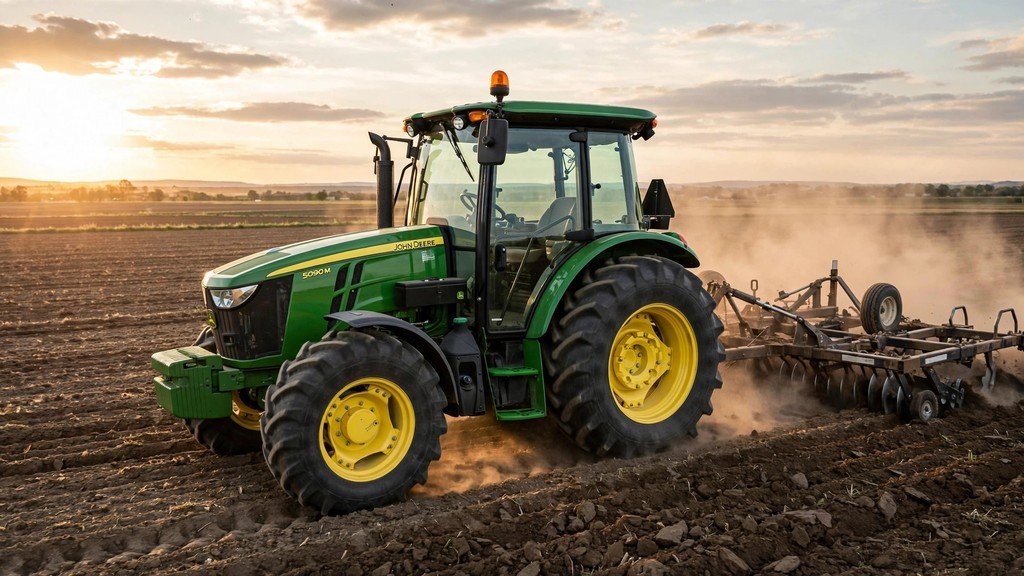
For tillage, John Deere 5090M performance suits 5- to 7-shank rippers, 12- to 15-foot field cultivators, and 4- to 5-bottom plows depending on soil — the 8,700-pound cab tractor (up to 11,510 pounds ballasted) puts power down without the wheelspin that plagues lighter machines. The 25.6-gpm open-center hydraulic system with up to three rear SCVs runs planters, sprayers, and air seeders without starving the steering circuit. Material handling around the farm — pallets, seed totes, round bales — is loader work, covered in the next section.
Loader Work, Hauling and Heavy-Load Performance
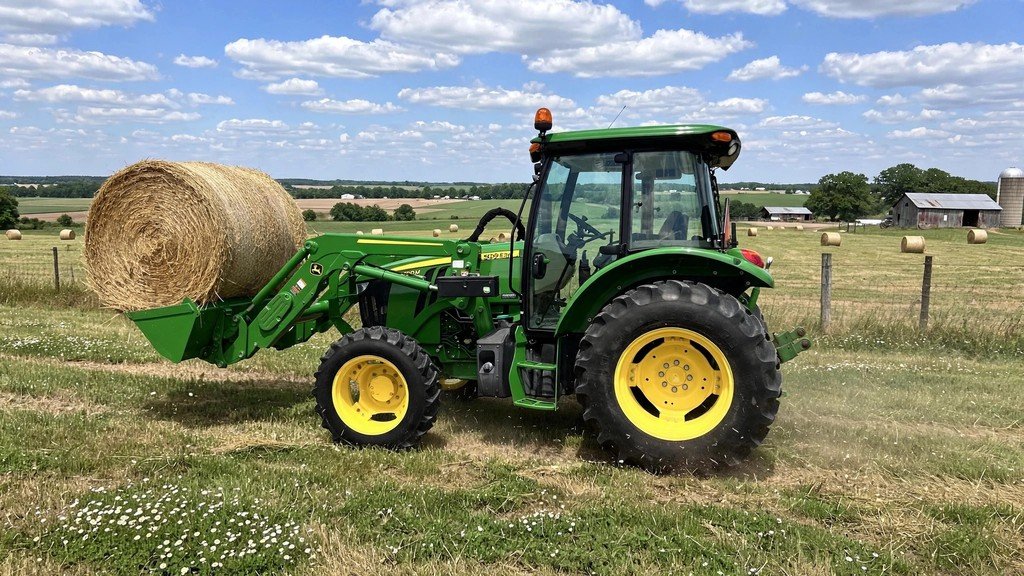
The factory loader for the 5090M is the 540M (previously the H260), and its numbers define John Deere 5090M performance for chore work: 141 inches of maximum lift height, 3,027 pounds of lift capacity at the pivot at full height, and 2,671 kgf of boom breakout force, per dealer-published 540M specs. Mechanical self-leveling comes standard, cycle times run about 3.4 seconds to raise and 2.1 to dump, and the mid-frame cast-iron design keeps the tractor rigid under a heaped bucket.
Owners move round bales, load manure spreaders, and stack pallets all day with the 540M — chore versatility at the heart of John Deere 5090M performance — and the Panorama roof option exists specifically for this work — upward visibility improves dramatically for bale stacking and dumping into walled trailers. Hauling is equally strong: the 25-mph ECO Shift top gear (Powr8) moves the tractor between fields at reduced engine rpm, and the heavy cast frame tows loaded wagons and implements without the tail-wagging-the-dog feel of lighter utilities. If most of your hours are loader chores, price the third-function hydraulics and a grapple at purchase — the loader valve bank and joystick are easiest to fit at the factory.
John Deere 5090M Handling, Comfort and Operating Limitations
The 5M is Deere’s mid-spec utility line, so John Deere 5090M performance in the seat splits the difference between the workmanlike 5E and the premium 5R: a modern cab with genuinely good ergonomics, but without the 5R’s fancier automation. The trade-offs are honest ones — nearly 9,000 pounds of tractor is stable and planted, but it is not nimble, and soft ground notices the weight.
Cab, Open-Station Controls and Operator Comfort
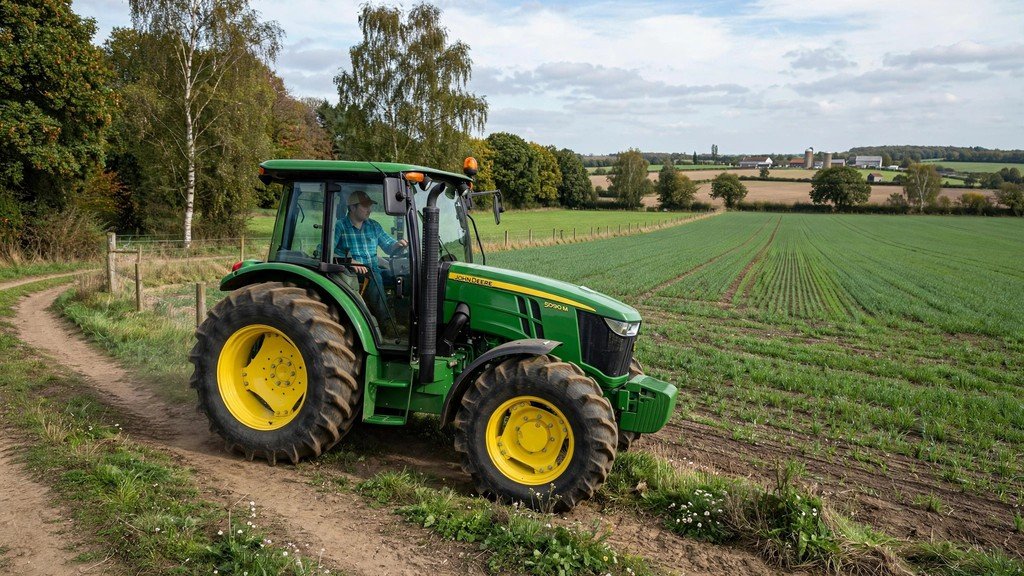
The cab is the strongest comfort argument for John Deere 5090M performance. The premium cab borrows structure from the 5R line: a Panorama roof option, air-ride or premium air-ride seat, a digital dash with three LCDs, and a 78-dBA noise rating that owners call noticeably quieter than older utilities. Climate control is standard in the cab, and the corner-post exhaust keeps the forward view clean. One owner who upgraded from an E-series specifically cites the radial tires and the air-ride seat as worth the premium — after 14-hour hay days, the seat is not a luxury.
Controls are laid out for long days: the transmission lever carries integrated declutch and gear buttons, so range changes happen with a button press instead of the foot clutch, and ranges C and D are fully synchronized for shift-on-the-go. Rear fender hitch controls let you raise and lower the 3-point without climbing back in — a small feature owners use constantly when hooking implements alone. Open-station buyers get the same mechanical package with a flat platform and fender-mounted controls, but for anyone logging real hours, the cab is where the John Deere 5090M performance story is told.
Traction, Stability, Terrain and Workload Limitations
Weight is the defining handling trait of John Deere 5090M performance: at roughly 8,700 pounds in MFWD cab form, the tractor is planted on hillsides and stable with a loaded 540M bucket — the exact opposite of the tippy compacts below it. MFWD is effectively mandatory for loader work and tillage; 2WD versions exist but give up the traction that John Deere 5090M performance depends on. Radial tires (460/85R30 rears are a popular option) and proper ballast turn that weight into grip.
The honest limitations: soft, wet ground is the 5090M’s weak spot — several owners note the weight works against it in muddy spring conditions, where a lighter tractor floats better. The 12.6-foot turning radius with brakes is decent for the class but this is not an orchard tractor; headland turns need room. Transport width with wide-set rears can exceed 8 feet, so check gate and trailer widths. And while 75 PTO horsepower covers the 90-horsepower implement class, it will not run a 15-foot batwing in heavy material or a large square baler at full tilt — size implements to the PTO, not the engine badge, a point our 5075E performance and fuel usage guide makes for the smaller sibling as well.
John Deere 5090M Real-World Owner Experience
After the spec sheets, John Deere 5090M performance comes down to how owners feel after hundreds of hours. The consensus across owner threads is consistent: a reliable, comfortable, strong-pulling tractor that owners buy for the long haul — with the purchase price and DEF handling as the two recurring grumbles. Owners who came from older 5M or 5E machines describe the current cab and transmission as a genuine step up.
Owner-Reported Benefits, Complaints and Trade-Offs
Benefits first, as owners report them: pulling power with margin — the torque rise and power bulge mean the engine rarely feels strained. Cab comfort draws repeated praise in John Deere 5090M performance reviews, especially the air-ride seat and the quiet 78-dBA cab on long hay days. Reliability reports are strong: the PowerTech 4.5L is a long-proven platform with wet-sleeved liners, and the DOC/SCR emissions package avoids the parked-regen interruptions that frustrate owners of DPF-equipped compacts — you add DEF every few fill-ups and keep working. The digital dash with diagnostic trouble-code text helps owners and techs alike.
Complaints, equally candid: the price — one owner paid $72,000 in 2018 for a well-optioned machine, and current pricing runs higher still. DEF is a minor but real chore: the 3.17-gallon tank needs refilling, DEF freezes at 12°F (the tank is heated, but stored jugs are not), and letting it run dry derates the engine. Some owners find it noisy at full throttle compared with the premium 5R, and the E-series comparison threads note that the M’s advantages — nicer cab, better seat, more hydraulic refinement — cost real money over a 5090E doing similar work. Overall, owners rate John Deere 5090M performance as the sweet spot of the 5M line: enough tractor for serious farm work without stepping into 6-series money.
Choosing the Right Transmission and Tractor Setup
Transmission choice shapes John Deere 5090M performance more than any other option. The PowrQuad PLUS 16F/16R is the value pick: four ranges, four powershift speeds per range, declutch-button shifting, and enough ratios for tillage, PTO work, and transport. The Powr8 32F/16R adds eight speeds per range and ECO Shift — worth it for operators who constantly change ground speed (vegetables, mowing, specialty crops) or who road the tractor between farms. The creeper option suits transplanting and other ultra-slow work.
Setup advice from owner experience for the best John Deere 5090M performance: order MFWD unless the tractor will live on pavement; take the Panorama roof if you stack bales or load trailers; get three rear SCVs if you run planters or implements with multiple hydraulic functions; and spec the air-ride seat if your days run long. Radial tires ride better and grip better than bias — most owners consider them money well spent. For the full buying picture, start with our 5090M review and buying guide, and compare running costs in the 5090M ownership cost guide.
Frequently Asked Questions About John Deere 5090M Performance
These are the John Deere 5090M performance questions owners and shoppers ask most often, answered from Deere specifications and documented owner experience.
How much fuel does a John Deere 5090M use per hour?
For John Deere 5090M performance in fuel terms: typically 1.0 to 1.8 gallons per hour for light chores, 2.5 to 4.0 for loader work, 3.0 to 4.5 for mowing and hay work, and 4.0 to 5.5 under a full PTO load (typical ranges from owner reports and test-data math). A blended average for mixed farm work lands around 2.5 to 3.5 gallons per hour.
How long will a tank of fuel last on a 5090M?
The standard 35.4-gallon tank covers roughly 10 to 14 hours of mixed work — a full day for most operations. Continuous full-load PTO work at 4.5 gallons per hour brings that to about 8 hours. An optional 42.4-gallon high-capacity tank extends range for dawn-to-dusk operations.
Does the 5090M use DEF?
Yes. The 5090M meets Final Tier 4 with a DOC plus SCR catalyst that requires diesel exhaust fluid — the 3.17-gallon DEF tank is heated for cold weather. There is no DPF parked-regen cycle; you simply keep the DEF tank filled and keep working.
What can the 540M loader lift on a 5090M?
In John Deere 5090M performance terms, the 540M loader lifts 3,027 pounds at the pivot pin at its 141-inch maximum height, with 2,671 kgf of boom breakout force. Mechanical self-leveling is standard. Proper rear ballast is required to use the full rating safely.
Which transmission is best on the 5090M?
The PowrQuad PLUS 16F/16R suits most buyers — simple, durable, and enough ratios for tillage, PTO, and transport. Choose the Powr8 32F/16R if you constantly change ground speed or road between farms (its ECO Shift tops 25 mph at reduced rpm). Add the creeper only for ultra-slow specialty work.
Is the 5090M good for hay work?
Yes — hay work is one of John Deere 5090M performance’s strongest suits. Owners run disc mowers, tedders, and balers through 14- to 16-hour days, praise the 540E economy PTO for moderate-PTO jobs, and value the quiet cab and air-ride seat on long hay days. Size the mower to the 75-horsepower PTO: 9- to 12-foot disc mowers are the sweet spot.