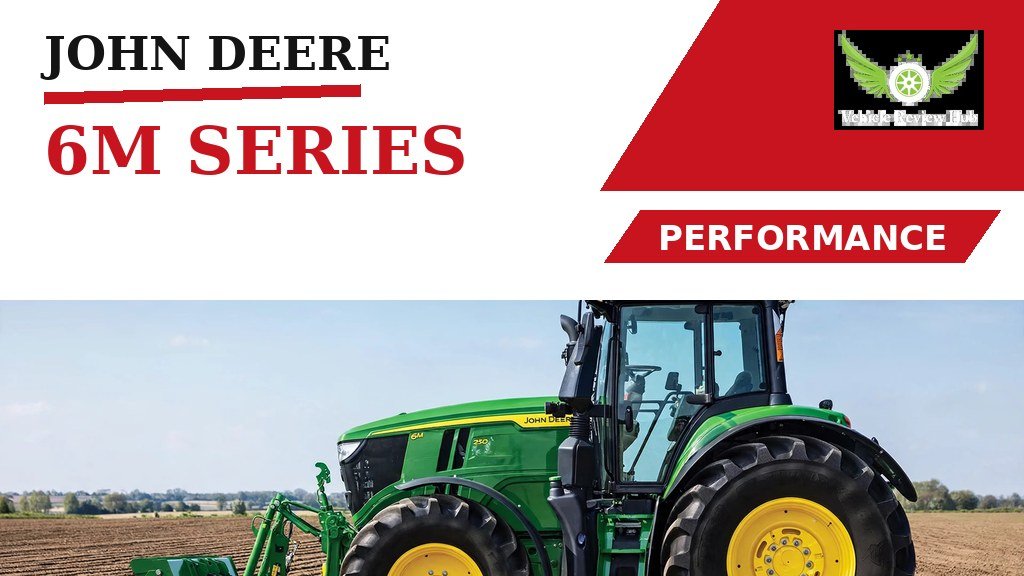
If you want to know how the John Deere 6M Series performs in real farm work, the short answer is this: it is a 90-to-145-horsepower utility line that punches above its weight. Owners and independent testers consistently report strong low-end torque, frugal fuel use for the class, and loader and PTO performance that lets a mid-frame 6M do work many buyers assume needs a bigger tractor.
This John Deere 6M Series performance guide covers real-world fuel consumption by task, how the six models differ in the field, loader and hauling capability, handling and comfort, and what owners say after hundreds of hours. Every figure comes from Deere specs, dealer data, independent tests, or documented owner experience.
John Deere 6M Series Fuel Consumption and Runtime
Fuel economy is where the John Deere 6M Series performance story starts, because these tractors are bought to work long days. The range runs from the 90-hp 6090M to the 145-hp 6145M, all running John Deere PowerTech 4.5L four-cylinder diesels, and fuel use scales with model size and workload. For how John Deere 6M Series performance compares with its smaller sibling on running costs, see our 5M Series performance and fuel usage guide.

Fuel Use During Fieldwork, Loader Work and PTO Operation
The most useful numbers for judging John Deere 6M Series performance come from independent testing and documented field runs rather than brochure claims. An OECD tractor test of the 6120M recorded 6.3 gallons per hour at maximum power output — that is the ceiling, measured at full drawbar load, not a typical working figure. In lighter real-world work, a Farmers Guardian review of the 6120M logged 18 hours of mowing, tedding, raking, and road work on a single tank, 190 liters (about 50 gallons) — roughly 2.8 gallons per hour across genuinely mixed work, a figure most owners of the smaller 6M models will recognize.
Loader work typically runs 2.5 to 4.0 gallons per hour, heavy tillage with the larger 6130M and 6145M pushes 4.0 to 5.5 under full draft load, and road transport is the most economical duty at roughly 2.0 to 3.0 gph. DEF consumption on SCR-equipped models runs a small fraction of diesel use — the Farmers Guardian tester described AdBlue usage as “negligible” over the 18-hour run. The table below summarizes typical fuel figures by task — treat them as owner-and-test-reported ranges, not factory ratings.
| Task | Typical fuel use (gph) | Notes |
|---|---|---|
| Road transport / light utility | 2.0–3.0 | Most economical duty |
| Mowing, tedding, raking | 2.5–3.5 | ~2.8 gph documented on 6120M |
| Loader work | 2.5–4.0 | Varies with cycle intensity |
| Heavy tillage / draft work | 4.0–5.5 | 6145M at full draft, upper end |
| Maximum power (OECD test) | 6.3 | 6120M at full drawbar load — ceiling |
| Blended full working day | 2.8–4.0 | Realistic owner-reported range |
How Model, Workload and Transmission Affect Fuel Economy
Within the John Deere 6M Series performance range, the smaller short-frame models (6090M through 6120M) sip noticeably less than the big-frame 6145M doing the same job — but the gap narrows when both are worked hard, because a lightly loaded big engine is not much thirstier than a heavily loaded small one. The 6120M carries a 51-gallon fuel tank, which at 2.8 gph gives roughly 18 hours between fills — similar to the 6145M’s 70-gallon tank on long tillage days. Intelligent Power Management (IPM) adds up to 10 percent power — 20 hp on the 6145M — in transport and non-stationary PTO applications, which can actually improve fuel economy per acre by letting the tractor hold speed at lower engine rpm — a subtle but real part of John Deere 6M Series performance.
Transmission choice matters too: the AutoPowr IVT keeps the engine in its most efficient rpm band continuously, and owners switching from gears to IVT commonly report smoother speed control and modest fuel savings in variable-load work like mowing. The CommandQuad Plus with EcoShift drops engine rpm automatically at transport speed, which trims road-work consumption. For buyers comparing running costs, our 6M Series ownership cost guide builds a full five-year budget from these fuel figures.
John Deere 6M Series Performance for Farm Work
The John Deere 6M Series performance envelope is defined by torque, not just horsepower. Peak torque figures run from 421 Nm on the 6090M to 702 Nm (518 lb-ft) on the 6145M, with 40 percent torque rise on most models — meaning the engine digs in rather than stalling when load spikes. That torque character is why the 6M has a reputation as a small tractor with big-tractor manners.
Mowing, Hay Work, Tillage and Material Handling
In mowing and hay work, the John Deere 6M Series performance is consistently praised for holding PTO speed under load. The 6120M tested by Farmers Guardian ran a rear mower-conditioner plus a front mower on the four-tonne front linkage — 5.4 meters of cut at 12 kph — with engine and PTO speed rarely dropping even with the grille full of chaff. Three-speed PTO options (540, 540E, 1,000 rpm) let operators match implement speed to the job; the 540E economy mode is a genuine fuel saver for light PTO work like tedding — a small detail that adds up in John Deere 6M Series performance over a season. PTO power runs from roughly 70 hp on the 6090M to 114 hp on the 6145M, with IPM pushing maximum PTO output higher (up to 118 hp at 1,000 rpm PTO on the 6120M).
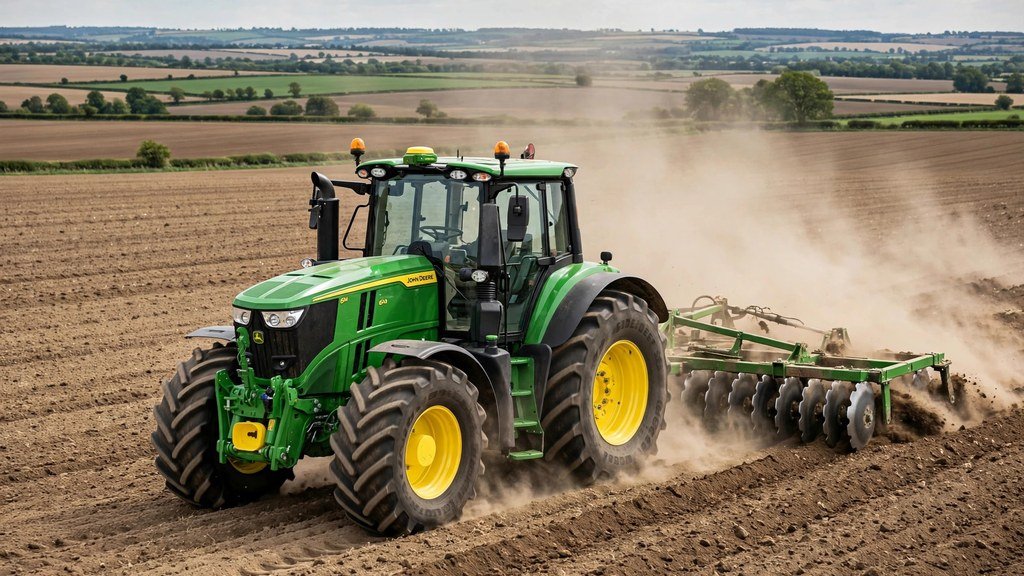
For tillage, the 6M’s full-frame design and 12,500-plus-pound base weight (6120M) give it traction and stability lighter utility tractors cannot match. The 6145M, with its dual-turbo PowerTech PSS engine and 40 percent torque rise, handles primary tillage implements sized for its 114 PTO horsepower without strain. Material handling — pallets, feed, fertilizer totes — is comfortable across the range, with the pressure-compensated hydraulic system (21 gpm standard, 30 gpm optional) keeping steering and implements independent under load.
The video above puts John Deere 6M Series performance to a real-world test — including the anti-stall behavior that matters when a mower or loader suddenly loads the engine. Transmission choice is one of the biggest performance decisions on a 6M — covered in detail in our 6M Series review and specs guide.
Loader Work, Hauling and Heavy-Load Performance
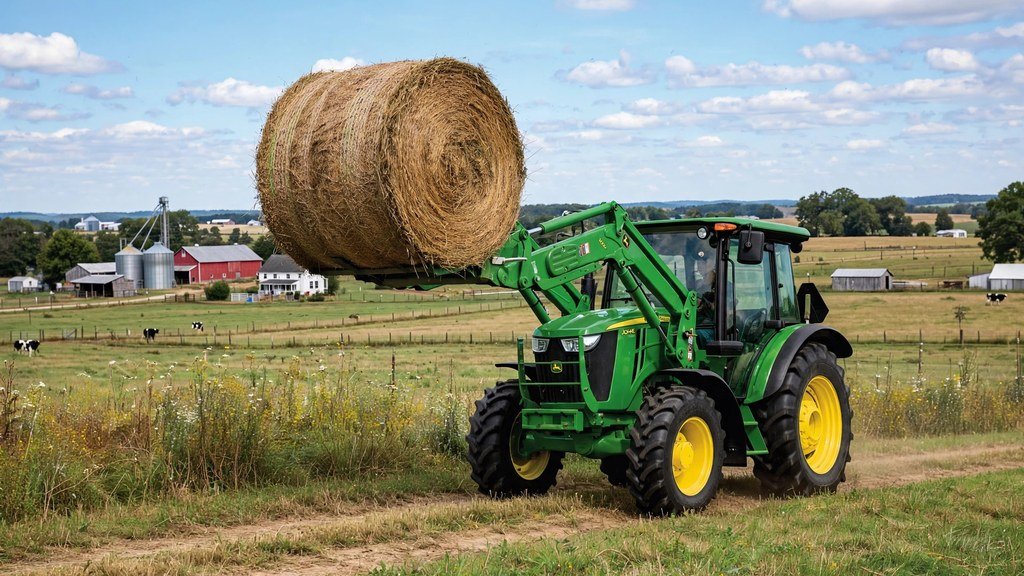
Loader performance is a core part of the John Deere 6M Series performance picture, since most 6Ms spend significant hours on the loader. The factory-matched 643R loader on small-frame models lifts 3,832 to 3,874 lb in non-self-leveling configuration (4,736 to 4,826 lb with mechanical self-leveling) to 163–169 inches, with boom breakout force around 6,200 lbf — strong numbers for the class. The 663R on the 6145M steps up to roughly 5,600 to 6,140 lb at the pivot pin and 177 inches of lift height. Cycle times are quick — loader raise around 3.5 seconds on the 643R — and the electronic joystick with third-function hydraulics makes grapple and 4-in-1 bucket work precise.
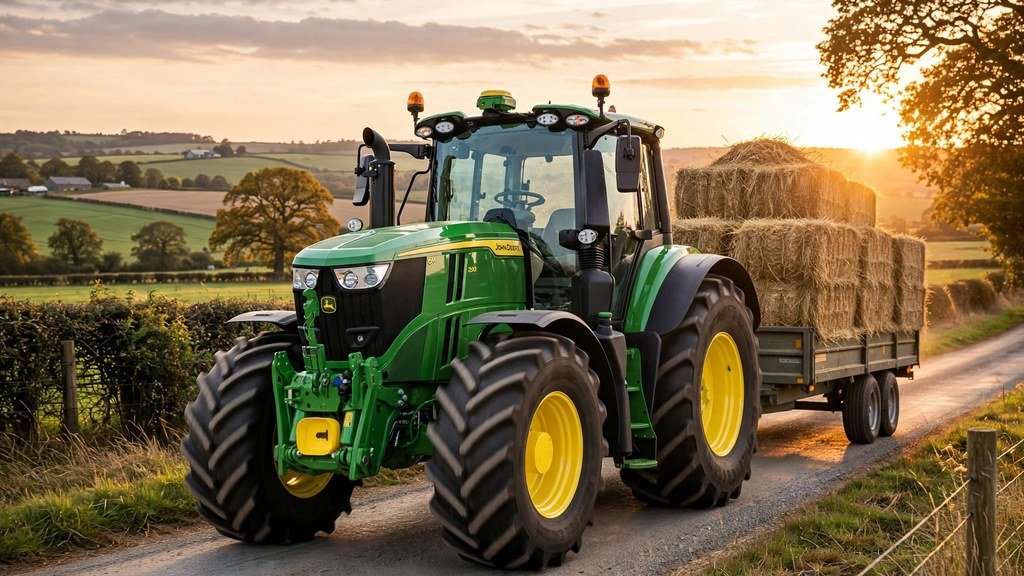
For hauling, John Deere 6M Series performance benefits from the 6M’s 40 km/h (25 mph) transport speed, heavy-duty rear brakes, and optional air trailer brakes make it a capable road tractor for grain carts, manure spreaders, and silage trailers. The 6145M’s IPM boost adds up to 20 hp in transport applications, noticeable on hills with a loaded trailer. Stability is excellent thanks to the long wheelbase (up to 108.9 inches on the 6145M) and heavy base weight — a meaningful step up from the 5M Series for regular road hauling.
John Deere 6M Series Handling, Comfort and Limitations
Handling is a John Deere 6M Series performance highlight: a tight turning radius for the class, responsive hydrostatic steering, and optional Triple Link Suspension (TLS) on the front axle give the 6M a nimble feel that belies its 12,500-lb weight. The full-frame chassis keeps the driveline rigid under loader and draft loads, giving the planted, confidence-inspiring feel owners describe.
Cab, Open-Station Controls and Operator Comfort
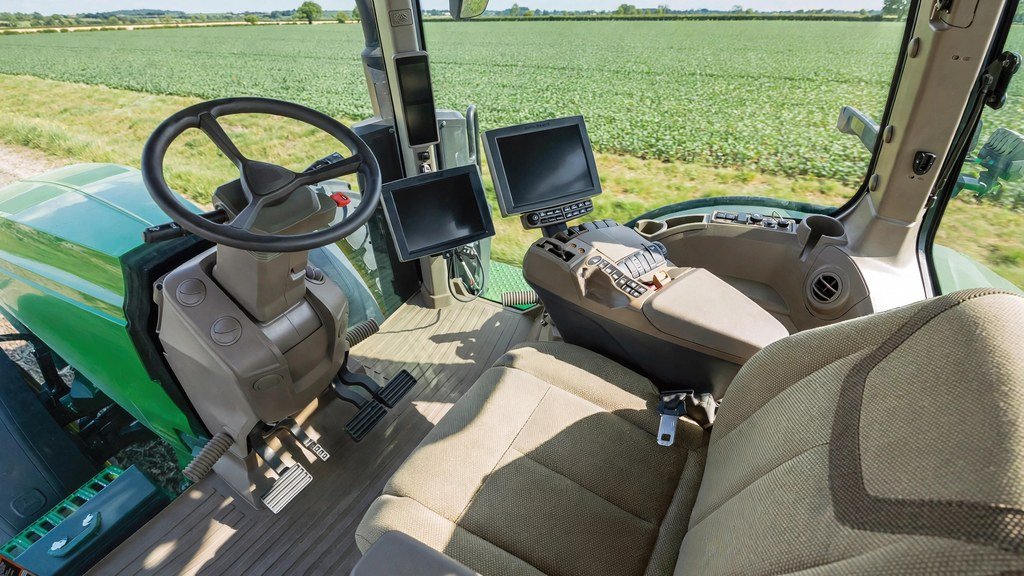
The 6M is a cab-first tractor in the US market, and cab comfort is central to John Deere 6M Series performance over long days: excellent all-around visibility, low in-cab noise, effective climate control, and the available CommandARM console that puts transmission, hydraulics, and hitch controls at the operator’s right hand. TLS front-axle suspension plus optional cab suspension smooth out rough headlands and road transport — reviewers consistently rate ride quality among the best in the class. The panoramic windshield option is popular with loader operators. Air-ride suspension seats are available, and the buddy/instructional seat option matters for training or long days with a second person.
Controls are logically laid out, though operators coming from basic gear transmissions report a few days of familiarization before CommandQuad Plus and AutoPowr IVT become second nature. The declutch button on the gear lever, standard across Quad transmissions, makes shuttle work and loader cycling noticeably easier.
Traction, Stability, Terrain and Workload Limitations
Traction is strong: MFWD with an electrohydraulic differential lock, up to 600/65R38 rear rubber, and 12,500-plus pounds of base weight mean the 6M puts power down effectively in most field conditions. The TLS suspended front axle keeps the front tires in contact over uneven ground, which improves both traction and ride. That said, the John Deere 6M Series performance envelope has limits worth knowing. It is not a row-crop tractor — row spacing adjustability and high-clearance options are limited compared with the 6R. In very soft, wet conditions the weight that helps traction works against flotation; duals or wider rubber help, but a 6M will never float like a lighter machine. And while the 6145M handles implements up to its 114 PTO hp, buyers consistently running 150-hp-class implements should step up to the 6R rather than maxing out a 6M — running at the ragged edge of capacity costs fuel, tires, and longevity. Our 6M Series maintenance and reliability guide covers what overloading does to long-term durability.
John Deere 6M Series Real-World Owner Experience
Synthesizing owner reports from forums and dealer feedback, the John Deere 6M Series performance reputation rests on three pillars: the engine’s willingness to lug, the transmission options, and day-in-day-out reliability. Owners moving up from 5-series or competitive 100-hp tractors most often cite cab comfort, hydraulic capacity, and sheer pulling ability as the difference they feel immediately.
Owner-Reported Benefits, Complaints and Trade-Offs
When owners rate John Deere 6M Series performance, the benefits they report most are excellent fuel economy for the power (the 2.8 gph mixed-work figure on the 6120M comes up repeatedly as better than expected), strong resale value, a comfortable cab for 10-plus-hour days, and the flexibility of the Quad/IVT transmission lineup. The IPM power boost gets genuine appreciation from owners who tow on roads or run PTO implements at the top of the range. TLS suspension is frequently called the single best option box to tick.
Complaints are fewer but consistent: the base price climbs quickly with options (a well-equipped 6120M can list well above $160,000), and some owners find the standard 21 gpm hydraulic pump marginal for continuous high-demand loader work, making the 30 gpm PFC pump a recommended upgrade. DEF handling is a minor recurring theme on SCR models, and a few owners report that the electronic complexity of CommandQuad/IVT means dealer-level diagnostics for issues a mechanical transmission would let them fix in the shop. None of these are deal-breakers in owner consensus, but they are the real trade-offs: purchase price and complexity in exchange for capability and comfort.
Choosing the Right Model and Transmission for Your Work
Choosing within the John Deere 6M Series performance lineup comes down to matching power and transmission to the workload. The 6090M and 6100M suit livestock and mixed farms where 90–100 hp is plenty and purchase price matters most — the entry point to John Deere 6M Series performance. The 6110M and 6120M are the sweet spot for most buyers — enough PTO power for serious hay and tillage work without the big-frame price jump. The 6130M and 6145M are for buyers who need 130-plus horsepower regularly: heavy tillage, large square balers, big grain carts. On transmissions, the guidance from experienced owners is consistent: PowrQuad Plus for simplicity and value, AutoQuad Plus for operators who want push-button range shifting, CommandQuad Plus for maximum automation in mixed work, and AutoPowr IVT for operators who prioritize ease of use and do lots of variable-speed work like mowing or loader cycling. The IVT costs more up front but owners who chose it rarely regret it.
Frequently Asked Questions About John Deere 6M Series Performance
These are the John Deere 6M Series performance questions buyers ask most.
What is the real-world fuel consumption of a John Deere 6M?
Expect 2.8 to 4.0 gallons per hour across a typical mixed working day — the headline John Deere 6M Series performance figure most buyers ask about. A documented 6120M field test returned about 2.8 gph over 18 hours of mowing, tedding, raking, and road work; loader work runs 2.5–4.0 gph; heavy tillage 4.0–5.5 gph; and an OECD test measured 6.3 gph at absolute maximum power. DEF use on SCR models is a small fraction of diesel consumption.
Does the John Deere 6M have a DPF?
It depends on the model. The smaller short-frame models (6090M through 6120M) with the PowerTech EWL 4.5L engine use DOC plus SCR with DEF and have no DPF — no parked regeneration. The larger 6130M and 6145M with the dual-turbo PowerTech PSS engine use cooled EGR plus DOC, DPF, and SCR with DEF, so those models do regenerate the DPF automatically. Check the specific model’s spec sheet rather than assuming one emissions system for the whole series — getting this right is part of understanding John Deere 6M Series performance.
How much can the 6M lift with a front loader?
In loader terms, a key John Deere 6M Series performance number: the 643R loader on small-frame 6M models lifts 3,832–3,874 lb (non-self-leveling) or 4,736–4,826 lb (mechanical self-leveling) to 163–169 inches, with about 6,200 lbf of breakout force. The 663R on the 6145M lifts roughly 5,600–6,140 lb at the pivot pin to 177 inches. Always confirm the exact loader configuration, since NSL vs. MSL makes a large difference.
Which 6M transmission is best?
There is no single best transmission for John Deere 6M Series performance — it depends on the operator and the work. PowrQuad Plus is the value choice and the simplest to service. AutoQuad Plus adds push-button range changes. CommandQuad Plus automates shifting further for mixed operations. AutoPowr IVT is the easiest to operate and keeps the engine at peak efficiency, at the highest purchase price. Owner consensus: match the transmission to who will drive it most.
Is the John Deere 6M good for hay work?
Yes — hay is arguably the home turf of John Deere 6M Series performance. Stable PTO speed under load, 540/540E/1000 PTO options, strong hydraulics for balers and wrappers, and a comfortable cab for long cutting days. The 540E economy PTO mode saves fuel on light jobs like tedding, and IPM adds power for heavy PTO loads like large square balers on the bigger models.
How does 6M performance compare with the 5M Series?
Measured against its smaller sibling, John Deere 6M Series performance is a meaningful step up: roughly 2,000–4,000 lb heavier, 21–30 gpm hydraulics versus 24.7–25.6 on the 5M, higher hitch capacity, a full-frame chassis, and IVT and front suspension the 5M does not offer. For buyers deciding between the lines, the 5M suits lighter mixed-farm work at a lower price; the 6M earns its premium when the workload regularly needs 100-plus horsepower, heavy loader cycling, or long comfortable days in the cab.