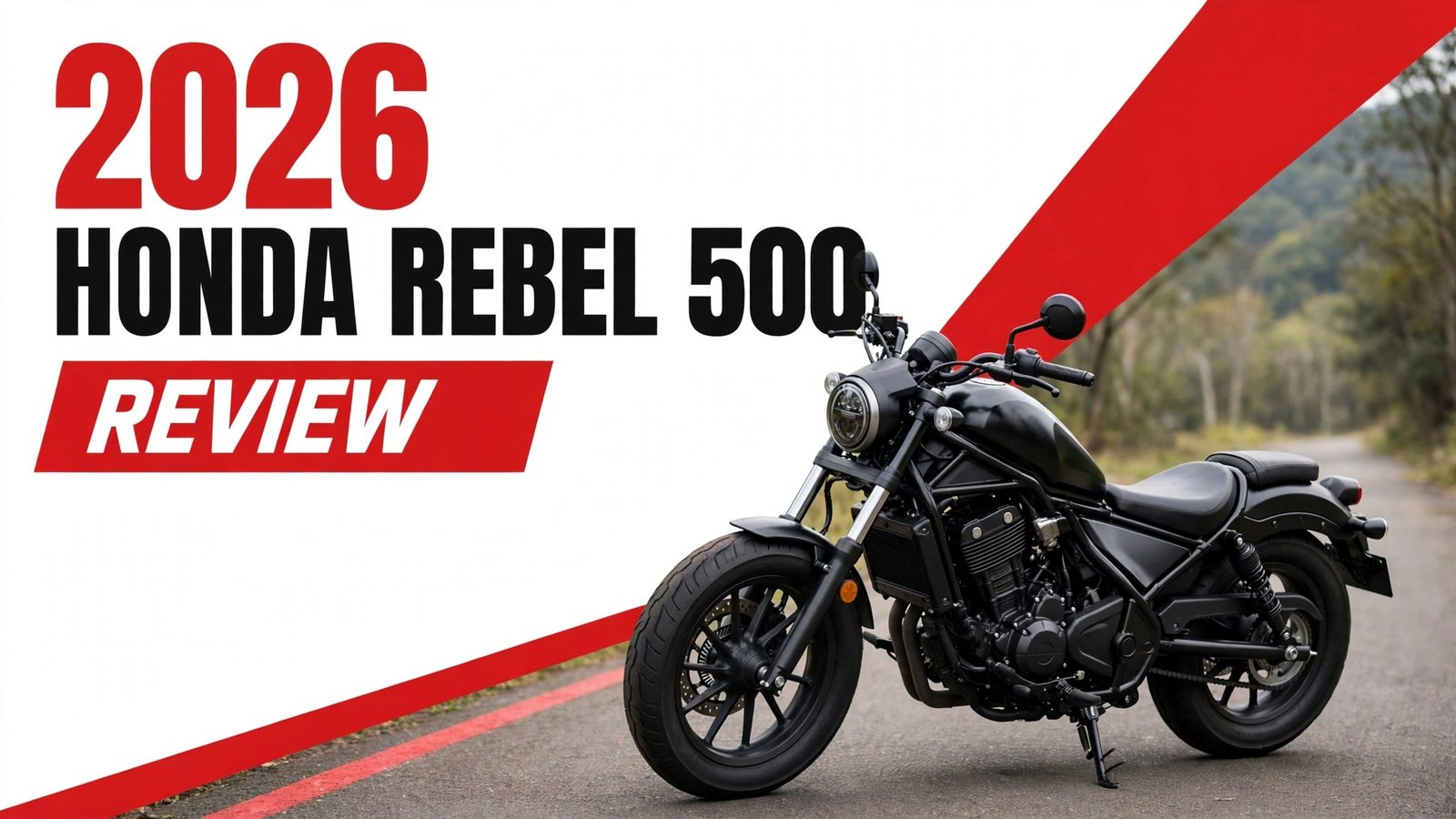
The Honda Rebel 500 is the middleweight cruiser that makes sense for the most riders. It costs $6,799 for 2026, weighs 414 pounds, has a 27.2-inch seat, and its 471cc parallel-twin has real highway ability. This Honda Rebel 500 review covers prices from 2017 to 2026, the engine and specifications, the SE trim, the 2025 refresh, and everyday riding. This Honda Rebel 500 review gives the full verdict below. One clarification: CMX500 is the Rebel 500’s model code, not a different motorcycle.
Honda Rebel 500 Overview and Model-Year Updates
The Rebel 500 has been Honda’s approachable middleweight cruiser since 2017, and its formula barely changed because it did not need to. A narrow twin, a low frame, and blacked-out styling deliver the bobber look this Honda Rebel 500 review praises, while the weight and seat height keep the bike usable for shorter riders. This Honda Rebel 500 review starts with who the bike is for and its year-by-year changes.

What Is the Honda Rebel 500 and Who Is It Designed For?
The Honda Rebel 500 is a midsize bobber-style cruiser built around a 471cc liquid-cooled parallel-twin, a six-speed manual gearbox, and a low tubular-steel frame. Honda designed it for riders who want custom-cruiser style without the weight, price, or maintenance demands of a big twin. New riders like it because, as this Honda Rebel 500 review notes, the 27.2-inch seat lets most adults put both feet flat on the ground, and the 414-pound weight makes the bike easy to push around a parking lot.
It works as a first big bike, a commuter, or a downsizing choice. It is a cruiser that prioritizes confidence, and that confidence-first character is the thread running through this Honda Rebel 500 review.
US History 2017 to 2026: 2020 Update, SE Trim From 2021 and 2025 Refresh
Honda launched the modern Rebel 500 in the United States for 2017, alongside the smaller Rebel 300, as a replacement for the long-running Rebel 250. The bike reached dealers in April 2017 at $5,999 and was an instant hit. The 2018 and 2019 bikes were essentially unchanged apart from colors and small price moves. This Honda Rebel 500 review treats those early years as the value sweet spot for used buyers.
The first real update covered in this Honda Rebel 500 review came for 2020: an assist-and-slipper clutch, retuned suspension, full LED lighting, a gear-position indicator, and a thicker seat. The 2021 model year added the SE trim, a factory package with a diamond-stitch seat, black fork boots and covers, and a headlight cowl. For 2025, Honda refreshed the bike again with a revised handlebar position, tapered handlebar, less reflective LCD meter, revised seat foam, and color-matched fenders. The 2026 bike carries that refresh forward and makes ABS standard on both trims.
Honda Rebel 500 Engine and Specifications
The engine is why, in this Honda Rebel 500 review, the Rebel 500 feels like more than an entry-level bike. The 471cc twin comes from Honda’s proven 500 platform, tuned for low-end and midrange pull, with a reputation for quiet running and long life. This Honda Rebel 500 review covers the engine, the gearbox, and the key numbers.

471cc Parallel-Twin Engine, Six-Speed Gearbox and Slipper Clutch
The Rebel 500 uses a 471cc liquid-cooled parallel-twin four-stroke with double overhead camshafts and four valves per cylinder, fed by programmed fuel injection through a 34mm throttle body, with a 67.0mm by 66.8mm bore and stroke and 10.7:1 compression. For this Honda Rebel 500 review, Honda’s European materials claim 46 horsepower at 8,500 rpm and 32 lb-ft of torque at 6,000 rpm — crankshaft figures, since Honda USA publishes no horsepower figure for the American bike. Independent testing gives the rear-wheel story for this Honda Rebel 500 review: Cycle World’s dyno run on a 2018 Rebel 500 recorded 39.36 horsepower at 7,670 rpm and 29.86 lb-ft at 6,190 rpm.
Power reaches the rear wheel through a six-speed manual gearbox and an O-ring-sealed chain, a setup this Honda Rebel 500 review finds refreshingly simple, and since 2020 the clutch has been an assist-and-slipper design. The assist function lightens lever pull by roughly 30 percent for traffic, while the slipper function reduces rear-wheel hop on aggressive downshifts. There is no quickshifter or auto-blip, and this Honda Rebel 500 review counts that simplicity as a virtue.
Weight 414 lb With ABS and 419 lb SE, Seat Height 27.2 Inches
For 2026, Honda lists the Rebel 500 at 414 pounds full, and the SE at 419 pounds. Seat height is 27.2 inches on both trims, and it has been 27.2 inches in every model year, a consistency this Honda Rebel 500 review applauds. Wheelbase is 58.7 inches, rake 28 degrees, trail 4.3 inches, and ground clearance 5.4 inches. The tank holds 3.0 gallons on Honda’s current pages, although older pages listed 2.9 gallons for the same 11.2-liter tank — rounding, not a real change, as this Honda Rebel 500 review notes.
Earlier years weighed slightly less: Honda listed the 2018 non-ABS bike at 408 pounds, and early-2020s ABS road tests came in around 414 to 418 pounds. The headline weight tells only half the story, because the Rebel carries its weight low, which is why a 414-pound motorcycle feels lighter than the number suggests. The table below gathers the current figures for this Honda Rebel 500 review, all from Honda’s 2026 specification pages.
| Specification | 2026 Honda Rebel 500 | 2026 Honda Rebel 500 SE |
|---|---|---|
| Engine | 471cc liquid-cooled parallel twin | 471cc liquid-cooled parallel twin |
| Transmission | Six-speed manual with slipper clutch | Six-speed manual with slipper clutch |
| Curb weight | 414 lb | 419 lb |
| Seat height | 27.2 inches | 27.2 inches |
| Fuel capacity | 3.0 gallons | 3.0 gallons |
| Wheelbase | 58.7 inches | 58.7 inches |
| Front brake | Single 296mm disc with ABS | Single 296mm disc with ABS |
| Rear brake | Single 240mm disc with ABS | Single 240mm disc with ABS |
| Tires | 130/90-16 front, 150/80-16 rear | 130/90-16 front, 150/80-16 rear |
| Model code | CMX500A | CMX500A2 |
Honda Rebel 500 Price and Market Availability
The Rebel 500 has always been keenly priced in Honda’s cruiser range. A new 2026 bike costs $6,799, or $6,999 for the SE, plus a $600 destination charge, figures this Honda Rebel 500 review verified against Honda’s own pages, putting the starting figure at $7,399 before tax and fees. This Honda Rebel 500 review lays out the year-by-year prices so you can judge used-bike value.
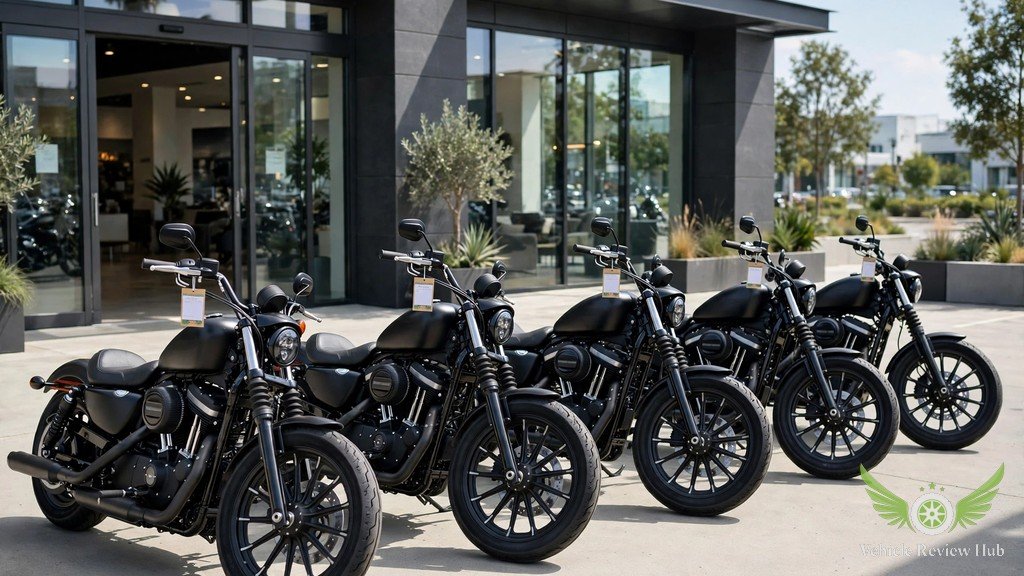
Honda Rebel 500 Price by Year in the USA: 2017 to 2026
The Rebel 500 launched for 2017 at $5,999, or $6,299 with ABS, and this Honda Rebel 500 review tracked the slow climb that followed: $6,099 for 2018, $6,199 for 2019 and 2020, $6,299 for 2021, $6,399 for 2022, and $6,449 for 2023. Motorcyclist’s 2021 buyer’s guide confirms three trims at $6,299, $6,599, and $6,799. The 2024 and 2025 base bikes both listed at $6,499, and the 2026 base bike is $6,799.
The SE has held a steady band since it arrived: $6,799 for 2021, $6,899 for 2022, $6,949 for 2023, and $6,999 for 2024, 2025, and 2026. Three straight years at $6,999 makes a leftover 2024/2025 SE an interesting deal. The table below gives every year’s figures, so this Honda Rebel 500 review can anchor any used asking price against the original price.
| Model year | Base MSRP | ABS MSRP | SE MSRP |
|---|---|---|---|
| 2017 | $5,999 | $6,299 | Not offered |
| 2018 | $6,099 | $6,399 | Not offered |
| 2019 | $6,199 | $6,499 | Not offered |
| 2020 | $6,199 | $6,499 | Not offered |
| 2021 | $6,299 | $6,599 | $6,799 |
| 2022 | $6,399 | $6,699 | $6,899 |
| 2023 | $6,449 | $6,749 | $6,949 |
| 2024 | $6,499 | $6,799 | $6,999 |
| 2025 | $6,499 | $6,799 | $6,999 |
| 2026 | $6,799 (ABS standard) | Included | $6,999 (ABS standard) |
ABS Was a Paid Trim Until 2025 and Is Standard on Both 2026 Trims
For nine model years, ABS was a $300 option on the Rebel 500, a fact this Honda Rebel 500 review verified year by year: the ABS bike always cost exactly $300 more than the base bike, from $5,999 versus $6,299 in 2017 through $6,499 versus $6,799 in 2025. That $300 rule helps used-bike shopping — this Honda Rebel 500 review recommends using it.
For 2026, Honda ended the choice: both trims now come standard with ABS, and Honda’s own 2026 pages say so plainly. The base price rose from $6,499 to $6,799 — exactly the old ABS price — while the SE stayed at $6,999. If you buy used, a 2025 or older non-ABS bike misses a safety feature every 2026 bike has, and this Honda Rebel 500 review says that gap should show in the price.
Honda Rebel 500 Design, Features and Technology
The Rebel 500 looks like a custom bike from a small shop, and that is deliberate. Honda started with a low, narrow frame, blacked-out finish, and minimal bodywork. This Honda Rebel 500 review covers the styling, the SE package, and the technology.

Bobber Styling, SE Diamond-Stitch Seat, Fork Boots and Headlight Cowl
The bobber look comes from specific choices: a wide-set 41mm fork, a single-piece handlebar with a relaxed bend, a low one-piece seat, and a rear fender tight to the 150/80-16 rear tire. All lighting is LED, including the four-bulb round headlight and halo turn signals from the 2020 update. The 2026 base bike comes in Pearl Black or Pearl Smoky Gray — a blacked-out finish this Honda Rebel 500 review finds fresh.
The SE is the same motorcycle with a factory styling package — worth knowing so you do not pay SE money for a base bike with aftermarket parts. Since 2021, the SE has added a diamond-stitch seat, black fork boots and covers, and a headlight cowl, and the current SE pairs those parts with exclusive Pearl Blue paint and a brown diamond-stitch saddle. Early SE descriptions vary between black and brown seats, so check the actual bike. The SE’s $200 premium is easy to justify if you like the look, but as this Honda Rebel 500 review stresses, it adds no power or suspension change.
LCD Display, Not TFT, and Why There Is No E-Clutch or DCT in the USA
The Rebel 500’s instrument is a round LCD display in a classic nacelle — not a TFT screen. The LCD shows speed, gear position, fuel level, fuel consumption, and trip information, a full set this Honda Rebel 500 review finds adequate for the price, updated for 2025 to reduce reflections, but with no color display, Bluetooth, navigation, or phone connectivity. No US Rebel 500 has ever offered a TFT, and Honda lists no traction control, riding modes, or cruise control for the US bike, as this Honda Rebel 500 review notes.
The same honesty applies to the gearbox. The US Rebel 500 has only ever been sold with a conventional six-speed manual and a cable clutch, with an assist-and-slipper design since 2020. There is no E-Clutch or DCT Rebel 500 in the United States: the E-Clutch Rebel for 2026 is the smaller Rebel 300, and DCT remains a Rebel 1100 feature. What you do get is a light, predictable clutch and a slick-shifting gearbox.
Honda Rebel 500 Riding Experience and Comfort
A motorcycle can look right and still disappoint on the road, so the ride is where this Honda Rebel 500 review earns its verdict. Testers praise the bike’s light handling, friendly engine, and low seat, while noting its limits on rough pavement and long highway days.
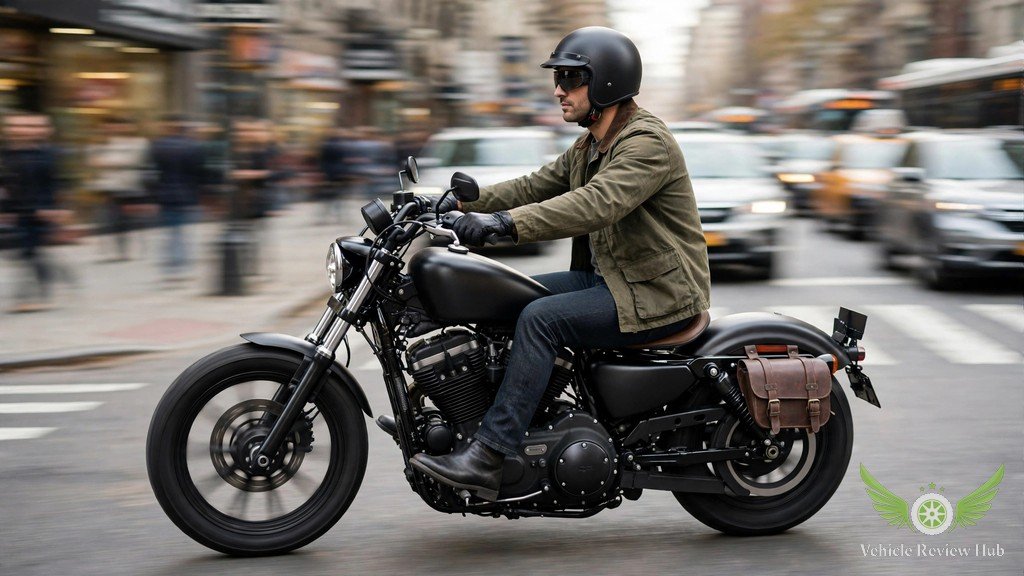
Riding Position, Low Seat, Handling and Low-Speed Maneuverability
The riding position is the Rebel 500’s greatest strength: the 27.2-inch seat, mid-mounted footpegs, and pullback bars put most riders in a relaxed, upright posture with feet flat on the ground, and the 2025 handlebar update moved the grips slightly inward and rearward for more comfort. The narrow waist and low center of gravity plant the bike at walking speed. Rider Magazine’s 2020 road test praised the same light clutch and slick gearbox. Handling at speed is stable rather than sporty, though the rear twin shocks are the weaker part on rough roads for heavier riders — a point this Honda Rebel 500 review keeps returning to.
The walk-around above, from Modern Classic Motorcycle News, covers the bike’s design, controls, and riding position before taking it out on the road.
City Riding, Highway Trips and Everyday Practicality
In the city, the Rebel 500 is close to ideal. The light clutch, slick six-speed gearbox, and wide friction zone make stop-and-go traffic painless, and the engine’s low-end torque means you rarely work the gearbox. Practicality is honest: no storage, wind protection, or passenger comfort standard, so most owners add a screen, rack, or saddlebags. On the highway, the twin holds speed all day and feels stable, but the upright position builds wind pressure, and the small tank means more frequent fuel stops. This Honda Rebel 500 review rates the bike as highway-capable for day trips and weekend rides, not multi-day touring.
Honda Rebel 500 Review: Pros, Cons and Verdict
The verdict is straightforward: the Rebel 500 is one of the best motorcycles Honda sells, because it gets the fundamentals right and charges a fair price. This Honda Rebel 500 review weighs the advantages against the limitations, then answers whether to buy the 500 or the smaller Rebel 300.
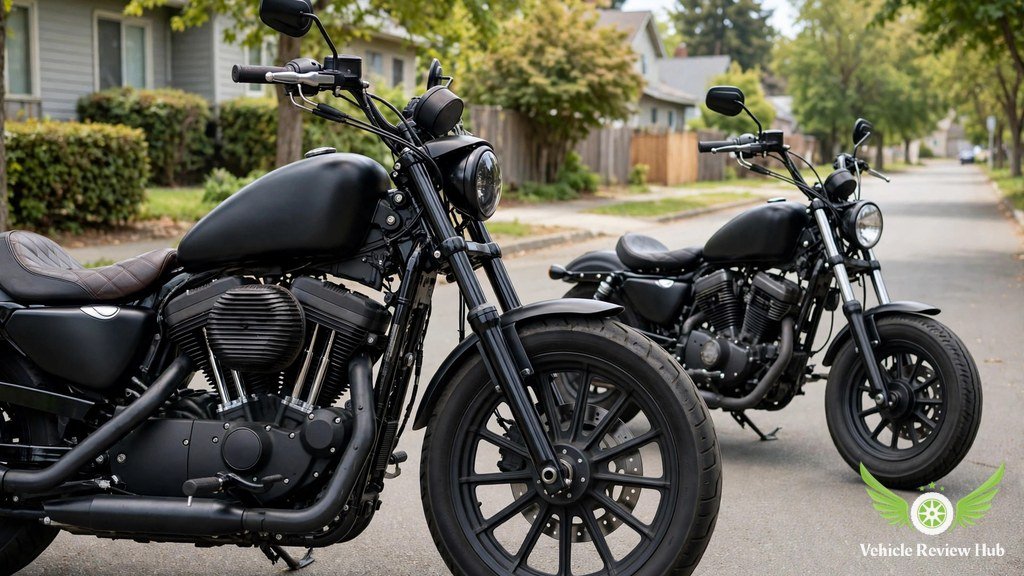
Main Advantages and Limitations of the Honda Rebel 500
The advantages start with fit: the 27.2-inch seat and 414-pound weight suit almost any adult, the 471cc twin is smooth, proven, and cheap to run, and the gearbox and slipper clutch are genuinely good. The price is the other advantage: $6,799 with standard ABS for 2026 is remarkable value, and the bike’s simplicity keeps insurance, tires, and servicing low. The limitations are real but proportionate: no wind protection, storage, or passenger comfort standard, a rear suspension that struggles for heavier riders on rough roads, a basic LCD with no TFT or rider aids beyond ABS, and a 3.0-gallon tank that limits range. None of these is a reason to avoid the bike, but this Honda Rebel 500 review says to be honest about what kind of riding you actually do.
Who Should Consider the Honda Rebel 500 Over the Rebel 300 E-Clutch?
The Rebel 300 E-Clutch is the obvious alternative inside Honda’s own range, and the choice comes down to riding plans. For 2026 it costs $5,349 — $1,450 less than the Rebel 500’s $6,799 — and its electronic clutch eases stop-and-go riding for new riders. If your riding is almost entirely urban or the budget is tight, the smaller bike is a sensible pick, and the Rebel 300 review covers it in full. Choose the Rebel 500 for regular highway riding, longer ownership, or carrying a passenger or luggage. This Honda Rebel 500 review recommends the 500 for most buyers who can afford the price gap: the extra $1,450 buys a motorcycle that covers more kinds of riding and stays satisfying for longer.
Honda Rebel 500 Review: Frequently Asked Questions
These direct answers cover the questions buyers ask most, and this Honda Rebel 500 review states the verified figure in each one.
What is the Honda Rebel 500 review verdict on value?
Excellent value. For $6,799 with standard ABS, a 471cc twin, and a 414-pound package, this Honda Rebel 500 review finds no other new American cruiser matching it.
How much does a 2026 Honda Rebel 500 cost?
The 2026 Rebel 500 costs $6,799, and the SE costs $6,999, plus $600 destination each — confirmed by this Honda Rebel 500 review.
What is the Honda Rebel 500 seat height and weight?
Seat height is 27.2 inches, unchanged yearly. The 2026 base bike weighs 414 pounds full, and the SE 419 pounds, figures this Honda Rebel 500 review verified.
Does the Honda Rebel 500 have ABS?
Yes, ABS is standard on every 2026 Rebel 500. On 2017–2025 bikes it was a $300 option, so this Honda Rebel 500 review advises used buyers to check.
Is the Honda Rebel 500 a good beginner motorcycle?
Yes, one of America’s best beginner motorcycles. The low seat, light weight, gentle power, and light clutch build confidence, and this Honda Rebel 500 review finds most owners do not outgrow it within a year.
What engine does the Honda Rebel 500 have?
A 471cc liquid-cooled parallel-twin with double overhead camshafts and four valves per cylinder, paired with a six-speed manual and an assist-and-slipper clutch since 2020.
Does the Honda Rebel 500 have a TFT display or E-Clutch?
No. It uses a round LCD display, not a TFT screen, with no E-Clutch or DCT option in the United States — the E-Clutch Rebel for 2026 is the smaller Rebel 300, as this Honda Rebel 500 review confirmed.
What is the Honda Rebel 500 fuel tank size?
The tank holds 3.0 gallons on Honda’s current pages, with older pages listing 2.9 gallons for the same tank. Honda publishes no official MPG or range figure.
What is the difference between the Rebel 500 and the Rebel 500 SE?
The SE is the same motorcycle with a factory styling package: diamond-stitch seat, black fork boots and covers, headlight cowl, and exclusive Pearl Blue paint. This Honda Rebel 500 review notes no power or suspension changes, and $200 more.
What does CMX500 mean?
CMX500 is the Rebel 500’s model code, not a different motorcycle. The letters after it identify the trim: A for ABS, A2 for SE.
Is the Honda Rebel 500 good for highway riding?
Yes, genuinely highway-capable. The twin holds highway speeds comfortably, but the upright position builds wind pressure, and the small tank means more frequent fuel stops.
Should I buy the Rebel 500 or the Rebel 300 E-Clutch?
Buy the 500 for regular highway riding or long-term ownership, and the 300 E-Clutch for mostly urban riding where the saving matters. The 300’s figures are in the Rebel 300 review, and this Honda Rebel 500 review finds the twin matters more at speed.
What is the Honda Rebel 500 warranty and first service?
A one-year limited warranty. First service at 600 miles, then oil every 8,000 miles or yearly.