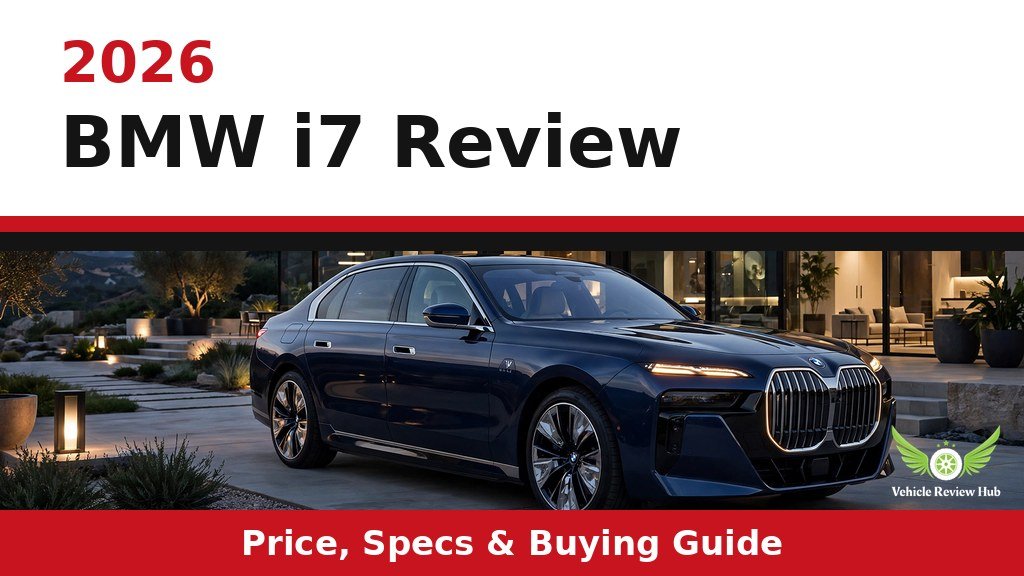
BMW i7 maintenance cost is one of the pleasant surprises of owning BMW’s electric flagship. With no engine, transmission, or exhaust to service, routine BMW i7 maintenance cost runs far below a gasoline 7 Series — and BMW covers the first three years or 36,000 miles of scheduled maintenance for free. But this is still a $105,700-plus luxury flagship, and when things do break outside warranty — air suspension, the Theater Screen, high-voltage HVAC hardware — repair bills can be steep. For the model overview, see our 2026 BMW i7 review with pricing and specs. This guide covers BMW i7 maintenance cost in detail: the service schedule, what routine maintenance actually costs, real reliability data, common problems, recalls, and how to keep long-term BMW i7 maintenance cost under control.
BMW i7 Maintenance Schedule & Routine Service Requirements
The BMW i7 maintenance schedule is refreshingly simple compared to a gasoline flagship — which is why routine BMW i7 maintenance cost stays so low. There are no oil changes, no spark plugs, no transmission services — the electric drivetrain needs almost nothing. For the efficiency side of ownership, see our BMW i7 mileage and MPGe guide. What remains is a short list of wear items and inspections that keep BMW i7 maintenance cost low and predictable.
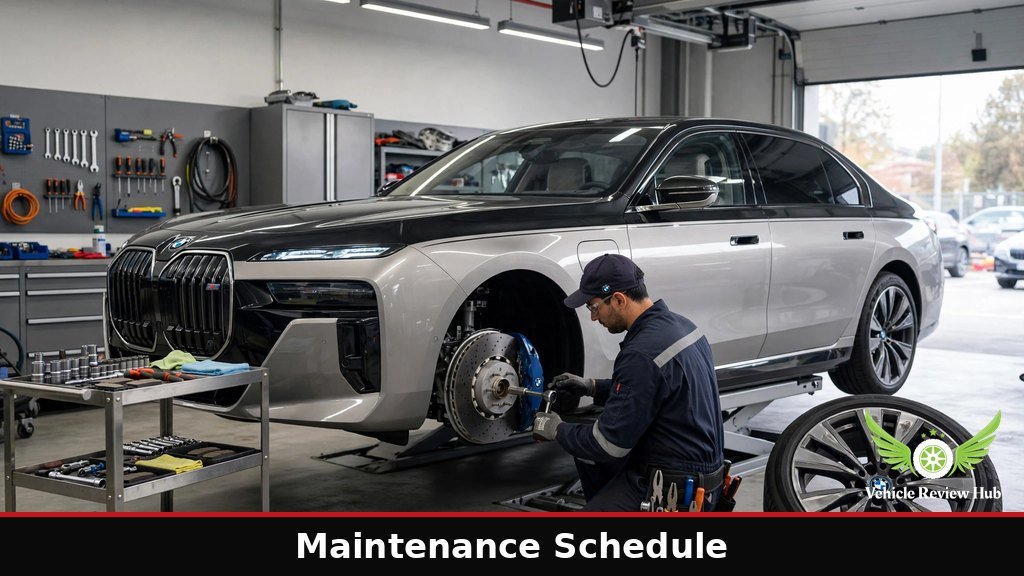
Tires, Brakes, Cabin Filters & Essential EV Maintenance
Tires are the biggest recurring BMW i7 maintenance cost. At nearly 6,000 pounds with instant torque, the i7 eats tires faster than a gas 7 Series — expect a set every 25,000–35,000 miles depending on driving style. Replacement tires run $300–$500+ each for the 19-, 20-, and 21-inch sizes, so budget $1,200–$2,000 per set. Rotations every 5,000–7,500 miles help even out wear.
Brakes last far longer than on a gas car because regenerative braking handles most deceleration — pads and rotors can easily last 60,000–100,000 miles. BMW still recommends brake fluid replacement every two years — a small line item in total BMW i7 maintenance cost. The cabin air filter needs replacement roughly every 20,000 miles or two years (a $100–$200 dealer job), and the 12V auxiliary battery typically needs replacement every 4–5 years at $300–$500. Wiper blades, key fob batteries, and washer fluid round out the list — the total routine BMW i7 maintenance cost over five years, excluding tires, is remarkably modest.
BMW Warranty, Complimentary Maintenance & Service Coverage
BMW’s coverage keeps early BMW i7 maintenance cost near zero. Every i7 includes three years or 36,000 miles of complimentary scheduled maintenance, a four-year/50,000-mile basic warranty, an eight-year/100,000-mile high-voltage battery warranty, four years of unlimited-mile roadside assistance, and a 12-year unlimited-mile corrosion warranty. The battery warranty covers defects and abnormal capacity loss — if usable capacity drops below roughly 70 percent within the window, BMW repairs or replaces modules.
The complimentary maintenance covers the scheduled inspections, cabin filters, and brake fluid services during the first three years, keeping early BMW i7 maintenance cost near zero. What it does not cover: tires, the 12V battery, wiper blades, and damage from accidents or neglect. After the free maintenance expires at 36,000 miles, BMW offers prepaid maintenance plans that lock in service pricing — worth considering if you plan to keep the car long-term, since dealer labor rates for luxury EVs run $200–$300 per hour.
BMW i7 Maintenance & Repair Costs
Separating routine BMW i7 maintenance cost from potential repair cost is essential. The first is low and predictable; the second is where the luxury flagship can bite. Here is what each side of the ledger looks like.
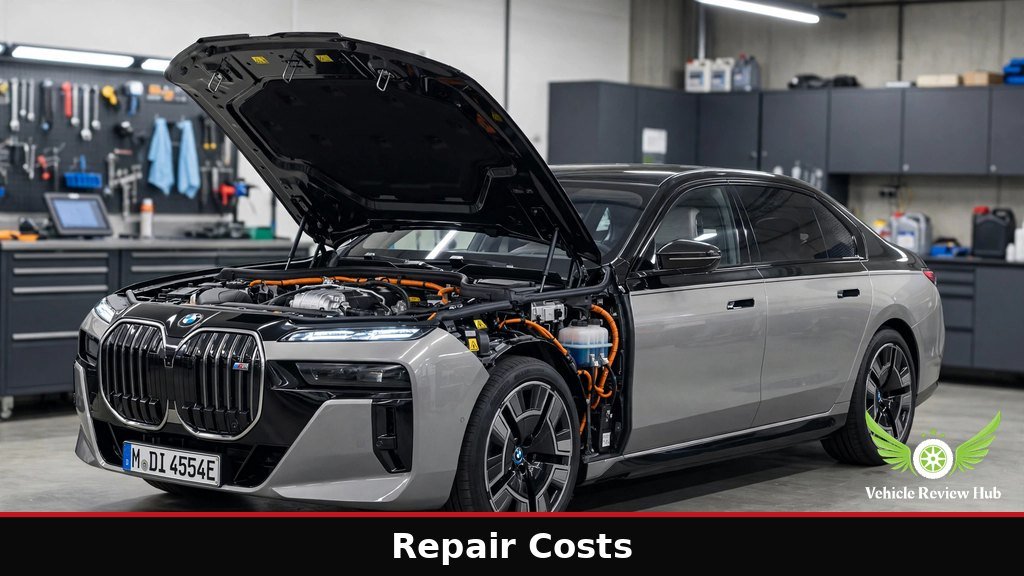
Routine EV Service Costs and Common Wear Items
Annual routine BMW i7 maintenance cost after the free period typically runs $300–$600 per year for inspections, filters, and brake fluid — remarkably low for a flagship sedan — a fraction of a gasoline 7 Series, which needs oil changes, spark plugs, and transmission services on top. Over five years including one set of tires, a realistic routine BMW i7 maintenance cost totals roughly $2,500–$4,500, with tires accounting for about half.
Common wear items follow predictable patterns. The 12V battery ($300–$500 every 4–5 years), cabin filters ($100–$200 every two years), brake fluid service ($200–$350 every two years), and wiper blades are the recurring expenses. Alignment checks matter more than usual given the i7’s weight and low-profile tires — a $150–$250 alignment every year or two protects your $1,500 tire investment. None of this is exotic; any BMW dealer and increasingly many independent shops handle it.
Electronics, Suspension & Potential Luxury Vehicle Repair Expenses
Out-of-warranty repairs are where BMW i7 maintenance cost can spike. The drivetrain itself is robust — the risk sits in the luxury hardware. Air suspension struts and compressors run $1,500–$3,000 per corner when they fail. The rear-axle steering hardware (standard on M70) and adaptive dampers are similarly expensive. High-voltage HVAC components like the heat pump are reliable but costly to diagnose and replace.
Electronics carry their own risks. The 31.3-inch Theater Screen mechanism, power-operated automatic doors, frameless door seals, and the panoramic Sky Lounge roof all add potential failure points — and one documented case saw a malfunctioning Theater Screen lead to a lemon-law vehicle repurchase after extended dealer repair attempts. These are low-probability but high-cost events, which is exactly why an extended warranty deserves consideration before the factory coverage expires.
BMW i7 Reliability & Common Problems
The i7’s reliability picture is a tale of two cars: a simple, proven electric drivetrain wrapped in enormously complex luxury technology. The drivetrain rarely causes trouble; the gadgets around it generate most owner complaints.
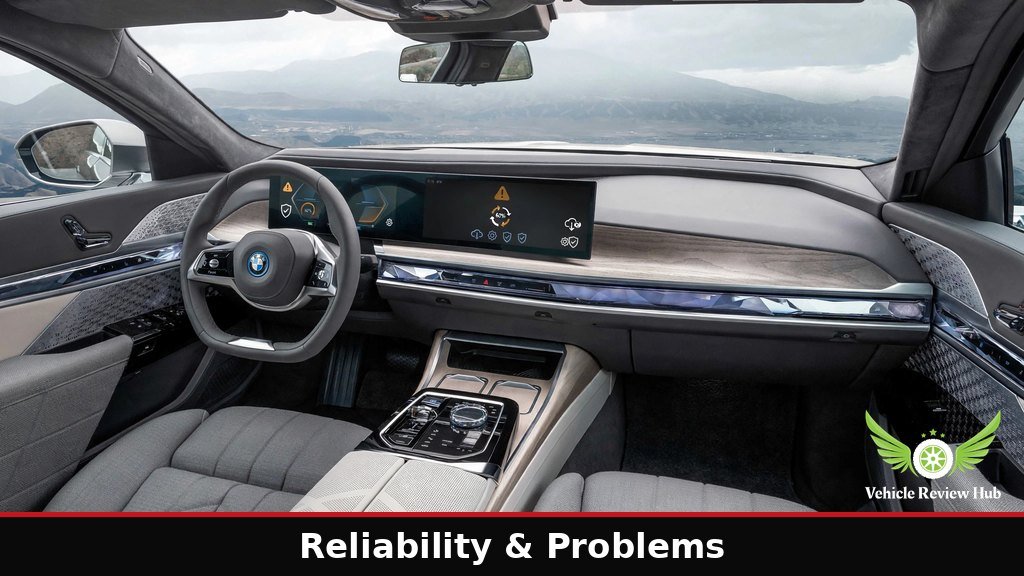
Battery, Electric Motor, Charging & High-Voltage System Concerns
The high-voltage system has proven fundamentally sound. The 101.7 kWh battery shows minimal degradation in real-world use — well-cared-for packs retain mid-90s percent capacity after two to three years — and complete pack failures are rare. The electric motors are proven units shared across BMW’s EV lineup with no systemic weaknesses reported. Onboard charger hardware has been largely trouble-free, and most “charging issues” owners report trace back to public charging stations, not the car.
The notable drivetrain-related recall involved electric drive motor software that could shut down the high-voltage system, causing sudden loss of drive power — affecting up to 70,852 vehicles across the i4, i5, i7, and iX lines. BMW fixed it with a free software update, available over-the-air for capable vehicles. No drivetrain hardware recall has affected the i7, which is encouraging for long-term reliability.
Software, Electronics & Other Reported BMW i7 Issues
Software and electronics dominate the i7’s complaint history. Owners report occasional iDrive glitches, the Theater Screen mechanism sticking during deployment, automatic doors behaving inconsistently, and driver-assistance false alarms. Most are resolved with software updates rather than hardware replacement — which is both the good news and the frustration, since a car this expensive should not need frequent reboots.
Physical trim issues also surface: wind noise from the frameless doors, rattles that require multiple dealer visits to isolate, and alignment-sensitive door closure. HVAC-related service campaigns have addressed interaction-bar control issues. None of these are drivetrain-threatening, but on a $105,700–$168,500 flagship, buyers reasonably expect better. The pattern matches what reliability analysts describe: the powertrain is simple, but the rest of the car is not.
BMW i7 Recalls, Software Updates & Service History
Staying current on recalls and software is part of responsible i7 ownership — and it directly affects resale value, since buyers pay premiums for cars with clean, documented service histories.
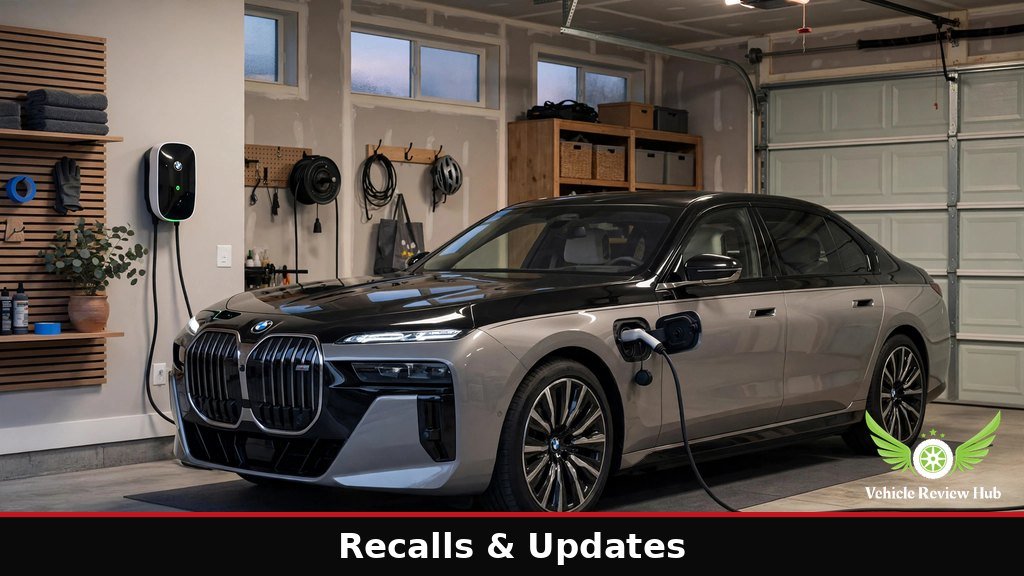
How to Check VIN-Specific Recalls and Service Campaigns
Check your specific car at NHTSA.gov using its 17-character VIN — BMW’s owner notification letters sometimes miss second owners. Key i7 recalls to verify: the electric drive motor software recall (loss of drive power, fixed via free software update), the air conditioning wiring harness recall affecting 58,713 vehicles across BMW’s lineup (a damaged harness can short-circuit, increasing fire risk), the integrated brake system recall (potential loss of power brake assist), and a small 2024-model steering spindle recall affecting just 21 i7s.
All recall repairs are free at any BMW dealer, including for used-car buyers — recalls follow the VIN, not the owner. When buying used, ask for the complete service history and verify all recall work is documented as complete. Cars with clean software histories and documented recall completion hold value better in the used market.
Why Software Updates Matter for BMW i7 Ownership
Over-the-air software updates are the i7’s most important maintenance item that is not really maintenance. BMW pushes updates that fix iDrive bugs, improve charging behavior, refine driver-assistance calibration, and occasionally add features. Keeping the car updated resolves many of the electronic complaints owners report — and it is free.
Enable automatic updates in the iDrive settings and install them promptly, ideally while the car charges overnight. Some updates require dealer installation, particularly recall-related software. A car running outdated software is more likely to exhibit the glitches that generate complaints — and when selling, being able to show a fully updated car with complete service records is a genuine selling point.
BMW i7 Long-Term Reliability
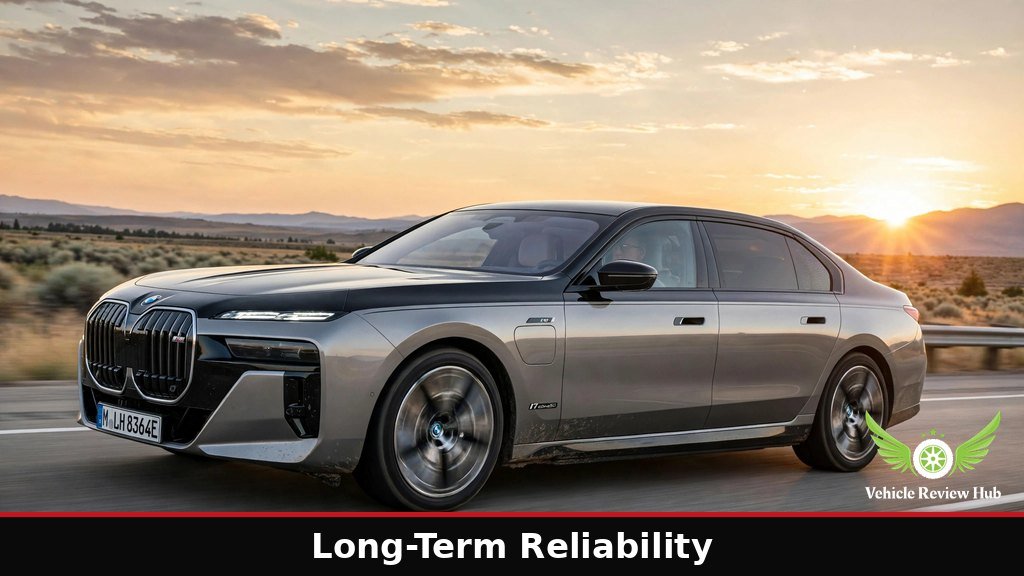
With the earliest i7s now several years old, the long-term picture is coming into focus. The news is mostly good — with the caveat that “long-term” for this model still means under 100,000 miles for most cars.
Battery Life and High-Mileage Ownership Expectations
Battery longevity looks strong. Real-world data shows well-cared-for i7 packs retaining high-80s percent capacity after six to seven years, and the eight-year/100,000-mile warranty protects against abnormal degradation. Charging habits matter: keeping daily charges to 80–90 percent, avoiding constant DC fast charging, and garaging the car all protect long-term battery health.
High-mileage i7s remain rare, but the drivetrain shows no systemic weaknesses at elevated miles — the electric motors and battery thermal management are proven across BMW’s EV lineup. The realistic long-term concerns are familiar luxury-car items: air suspension components, wheel bearings, aging electronics, and the 12V battery. Budget a repair reserve if you plan to keep the car past 100,000 miles, but the core EV hardware inspires confidence.
How Proper Maintenance Can Help Reduce Long-Term Repair Costs
Disciplined maintenance is the best defense against long-term BMW i7 maintenance cost. Follow the service schedule even though the car “needs nothing” — inspections catch suspension wear, keeping long-term BMW i7 maintenance cost predictable, brake corrosion from underuse, and 12V battery decline before they strand you. Keep software updated, complete recall work promptly, and keep every service receipt.
Tire discipline pays twice: regular rotations and alignments extend tire life and protect efficiency. Garage the car when possible to protect the battery and trim — simple habits that lower lifetime BMW i7 maintenance cost. And consider an extended warranty before the four-year/50,000-mile basic coverage expires — on a car where a single air suspension repair can cost $3,000, the warranty math often works. For the complete financial picture including insurance and depreciation, see our BMW i7 ownership cost guide.
BMW i7 Maintenance Cost FAQs
These are the questions American shoppers ask most about BMW i7 maintenance cost and reliability.
How much does BMW i7 maintenance cost per year?
Routine BMW i7 maintenance cost runs about $300–$600 per year after the three-year complimentary maintenance period, and total BMW i7 maintenance cost stays well under $1,000 annually for most owners, excluding tires. Over five years including one set of tires, expect roughly $2,500–$4,500 in total routine BMW i7 maintenance cost — far less than a gasoline 7 Series.
Is the BMW i7 reliable?
The electric drivetrain and battery have proven reliable with no systemic hardware issues. Most reported problems involve software glitches, electronics, and luxury features like the automatic doors and Theater Screen — annoying but rarely drivetrain-threatening. Overall reliability is average for the luxury EV class.
What are common BMW i7 problems?
Commonly reported issues include iDrive software glitches, Theater Screen deployment problems, inconsistent automatic door behavior, wind noise from frameless doors, and minor rattles. The major recall involved electric drive motor software that could cause loss of drive power, fixed with a free update.
How long does the BMW i7 battery last?
Real-world data shows well-maintained i7 batteries retaining mid-90s percent capacity after 2–3 years and high-80s percent after 6–7 years. BMW warranties the battery for eight years or 100,000 miles against defects and abnormal capacity loss below roughly 70 percent.
Has the BMW i7 been recalled?
Yes. Notable recalls include electric drive motor software (potential loss of drive power, ~70,852 vehicles across i4/i5/i7/iX), an A/C wiring harness issue (58,713 vehicles), an integrated brake system concern, and a small 2024 steering spindle recall (21 i7s). Check any VIN at NHTSA.gov; all recall repairs are free.
Does the BMW i7 need a lot of maintenance?
No. Beyond tires, the i7 needs cabin filters, brake fluid every two years, a 12V battery every 4–5 years, and routine inspections. There are no oil changes, spark plugs, or transmission services. BMW includes the first three years or 36,000 miles of scheduled maintenance free.