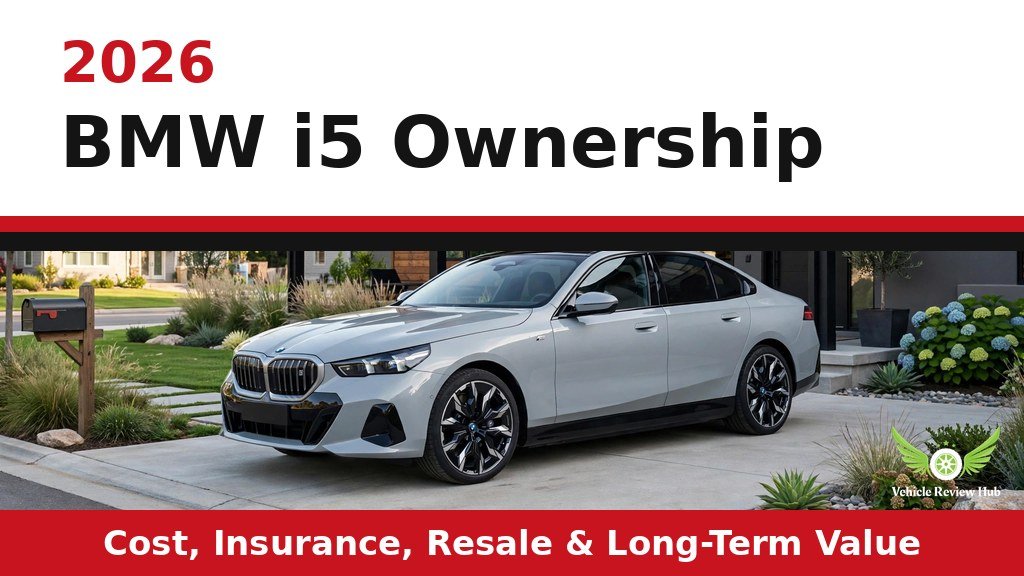
BMW i5 ownership cost over five years is a mix of good news and one big caveat. The good news: electricity, maintenance, and insurance run significantly cheaper than a gas-powered 5 Series, and BMW includes three years of scheduled maintenance plus two years of free public charging. The caveat: like most luxury EVs, the i5 depreciates steeply in its early years, with analysts projecting a 55 to 60 percent value loss over five years. Put together, a realistic five-year BMW i5 ownership cost picture for a well-equipped eDrive40 runs roughly $75,000 to buy, and that headline BMW i5 ownership cost number is only the start — roughly $900 to $1,400 for home charging, $1,800 to $3,000 for maintenance and tires, and about $20,000-plus for insurance — offset by the thousands you save versus feeding a gas sedan. This guide breaks down every piece of BMW i5 ownership cost: running expenses, insurance, resale value, depreciation, and the long-term verdict, so you can plan your BMW i5 ownership cost with confidence.
BMW i5 Total Ownership Cost
The total BMW i5 ownership cost is dominated by two things: depreciation and the purchase price, and getting those two right determines most of your BMW i5 ownership cost. Everything else — charging, maintenance, insurance — is comparatively modest, and in several categories the i5 beats its gas-powered rivals outright. Understanding where the money actually goes helps you decide whether buying new, buying used, or leasing makes the most sense — and that decision shapes your total BMW i5 ownership cost more than anything else.
Electricity, Maintenance, Repairs & Other Running Expenses
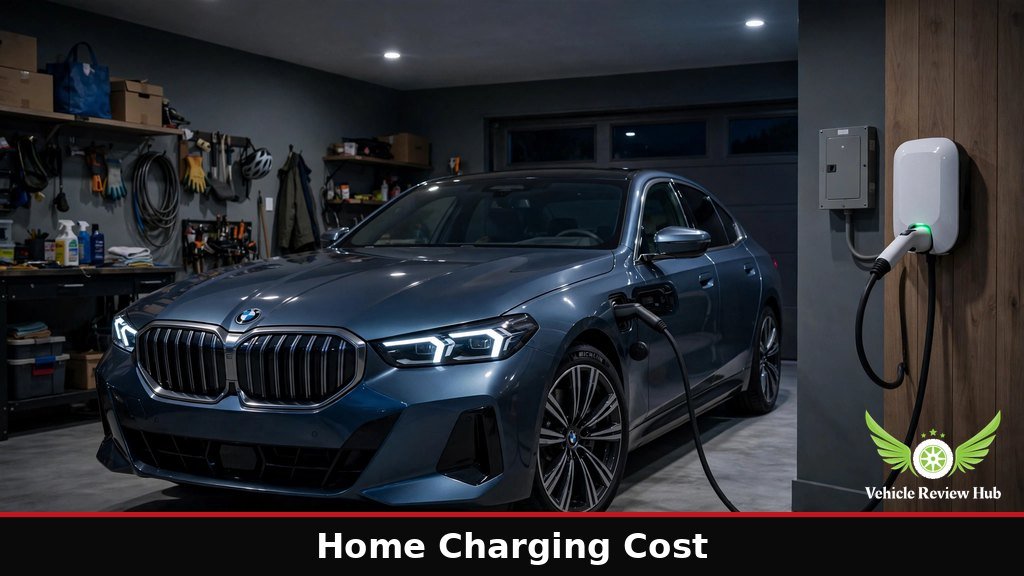
Day-to-day running expenses are where the i5 shines. Charging at home on off-peak electricity costs roughly $900 to $1,400 over five years for a typical 12,000-miles-per-year driver — about three to four cents per mile, versus 12 to 15 cents per mile for a gas 5 Series. Public fast charging costs more per mile but is softened by BMW’s two years or 1,000 kWh of free Electrify America charging, and the native NACS port on 2026 models opens up Tesla Superchargers for road trips.
Maintenance adds another $1,800 to $3,000 to BMW i5 ownership cost over five years, covering routine service and wear items like tires and brakes, with the first three years or 36,000 miles of scheduled maintenance included free. Repairs outside the four-year/50,000-mile warranty are the wildcard: the drivetrain is generally robust, but electronic components and air suspension hardware can generate four-figure bills if they fail. Tires are the biggest recurring expense at $1,200 to $1,800 per set, and registration, tolls, and parking add a few hundred dollars a year depending on your state. All in, the running-cost side of BMW i5 ownership cost is one of the lowest in the luxury sedan class, which is the strongest argument in the BMW i5 ownership cost debate.
Home Charging Equipment and Long-Term EV Ownership Costs
A home Level 2 charger is the single best investment for lowering your BMW i5 ownership cost. A good 240V charger costs $400 to $700, and professional installation runs $500 to $1,500 depending on your electrical panel and garage wiring — a one-time cost that pays for itself quickly through cheap off-peak electricity. Many utilities offer rebates or time-of-use rates that cut charging costs further, and the My BMW app lets you schedule charging for the cheapest hours automatically.
Long-term, the biggest structural advantage of EV ownership is the absence of engine-related maintenance: no oil changes, no transmission service, no exhaust or emissions repairs. Over a decade, that gap compounds. Battery degradation is the main long-term unknown, but BMW’s eight-year/100,000-mile battery warranty covers abnormal capacity loss, and real-world data shows well-cared-for packs holding up well. For drivers who keep cars a long time, the BMW i5 ownership cost curve bends in the EV’s favor the longer you own it — long-term BMW i5 ownership cost is where the EV math really wins.
BMW i5 Insurance Cost
Insurance is one of the larger line items in BMW i5 ownership cost, and managing it is a key part of controlling total BMW i5 ownership cost, though it is not dramatically different from insuring a gas 5 Series. The car’s luxury price, expensive repair parts, and advanced driver-assistance hardware all push premiums up, while its strong safety ratings and standard safety tech help push them down.

Factors That Affect BMW i5 Insurance Rates
The average cost to insure a BMW i5 is about $4,591 per year according to CarEdge’s ownership data, totaling roughly $22,955 over five years. Another analysis shows a gentler curve starting at $2,307 in year one and declining to $2,027 by year five, per EV depreciation data as the car’s value falls. Your actual premium depends on the usual factors: driving record, annual mileage, deductible, coverage limits, credit history, and whether you bundle home and auto policies.
EV-specific factors also matter. Insurers price in the cost of battery and electronics repairs, which are expensive even in minor collisions — a cracked battery casing can total an EV that a gas car would survive. On the other hand, the i5’s standard driver-assistance features, strong crash-test performance, and theft-deterrent tech earn discounts with many carriers. Shopping quotes from at least three insurers before you buy is the single most effective way to manage this part of BMW i5 ownership cost, and it directly lowers your annual BMW i5 ownership cost, since premiums for the same driver can vary by thousands per year between companies.
How Location, Trim & Driver Profile Affect Premiums
Where you live moves the needle more than almost anything else. Urban areas with higher repair costs, theft rates, and accident frequency charge far more than rural areas, which is why location is one of the biggest variables in BMW i5 ownership cost — the same i5 can cost twice as much to insure in a dense coastal city as in the Midwest. State regulations matter too: some states restrict how insurers use credit scores or telematics, changing the pricing landscape entirely.
Trim choice matters as well. The M60’s 593 horsepower and $84,100 starting price make it the most expensive i5 to insure, while the eDrive40’s lower price and modest power keep premiums down. Younger drivers and those with recent claims pay the most, while mature drivers with clean records and low annual mileage get the best rates. If insurance is a concern, the eDrive40 on smaller wheels is the cheapest i5 to own across the board — lower purchase price, lower charging and tire expenses, and the lowest premiums, giving you the lowest BMW i5 ownership cost of any trim.
BMW i5 Resale Value & Depreciation
Depreciation is the elephant in the room for BMW i5 ownership cost, and it is the single largest component of total BMW i5 ownership cost. Luxury EVs depreciate faster than almost any other vehicle category, and the i5 is no exception. Buying with open eyes about the curve — and choosing the right strategy to handle it — is the most important financial decision an i5 shopper makes.
Expected Depreciation and Used Electric Vehicle Market Trends
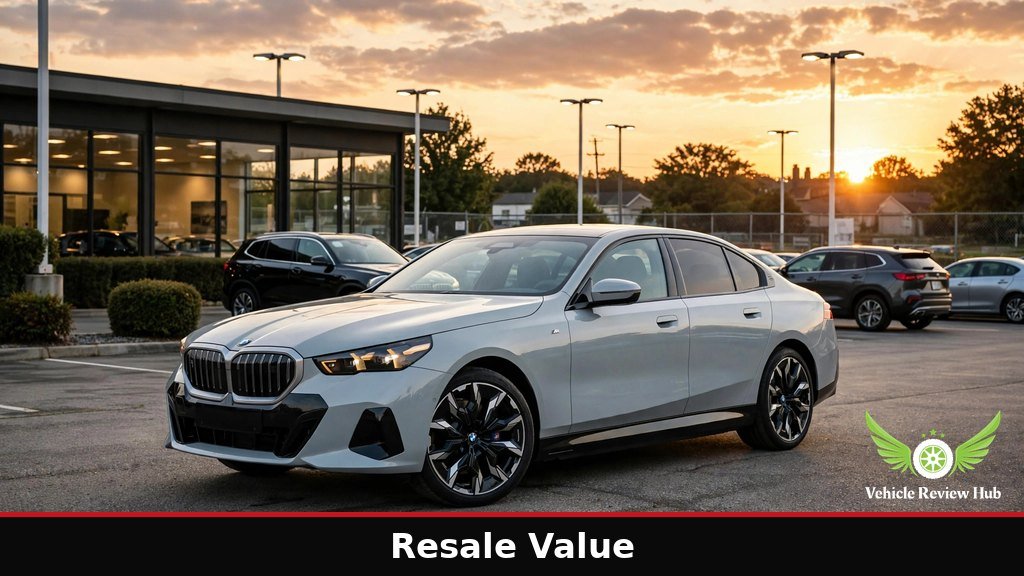
The numbers are stark. Analysts estimate the i5 loses roughly 25 to 30 percent of its value in the first 12 months — about $20,000 to $25,000 on a typical car — and is on track to lose 55 to 60 percent by year five, retaining only 40 to 45 percent of its original MSRP. One year-by-year model shows the eDrive40 shedding $15,547 in year one, then $6,999, $6,848, $6,023, and $4,873 in years two through five. This mirrors the broader luxury EV depreciation market, where rapid technology improvements and generous new-car incentives push used values down.
There is a silver lining: steep depreciation makes used i5s exceptional values. A two- or three-year-old i5 with low miles can sell for barely half its original sticker price, while still carrying most of its battery warranty and modern tech. For budget-conscious buyers, a certified pre-owned i5 is arguably the smartest way to own one. The depreciation curve also strongly favors leasing, which lets the finance company absorb the residual-value risk while you pay only for the years you drive — a smart way to cap your BMW i5 ownership cost.
How Battery Health and New EV Technology Can Affect Resale Value
Battery health is the new mileage when it comes to used EV values. Buyers increasingly check battery state-of-health reports, and an i5 with a well-maintained pack commands a premium over one with heavy fast-charging history and degraded capacity. Charging habits during your ownership directly affect your resale price: charging to 80–90 percent daily, avoiding constant DC fast charging, and keeping the car garaged all protect long-term battery health.
Technology shifts cut both ways. The 2026 model’s native NACS charging port and improved efficiency make older i5s slightly less desirable, accelerating their depreciation. But BMW’s steady over-the-air updates keep older cars feeling current, which supports values. When selling, a full service history, completed recall work, and a battery health report are the three things that maximize your i5’s resale value. And remember that depreciation, while painful, is also why buying a two-year-old i5 is such a strong deal — someone else already paid the steepest part of the curve.
BMW i5 Long-Term Ownership Experience
Beyond the spreadsheet, what is it actually like to own an i5 for the long haul? Owner reports and long-term press tests paint a picture of a car that is easy to live with, cheap to run, and generally trouble-free — with a few long-term considerations to plan for.
Battery Warranty, Battery Degradation & Post-Warranty Considerations
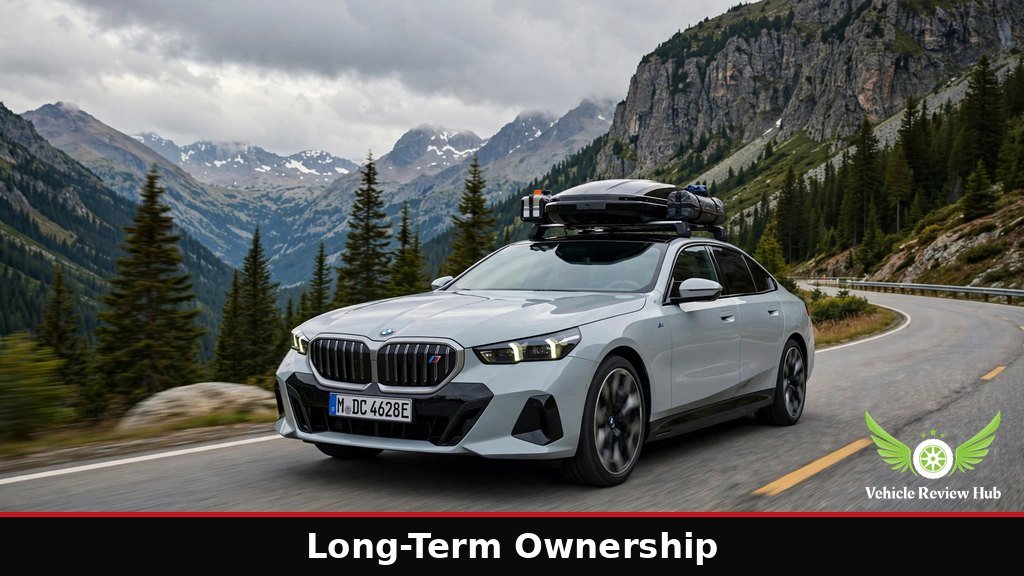
BMW’s eight-year/100,000-mile battery warranty is the safety net for long-term ownership. It covers defects and abnormal capacity loss — if usable capacity drops below roughly 70 percent within the warranty window, BMW repairs or replaces modules, and the warranty transfers to subsequent owners. Real-world data shows well-cared-for i5 packs retaining mid-90s percent capacity after two to three years and high-80s percent after six to seven years, so most owners will never need a warranty claim.
After the warranty expires, a full battery replacement would be extremely expensive — five figures — but complete pack failures are rare, so this worst case rarely enters real BMW i5 ownership cost, and individual module replacement is often possible at lower cost. More realistic post-warranty expenses are the 12V battery, suspension bushings, and the occasional electronic component. Owners planning to keep an i5 past 100,000 miles should budget a repair reserve, but the core drivetrain has shown no systemic weaknesses. For the full maintenance picture, see our BMW i5 maintenance cost and reliability guide.
High-Mileage BMW i5 Ownership and Potential Repair Risks
High-mileage i5s are still a new phenomenon, but the early signals are good. Long-term press tests report trouble-free running past 12,000 miles with no service needed in the first year, and owner forums show cars approaching 50,000 miles with only tires and software updates to report. The electric motors are proven units shared across BMW’s EV lineup, and the battery’s thermal management protects it from the stresses that age packs prematurely.
The realistic risks at high mileage are familiar luxury-car items rather than EV-specific failures: air suspension components on the M60, wheel bearings, and aging electronics. Independent shops are increasingly comfortable servicing BMW EVs, which helps keep post-warranty costs down compared to dealer-only repairs. Our BMW i5 mileage and MPGe guide covers the efficiency side of high-mileage ownership. Overall, the i5 shapes up as a car you can confidently keep for a decade — the BMW i5 ownership cost advantage over gas rivals only grows with time, making decade-long BMW i5 ownership cost genuinely attractive.
Is the BMW i5 Worth Buying in 2026?
After accounting for every dollar, the verdict depends on how you buy. The i5 is a genuinely excellent car — refined, quick, efficient, and cheap to run — but its depreciation curve means the buying strategy matters as much as the car itself.
Who Should Buy or Lease the BMW i5?
Leasing is the strongest play for most buyers. It locks in your total cost, sidesteps the steepest depreciation, and lets you hand the residual-value risk to the finance company — while you still benefit from cheap charging and included maintenance. Lessees also sidestep long-term battery and out-of-warranty repair concerns entirely. If you drive 10,000 to 12,000 miles a year and like a new car every three years, leasing an i5 is close to a no-brainer.
Buying new makes sense if you plan to keep the car for eight to ten years, where the low running costs compound and depreciation becomes irrelevant. Buying used — ideally a two- to three-year-old certified pre-owned i5 — is the value champion: you skip the brutal first-year depreciation, keep most of the battery warranty, and get a modern luxury EV for roughly half its original price. Who should skip it? Very high-mileage drivers in areas with sparse charging infrastructure, and anyone who needs maximum resale value after a short ownership period.
Final Long-Term Ownership Verdict
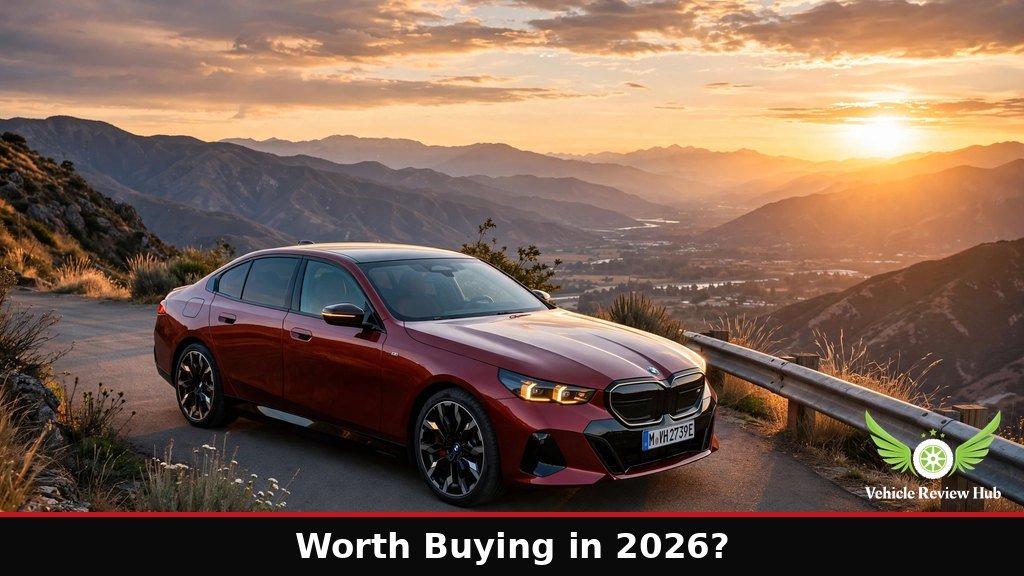
The BMW i5 is worth buying in 2026 — with the right strategy. Its BMW i5 ownership cost for running expenses is among the lowest in the luxury class: cheap electricity, minimal maintenance, and reasonable insurance — the bright side of the BMW i5 ownership cost ledger. The depreciation hit is real, but it is a known quantity you can plan around through leasing or buying used. For the full model rundown, see our 2026 BMW i5 review with pricing and specs.
Choose the eDrive40 for the lowest BMW i5 ownership cost, the xDrive40 for the best balance of capability and cost, or the M60 if performance justifies the premium for you. Keep it charged at home, maintain it on schedule, and the i5 rewards you with one of the most refined and economical luxury ownership experiences available in 2026 — proof that smart BMW i5 ownership cost management pays off — a car whose BMW i5 ownership cost story gets better the longer you keep it.
BMW i5 Ownership Cost FAQs
These are the questions American shoppers ask most about BMW i5 ownership cost, insurance, and resale value.
How much does it cost to own a BMW i5 for 5 years?
A realistic five-year BMW i5 ownership cost for a new eDrive40 includes roughly $75,000 purchase price, $900–$1,400 for home charging, $1,800–$3,000 for maintenance and tires, and about $20,000–$23,000 for insurance — before the 55–60 percent depreciation hit. Running costs are far lower than a gas 5 Series; depreciation is the dominant expense.
How much is insurance for a BMW i5?
The average BMW i5 insurance cost is about $4,591 per year, or roughly $22,955 over five years. Premiums vary widely by location, driver profile, and trim — the M60 costs the most to insure, the eDrive40 the least. Shopping quotes from multiple insurers is the best way to lower the insurance slice of your BMW i5 ownership cost.
Does the BMW i5 hold its value?
Not particularly well in the early years. The i5 is expected to lose 25–30 percent in year one and 55–60 percent over five years, retaining 40–45 percent of MSRP — typical for luxury EVs. That steep curve makes used and certified pre-owned i5s excellent values for buyers watching BMW i5 ownership cost, and makes leasing an attractive strategy for new-car buyers.
Is it better to lease or buy a BMW i5?
Leasing is the strongest option for most buyers: it avoids the steep depreciation curve, locks in total cost, and sidesteps long-term battery and repair risks. Buying new works for long-term keepers (8–10 years), while buying a two- to three-year-old used i5 offers the best value of all.
How much does it cost to charge a BMW i5 at home?
Home charging on off-peak electricity costs about three to four cents per mile, or roughly $900 to $1,400 over five years for a typical driver. A Level 2 home charger costs $400–$700 plus $500–$1,500 for installation — a one-time investment that quickly pays for itself. BMW also includes two years or 1,000 kWh of free Electrify America charging.
What is the BMW i5 battery warranty?
BMW covers the i5’s high-voltage battery for eight years or 100,000 miles against defects and abnormal capacity loss (below roughly 70 percent usable capacity). The warranty transfers to subsequent owners. Real-world data shows well-cared-for packs retaining mid-90s percent capacity after two to three years.