Short answer: Honda Rebel 1100T reliability is the same strong story as the standard Rebel 1100, with one extra chapter for the touring kit. The honest caveats are the hard saddlebags, whose latches frustrated two separate test teams, and wear items carrying extra weight on unchanged hardware. Check the VIN for the sealing-bolt recall before buying, because the manual-only scope is easy to misread.
Honda Rebel 1100T Reliability Overview
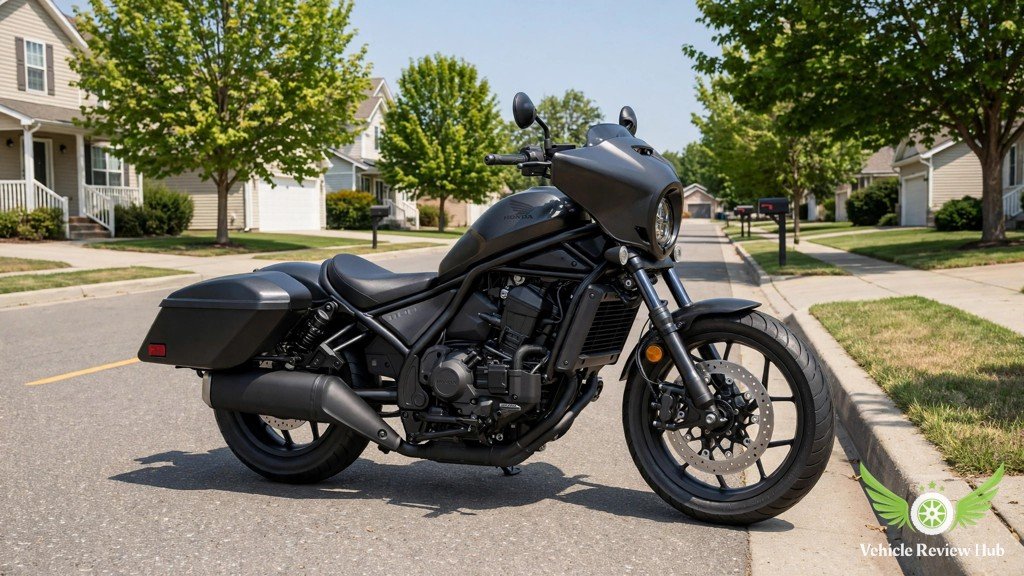
Honda Rebel 1100T reliability starts from a simple fact: the T is a trim level, not a different motorcycle. Under the batwing fairing and hard saddlebags sits the standard CMX1100 platform: the same 1084cc Unicam parallel twin from Honda’s Africa Twin family, steel frame, and chain final drive, with electronics that stop short of an IMU. A full Rebel 1100T review covers specifications; this article sticks to Honda Rebel 1100T reliability.
Shared CMX1100 Platform Record and No T-Specific Failure Pattern
The platform record is the foundation of Honda Rebel 1100T reliability. MCN, the UK’s Motor Cycle News, rates the 2021-on Honda CMX1100 Rebel’s reliability and build quality 4.6 out of 5 on its owner-review page. That number needs its sample size attached: only 12 owners have reviewed their CMX1100 on MCN’s page, so one unhappy reviewer moves the average a lot. What matters most for Honda Rebel 1100T reliability is what those owners do not report: no group complaint about engine or gearbox failure. No T-specific MCN owner page was found, so the 4.6 is platform evidence, not T-only evidence.
How Mileage, Maintenance History and Previous Use Affect Reliability
Mileage alone tells you very little about Honda Rebel 1100T reliability. A 20,000-mile T with full service history, a clean chain, and its recall closed beats a 3,000-mile T that sat outside for three winters on its original oil. The video below is a two-year, 3,500-mile DCT ownership account.
Honda Rebel 1100T Common Problems and Wear Items
No motorcycle is trouble-free, and Honda Rebel 1100T reliability is no exception — but its problem list is short, and its headline item is luggage, not breakdowns.
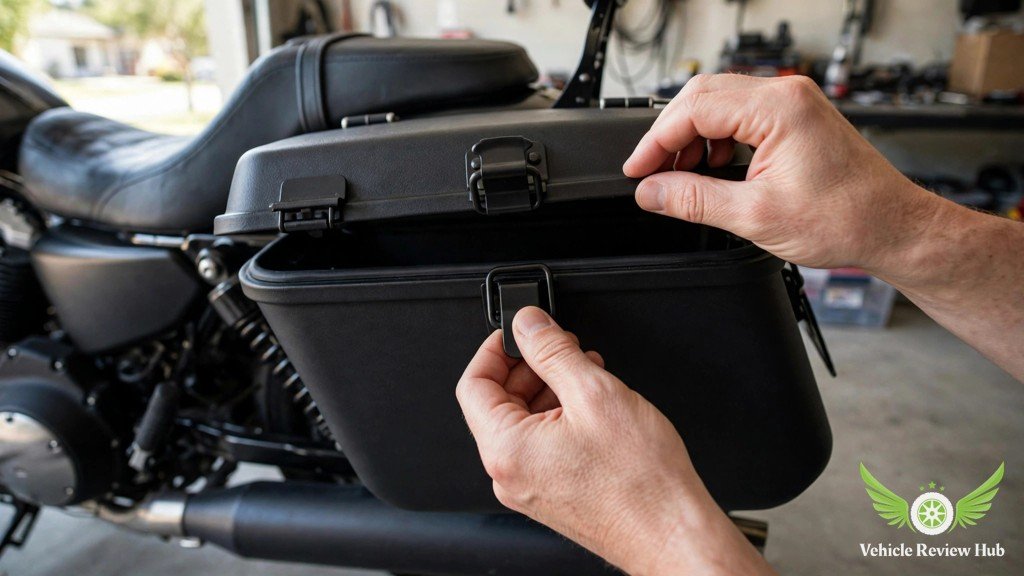
Flimsy Bag Latches in Two Tests, Seals and Fairing Mount Checks
The clearest T-specific complaint in the Honda Rebel 1100T reliability record is the saddlebag latch, confirmed by two independent tests, not one. In Ultimate Motorcycling’s 2023 T test, the verdict was blunt: the case plastic is not robust, and the lid is so flimsy it is difficult to latch shut — it takes concerted pressure in just the right spot until you hear the latch click. In Rider’s 2023 T test, the same complaint appears in softer words: the latching mechanism is a little finicky and takes some effort to close, the tester’s only complaint about the bags.
The bags are top-loading, lockable with the ignition key, weather-resistant, and hold 35 litres combined (16 litres pipe side, 19 kickstand side, per RevZilla’s 2026 T test). For Honda Rebel 1100T reliability, the buying check writes itself: open and close both lids several times, listen for a clean click without forcing, and check the seals and mounts for gaps or cracks. On the fairing, check the fork-mounted batwing’s fasteners and look for stress cracks at the mounts.
DCT System, Chain, Sprockets, Battery and Electrical Checks
The DCT deserves its own paragraph in any Honda Rebel 1100T reliability discussion: it is the one area where owner reports diverge from the manual’s calm tone. Forum owners report the DCT occasionally refusing to engage from neutral when rolling, jerky deceleration, and awkward shuffling at crawling speeds; in some cases a DCT relearn from the owner’s manual cleared it, and in others a switch or loose connection was blamed. These are owner reports, not a defect finding, and no recall covers DCT behaviour. For Honda Rebel 1100T reliability, the DCT test ride matters as much as the engine check: always include slow traffic and paddle-shifter use, not just open-road cruising.
The chain and sprockets are the most frequent expense: a #525 O-ring chain running 16T front and 42T rear sprockets, checked every 600 miles at 15–25mm of slack.
Honda Rebel 1100T Maintenance Schedule and Servicing
The service schedule is a selling point for Honda Rebel 1100T reliability: long intervals, simple jobs, one genuinely big service. The T follows the standard CMX1100 schedule exactly — the touring kit adds no service item of its own.
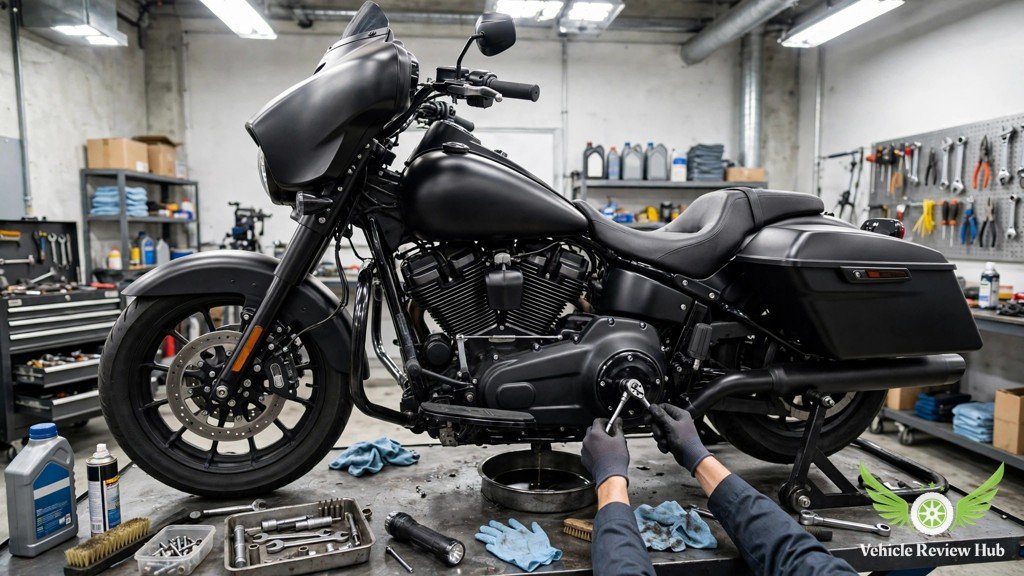
First Service at 600 Miles, Oil and Filter Every 8,000 Miles
The 600-mile first service is the most important visit for Honda Rebel 1100T reliability: first oil and filter change, fastener and control check, chain inspection — plus a fairing and bag fastener check on a T, though the manual does not list it separately. After that, engine oil falls every 8,000 miles or one year, using Pro Honda GN4 10W-30 or an equivalent JASO MA oil. Capacity with a filter change is 4.2 quarts manual, 4.4 quarts DCT. The oil filter itself is replaced at 600 and 16,000 miles, not at every oil change.
Major Service at 16,000 Miles: Valve Inspection and DCT Clutch Filter
The valve-clearance inspection every 16,000 miles is the big service for Honda Rebel 1100T reliability, and the one buyers most often forget to ask about. Checking means tank-off access to the cylinder head, so it is a dealer job for most owners. At the same visit, DCT bikes also need their clutch oil filter replaced — DCT-only, so a DCT bike without that receipt has a gap. When buying used, ask whether the 16,000-mile service has been done — that tells you more about Honda Rebel 1100T reliability on that bike than the odometer does.
| Service item | Interval (manual) | Notes |
|---|---|---|
| First service | 600 miles | First oil, filter, chain; add fairing and bag check |
| Engine oil | Every 8,000 miles or 1 year | GN4 10W-30 |
| Engine oil filter | 600 and 16,000 miles | Not every oil change |
| DCT clutch oil filter | 600 and 16,000 miles | DCT only |
| Drive chain | Every 600 miles | Slack 15–25 mm |
| Valve clearance | Every 16,000 miles | Tank-off; dealer job |
| Spark plugs | Every 32,000 miles | NGK SILMAR8A9S, gap 0.80–0.90 mm |
| Air cleaner | 12,000-mile service | Per manual schedule |
| Brake fluid | Every 2 years | DOT 4; time-based |
Honda Rebel 1100T Tires, Brakes and Suspension Maintenance
Tires, brakes, and suspension are where Honda Rebel 1100T reliability shows its age first — and on the T they carry more weight on identical hardware. The bike runs fat bias-ply tubeless tires — 130/70-18 front, 180/65-16 rear, Dunlop D428 as standard — with a single 330mm front disc, a 256mm rear disc, ABS, and Showa suspension. For Honda Rebel 1100T reliability, the T-specific question is what the extra weight does to it.
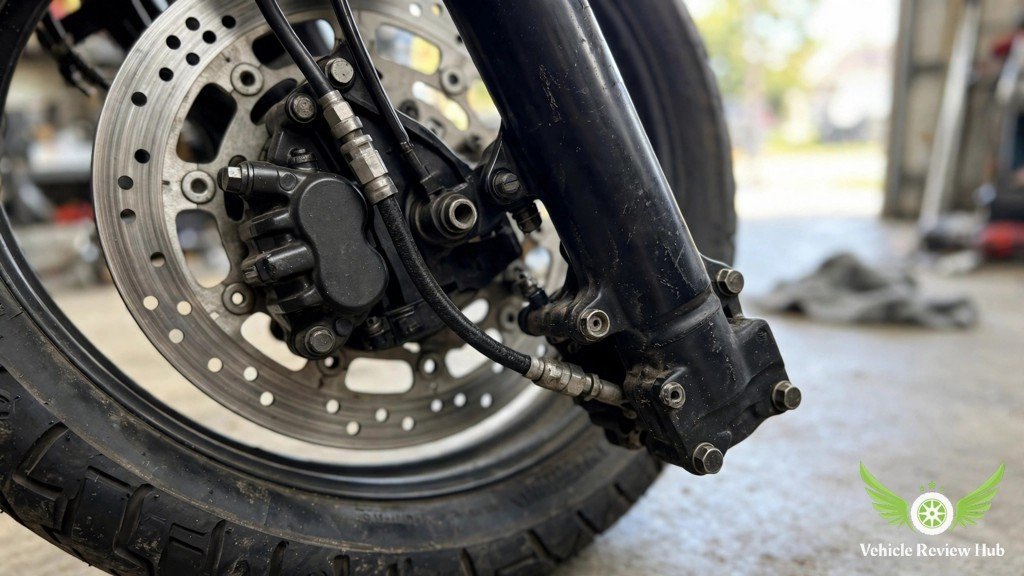
Air Cleaner Every 12,000 Miles, Tire Wear Under Extra Weight
The air cleaner service falls at the 12,000-mile mark in the manual schedule. Tire checks for Honda Rebel 1100T reliability belong in every pre-ride routine: cold pressure, tread depth, sidewalls, and age. Age matters as much as tread: a five-year-old date code means hardened rubber, replaced regardless of tread. No T-specific tire-life figure was found in any major test or owner source, so none is quoted. Pressure discipline matters more on a T: check pressures loaded as you actually ride, not just solo and unladen.
Brake Pads, Brake Fluid Every Two Years, Forks and Shock Checks
Brake maintenance for Honda Rebel 1100T reliability follows the manual: pad wear inspected, DOT 4 fluid replaced every two years, system inspected at each service. The two-year fluid interval is time-based, so a 2023 bike on original fluid is overdue. One test opinion deserves attribution: Ultimate Motorcycling called braking the only weak spot in the T’s sport-touring performance, on the same single-disc hardware the standard bike carries. That is a tester’s judgement, not a defect finding. Suspension checks are simple but telling: a leaking fork seal or dead shock changes braking and handling, and should come off the price. The hardware is a 43mm fork (5.5 inches of travel on current pages, 4.8 on 2021 pages) with dual Showa piggyback shocks offering 3.7 inches of rear travel. For Honda Rebel 1100T reliability, brakes are a loaded-test item: test them loaded, not just solo, before buying.
Honda Rebel 1100T Maintenance and Ownership Costs
The Rebel 1100T is cheap to own for a bagger, and that is a large part of the Honda Rebel 1100T reliability story — when servicing is inexpensive, owners actually do it.
Fuel, Routine Servicing, Tires and Replacement Parts
Fuel is a modest cost, but the 3.6-gallon tank is small for the class, so range planning matters more than the bill itself. On the T, two tested figures frame it: Rider’s 1100T DCT test averaged 46.4 mpg for about 167 miles of range, and RevZilla’s 2026 T test averaged 145 miles between fill-ups over 850 logged miles. Neither is a Honda figure — Honda USA publishes no MPG for the Rebel line. Replacement parts are a strength for Honda Rebel 1100T reliability: engine, brakes, and electrics are shared with the Africa Twin family and the standard Rebel, so dealers stock common parts.
Fairing and Bag Part Prices and Long-Term Ownership Costs
Here is the honest gap in Honda Rebel 1100T reliability costs: no verified US OEM price for a replacement T hard case or batwing fairing was found in any Honda or major dealer source. That changes how a buyer should price a T with damaged luggage: get a dealer quote before agreeing a price, rather than trusting a round number from a guide. What can be said with attribution is thinner: used and aftermarket fairing listings on eBay run roughly $325–$455, labelled as listings, not OEM T fairing prices — and Honda’s European accessory nylon saddlebags (10 and 14 litres) are different parts, not T hard cases, so their prices prove nothing about T case prices. Long-term ownership costs for Honda Rebel 1100T reliability stay low as long as the big service is not deferred. The 16,000-mile valve check, plus the DCT clutch filter on DCT bikes, is the only service with significant labour. Skipping it does not save money: tight valves can burn, turning a service bill into an engine repair. Beyond that service, the Honda Rebel 1100T reliability repair list is short: chains and sprockets, a battery every few years, brake pads and fluid, and tires. The long-term cost risk is the touring kit, not the mechanicals: a T with a cracked case or a latch that will not click is a dealer-quote repair.
How to Keep a Honda Rebel 1100T Reliable
Keeping Honda Rebel 1100T reliability high is mostly small jobs on time, plus two T-specific habits.
Preventive Maintenance, Chain Care Every 600 Miles and Inspections
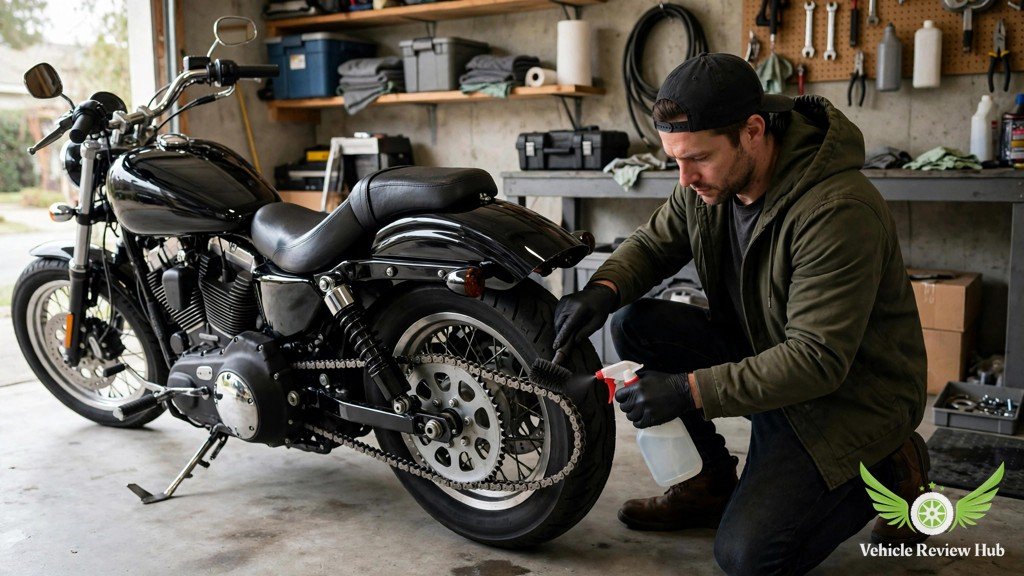
Preventive maintenance for Honda Rebel 1100T reliability starts with the chain: every 600 miles, more often than any other job. Routine: check slack (15–25mm), clean, wipe dry, and lubricate with Pro Honda HP Chain Lube or equivalent. Beyond the chain, the Honda Rebel 1100T reliability pre-ride check covers tires, brakes, lights, steering, fuel, and oil — plus the T extras: both bag lids latched and locked, seals seated, and fairing fasteners tight. For the standard bike, the standard Rebel 1100 reliability picture follows the same discipline on a simpler machine.
Recall Scope: Only the 2025 Manual T May Sit Inside 25V358, Check by VIN
One US safety recall can touch the T, and its scope is easy to get wrong — so this section states it precisely. NHTSA lists the 2025 recall under “CMX1100” (the 2021 recall sits under “Rebel 1100”), so searching only one spelling returns a false clean result. Before buying, run the VIN through NHTSA’s recall lookup and get dealer confirmation in writing; checks and fixes are free. The companion Rebel 1100T buying guide covers what to check beyond the recall.
| Recall | Scope | Defect and remedy |
|---|---|---|
| 25V358 (KS2) | Certain manual-transmission 2025 CMX1100 (the T variant that may sit inside is the 2025 manual T) | Sealing bolt improperly machined, oil may leak onto rear tire; free replacement; ~1,016-unit multi-model total |
| 21V987 (KN1) | Certain 2021 only — predates the T, does NOT apply to any Rebel 1100T | Radiator cap improperly formed; 1,022 units |
The 25V358 story, stated carefully. Honda’s KS2 covers a crankcase sealing bolt (22mm oil-pressure-switch bolt, part 90048-MFL-000) improperly machined, so oil can leak past it and reach the rear tire. The NHTSA summary names certain 2024 XL750 plus 2025 CMX1100 and 2025 CRF1100 bikes, about 1,016 units across all models, and dealers must not sell an affected new or used bike until it is repaired. Honda’s dealer-bulletin wording covers manual-transmission bikes, so a 2025 manual T may sit inside, while a DCT T sits outside that scope as Honda wrote it — but a VIN check is still the only confirmation. The reported bolt production window starts in October 2024, so as a caution — not an inclusion — VIN-check any 2024 manual T rather than assuming it clear. The 2021 radiator-cap recall, 21V987, names certain 2021 CMX1100A/D bikes built April 10 to July 22, 2021, and the T did not exist until 2023, so no T of any year is inside it. For Honda Rebel 1100T reliability, that VIN check is the whole point.
| Model year | NHTSA API result (both spellings checked) | What it means |
|---|---|---|
| 2023 | No record returned | None found; DCT-only launch year |
| 2024 | No record returned | Not named; VIN-check a manual T anyway (bolt window caution) |
| 2025 | 25V358 only (under “CMX1100”) | Check sealing-bolt replacement closed (manual T may sit inside; DCT outside as written) |
| 2026 | No record returned | None found |
One weight note: Honda’s own figures disagree by year and transmission — a year split, not an error. Honda’s 2026 tables list the T at 528 pounds curb manual and 549 DCT, while the 2025 tables list 520 and 542. RevZilla’s scales measured a 2026 manual T at 525 pounds, three under Honda’s claim. For Honda Rebel 1100T reliability, year-scope every weight figure.
Honda Rebel 1100T Reliability FAQs
Direct answers about Honda Rebel 1100T reliability: the platform record, the bag latches, the service schedule, the recall, and buyer questions.
Is the Honda Rebel 1100T reliable?
Yes. Honda Rebel 1100T reliability is strong: its 1084cc twin comes from Honda’s Africa Twin family in a gentler tune, MCN platform owners rate reliability 4.6 out of 5, and no owner group reports engine or gearbox failure.
What does the MCN 4.6 out of 5 rating really mean?
It means 12 CMX1100 platform owners rated reliability and build quality 4.6 out of 5, with the engine at 5 out of 5. For Honda Rebel 1100T reliability, the small sample matters, and no T-specific MCN page was found.
What are the most common problems on a Honda Rebel 1100T?
Honda Rebel 1100T reliability complaints start with the saddlebag latches, confirmed by two tests, plus DCT low-speed quirks and normal wear items.
Are the saddlebag latches really that bad?
They are the T’s clearest complaint: Ultimate Motorcycling called the lid so flimsy it takes concerted pressure in just the right spot to latch, and Rider called the mechanism finicky. For Honda Rebel 1100T reliability, test both lids several times before buying.
How often does a Honda Rebel 1100T need servicing?
First service at 600 miles, then oil every 8,000 miles or one year, chain care every 600 miles, air cleaner at 12,000 miles, valves and DCT clutch filter every 16,000 miles, plugs at 32,000 miles, brake fluid every two years, coolant every three years.
Does the Honda Rebel 1100T have any recalls?
One can touch it. For Honda Rebel 1100T reliability, 25V358 covers certain manual-transmission 2025 CMX1100 bikes, so a 2025 manual T may sit inside it; DCT bikes sit outside that scope as Honda wrote it.
Is my 2024 Honda Rebel 1100T affected by the sealing-bolt recall?
No T of 2024 is named in the NHTSA summary, which names 2025 CMX1100 only. For Honda Rebel 1100T reliability, VIN-check a 2024 manual T anyway rather than assuming it clear.
Are DCT models included in the 25V358 recall?
No, on Honda’s dealer bulletin wording: the update covers manual-transmission bikes. DCT bikes sit outside that scope, but for Honda Rebel 1100T reliability, a VIN check is still the only confirmation.
What is the Honda Rebel 1100T valve service interval?
For Honda Rebel 1100T reliability, valve inspection falls every 16,000 miles. Checking needs tank-off access, so it is a dealer job for most owners.
Does the DCT need different servicing from the manual bike?
Yes, one item for Honda Rebel 1100T reliability: DCT bikes need a clutch oil filter replacement at 600 and 16,000 miles, while manual bikes have no such filter. Engine oil capacity also differs: 4.4 quarts on DCT bikes against 4.2 quarts on manuals.
How long do Honda Rebel 1100T tires last?
For Honda Rebel 1100T reliability, no T-specific tire-life figure was found in any major test or owner source, so none is quoted. Check pressure cold and loaded as you ride, tread, sidewalls, and age.
Is the pre-2025 seat really that bad?
For Honda Rebel 1100T reliability, MCN reports numbness after about an hour on the pre-2025 seat, and many used bikes already carry an aftermarket seat. Honda answered it in 2025 with a 10mm thicker cushion, pegs 50mm forward, and grips 12mm higher and 28mm farther back.
Is a high-mileage Honda Rebel 1100T worth buying?
Often yes, if the service history is complete: Honda Rebel 1100T reliability rewards maintenance over low mileage.
What should I check before buying a used Honda Rebel 1100T?
For Honda Rebel 1100T reliability, start the bike cold, test the DCT in slow traffic if fitted, and check chain slack, tire age, pads, fluid age, fork seals, and the valve-service record. Then work both bag lids, check the seals and fairing mounts, and run the VIN through NHTSA’s lookup for 25V358.