Short answer: this Honda CBR600RR review finds the last old-school supersport still on sale in America — a 599cc inline-four with no ride modes, no traction control, and no TFT display, sold for 2026 at $11,499 plus a $600 destination charge. The bike on American showroom floors is the generation Honda introduced for 2013, not the updated model sold in Japan since 2021 and Europe since 2024 — and this Honda CBR600RR review treats that fact as the story, not a footnote. This Honda CBR600RR review covers the verified specifications, the generation split every buyer must understand, the honest limits of a thirteen-year-old platform, and who should still buy one new in 2026.
That generation split is why this Honda CBR600RR review starts with a warning, not a celebration. Search the internet for the CBR600RR and you will find winglets, a TFT dash, five ride modes, and 119-horsepower claims — none of which belong to the American bike. This Honda CBR600RR review judges it on what it actually is: a proven, razor-sharp 600 that asks the rider to do the riding.
Honda CBR600RR Overview and Model-Year Updates
The CBR600RR has been Honda’s focused 600-class supersport since 2003, and this Honda CBR600RR review traces a line that never broke in America, even when it broke everywhere else.
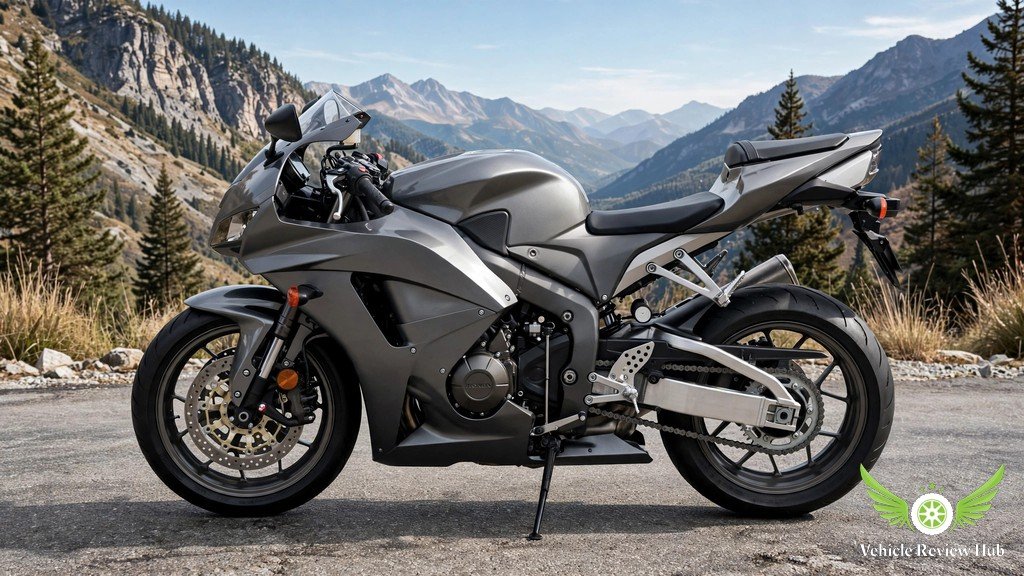
Never Dropped in the USA: Sold Continuously From 2003 to 2026
The CBR600RR debuted in 2003 as Honda’s more track-focused middleweight, and American Honda has kept it in the lineup ever since — a run no other Japanese 600 can match in the United States. The first generation ran from 2003 to 2006, the second from 2007 to 2012 brought a new frame and the Electronic Steering Damper, and the third arrived for 2013 with the 41mm Showa Big Piston Fork, MotoGP-inspired bodywork, and optional Combined ABS. After 2013, the American bike effectively stopped changing. That continuity is a genuine selling point in this Honda CBR600RR review — parts, knowledge, and aftermarket support run deep — but it also means a 2026 buyer is buying a 2013 motorcycle with 2026 paint. The 2013 bike listed at $11,490, or $12,490 with ABS; thirteen years later the same basic motorcycle lists at $11,499, or $12,499 with ABS.
The 2021-On PC69 Update the US Never Got and the 2027 Reports
Here is the split every buyer must understand before reading another word of this Honda CBR600RR review. Honda launched a heavily updated CBR600RR in Japan for 2021 — model code PC69 — with ride-by-wire, a six-axis IMU, a TFT display, selectable ride modes, lean-sensitive traction control, wheelie control, a quickshifter, cornering ABS, and aerodynamic winglets, and brought that bike to Europe for 2024. The United States never got it: the American bike, model code PC40, is the generation that debuted in 2013, with none of those features — not even traction control. American Honda told Motorcycle.com in 2020 it had no plans to sell the updated model in the US, and through 2026 that position has held. Reports surfaced in October 2026 that the PC69 may finally come to America as a 2027 model, based on a Honda VIN-decoder filing and a California emissions certification, but Honda has not announced a 2027 US CBR600RR, and this Honda CBR600RR review treats those reports as unconfirmed speculation, not fact.
Honda CBR600RR Engine and Specifications
The engine is the heart of this Honda CBR600RR review: a 599cc inline-four refined, not replaced, for over two decades, still defining what a middleweight supersport feels like.
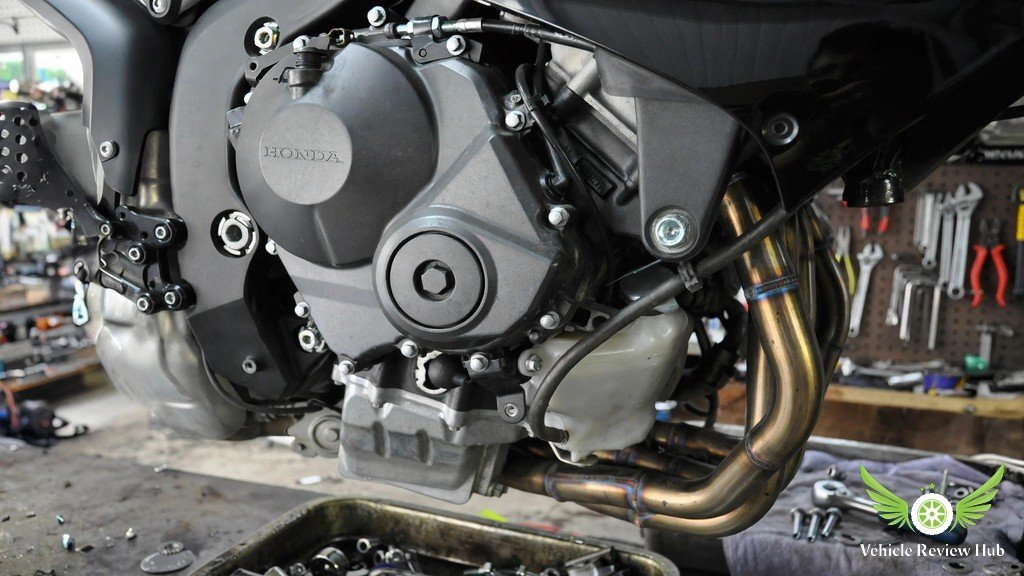
599cc DOHC Inline-Four, 67.0×42.5mm Bore and Stroke at 12.2:1
At the center of this Honda CBR600RR review is a 599cc liquid-cooled DOHC inline-four, four valves per cylinder, 67.0mm bore and 42.5mm stroke, 12.2:1 compression, and Programmed Dual Stage Fuel Injection through 40mm throttle bodies with dual injectors per cylinder. A close-ratio six-speed gearbox and a #525 O-ring chain (16T/42T) drive the rear wheel, and a 4-into-1 underseat exhaust handles breathing. Honda USA publishes no horsepower figure for this motorcycle, and this Honda CBR600RR review invents none. The measured evidence in this Honda CBR600RR review comes from named tests: Cycle World recorded 98.8 horsepower at 12,510 rpm and 44 pound-feet of torque at 10,150 rpm for the 2013-generation bike, and Cycle News’ 2013 shootout dyno squeezed barely over 100 horsepower at 12,500 rpm with a 44.81 pound-feet torque peak at 10,600 rpm. The 113-horsepower figure circulating online is not a US figure, and 119 horsepower belongs to the European PC69. What the numbers cannot convey is character: little below 7,000 rpm, a gathering rush past 9,000, and a 15,000-rpm scream that is the entire point of the motorcycle. RevZilla’s 2015 long-term test of the same generation reported the same Cycle World figures and a 410-pound wet weight. For power-delivery detail, see our Honda CBR600RR performance guide.
Weight by Year: 410 lb in 2013 Against 419 lb for 2026
Weight tells the generation story in miniature, and this Honda CBR600RR review quotes it by source rather than blending figures. The 2013 non-ABS bike was claimed at 410 pounds ready to ride, with the C-ABS model 22 to 24 pounds heavier depending on the source. The 2026 non-ABS bike is claimed at 419 pounds curb weight, and the 2026 ABS model at 434 pounds — a gain of roughly 9 to 15 pounds over thirteen years, mostly ABS hardware and emissions equipment. The rest of the chassis numbers have not moved: 53.9-inch wheelbase, 23.5-degree rake, 3.9 inches of trail, 32.4-inch seat, 4.8-gallon tank. The 41mm inverted Showa fork carries 4.7 inches of travel and the Unit Pro-Link rear shock 5.1 inches, both fully adjustable. Dual 310mm front discs with radial four-piston calipers and a single 220mm rear disc handle braking, with tires sized 120/70-17 front and 180/55-17 rear.
| Specification | Honda CBR600RR (2026, USA) | Notes |
|---|---|---|
| Engine | 599cc liquid-cooled DOHC inline-four, 67.0 x 42.5mm, 12.2:1 | PGM-DSFI, 40mm throttle bodies |
| Gearbox / final drive | Close-ratio 6-speed, #525 O-ring chain 16T/42T | No quickshifter on the US bike |
| Seat height / wheelbase | 32.4 in / 53.9 in | Rake 23.5°, trail 3.9 in |
| Curb weight | 419 lb (434 lb ABS) | 410 lb claimed for 2013 non-ABS |
| Fuel capacity | 4.8 gallons | Underseat exhaust, 4-into-1 |
| Front brakes | Dual 310mm discs, radial 4-piston calipers | C-ABS only on the RA variant |
| Suspension | 41mm Showa SFF-BP fork / Unit Pro-Link rear | 4.7 in front / 5.1 in rear travel |
| Summary | 2026: $11,499 + $600 destination | ABS model $12,499 + $600 |
Honda CBR600RR Price and Market Availability
Price in this Honda CBR600RR review is the bike’s second-strongest argument after its chassis: one trim choice, one colour, and a sticker barely moved in thirteen years.
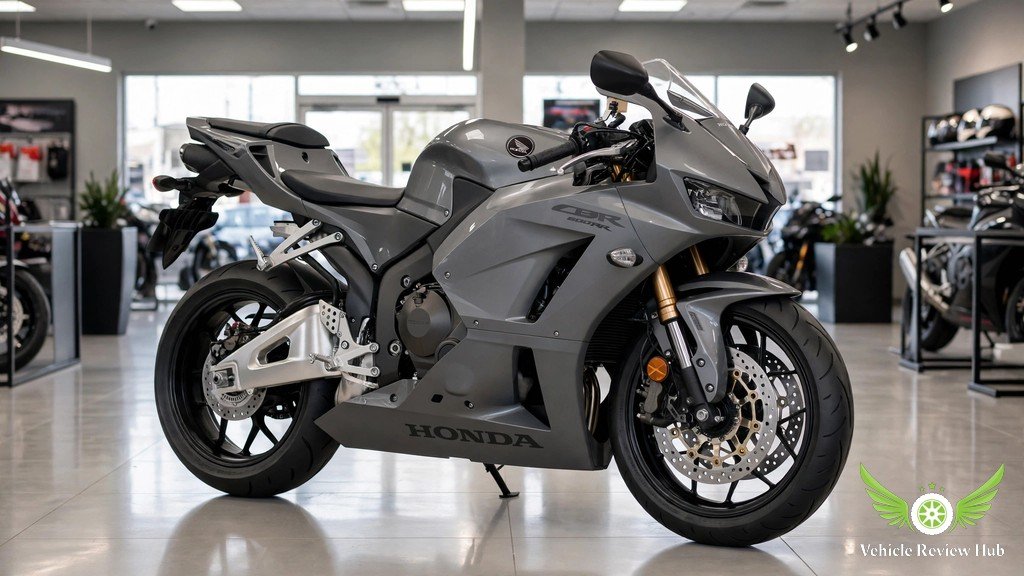
Honda CBR600RR Price in the USA: $11,499 for 2026 Plus $600 Destination
The 2026 Honda CBR600RR lists at $11,499 plus a $600 destination charge — $12,099 before tax and dealer fees — verified on Honda Powersports’ own 2026 page and in current dealer listings. The price walk tells the model’s story: $11,490 for the 2013 bike, $11,499 for 2026, a difference of nine dollars across thirteen model years. No other current motorcycle holds its price that flat, and this Honda CBR600RR review reads it two ways: Honda amortized this platform long ago, and Honda has also stopped investing in it. The full rival comparison is in our Honda CBR600RR buying guide, where every figure carries its trim label.
ABS Model at $12,499 and Deep Pearl Gray as the Only 2026 Colour
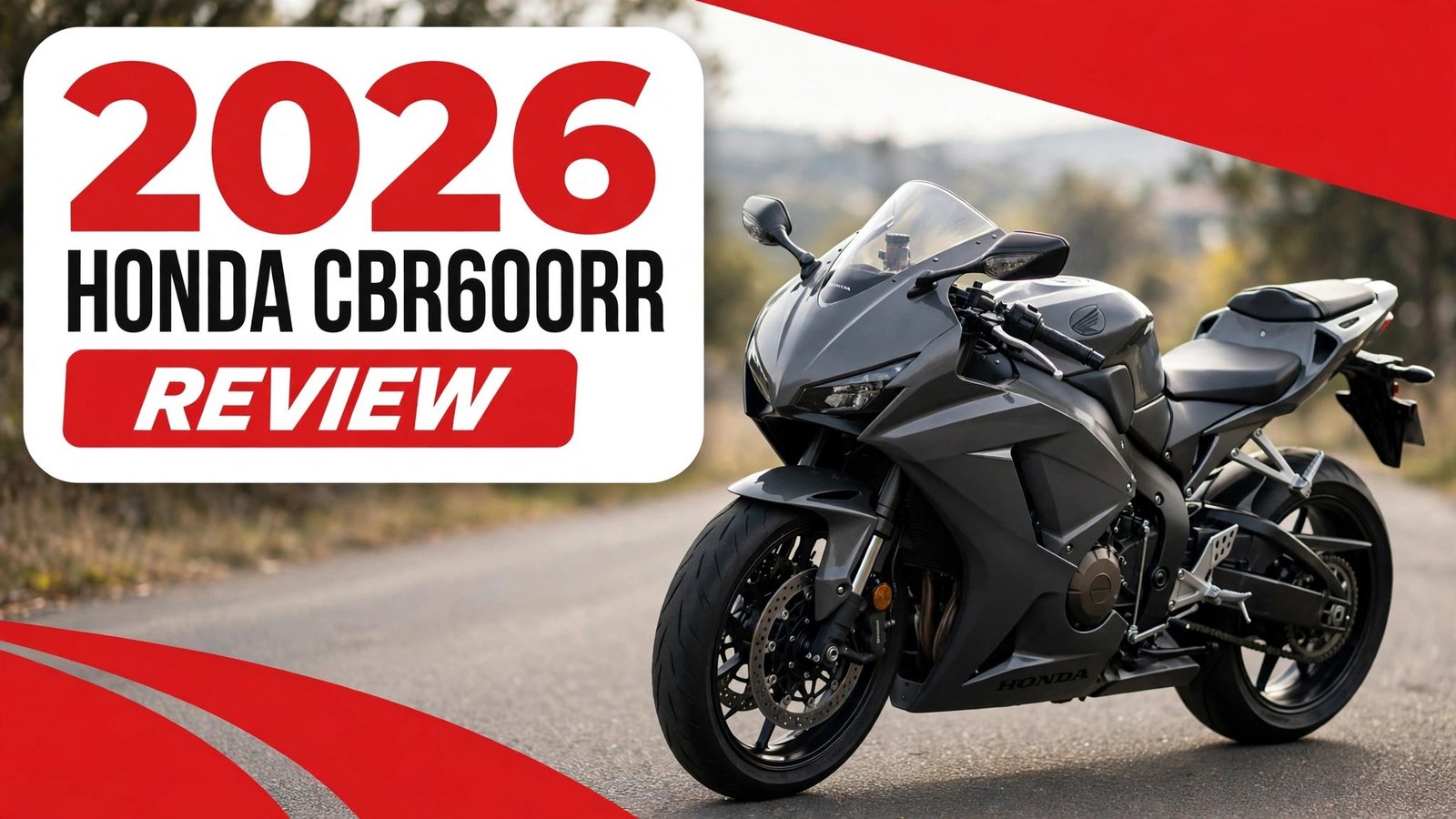
The 2026 CBR600RR ABS — model code RA — lists at $12,499 plus the same $600 destination charge, exactly $1,000 over the standard bike, buying Honda’s Electronic Combined ABS. Deep Pearl Gray is the only colour for 2026, on both variants — no red, no white, no Repsol replica, which the 2013 bike offered at a $500 premium. The single-colour choice shows where this motorcycle sits in Honda’s priorities: still sold, still supported, no longer promoted. This Honda CBR600RR review states the colour plainly because buyers shopping older listings will see red, white, blue, and Repsol bikes everywhere — all of them used, none of them 2026.
Honda CBR600RR Design, Features and Technology
The technology story in this Honda CBR600RR review is defined by absence: a steering damper and optional combined ABS, surrounded by everything Honda chose not to fit.
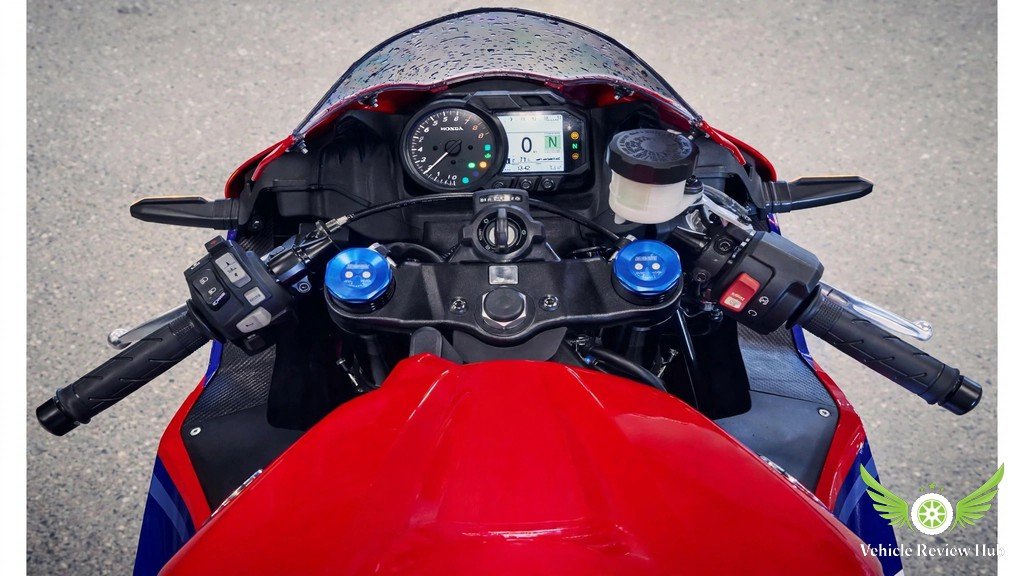
HESD Steering Damper From 2007 and C-ABS Only on the RA Variant
Honda’s Electronic Steering Damper has been on the CBR600RR since 2007, and it remains the bike’s most sophisticated electronic system — which says everything about this motorcycle’s priorities. HESD adjusts damping by speed and handlebar movement, firming up at high speed and staying light at parking-lot pace, and testers call it unobtrusive. Combined ABS arrived with the 2013 generation and remains exclusive to the RA variant; the standard bike has no ABS at all. The 2013 bodywork brought a central ram-air intake, a claimed 6.5 percent drag reduction, and 12-spoke wheels. For the servicing picture, see our Honda CBR600RR reliability guide.
No Ride Modes, No IMU, No TFT on Any US-Sold Bike to 2026
This section of the Honda CBR600RR review states the fact that internet coverage blurs most often: no US-sold CBR600RR through 2026 has ride modes, an inertial measurement unit, traction control of any kind, a TFT display, a quickshifter, or cornering ABS. The dash pairs an analog tachometer with a digital display, the throttle is cable-operated, and the 2013 review noted the bike was even devoid of a slipper clutch and a gear-position indicator. None of this is a defect — it is the design brief of a motorcycle engineered before rider aids became standard, kept in production unchanged. But a buyer who wants a safety net must look elsewhere, and a seller who describes a US CBR600RR as having traction control or riding modes is describing the European bike, or inventing features.
Honda CBR600RR Riding Experience and Comfort
On the road, the CBR600RR feels exactly like its specification sheet promises: small, sharp, committed, happiest when ridden hard. Testers keep reaching for surgical metaphors, and this Honda CBR600RR review finds them fair.
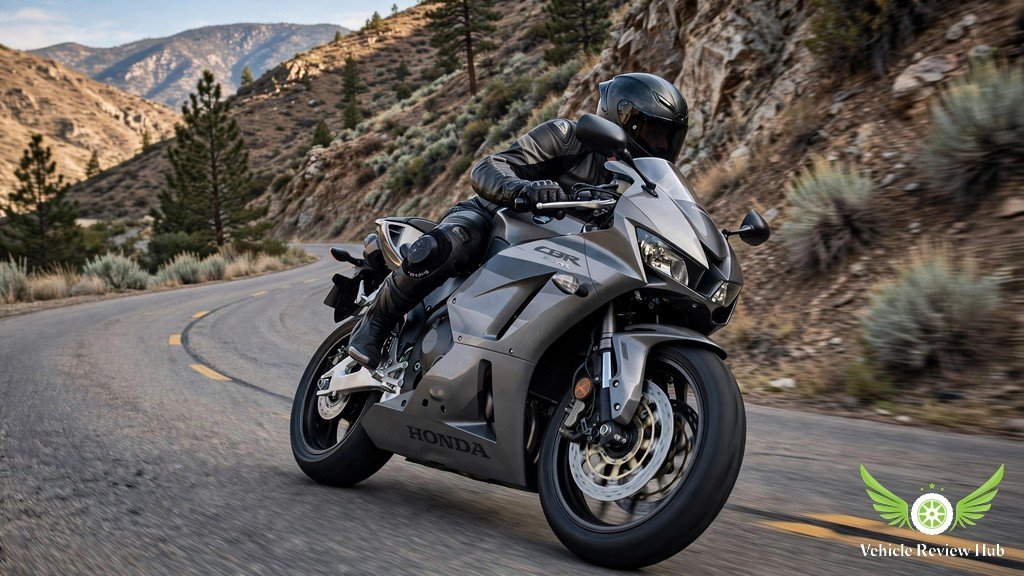
Riding Position, Handling and Low-Speed Maneuverability
The riding position in this Honda CBR600RR review is the bike’s great filter: low clip-ons, high rearset footpegs, and a 32.4-inch seat create a compact, committed crouch that suits smaller and more flexible riders and punishes everyone else. Rider Magazine’s six-foot-two, 200-pound tester called the bike compact, with weight on his wrists and a deep bend in his knees — then praised it anyway in the canyons, where the short wheelbase, steep rake, and adjustable Showa fork deliver the precise, neutral steering that made this chassis famous. At low speed the bike is light and narrow enough to manage, but the tall first gear and peaky engine demand clutch care in traffic. The video below is an owner’s 6,000-mile review of the CBR600RR — not a magazine instrumented test, and worth watching precisely because it shows what living with this motorcycle looks like after the new-bike excitement fades.
Two honest limits belong in this Honda CBR600RR review alongside the praise. The underseat exhaust puts heat under the seat in slow traffic, and the engine’s lack of low-end torque means city riding is constant gear work rather than relaxed cruising. Neither flaw dents the verdict for the intended buyer, but both belong in an honest Honda CBR600RR review.
Highway Comfort, Passenger Use and Everyday Practicality
On the highway the CBR600RR is capable but committed, and this Honda CBR600RR review rates its practicality below its sportiness without apology. The fairing takes the worst of the wind off at speed, and the 4.8-gallon tank returns roughly 175 to 195 miles of real range — Cycle News’ 2013 shootout recorded 36.9 mpg and a 176.9-mile estimated range, and Honda’s own economy estimate rose from 40 to 44 mpg with the 2013 update, a laboratory-style figure rather than a tested one. Passenger use is the weak point: the pillion pad is small, the pegs are high, and the underseat exhaust heat reaches the passenger too. Everyday practicality is otherwise workable — Honda dealer support, deep parts availability, and a 12-month warranty on a new bike. Ownership-cost detail lives in our Honda CBR600RR buying guide, but the headline here is simple: the CBR600RR rewards commitment and punishes compromise.
Honda CBR600RR Review: Pros, Cons and Verdict
The verdict in this Honda CBR600RR review comes down to a simple trade: a proven, razor-sharp chassis and a screaming inline-four in exchange for a decade-old feature set and a riding position that tolerates no passengers.
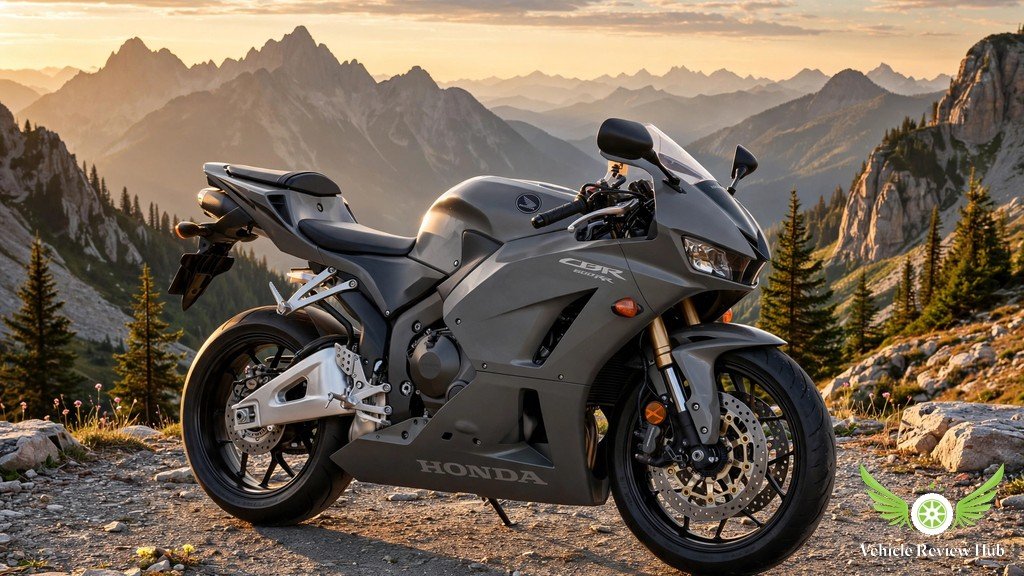
Main Advantages and Limitations of the Honda CBR600RR
Advantages in this Honda CBR600RR review: a 599cc inline-four with genuine top-end character; one of the best-handling chassis ever fitted to a middleweight; fully adjustable Showa suspension; dual 310mm radial brakes with optional C-ABS; HESD; a 419-pound curb weight; Honda reliability and dealer support; and a $11,499 price unchanged in thirteen years. The limitations in this Honda CBR600RR review are equally clear. There are no rider aids of any kind — no traction control, no ride modes, no IMU, no quickshifter — and the standard bike has no ABS. The riding position is committed, pillion accommodation is minimal, the underseat exhaust cooks the rider in traffic, and low-rpm torque is thin. Fuel-pump recalls have touched this model across generations, and a recent engine-oil-consumption recall covers certain 2024–2026 bikes — both are VIN-check items, and the full recall picture belongs to the reliability guide.
Who Should Consider a New CBR600RR Over a Yamaha R9?
Choose the new CBR600RR over the Yamaha R9 if you want an inline-four rather than a triple, a motorcycle $1,000 cheaper than the R9’s $12,499 sticker, a chassis with thirteen years of setup knowledge behind it, and no electronic intermediary between your wrist and the rear wheel. Choose the R9 if you want modern electronics — IMU, traction control, ride modes, a TFT dash, a quickshifter — plus stronger midrange torque from its larger triple and a more current platform. For everyone else in this Honda CBR600RR review — experienced riders who want a track-day weapon they can also ride home, collectors who value the last of a breed, and supersport loyalists who never wanted rider aids — the CBR600RR remains one of the easiest recommendations in the class, provided the buyer accepts it for what it is: a superbike in miniature from another era, still sold new, still brilliant, and still uncompromising. At $11,499 plus $600 destination for 2026, this Honda CBR600RR review calls it the last honest supersport America can buy new.
Honda CBR600RR Review FAQs
Direct answers to the questions buyers ask most in this Honda CBR600RR review.
What is the Honda CBR600RR?
A 599cc inline-four supersport in this Honda CBR600RR review: Honda’s focused middleweight sport bike, sold in America continuously since 2003, built for experienced riders who want track-bred handling on the road.
How much does the Honda CBR600RR cost?
The 2026 Honda CBR600RR costs $11,499 plus a $600 destination charge, in Deep Pearl Gray only, notes this Honda CBR600RR review. The ABS model costs $12,499 plus destination.
How much horsepower does the Honda CBR600RR make?
Honda USA publishes no figure. Cycle World recorded 98.8 rear-wheel horsepower for the 2013-generation bike, and Cycle News’ dyno showed barely over 100 horsepower, reports this Honda CBR600RR review. The 113-horsepower claim is not a US figure, and 119 horsepower belongs to the European PC69.
What is the seat height of the Honda CBR600RR?
32.4 inches, per this Honda CBR600RR review — tall for a middleweight, and one reason shorter riders should sit on the bike before buying.
How much does the Honda CBR600RR weigh?
419 pounds claimed curb weight for the 2026 standard bike, 434 pounds for the ABS model, says this Honda CBR600RR review. The 2013 non-ABS bike was claimed at 410 pounds.
Does the Honda CBR600RR have traction control?
Not in the USA. No US-sold CBR600RR through 2026 has traction control, ride modes, an IMU, or a TFT display, stresses this Honda CBR600RR review. Those features belong to the European PC69 model.
Does the Honda CBR600RR have ABS?
Only on the RA variant. The standard 2026 bike has conventional brakes with no ABS; the $12,499 ABS model carries Honda’s Electronic Combined ABS, says this Honda CBR600RR review.
What colours does the 2026 Honda CBR600RR come in?
Deep Pearl Gray only, confirms this Honda CBR600RR review, per Honda’s own 2026 page and dealer listings.
Is the Honda CBR600RR good for beginners?
No, says this Honda CBR600RR review plainly. The peaky engine, committed riding position, tall seat, and complete absence of rider aids make it a poor first motorcycle, whatever the 599cc badge suggests.
What fuel economy does the Honda CBR600RR get?
Cycle News’ 2013 shootout recorded 36.9 mpg, notes this Honda CBR600RR review. Honda’s estimate rose from 40 to 44 mpg with the 2013 update, but that is an estimate, not a tested result.
Is the Honda CBR600RR good for highway riding?
Capable but committed, finds this Honda CBR600RR review: stable at speed with useful wind protection, but a small tank range of roughly 175 to 195 miles and a riding position that tires the rider on long days.
Should I buy the CBR600RR or the Yamaha R9?
Buy the Honda for inline-four character, a $1,000 price edge, and a proven chassis with no electronic intermediary; buy the R9 for modern electronics, stronger midrange, and a current platform, advises this Honda CBR600RR review.
Will Honda sell the new CBR600RR in the USA for 2027?
Unconfirmed, notes this Honda CBR600RR review. Reports from October 2026 point to a possible 2027 US launch of the PC69 generation, but Honda has not announced it — do not buy or delay a purchase based on those reports.
When did the Honda CBR600RR go on sale?
Launched for 2003, revised for 2007 and 2013, and sold continuously in the USA through 2026 at $11,499, notes this Honda CBR600RR review.