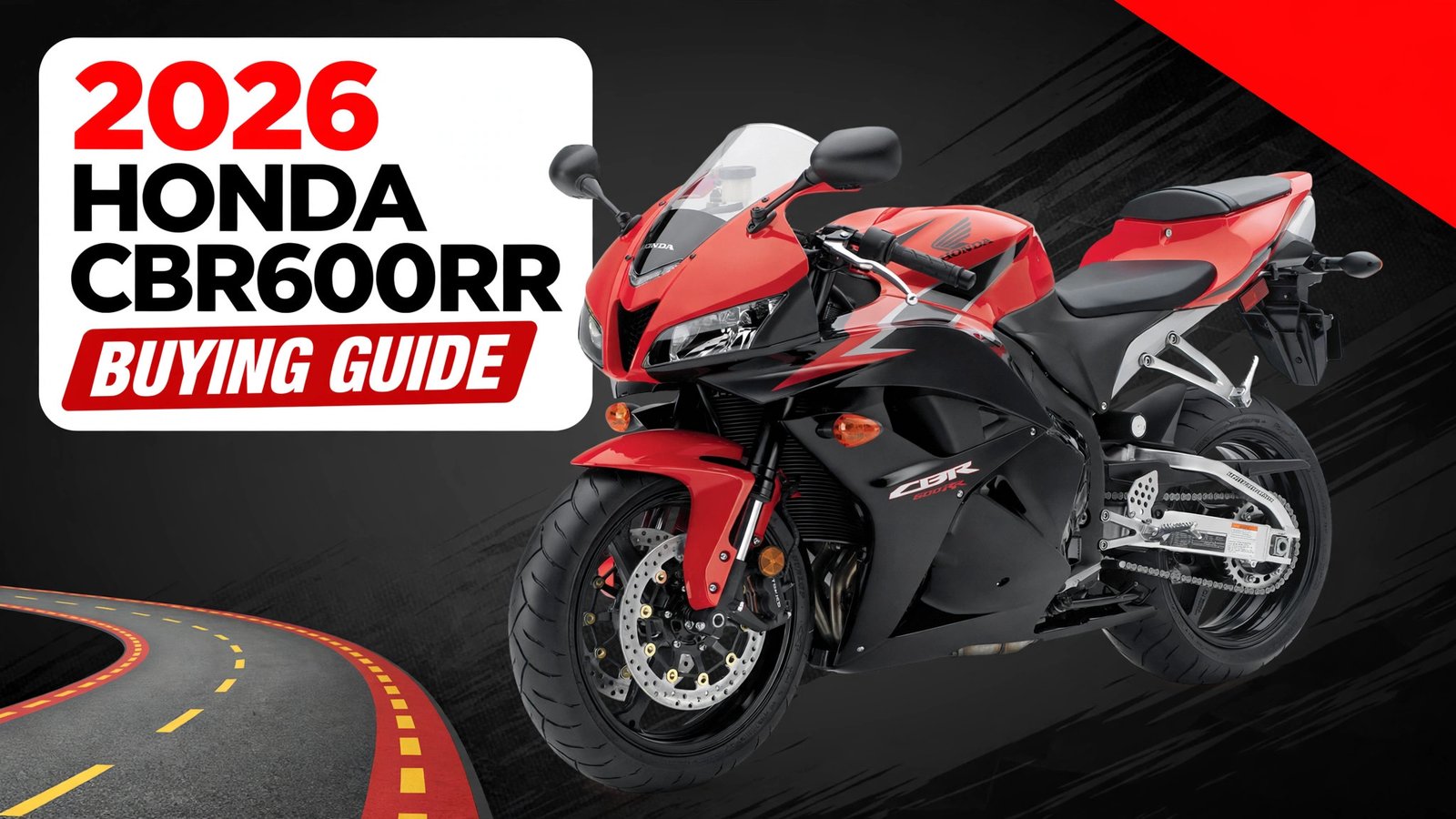
Short answer: this Honda CBR600RR buying guide says buy a 2013-on bike with a clean title and a VIN you have checked yourself, and think twice before paying near-new money for a used example — the new 2026 CBR600RR costs $11,499 plus a $600 destination charge. The CBR600RR is Honda’s 599cc inline-four supersport, a bike that has been sold in the USA continuously since 2003 but has not fundamentally changed since the 2013 update, which makes the used market both a bargain and a trap: the same bodywork from 2013 to 2026 means a seller can pass off an older bike as a newer one, and the newest bikes carry a live engine recall you must check before you pay.
That warning shapes every decision in this Honda CBR600RR buying guide. This Honda CBR600RR buying guide prices the bike generation by generation, explains the insurance reality, and gives you the inspection checklist that catches the three expensive mistakes: year fraud, a grey-import PC69, and an ex-race bike sold as a street bike.
Honda CBR600RR Price and Market Availability
New prices frame every deal in this Honda CBR600RR buying guide. The 2026 CBR600RR lists at $11,499 plus a $600 destination charge in a single colour, Deep Pearl Gray, and the ABS model — model code CBR600RA, with Honda’s Combined ABS — lists at $12,499 plus $600 destination.
What Does a Used Honda CBR600RR Cost in the USA by Generation?
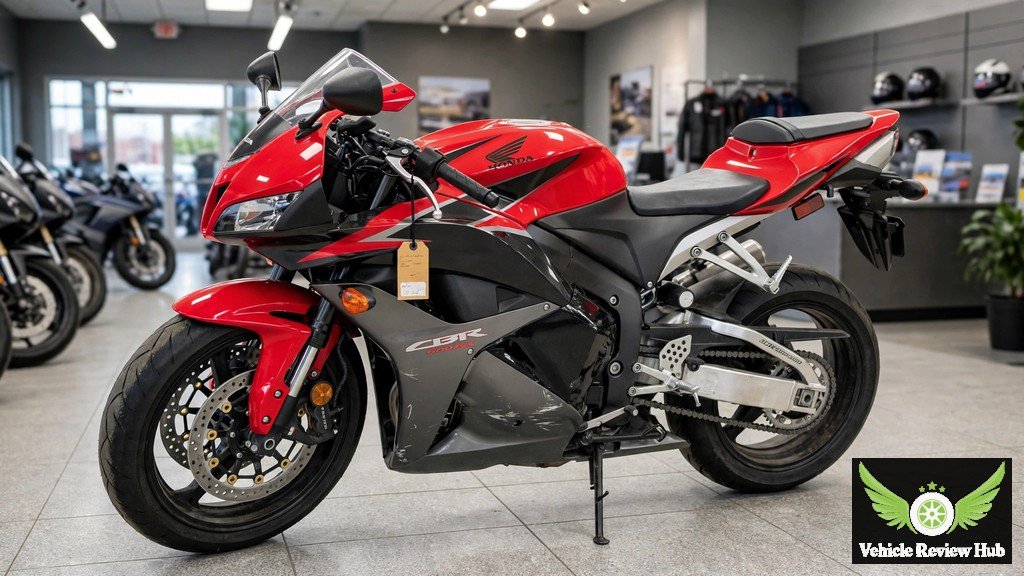
There is no published used-price guide for the CBR600RR that means anything on its own, and this Honda CBR600RR buying guide says so plainly. The bike splits into two buying generations. The 2007–2012 bikes are the older generation: conventional-looking bodywork, an earlier fork and brake package, and the cheapest entry into the nameplate. The 2013-on bikes are the final US generation, carried with the same bodywork through 2026: a 41mm Showa Big Piston Fork, dual 310mm front discs, and the chassis most testers still praise. For the full model story, see our Honda CBR600RR review, and for the tested performance figures, see our Honda CBR600RR performance guide.
From Around $3,500 Track Bikes to $9,500 Clean Late Models Asking
The doc’s band for this Honda CBR600RR buying guide runs from around $3,500 for track bikes to $9,500 for clean late models asking, and the bottom of that band is real: rough, high-mileage, or track-prepared bikes with salvage history or no street equipment genuinely trade at the $3,500 end, and they are only a deal if you want a track bike. The top of the band needs an honest correction. Sampled dealer listings found for this Honda CBR600RR buying guide run above $9,500 for late models: a 2020 with 7,395 miles in Tampa, Florida at $9,790; a 2022 with 15,204 miles in Sacramento, California at $10,995; a 2022 in Woodbridge, Virginia at $11,599; a 2024 with 13,328 miles in Pembroke, New Hampshire at $10,499; and a 2023 in Tampa at $11,990. A used bike is only a deal if its price, plus the service it needs, stays well under that number.
| Honda CBR600RR (buying guide) | Price | Status |
|---|---|---|
| 2026 Honda CBR600RR (new) | $11,499 + $600 destination | Deep Pearl Gray only |
| 2026 Honda CBR600RR ABS / RA (new) | $12,499 + $600 destination | C-ABS variant, model code CBR600RA |
| 2020–2024 Honda CBR600RR (used asks) | $9,790 to $11,990 asking | Sampled dealer listings, Nov 2026 |
| 2007–2012 Honda CBR600RR (used) | Roughly $5,000 to $8,000 | Clean examples; track bikes from ~$3,500 |
| Buying rule | Used + service due must stay well under $12,099 | Before tax and fees |
Honda CBR600RR Insurance and Ownership Costs
Ownership costs in this Honda CBR600RR buying guide look nothing like a naked bike’s, even though the 600RR shares Honda’s dealer network with friendlier machines.
No US Model-Specific Insurance Data Found and Supersport Loading
No US model-specific insurance data was found for this Honda CBR600RR buying guide, so the figures below are labelled supersport-class benchmarks, never a CBR600RR quote. Published 2026 planning ranges put full coverage for a 600cc supersport with a clean record at roughly $1,200 to $2,800 a year, with other surveys putting 600cc supersports at $1,800 to $3,000 a year; young or inexperienced riders on a 600cc sport bike are quoted $1,500 to $3,500-plus. The honest advice in this Honda CBR600RR buying guide: get quotes for the RR, the ZX-6R, and the CBR650R on the same rider profile before deciding, because the spread between carriers for supersports is larger than for any other class. For the servicing picture behind the running costs, see our Honda CBR600RR reliability guide.
Engine Recall 25V-891: Check Any 2024-26 Bike or New Stock by VIN
Engine recall 25V-891 is the single most important check in this Honda CBR600RR buying guide, and it applies to new stock as well as used bikes. NHTSA recall 25V-891 (Honda campaign KT5) covers certain 2024–2026 CBR600RR motorcycles: improper finishing of the engine block’s cylinder surface can cause excessive engine oil consumption, and if the oil level drops far enough, oil pressure can fall until the connecting-rod bearings seize — which can lock the rear wheel, breach the engine case, or put oil on the exhaust or rear tire. Honda’s records put approximately 1,253 US motorcycles in the recall, built from January 10, 2024 to November 12, 2025. Run every 2024–2026 candidate — new or used — through Honda’s own recall lookup by VIN before you pay, and get the recall status in writing. RideApart’s report on the recall confirms the same scope and timeline.
How to Inspect a Used Honda CBR600RR
Inspection is the step that saves buyers the most money in this Honda CBR600RR buying guide: a used supersport hides crash damage and deferred service behind fresh fairing shine, so every check below earns its place.
Year Fraud Trap: Same Bodywork 2013-2026, Check the 10th VIN Digit
The year-fraud trap is genuine in this Honda CBR600RR buying guide because the 2013-on bodywork never changed: a 2013 and a 2026 look the same to almost everyone, including some sellers. The defence is the VIN, and it costs nothing. US CBR600RR VINs start JH2PC40, and the 10th character is the model year: D is 2013, E is 2014, F is 2015, G is 2016, H is 2017, J is 2018, K is 2019, L is 2020, M is 2021, N is 2022, P is 2023, R is 2024, S is 2025, and T is 2026. Check the 10th digit on the steering head against the title and against the seller’s advert before you travel, and walk away from any bike where the three do not agree.
Inspecting CCT Noise, Fork Seals, Crash Damage and C-ABS Health
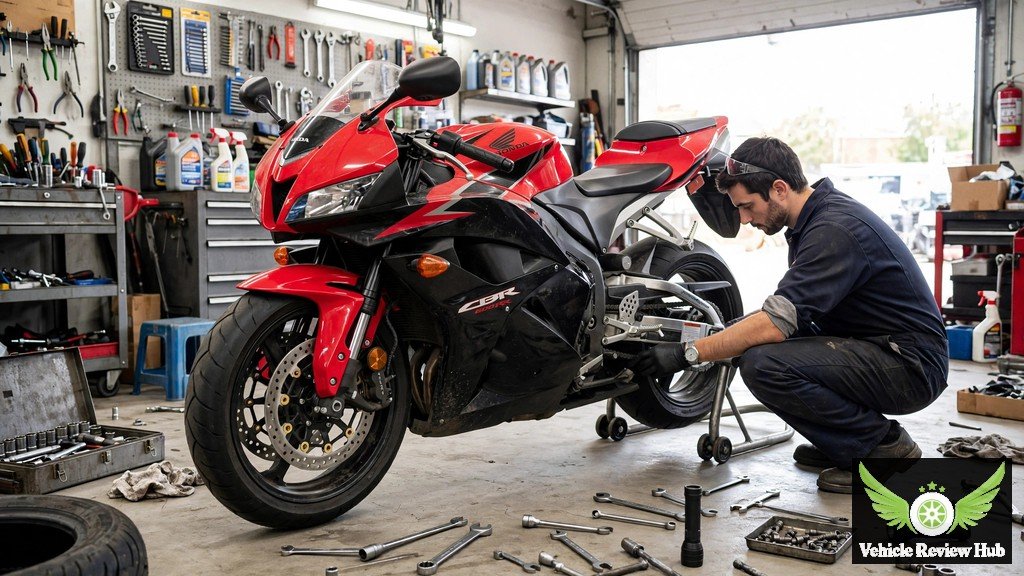
Start the bike cold and listen. Cam chain tensioner rattle is an inspection point in this Honda CBR600RR buying guide, not a proven defect: a brief rattle on a cold start that settles is common chatter to note and monitor, while a rattle that persists hot, or that grows with revs, is a reason to price in a tensioner job or walk away — never accept it as “they all do that” without hearing it yourself. Check every fairing panel gap and mounting tab for cracks, mismatched fasteners, and overspray, and look behind the fairings for bent brackets and scraped engine cases. On an RA (ABS) bike, confirm the C-ABS system is healthy: the ABS light should self-test and go out on roll-off, the brakes should feel consistent with no pulsing at low speed, and no warning should stay lit — C-ABS faults are dealer-diagnosed and not cheap.
Honda CBR600RR Model Years and Features to Compare
The lineup in this Honda CBR600RR buying guide is short: a 2003 launch, a major update in 2007, the final US generation from 2013, and the same bike carried through 2026.
Comparing 2007-12 Bikes With the 2013-On Final US Generation
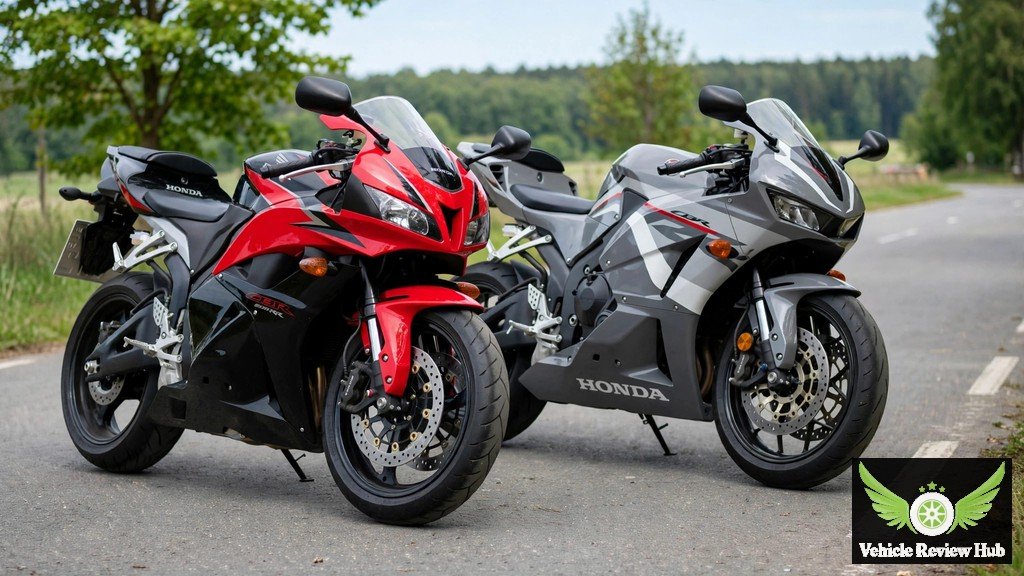
The 2007–2012 bikes brought the undertail-to-underseat exhaust era to a close and the modern CBR600RR shape into focus, with Honda’s Electronic Steering Damper (HESD) from 2007 and a chassis that still feels sharp today. The 2013-on bikes are the ones to buy in this Honda CBR600RR buying guide: the 41mm Showa Big Piston Fork, dual 310mm radial front discs with four-piston calipers, a single 220mm rear disc, Unit Pro-Link rear suspension with 5.1 inches of travel, and bodywork styled after Honda’s MotoGP machine of the time. The 2013-on bike is also the one whose parts are easiest to find, because it ran unchanged for so long.
Grey-Import PC69 Bikes: Track-Only Until Federal Compliance Is Proven
The rest of the world got a new CBR600RR from 2021, codenamed PC69, with ride-by-wire, a TFT display, and modern electronics — and some of those bikes have reached the USA as grey imports. This Honda CBR600RR buying guide is blunt about them: a grey-import PC69 is track-only until federal compliance is proven, full stop. It does not carry US EPA and CARB certification for street use, it cannot be assumed to carry a street-legal US title, and a seller’s promise that “it can be registered” is not compliance. If the VIN does not start with the US JH2PC40 pattern, or the bike has a TFT dash and ride modes, you are looking at a PC69 or a modified bike, and this Honda CBR600RR buying guide says to treat it accordingly.
Honda CBR600RR vs Kawasaki ZX-6R: Which One to Buy in the USA
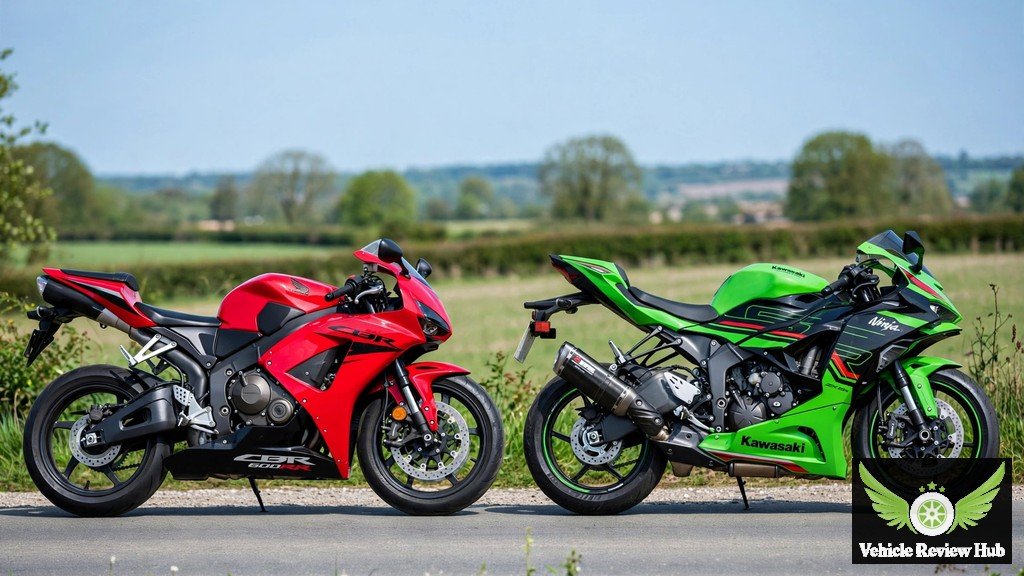
The Kawasaki Ninja ZX-6R is the rival every CBR600RR buyer cross-shops, and this Honda CBR600RR buying guide finds the comparison closer than the spec sheets suggest.
New CBR600RR at $11,499 Against the ZX-6R at $11,599 for 2026
On headline price, the two bikes are $100 apart: the new CBR600RR at $11,499 plus $600 destination against the ZX-6R at $11,599 for 2026, with the ZX-6R ABS at $12,599 against the Honda RA at $12,499. The ZX-6R answers with a 636cc inline-four that makes more midrange torque, modern electronics including traction control and a TFT display, and a chassis that has been continuously developed — it is, by most measures, the more modern motorcycle. The Honda answers with a lighter, more precise feel, a 419-pound curb weight, and a reputation for doing nothing wrong: the CBR600RR is the bike that rewards a smooth rider and never surprises one. Cycle World’s 2013 comparison test already captured the trade — the Honda was the smooth, cushy, easy-on-gas bike with the smallest engine in the test, and it lost at the dragstrip while winning friends everywhere else.
| Item (2026, new) | Honda CBR600RR | Kawasaki Ninja ZX-6R |
|---|---|---|
| Price | $11,499 + $600 destination | $11,599 (ABS $12,599) |
| Engine | 599cc inline-four, 67.0×42.5mm, 12.2:1 | 636cc inline-four |
| Weight / tank | 419 lb curb / 4.8 gallons | Heavier; 4.5-gallon tank |
| Electronics | HESD only; no ride modes, IMU, or TFT | Traction control, TFT, modern aids |
| Character | Light, precise, analogue | Torquier, faster, more modern |
When an R9 at $12,499 or a GSX-R750 at $13,249 Makes More Sense
Two other rivals cover the edges this Honda CBR600RR buying guide does not. The Yamaha YZF-R9 at $12,499 is the modern answer: an 890cc triple with a six-axis IMU, sophisticated electronics, and Brembo Stylema calipers — $1,000 more than the Honda, and a genuinely newer motorcycle in every electronic respect. Buy the R9 if you want modern rider aids and triple torque, and accept that it is not a 600 and does not pretend to be one. The Suzuki GSX-R750 at $13,249 is the displacement answer: a bigger engine with more torque everywhere, on a platform that, like the Honda, has barely changed in years. Buy the GSX-R750 if you want 750cc grunt and Suzuki’s own long parts history, and accept the $1,750 premium over the Honda. TopSpeed’s 2026 supersport coverage confirms the same price ladder.
Is Buying a Used Honda CBR600RR Worth It?
The verdict in this Honda CBR600RR buying guide is yes, with conditions that are not optional: buy the generation your budget genuinely allows, verify the year by VIN, and check the recall status in writing.
Benefits and Risks: Salvage Titles and Ex-Race Bike Histories
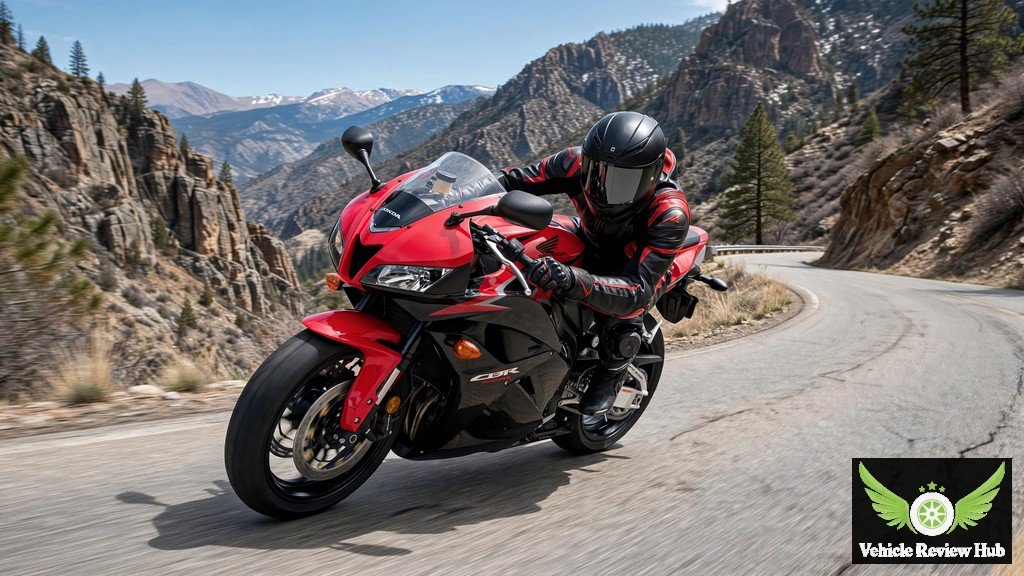
The benefits in this Honda CBR600RR buying guide are concrete: a proven 599cc inline-four, a 419-pound chassis with a 41mm Big Piston Fork and dual 310mm discs, a dealer network that stocks every consumable, and a used market deep enough that a patient buyer can find a clean 2013-on bike well under new money. The risks are equally plain in this Honda CBR600RR buying guide. Salvage titles are common in this class because a fairing-heavy supersport is easily totalled by cosmetic damage — a salvage title is not automatically a bad bike, but it must be priced as one, inspected for frame straightness, and insured with eyes open, since some carriers will only offer liability on a branded title. Ex-race bike histories are the bigger trap: safety-wired bolts, a removed or taped-over headlight, aftermarket rearsets and a quickshifter, slicks or warmers in the seller’s garage, and a service book that stops at the first track season all point to a bike that lived at redline. The video below reviews the current US-spec CBR600RR — not a used-buying walkaround, but it is useful for this Honda CBR600RR buying guide because it shows the current bike a buyer compares every used example against in this Honda CBR600RR buying guide.
No CBR600RR-specific insurance figure exists to quote in this Honda CBR600RR buying guide, and none is quoted here — get same-rider quotes for the RR and its rivals before deciding.
US-Market Alternatives: RS 660, CBR650R and ZX-6R
If the CBR600RR does not fit, three alternatives cover the same ground in this Honda CBR600RR buying guide, and each one is priced honestly below. The Aprilia RS 660 starts at $11,849 for 2026 before destination: a 659cc twin with modern electronics and a lighter, more agile feel than either Japanese 600, bought with a smaller dealer network and higher service costs. The Honda CBR650R is the street-friendly Honda answer: a more upright, more forgiving middleweight with an E-Clutch option, built for the rider who wants Honda reliability without supersport ergonomics. The Kawasaki ZX-6R at $11,599 is the direct supersport answer, covered in full above.
Honda CBR600RR Buying Guide FAQs
Direct answers in this Honda CBR600RR buying guide to the questions buyers ask most about buying a used CBR600RR.
How much does a new Honda CBR600RR cost?
The 2026 CBR600RR costs $11,499 plus a $600 destination charge, and the ABS (RA) model costs $12,499 plus $600 destination, confirms this Honda CBR600RR buying guide.
How much does a used Honda CBR600RR cost?
Sampled asks only in this Honda CBR600RR buying guide: track or rough bikes from around $3,500, clean older bikes roughly $5,000 to $8,000, and late-model dealer asks $9,790 to $11,990 — several within a few hundred dollars of a new bike, which is why this Honda CBR600RR buying guide works backward from $12,099.
Has the CBR600RR been recalled?
Yes, and the live one matters most in this Honda CBR600RR buying guide: engine recall 25V-891 covers certain 2024–2026 bikes for oil consumption from a cylinder-surface finishing defect, with about 1,253 US bikes involved — and this Honda CBR600RR buying guide repeats the warning because new stock is not automatically clear.
How do I check the model year of a used CBR600RR?
Read the 10th VIN digit, advises this Honda CBR600RR buying guide: D is 2013, E is 2014, F is 2015, G is 2016, H is 2017, J is 2018, K is 2019, L is 2020, M is 2021, N is 2022, P is 2023, R is 2024, S is 2025, and T is 2026.
What is a grey-import PC69 CBR600RR?
A 2021-on European-market CBR600RR with ride-by-wire, a TFT display, and modern electronics, states this Honda CBR600RR buying guide.
Does the US CBR600RR have ride modes or a TFT display?
No, states this Honda CBR600RR buying guide: no ride modes, no IMU, and no TFT on any US-sold bike through 2026.
What should I check first on a used CBR600RR inspection?
Year by VIN, title branding, recall status, cold-start cam chain tensioner noise, fork seal weeping, fairing and frame crash damage, C-ABS health on RA bikes, tire age, chain condition, and proof of the 16,000-mile valve service, lists this Honda CBR600RR buying guide.
How much does it cost to insure a CBR600RR?
No CBR600RR-specific quote was found for this Honda CBR600RR buying guide. Supersport-class benchmarks run roughly $1,200 to $3,000 a year for full coverage depending on rider and survey — get same-rider quotes before deciding.
What is the CBR600RR service schedule?
First oil at 600 miles, then every 8,000 miles or 12 months, valve clearance every 16,000 miles, chain care every 500 miles, and brake fluid every two years, per this Honda CBR600RR buying guide — and a bike near its valve service should be priced accordingly.
CBR600RR or ZX-6R: which should I buy?
The ZX-6R at $11,599 is the faster, more modern bike with a 636cc engine and modern electronics; the Honda at $11,499 is the lighter, simpler, more refined one, compares this Honda CBR600RR buying guide. Ride both before deciding.
Is a 2027 CBR600RR coming to the USA?
Unconfirmed speculation only, says this Honda CBR600RR buying guide: Honda USA has not announced a 2027 US model, and no buyer should pay a premium for a rumoured model year — the current bike in this Honda CBR600RR buying guide is the 2026 model.
Should I buy a salvage-title CBR600RR?
Only at a salvage price with a frame-straightness inspection and insurance confirmed in advance, advises this Honda CBR600RR buying guide.
Is the CBR600RR good for beginners?
No, says this Honda CBR600RR buying guide: it is a committed supersport with peaky power, aggressive ergonomics, and supersport insurance costs.
Should I buy new or used?
At $11,499 new, buy new unless the used bike is a clean 2013-on example with verified year, clear title, and clear recall status priced well under $12,099 before tax and fees, advises this Honda CBR600RR buying guide.