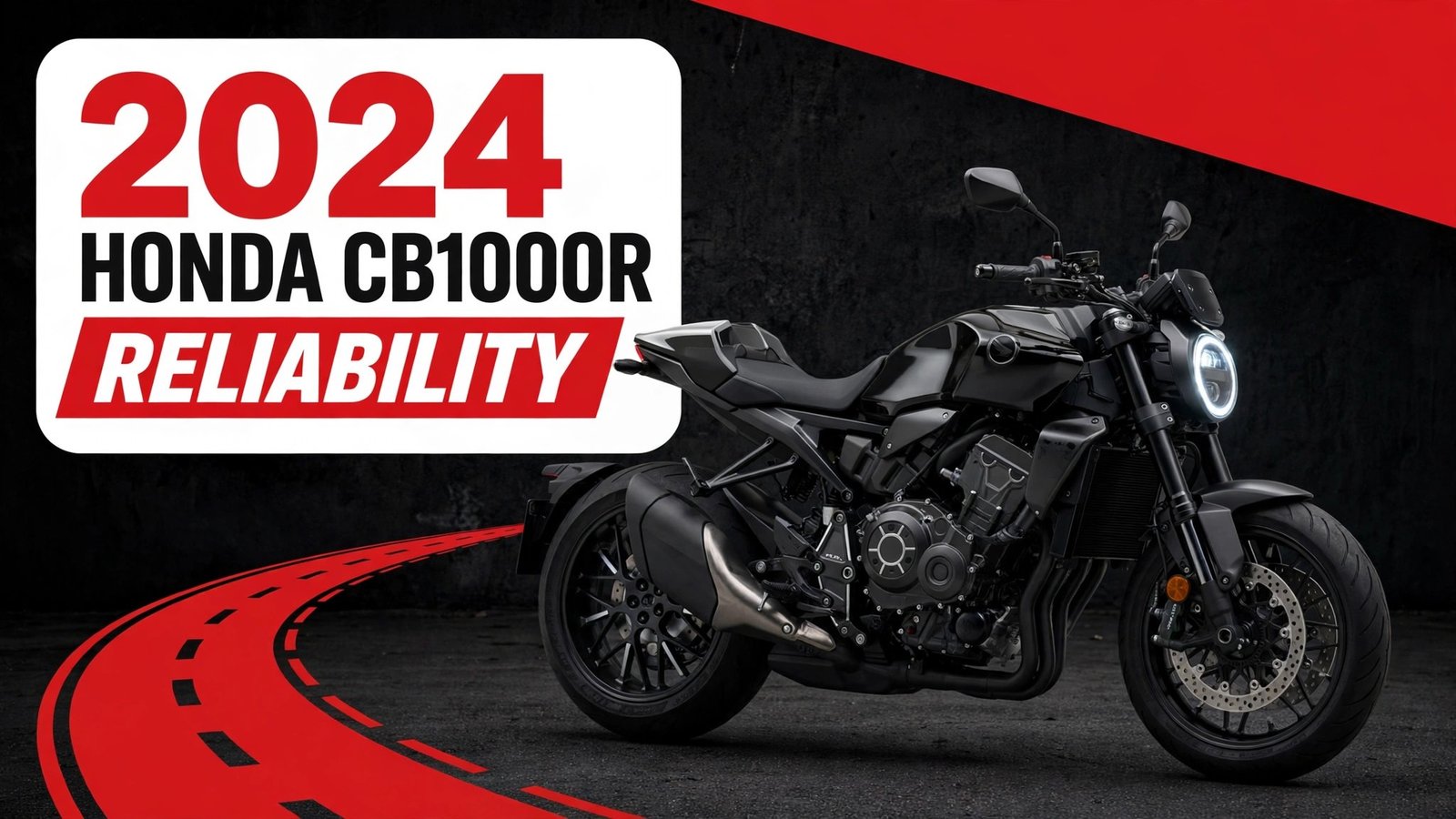
Short answer: Honda CB1000R reliability is genuinely strong — one of the most dependable big naked motorcycles Honda has sold, built around a proven 998cc inline-four with a simple service schedule and, remarkably, no NHTSA recall naming the bike in any US model year. But Honda CB1000R reliability is not a blank cheque: thin paint, a weak rear shock, and a snatchy Sport-mode throttle are the known complaints, and the bike is now discontinued. This Honda CB1000R reliability guide reports the verified record plainly, keeps the two generations apart, and keeps the replacement Hornet SP’s recalls off this bike’s record.
One identity rule governs this whole Honda CB1000R reliability guide: the CB1000R is the Neo Sports Café flagship sold in the US from 2018 to 2024 (plus the earlier SC60 generation from 2011), and the CB1000 Hornet SP is a different motorcycle that replaced it. They share a badge family, not a record — prices, specs, and recalls for the Hornet SP must never be pasted onto the CB1000R. For the full model story, see our Honda CB1000R review.
Honda CB1000R Reliability Overview
The headline for Honda CB1000R reliability is simple: owners like this motorcycle, and the mechanical record backs them up, which is why Honda CB1000R reliability stands out in the super-naked class. Across two US generations there is no chronic engine failure, no gearbox scandal, and no electrical plague — just ordinary wear items, one paint complaint, one weak shock, and a recall record that is empty for this bike. That combination is rare in the super-naked class. For the engine’s measured output, see Cycle World’s 2019 dyno test.
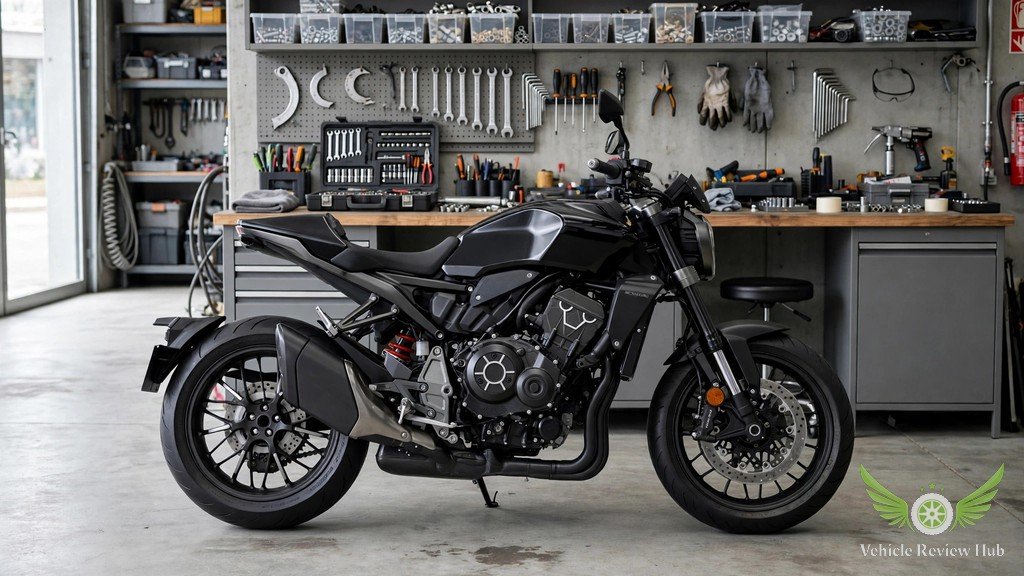
MCN Owners: SC80 Reliability 4.5 Out of 5 From 35 Reviews
MCN owners rate the SC80 bike’s reliability 4.5 out of 5 from 35 reviews — a doc figure this Honda CB1000R reliability guide labels as the doc’s snapshot, because the live MCN picture has moved since. The live MCN 2021–2024 owners page, checked in November 2026, shows reliability at 5 out of 5 from only 6 owners, with overall ownership at 4.8 out of 5. Both point the same way, but the sample is small either way. The words behind the scores matter more: MCN’s CB1000R owner reviews are positive overall, with complaints concentrated on thin paint, the rear shock, and throttle feel — all covered below — while the engine itself draws almost no criticism.
The video below is Honda’s official film about the 2021 Black Edition’s features — honestly named as a features film, not a service tutorial.
How Mileage, Storage and Previous Care Affect Reliability
How mileage, storage, and previous care affect reliability matters more than the model year on the badge for Honda CB1000R reliability. A 2019 bike with 8,000 garaged miles and a full dealer book is safer than a 2022 Black Edition with 25,000 hard miles, no valve-service receipt, and a chain adjusted once a year. Mileage alone rarely condemns these inline-fours, but neglect compounds: a dry chain wears sprockets, a missed valve check hides tightening clearances, and stale fuel gums injectors. Outdoor-kept bikes corrode sooner, and the most valuable document on any used CB1000R is its 16,000-mile valve-service receipt. For the performance story behind these miles, see our Honda CB1000R performance guide.
Honda CB1000R Common Problems and Wear Items
Common problems on the CB1000R are refreshingly ordinary for Honda CB1000R reliability: no chronic engine failure, no gearbox scandal, no electrical plague — and that clean record is the core of Honda CB1000R reliability — just wear items any inspection catches, one paint complaint, one weak shock, and a throttle trait some riders mistake for a fault. Everything below is labelled by authority.
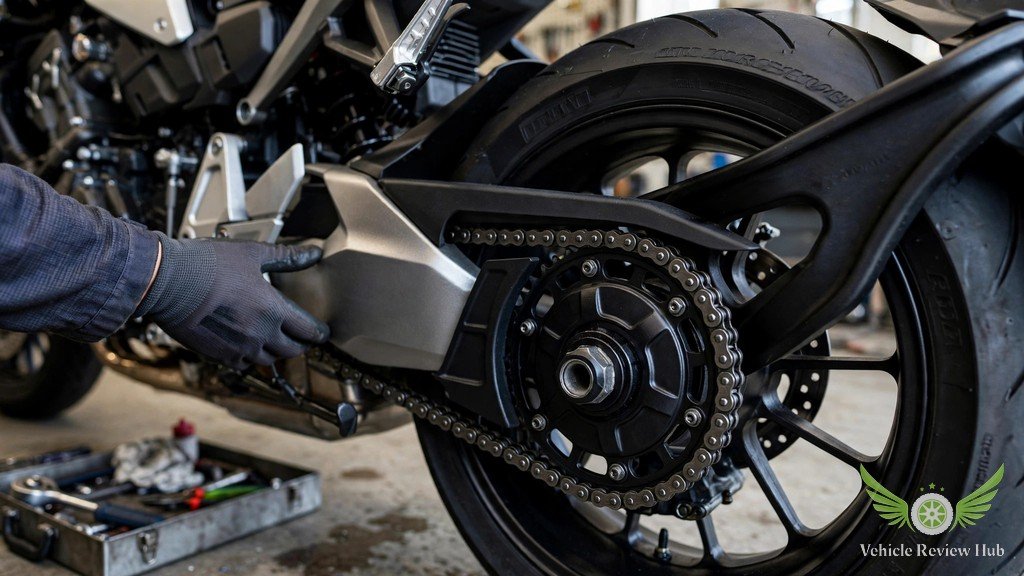
Thin Paint and Finish Complaints From SC80 Owners
Thin paint and finish complaints are the most repeated SC80 owner gripe in Honda CB1000R reliability coverage, and they deserve a straight account. MCN’s owner reviews note buyers complaining about thin paint, with one owner reporting thin paint on the bottom of the fuel tank that can lead to rust spots, and a 2023 owner review noting cheap-looking finish details. Devitt’s owner reviews add tank-weld rust, seat stitching coming apart, and tank-pad rubber coming off. None of this stops the bike, but check the tank’s lower edges, weld areas, and anywhere a tank bag or knee has rubbed. The SC60 generation has its own older exhaust and frame corrosion reports — kept separate here.
Chain, Sprockets, Tires, Fork Seals, Brakes and Electrical Checks
Chain, sprockets, tyres, fork seals, brakes, and electrics make up the rest of the Honda CB1000R reliability watch list. Chain and sprockets wear first: look for tight spots, hooked teeth, and missing O-rings, and replace chain and sprockets as a set when adjustment runs out. Fork seals weep with age; check for oil mist on the fork legs, especially on the Showa SFF-BP fork. On brakes, check pad thickness, disc condition, and caliper movement on the dual 310mm front discs with two-channel ABS — the braking character is decent and progressive, not Brembo-class, and the ABS is unobtrusive rather than lean-sensitive, because this bike has no IMU. The throttle is the character item: MCN and Cycle News report snatchy, on-off feel in Sport mode and at low revs — not a defect, and Standard or User mode cures most of it. Occasional missed shifts with the quickshifter appear in owner reviews as a minor item.
Honda CB1000R Maintenance Schedule and Servicing
The maintenance schedule is the backbone of Honda CB1000R reliability, and it is reassuringly simple — the schedule itself is a big part of Honda CB1000R reliability: a first service at 600 miles, oil and filter every 8,000 miles or 12 months, chain care every 600 miles, and time-based fluid changes owners most often forget. The rhythm is the same across both generations, which makes a used bike’s history easy to read — if the book shows the rhythm, the bike has been kept.
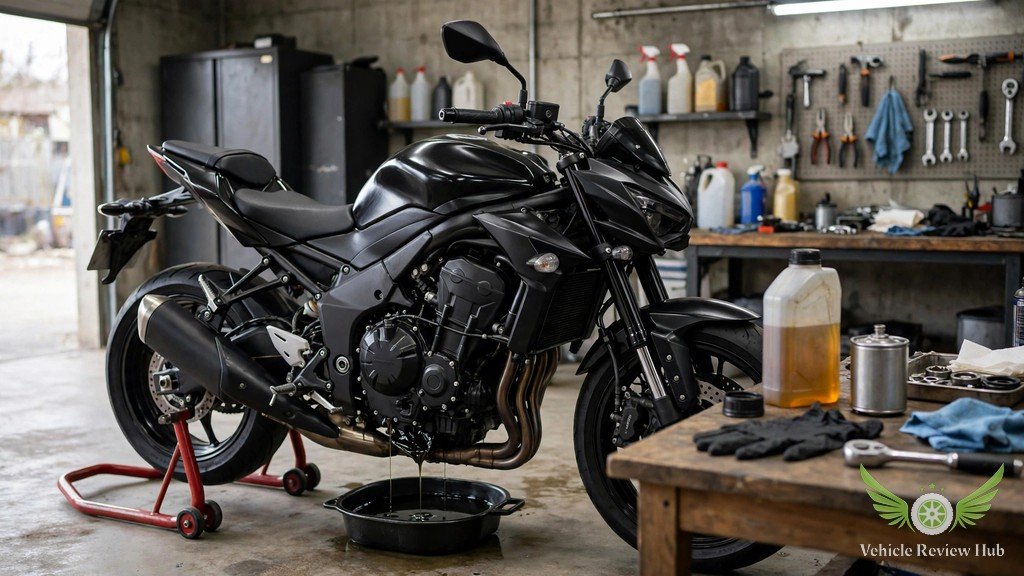
First Service at 600 Miles, Oil Every 8,000 Miles or 12 Months
First service at 600 miles, oil every 8,000 miles or 12 months — that pairing is the heartbeat of Honda CB1000R reliability. The 600-mile first service clears break-in debris and establishes the service book; a used bike without it deserves a discount, After that, oil and filter go every 8,000 miles or 12 months (SAE 10W-30, JASO MA), with an interim safety inspection every 4,000 miles. The table below draws on MaintenanceSchedule’s Neo Sports CB1000R schedule, derived from the owner’s manual, and the first-generation schedule carries the same rhythm. Warning: manua.ls FAQ snippets for this model contain generic wrong answers — use the manual’s schedule table, never FAQ text.
Valve-Clearance Inspection at 16,000 Miles and Plug Schedule
Valve-clearance inspection at 16,000 miles is the service that separates a kept CB1000R from a neglected one in Honda CB1000R reliability terms, and the plug schedule runs alongside it: spark plugs are inspected at 16,000 miles and replaced at 32,000 miles. The first-generation plug is the NGK IMR9E-9HES, but this Honda CB1000R reliability guide does not print it as the SC80 plug — confirm the plug from your year manual before ordering. Demand the matching valve-service receipt — a bike near the 16,000-mile mark without it carries a bill coming. Brake fluid and coolant are time-based items covered in the next section, and both are easy to forget on a low-mileage bike.
| Service item | Honda CB1000R interval (US) | Notes |
|---|---|---|
| First service | 600 miles | Establishes the service book |
| Engine oil + filter | Every 8,000 miles / 12 months | SAE 10W-30 JASO MA; interim checks 4,000 miles |
| Valve clearance | Inspect at 16,000 miles | Receipt is the key document |
| Spark plugs | Inspect 16,000 miles; replace 32,000 miles | Confirm part number from your year manual |
| Chain care | Lube + slack check every 600 miles | Use the year-manual slack spec, never a borrowed figure |
| Brake fluid | Replace every 2 years | DOT 4; time-based |
| Coolant | Replace every 3 years | Time-based |
| Summary | Oil 8,000 mi, valves 16,000 mi | Same rhythm both generations |
Honda CB1000R Tires, Brakes and Suspension Maintenance
Tyres, brakes, and suspension are where Honda CB1000R reliability meets the road most directly, and getting them right protects Honda CB1000R reliability: and where the 2021 update and the single-sided swingarm both change what to check. Model years matter for the parts you replace most.
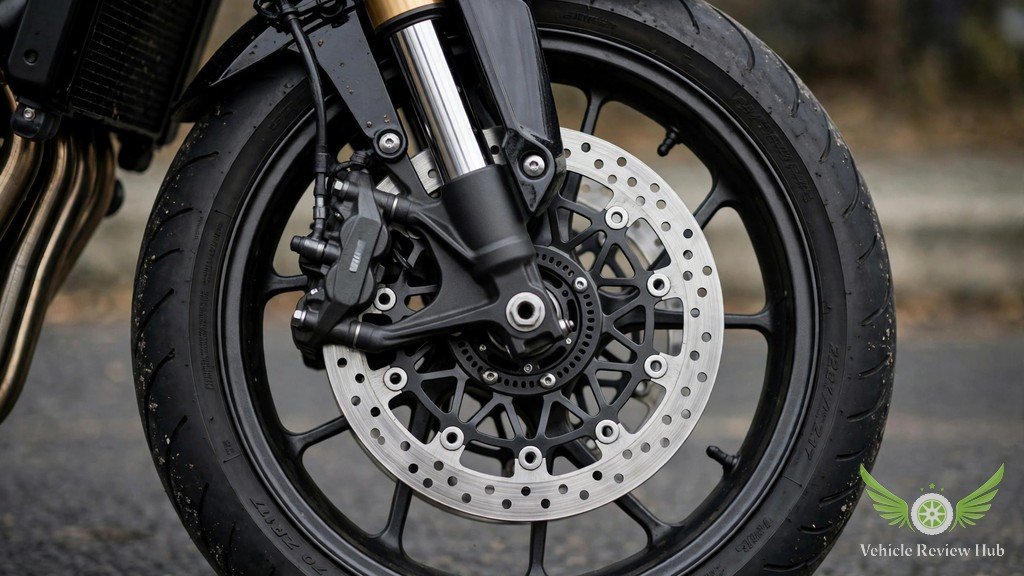
Chain Care With the Single-Sided Swingarm Explained
Chain care with the single-sided swingarm is different from a conventional swingarm, and this Honda CB1000R reliability guide explains why it matters rather than glossing over it. The Pro-Arm single-sided swingarm — fitted to both generations, absent from the Hornet SP — makes rear-wheel removal and chain work a different procedure, adjusted with the toolkit C-spanner. The chain is a #525 O-ring running 15T/44T sprockets on the SC80. This Honda CB1000R reliability guide deliberately prints no millimetre slack figure, because the SC80 slack spec was not pinned to the SC80 manual at writing — use your year manual’s figure, and never copy the CB650R’s 25–35 mm figure onto this bike. A chain lubed every 600 miles and adjusted to spec lasts; a dry, tight chain eats sprockets.
Brake Pads, Fork Seals, Shock Checks and Coolant Every Three Years
Brake pads, fork seals, shock checks, and coolant every three years complete the Honda CB1000R reliability running-gear picture. Brake fluid goes every two years (DOT 4) and coolant every three years — both time-based, so a low-mileage bike without a fluid change can still have spongy brakes. The front brakes are dual 310mm discs with radial-mount four-piston Nissin calipers every SC80 year, plus a 256mm rear disc and two-channel ABS. The Showa SFF-BP fork is fully adjustable and rarely troublesome beyond seal weeping, while the rear shock is the bike’s signature complaint — MCN calls it weak and bouncy when pushed. The US shock adjusts preload and rebound only, with no compression-damping adjustment, so a used bike’s shock setting tells you how the last owner rode, not how the bike must ride. Tyres are 120/70ZR17 front and 190/55ZR17 rear on the SC80 — never the 180/55 rear from the CB650R family or the SC60 era. A used example with a quality aftermarket shock is a plus, not a warning sign.
Honda CB1000R Maintenance and Ownership Costs
Ownership costs are where Honda CB1000R reliability pays off in cash, and low bills are the reward for Honda CB1000R reliability: with one catch: the bike is cheap to keep, but discontinued in the United States, so the parts and resale pool is thinner than the MT-10’s or the GSX-S1000’s. Fuel is a middling bill, routine servicing is modest, and the only genuinely large bill is the major valve service — plus the shock, if the owner chooses to fix it.
Fuel, Routine Servicing, Tires and Replacement Parts
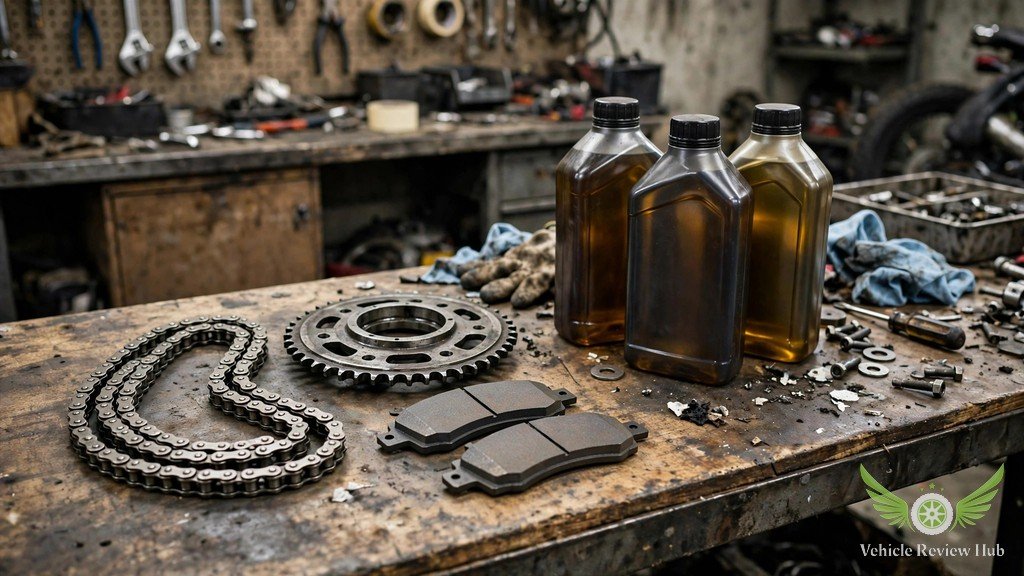
Fuel, routine servicing, tyres, and replacement parts form the everyday running costs in Honda CB1000R reliability, and three of the four are modest. Fuel first: Rider’s 2018 US road test averaged 35.9 mpg with a 154-mile estimated range from the 4.3-gallon tank, so fuel stops come more often than on a middleweight — a super naked drinks like one. Routine servicing follows the 8,000-mile rhythm above; no published US servicing-cost figure was found, so this Honda CB1000R reliability guide gives no American price quote. Tyres are widely available, and a chain-and-sprocket set is routine when the 600-mile habit is kept. Parts availability is a qualified strength of Honda CB1000R reliability: consumables are common Honda parts, while bodywork and trim are model-specific and slower to source now that the bike is discontinued.
Repair Expenses, Parts Availability and Long-Term Ownership Costs
Repair expenses, parts availability, and long-term ownership costs complete the Honda CB1000R reliability money picture: cheap years punctuated by one expensive service and, optionally, one shock. The major valve service is the big bill and the service most likely skipped by a previous owner, which is exactly why its receipt matters so much on a used bike. Beyond that, long-term costs stay low because there is no chronic failure to keep repairing — the record shows wear items, not breakdowns. The US warranty is one year, unlimited miles. UK servicing figures exist but are UK figures, never US costs. See our Honda CB1000R buying guide for the buying decision.
| Cost item | Figure | Label |
|---|---|---|
| Fuel economy | 35.9 mpg US tested (Rider 2018) | ~154-mile estimated range, 4.3 gal |
| Routine service rhythm | Oil every 8,000 miles / 12 months | Interim safety checks 4,000 miles |
| Major valve service | The big bill — inspect at 16,000 miles | Receipt is key |
| US servicing cost | No published figure found | Stated plainly, never a quote |
| US warranty | 1 year, unlimited miles | UK cover is NOT US warranty |
| Summary | Cheap years, one big valve bill | Discontinued — thinner parts pool |
How to Keep a Honda CB1000R Reliable
Keeping a CB1000R reliable means doing the simple things on time. Nothing in Honda CB1000R reliability requires exotic tools, and that simplicity is the point of Honda CB1000R reliability — just a calendar, a chain habit, a shock check, and a service book proving the work, plus one paperwork check: the recall check that comes back empty.
Preventive Maintenance, Service Records and Regular Inspections
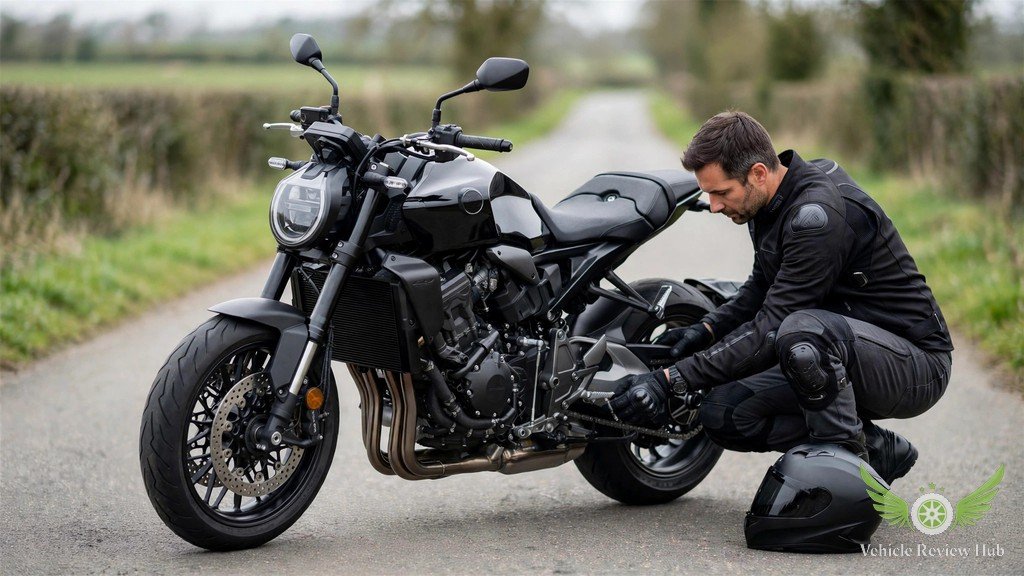
Preventive maintenance, service records, and regular inspections are the three habits that define Honda CB1000R reliability in practice, and Honda CB1000R reliability rewards owners who keep them. Preventive maintenance means the 600-mile chain habit, oil every 8,000 miles, fluids on their time intervals, and the valve check booked before it is overdue. Keep every receipt: a complete book is worth real money at resale, especially for a discontinued bike. Regular inspections mean a two-minute pre-ride check — tyres, chain, brakes, lights, oil level — plus a seasonal look at fork seals, pads, battery, paint edges, and fastener corrosion. For winter storage, use a battery tender and fuel stabiliser, and fit a trickle charger if the bike carries a tracker.
No NHTSA Recall Names the CB1000R: Hornet SP Campaigns Stay Separate
No NHTSA recall names the CB1000R — and that heading is literal, verified, and worth stating plainly for Honda CB1000R reliability buyers. The NHTSA recalls API returns a count of zero for the CB1000R in every US model year checked: 2018, 2019, 2021, 2022, 2023, and 2024. Any list adding a campaign for the naked CB1000R is wrong. But the instruction stays VIN-first, because an API zero-result is not a substitute for a buyer’s own VIN lookup — run the VIN and get the answer in writing before paying. The campaigns that must stay separate are the Hornet SP’s: the 25V-892 / Honda KT6 notice (certain 2025 CB1000 motorcycles, improper piston and piston-ring specifications, excessive oil consumption), the 2025 Hornet SP fuel-hose recall, and the January 2025 European Hornet rear-brake-hose recall. For Honda CB1000R reliability buyers, the rule is absolute: an empty recall record is a selling point, but only a VIN check proves it for the bike in front of you.
| Recall check | CB1000R position | Note |
|---|---|---|
| NHTSA recalls naming the CB1000R | None — Count 0 every US year | 2018, 2019, 2021–2024 checked via NHTSA API |
| 25V-892 / KT6 — NOT the CB1000R | Certain 2025 CB1000 (Hornet SP) | Piston/ring oil consumption; never list for the CB1000R |
| Hornet fuel-hose + EU brake-hose — NOT the CB1000R | 2025 Hornet SP only | Replacement bike’s campaigns, kept separate |
| Buyer rule | Run the VIN, get it in writing | API zero is not a VIN check |
Honda CB1000R Reliability FAQs
Direct answers to the Honda CB1000R reliability questions asked most.
Is the Honda CB1000R reliable?
Yes. For Honda CB1000R reliability, MCN owners rate the SC80 bike 4.5 out of 5 in the doc snapshot, and the live MCN page shows 5 out of 5 from a small sample — and the mechanical record shows no chronic failure.
What are the common problems on a CB1000R?
For Honda CB1000R reliability shoppers, the watch items are thin paint and finish complaints, the weak rear shock, snatchy throttle in Sport mode, chain and sprocket wear, fork-seal weeping, tyre age, and brake wear.
Which recalls affect the CB1000R?
For Honda CB1000R reliability checks, none: no NHTSA recall names the CB1000R in any US year. The Hornet SP campaigns (25V-892, fuel-hose, brake-hose) never apply to this bike — but run the VIN anyway.
What is the CB1000R service schedule?
For Honda CB1000R reliability: first service 600 miles, oil and filter every 8,000 miles or 12 months, chain care every 600 miles, brake fluid every two years, coolant every three years.
When does the CB1000R need a valve check?
For Honda CB1000R reliability, valve-clearance inspection falls at 16,000 miles, with spark plugs inspected at the same mark and replaced at 32,000 miles. Demand the receipt.
What is the correct chain slack for a CB1000R?
For Honda CB1000R reliability, use your year manual’s slack figure at every 600-mile chain check. This guide deliberately prints no millimetre figure, because the SC80 spec was not pinned to the manual at writing — never copy another model’s figure.
Does the CB1000R have the Hornet SP oil-consumption recall?
No. For Honda CB1000R reliability readers, 25V-892 names certain 2025 CB1000 motorcycles — the Hornet SP replacement — never the CB1000R. Only a VIN check proves a single bike’s record.
How much does servicing cost?
For Honda CB1000R reliability budgeting, no published US servicing figure was found, so no American quote is given here. Expect modest routine costs and one large valve bill.
Is the rear shock a problem on the CB1000R?
For Honda CB1000R reliability, the rear shock is soft and bouncy when pushed, with preload and rebound only and no compression damping. Many owners upgrade it by choice, not by failure.
Is the CB1000R still in production?
No. For Honda CB1000R reliability buyers, 2024 was the last US year (Black Edition only), and the 2025 CB1000 Hornet SP replaced it. Buy the CB1000R as a discontinued flagship, with parts patience to match.