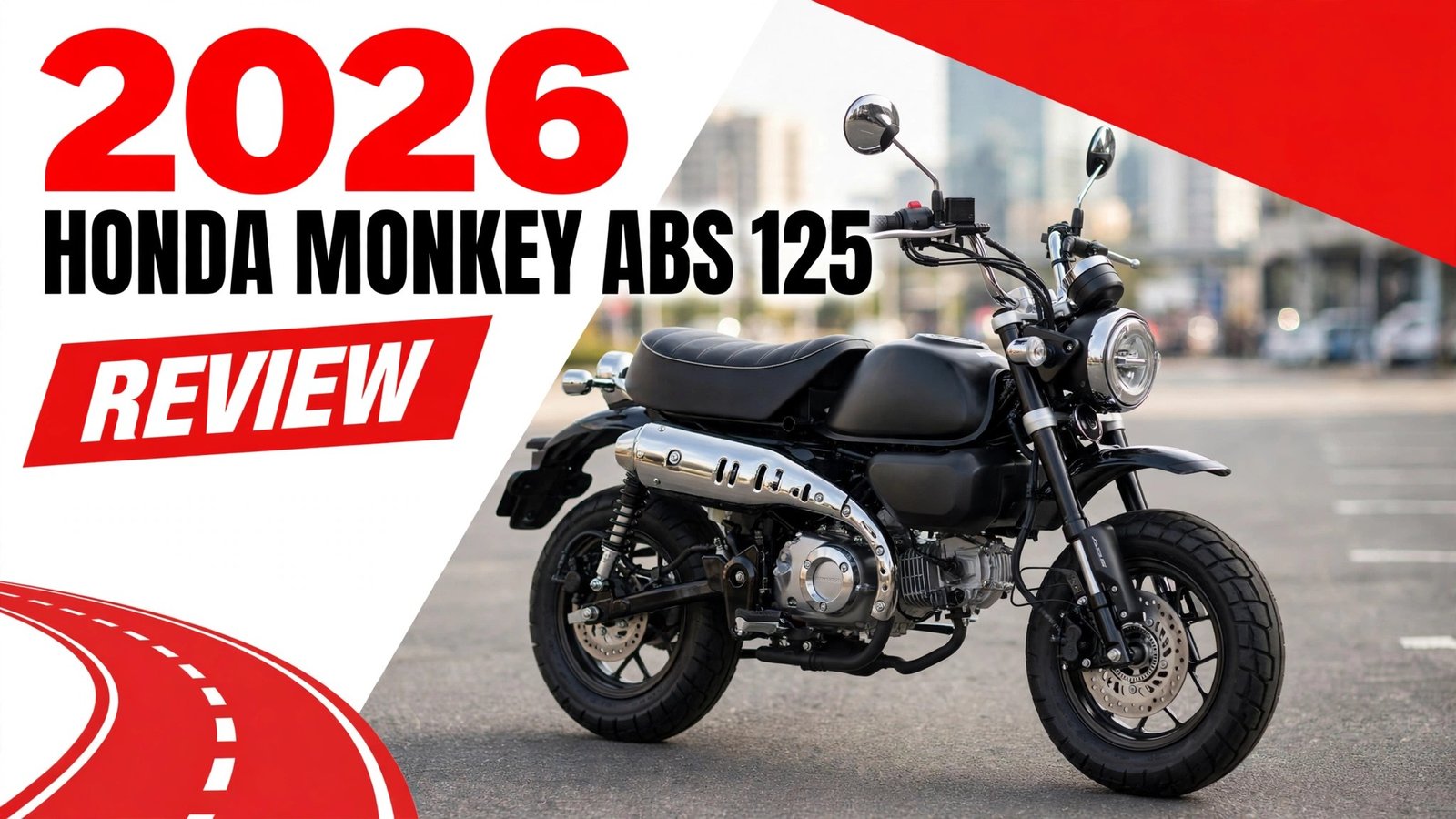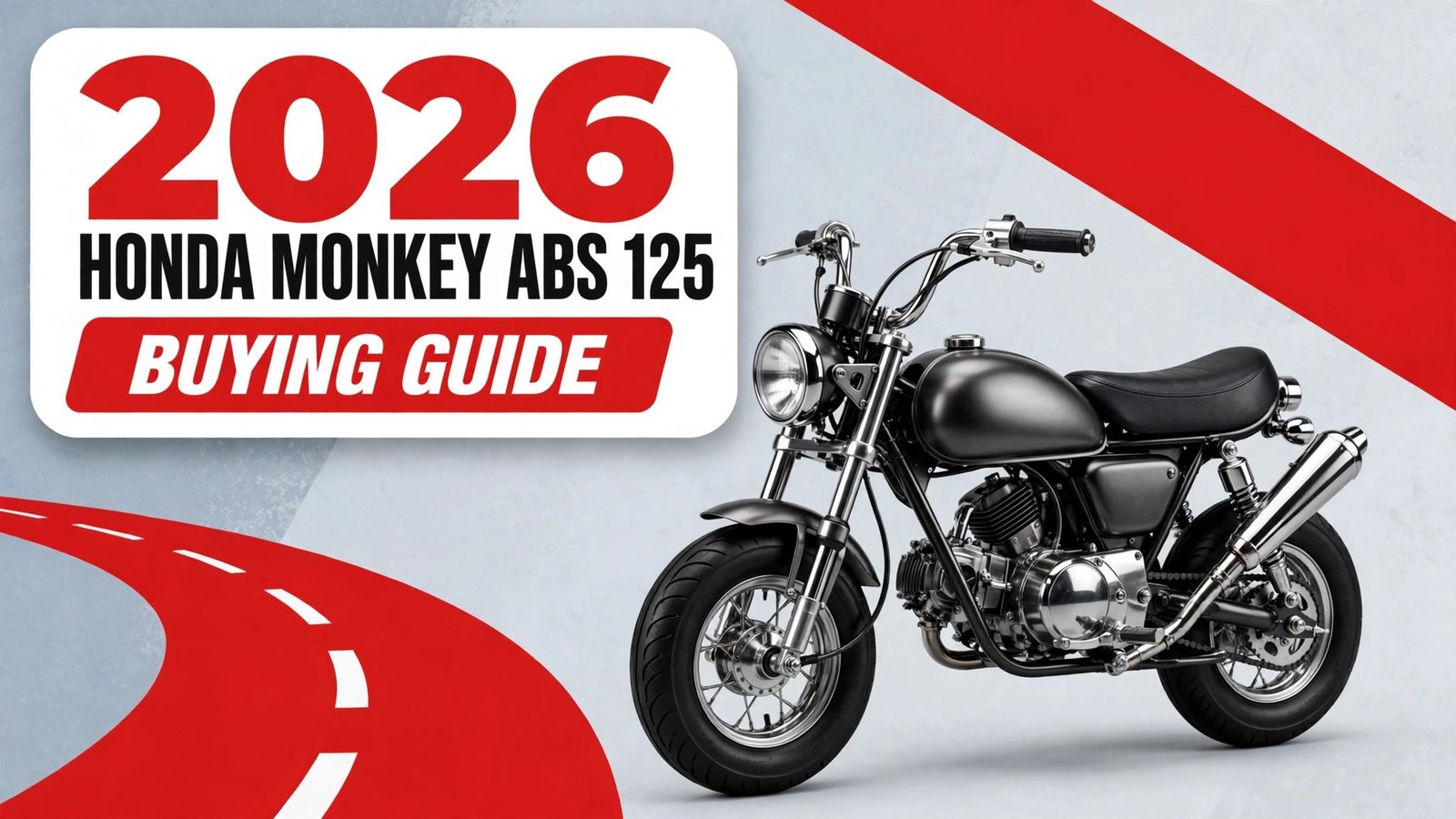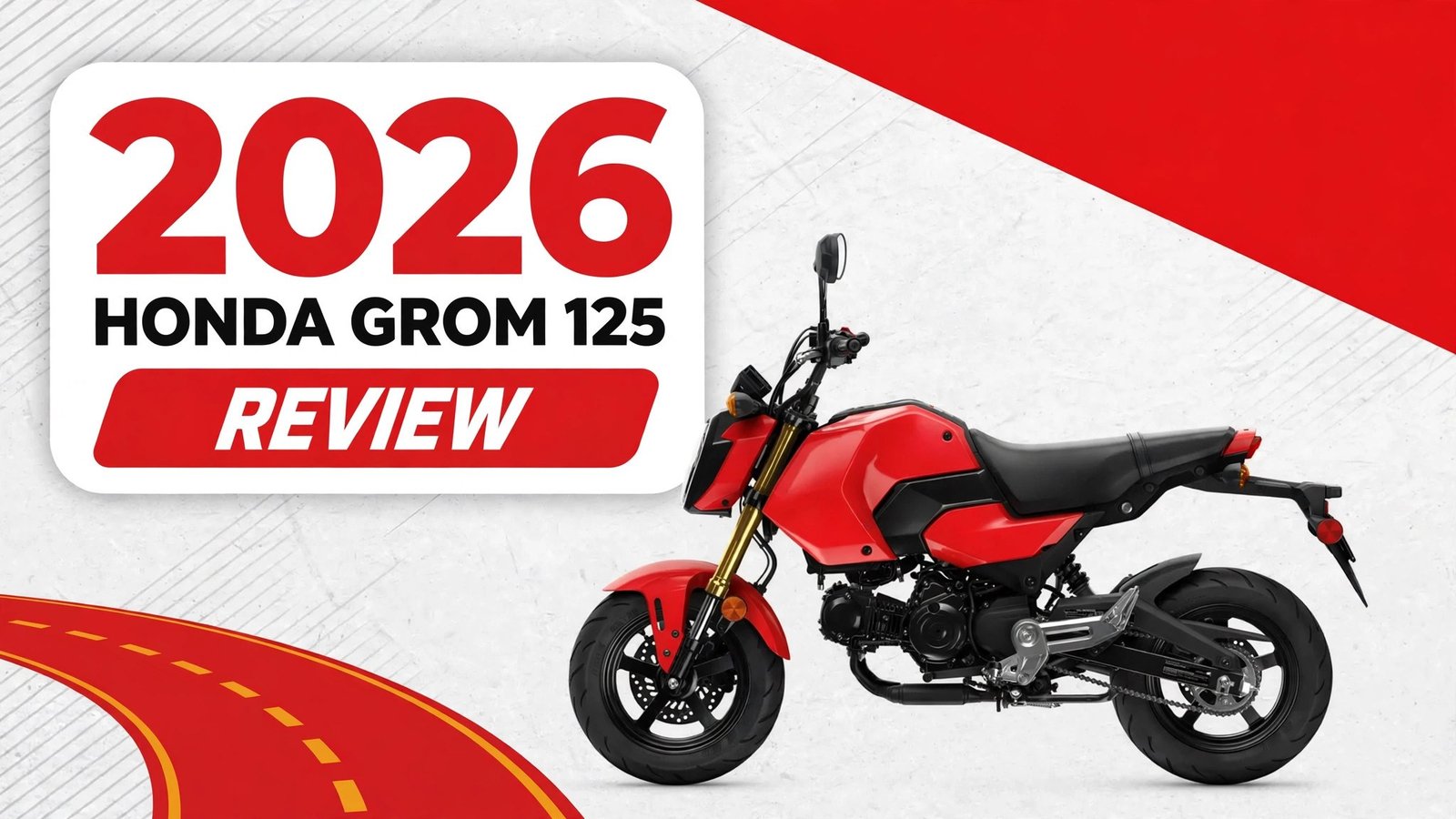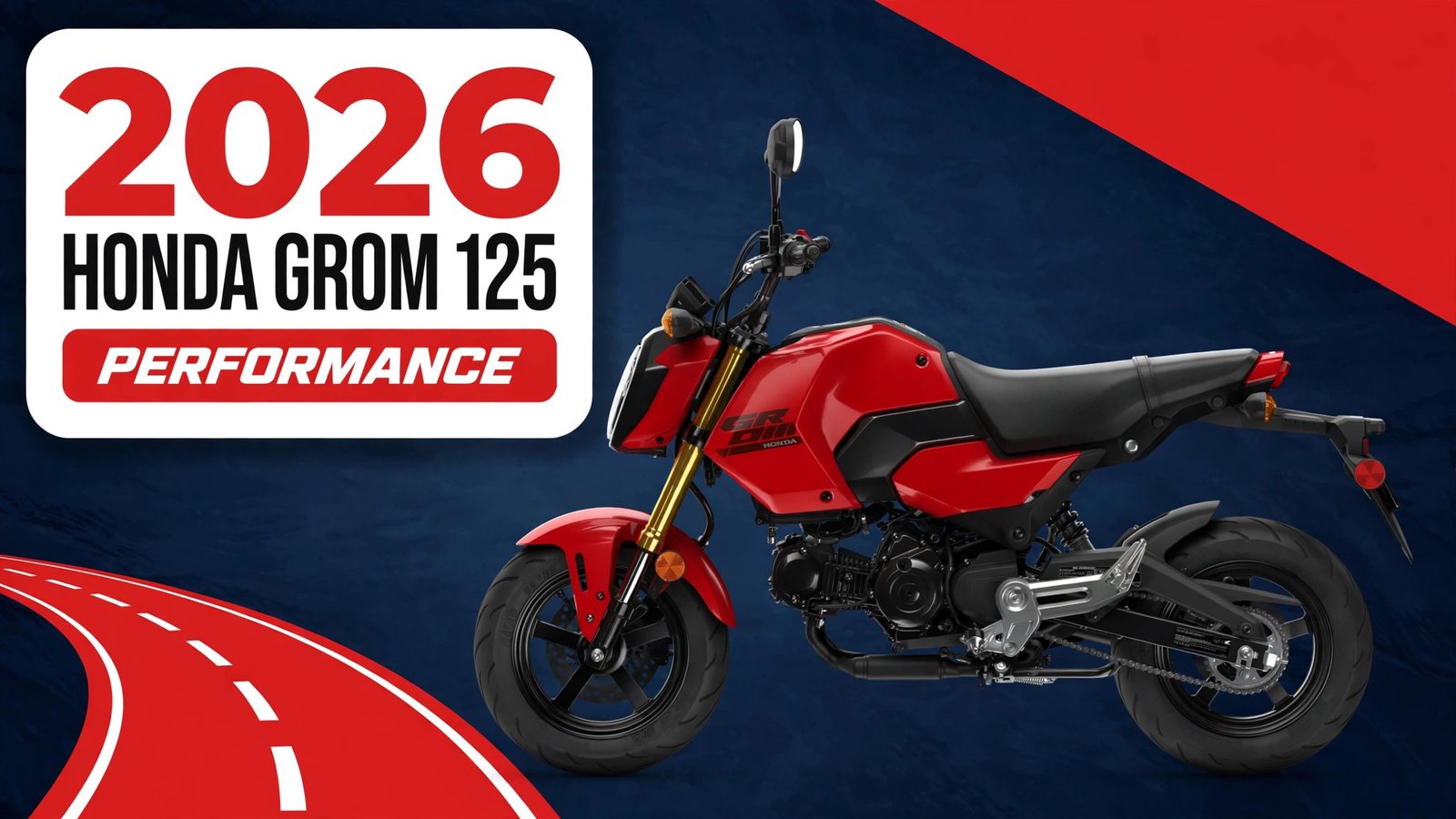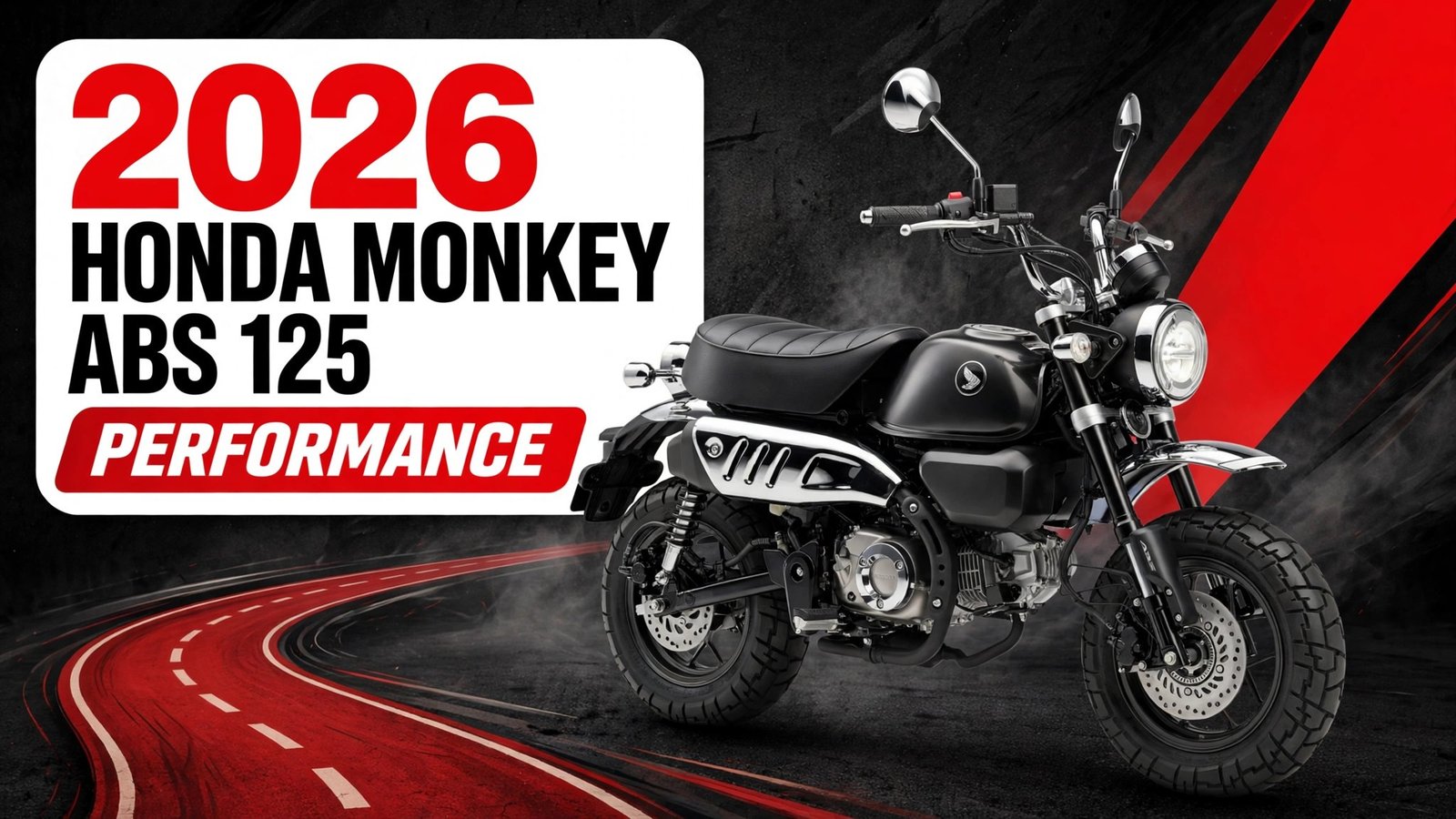
Short answer: Honda Monkey ABS 125 performance is small-bike performance with a retro face — a 124cc air-cooled single with a five-speed gearbox, a real-world top speed around 60 mph, and fuel economy that embarrasses nearly every other motorcycle on sale. This Honda Monkey ABS 125 performance guide starts with the framing that matters: the Monkey is Honda’s retro miniMOTO street bike, not a Grom clone, and it is judged here by city speed, back-road agility, and miles per gallon, not by freeway numbers it was never built to chase. The 2026 bike costs $4,399 plus $300 destination.
One framing fact belongs up front in this Honda Monkey ABS 125 performance guide: Honda USA publishes no horsepower or torque figure for the Monkey, and no US magazine has published an instrumented top-speed or 0-60 test for it. Every power number here therefore carries its non-Honda label, every top-speed figure carries its source, and every MPG figure carries its test. For the full model story, see our Honda Monkey ABS 125 review.
Honda Monkey ABS 125 Engine Performance and Power Delivery
Engine performance on the Monkey is about delivery, not output: modest power, a clean pull from a stop, and breathlessness exactly where a city bike should run out.

Only Verified US Dyno Is Gen 1: 7.94 HP Stock
Only verified US dyno is Gen 1: 7.94 HP stock is the doc heading, kept verbatim — and this Honda Monkey ABS 125 performance guide labels it honestly underneath it. The 7.94 figure could not be pinned to a verified US magazine dyno source in this research, so this Honda Monkey ABS 125 performance guide does not present it as a verified measurement: the heading phrase is doc-sourced, and no verified US magazine dyno figure for the Monkey is asserted here. The Gen 1 bike (2019–2021): 124.9cc air-cooled SOHC two-valve single, 52.4 by 57.9 mm, 9.3:1 compression, four-speed manual gearbox. The Gen 2 bike (2022 onward): 124cc, 50.0 by 63.1 mm, 10.0:1 compression, five-speed manual gearbox, programmed fuel injection through a 24 mm throttle body, #420 chain 14T/37T. Honda USA publishes no horsepower or torque figure for any Monkey year, so this Honda Monkey ABS 125 performance guide never prints a Honda power number. Press and European claims of 9.3 hp at 6,750 rpm and 8.1 lb-ft at 5,500 rpm are non-Honda-USA figures, printed only with that label, never averaged into one figure.
No 2022-On Dyno Exists: Never Transfer Grom Numbers
No 2022-on dyno exists: never transfer Grom numbers is the standing rule of this Honda Monkey ABS 125 performance guide, and it matters because the Grom and the Monkey share an engine family but are different bikes. No magazine has published a stock dyno run for the 2022-on Monkey, and this Honda Monkey ABS 125 performance guide will not fill that gap with the Grom’s numbers. The Grom’s Cycle World Gen 1 dyno figure of 8.96 rear-wheel horsepower belongs to the Grom, not the Monkey — as do the Grom’s 160.5 mpg figure, 1.6-gallon tank, 15T/38T gearing, 47.2-inch wheelbase, 30-inch seat, and two-up seating. The Monkey’s own figures are a 1.5-gallon tank, 14T/37T gearing, a 45.0-inch wheelbase, a 30.5-inch seat, and a solo seat only. The 2022-on Monkey offers a 24 mm throttle body, programmed fuel injection, a light clutch pull, and a fifth gear that calms cruising revs. MCN’s 2022 Monkey review reports the same story — a pleasingly basic air-cooled single that feels sluggish only when asked to do freeway work it was never built for. For the service habits behind that delivery, see our Honda Monkey ABS 125 reliability guide.
| Engine item | Gen 1 (2019–2021) | Gen 2 (2022–2026) |
|---|---|---|
| Displacement / bore × stroke | 124.9cc / 52.4 × 57.9 mm | 124cc / 50.0 × 63.1 mm |
| Compression / gears | 9.3:1 / 4-speed | 10.0:1 / 5-speed |
| Verified US magazine dyno | None verified in this research | None — no 2022-on dyno exists |
| Summary | Honda Monkey ABS 125 performance: delivery over output | Honda USA publishes no hp/torque |
Honda Monkey ABS 125 Top Speed and Acceleration
Top speed and acceleration are the two questions every buyer asks first about Honda Monkey ABS 125 performance, and both have the same honest answer: tested numbers are modest, claimed numbers only slightly higher.

Tester-Observed Just Over 55 MPH on the Gen 1 Bike
Tester-observed just over 55 mph on the Gen 1 bike is the attributed top-speed line this Honda Monkey ABS 125 performance guide stands behind for the early bike. The Gen 1 Monkey, with its four-speed gearbox, tops out just over 55 mph in tester observation — attributed to testers, never a Honda claim. The newer bike is a little faster: Honda’s European claim for the Gen 2 bike is 91 km/h (56.5 mph), and MCN’s 2022 review puts its real top speed at about 55 mph on the flat, with a claimed 57 mph that MCN calls about right and an indicated 65 mph possible downhill. CycleTrader’s 2026 first ride found the current bike capable of reaching 60 mph in certain conditions with the throttle pinned. Caution: speedometers read a few mph high, and claims above 65 mph describe tucked, downhill, or modified runs. The freeway verdict follows: the Monkey is street-legal everywhere in the US, but sustained 55-plus mph running sits at the bike’s limit, and this Honda Monkey ABS 125 performance guide calls it freeway-shy throughout.
No Instrumented Top Speed or 0-60 Test Exists
No instrumented top speed or 0-60 test exists is the correction this Honda Monkey ABS 125 performance guide insists on, because the Monkey’s speed figures are quoted constantly without their test conditions. No US magazine has published an instrumented, GPS-verified top-speed test for the Monkey, and no US magazine has published a 0-60 mph test for it — and this Honda Monkey ABS 125 performance guide will not convert a European km/h claim or a tester impression into an American test figure. What is verified about acceleration is the feel: sprightly to about 35 mph, quick off the line in city traffic, and slow to wind through the short gears after that. The fifth gear on the 2022-on bike does not make the Monkey fast — it makes fifth gear a calmer cruising gear, which is the more useful gain for Honda Monkey ABS 125 performance in daily use.
Honda Monkey ABS 125 Mileage and Fuel Economy
Mileage is the Monkey’s superpower: a tiny tank, a sipping engine, and a range answer that depends entirely on which MPG figure you believe.

Honda’s Estimate Is 162.6 MPG: Dealer Feeds Show 169
Honda’s estimate is 162.6 MPG: dealer feeds show 169 is the heading this Honda Monkey ABS 125 performance guide keeps verbatim, because the conflict is real and must stay visible. Honda’s own EPA-procedure estimate, printed on the 2026 Monkey spec page, is 162.6 mpg — with Honda’s comparison-purposes disclaimer. Dealer feeds separately show 169 mpg, attributed to Honda testing — not the spec-page figure. On the 1.5-gallon tank, the spec-page figure implies roughly 244 miles of range, and the dealer-feed figure implies roughly 254 miles — two separate ranges with separate labels, never one blended range. CycleTrader’s 2026 first ride, working from the 162.6 figure, calls the theoretical range approximately 240 miles. This Honda Monkey ABS 125 performance guide never uses the Grom’s 160.5 mpg figure for the Monkey, and never averages the Monkey’s MPG figures. Honda’s Monkey page confirms the spec list, including what it does not publish.
Cycle World’s 155 MPG Was an Estimate, Not Measured
Cycle World’s 155 mpg was an estimate, not measured is the heading this Honda Monkey ABS 125 performance guide keeps verbatim — with the same honest labelling as the dyno heading. The 155 mpg figure is doc-sourced: it could not be pinned to a verified Cycle World measurement in this research, so this Honda Monkey ABS 125 performance guide does not present it as a measured result. It is printed here only as the doc’s estimate-not-measured figure, kept separate from Honda’s 162.6 mpg EPA-procedure estimate and from the dealer-feed 169 mpg figure. Three MPG figures, three labels, never one MPG. The practical point for Honda Monkey ABS 125 performance is unchanged: the Monkey runs on regular gas, the 1.5-gallon tank costs a few dollars to fill, and real-world riding lands well above 100 mpg.
Honda Monkey ABS 125 Real-World Riding Performance
Real-world riding is where Honda Monkey ABS 125 performance earns its reputation — the bike is not fast, and does not pretend to be.
Cramped Cockpit for Taller Riders per Cycle World
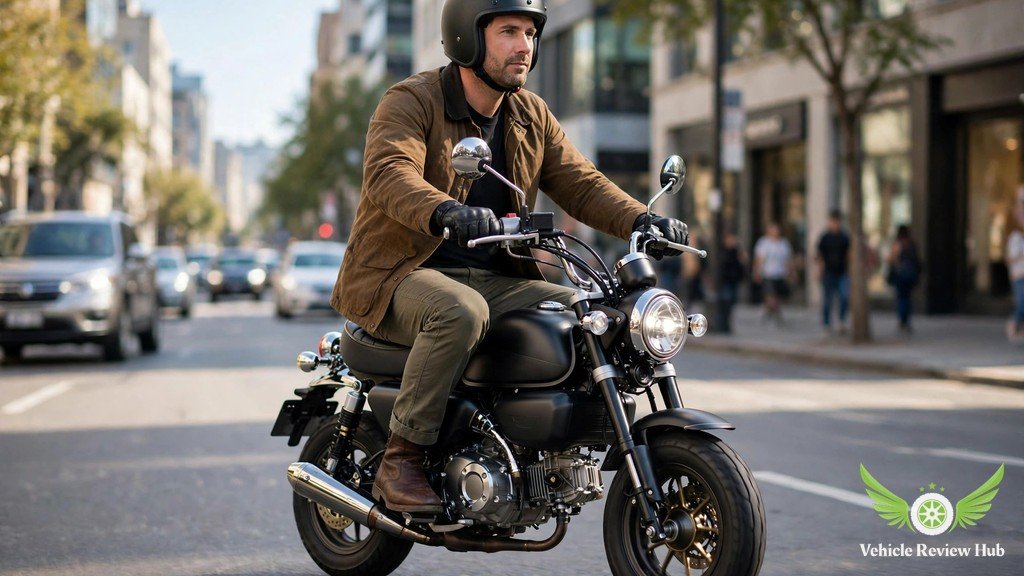
Cramped cockpit for taller riders per Cycle World is the doc heading, kept verbatim — and this Honda Monkey ABS 125 performance guide explains what it means in practice. The Monkey’s cockpit is short: a 45.0-inch wheelbase, a 30.5-inch seat, wide handlebars, and a riding position that CycleTrader’s 2026 first ride describes as sitting above the bike rather than in it. For shorter and average-height riders that position is a gift — upright, neutral, approachable regardless of inseam, with a plush solo seat comfortable for short journeys. For taller riders the same geometry turns cramped: knees ride high, the bars sit close, and the solo seat offers no room to slide back. Sit on one before buying, especially if you are tall.
Squishy, Undersprung Suspension in Tester Verdicts
Squishy, undersprung suspension in tester verdicts is the doc heading, kept verbatim — and this Honda Monkey ABS 125 performance guide presents both sides of the tester argument, with attribution, rather than one verdict. The critical view is that the Monkey’s suspension is soft and basic: a 31 mm inverted fork up front and twin rear shocks that feel undersprung for heavier riders and wallow over bigger bumps, with the rear shocks the first thing many owners replace. The counter-view comes from CycleTrader’s 2026 first ride, which calls the suspension surprisingly compliant over road imperfections like speed bumps and potholes. Both views can be true: soft suspension rides well over city bumps while feeling vague when pushed. The honest reading for Honda Monkey ABS 125 performance is that the Monkey’s chassis is tuned for city comfort, not for hard riding — the 45.0-inch wheelbase and tiny 12-inch wheels make it impressively agile in traffic, but the suspension sets the limit well before the engine does. For the buying decision behind this verdict, see our Honda Monkey ABS 125 buying guide.
Honda Monkey ABS 125 Handling, Braking and Stability
Handling on the Monkey is light, low, and forgiving — the foundation of Honda Monkey ABS 125 performance at 231 pounds and a 30.5-inch seat.
Fork Travel Conflict: 3.9 in Brochures, 4.3 on the Web
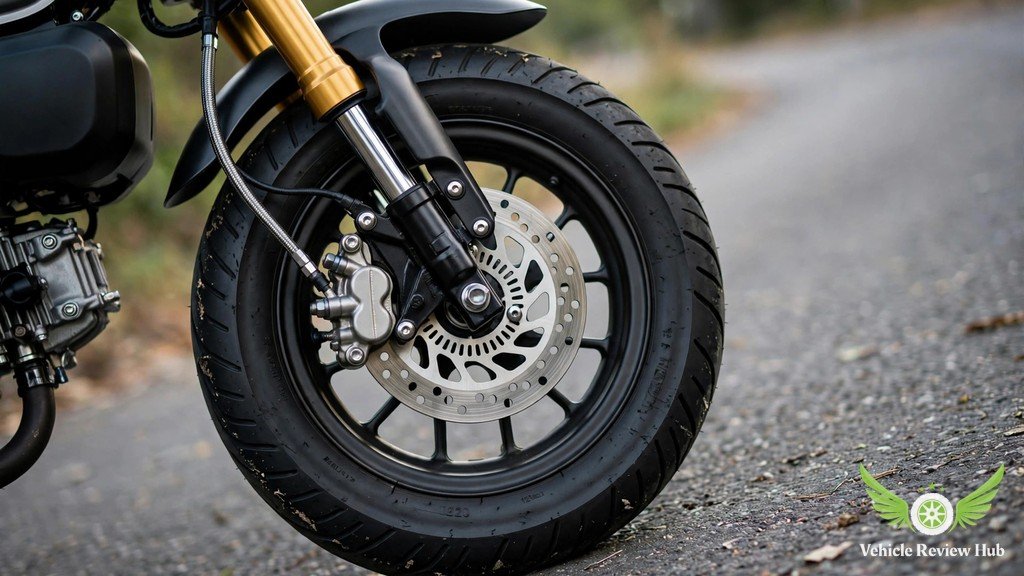
Fork travel conflict: 3.9 in brochures, 4.3 on the web is the heading this Honda Monkey ABS 125 performance guide keeps verbatim, because the conflict is real — though the sources run the other way from the heading’s shorthand. Honda’s own 2026 Monkey spec page says 4.3 inches of front fork travel, while CycleTrader’s 2026 first ride says 3.9 inches up front, and both agree on 4.0 inches at the rear. This Honda Monkey ABS 125 performance guide prints both front figures with their sources, uses Honda’s 4.3-inch figure as the spec-page figure, and never presents one travel figure as settled. Chassis: 31 mm inverted fork, dual rear shocks, 220/190 mm discs, 25-degree rake, 3.2-in trail, 45.0-in wheelbase, 12-in wheels. ABS is front-wheel only and standard on the Gen 2 bike, after being a $200 option on the Gen 1 bike.
IMU ABS Manages Rear Lift, Front Wheel Only
IMU ABS manages rear lift, front wheel only is the braking truth of this Honda Monkey ABS 125 performance guide, with one correction to a common telling. The Monkey’s ABS is a single-channel, IMU-based system acting on the front wheel only, with rear-lift mitigation, and the rear wheel is free to lock and slide. What this Honda Monkey ABS 125 performance guide does not claim is that IMU ABS debuted in 2026: CycleTrader calls it the most significant addition for 2026, but Rider already described the Monkey’s ABS as one-channel and IMU-based in 2019, so the 2026 change is a refinement, not a debut. Practically, for Honda Monkey ABS 125 performance: the front brake gets the safety net, the rear brake gets the rider’s judgement, and the light lever feel is part of the bike’s character, not a defect. Gen 1 buyers should note the trim trap: ABS was a $200 option in 2019–2021, red only, so a non-ABS Gen 1 Monkey is common and must never be misdescribed as an ABS bike.
Honda Monkey ABS 125 Performance Compared With Other Mini Motorcycles
Comparison is where Honda Monkey ABS 125 performance becomes a buying decision.

Honda Monkey ABS 125 vs the Cheaper Grom 125
Honda Monkey ABS 125 versus the cheaper Grom 125 is a close fight on paper and a clearer one in the showroom, once prices are year-labelled. The 2026 Monkey costs $4,399 plus $300 destination — $4,699 before tax — against the 2026 Grom at $3,599 to $3,799 plus $300, an $800 premium over the Grom base. The Monkey answers with retro styling, chrome, and collector appeal. The Grom answers with $800 less, two-up seating against the Monkey’s solo seat, a bigger 1.6-gallon tank against 1.5 gallons, a longer 47.2-inch wheelbase against 45.0 inches, and more daily practicality. Both share the same 124cc engine family and five-speed gearbox from 2022 onward, so the difference is manners and ergonomics, not speed. The video below is Daily Motor’s 2023 Monkey quick ride review — a Gen 2 five-speed review, not a comparison test.
| Mini bike (2026, year-labelled) | Price + destination | Honda Monkey ABS 125 performance verdict |
|---|---|---|
| 2026 Honda Monkey ABS | $4,399 + $300 | 5-speed, 124cc, ~60 mph, 162.6 mpg estimate |
| 2026 Honda Grom 125 | $3,599–$3,799 + $300 | Same engine family, two-up, bigger tank, $800 less |
| 2026 Kawasaki Z125 Pro | $3,799–$3,999 (range) | 125cc rival; price overlaps Monkey, no retro edge |
| 2026 CFMOTO Papio SS | $3,299 | 126cc, cheapest; Monkey wins on network + resale |
| Summary | Honda Monkey ABS 125 performance: charm per dollar, not speed | No maker here publishes power to rank |
Is the Honda Monkey ABS 125 Suitable for Beginner Riders? Yes
Is the Honda Monkey ABS 125 suitable for beginner riders? Yes — with the freeway caveat this Honda Monkey ABS 125 performance guide has carried throughout. The case is strong: a 30.5-inch seat, 231 pounds, a light clutch, and gentle, forgiving power. A motorcycle endorsement is required — the Monkey is a full-class road motorcycle, not a scooter and not an off-road bike. MotorcycleSpecs’ 2026 Monkey page confirms the bike’s current specs and Euro 5+ engine. City, town, and back-road riding: yes. Sustained freeway: no. For the Grom’s own story, see our Honda Grom 125 performance guide. The last word on Honda Monkey ABS 125 performance is simple: the easiest, most charming way to learn real motorcycling at real road speeds — as long as those roads are not freeways.
Honda Monkey ABS 125 Performance FAQs
Direct answers to the Honda Monkey ABS 125 performance questions buyers and new riders ask most, with every figure labelled by source.
How much horsepower does the Honda Monkey ABS 125 make?
Honda USA publishes no figure, says this Honda Monkey ABS 125 performance guide. Press and European claims run around 9.3 hp, and no verified US magazine dyno figure is asserted here.
What is the Honda Monkey ABS 125 top speed?
About 60 mph on the newer bike with the throttle pinned, says this Honda Monkey ABS 125 performance guide — just over 55 mph observed on Gen 1, and a European claim of 91 km/h (56.5 mph) for Gen 2.
What is the Honda Monkey ABS 125 0-60 time?
No instrumented US 0-60 test exists, says this Honda Monkey ABS 125 performance guide. No magazine has published a tested 0-60 mph figure for the Monkey, and none is printed here.
What MPG does the Honda Monkey ABS 125 get?
Honda’s EPA-procedure estimate is 162.6 mpg, says this Honda Monkey ABS 125 performance guide, against dealer feeds showing 169 mpg and a doc-sourced Cycle World estimate of 155 mpg, not measured — three labelled figures, never averaged.
How far can a Monkey go on a tank?
Roughly 244 miles at Honda’s 162.6 mpg estimate, says this Honda Monkey ABS 125 performance guide, against roughly 254 miles at the dealer-feed 169 mpg figure.
Is the Monkey fuel-injected?
Yes, says this Honda Monkey ABS 125 performance guide — programmed fuel injection (PGM-FI) with a 24 mm throttle body on the 2022-on bike. The engine is air-cooled, never liquid-cooled.
Does the Monkey have a clutch lever?
Yes, says this Honda Monkey ABS 125 performance guide — a five-speed manual gearbox with a clutch lever on the 2022-on bike (four speeds before 2022). It is a real motorcycle gearbox, not an automatic.
Does the Monkey have ABS?
Yes on the current bike, says this Honda Monkey ABS 125 performance guide — single-channel, IMU-based, front-wheel-only ABS, standard from 2022. On Gen 1 bikes it was a $200 option, red only.
Is the Monkey good for beginners?
Yes, says this Honda Monkey ABS 125 performance guide, with the freeway caveat: a 30.5-inch seat, light weight, and gentle power make it a genuine first bike for city and back-road riding — but sustained freeway running is at the bike’s limit.
Is the Monkey street legal?
Yes, says this Honda Monkey ABS 125 performance guide — a full-class road motorcycle, street-legal everywhere in the US with a motorcycle endorsement. It is not an off-road bike and not a scooter.
How much does the 2026 Monkey cost?
Honda Monkey ABS 125 performance value starts at $4,399 for the 2026 bike plus $300 destination — $4,699 total — against the Grom base at $3,599 plus $300.
What changed on the Monkey for 2025?
Euro 5+ retune only, says this Honda Monkey ABS 125 performance guide — the 2025 bike is otherwise mechanically unchanged from the Gen 2 bike, and the 2026 bike carries the same engine and components.