Short answer: Honda Monkey ABS 125 reliability is one of the strongest reasons to buy the little retro Honda, with one condition: the verdict applies to stock bikes kept on Honda’s schedule. A stock Monkey ridden on city streets, serviced at Honda’s intervals, and never modified is a genuinely durable machine with cheap consumables and parts support everywhere. A modified Monkey, a neglected Monkey, or an early bike with an open recall is a different machine, and this Honda Monkey ABS 125 reliability guide judges each of those honestly.
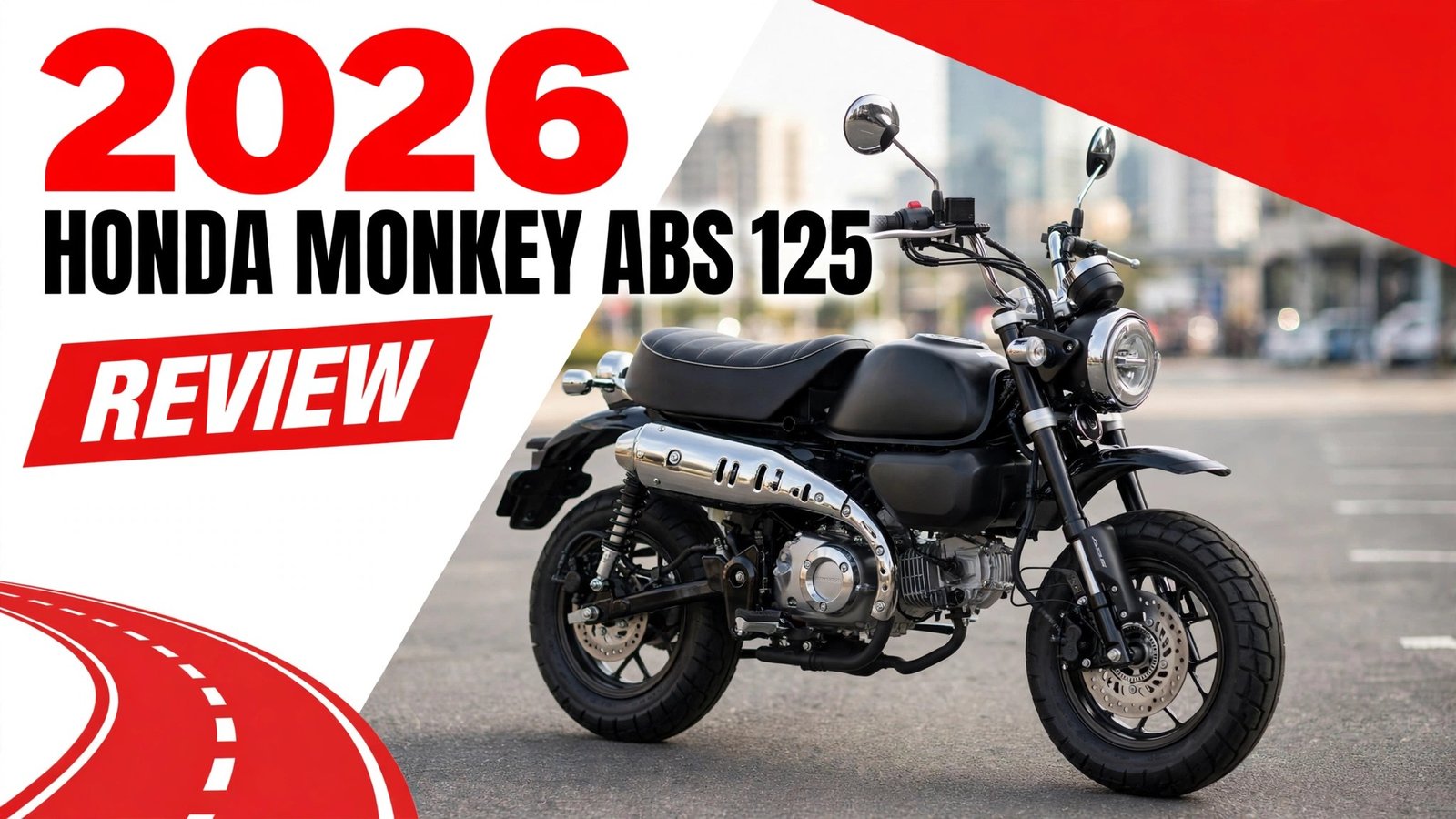
The frame for this Honda Monkey ABS 125 reliability guide is the current bike: the 2026 Monkey at $4,399 plus a $300 destination charge, in Matte Black Metallic, the sole 2026 US color. The Monkey is a full-class road motorcycle, not a scooter and not an off-road toy: it needs a motorcycle endorsement and is street legal everywhere in the United States. The engine is a 124cc air-cooled single with a five-speed manual gearbox on 2022-and-newer bikes, and this Honda Monkey ABS 125 reliability guide never calls it liquid-cooled. For the full model story, see our Honda Monkey ABS 125 review.
Honda Monkey ABS 125 Reliability Overview
The overview of Honda Monkey ABS 125 reliability starts with why the bike earns its reputation: a simple, low-stress engine and almost nothing electronic to fail. The 2026 engine is a 124cc air-cooled SOHC two-valve single, 50.0 by 63.1 mm, 10.0:1 compression, fed by PGM-FI through a 24 mm throttle body, five-speed gearbox, #420 chain, 14T/37T. It does its work at city speeds rather than at sustained freeway revs, and that low-stress life is the foundation of Honda Monkey ABS 125 reliability.

No Systemic Faults in Reputable Sources
No systemic faults in reputable sources is the headline this Honda Monkey ABS 125 reliability guide can stand behind, because the search for a chronic Monkey failure comes up empty. There is no recurring engine failure, no repeating electrical fault, and no model-year lemon to avoid across the whole 2019–2026 US run. What reputable sources do report is a short list of ordinary wear items and two narrow recalls, both covered below. That is the shape of Honda Monkey ABS 125 reliability: not a bike without faults, but a bike whose faults are small, known, and cheap.
MCN Owners Rate Reliability 4.7 From 5 From Six Reviews
MCN owners rate reliability 4.7 from 5 from six reviews is a verified figure, and this Honda Monkey ABS 125 reliability guide prints it with its source attached. Motorcyclenews.com’s owners’ reviews for the 2022-on Monkey 125, from six owners, rate reliability and build quality at 4.7 out of 5, with an overall owner rating of 4.8 out of 5. MCN’s own review text is more measured: the engine comes out very strongly, while a few owners grumble about the quality of the chrome finish, which can start to corrode — though most Monkeys are not used much in the wet, so the issue stays minor. MCN’s Monkey 125 review also notes the shared MSX125/Grom motor lineage, which is part of why parts and mechanic familiarity are so widespread. Keep the two numbers separate: 4.7 is the owners’ reliability rating, not MCN’s own score, and six reviews is a small sample.
Honda Monkey ABS 125 Common Problems and Wear Items
Honda Monkey ABS 125 reliability has a short problem list. There is no chronic engine failure and no recurring electrical fault. The real issues are one small bike recall, one accessory-only recall, and ordinary wear items — chain, tires, fork seals, brake pads, and battery. Judge a used Monkey by whether its recall work is documented and its wear items were kept up.
Recall 21V-382: Dim Rear Reflector on 2020-21 Bikes
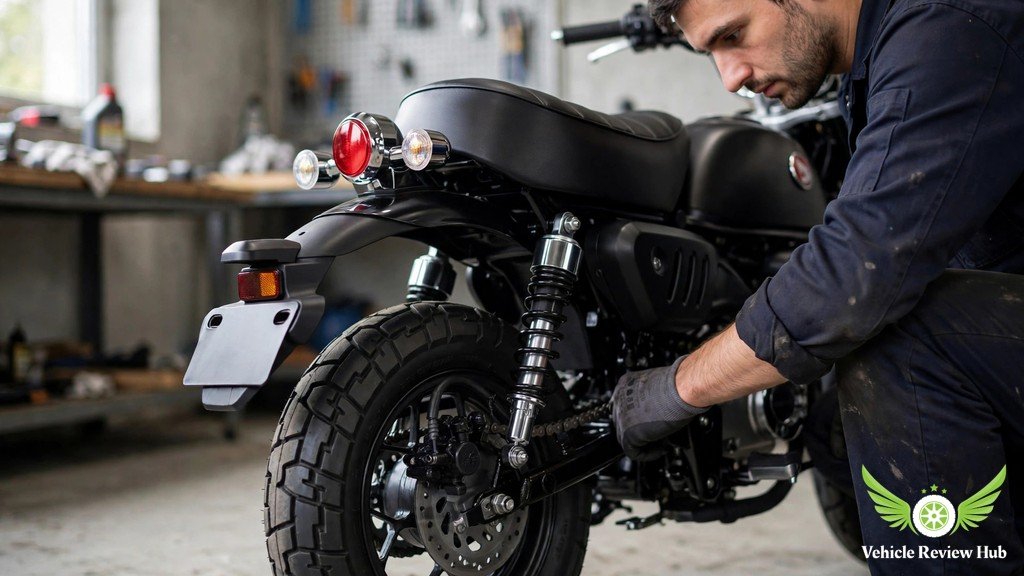
Recall 21V-382: dim rear reflector on 2020-21 bikes is the only recall that names the Monkey as a motorcycle, and this Honda Monkey ABS 125 reliability guide keeps it in proportion. Issued in May 2021 under Honda number KM3, it covers 2020–2021 Monkeys — 1,134 units from 2020 and 3,666 from 2021 — whose rear reflector could be too dim to meet the standard. The remedy is a free reflector replacement at a Honda dealer. Always run the VIN through Honda’s recall lookup before buying. Separately, no handlebar-clamp, drive-gear, grip, or fuel-pump recall, and no emissions stop-sale, names the Monkey.
The video above in this Honda Monkey ABS 125 reliability guide is Peter Lowe One’s Monkey review — honestly labelled as a review of the bike, not a service film, and a useful look at the machine whose ownership case this Honda Monkey ABS 125 reliability guide is judging.
Chain, Sprockets, Tires, Fork Seals, Brakes and Electrical Checks
Beyond the recalls, Honda Monkey ABS 125 reliability comes down to this wear-item checklist. The chain is a #420 on a 14-tooth front and 37-tooth rear sprocket on the 2022-and-newer bike: check slack, stiff links, and hooked teeth, replacing chain and sprockets together. The 12-inch tires — 120/80-12 front, 130/80-12 rear — wear faster than a full-size bike’s tires and deserve a tread and age check at every service. Fork seals wear in city grime on the 31 mm inverted fork, brake pads work the 220 mm front and 190 mm rear discs, and the ABS sensor needs care during wheel work. Electrics: LCD dash, LED lighting, IMU — plus the battery, the most common no-start cause on a bike that sits. Chrome deserves its own line: MCN owners report the chrome finish can start to corrode, so a used bike’s chrome is a storage-history tell, not just cosmetics.
Honda Monkey ABS 125 Maintenance Schedule and Servicing
Honda Monkey ABS 125 reliability is a schedule, not a hope. Honda’s manuals set the work in miles: initial service at 600 miles, then steps every 4,000 miles, with the chain checked far more often and brake fluid on a two-year clock. Two traps sit inside it: pre-2022 bikes have no spin-on oil filter at all, and the valve-clearance interval differs between sources — the year manual governs, as this Honda Monkey ABS 125 reliability guide explains below.

| Service item | Interval (Honda manual) | What Honda requires |
|---|---|---|
| Initial service | 600 miles | Oil, chain, idle |
| Engine oil | Every 4,000 miles or yearly | Replace; SAE 10W-30, JASO MA |
| Valve clearances | Every 8,000 miles (2021 manual) | Inspect; per year manual |
| Spark plug | Per manual cycle | Inspect, replace as needed |
| Air cleaner | Every 12,000 miles | Replace |
| Drive chain | Every 300 miles | Inspect and lubricate |
| Brake fluid | Every 2 years | Replace |
| Summary | Short ladder, small jobs | Most work is home-garage |
One more manual detail matters for Honda Monkey ABS 125 reliability: this road bike has an odometer, so intervals are provable from the dash, unlike Honda’s off-road line. A service logbook is therefore far more meaningful on a Monkey: claimed mileage can be checked against odometer and log together. A readable version of the manual ladder is published in the 2021 Monkey owner’s manual. For the riding story behind the schedule, see our Honda Monkey ABS 125 performance guide.
First Service at 600 Miles, Oil Every 4,000 Miles
First service at 600 miles, oil every 4,000 miles is the ladder this Honda Monkey ABS 125 reliability guide stands behind — Honda’s manual cycle. At 600 miles: oil replaced, chain and idle checked; then every 4,000 miles or yearly, whichever comes first, the oil is replaced. The oil grade is SAE 10W-30 meeting API SG or higher, and the drain-and-fill quantity is 1.0 US quart (0.9 litre) per the owner’s manual, with about 1.11 US quarts (1.05 litres) after full disassembly. Valve clearances are the one interval to handle carefully: the 2021 owner’s manual FAQ puts valve-clearance checking and adjusting at every 8,000 miles, while MCN’s review says every service includes a valve-clearance check. This Honda Monkey ABS 125 reliability guide follows the year manual — 8,000 miles — and notes the MCN wording as a review claim, not the manual. Valve-clearance numbers are deliberately not printed here: set clearances to your year manual’s spec, never to a forum number.
Gen 1 Has No Oil Filter: Strainer and Centrifugal Only
Gen 1 has no oil filter: strainer and centrifugal only is the filter truth this Honda Monkey ABS 125 reliability guide keeps straight. The 2019–2021 Monkey has no spin-on element: its strainer screen and centrifugal filter are cleaned, not replaced, per the 2018–2021 schedule extract. The 2022-and-newer bike is different: its manual schedule lists an engine oil filter alongside the strainer screen, so the Gen 2 bike gets a replaceable filter. Never order a spin-on filter for a Gen 1 Monkey — and a Gen 1 bike with no strainer and centrifugal cleaning on record has a gap worse than a missed oil change. This is a Monkey-manual finding, verified from the Monkey’s own 2022 manual schedule, not an assumption carried over from the Grom.
Honda Monkey ABS 125 Tires, Brakes and Suspension Maintenance
Honda Monkey ABS 125 reliability in the chassis is about three small systems: tires, disc brakes, and simple suspension. None is complicated, but all wear in ways easy to miss on a bike this small.

Chassis numbers: 31 mm inverted fork, 4.3 inches of front travel per Honda’s 2026 page; dual rear shocks, 4.0 inches; seat 30.5 inches; wheelbase 45.0 inches; tank 1.5 gallons; 2026 curb weight 231 pounds.
Chain Lubrication Every 300 Miles, Brake Fluid Two Years
Chain lubrication every 300 miles, brake fluid two years are the two clockwork jobs on the Honda Monkey ABS 125 reliability schedule. Every 300 miles, Honda requires the chain inspected and lubricated, and on a bike ridden in city grime that interval is a maximum: a dry chain wears sprockets, stretches unevenly, and eventually jumps. Slack is set per the year manual — the 2022 manual FAQ gives 20 to 30 mm, and this Honda Monkey ABS 125 reliability guide prints that as a manual figure for the Gen 2 bike.
Brake Pads, Suspension Linkage and Bearing Checks
Brake pads, suspension linkage and bearing checks close the chassis side of Honda Monkey ABS 125 reliability. Disc brakes: check pad thickness, lever feel, and fluid level, and protect the ABS trim’s front-wheel sensor during wheel work — a damaged sensor is an ABS fault, not a pad job. Suspension and bearings: dry fork seals, smooth fork travel, shocks rebounding without bouncing, and wheel, steering-head, and swingarm bearings checked for play.
Honda Monkey ABS 125 Maintenance and Ownership Costs
Honda Monkey ABS 125 reliability is cheap to maintain — but this Honda Monkey ABS 125 reliability guide will not invent a servicing-cost dollar figure, because no published US figure exists. The shape of the costs is honest: small quantities of oil, one air filter at long intervals, a chain and sprocket set, small cheap tires, and pads rather than discs and calipers.
The purchase price sets the frame. A new 2026 Monkey is $4,399 plus $300 destination, per Honda’s Monkey page. Fuel is the smallest line: a few dollars per 1.5-gallon fill, and Honda’s EPA-procedure estimate of 162.6 MPG on the 2026 page carries Honda’s own comparison-purposes disclaimer — real-world economy runs lower, and this Honda Monkey ABS 125 reliability guide keeps the estimate and the tested range separate rather than averaging them.
| Cost area | What to expect | Reliability note |
|---|---|---|
| Routine servicing | Small oil quantity, long-interval filter | Mostly home-garage work |
| Tires and tubes | 12-inch size | Check tread and age |
| Chain and sprockets | #420 chain, 14T/37T (2022+) | Replace sprockets with the chain |
| Recall work | Free where applicable | Confirm by VIN first |
| Summary | Low running costs | No published US cost figure exists |
Fuel, Routine Servicing, Tires and Replacement Parts
Fuel, routine servicing, tires and replacement parts are the four lines of Honda Monkey ABS 125 reliability costs. Fuel is a few dollars per 1.5-gallon fill. Routine servicing is oil at every 4,000-mile step, valves inspected at the 8,000-mile step per the 2021 manual, chain work every 300 miles, and strainer cleans on Gen 1 bikes or a filter change on 2022-and-newer bikes. Tires and parts are similar: small, cheap 12-inch tires and inexpensive Honda pads, seals, and grips, with an enormous aftermarket shared with the Grom.
One-Year Warranty Included, HondaCare Available
One-year warranty included, HondaCare available is the warranty truth this Honda Monkey ABS 125 reliability guide states plainly. Honda backs the Monkey with a transferable, one-year included limited warranty, plus optional HondaCare — verified on Honda’s page. This Honda Monkey ABS 125 reliability guide does not add an “unlimited-mileage” claim, because that wording did not appear on the Honda page extract reviewed during drafting. Transferability matters for Honda Monkey ABS 125 reliability in the used market: a bike still inside its year carries its warranty to the next owner — check the in-service date, never assume cover.
How to Keep a Honda Monkey ABS 125 Reliable
Keeping Honda Monkey ABS 125 reliability intact is mostly about habits, not mechanical skill. An owner with basic tools can do every job on its schedule except the strainer and centrifugal cleaning Honda recommends a mechanic for.

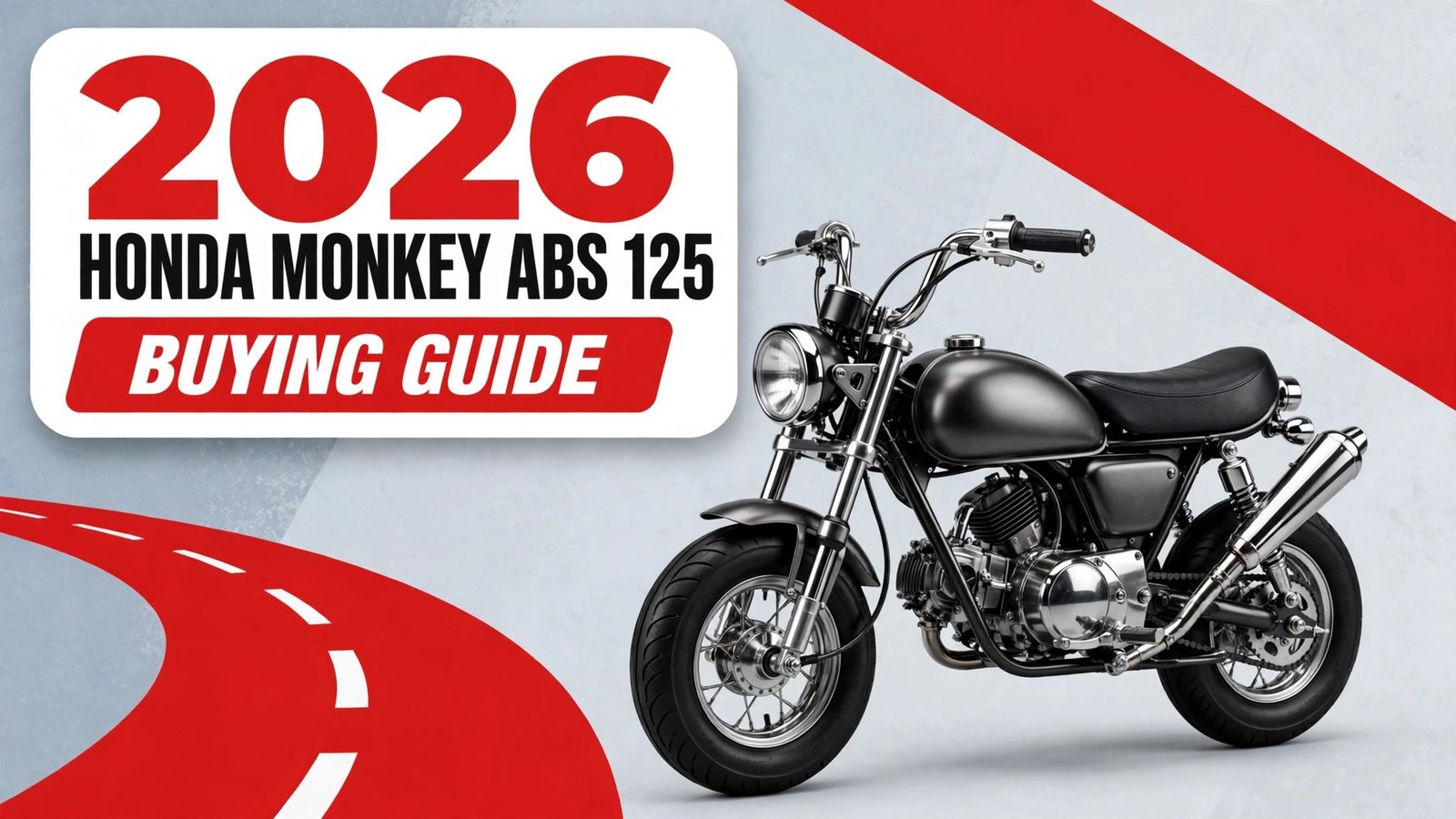
Two hard rules belong in any Honda Monkey ABS 125 reliability guide. First, never buy on story: a Monkey’s reliability is proven by VIN recall status, service log, and visible condition, in that order. Second, never let the small size fool you into skipping the schedule — the 4,000-mile steps are short. For the buying decision behind these habits, see our Honda Monkey ABS 125 buying guide.
Preventive Maintenance, Records and Regular Inspections
Preventive maintenance, records and regular inspections are the three habits that keep Honda Monkey ABS 125 reliability intact. Preventive maintenance means doing the 300-mile chain job and the 4,000-mile service on time. Records mean keeping logbook, dealer receipts, and recall paperwork together — on a bike with an odometer, log and dash corroborate each other. Regular inspections mean a monthly walk-around of tires, chain, seals, pads, fluid, battery, and chrome.
Recall 19E-071 Was the Accessory Carrier: Refund, No Fix
Recall 19E-071 was the accessory carrier: refund, no fix is the second recall story in Honda Monkey ABS 125 reliability, and it is accessory-only. Issued in October 2019 under Honda number KK5, it covers the genuine Honda accessory rear carrier, part number 08L70-K0F-A00, fitted to 2019–2020 Monkeys: its load capacity was below specification, so it could break and fall off. The remedy is not a replacement part — the dealer uninstalls the carrier and replaces the mounting hardware free of charge, and Honda refunds $204 for the carrier. A used bike without that genuine carrier fitted is unaffected, and a bike with one fitted needs the carrier check, not a bike-level repair. That distinction closes the recall picture for this Honda Monkey ABS 125 reliability guide: two recalls total, one small bike recall and one accessory recall, and nothing else.
Honda Monkey ABS 125 Reliability FAQs
Direct answers to the Honda Monkey ABS 125 reliability questions owners and used buyers ask most.
Is the Honda Monkey ABS 125 reliable?
Yes, says this Honda Monkey ABS 125 reliability guide — in stock form, kept on Honda’s schedule, with low service costs and excellent parts availability.
What are the common problems on a Honda Monkey ABS 125?
One small bike recall, one accessory-only recall, and ordinary wear — chain, tires, fork seals, pads, battery, and chrome corrosion — says this Honda Monkey ABS 125 reliability guide.
What is recall 21V-382 on the Monkey?
A May 2021 recall for a dim rear reflector on 2020–2021 Monkeys, says this Honda Monkey ABS 125 reliability guide — 1,134 units from 2020 and 3,666 from 2021, with a free reflector replacement at a Honda dealer.
What was recall 19E-071 on the Monkey?
An October 2019 recall of the genuine accessory rear carrier on 2019–2020 Monkeys, says this Honda Monkey ABS 125 reliability guide — the carrier’s capacity was below spec, the dealer uninstalls it and replaces the hardware free, and Honda refunds $204, with no replacement part.
How often does a Monkey need servicing?
First service at 600 miles, then oil every 4,000 miles or yearly, says this Honda Monkey ABS 125 reliability guide. Chain every 300 miles, brake fluid every two years, valves every 8,000 miles per the 2021 manual.
What oil does a Monkey take, and how much?
SAE 10W-30 meeting API SG or higher, says this Honda Monkey ABS 125 reliability guide. Drain-and-fill quantity is 1.0 US quart (0.9 litre) per the owner’s manual.
Does a Gen 1 Monkey have an oil filter?
No spin-on filter, says this Honda Monkey ABS 125 reliability guide. Gen 1 bikes use a strainer screen and centrifugal filter, cleaned rather than replaced. The 2022-and-newer bike adds a replaceable oil filter.
What are the Monkey valve clearances?
Inspect them every 8,000 miles per the 2021 manual and set them to your year manual’s spec, says this Honda Monkey ABS 125 reliability guide. This Honda Monkey ABS 125 reliability guide deliberately prints no clearance numbers.
How long do Honda Monkeys last?
Owner reports describe many trouble-free miles on basic maintenance, says this Honda Monkey ABS 125 reliability guide — with MCN owners rating reliability 4.7 out of 5 from six reviews.
Does the Monkey have a warranty when bought used?
Honda’s new-bike warranty is one year, transferable, limited, says this Honda Monkey ABS 125 reliability guide — so a recent used bike may still carry term. Check the in-service date rather than assuming cover.
Is a modified Monkey as reliable as a stock Monkey?
No, says this Honda Monkey ABS 125 reliability guide. Big-bore kits, reflashes, and stretched swingarms change the loads Honda designed for, so a modified bike’s reliability is the builder’s work.
How do I check the recalls on a used Monkey?
Run the VIN through Honda’s recall lookup and ask the dealer to show the repair records, says this Honda Monkey ABS 125 reliability guide. Check 21V-382 on 2020–2021 bikes and the 19E-071 carrier check on 2019–2020 bikes with the genuine carrier fitted.