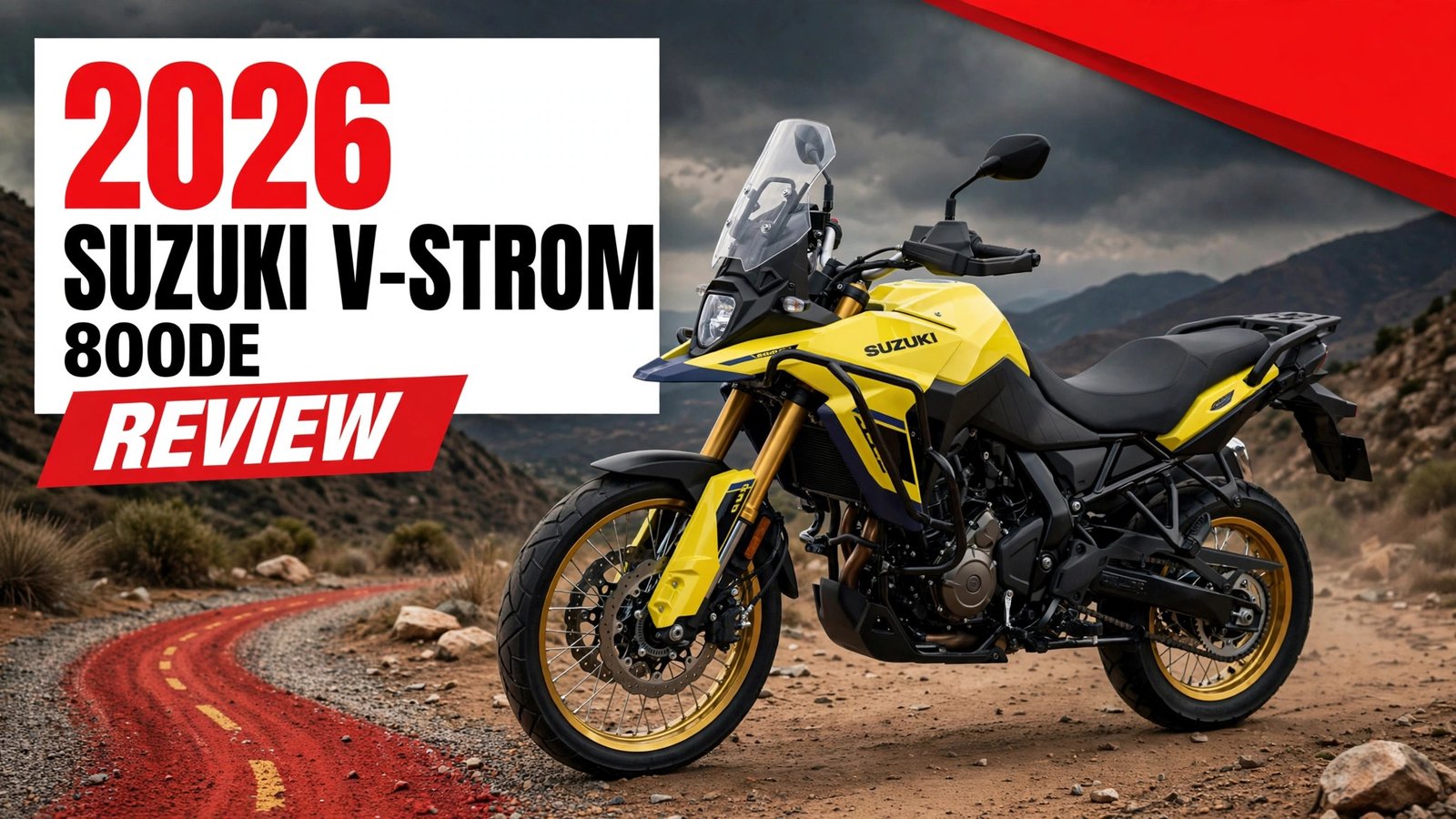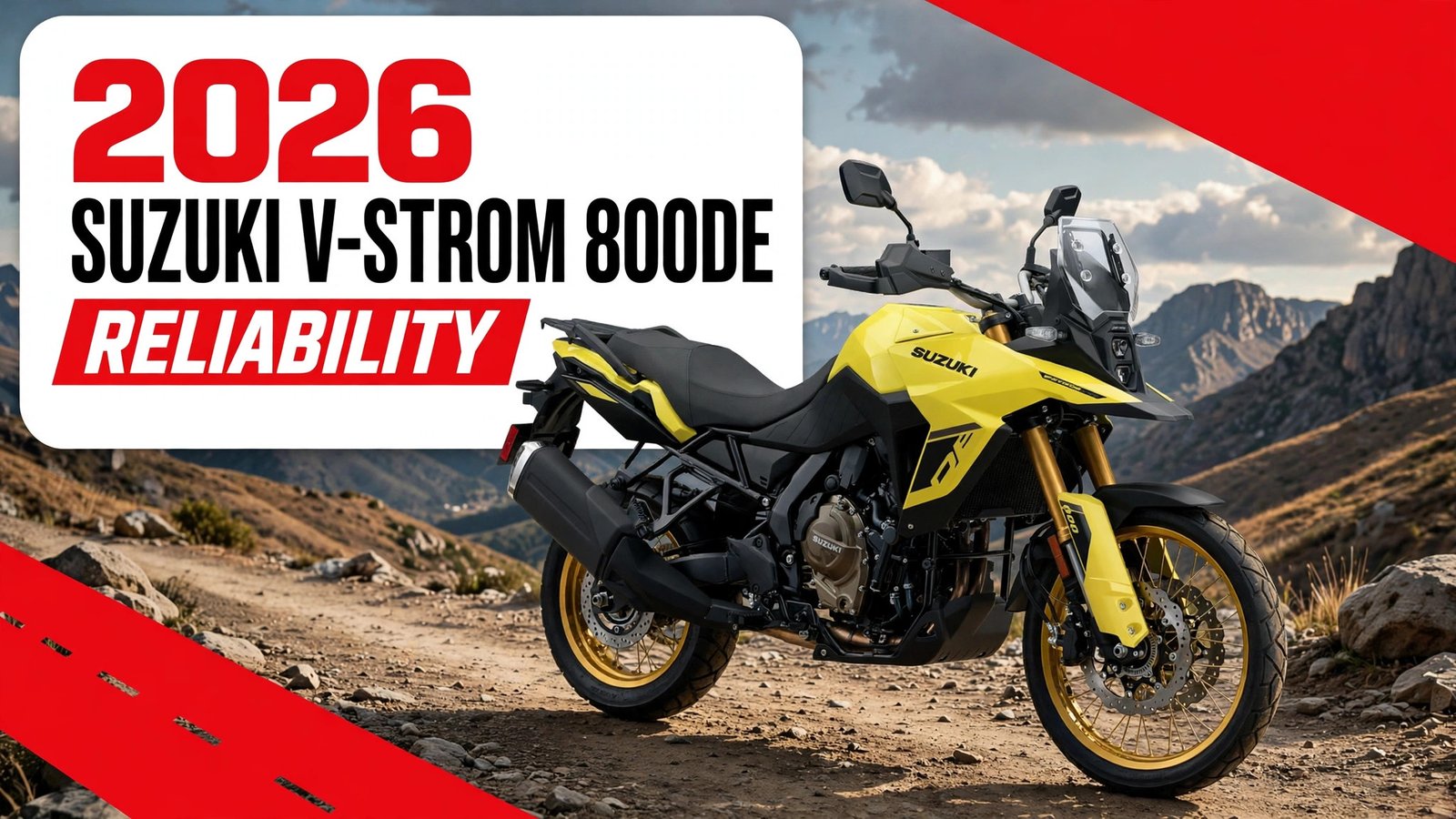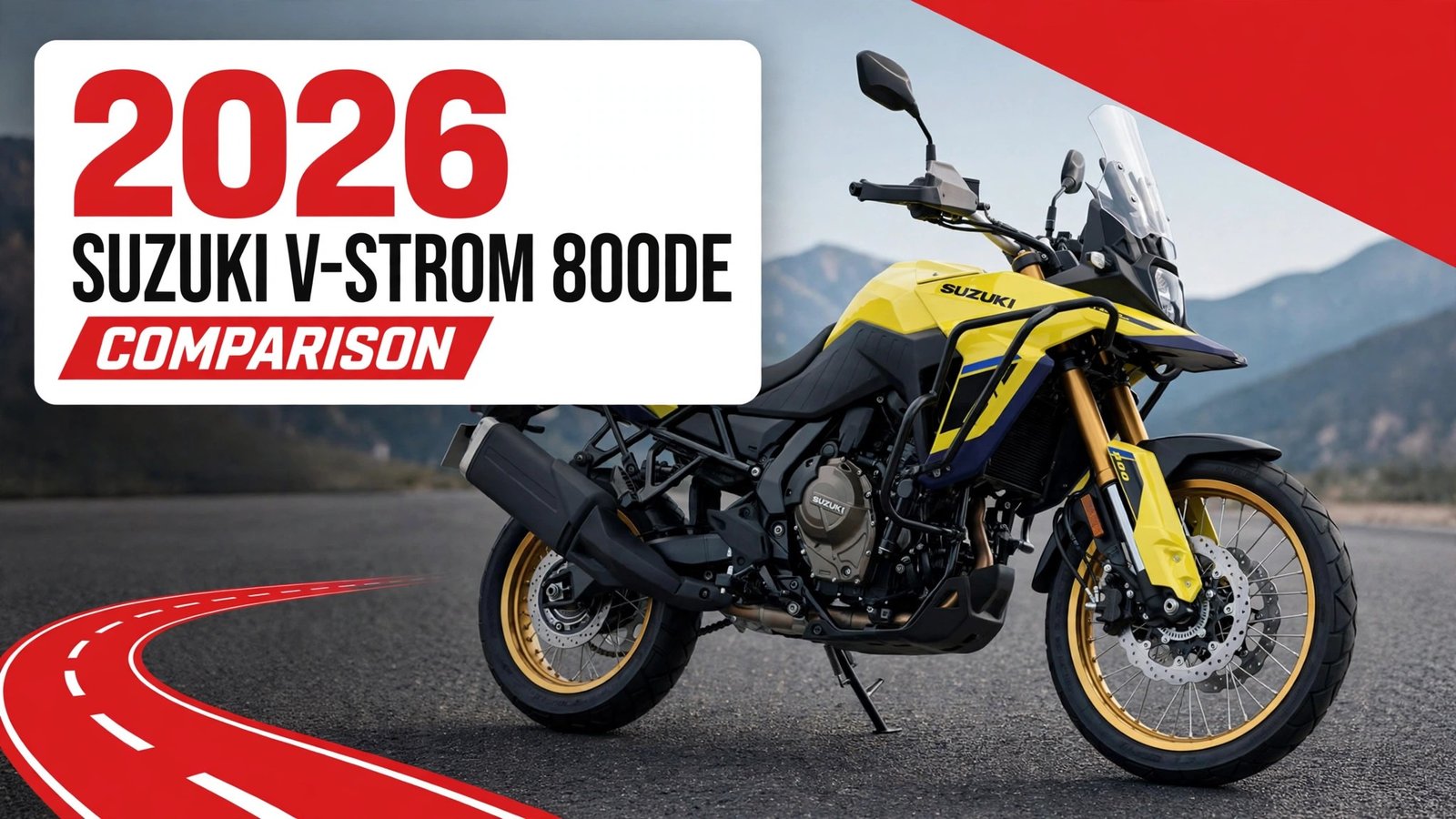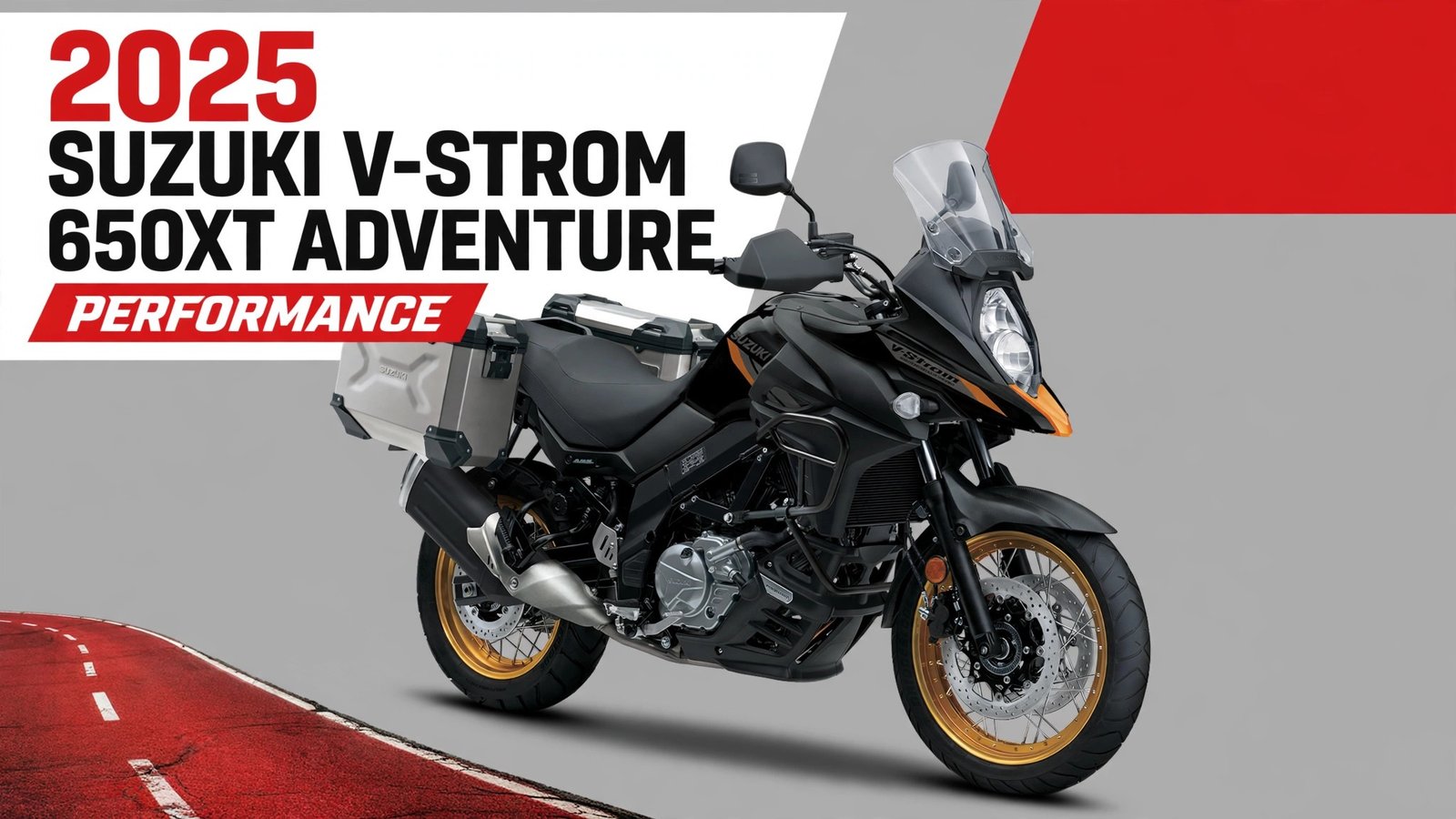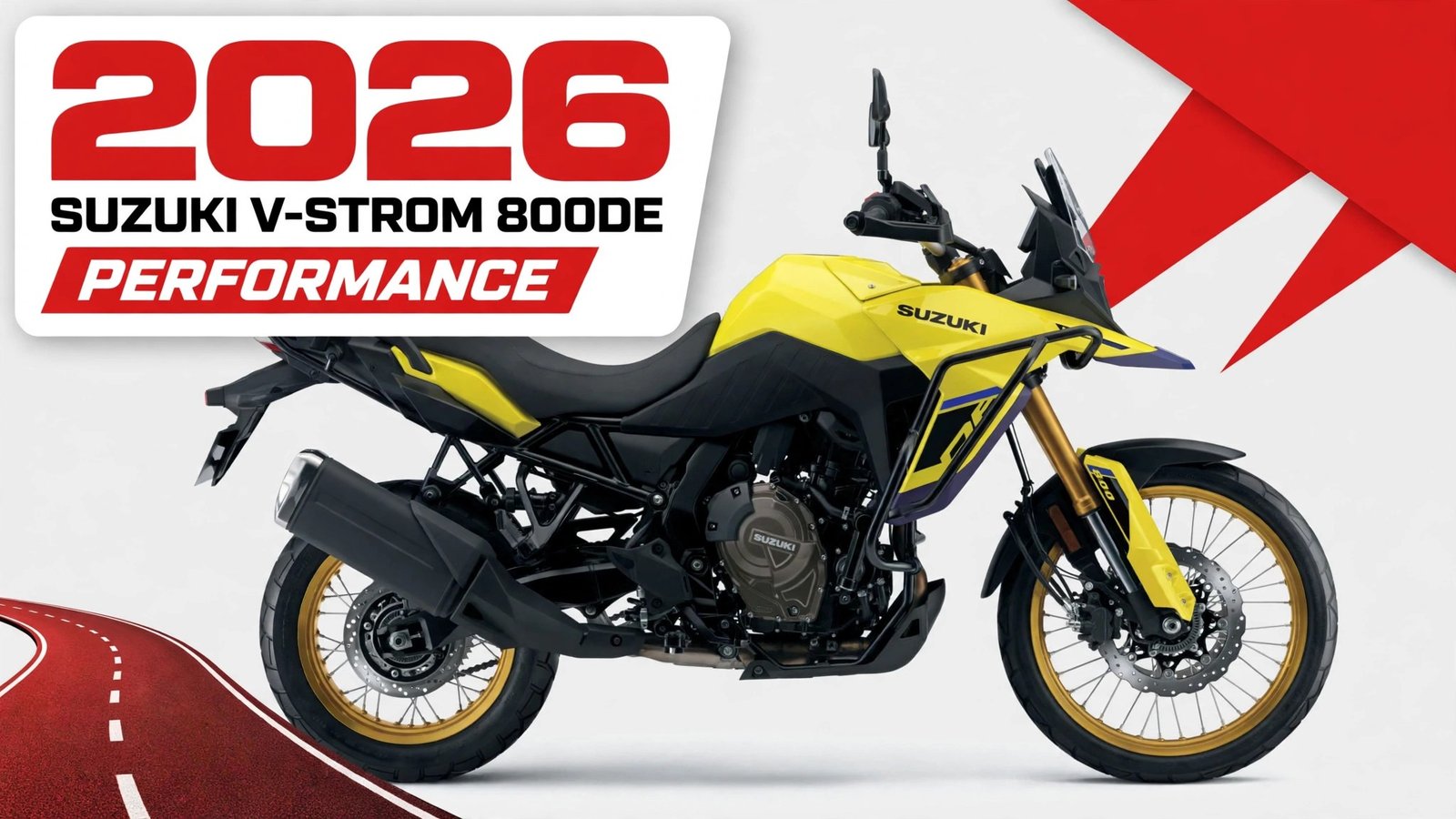
The Suzuki V-Strom 800DE performance story is refreshingly honest: this middleweight adventure bike makes 72.2 hp at the rear wheel on Cycle World’s dyno, returns around 45 to 46 mpg in real riding, and has no tested top speed from any US magazine. This Suzuki V-Strom 800DE performance guide gives you the numbers that were actually measured — and says plainly where no number exists.
The short answer is that the DE is the strongest bike in its class on the dyno, the most honest about its limits, and the one whose real-world economy you can plan a trip around. The Suzuki V-Strom 800DE performance picture below covers the dyno table, the fuel figures, the top-speed truth, and how Suzuki V-Strom 800DE performance feels when the pavement ends.
Suzuki V-Strom 800DE Engine Performance and Power Delivery
The engine is a 776cc parallel twin with a 270-degree crank, and the Suzuki V-Strom 800DE performance character comes from its mid-range: peak torque arrives at just 5,500 rpm, so the bike pulls hard without needing to be revved. The image below shows the engine behind Suzuki V-Strom 800DE performance.
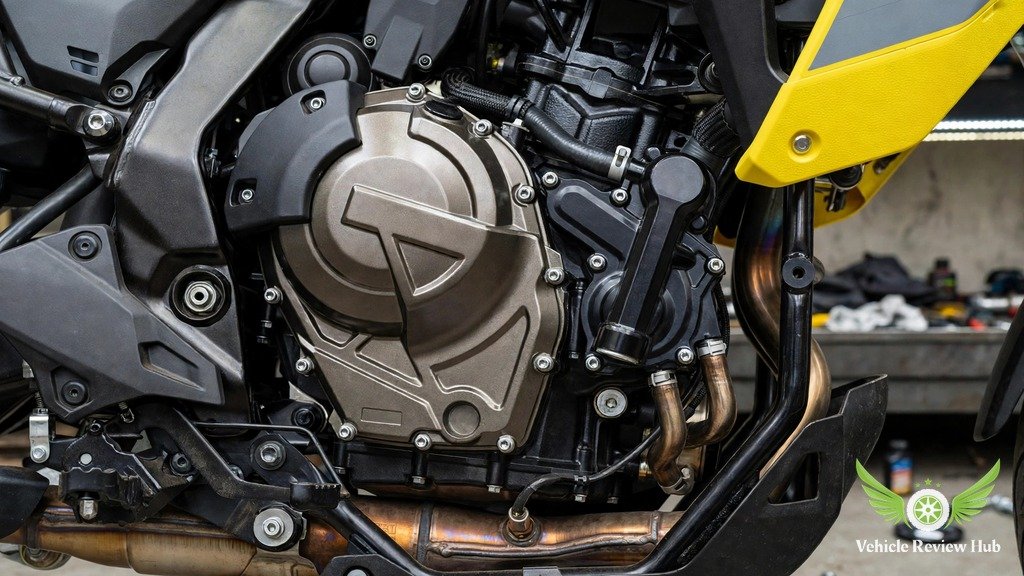
Cycle World Dynoed the DE Itself: 72.2 HP
Cycle World put a 2023 DE on its Dynojet 250i and measured 72.2 hp at 8,500 rpm and 50.2 lb-ft at 5,500 rpm, with the bike weighing 507 lb wet. That is the only Suzuki V-Strom 800DE performance dyno test from a named US outlet, and it matters because Suzuki USA publishes no power figure of its own — the 83 hp claim is global. The gap between 83 claimed and 72.2 measured is about 13 percent, normal driveline loss between crank and rear wheel on a chain-drive bike, not a defect. Torque tells the real story: 50.2 lb-ft at 5,500 rpm means the pull is there early, which is why testers keep calling the delivery flexible and gentlemanly. This Suzuki V-Strom 800DE performance result puts the DE ahead of every Japanese middleweight rival on the same dyno.
The video above is 44 Teeth’s engine-focused final thoughts on a 2024 DE — the closest thing to a performance-angle video that exists, since no dedicated 800DE dyno or acceleration video exists on YouTube. The bike is mechanically unchanged since 2023, so the review still applies to the 2026 model.
GSX-8S Dyno Figures Are Engine-Relative Only
The same 776cc engine also powers the GSX-8S and GSX-8R, and their dyno numbers look tempting to borrow: Cycle World measured the GSX-8S at 74 hp and 52.3 lb-ft, and the GSX-8R at 72.75 hp and 51.73 lb-ft. But those are different bikes with a different state of tune, different exhausts and different gearing, so Suzuki V-Strom 800DE performance figures must come from the DE’s own test. The engine family is consistent, but consistency is not the same as a measurement. Any Suzuki V-Strom 800DE performance guide that prints 74 hp for the DE is quoting the naked bike, not the adventure bike.
Suzuki V-Strom 800DE Top Speed and Acceleration
Here is where this Suzuki V-Strom 800DE performance guide earns its keep: there is no tested top speed and no instrumented acceleration figure for this bike from any named outlet. That sounds like a gap, but it is actually the most useful fact in this section — because the numbers floating around online are estimates and unsourced claims, not tests.
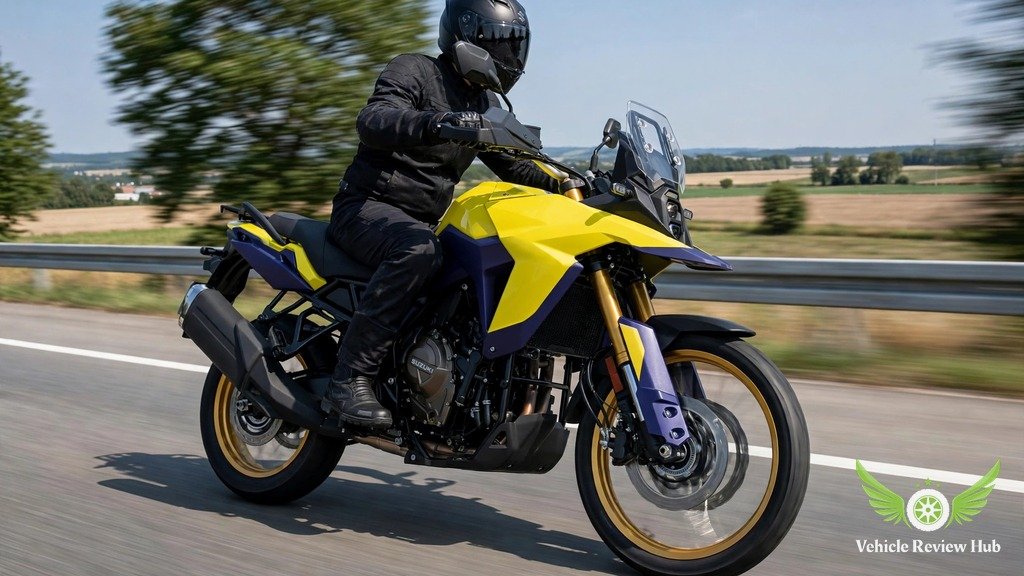
No Instrumented Run Exists From a US Outlet
MCN lists the 800DE’s top speed as a dash, and no US magazine has published a tested top speed. The only real-world run found anywhere comes from a Team-BHP owner in India, who recorded 203 km/h (126 mph) in a controlled environment, not on public roads. That is an owner test, not a magazine test, and this Suzuki V-Strom 800DE performance guide presents it exactly that way. Aggregator sites cluster their estimates between 115 and 130 mph: MotorcycleDB prints 115 mph and labels it honestly as an editorial estimate, not a lab test, while other sites list 127 to 130 mph with no test method given. Suzuki itself claims no top speed at all. The honest Suzuki V-Strom 800DE performance line is simple: no verified top speed exists, estimates say roughly 115 to 130 mph, and the only real-world run is the owner’s 126 mph.
Aggregator Quarter-Mile Figures Are Unsourced
The acceleration picture is the same. MCN, MotorcycleDB, moto-trips and Autocar India all list 0-60 mph, 0-100 km/h and quarter-mile figures as dashes, and zeroto60times has no 800DE row at all. The only numbers anywhere come from VikingBags, a luggage retailer, which prints an unsourced 0-62 mph time of 4.0 seconds and a quarter-mile of 12.4 seconds at 108.1 mph. This Suzuki V-Strom 800DE performance guide names that source and labels the figures unsourced — they are not tested numbers. The 108.1 mph trap speed is suspiciously close to the gen-1 V-Strom 650’s verified 109 mph quarter-mile trap speed from Cycle World’s 2006 test, and it looks borrowed rather than measured; treat that as a suspicion, not a fact. What is verified about Suzuki V-Strom 800DE performance is qualitative: strong mid-range pull, a quickshifter that keeps the drive going, and no launch control or wheelie control.
Suzuki V-Strom 800DE Mileage and Fuel Economy
Fuel economy is the one area where the Suzuki V-Strom 800DE performance numbers are solid, because four named outlets actually measured it. The tested Suzuki V-Strom 800DE performance figure is around 45 to 46 mpg — and the 53.4 mpg number you will see online is a manufacturer claim, not a test.
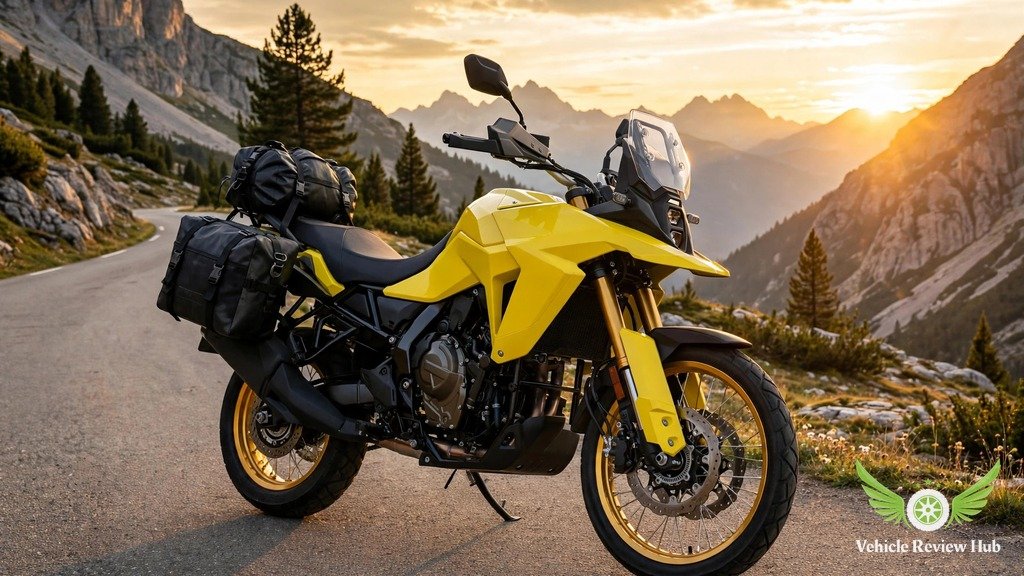
RevZilla Saw Around 45 MPG in Real Use
RevZilla’s first ride reported “45-ish mpg” and noted that a 5.3-gallon tank at that rate means more than 200 miles of range. RoadRunner tested 46 mpg, Bennetts recorded around 45 to 46 mpg, and Italy’s Motorionline averaged 18.8 km/l, which converts to 44.2 mpg in US gallons. Four outlets, one answer: Suzuki V-Strom 800DE performance in real riding is about 45 to 46 mpg, for a tested range of roughly 200 to 240 miles on the 5.3-gallon tank. The Suzuki V-Strom 800DE performance arithmetic is simple — 5.3 gallons times 45 mpg is 238.5 miles — and RevZilla’s “more than 200 miles” is the conservative version, allowing for reserve fuel and real-world margin.
| Source | Tested MPG | Range on 5.3 Gallons | Status |
|---|---|---|---|
| RevZilla first ride | About 45 mpg | More than 200 miles | Tested |
| RoadRunner | 46 mpg | About 244 miles | Tested |
| Bennetts | About 45-46 mpg | About 200-240 miles | Tested |
| Motorionline | 44.2 mpg | About 234 miles | Tested |
| WMTC manufacturer claim | 53.4 mpg | 283 miles | Claim, not tested |
The 83 HP Claim Is Global: Never US-Published
The 83 hp figure needs the same care as the fuel figures. Suzuki claims 83 hp at 8,500 rpm and 57.5 lb-ft at 6,800 rpm globally, but Suzuki USA publishes no power figure on its own spec page. The 84 hp figure you will see in some articles is metric horsepower — 62 kW converts to 84.3 PS — and the correct imperial figure is 83 hp. One Driving article prints 81 hp, which is simply wrong. The WMTC fuel claim works the same way in Suzuki V-Strom 800DE performance: 53.4 mpg is the manufacturer-claimed WMTC figure, and MCN’s “64 mpg” is that same claim converted into imperial gallons, not a separate test. The 283-mile range that follows from 53.4 mpg is arithmetic on a claim, not a tested range. This Suzuki V-Strom 800DE performance guide keeps claimed and tested numbers in separate columns so you can see which is which.
Suzuki V-Strom 800DE Real-World Riding Experience
Dyno numbers and fuel figures only tell half the Suzuki V-Strom 800DE performance story. The other half is how Suzuki V-Strom 800DE performance feels on real roads, and the published tests agree with each other more than they disagree.
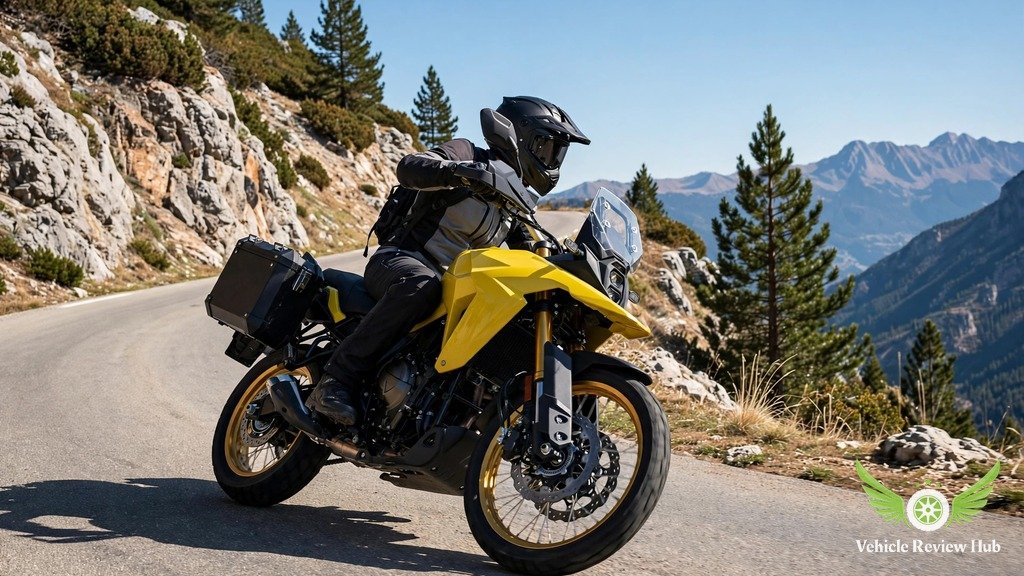
RevZilla: a Better Street Bike Than Dirt Bike
RevZilla spent weeks with the DE on city streets, twisty mountain roads and fire roads, and its verdict was plain: the bike is a better street bike than a dirt bike. The long-travel suspension and knobby tires suggest a trail weapon, but the DE is more capable on pavement than its looks promise and less dominant off-road than its hardware suggests. RevZilla’s comparison was blunt — the 800 is not a lot better than the Ténéré 700 as a road bike, and it is not as much better off-road as it should be compared with a Versys. That is not a bad Suzuki V-Strom 800DE performance review; it is a useful one. Suzuki V-Strom 800DE performance on the road is where the bike earns its price: comfortable for long days, stable at speed, and genuinely capable when the pavement ends — just not a dirt bike in adventure clothing.
Buzz at 5,500 to 6,500 RPM in US Testing
The one complaint that shows up in every long test is vibration between 5,500 and 6,500 rpm, right where US highway cruising lives. MotorcycleDaily’s 2026 ride review found “a bit of buzzyness in the bars and pegs” between those revs on a bike with only 30 miles, and noted it might fade after the first service. MCN called the vibration “particularly persistent at just over 5500 rpm,” right around motorway speed in top gear, and TopGear India felt it at about 120 km/h (75 mph) in sixth. All three sources treat it as a minor annoyance, not a defect — the Suzuki V-Strom 800DE performance experience is not ruined by it, but a test ride at motorway speed will reveal it in ten minutes. The 270-degree crank and Cross Balancer keep the engine smooth at low revs; the Suzuki V-Strom 800DE performance buzz is a cruising-speed footnote, not a flaw.
Suzuki V-Strom 800DE Handling, Braking and Stability
Handling is where the DE’s long-travel hardware meets its 507-pound curb weight, and Suzuki V-Strom 800DE performance here is a balance: real off-road tools, road manners that stay composed, and brakes that are strong rather than sharp.
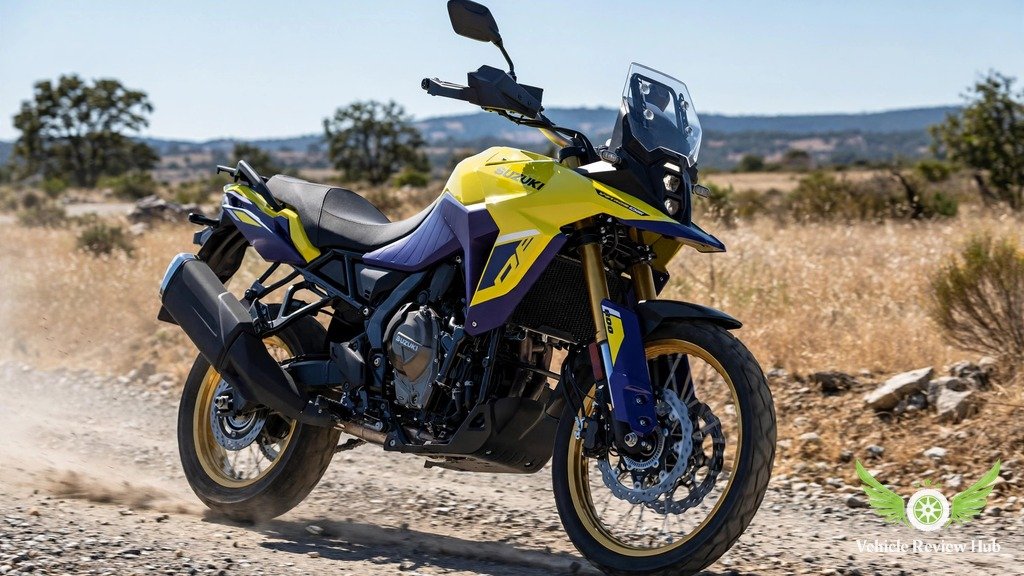
Gravel Mode, Two ABS Levels and Rear ABS Off
The electronics give the rider real choices: three SDMS drive modes, five traction-control modes including Gravel, two ABS levels, and rear ABS that switches off for dirt. That last one matters — locking the rear wheel is a legitimate off-road technique, and the DE lets you do it. There is no IMU, no cornering ABS and no lean-sensitive traction control, and this Suzuki V-Strom 800DE performance guide says so plainly. The Ténéré 700 and Transalp do not have an IMU either, so it is not a unique deficit at this price; it is simply the class standard. The quickshifter is standard up and down in Suzuki V-Strom 800DE performance, and testers rate it highly, though ADVMoto notes it feels chunky at low speeds.
Spoked Wheels Are Tube-Type: Plan Punctures
The 21-inch front and 17-inch rear spoked wheels look like the 650XT’s, but they are tube-type, not tubeless — and that changes a puncture from a ten-minute plug job into a tube repair or replacement. Carry tubes and tools on any trip that leaves pavement, or budget for a tubeless conversion. The 650XT Adventure’s tubeless spokes are the direct contrast, and one sentence is enough: the smaller bike is easier to fix at the roadside. The Showa suspension is fully adjustable at both ends with 8.7 inches of travel, which is why Suzuki V-Strom 800DE performance stays comfortable on rough roads — though the long travel also means more dive under braking than the road-biased V-Strom 800. No outlet has published a tested 60-0 mph stopping distance, so this Suzuki V-Strom 800DE performance guide stays qualitative: MotorcycleDaily calls the Nissin brakes plenty strong but short on feel, 1000PS praises the front bite, and a long-term owner calls the stopping power sufficient without sport-bike sharpness.
Suzuki V-Strom 800DE Performance Compared With Other Adventure Bikes
The fairest comparison uses one dyno, one test method, and no borrowed figures. This Suzuki V-Strom 800DE performance comparison uses Cycle World’s Dynojet numbers wherever they exist, and Rider Magazine’s same-dyno comparo where they do not. Aprilia’s Tuareg 660 measured 69.9 hp on the same dyno family.
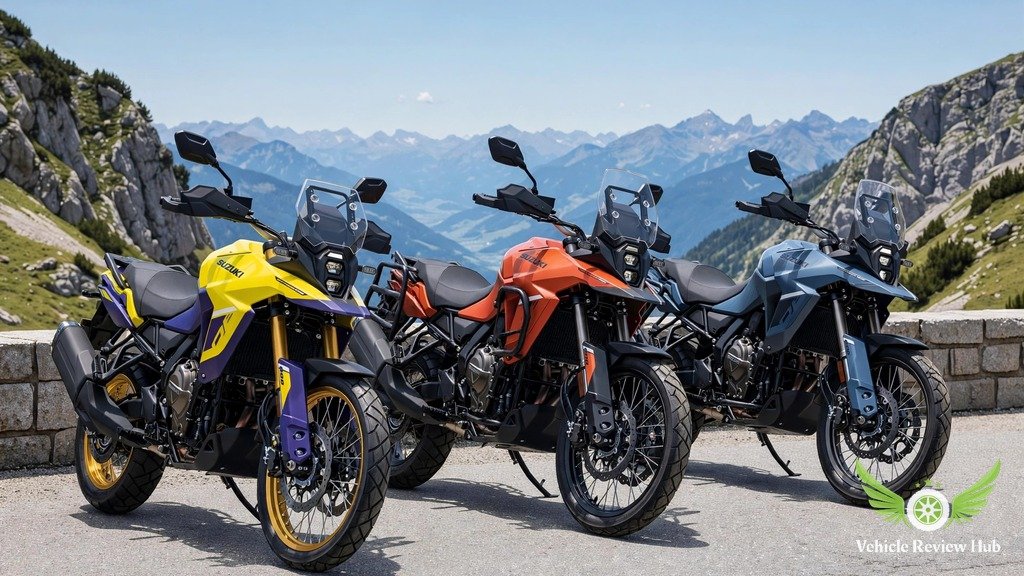
| Bike | Dyno Source | Rear-Wheel HP | Rear-Wheel LB-FT | Curb Weight |
|---|---|---|---|---|
| Suzuki V-Strom 800DE | Cycle World 2023 | 72.2 @ 8,500 rpm | 50.2 @ 5,500 rpm | 507 lb |
| Honda Transalp | Cycle World | 70.58 | 47.01 | 463 lb |
| Suzuki V-Strom 650XT Adventure | Cycle World 2023 | 66.85 @ 9,210 rpm | 43.04 @ 6,560 rpm | 476 lb |
| Suzuki V-Strom 650 (base) | Rider Magazine 2017 | 68.7 @ 9,100 rpm | 44.2 @ 9,100 rpm | 470 lb |
| Yamaha Ténéré 700 | Cycle World | 61.68 | 42.45 | 459 lb |
| Kawasaki Versys 650 | Rider 2017 (same test) | 61.2 | 42 | 482.9 lb |
The table tells the honest Suzuki V-Strom 800DE performance story: the DE has the most dyno horsepower in the class, but the Transalp has the best power-to-weight at 0.152 hp per pound against the DE’s 0.142, because the Transalp weighs 44 pounds less. The 650XT Adventure’s own performance figures show how close the smaller Suzuki comes, and the base 650’s dyno numbers are a reminder that the old V-twin still punches above its size. The Ténéré is the weakest on the dyno at 61.68 hp despite the second-highest claimed figure — the same dyno inversion seen in the earlier clusters.
Suzuki V-Strom 800DE vs the Road V-Strom 800
The closest rival wears the same badge. The road-biased V-Strom 800 costs $10,249 for 2026, which is $1,550 less than the DE’s $11,799, for the same 776cc engine. What the extra money buys in Suzuki V-Strom 800DE performance is dirt hardware: a 21-inch tube-type spoked front wheel instead of a 19-inch cast wheel with tubeless tires, 8.7 inches of suspension travel, Gravel mode with rear ABS off, hand guards and a taller stance. On the road, the road 800 is the sharper, cheaper bike; the DE is the dirt-capable one. Suzuki V-Strom 800DE performance buyers should choose by the surface they actually ride, not by the spec sheet.
Is the Suzuki V-Strom 800DE Suitable for Beginner Riders? Mostly
MCN calls the power delivery “gentlemanly,” and 83 claimed horsepower is manageable — but 507 pounds and a 33.7-inch seat make this a big first big bike. The honest answer is that the DE suits a confident new rider with some experience, not a first-ever motorcycle. Compared with the 650, which weighs 476 pounds, sits 0.8 inches lower and costs less, the DE asks more of a new rider and gives more back. The full 650 review shows what the smaller bike offers a new rider, and the Versys 650 review covers a road-biased rival with a lower seat. Suzuki V-Strom 800DE performance is friendly enough to learn on and strong enough to grow into — that is the “mostly.”
Suzuki V-Strom 800DE Performance FAQs
These are the questions buyers ask most often about Suzuki V-Strom 800DE performance. Every answer uses the verified figures from the sections above, and where no tested figure exists, the answer says so.
What is the Suzuki V-Strom 800DE’s top speed?
No tested top speed exists from any US outlet. Aggregator estimates cluster between 115 and 130 mph, and the only real-world run is a Team-BHP owner’s 126 mph in a controlled environment — an owner test, not a magazine test.
What is the 800DE’s 0-60 mph time?
No instrumented 0-60 mph figure exists from any named test outlet. The only number anywhere is an unsourced aggregator claim of 0-62 mph in 4.0 seconds, which this Suzuki V-Strom 800DE performance guide does not treat as tested.
How much power does the 800DE really make?
Cycle World measured 72.2 hp and 50.2 lb-ft at the rear wheel. Suzuki claims 83 hp globally for Suzuki V-Strom 800DE performance, but Suzuki USA publishes no figure of its own.
Why is the dyno figure lower than the claimed figure?
The claim is measured at the crank; the dyno measures at the rear wheel. About 13 percent is lost through the chain and gearbox, which is normal — the Suzuki V-Strom 800DE performance gap is crank versus wheel, not a defect.
What MPG does the 800DE get in real riding?
Around 45 to 46 mpg in real Suzuki V-Strom 800DE performance use, measured by RevZilla, RoadRunner and Bennetts. The 53.4 mpg figure is a manufacturer WMTC claim, not a test.
How far can the 800DE go on a tank?
About 200 to 240 miles on the 5.3-gallon tank at tested economy. The 283-mile figure is arithmetic on the 53.4 mpg WMTC claim, not a tested range.
Does the 800DE vibrate at highway speed?
Yes, a little. Testers report buzz in the bars and pegs between 5,500 and 6,500 rpm, right at motorway speed. It is a minor annoyance, not a defect, in this Suzuki V-Strom 800DE performance review of real-world riding.
How does the 800DE compare to the Ténéré 700 / Transalp on the dyno?
The DE is strongest in Suzuki V-Strom 800DE performance at 72.2 hp, the Transalp next at 70.58 hp with the best power-to-weight, and the Ténéré weakest at 61.68 hp despite the second-highest claimed figure.
What fuel does the 800DE take — regular or premium?
Premium unleaded. The owner’s manual specifies 95 RON minimum, which is about 91 pump octane in the US. E10 is acceptable.
How good is the 800DE off-road, really?
Gravel mode, rear ABS off and a 21-inch front wheel make it genuinely capable, but RevZilla’s verdict stands: it is a better street bike than a dirt bike, and its tube-type spokes make punctures a bigger job.
What is the break-in for the 800DE?
The first 1,000 miles are the break-in period, with the first 500 miles below 4,500 rpm. The initial service falls at 600 miles.
Is the 800DE fast enough / is it a good beginner big bike?
Yes, mostly. The power delivery is gentlemanly and the Suzuki V-Strom 800DE performance is friendly to learn on, but 507 lb and a 33.7-inch seat make it a second bike, not a first-ever motorcycle.