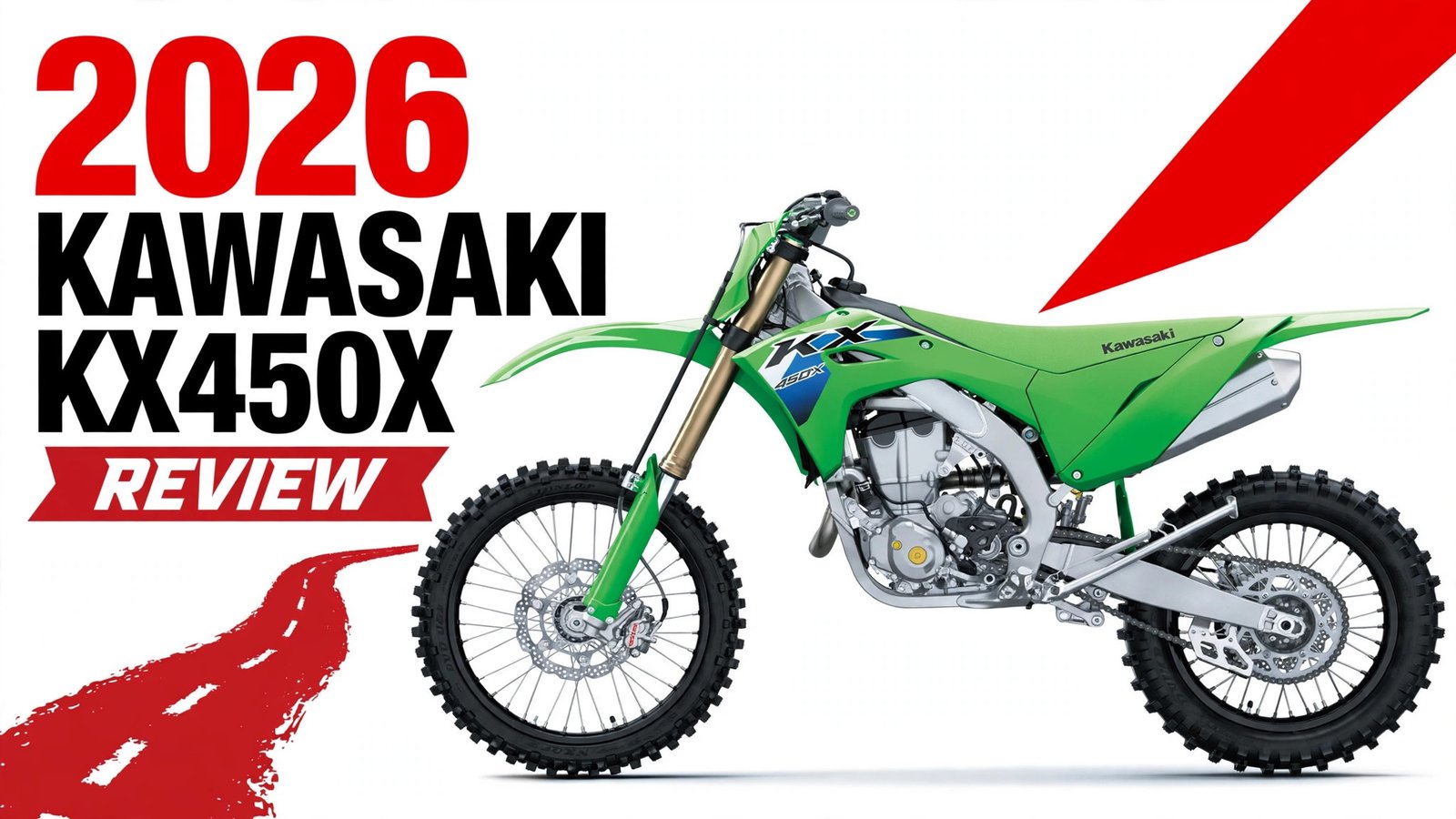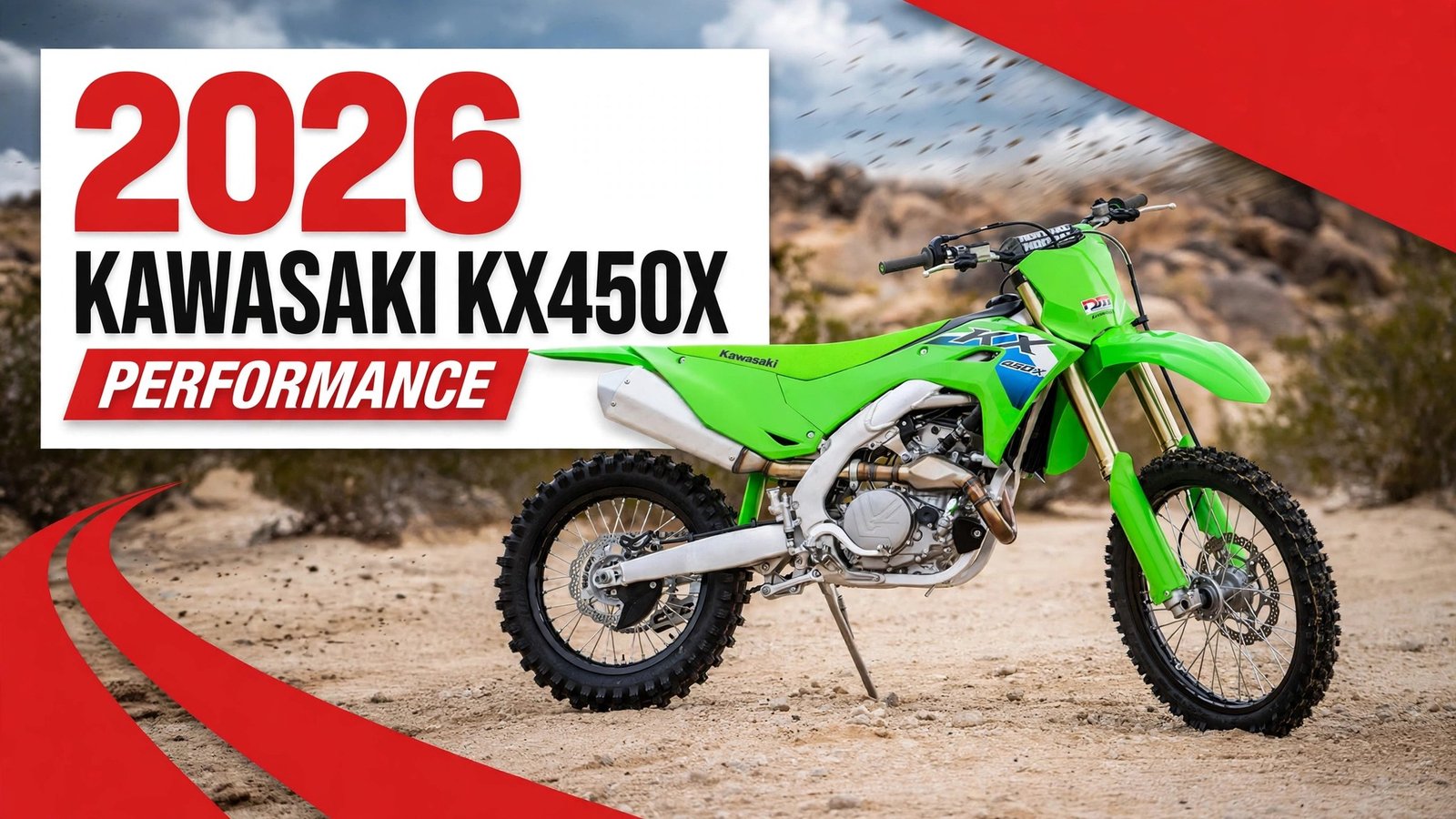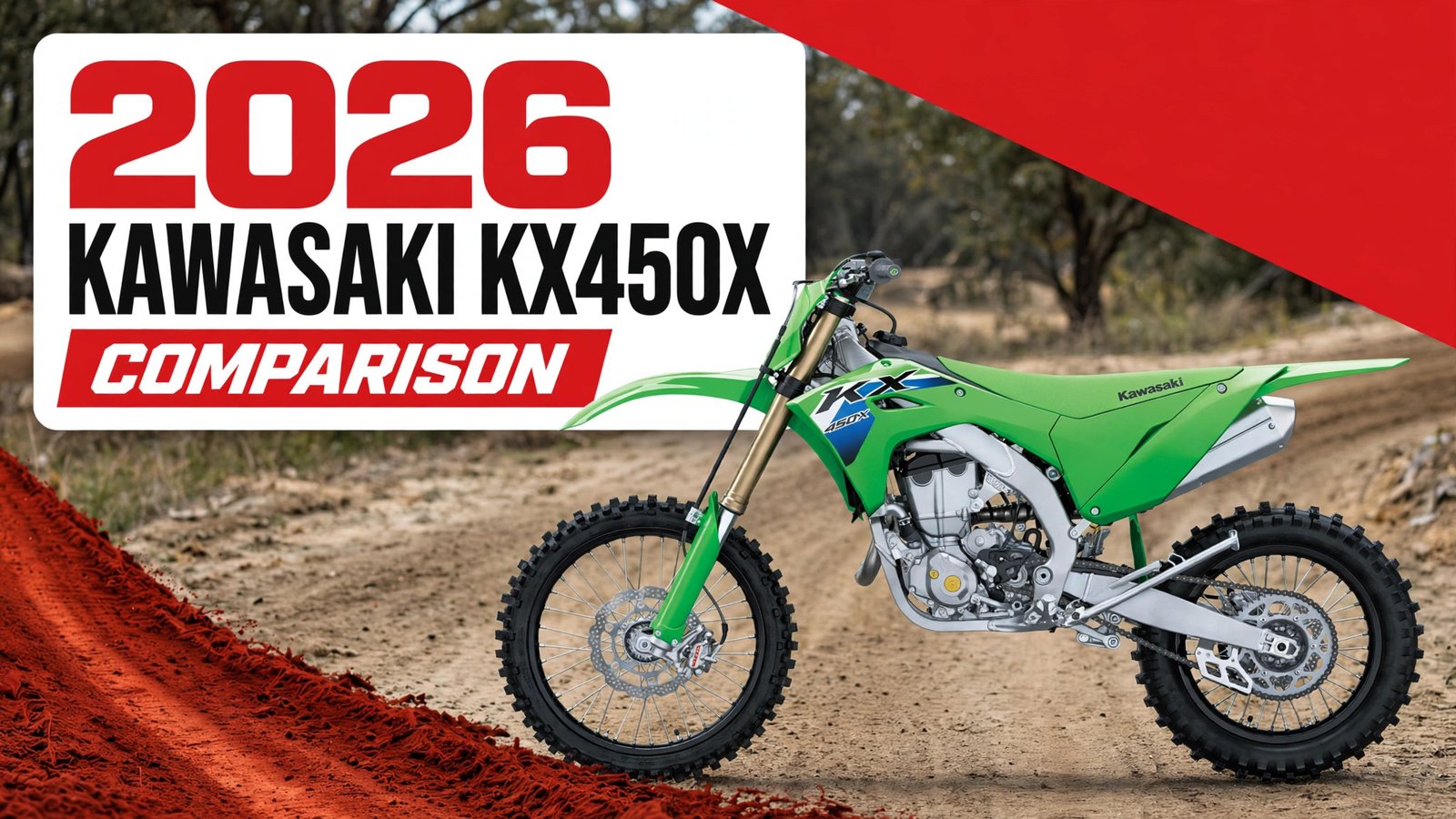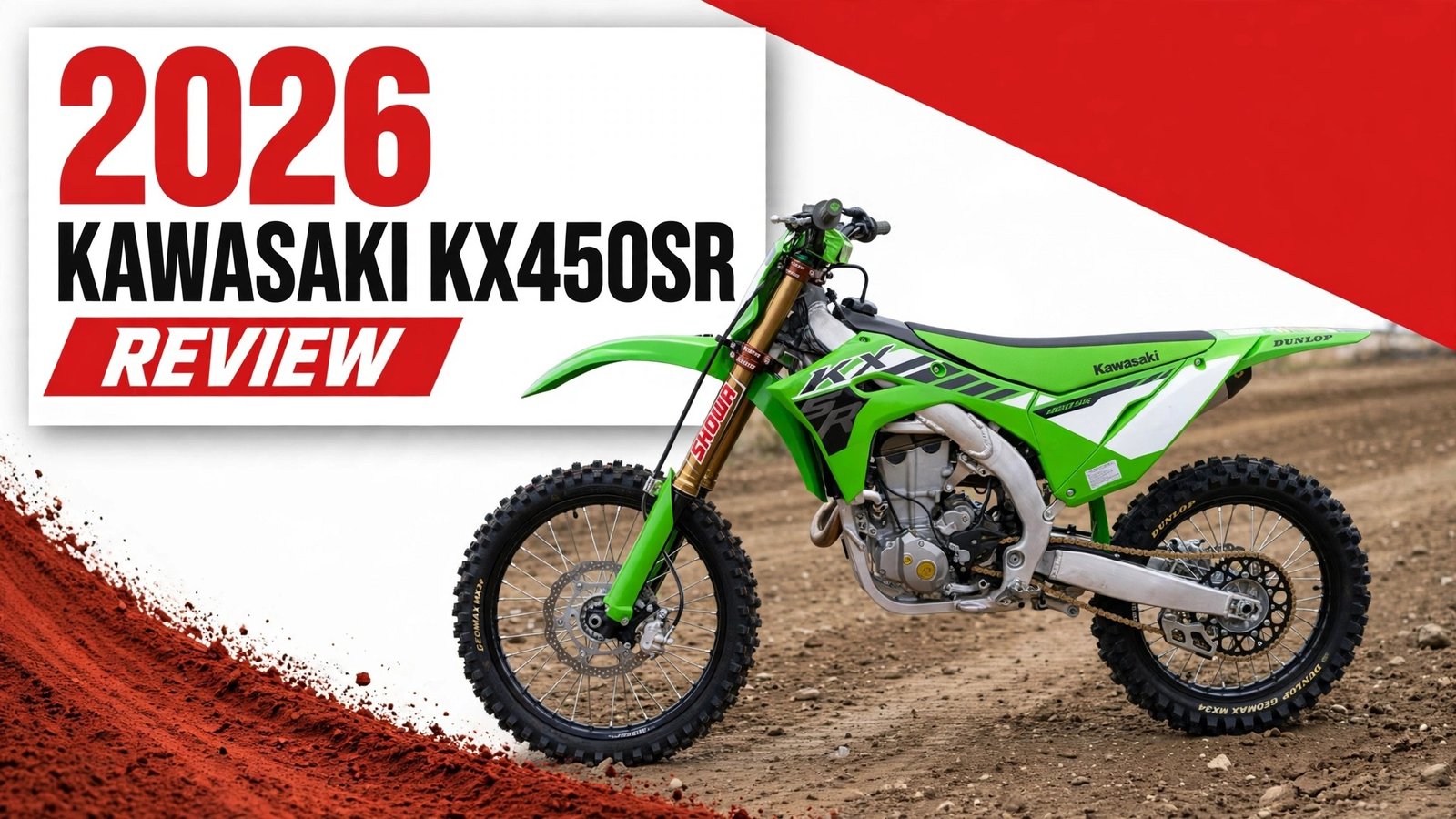
The Kawasaki KX450X is a closed-course cross-country race bike, not a trail bike with lights and a warranty, and that fact shapes how reliable it is and what it costs to keep running. This Kawasaki KX450X reliability guide covers the 2021–2026 bikes — renamed KX450FX for 2027 — and is built on the sources that actually tested the bike, not on dealer talk.
The honest summary is short: the X is a tough, well-proven 450, but it has one real recall, one documented clutch failure, and one awkward gap in its paperwork. The 2025 bike is named in a federal recall, a clutch fibre broke at 27 hours on Dirt Bike Test’s test bike, and the X’s own service chart is not public, so this Kawasaki KX450X reliability guide uses the KX450 family chart, labelled as the family figure every time.
Kawasaki KX450X Reliability Overview
A race bike’s reliability is measured in hours, not years, and the X asks for the same attention as any 450 motocross bike. It is sold as a competition machine with no warranty and no spark arrestor, so the owner is the warranty department. This Kawasaki KX450X reliability guide starts with the recall, then the wear items, the intervals and the costs. No dyno figure exists for the X — the 52.4-horsepower figure is the motocross KX450’s.
25-238 Names the 2025 X
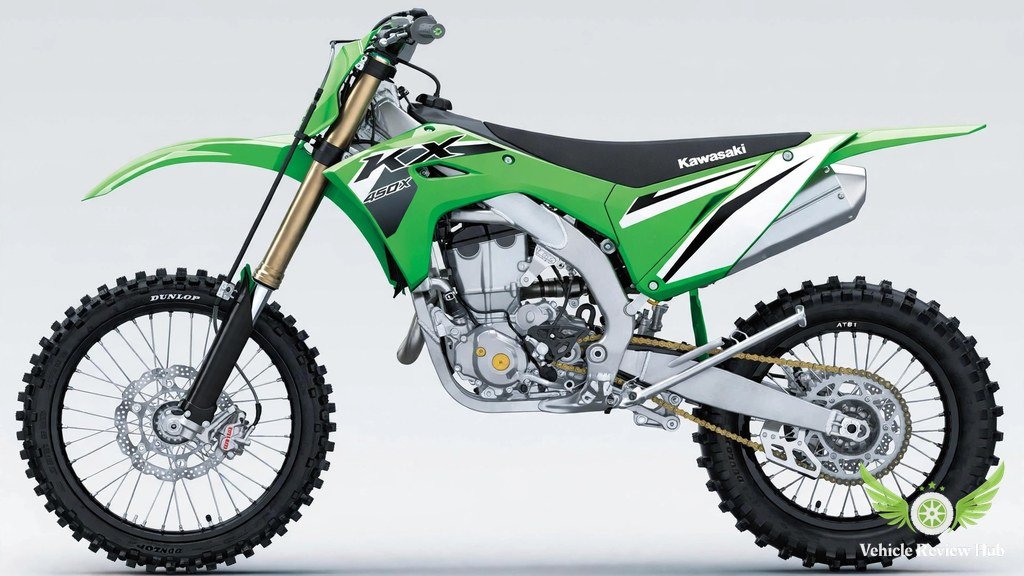
The 2025 Kawasaki KX450X is named in a federal safety recall. The CPSC recall 25-238, announced April 24, 2025, covers about 3,400 model-year 2025 KX450, KX450SR and KX450X motorcycles combined, and the X is listed by its own model number, KX450NSFNN, with its own VIN range. The hazard, in the CPSC’s own words, is that “The primary gear for the crank shaft can fail, posing a crash hazard.” The remedy is a free repair at a Kawasaki dealer, where the primary gear is replaced, and no injuries were reported. This Kawasaki KX450X reliability guide treats the CPSC wording as authoritative and does not repeat other descriptions of the defect as fact.
Kawasaki had already issued a stop-sale on March 11, 2025, after irregular wear was found during in-house dyno testing. Only the 2025 bikes are named: no recall names any 2021, 2022, 2023, 2024 or 2026 X, or the 2027 FX. NHTSA is never cited for this bike — it does not cover competition motorcycles — so a NHTSA search returning nothing means nothing.
| Model (2025) | Model number | VIN range |
|---|---|---|
| KX450 | KX450MSFNN | JKAKXGMCSA008598 – JKAKXGMCSA011475 |
| KX450SR | KX450PSFNN | JKAKXGPCSA000012 – JKAKXGMCSA000971 |
| KX450X | KX450NSFNN | JKAKXGNCSA002194 – JKAKXGNCSA003159 |
Note: These are the three models in CPSC recall 25-238, announced April 24, 2025, covering about 3,400 motorcycles combined. The X’s row is the one that matters for this Kawasaki KX450X reliability guide: model KX450NSFNN, VIN JKAKXGNCSA002194–003159, free primary-gear replacement.
How Mileage, Storage and Previous Care Affect Reliability
Hours matter far more than calendar years on a race bike. A 2021 bike with 20 gentle hours is a safer buy than a 2025 bike with 80 hard hours, and the only honest way to judge a used X is by its hour meter, its service records and its condition. This Kawasaki KX450X reliability guide judges every used bike the same way: ask for the hours, ask for the records, and look at the wear items before believing the price.
Dirt Bike Test’s long-term 2025 bike is a useful picture. After about 35 hours, including two-hour sand races, the bike was holding up fairly well: the stock plastic was still brittle and prone to cracking, and the chain guide and slider were on the weak side, but nothing structural had failed. Storage matters too: a bike kept indoors ages far better than one left outside, and previous care shows in the details — a clean chain, tight bolts and an honest hour reading are worth more than fresh graphics.
Kawasaki KX450X Common Problems and Wear Items
The X’s problem list is short, and every item is labelled with its source. The two headline items are a clutch fibre that broke in testing and a primary gear that failed on the 2025 bikes. Around them sit the smaller wear items: brittle plastic, a weak chain guide and slider, and a loud motor that is normal rather than a defect. This Kawasaki KX450X reliability guide prints each one with its conditions attached.
Clutch Fibre Broke at 27 Hours
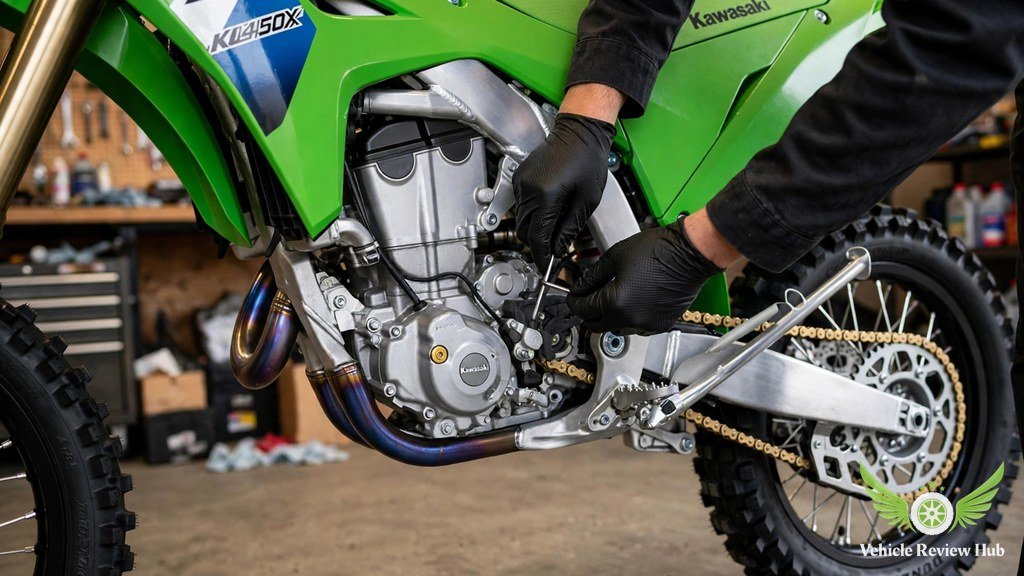
Dirt Bike Test’s 2025 test bike broke a clutch fibre at the 27-hour mark, after a couple of races in a row that were somewhat abusive on the clutch. The testers had gone about 30 hours with several two-hour sand races, and had previously gone about 35 hours on a set of plates without issues. They also say they do not expect it to be a common problem, and this Kawasaki KX450X reliability guide prints that caveat with the failure.
Dirt Bike Test recommends replacing the stock plates and fibres every 10 to 20 hours to be safe, and Kawasaki recommends running a non-synthetic oil to help with clutch life. A rider who slips the clutch hard in sand or mud should treat the shorter end of that range as the real interval.
Primary Gear Can Fail
The primary gear can fail on the 2025 KX450X — the recall defect described above, not a separate problem. The CPSC’s wording is that the primary gear for the crank shaft can fail, posing a crash hazard, and the free repair replaces it at an authorised dealer. No other model year is implicated. This Kawasaki KX450X reliability guide keeps the two problems apart — the clutch fibre is a wear item testing found, while the primary gear is a manufacturing defect only the 2025 bikes carry.
A class action, Melendez v. Kawasaki, exists over the same issue; this Kawasaki KX450X reliability guide mentions it only as an existing lawsuit and does not adopt the law firm’s claim about over-torqued crankshaft bolts. The VIN range is the only reliable way to know whether a particular 2025 X is affected.
Kawasaki KX450X Maintenance Schedule and Servicing
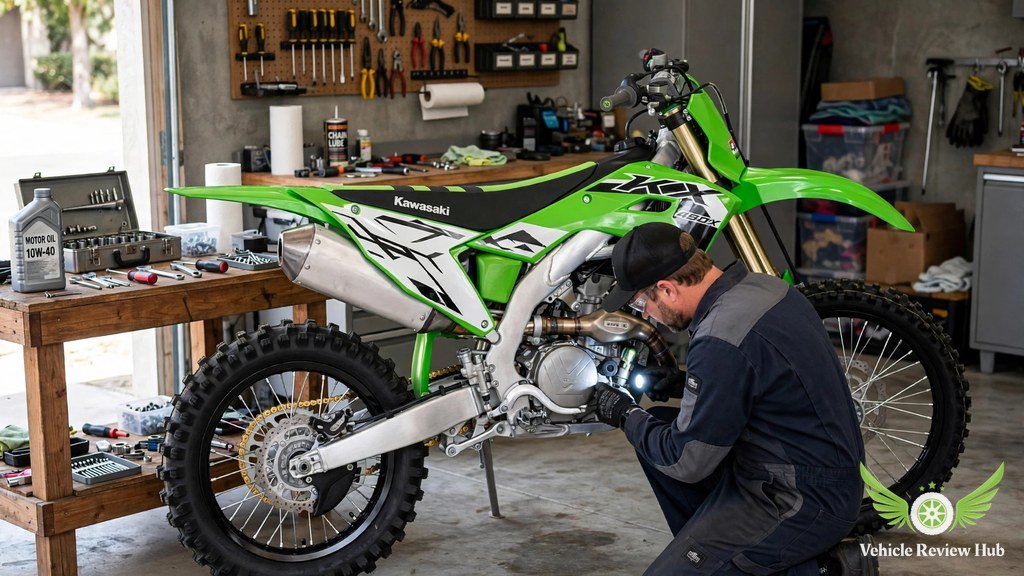
The awkward gap in the X’s paperwork, stated plainly: the X’s own service chart is not public. No published Kawasaki chart lists the KX450X’s piston, valve and fluid intervals, so this Kawasaki KX450X reliability guide uses the KX450 family chart from the 2018 KX450F owner’s manual, pages 35 to 39, labelled as the family figure every time. The family chart is the one used for the standard KX450, whose engine the X shares, so it is the honest substitute.
Valves Checked at 15 Hours
The heading above is wrong, and this guide says so plainly. Valve clearance on the KX450 family is INSPECTED every 3 races or 7.5 hours — not 15 hours. Fifteen hours is the piston interval, not the valve interval, and the two must never be swapped. The family chart’s valve standard is 0.17 to 0.22 mm exhaust and 0.10 to 0.15 mm intake, and a check means measuring those clearances and re-shimming any valve out of range. This Kawasaki KX450X reliability guide corrects the heading here because a buyer who waits 15 hours has waited twice as long as the family chart allows, and tight valves turn a cheap check into an expensive top-end job.
Piston Interval Is Unpublished
The X’s own piston interval is unpublished because the X’s own chart is not public. The KX450 family chart replaces the piston, ring and pin every 6 races or 15 hours, and that family figure is the interval this guide prints for the X, labelled as the family figure. The 2024 and later bikes take the Pro X piston kit at $199.76 from RevZilla, while the 2024-and-later OEM piston price was not verified; about $171 is the 2021–2023 OEM piston only, part 13001-0816.
The oil-change interval is NOT a manual figure, and this guide never prints “oil at 15 hours” as if the manual said it. Dirt Bike Test changes the oil every 5 to 6 hours in its own practice, and Kawasaki recommends a non-synthetic oil for clutch life, the same advice behind the 10-to-20-hour clutch fibre recommendation. Treat oil as a frequent race-interval service and check it after every hard ride.
| Service item | Interval (KX450 family chart) | Notes |
|---|---|---|
| Piston, ring and pin | Replace every 6 races / 15 hours | Family figure; Pro X kit $199.76 (2024–2026) |
| Valve clearance | Inspect every 3 races / 7.5 hours | Ex 0.17–0.22 mm, In 0.10–0.15 mm |
| Clutch plates and fibres | Replace every 10–20 hours | Dirt Bike Test recommendation |
| Engine oil | Frequent race-interval service | No manual figure; Dirt Bike Test practice is 5–6 hours |
| Brake fluid | Change every 2 years | Cup, dust cover and caliper seals also every 2 years |
| Brake hoses | Replace every 4 years | Fuel hose every 5 years |
Note: Every interval here is the KX450 FAMILY chart from the 2018 KX450F owner’s manual, pages 35 to 39 — the X’s own chart is not public. The clutch and oil rows are Dirt Bike Test’s own practice, not manual figures, and this Kawasaki KX450X reliability guide keeps that distinction visible.
Kawasaki KX450X Tires, Brakes and Suspension Maintenance
Tyres, brakes and suspension are where the X shows its two generations most clearly: the 2021–2023 bikes run Nissin brakes and the 2024–2026 bikes run a Brembo front brake, while the fork stays a 49 mm Showa across every year and the rear wheel stays 18 inches. None of this is exotic, but all of it wears. This Kawasaki KX450X reliability guide gives no Kawasaki tyre-pressure figure, because none was verified — a tyre pressure printed without a source would be a guess.
Skid Plate Costs $36.72
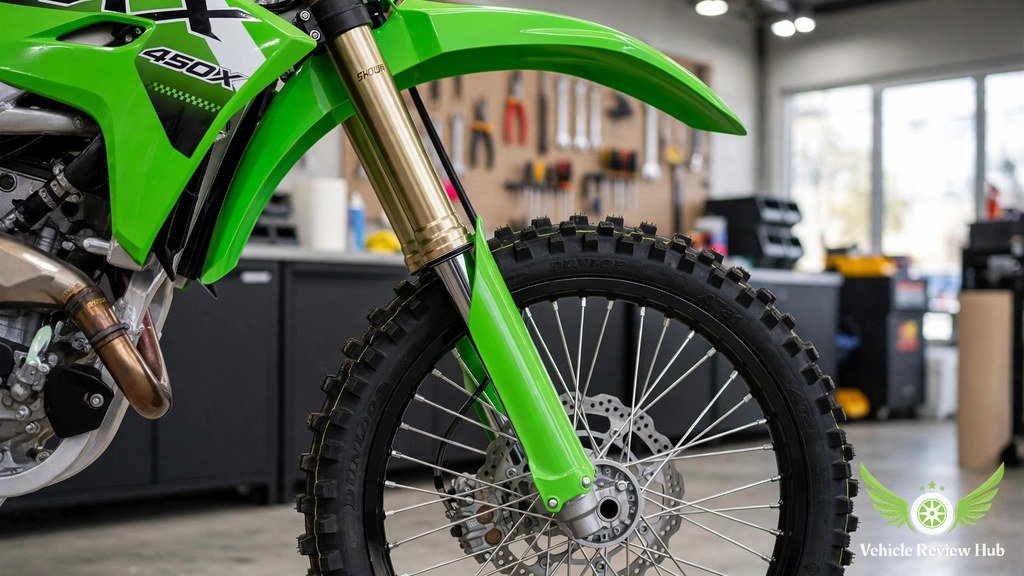
The skid plate is the X’s most confusing part: it was standard, and then it was not. The first generation, 2021 to 2023, came with a plastic skid plate as standard; the second generation, 2024 to 2026, does not, and Dirt Bike Test’s 2024 build had to buy an aftermarket plate. The factory answer is the Kawasaki skid-plate kit, item 99994-1532, at $36.72, which fits every KX450X from 2021 to 2026. This Kawasaki KX450X reliability guide prints that price because it is the one verified factory figure.
The Acerbis off-road skid plate for 2024–2026 was $82.76 on RevZilla, on sale from $91.95, and the Moose Racing aluminium skid plate was $299.95, out of stock. The P3 Carbon plate on Dirt Bike Test’s 2024 build has no verified price, so none is printed. The 2027 FX, $10,599 with a 1.98-gallon tank, restores the skid plate, linkage guard and hand guards as standard — the first standard plate since the first generation.
Tire, Brake and Suspension Checks That Matter
The X runs Dunlop Geomax AT81 tyres — 80/100-21 front and 120/80-18 rear from 2022 on, with a 120/90-18 rear on the 2021 bike — and the 18-inch rear is the off-road wheel, not the motocross bike’s 19-inch. Check tread, sidewalls and pressures before every ride, and check the chain guide and slider at the same time — Dirt Bike Test found both on the weak side after about 35 hours, and a worn guide lets a chain eat a swingarm. This Kawasaki KX450X reliability guide treats the chain guide as a wear item, not a fit-and-forget part.
Brakes and suspension follow the same pattern. The front brake is a 270 mm petal disc and the rear is a 240 mm petal disc on every year — the 250 mm rear figure in some databases is the motocross bike’s, not the X’s — with a Nissin master and caliper on the first generation and a Brembo master and dual-piston caliper on the second. Check pad thickness, disc condition and fluid age, and remember the two-year brake-fluid change. The 49 mm Showa fork is set soft from the factory, a known family trait, and Dirt Bike Test’s 2026 first impression set sag at 106 to 108 mm with the front end prone to diving under hard braking. No fork-oil or shock-oil hour figure was verified, so this Kawasaki KX450X reliability guide prints none — suspension service is a specialist’s job.
| Component | What to check | Interval or note |
|---|---|---|
| Tyres (Dunlop AT81) | Tread, sidewalls, pressures | Before every ride; 80/100-21 front, 120/80-18 rear |
| Chain, guide and slider | Wear, tension, guide condition | Weak — check often; replace when worn |
| Brakes (270/240 mm) | Pad thickness, disc condition, fluid | Fluid every 2 years; Brembo front from 2024 |
| Fork (49 mm Showa) | Seals, sag, clicker settings | Sag 106–108 mm; set soft from the factory |
| Rear shock (Uni-Trak) | Seals, linkage bearings, sag | No verified oil-hour figure — specialist service |
| Skid plate | Fit, cracks, mounting bolts | Gen 1 only; kit 99994-1532, $36.72 |
Note: No Kawasaki tyre-pressure figure and no fork-oil or shock-oil hour figure was verified, so this Kawasaki KX450X reliability guide prints neither. The rear brake is 240 mm every year — the 250 mm figure in some databases is the motocross bike’s, and this Kawasaki KX450X reliability guide prints the 240 mm figure.
Kawasaki KX450X Maintenance and Ownership Costs
Owning a race 450 is not expensive in any single service, but the services come often — judge the cost per hour, not per year. A piston every 15 hours, clutch fibres every 10 to 20 hours, oil every 5 to 6 hours and tyres when they wear out add up to a steady bill. Dealer sale prices are not ownership costs: the $2,500 rebate and the $8,299 dealer price belong in the Kawasaki KX450X review, not in a cost table. This Kawasaki KX450X reliability guide counts only what the owner pays to keep the bike running.
Fuel, Routine Servicing, Tires and Replacement Parts
The X carries a 1.64-gallon tank in every year from 2021 to 2026, and Dirt Bike Test got 45 to 60 minutes per tank on the stock tank in its 2025 review — a range in minutes, not mileage, because no MPG figure exists. A rider doing two-hour races needs a fuel plan: the stock tank is the smallest in the class, and the aftermarket answer is the 2.8-gallon IMS tank on Dirt Bike Test’s desert bike.
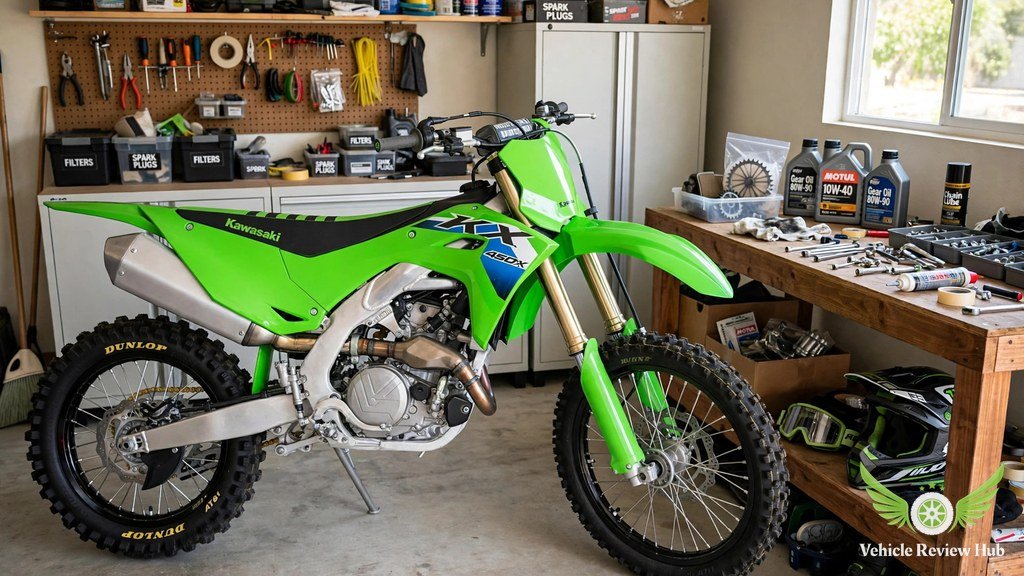
Oil every 5 to 6 hours, clutch fibres every 10 to 20 hours and a piston every 15 hours mean a regular cycle of parts, listed with verified prices below. The Pro X piston kit for 2024–2026 is $199.76 from RevZilla, and the skid-plate kit is $36.72 from Kawasaki. Tyres are the other recurring cost: the stock Dunlop AT81 is the baseline, and Dirt Bike Test’s build chose the Dunlop AT82 front and rear, though no AT82 price was verified. This Kawasaki KX450X reliability guide prints a price only where a source verified it.
2025 Bikes Need a VIN Check
A used 2025 X needs a check before money changes hands. The recall range for the X is VIN JKAKXGNCSA002194–003159, model KX450NSFNN, and a buyer must check the VIN on the right side of the frame head pipe against that range and confirm with a Kawasaki dealer that the free repair was done. The repair is free and no injuries were reported — but an unrepaired bike in that range carries a crash hazard no discount justifies. This Kawasaki KX450X reliability guide treats the VIN check as part of the purchase, and the Kawasaki KX450X comparison puts the 2025 bike’s price against its rivals.
| Item | Price | Source and notes |
|---|---|---|
| Kawasaki skid-plate kit (99994-1532) | $36.72 | Kawasaki accessory; fits 2021–2026 |
| Pro X piston kit (2024–2026) | $199.76 | RevZilla, in stock |
| Acerbis off-road skid plate (2024–2026) | $82.76 | RevZilla, on sale from $91.95 |
| Moose Racing aluminium skid plate | $299.95 | RevZilla, out of stock |
| OEM piston (2021–2023 only) | About $171 | Part 13001-0816; previous generation only |
| Primary-gear recall repair (2025) | Free | CPSC 25-238 remedy at a Kawasaki dealer |
Note: Prices here are verified accessory and parts figures, not dealer sale prices. The $2,500 leftover rebate and the $8,299 dealer price are promotional figures from the review blog, not ownership costs, and this Kawasaki KX450X reliability guide keeps them out of this table. The IMS 2.8-gallon tank and the Dunlop AT82 tyres have no verified price, so no price is printed for them. Every price here is one this Kawasaki KX450X reliability guide could verify.
How to Keep a Kawasaki KX450X Reliable
The X rewards the owner who treats it like the race bike it is: short service intervals, honest records and a five-minute pre-ride check. It won both Dirt Bike Test off-road shootouts, the 2023 stock test and the 2026 off-road shootout, on rideability — smooth power and a comfortable chassis — not on a maintenance-free design. Keeping it reliable means protecting that rideability with routine work, and this Kawasaki KX450X reliability guide is built around that routine. The 2027 KX450FX fixes the skid plate and hand-guard gaps, but the service habits are the same.
Preventive Maintenance, Records and Regular Inspections
Fit an hour meter if the bike lacks one, and write down every service with the hours beside it — the record this Kawasaki KX450X reliability guide asks every owner to keep. A record turns guesswork into a schedule: oil at 5 to 6 hours, clutch fibres at 10 to 20, piston at 15, valves inspected at 7.5. The pre-ride check is the other half — chain tension and guide condition, tyre tread and pressures, brake pads, coolant, air filter and every bolt you can reach, because the KX450 family has a known habit of bolts stripping and falling out while riding. This Kawasaki KX450X reliability guide treats the inspection as part of the ride, and a bike checked every ride rarely fails on one.
Change Clutch Fibres Early
If this guide had one rule, it would be this one: change the clutch fibres early. Dirt Bike Test broke a fibre at 27 hours and recommends replacing the stock plates and fibres every 10 to 20 hours. Use a non-synthetic oil, as Kawasaki recommends for clutch life, and watch for slip under load, drag at the lever or a clutch that feels different after a hard sand race. This Kawasaki KX450X reliability guide puts the clutch first because it is the one wear item with a documented failure, and the fix costs far less than the failure.
Kawasaki KX450X Reliability FAQs
Buyers ask the same questions about the recall, the clutch, the intervals and the costs, and the answers below use the verified figures from this Kawasaki KX450X reliability guide. For prices, shootout wins and the riding experience, see the Kawasaki KX450X review and the Kawasaki KX450X performance guide.
Is the 2025 Kawasaki KX450X under recall?
Yes — this Kawasaki KX450X reliability guide confirms it. CPSC recall 25-238, announced April 24, 2025, names the 2025 KX450X — model KX450NSFNN, VIN JKAKXGNCSA002194–003159 — because the primary gear for the crank shaft can fail, posing a crash hazard, and the remedy is a free repair at a Kawasaki dealer.
How do I check if a used 2025 KX450X has had the recall repair?
Check the VIN on the right side of the frame head pipe against the range JKAKXGNCSA002194–003159, then confirm with a Kawasaki dealer that the free repair was done before buying. This Kawasaki KX450X reliability guide treats the VIN check as part of the purchase.
How long does the clutch last on a Kawasaki KX450X?
Dirt Bike Test broke a clutch fibre at 27 hours on its 2025 test bike after abusive clutch use in two-hour sand races, and it recommends replacing the stock plates and fibres every 10 to 20 hours. Kawasaki also recommends a non-synthetic oil for clutch life, and this Kawasaki KX450X reliability guide repeats that advice.
When should I replace the piston on a Kawasaki KX450X?
The X’s own service chart is not public, so its piston interval is unpublished — the gap this Kawasaki KX450X reliability guide works around with the family chart. This Kawasaki KX450X reliability guide uses the KX450 family chart: piston, ring and pin replaced every 6 races or 15 hours, labelled as the family figure.
How often should I check the valves on a Kawasaki KX450X?
Valve clearance is inspected every 3 races or 7.5 hours on the KX450 family chart, the figure this Kawasaki KX450X reliability guide prints — not 15 hours. Fifteen hours is the piston interval, and this Kawasaki KX450X reliability guide corrects the heading on that point.
How often should I change the oil on a Kawasaki KX450X?
The oil-change interval is not a manual figure, so this Kawasaki KX450X reliability guide prints none. Dirt Bike Test changes the oil every 5 to 6 hours in its own practice, and Kawasaki recommends a non-synthetic oil for clutch life.
How much does a skid plate cost for a Kawasaki KX450X?
The Kawasaki skid-plate kit, item 99994-1532, costs $36.72 and fits the KX450X from 2021 to 2026 — the price this Kawasaki KX450X reliability guide prints. It was standard on the first generation and is an accessory on the 2024–2026 bikes, while the 2027 FX restores it as standard.