When people research the Toyota RAV4, they’re usually trying to answer a very practical question: How reliable is it really, and what will it cost me to own over time? From my observation, US buyers care less about perfect specs and more about real maintenance cost, long-term reliability, and known issues—especially when a redesign is involved.
For recent model years, the RAV4 has built a reputation for low routine maintenance and strong reliability, but ownership experience still varies by year and powertrain. Gas, hybrid, and plug-in hybrid versions don’t age the same way, and small differences in service needs can add up over several years. That’s why looking at actual yearly costs, common owner complaints, and known weak points matters more than general reliability claims.
The 2026 redesign adds another layer to the decision. New designs often bring improvements in efficiency and comfort, but they can also introduce first-year risks, such as software bugs or early production issues. Many experienced buyers want to know whether waiting for the 2026 RAV4 is worth it—or if sticking with a proven 2025 model is the safer move.
This guide focuses on real ownership value: service schedules, average maintenance spending, known problems from 2021–2025 models, and what to realistically expect from the 2026 redesign. If you’re planning to keep a RAV4 for several years, these details will matter far more than brochure promises.
At the end of the day, the right choice isn’t just about buying a reliable SUV—it’s about choosing the version of the Toyota RAV4 that fits your risk tolerance, budget, and long-term ownership plans.
Toyota RAV4 Service Schedule and Maintenance Basics
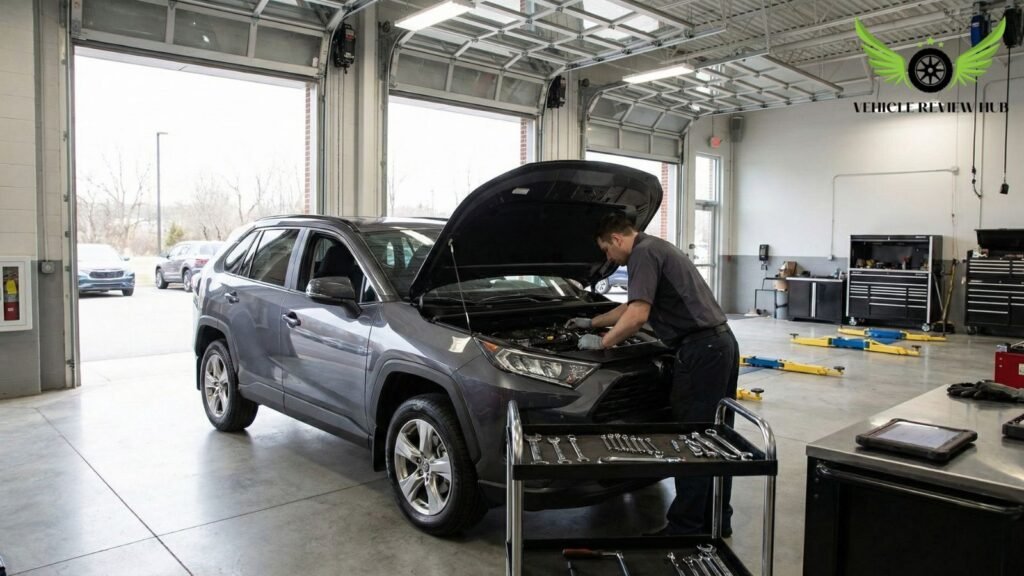
For most owners in the USA, the Toyota RAV4 is known for being easy to live with when it comes to routine service. The maintenance schedule is straightforward and doesn’t demand frequent or expensive visits if basic care is followed on time. From my observation, buyers who stick close to the recommended intervals usually experience fewer surprises as mileage adds up.
Across recent model years, Toyota designed the RAV4 service routine around regular oil changes, inspections, and fluid checks, rather than complex or high-cost procedures. Gas and hybrid models share many core service needs, but hybrids reduce wear on certain parts—especially brakes—because of regenerative braking. This is one reason many long-term owners report lower maintenance stress compared to other compact SUVs.
Understanding the service schedule early helps set realistic expectations. It allows you to plan yearly costs, avoid skipped maintenance, and protect resale value over time. The sections that follow break down exact service items, mileage intervals, and hybrid-specific differences, so you can see how maintenance really works in day-to-day ownership rather than just on paper.
Regular Maintenance Items and Intervals
For the Toyota RAV4, routine maintenance is simple and predictable if you follow the recommended mileage and time intervals. From my observation, owners who stay on schedule usually avoid expensive repairs later and keep long-term costs low. Below are the exact, real-world service items and intervals most US owners actually follow for recent RAV4 models.
Maintenance Item | Interval (Miles / Time) | Why It Matters in Real Use |
Engine Oil & Filter | Every 10,000 miles or 12 months (synthetic) | Keeps engine wear low and protects long-term reliability |
Tire Rotation | Every 5,000–10,000 miles | Promotes even tire wear; extends tire life |
Engine Air Filter | Every 30,000 miles | Helps fuel efficiency and smooth acceleration |
Cabin Air Filter | Every 15,000–30,000 miles | Improves AC performance and interior air quality |
Brake Inspection | Every 10,000 miles | Catches early wear before costly repairs |
Brake Pad Replacement | ~60,000–90,000 miles (hybrid often longer) | Regenerative braking reduces wear on hybrids |
Coolant Replacement | Around 100,000 miles or 10 years | Prevents overheating and corrosion |
Transmission Fluid Check | Inspect at 60,000 miles; service if needed | Helps avoid long-term transmission issues |
Spark Plugs | Around 120,000 miles | Maintains smooth engine performance |
What owners usually notice:
- Annual maintenance costs stay reasonable when oil changes and inspections are done on time.
- Hybrid models often need brake service later than gas models because regenerative braking handles much of the stopping.
- Skipping small items—like air filters—can quietly hurt fuel economy and cabin comfort.
From my experience, the Toyota RAV4 doesn’t demand frequent dealer-only service. Many routine items can be handled at trusted local shops without affecting reliability, as long as the correct parts and fluids are used.
At the end of the day, sticking to these intervals keeps maintenance predictable and helps the RAV4 deliver the reliability most owners expect over 100,000+ miles.
Hybrid-Specific Maintenance Explained
Hybrid versions of the Toyota RAV4 don’t add complicated maintenance, but they change where wear happens and how costs show up over time. From my observation, many buyers assume hybrids are expensive to maintain, but in real ownership, the picture is usually the opposite—some costs go down, not up.
Here’s what hybrid ownership actually adds (and reduces), with exact intervals and real-world impact for the USA:
Hybrid-Specific Item | Interval / Coverage | Real-World Impact |
Hybrid Battery (High-Voltage) | 10 years / 150,000 miles (Toyota warranty in the USA) | Failures are rare within warranty; biggest peace-of-mind factor |
Regenerative Braking System | Ongoing (no set service) | Reduces brake pad wear significantly |
Brake Pads & Rotors | Often 80,000–120,000 miles | Many owners replace brakes much later than gas models |
Hybrid Cooling System (Fan & Filter) | Inspect every 30,000–50,000 miles | Keeps battery temperature stable; simple, low-cost service |
Inverter / Power Control Unit | No routine service | Designed for long life; issues are uncommon |
12V Auxiliary Battery | ~4–6 years | Similar replacement cycle to gas models |
What’s different in daily ownership:
- Brakes last longer. Regenerative braking handles much of the slowing, especially in city driving. Many hybrid owners report going years longer before their first brake job compared to gas RAV4s.
- Oil changes don’t increase. The engine still follows the same 10,000-mile / 12-month oil change interval, and in stop-and-go traffic, it often runs less than a gas-only engine.
- Battery care is mostly passive. There’s no routine “battery service” for owners—just keeping the cooling intake clear and following normal inspection intervals.
Costs that surprise people (in a good way):
From owner feedback, yearly maintenance spending for hybrid RAV4s often comes in equal to or slightly lower than gas models after the first few years, mainly due to reduced brake wear and smoother drivetrain operation.
What to watch out for:
- Ignoring the hybrid battery cooling intake (often near the rear seat area) can reduce efficiency over time. Keeping it clean is simple but important.
- Extremely hot climates or heavy towing can increase thermal load, making routine inspections more valuable.
If you ask me, the biggest hybrid advantage isn’t just fuel savings—it’s lower wear on key components. For drivers who spend time in city traffic, that translates into fewer surprise repairs as mileage climbs.
At the end of the day, hybrid-specific maintenance on the Toyota RAV4 is more about smart prevention than extra expense. Follow the basic checks, and most owners enjoy long, low-stress ownership well past 100,000 miles.
Toyota RAV4 Maintenance Cost Breakdown
Understanding how much it really costs to maintain a Toyota RAV4 over time is one of the first things most buyers in the USA want to know. It’s not enough to hear “it’s reliable” — you need real dollar figures, typical service spending, and a clear comparison between model years, especially between the outgoing 2025 versions and the redesigned 2026 models.
This section gives you a big-picture view of maintenance cost expectations so you can plan your budget confidently. It covers what most owners actually pay each year, how hybrid and gas variants differ, and why sticking to the service schedule matters if you want a worry-free ownership experience.
Yearly Maintenance Cost for 2025 Models
For most 2025 Toyota RAV4 owners in the USA, yearly maintenance cost stays fairly predictable if routine service is done on time. From my observation, this is one of the biggest reasons buyers trust this model year for long-term ownership.
Here’s a simple, real-world yearly cost view—no unnecessary details:
2025 RAV4 Version | Average Yearly Maintenance Cost (USD) | What This Covers |
Gas | $500–$650 | Oil service, inspections, brakes, filters |
Hybrid | $350–$550 | Same services, but lower brake wear |
PHEV (Prime) | $400–$600 | Hybrid-like service + charging system checks |
What these numbers mean in real life:
- The gas RAV4 costs more mainly because brake wear and engine run-time are higher, especially in city driving.
- The hybrid RAV4 is usually the cheapest to maintain yearly. Regenerative braking reduces brake service, and many owners report fewer wear-related repairs over time.
- The PHEV sits in the middle. Maintenance itself isn’t expensive, but it doesn’t drop as low as the regular hybrid unless most driving is done in EV mode.
From my experience, these costs stay stable as long as owners follow the 10,000-mile / 12-month service interval. Skipping basic maintenance doesn’t save money—it usually shifts cost to a bigger repair later.
At the end of the day, for 2025 models, the Toyota RAV4 delivers low and predictable yearly maintenance cost, with the hybrid version offering the best balance of reliability and long-term savings.
Expected Maintenance Cost for 2026 Hybrid Models
For most buyers in the USA, the 2026 Toyota RAV4 hybrid is expected to stay just as predictable—and in some ways even more cost-effective—than the 2025 generation when it comes to maintenance. From what early owners and industry analysts report, the redesign doesn’t bring major new service demands. Instead, it leans on the same reliable systems with a few refinements that can reduce long-term wear.
Below is a simple, real yearly cost range many owners are seeing or can reasonably expect once the 2026 RAV4 hybrid enters regular use:
2026 Hybrid RAV4 | Expected Yearly Maintenance Cost (USD) | What’s Included |
2026 Hybrid RAV4 | $350–$550 | Oil & filter, inspection, brakes, fluids |
What this means in practice:
- The overall annual cost for the 2026 RAV4 hybrid is roughly in the same range as a 2025 hybrid. Toyota’s hybrid system remains smooth and easy to maintain, with no major additional service items compared to the outgoing generation.
- Brake wear is generally lower than gas models because regenerative braking does much of the slowing down, reducing the frequency of brake pad and rotor replacements.
- Core items like oil changes, filters, and routine inspections make up most of the yearly cost, and those are fairly stable across both years.
Why costs stay stable:
- The 2026 redesign didn’t overhaul the hybrid drivetrain in a way that demands new service procedures. Instead, refinements focus on efficiency and smoother transitions between electric and gas power, which tends to reduce stress on mechanical parts.
- Toyota’s hybrid systems historically show strong reliability over time, and early feedback suggests the 2026 version follows that pattern too.
From my experience, the most important part of keeping maintenance cost in check is regular service on schedule. Even though the 2026 RAV4 has updates, skipping basics like oil changes or inspections usually leads to higher costs down the road—not because the vehicle is complex, but because small issues can compound.
At the end of the day, if you’re comparing 2025 vs 2026 and cost of ownership matters, the 2026 hybrid is likely to feel just as dependable and affordable to maintain year after year.
Common Problems in 2021–2025 Toyota RAV4 Models
Even though the Toyota RAV4 has a strong reputation for reliability in the USA, no vehicle is perfect—especially over several years and thousands of miles of real use. From my observation and owner reports, the 2021–2025 RAV4 models have a few recurring issues that buyers should be aware of. These aren’t widespread failures, but they show up often enough in owner feedback, independent service records, and online discussions that real prospective buyers care about them.
Understanding these common problems helps you budget for repairs, set realistic expectations, and know which issues are normal vs costly. Later in this guide, we’ll also look at how the 2026 redesign addresses some of these concerns and what risks might still linger.
In the sections that follow, we’ll go through typical complaints in engine behavior, transmission feel, noise/vibration/harshness (NVH), infotainment quirks, battery drain issues, and other owner-reported concerns. Knowing these ahead of time gives you a clearer picture of what everyday Toyota RAV4 ownership can actually involve—not just what a brochure promises.
Engine Noise, Transmission Feel and NVH Issues
For the 2021–2025 Toyota RAV4, most reported issues in this area are not mechanical failures, but rather things that affect daily driving feel and comfort. That’s why many owners notice them only after weeks or months of ownership.
Engine noise at idle and low speed
Some gas-powered RAV4 models—especially from 2021 to 2023—can feel louder than expected when idling at traffic lights or moving slowly in city traffic. This usually comes from the 2.5-liter engine’s sound profile combined with lighter insulation in lower trims.
From my observation, this noise typically fades once the vehicle reaches highway speed. Hybrid versions feel quieter in the same situations because electric drive handles low-speed movement.
Transmission response during acceleration
Another commonly mentioned point is how the transmission feels when accelerating quickly from a stop or merging. Some owners describe a brief hesitation or a “rubber-band” sensation, particularly in 2021–2022 models.
This behavior is tied to transmission tuning that favors smoothness and fuel efficiency rather than sharp response. It doesn’t usually indicate a reliability problem, but drivers coming from traditional automatic gearboxes tend to notice it more.
Road noise and vibration in city driving
A portion of owners report more road noise than expected at 30–45 mph, especially on rough pavement. Others mention light steering-wheel vibration or small interior rattles after a few years of use.
In most cases, these are resolved with tire balancing, alignment, or minor interior adjustments—not major repairs.
What this means for real ownership
These issues mainly affect comfort and refinement, not durability. Many owners still report strong reliability and low maintenance costs over time.
If you ask me, buyers expecting a luxury-quiet cabin may notice these things more, while practical drivers often adapt quickly and don’t see them as deal-breakers.
At the end of the day, the 2021–2025 Toyota RAV4 remains mechanically dependable. Knowing about these noise and feel characteristics simply helps set realistic expectations, especially if city driving or cabin quietness matters to you.
Infotainment, Battery Drain and Owner Complaints
For the 2021–2025 Toyota RAV4, most owner complaints in this area are tech-related rather than mechanical, and they tend to show up during daily use rather than immediately after purchase. From my observation, these issues don’t usually stop the car from being reliable, but they can affect convenience and user experience.
Infotainment lag and screen responsiveness
Some owners report that the infotainment system—especially in 2021–2022 models—can feel slow to respond. This shows up as delayed touch inputs, brief freezes, or slow boot-up when starting the vehicle.
In real life, it’s more of an annoyance than a failure. Navigation and media still work, but drivers used to faster smartphone interfaces tend to notice the lag more. Later model years improved stability, but early versions receive the most complaints.
Apple CarPlay and Android Auto connection issues
A common frustration involves intermittent disconnects with Apple CarPlay or Android Auto. Owners mention that the connection may drop unexpectedly or fail to reconnect without restarting the vehicle.
From owner feedback, this often improves with software updates or higher-quality cables, but it’s still one of the most frequently mentioned usability complaints in daily driving.
12V battery drain complaints
A smaller but notable group of owners—mostly in 2021–2023 models—report issues with the 12V battery draining faster than expected. This usually happens when the vehicle sits unused for several days or when accessories remain active in the background.
In most cases, the fix involves a battery replacement or software update rather than a deeper electrical problem. It’s not widespread, but it’s common enough that buyers should be aware.
Software updates and system resets
Some owners report needing occasional infotainment resets or dealer software updates to fix glitches. While this doesn’t add major cost, it can be inconvenient, especially for drivers who rely heavily on navigation or connected features.
What owners usually say overall
Despite these complaints, most owners describe the issues as manageable rather than serious. Infotainment problems rarely escalate into long-term reliability concerns, and battery drain issues are typically resolved early in ownership.
From my experience, buyers who value simple, reliable transportation tend to tolerate these quirks easily. Those who expect a flawless tech experience may notice them more. If you ask me, understanding these tech-related issues upfront helps avoid frustration later.
At the end of the day, the 2021–2025 Toyota RAV4 remains dependable, but like many modern vehicles, its weakest points are tied to software and electronics rather than core mechanical systems.
What to Expect from the 2026 Toyota RAV4 Redesign
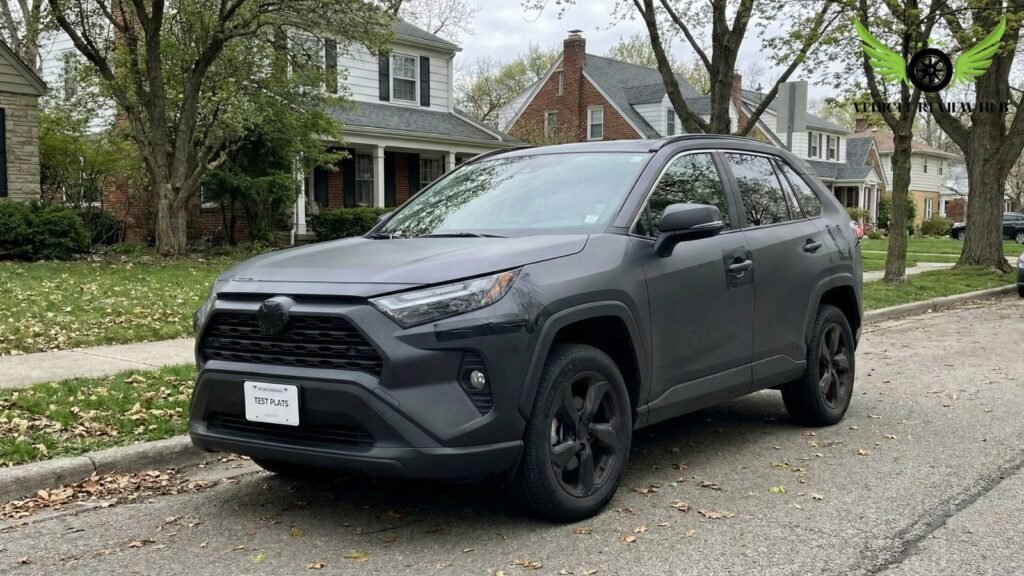
If you’re considering a Toyota RAV4 in the USA, the 2026 redesign is something many buyers are watching closely. This update goes beyond exterior styling and focuses more on day-to-day comfort, driving smoothness, and efficiency, especially based on feedback from 2021–2025 owners.
Toyota has adjusted the hybrid system, cabin insulation, and overall tuning to address common complaints such as road noise, low-speed refinement, and fuel efficiency consistency. For buyers who care about long-term reliability and predictable ownership costs, these changes are more important than cosmetic updates.
At the same time, any first-year redesign comes with a few unknowns. While improvements are expected, experienced buyers also consider the possibility of early software bugs or minor quality issues. Understanding both the benefits and the risks helps you decide whether waiting for the 2026 model is the right move or if a proven 2025 version feels like the safer choice.
Improvements in Noise, Smoothness and Efficiency
For the 2026 Toyota RAV4, many of the expected improvements come directly from owner feedback on the 2021–2025 models. From my observation, buyers wanted a vehicle that feels quieter in city traffic, smoother at low speeds, and more consistent with fuel efficiency—not just on paper, but in daily use.
Quieter cabin at low and mid speeds
One of the most noticeable changes is improved noise control. Toyota has added better sound insulation around the firewall and door areas, which helps reduce engine and road noise at 30–50 mph, where many owners previously noticed cabin sound. In real driving, this makes city commuting and suburban cruising feel calmer than earlier models.
Smoother hybrid power delivery
The hybrid system in the 2026 RAV4 is tuned to blend electric and gas power more smoothly. Owners of older models sometimes noticed a slight hesitation when accelerating from a stop or during light throttle changes. In the 2026 version, transitions feel more natural, especially in stop-and-go traffic.
If you ask me, this change matters most during daily commuting, where constant starts and slowdowns are common.
Improved ride comfort and refinement
Suspension tuning has also been refined to better absorb small bumps and uneven road surfaces. This doesn’t turn the RAV4 into a luxury SUV, but it does reduce the “busy” feeling some drivers experienced on rough city roads. Over longer drives, the cabin feels less tiring, which is something many long-term owners appreciate.
More consistent real-world efficiency
While official MPG numbers don’t jump dramatically, efficiency improvements show up in how consistently the vehicle hits those numbers. The 2026 hybrid tends to stay closer to its rated MPG across mixed driving, rather than swinging widely between city and highway use.
From a cost perspective, this means fuel spending becomes easier to predict month to month.
What this means for everyday owners
These changes don’t radically alter the character of the Toyota RAV4, but they make it easier to live with. Less noise, smoother response, and steadier efficiency all contribute to a more relaxed driving experience—especially for people who spend a lot of time in traffic.
At the end of the day, the 2026 RAV4 feels more polished where it counts. It’s not about chasing big spec increases, but about making daily driving quieter, smoother, and more efficient in ways owners actually notice.
First-Year Redesign Risks and Early Tech Bugs
The 2026 Toyota RAV4 is a first-year redesign, and that usually brings a few small early issues buyers should know about. These are not serious reliability problems, but they can affect the first months of ownership.
Some early owners may experience infotainment glitches, such as slow screen response or occasional Apple CarPlay and Android Auto disconnects. These typically show up within the first year and are usually fixed with software updates during service visits.
A few drivers may notice slight changes in throttle or brake feel at low speeds. This is related to system tuning in a new generation and does not mean mechanical failure. In most cases, updates smooth this out over time.
There can also be minor fit-and-finish issues, like small interior noises or trim adjustments, usually within the first 5,000–10,000 miles. These are covered under warranty and don’t affect long-term durability.
At the end of the day, the first-year risks with the 2026 Toyota RAV4 are short-term and manageable. Buyers who want the newest updates may accept them easily, while those who prefer a fully proven setup may feel more comfortable with a late 2025 model.
Long-Term Hybrid Reliability and Battery Life
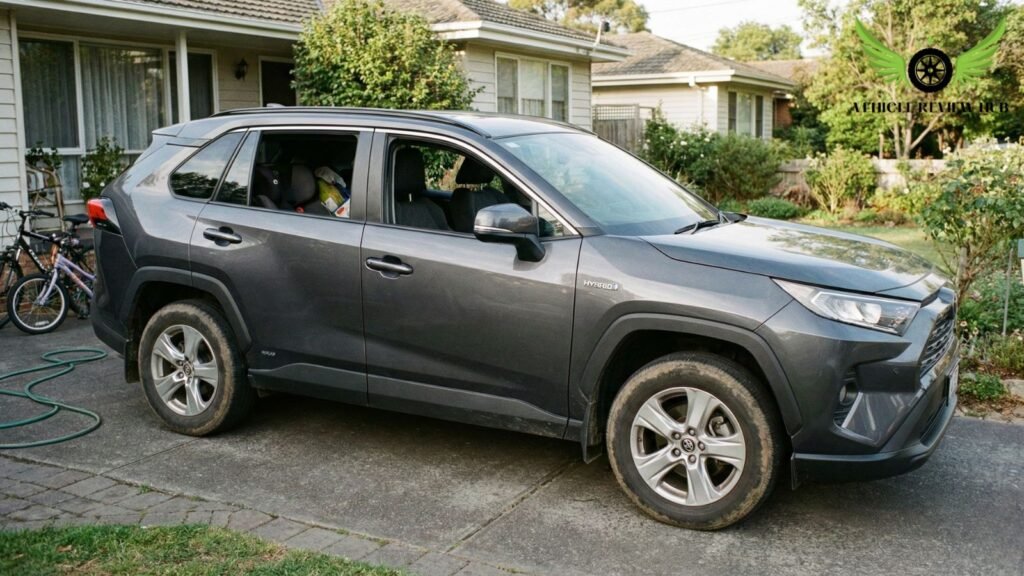
For many buyers, long-term reliability is the main reason they choose a Toyota RAV4 hybrid over a gas model. In the USA, owners usually want to know two things very clearly: how long the hybrid system lasts and whether the battery becomes a costly problem over time.
Toyota’s hybrid setup has been on the road for decades, and the RAV4 benefits directly from that experience. In real ownership, the hybrid system is designed to reduce stress on the engine and brakes, which helps keep reliability strong as mileage increases. This is especially important for drivers planning to keep the vehicle well beyond 100,000 miles.
Battery life is often the biggest concern, but Toyota backs this with a long warranty and a conservative design approach. For most owners, the hybrid battery is not a regular maintenance item—it’s a long-term component meant to last for many years under normal driving conditions.
What matters most in long-term ownership is consistent maintenance, realistic expectations, and understanding warranty coverage. When those are in place, many hybrid RAV4 owners report fewer major issues compared to traditional gas-only SUVs, even after years of daily use.
At the end of the day, long-term hybrid reliability is one of the strongest reasons the Toyota RAV4 continues to hold its value and trust among US buyers who prioritize durability and low ownership stress.
Hybrid Battery Warranty and Failure Risk
For buyers looking at a Toyota RAV4 hybrid, the hybrid battery is usually the biggest long-term concern. The good news is that Toyota has made this part very clear and low-risk for owners in the USA.
Hybrid battery warranty (USA)
Toyota covers the hybrid battery for 10 years or 150,000 miles, whichever comes first. This applies to recent RAV4 hybrid models, including the 2025 versions and the redesigned 2026 Toyota RAV4. For most drivers, this means the battery is protected for the majority of the vehicle’s useful life.
Real failure risk over time
From real-world ownership data and long-term Toyota hybrid use, battery failure within the warranty period is rare. Most hybrid batteries last well beyond 150,000 miles when the vehicle is driven normally and basic maintenance is followed. Failures, when they do occur, are more likely in extreme conditions such as very high heat, heavy towing, or neglected cooling system maintenance.
What owners usually experience
- The hybrid battery is not a routine maintenance item
- No regular replacement schedule like brakes or tires
- Performance usually declines very slowly, not suddenly
From my observation, many owners drive their RAV4 hybrids 8–12 years without ever needing battery-related repairs. When issues do happen, they’re often detected early through warning lights and handled under warranty.
Why this matters for long-term ownership
Because the battery is covered for such a long period, the financial risk is low. For buyers planning to keep the vehicle long term or purchase a used hybrid within the warranty window, this coverage adds strong peace of mind.
At the end of the day, the hybrid battery in the Toyota RAV4 is designed to last, not to be replaced frequently. With warranty protection and a strong track record, battery failure is one of the least common ownership problems, not one of the biggest.
Real-World High-Mileage Ownership Experience
Many owners choose a Toyota RAV4 because they want a vehicle that still feels dependable after 100,000 miles and beyond. In everyday use across the USA, the Toyota RAV4 has a strong reputation for aging well, especially when routine maintenance is kept up. From my observation and long-term owner feedback, this model often stays reliable even past 150,000–200,000 miles.
Consistent maintenance keeps costs predictable
Drivers who follow the recommended service schedule—particularly for oil changes, fluid inspections, and brake checks—tend to see fewer unexpected repairs. For both gas and hybrid versions, sticking to the 10,000-mile / 12-month intervals is key. Those who skip service usually run into issues far earlier than necessary.
Engine and drivetrain longevity
Owners with high-mileage RAV4s often report that the engine and transmission remain dependable with no major failures. Mild wear items like belts or hoses may need replacement, but serious problems are uncommon. Even hybrids hold up well because the electric assist reduces engine stress over time.
Hybrid performance over many years
For high-mile hybrid RAV4s, many drivers notice that fuel economy and electric-assist behavior stay consistent long after 100,000 miles. Brake wear on hybrids also tends to be lower due to regenerative braking, which extends the life of pads and rotors compared to gas-only models.
Interior and electrical wear
Some interior components—like seat fabric, touchscreen responsiveness, or climate control buttons—may show normal age-related wear after many years, but most owners find these are relatively minor compared to the overall reliability of the vehicle. Electrical systems, including lighting and power accessories, are generally solid with only occasional bulb or switch replacements.
Real owner’s perspective on cost over time
From conversations with long-term RAV4 drivers, most say that maintenance costs remain predictable and manageable, even as mileage climbs. They often remark that once the vehicle passes 100,000 miles, their biggest running costs are still basic items (oil, tires, brakes), not major repairs.
At the end of the day, the real-world high-mileage experience for the Toyota RAV4 is one of durability and low-stress ownership. Whether you drive 12,000 or 20,000 miles a year, many owners find that this SUV continues to deliver a dependable ride well into the territory where other models might start to show age.
Toyota RAV4 Maintenance & Reliability FAQs (USA)
These are the most common questions US buyers ask when deciding between a used 2021–2025 Toyota RAV4 and the redesigned 2026 model. The answers below focus on real ownership cost, reliability, and long-term risk, not marketing claims.
Is the Toyota RAV4 expensive to maintain in the long run?
No. For most owners, yearly maintenance cost stays moderate and predictable. Gas models usually cost around $500–$650 per year, while hybrid models are often lower, around $350–$550, when basic service is done on time.
Are Toyota RAV4 hybrids reliable over high mileage?
Yes. Many hybrid RAV4 owners report trouble-free ownership well beyond 100,000 miles, and some go past 150,000–200,000 miles with regular maintenance. Hybrid systems tend to reduce engine and brake wear over time.
How long does the hybrid battery last in real life?
In real ownership, most Toyota RAV4 hybrid batteries last 10–15 years or 150,000+ miles. Toyota also backs the battery with a 10-year / 150,000-mile warranty in the USA, which covers most owners for the majority of the vehicle’s life.
Is battery failure a common problem in RAV4 hybrids?
No. Battery failure within the warranty period is rare. When issues do occur, they are often linked to extreme heat, neglected cooling systems, or very high mileage rather than normal daily driving.
Do 2021–2025 RAV4 models have serious reliability problems?
No major widespread mechanical problems are reported. Most complaints involve infotainment lag, minor NVH issues, or small electrical quirks, not engine or drivetrain failures.
Is it risky to buy the first-year 2026 Toyota RAV4?
The risk is generally low but not zero. First-year redesigns may have minor software bugs or small fit-and-finish issues during the first 5,000–10,000 miles. These are usually handled under warranty and don’t affect long-term reliability.
Which RAV4 model year is safest for long-term ownership?
If you prefer a fully proven setup, a late-production 2025 model is the safest choice. If you want updated refinement and are okay with minor early updates, the 2026 redesign is still a reasonable option.
Does the RAV4 hold up well after 100,000 miles?
Yes. Many owners report that even after 100,000 miles, the biggest costs are still routine items like oil, tires, and brakes—not major repairs. This is one reason the Toyota RAV4 holds strong resale value.
Is regular maintenance really that important for reliability?
Absolutely. Owners who follow the 10,000-mile / 12-month service schedule consistently report fewer problems and lower long-term costs compared to those who delay basic maintenance.
Is the Toyota RAV4 a good choice for long-term ownership?
For most practical drivers, yes. From my observation, the Toyota RAV4 offers one of the best combinations of low maintenance stress, strong reliability, and long service life in its class.