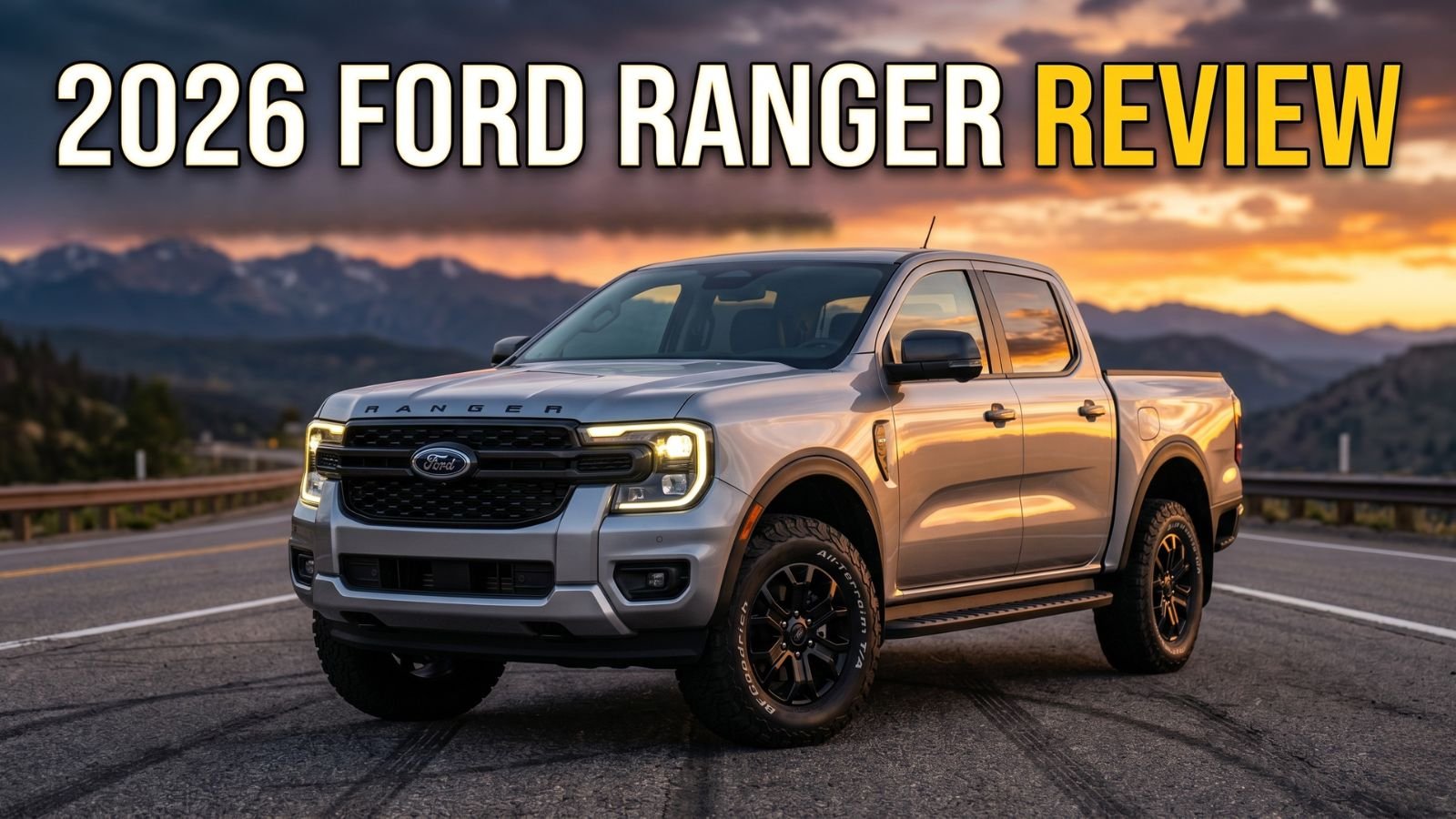
The Ford Ranger remains one of the most practical mid-size trucks for buyers who want strong towing capability, modern technology, and comfortable daily driving without moving to a full-size pickup. The latest USA model brings updated styling, improved interior quality, and more powerful engine options, making it far more refined than previous generations.
Current models are available with a 2.3L EcoBoost engine producing 270 horsepower and 310 lb-ft of torque, while higher trims offer a 2.7L EcoBoost V6 with 315 horsepower and 400 lb-ft of torque. The Ranger Raptor uses a 3.0L twin-turbo V6 delivering 405 horsepower and 430 lb-ft of torque. Properly equipped models can tow up to 7,500 pounds, which is one of the strongest ratings in the mid-size truck segment.
This Ford Ranger Review covers real pricing, trim differences, towing performance, interior comfort, fuel economy, safety features, ownership costs, and real-world driving experience in the USA market. Buyers looking for a balanced truck for commuting, work use, road trips, or light off-road driving often consider the Ranger because it combines everyday usability with serious capability.
Ford Ranger Price varies depending on trim level, drivetrain, and optional packages. Base XL models usually start in the low-to-mid $30,000 range, while the Ranger Raptor can approach $60,000 with destination charges and dealer-installed options. Based on recent market trends, XLT models continue to offer the best balance between value, comfort, and equipment for most buyers.
This Ford Ranger Buying Guide is designed to help USA truck buyers understand which trim level, engine, and configuration best fits their daily driving needs, towing requirements, and long-term ownership expectations.
Ford Ranger Overview and Latest USA Model Updates
The latest Ford Ranger brings major upgrades in engine performance, towing capability, interior technology, and off-road performance compared to the previous USA model. Ford redesigned the truck with a wider body, improved suspension setup, upgraded cabin layout, and more advanced safety technology to compete more directly with trucks like the Toyota Tacoma and Chevrolet Colorado.
The current lineup includes XL, XLT, Lariat, and Ranger Raptor trims. Standard models use a 2.3L EcoBoost engine producing 270 horsepower and 310 lb-ft of torque. Higher trims offer an available 2.7L EcoBoost V6 with 315 horsepower and 400 lb-ft of torque. The Ranger Raptor uses a 3.0L twin-turbo EcoBoost V6 generating 405 horsepower and 430 lb-ft of torque. Every model comes paired with a 10-speed automatic transmission.
Ford also improved overall capability. Properly equipped XL, XLT, and Lariat models can tow up to 7,500 pounds, while maximum payload capacity reaches approximately 1,788 pounds depending on drivetrain configuration. The Ranger Raptor is tuned more for off-road driving and has a lower towing capacity of around 5,510 pounds.
What Changed in the New Ford Ranger
The biggest update in the new Ford Ranger is the addition of more powerful engine options and a more refined cabin experience. Earlier USA models only offered the 2.3L EcoBoost engine, but newer versions now include the optional 2.7L EcoBoost V6 for buyers needing stronger acceleration, better highway pulling power, and improved towing performance.
Ford also redesigned the interior with larger digital displays and upgraded infotainment systems. Most trims now include wireless Apple CarPlay, Android Auto, digital instrument displays, USB charging ports, and Ford Co-Pilot360 safety technology. Higher trims add larger screens, 360-degree cameras, adaptive cruise control, and premium interior materials.
The Ranger Raptor became one of the biggest additions to the lineup. It features FOX Live Valve suspension, wider fenders, locking differentials, all-terrain tires, and Baja driving modes developed for high-speed off-road driving.
Available Trims in the USA Market
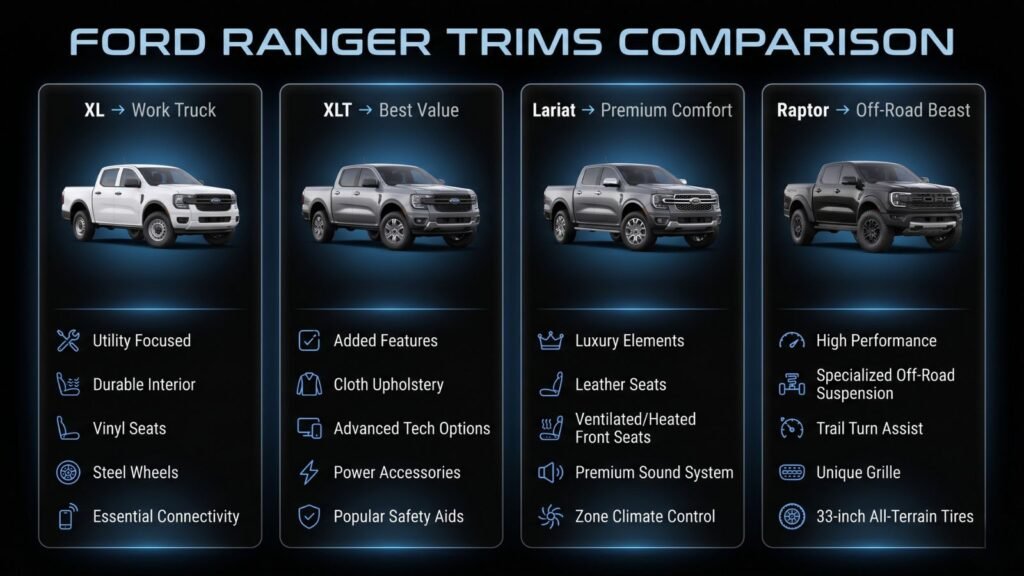
Trim | Engine | Horsepower | Main Focus |
XL | 2.3L EcoBoost | 270 HP | Work use and affordability |
XLT | 2.3L EcoBoost | 270 HP | Daily driving and value |
Lariat | 2.3L / 2.7L EcoBoost | Up to 315 HP | Comfort and technology |
Raptor | 3.0L Twin-Turbo V6 | 405 HP | High-performance off-road driving |
The Ford Ranger XL is designed mainly for buyers needing strong towing capability and practical work-truck features at a lower price point. It includes essential safety systems, modern infotainment features, and strong utility performance.
The XLT trim is widely considered the best value in the lineup because it balances price, comfort, technology, and daily usability. It adds upgraded interior materials, alloy wheels, more driver-assistance features, and additional convenience equipment.
The Lariat trim focuses more on premium comfort and technology. It adds leather-trimmed seating, larger digital displays, upgraded lighting, advanced safety systems, and available V6 performance.
The Ranger Raptor is built specifically for serious off-road driving. Its upgraded suspension system, wider track, locking differentials, and high-output twin-turbo V6 make it the most capable off-road model in the Ford Ranger lineup.
Ford Ranger Pricing and Best Trim Selection
The Ford Ranger lineup in the USA includes XL, XLT, Lariat, and Ranger Raptor trims. Pricing depends on drivetrain, engine choice, and optional equipment. Current USA MSRP starts around $33,350 for the XL trim, while the Ranger Raptor starts near $56,070 before destination charges and dealer-added packages.
XL vs XLT vs Lariat vs Raptor Differences
Trim | Starting MSRP | Engine | Output | Main Use |
XL | $33,350 | 2.3L EcoBoost I-4 | 270 HP / 310 lb-ft | Work and utility |
XLT | $35,875 | 2.3L EcoBoost I-4 | 270 HP / 310 lb-ft | Daily driving and value |
Lariat | $43,755 | 2.3L I-4 / Available 2.7L V6 | Up to 315 HP / 400 lb-ft | Comfort and technology |
Raptor | $56,070 | 3.0L Twin-Turbo V6 | 405 HP / 430 lb-ft | High-performance off-road use |
The Ford Ranger XL is the most affordable trim and focuses mainly on towing capability, payload performance, and lower operating cost. It includes the 2.3L EcoBoost engine, a 10-speed automatic transmission, and Ford Co-Pilot360 safety technology.
The XLT trim adds upgraded interior materials, LED exterior lighting, alloy wheels, improved infotainment features, and more driver-assistance technology. Many buyers choose the XLT because it offers the strongest balance between price, comfort, towing capability, and daily usability.
The Lariat trim is designed for buyers wanting more comfort and premium technology. It includes larger digital displays, leather-trimmed seating, upgraded interior materials, advanced convenience features, and the available 2.7L EcoBoost V6 producing 315 horsepower and 400 lb-ft of torque.
The Ranger Raptor is built specifically for serious off-road performance. It uses a 3.0L twin-turbo EcoBoost V6 with 405 horsepower and 430 lb-ft of torque, combined with FOX Live Valve suspension, locking differentials, wider fenders, and specialized off-road drive modes.
Real Dealer Pricing and Markup Trends
Actual Ford Ranger Price often changes depending on dealership inventory, trim demand, and regional truck markets. XL and XLT models usually remain close to MSRP in most USA markets. Higher-demand trims such as the Ranger Raptor frequently receive dealer markups because of limited inventory and strong off-road demand.
Dealer-installed accessories can also increase final pricing. Common add-ons include bedliners, wheel packages, off-road tires, tonneau covers, and towing equipment. Factory ordering is often the best option for buyers trying to avoid unnecessary dealer-installed package costs.
Best Ford Ranger Trim for Daily Use
For most buyers, the XLT trim provides the best overall value in the current lineup. It offers strong towing capability, modern safety technology, upgraded infotainment features, and better interior comfort without the higher pricing of the Lariat or Ranger Raptor.
The XL works best for buyers focused mainly on work use and lower ownership cost. The Lariat is a better option for drivers wanting more premium comfort and technology during long-distance driving. The Ranger Raptor is designed primarily for off-road enthusiasts rather than regular commuting because of its higher price and more aggressive suspension setup.
For daily driving, commuting, road trips, and occasional towing, the XLT remains the most balanced choice in the Ford Ranger lineup.
Ford Ranger Interior and Cabin Experience
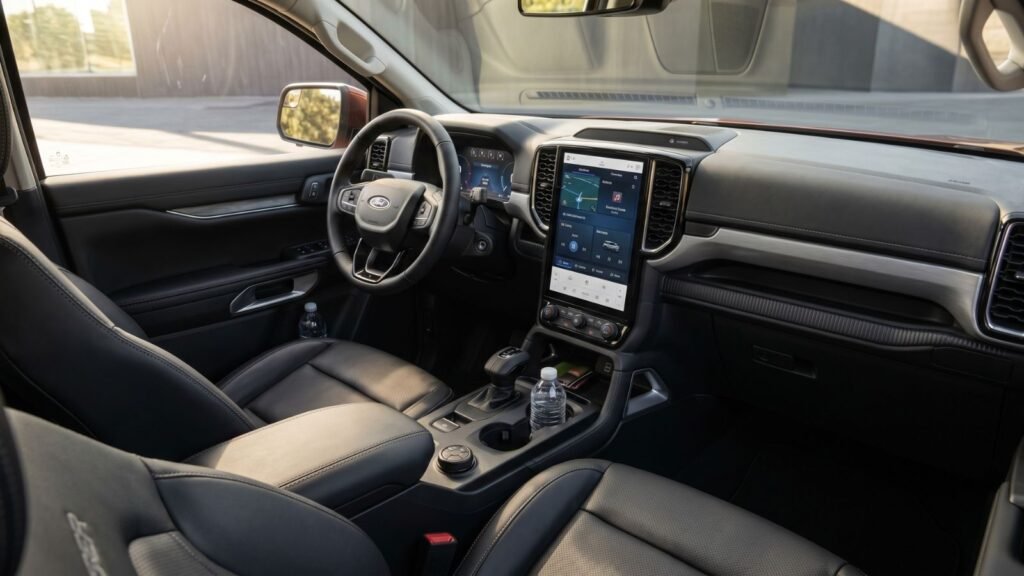
The latest Ford Ranger received major interior upgrades for the USA market, focusing on improved technology, passenger comfort, and everyday practicality. Compared to the previous generation, the cabin now feels more modern, with larger digital displays, better storage solutions, and upgraded materials across higher trims. Ford also redesigned the dashboard layout to improve usability during daily driving and towing.
Front and Rear Passenger Space
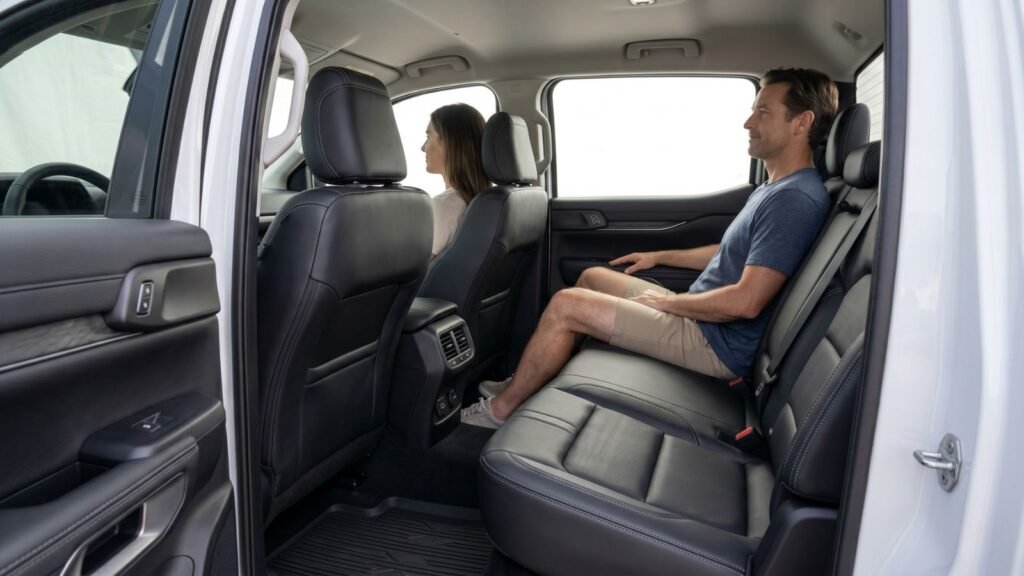
The Ford Ranger sold in the USA uses a four-door SuperCrew configuration with seating for five passengers. Front legroom measures 43.2 inches, while rear legroom measures 34.6 inches. Front headroom is 41.0 inches and rear headroom is 38.3 inches.
Interior Dimension | Measurement |
Front Legroom | 43.2 inches |
Rear Legroom | 34.6 inches |
Front Headroom | 41.0 inches |
Rear Headroom | 38.3 inches |
Front Shoulder Room | 57.1 inches |
Rear Shoulder Room | 56.7 inches |
The front seats provide strong outward visibility and comfortable driving support for long highway trips. Rear-seat space is practical for families and daily commuting, although taller passengers may notice tighter knee room during extended travel compared to some larger mid-size trucks.
Higher trims such as the Lariat include power-adjustable heated front seats, leather-trimmed seating surfaces, and additional cabin comfort features designed for long-distance driving.
Dashboard Technology and Infotainment
The newest Ford Ranger uses Ford’s SYNC 4 infotainment system with a standard 10.1-inch touchscreen. Higher trims offer a larger 12-inch vertically mounted touchscreen combined with a 12.4-inch digital instrument cluster.
Technology Feature | Availability |
10.1-inch Touchscreen | Standard |
12-inch Vertical Touchscreen | Available |
Wireless Apple CarPlay | Available |
Wireless Android Auto | Available |
12.4-inch Digital Cluster | Available |
Wireless Phone Charging | Available |
360-Degree Camera | Available |
B&O Premium Audio System | Available |
The infotainment system supports over-the-air software updates, voice controls, connected navigation, and multiple USB charging ports. Ford kept physical climate-control buttons in the dashboard, which improves usability while driving compared to fully touch-based systems.
Storage, Practicality and Cabin Materials
The Ford Ranger cabin was redesigned to improve everyday storage and work-truck usability. Ford added larger door pockets, wider cupholders, upgraded center-console storage, and additional small-item compartments throughout the cabin.
Rear seats can also provide under-seat storage space depending on trim configuration. The truck bed remains highly practical for tools, camping gear, and work equipment, with approximately 43.5 cubic feet of cargo volume.
Material quality changes significantly across trims. The XL uses durable hard-touch materials designed mainly for work use. The XLT adds upgraded interior finishes and more soft-touch surfaces, while the Lariat includes leather-trimmed seating, premium dashboard materials, ambient lighting, and upgraded interior detailing.
Compared to the previous generation, the latest Ford Ranger cabin feels quieter, more refined, and significantly more modern for everyday USA driving conditions.
Ford Ranger Safety and Driver Assistance Features
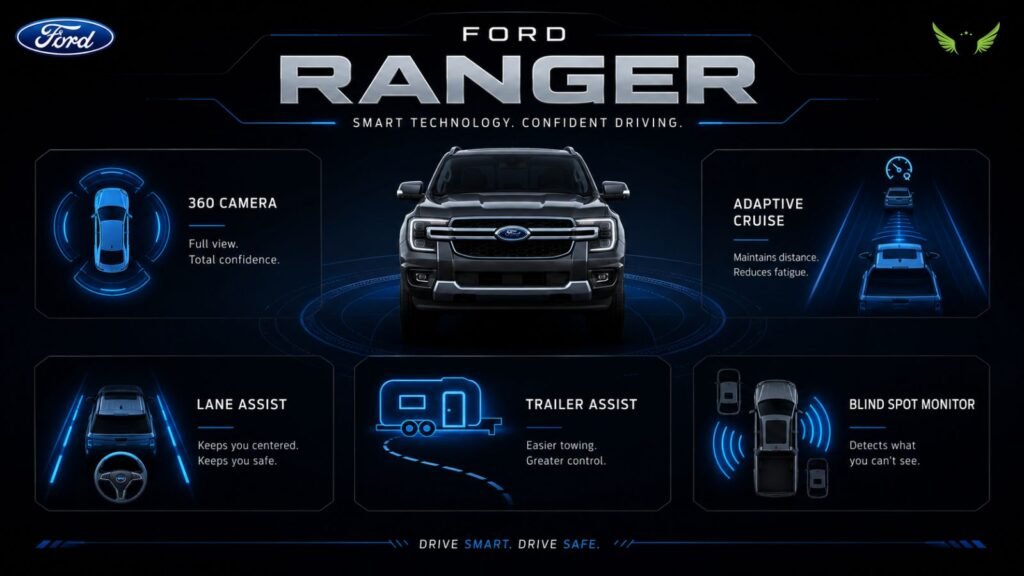
The latest Ford Ranger includes upgraded safety systems and driver-assistance technology designed for daily driving, towing, and highway travel. Ford expanded the standard Ford Co-Pilot360 package and improved towing-support systems across higher trims. Compared to the previous generation, the current Ranger offers stronger collision-prevention technology, improved camera visibility, and more advanced trailer-monitoring features.
Standard Safety Features
Every Ford Ranger sold in the USA includes Pre-Collision Assist with Automatic Emergency Braking, Forward Collision Warning, Lane-Keeping System, Rearview Camera, Auto High-Beam Headlamps, and Electronic Stability Control as standard equipment.
Trailer Sway Control is also included across the lineup. This system automatically helps stabilize the truck if trailer movement becomes unstable during towing. Post-Collision Braking can automatically apply braking after an impact to help reduce secondary collisions.
Ford also equips the Ranger with multiple airbags, rollover mitigation technology, traction control systems, and tire-pressure monitoring systems designed to improve overall driving safety.
Advanced Driver Assistance Technology
Higher Ford Ranger trims include more advanced driver-assistance systems focused on towing visibility, highway comfort, and parking support. Available Adaptive Cruise Control automatically maintains following distance during highway driving and helps reduce driver fatigue during long trips.
The available Blind Spot Information System with Trailer Coverage expands blind-spot monitoring zones based on trailer length, improving visibility during towing. This feature is especially useful for buyers who regularly tow boats, campers, or utility trailers.
Upper trims also include a 360-degree camera system that improves trailer hookup visibility, parking accuracy, and off-road visibility. Front and rear parking sensors, Rear Cross-Traffic Alert, connected navigation, and Trailer Reverse Guidance are also available depending on trim level.
Ranger Raptor models add additional off-road camera views and terrain-management systems developed for trail driving and rough terrain conditions.
Crash Safety Ratings Explained
The Ford Ranger received a 5-star ANCAP safety rating with strong performance across multiple crash-test categories.
Crash Test Category | Safety Score |
Adult Occupant Protection | 84% |
Child Occupant Protection | 93% |
Vulnerable Road User Protection | 74% |
Safety Assist Systems | 83% |
Crash testing showed strong side-impact protection, stable passenger-compartment performance, and effective autonomous emergency braking operation. Child occupant protection scores were especially strong compared to many trucks in the mid-size segment.
Ford has also issued recalls affecting some Ranger models related to side-curtain airbags, rearview camera software, steering systems, and brake booster software updates. These repairs are completed free of charge through authorized Ford dealerships.
The current Ford Ranger provides one of the stronger safety and towing-support packages available in the mid-size truck segment, especially for buyers who regularly tow trailers or drive long highway distances.
Ford Ranger Pros and Cons
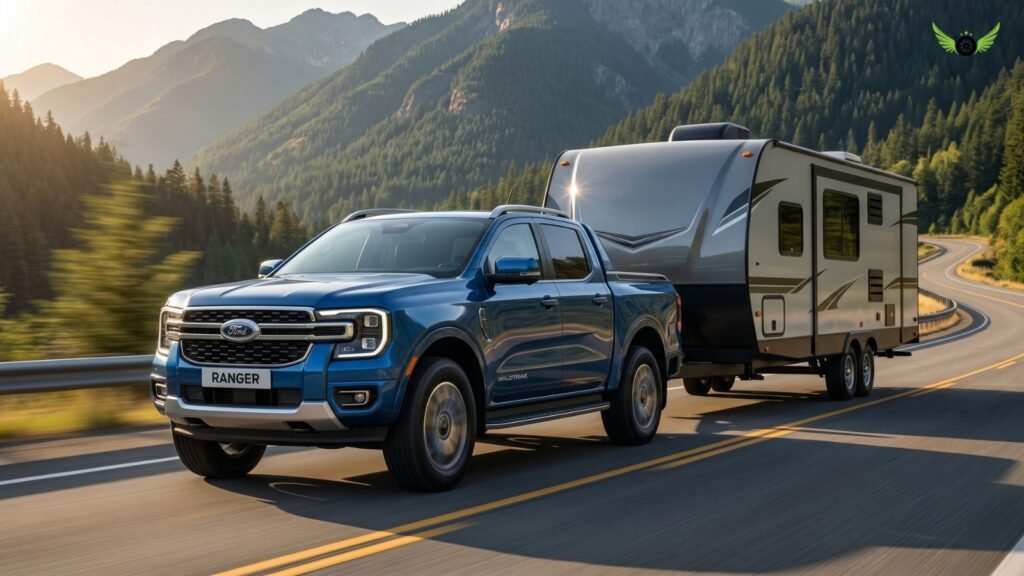
The 2026 Ford Ranger remains one of the most capable mid-size trucks in the USA market because it combines strong towing performance, turbocharged engine power, modern technology, and practical daily usability. The latest generation improved ride comfort, cabin quality, safety technology, and off-road capability compared to older Ranger models. Real owner feedback and long-term testing also show a few consistent weaknesses related to rear-seat space, fuel economy on higher trims, and software-related recalls.
Best Things Owners Love
One of the biggest strengths of the 2026 Ford Ranger is engine performance. The standard 2.3L EcoBoost engine produces 270 horsepower and 310 lb-ft of torque, while the available 2.7L EcoBoost V6 delivers 315 horsepower and 400 lb-ft of torque. The Ranger Raptor uses a 3.0L twin-turbo EcoBoost V6 producing 405 horsepower and 430 lb-ft of torque.
Many USA owners say the truck feels stronger during highway acceleration and towing than several competing mid-size trucks. Independent testing recorded 0–60 mph times of around 6.2 seconds for the 2.3L model and approximately 5.6 seconds for the V6 configuration.
Towing capability is another major advantage. Properly equipped Ford Ranger models can tow up to 7,500 pounds, which remains one of the strongest ratings in the segment. Owners who tow campers, boats, and utility trailers often mention stable highway towing performance and strong turbocharged torque during uphill driving.
The latest Ford Ranger also receives strong feedback for ride quality and daily driving comfort. Compared to the previous generation, the updated suspension setup and wider body design improve highway stability and overall cabin comfort.
Many owners also praise the SYNC 4 infotainment system, wireless Apple CarPlay and Android Auto connectivity, and the available 12-inch touchscreen for fast response speed and simple menu layout. Higher trims such as the Lariat and Ranger Raptor receive positive feedback for seat comfort and upgraded interior materials.
Most Common Complaints from USA Owners
The most common complaint involves rear-seat space. Although the latest Ford Ranger improved interior dimensions compared to older models, taller rear passengers may still find rear knee room tighter than some competitors during longer trips.
Fuel economy is another concern on higher-performance trims. Ranger Raptor models and V6-equipped trucks consume noticeably more fuel during city driving, towing, and aggressive off-road use compared to the standard 2.3L EcoBoost configuration.
Some owners also report that the touchscreen-focused dashboard requires more screen interaction than traditional physical-control layouts, especially while towing or driving on rough roads.
Recent recalls affecting certain Ranger models include side-curtain airbag issues, rearview camera software problems, steering-related concerns, and brake software updates. Ford dealerships perform these repairs free of charge.
Despite these complaints, real-world owner feedback remains largely positive because the 2026 Ford Ranger continues to deliver strong towing capability, modern technology, practical daily usability, and competitive performance in the mid-size truck segment.
Should You Buy the Ford Ranger?
The 2026 Ford Ranger is a strong choice for buyers who want a mid-size truck with modern technology, strong towing capability, turbocharged performance, and practical daily usability. The latest generation improved ride comfort, cabin technology, towing stability, and overall refinement compared to previous Ranger models.
Current USA models offer up to 7,500 pounds of towing capacity, available V6 performance, wireless smartphone connectivity, and advanced driver-assistance systems. The lineup also gives buyers flexibility between work-focused trims, comfort-oriented trims, and high-performance off-road models.
Best Type of Buyer for This Truck
The Ford Ranger works best for buyers who need one truck for commuting, towing, road trips, and weekend use without moving to a larger full-size pickup. Many USA owners choose the Ranger because it is easier to park and maneuver than a full-size truck while still providing strong towing and hauling capability.
The XLT trim remains the best overall option for most buyers because it balances price, comfort, towing capability, safety technology, and daily usability. Buyers who tow boats, campers, or utility trailers regularly often prefer the available 2.7L EcoBoost V6 because of its stronger torque output and improved highway pulling performance.
The Ranger Raptor is designed mainly for buyers focused on off-road driving. Its FOX Live Valve suspension, locking differentials, wider track, and 405-horsepower twin-turbo V6 make it one of the most capable factory off-road trucks in the mid-size segment.
The Ford Ranger is also a strong option for buyers who want modern technology features such as SYNC 4 infotainment, wireless Apple CarPlay, available 12-inch touchscreen displays, and advanced towing-support systems without moving into luxury-truck pricing.
Who Should Avoid the Ford Ranger
Buyers needing maximum rear-seat space may find the Ranger less comfortable for taller rear passengers during long trips. Rear legroom measures 34.6 inches, which is smaller than some competing trucks.
Drivers focused mainly on fuel economy may also prefer smaller crossovers or hybrid trucks because V6-equipped Ranger models and the Ranger Raptor consume noticeably more fuel during city driving, towing, and aggressive off-road use.
The current USA Ford Ranger lineup also offers fewer cab and bed configurations than some competitors. Buyers needing multiple bed lengths or extended-cab setups may prefer alternatives with more body-style options.
For buyers who regularly tow extremely heavy trailers or need maximum payload capacity every day, a full-size truck such as the Ford F-150 may provide better long-term capability.
Overall, the 2026 Ford Ranger remains one of the most balanced mid-size trucks for buyers who want strong towing performance, modern technology, practical daily usability, and available off-road capability in a manageable truck size.
Frequently Asked Questions About the Ford Ranger
Many buyers search for quick answers before choosing a mid-size truck. These Ford Ranger FAQs cover the most common questions about towing, fuel economy, reliability, trims, comfort, and real-world ownership in the USA market.
Is the 2026 Ford Ranger worth buying?
Yes. The 2026 Ford Ranger offers strong towing capability, turbocharged engine performance, modern technology, and practical daily usability in the mid-size truck segment.
What is the towing capacity of the 2026 Ford Ranger?
Properly equipped XL, XLT, and Lariat models can tow up to 7,500 pounds. The Ranger Raptor is rated at approximately 5,510 pounds.
Which Ford Ranger trim is best for daily driving?
The XLT trim is the best overall option for most buyers because it balances price, comfort, technology, towing capability, and fuel economy.
How much horsepower does the Ford Ranger have?
The 2.3L EcoBoost produces 270 horsepower, the 2.7L EcoBoost V6 produces 315 horsepower, and the Ranger Raptor produces 405 horsepower.
Is the Ford Ranger fuel efficient?
The 2.3L EcoBoost RWD model is rated around 21 mpg city and 26 mpg highway, making it competitive for a mid-size truck.
Does the Ford Ranger come with Apple CarPlay and Android Auto?
Yes. The latest Ford Ranger includes wireless Apple CarPlay and Android Auto through the SYNC 4 infotainment system.
Is the Ford Ranger reliable?
The Ford Ranger has a RepairPal reliability rating of 4 out of 5 and ranks above average among mid-size trucks for long-term dependability.
Does the Ford Ranger have a V6 engine?
Yes. The available 2.7L EcoBoost V6 produces 315 horsepower and 400 lb-ft of torque. The Ranger Raptor uses a separate 3.0L twin-turbo V6 producing 405 horsepower.
Is the Ranger Raptor good for off-road driving?
Yes. The Ranger Raptor includes FOX Live Valve suspension, locking differentials, all-terrain tires, and Baja drive modes designed for serious off-road performance.
Does the Ford Ranger have enough rear-seat space?
The latest Ranger improved rear-seat space compared to older models, but taller rear passengers may still find rear knee room tighter than some competitors during long trips.