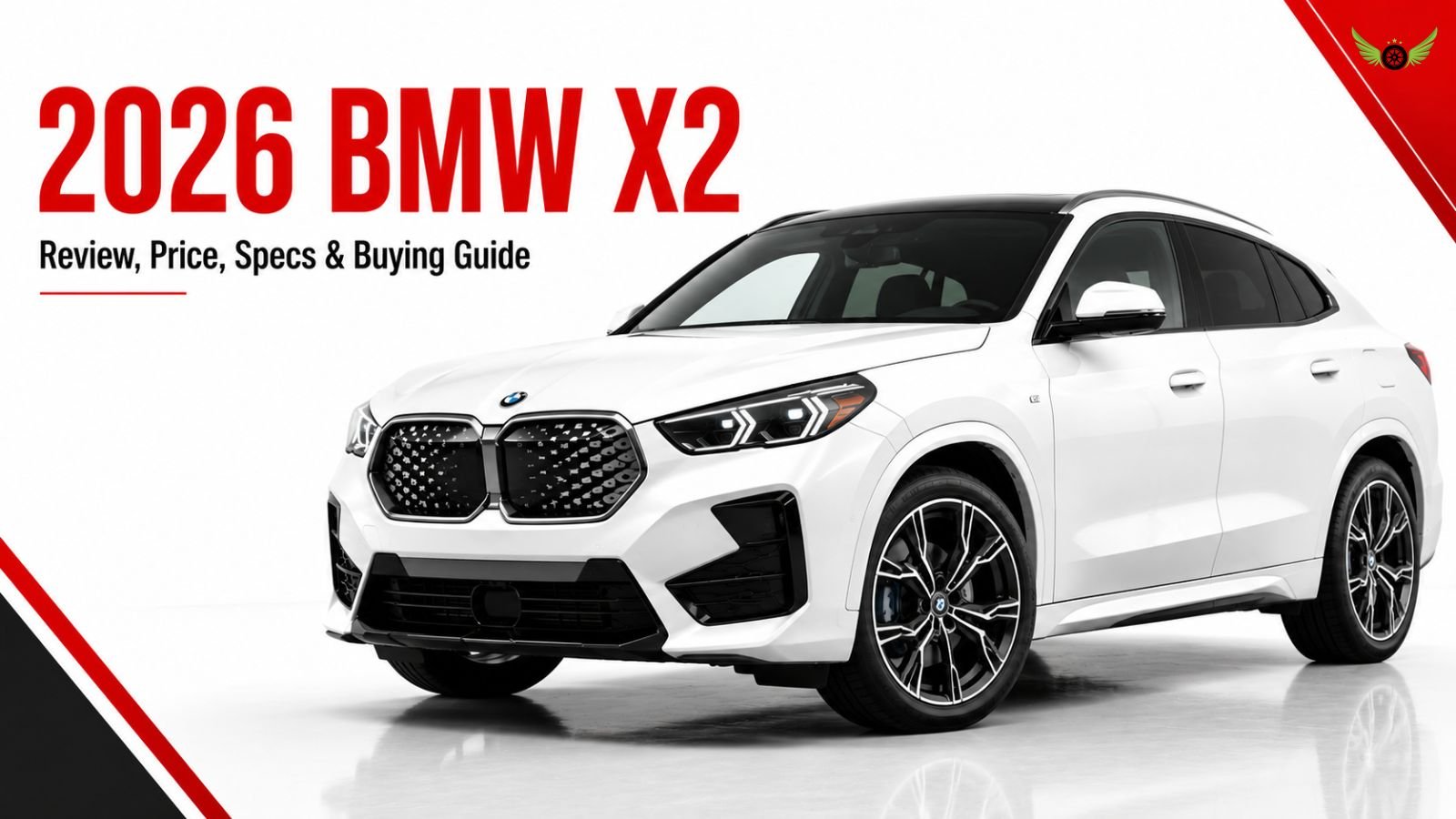
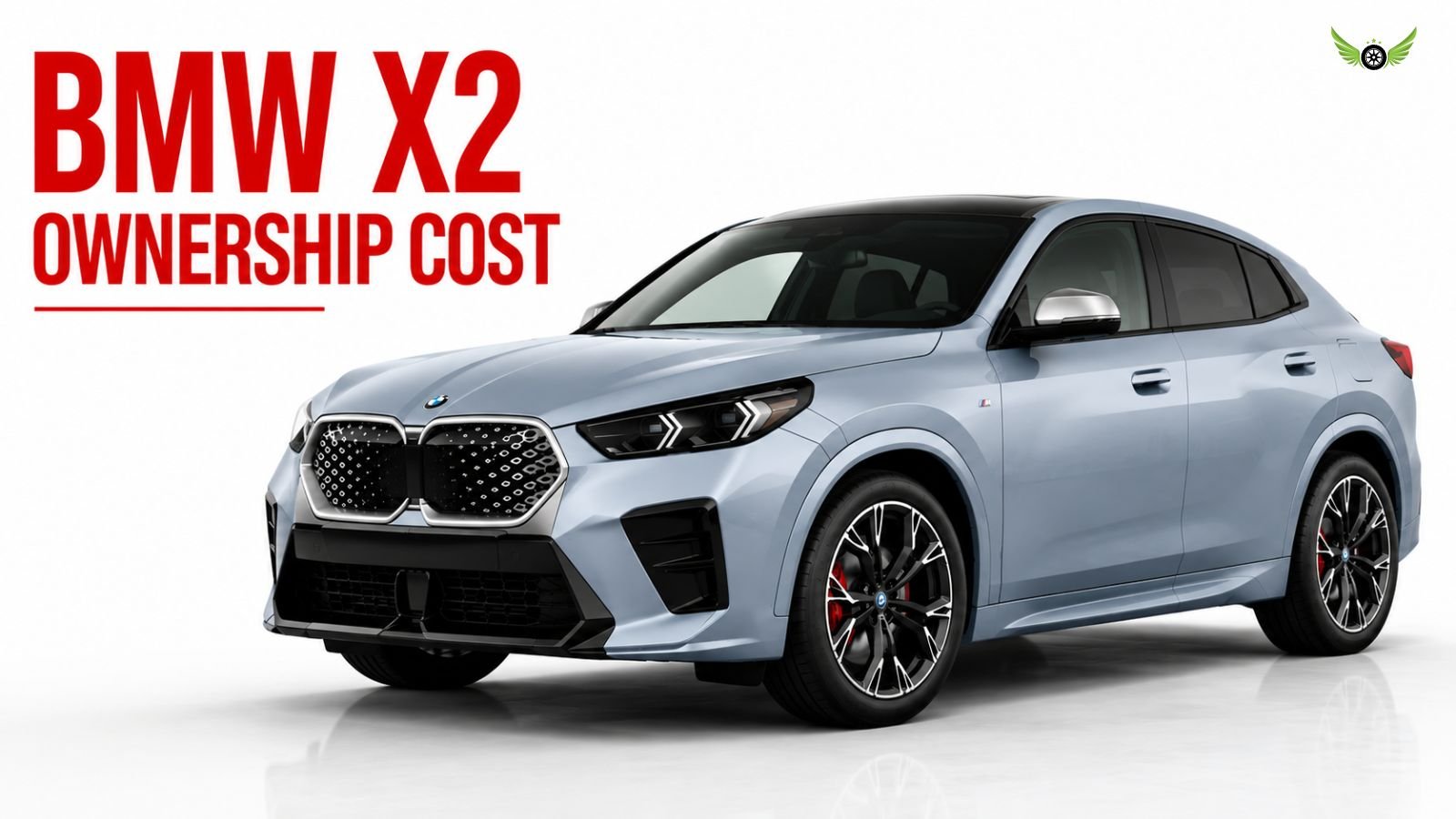
The 2026 BMW X2 is a luxury crossover whose real ownership cost extends well beyond its purchase price. Current CarEdge estimates put five-year ownership costs at $62,134, including approximately $26,768 in depreciation and $13,455 in insurance. These figures are estimates and can vary with mileage, location, driving habits, insurance profile, and trim.
For buyers considering the BMW X2, depreciation is particularly important because it can account for a large share of the total cost. CarEdge estimates a 53% depreciation rate after five years, with an estimated resale value of $23,557. That makes BMW X2 Resale value an important part of the ownership decision, especially for buyers planning to sell or trade within five years.
Insurance is another recurring expense. CarEdge currently estimates BMW X2 Insurance at about $2,680 per year, although an individual driver’s premium can differ substantially based on age, location, driving record, coverage, and insurer.
Overall, the BMW X2 can be a reasonable long-term luxury crossover choice, but buyers should evaluate the complete BMW X2 Ownership Cost rather than focusing only on the purchase price or monthly payment.
BMW X2 Total Cost of Ownership
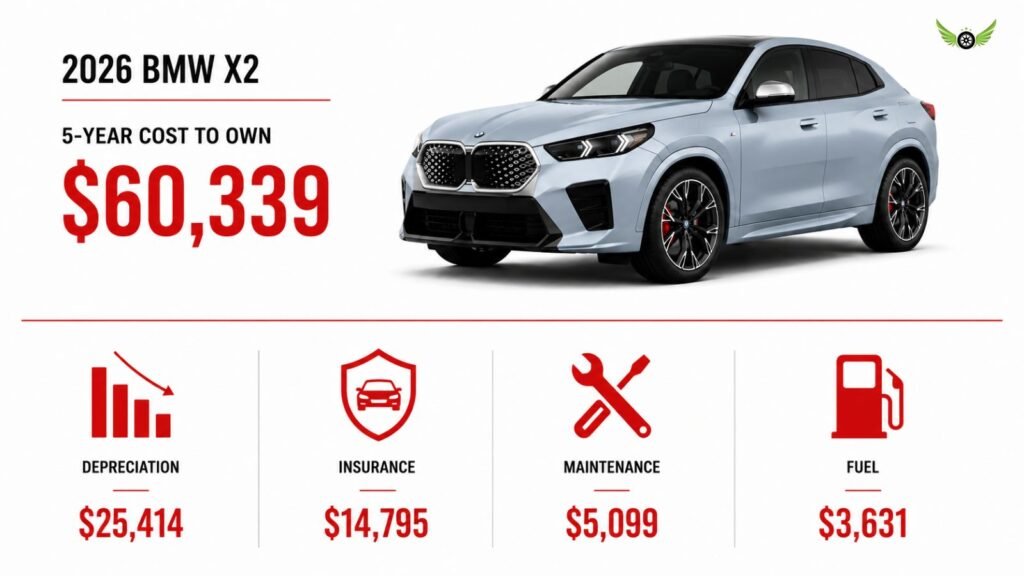
The 2026 BMW X2 has a meaningful ownership cost beyond its purchase price. Kelley Blue Book currently estimates $60,339 over five years, including operating expenses and depreciation. Its estimate assumes $34,925 in out-of-pocket costs plus $25,414 in depreciation. CarEdge gives a similar but slightly higher five-year estimate of $62,134, showing that ownership projections can vary by methodology.
The main expenses are fuel, insurance, maintenance, financing, and the vehicle’s loss in value. For a buyer planning to keep the vehicle for several years, depreciation and insurance deserve particular attention because they can represent a large portion of the overall budget.
Fuel, Maintenance & Insurance Expenses
Kelley Blue Book estimates $3,631 for fuel, $5,099 for maintenance, $14,795 for insurance, and $2,071 for repairs over five years for its standard 2026 X2 cost-to-own calculation. That puts insurance ahead of fuel and routine maintenance as the largest operating expense in its estimate.
Expense | 5-Year KBB Estimate |
Fuel | $3,631 |
Maintenance | $5,099 |
Insurance | $14,795 |
Repairs | $2,071 |
Insurance estimates should not be treated as a personal quote. CarEdge currently estimates about $2,680 per year for a 40-year-old driver with good credit, a clean record, full coverage, and around 13,000 miles annually. Location, age, claims history, credit profile, coverage, and insurer can change the premium substantially.
Fuel consumption also depends on trim and driving conditions. The xDrive28i is rated at 28 mpg combined, while the M35i is rated at 26 mpg combined.
Financing, Taxes & Fees (Loan/Lease Scenarios)
Financing adds interest to the purchase price, while registration and state fees depend on where the vehicle is purchased and registered. KBB currently estimates $5,867 in financing costs and $3,462 in state fees over five years for its standard 2026 X2 calculation.
For a financed purchase, the important figure is the total amount paid over the loan rather than the monthly payment alone. A lower monthly payment can simply mean a longer repayment period and more interest. Lease payments should likewise be evaluated alongside the amount due at signing, mileage allowance, taxes, acquisition charges, and potential end-of-lease costs.
Because financing rates and lease incentives change frequently, buyers should use the current BMW Financial Services offer and their actual credit terms when calculating the final purchase or lease cost.
BMW X2 Insurance Cost
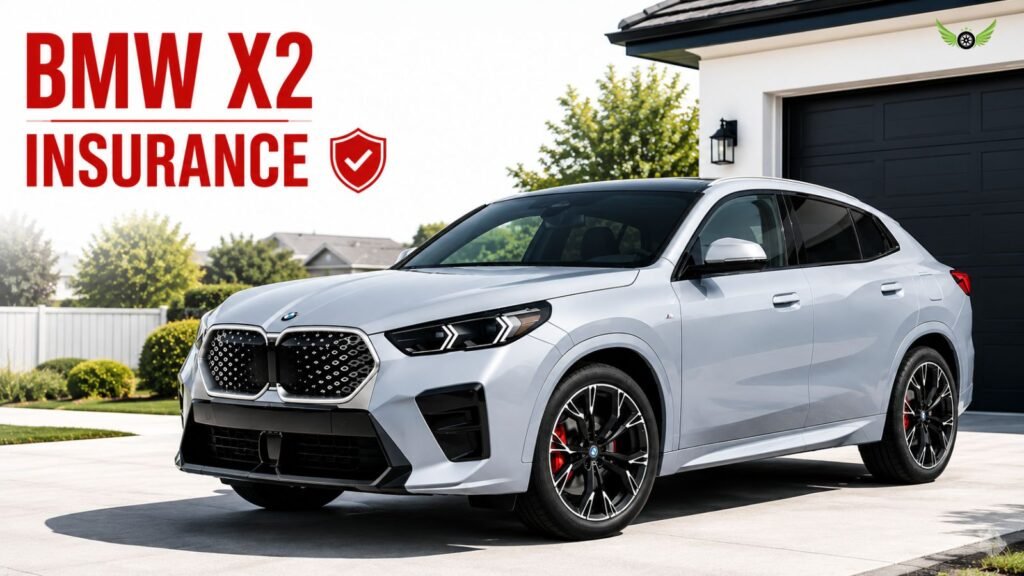
Insurance is one of the larger recurring expenses when budgeting for a 2026 BMW X2. Current estimates differ because insurers and research sites use different driver profiles and coverage assumptions. CarEdge estimates $2,680 per year for a 40-year-old driver with good credit, a clean record, full coverage, and about 13,000 miles annually. CarInsurance.com estimates a higher $3,057 per year, while Insuranceopedia projects about $2,150 for a 2026 model. These figures are estimates, not guaranteed quotes.
Average Insurance Premium (Approx. $2,700/yr)
For a typical full-coverage policy, using roughly $2,700–$3,100 per year is a reasonable planning range based on current published estimates. The difference between sources comes from their individual assumptions, so buyers should not treat the $2,700 figure as a fixed national premium.
Source | Estimated Annual Premium | Basis |
CarEdge | $2,680 | 40-year-old, clean record, good credit, full coverage |
CarInsurance.com | $3,057 | Average premium estimate |
Insuranceopedia | $2,150 | 2026 model-year projection |
CarEdge also shows how strongly driver risk can change the premium. Its estimate rises from $2,680 at age 40 with a clean record to $3,935 after a recent at-fault accident.
Factors Affecting Insurance Rates (Driver, Location)
Your final premium depends heavily on the driver and where the vehicle is insured. Age, driving history, annual mileage, credit history where permitted, coverage limits, deductible, and claims history can all affect the rate. Allstate also identifies the vehicle itself, driving habits, location, coverage choices, and deductibles as important pricing factors.
Location can create a particularly large difference. CarEdge estimates a clean-driver premium of about $1,240 in Hawaii versus $3,864 in Connecticut for its X2 profile. Compare.com also reports substantial state-to-state differences in its current data.
For an accurate budget, compare quotes from several insurers using the same liability limits, comprehensive and collision coverage, deductible, and annual mileage. That gives a much more useful estimate than relying on a national average alone.
BMW X2 Depreciation & Resale Value
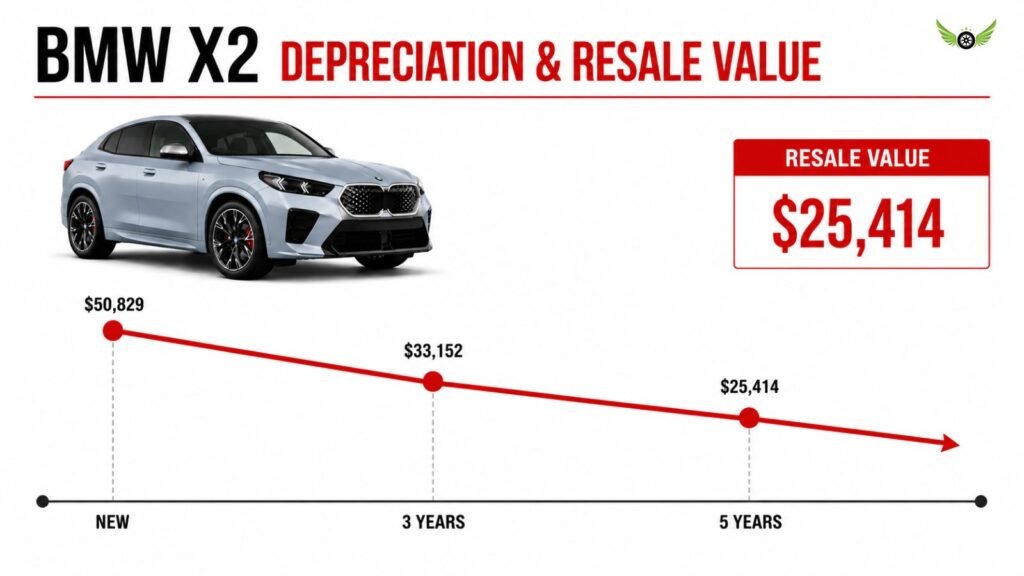
Depreciation is one of the largest costs to consider when buying a new 2026 BMW X2. Current iSeeCars data estimates that a new X2 loses 28.3% of its value after three years and 47.6% after five years. At five years, the estimated resale value is $23,194. The same analysis puts the luxury subcompact SUV segment at a slightly better 46.1% five-year depreciation, so the X2 is expected to depreciate a little faster than the class average.
Expected 3-Year & 5-Year Depreciation
iSeeCars estimates a 3-year depreciation of 28.3%, leaving approximately 71.7% of the vehicle’s original value. After five years, depreciation reaches 47.6%, leaving about 52.4% residual value.
Ownership Period | Estimated Depreciation | Estimated Resale Value |
3 years | 28.3% | $31,776 |
5 years | 47.6% | $23,194 |
Kelley Blue Book’s current 2026 X2 cost-to-own model is more conservative, estimating $25,414 in five-year depreciation and a $20,636 residual value. The difference between KBB and iSeeCars comes from different valuation methods and assumptions, so these figures should be treated as estimates rather than guaranteed future prices.
Mileage, accident history, service records, vehicle condition, trim, equipment, and market demand will ultimately determine the actual trade-in or private-party value.
Resale Value vs Competitors (Subcompact Luxury SUVs)
The X2 sits around the middle of the luxury subcompact SUV resale market. iSeeCars estimates 51.2% five-year depreciation for the X2, compared with 48.2% for the Mercedes-Benz GLA and 48.3% for the Volvo XC40. The Audi Q3 is estimated at 50.3% depreciation, giving it a small advantage over the X2 in value retention.
Model | 5-Year Depreciation | 5-Year Value Retained |
Mercedes-Benz GLA | 48.2% | 51.8% |
Volvo XC40 | 48.3% | 51.7% |
Audi Q3 | 50.3% | 49.7% |
BMW X2 | 51.2% | 48.8% |
The broader iSeeCars ranking places the BMW X2 eighth among luxury subcompact SUVs for resale value, behind models such as the Lexus UX, Mercedes-Benz GLA, Volvo XC40, and Audi Q3.
For buyers focused heavily on resale, the X2 is therefore not a segment leader. However, its expected value retention remains reasonably close to several direct luxury competitors, making depreciation a manageable—but important—part of the overall ownership calculation.
BMW X2 Long-Term Ownership
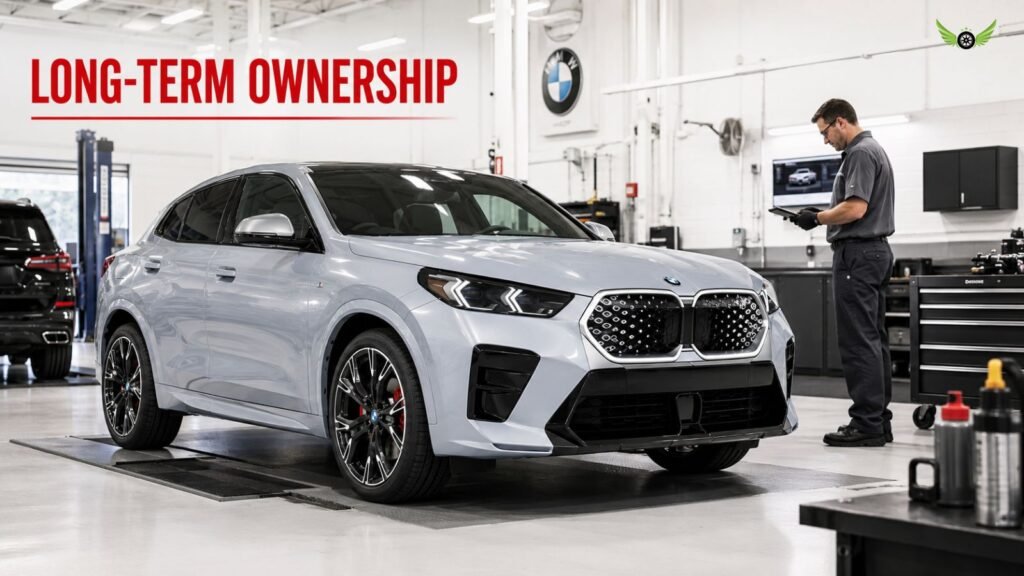
The 2026 BMW X2 is too new for trustworthy 10-year reliability data, so long-term expectations should be based on its warranty, maintenance requirements, and early reliability information rather than speculation. BMW provides 4 years/50,000 miles of new-vehicle warranty coverage and 3 years/36,000 miles of scheduled maintenance.
Early J.D. Power data gives the 2026 X2 a 70/100 Quality & Reliability score, rated Average, while its Driving Experience score is 82/100. These ratings are useful early indicators, but they are not evidence of how the vehicle will perform after 8–10 years.
High-Mileage Ownership Expectations
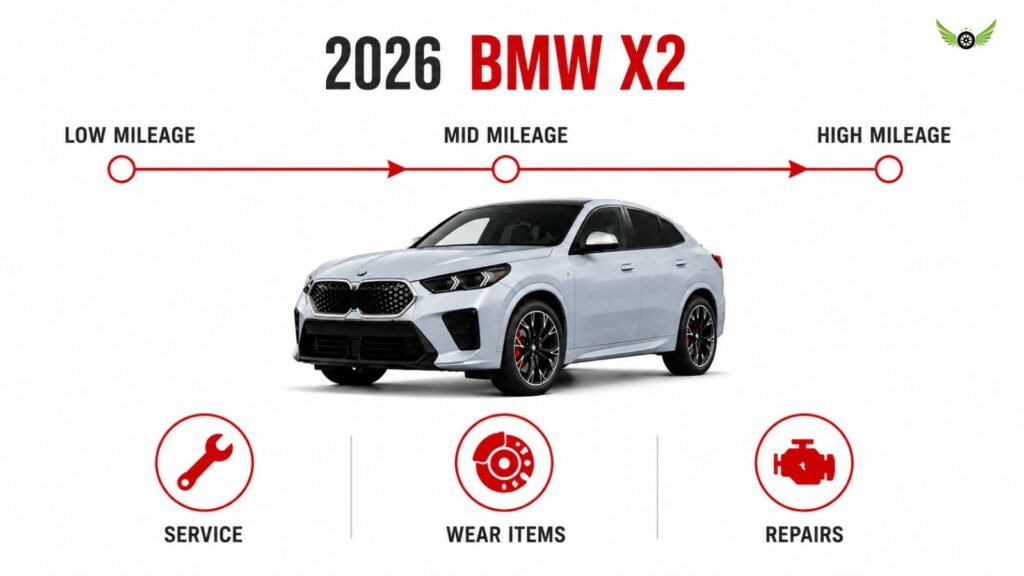
For higher-mileage use, following the factory service schedule is particularly important. BMW’s 2026 maintenance information specifies transmission-fluid replacement for the X2 at approximately 60,000–78,000 miles, based on the vehicle’s service indicator.
After the free-maintenance period ends, owners should expect to pay for scheduled service and wear items themselves. BMW also offers Vehicle Service Contracts with coverage available up to 7 years/100,000 miles, depending on eligibility and the selected plan.
There is currently no reliable evidence supporting a specific “problem-free” mileage figure for the 2026 model. For a high-mileage owner, documented service history and timely maintenance are more useful indicators than an assumed mileage threshold.
Pros, Cons & 10-Year Ownership Considerations
The main advantage is strong factory support during the early ownership period. The main drawback is that a 10-year owner will spend most of the vehicle’s later life outside the original warranty and maintenance coverage.
Factor | 2026 BMW X2 |
New-vehicle warranty | 4 years / 50,000 miles |
Scheduled maintenance | 3 years / 36,000 miles |
J.D. Power reliability | 70/100 — Average |
Transmission-fluid service | Approx. 60,000–78,000 miles |
Optional BMW VSC | Up to 7 years / 100,000 miles |
For a 10-year ownership plan, the sensible approach is to maintain the vehicle according to BMW’s schedule, keep detailed service records, and budget for repairs after factory coverage expires. At this stage, claiming that the 2026 X2 will be highly reliable—or unreliable—for a decade would go beyond the available evidence.
BMW X2 Ownership Verdict
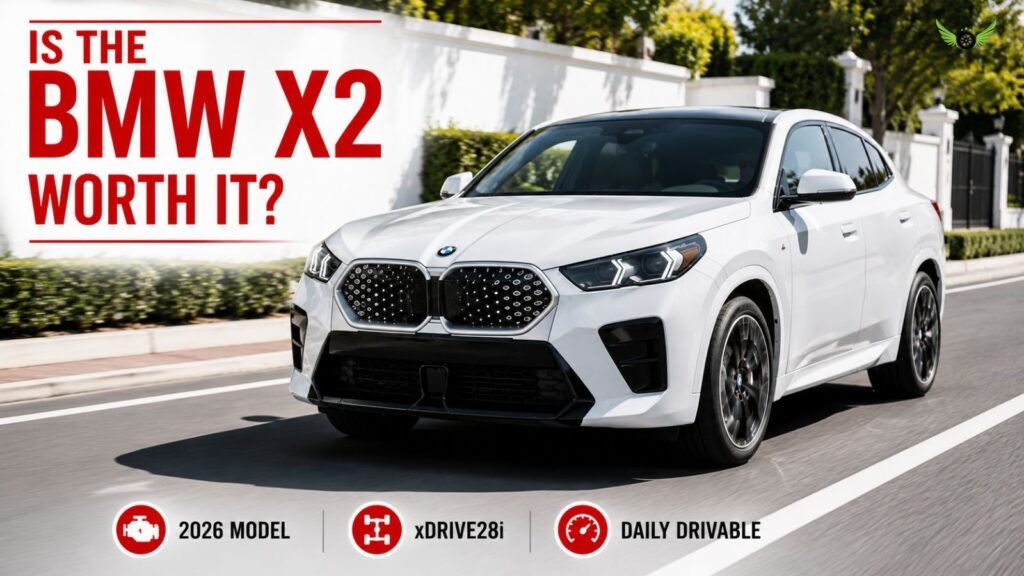
The 2026 BMW X2 is best suited to buyers who want a sporty luxury crossover and are comfortable with higher ownership expenses. The xDrive28i produces 241 hp, reaches 60 mph in a claimed 6.2 seconds, and returns 28 mpg combined. KBB currently estimates about $66,208 in five-year cost to own for the xDrive28i, including depreciation, insurance, maintenance, fuel, financing, and fees.
Who Should Buy the BMW X2?
The X2 makes the most sense for drivers who prioritize performance, premium design, all-wheel drive, and a more engaging driving character over the lowest possible running costs. The xDrive28i offers 241 hp with standard AWD, while the M35i increases output to 312 hp and cuts the claimed 0–60 mph time to 5.2 seconds.
For most buyers focused on balanced ownership expenses, the xDrive28i is the more sensible trim. KBB estimates its five-year depreciation at $26,601, compared with $33,105 for the M35i. Insurance is also substantially higher in KBB’s estimate for the M35i.
Who Should Consider Alternatives?
An alternative deserves consideration if purchase price, practicality, or lower long-term costs matter more than driving performance. The 2026 Audi Q3 starts at $43,700 and includes standard quattro all-wheel drive, while the 2026 Mercedes-Benz GLA 250 starts at $41,500; the GLA 250 4MATIC starts at $43,500.
The X2 M35i is particularly difficult to justify for a cost-conscious buyer. KBB estimates $82,687 in five-year ownership costs, compared with $66,208 for the xDrive28i. That difference comes largely from higher depreciation and insurance costs.
Ultimately, choose the X2 if its driving experience and styling justify the additional expense for you. If minimizing depreciation, insurance, and overall operating costs is the priority, comparing the Audi Q3 and Mercedes-Benz GLA before buying is the more financially cautious approach.
2026 BMW X2 Ownership FAQs
The 2026 BMW X2 combines luxury features, standard all-wheel drive, and strong performance with higher ownership expenses than many mainstream compact SUVs. The most important ownership questions involve purchase price, fuel economy, insurance, maintenance, depreciation, financing, and long-term value. Current U.S. estimates are used below, with figures identified as estimates where actual costs depend on the driver, location, financing terms, or vehicle condition.
How much does the 2026 BMW X2 cost in the USA?
The 2026 BMW X2 xDrive28i has a $46,050 MSRP according to Kelley Blue Book, while the X2 M35i starts at $55,250. BMW notes that its displayed MSRP does not include tax, title, license, registration, or dealer-specific adjustments.
What is the five-year ownership cost of a 2026 BMW X2?
Kelley Blue Book estimates $60,339 in five-year cost to own, including $34,925 in out-of-pocket expenses and $25,414 in depreciation. The estimate includes fuel, insurance, maintenance, repairs, financing, and state fees.
How much does it cost to insure a 2026 BMW X2?
KBB estimates about $14,795 in insurance over five years, or approximately $2,959 per year under its cost-to-own assumptions. Actual premiums can vary significantly based on age, driving record, location, credit where permitted, coverage limits, deductible, mileage, and insurer.
What is the fuel economy of the 2026 BMW X2?
The xDrive28i is rated at 24 mpg city, 34 mpg highway, and 28 mpg combined. The M35i is rated at 23 mpg city, 31 mpg highway, and 26 mpg combined.
How much does BMW X2 maintenance cost?
KBB estimates $5,099 in maintenance over five years, averaging about $1,019 per year. BMW also provides scheduled maintenance coverage for 3 years or 36,000 miles under its applicable maintenance program.
What warranty comes with the 2026 BMW X2?
The 2026 model has a 4-year/50,000-mile new-vehicle limited warranty. BMW’s scheduled maintenance coverage runs for 3 years/36,000 miles, subject to the program’s terms.
How much will the 2026 BMW X2 depreciate?
KBB currently estimates $25,414 in five-year depreciation, leaving a projected $20,636 residual value. Depreciation can change with mileage, condition, accident history, service records, trim, equipment, and market demand.
Does the BMW X2 have good resale value?
Its value retention appears moderate rather than class-leading based on current estimates. The projected five-year residual is about $20,636 against KBB’s $46,050 MSRP for the standard model. Actual BMW X2 Resale value will depend heavily on mileage, condition, history, and local used-car demand.
Is the xDrive28i cheaper to own than the M35i?
Yes, based on current KBB estimates. The xDrive28i has a $66,208 five-year cost-to-own estimate, while the M35i carries a substantially higher projected ownership cost. The xDrive28i also has better fuel economy at 28 mpg combined versus 26 mpg for the M35i.
Is the 2026 BMW X2 good for long-term ownership?
It can be a reasonable long-term choice for buyers who are comfortable with luxury-vehicle maintenance and repair costs. However, there is not yet enough real-world data to make a reliable 10-year reliability prediction for the 2026 model. BMW’s maintenance schedule includes regular service and, for the X2, transmission-fluid replacement at approximately 60,000–78,000 miles, based on the vehicle’s service indicator.
What are the biggest BMW X2 ownership expenses?
For the standard 2026 X2, KBB’s five-year estimate identifies insurance ($14,795), depreciation ($25,414), and maintenance ($5,099) among the major costs. Fuel is estimated at $3,631, while financing and state fees add further expense.
Is the 2026 BMW X2 worth buying?
The X2 is most suitable for buyers who prioritize premium design, performance, standard AWD, and driving character over the lowest possible ownership costs. The xDrive28i offers 241 hp and 28 mpg combined, while the higher-performance M35i produces 312 hp. Buyers focused mainly on minimizing depreciation, insurance, and running costs should compare competing luxury subcompact SUVs before making a decision.