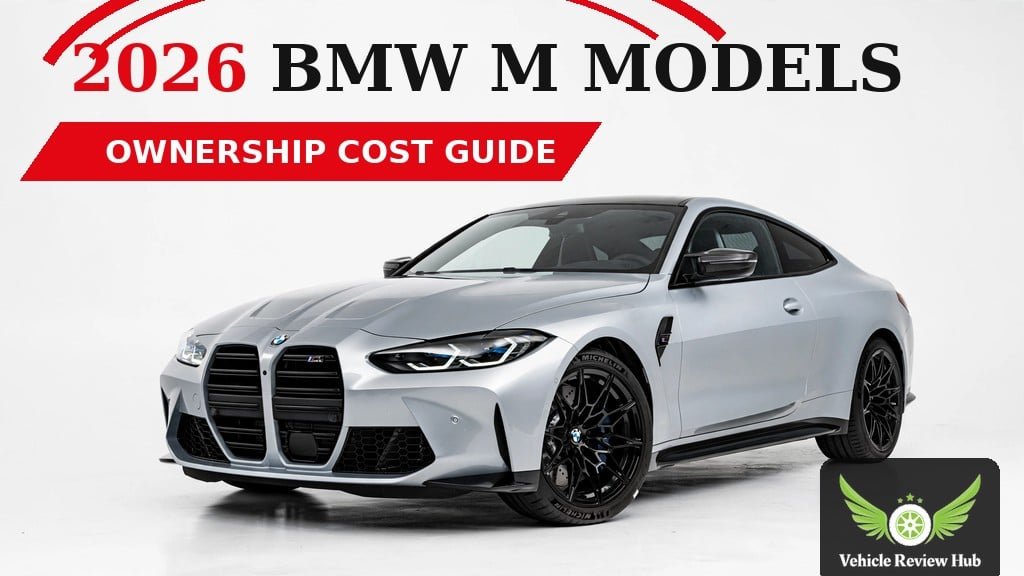
What does an M car really cost to own — not just buy? The short answer: BMW M models ownership cost runs roughly $90,000–$100,000 over five years for an M3, with depreciation as the single largest expense, followed by insurance and fuel. The good news: M cars hold their value better than most BMWs, and running costs are predictable. In this guide, we break down BMW M models ownership cost in full — fuel, maintenance, insurance, resale value, and long-term ownership — so you know the true price before you commit.
For specs and pricing, start with our 2026 BMW M models review, then read on for the complete financial picture.
BMW M Models Total Ownership Cost
The sticker price is only the beginning. BMW M models ownership cost includes everything you spend over the years you keep the car — and the biggest line item is one most buyers underestimate when calculating BMW M models ownership cost.
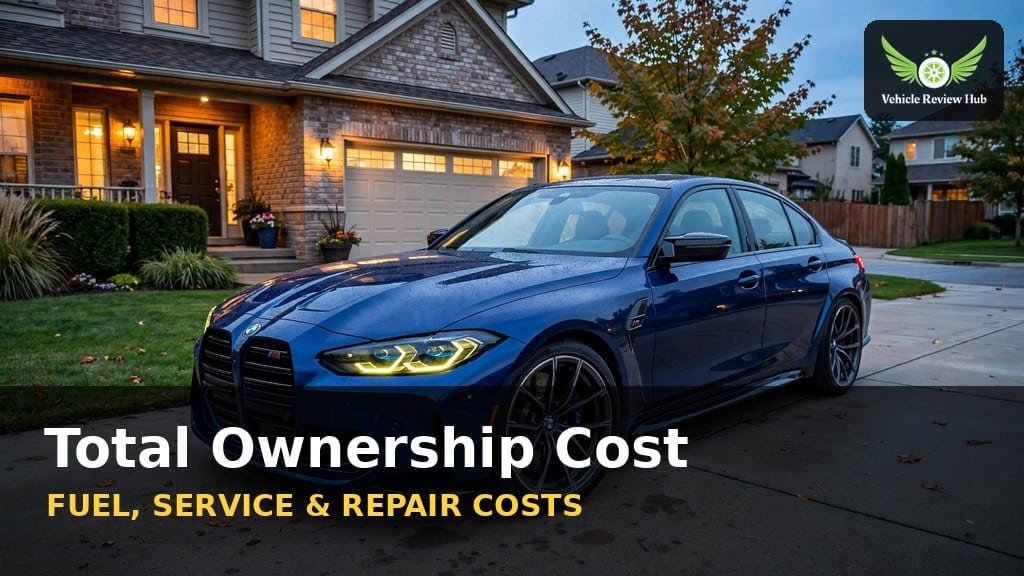
Fuel, Maintenance, Repairs & Performance Running Expenses
CarEdge estimates the first five years of BMW M3 ownership at $94,901 total, broken down as follows:
| Expense Category | 5-Year Cost (M3) | Notes |
|---|---|---|
| Depreciation | $40,896 | Largest single cost of ownership |
| Insurance | $24,090 | ~$4,800 per year |
| Financing interest | $13,000 | Based on typical loan terms |
| Fuel | $12,160 | ~$2,400 per year, premium required |
| Maintenance | $4,754 | Routine service only |
| Total 5-year ownership | $94,901 | Excluding purchase price |
Depreciation alone exceeds fuel and maintenance combined — a crucial insight for BMW M models ownership cost. Fuel runs about $2,525 per year for the M2/M3/M4 and up to $3,430 for gas-only M5 driving. Maintenance averages $1,000–$2,500 annually including tires and brakes, as detailed in our BMW M models maintenance cost guide. Add insurance at $2,000–$5,000 per year and the annual running total lands around $6,000–$11,000 before depreciation.
How Model Choice and Driving Habits Affect Total Costs
Model choice moves BMW M models ownership cost dramatically. The M2 is the cheapest M to own — lower purchase price, best fuel economy, cheapest tires and brakes. The M3 sits in the middle as the value sweet spot. The M5, X5 M, and X6 M cost substantially more across every category: pricier parts, higher insurance, thirstier engines, faster tire wear.
Driving habits matter just as much. A garage-kept M3 driven 8,000 gentle miles a year costs little beyond insurance and scheduled service. The same car tracked monthly and driven hard can double tire, brake, and fuel spending. For a detailed efficiency breakdown that feeds directly into running costs, see our BMW M models mileage and MPG guide. Honest self-assessment of your driving style is the most accurate ownership-cost calculator.
BMW M Models Insurance Cost
Insurance is the second-largest BMW M models ownership cost after depreciation — and the one buyers most often underestimate until the first quote arrives.
Why High-Performance BMWs Can Cost More to Insure
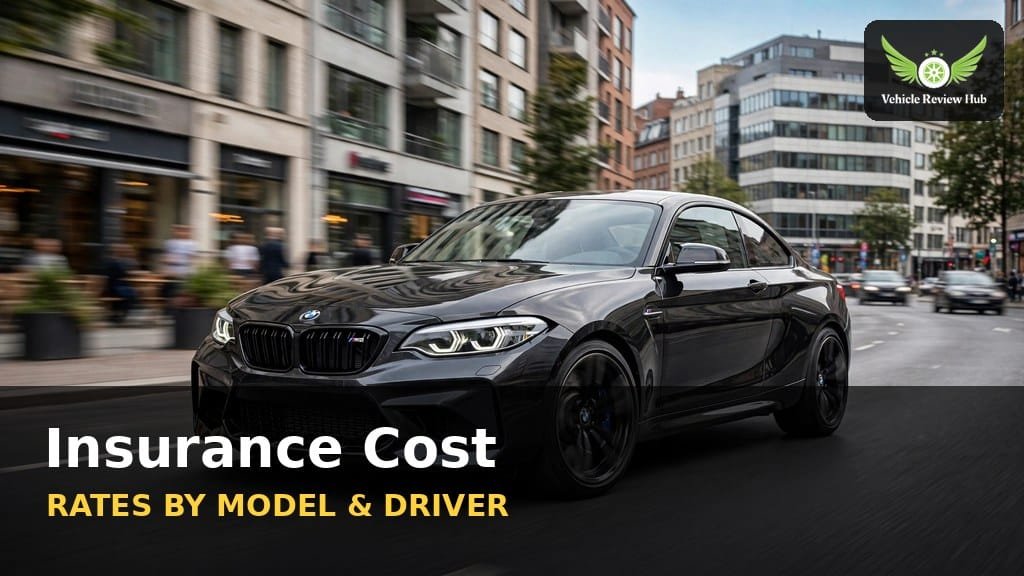
Insurers price M cars on three factors: power, repair cost, and risk profile. A 500+ hp sedan costs more to repair after a collision (specialized parts, aluminum bodywork, complex electronics), attracts a sportier driver demographic statistically linked to claims, and carries higher theft appeal. The result: M3 insurance averages about $4,797 per year for a 40-year-old good driver with full coverage, per CarEdge insurance data — roughly double a standard 3 Series.
Realistic planning ranges run $1,800–$3,000 per year for experienced drivers with clean records in moderate-cost states, climbing past $5,000 for younger drivers, high-cost states like Michigan or Florida, or maximum coverage levels. The M2 is cheapest to insure; the M5 and X5 M most expensive — a spread worth remembering when comparing BMW M models ownership cost.
Factors That Affect Insurance Rates by Model and Driver
Your rate depends on the car (model, trim, value, repair costs), the driver (age, record, credit, marital status), and the location (state regulations, theft rates, traffic density). A 40-year-old married homeowner with a clean record pays a fraction of what a 22-year-old pays for the same M4 — CarEdge shows M3 rates ranging from $4,281 at age 55 to over $16,000 at age 17.
To lower BMW M models ownership cost on insurance: shop at least three insurers, raise deductibles to $1,000, bundle home and auto policies, complete a defensive driving course, and ask about low-mileage or garaging discounts. Telematics programs can cut 10–30% for careful drivers. Never drop to liability-only on a financed M car — the lender will not allow it, and one at-fault accident could wipe out your equity.
BMW M Models Resale Value & Depreciation
Here is where BMW M models ownership cost gets interesting: M cars depreciate, but they depreciate better than almost anything else BMW sells — and better than most performance rivals.
Which BMW M Models May Hold Their Value Better?
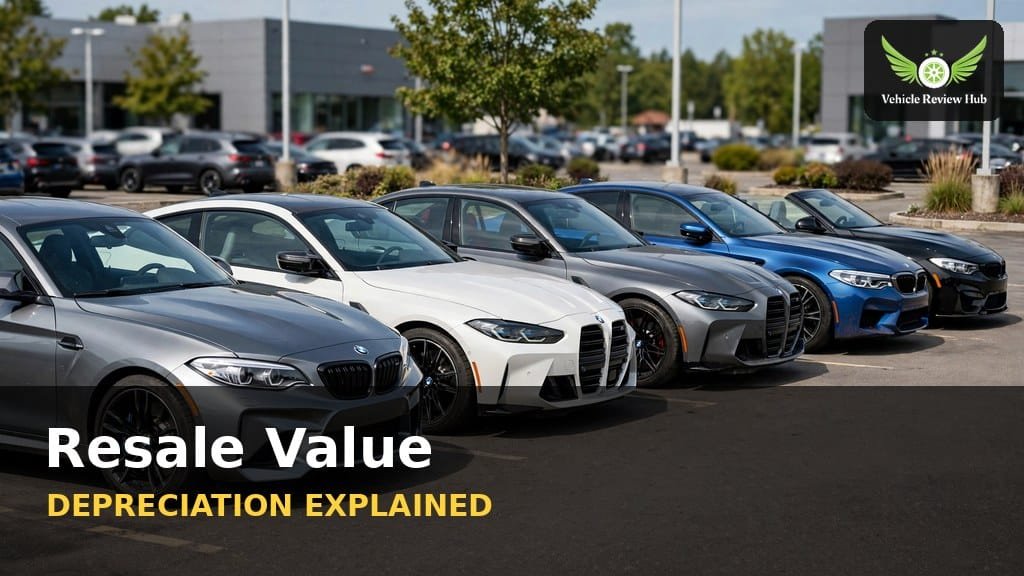
The M4 is BMW’s resale champion: CarEdge data shows it retains 61% of its value after five years (just 39% depreciation), the best of any BMW, per Autoblog’s BMW resale analysis. The M3 retains about 55% after five years according to Motor Trend. Manual-transmission cars command premiums — the stick-shift M2 and M3 consistently sell above automatic equivalents as manuals disappear from the market.
What protects M resale value? Enthusiast demand, limited production relative to regular BMWs, and the “last of its kind” factor — the current combustion M3/M4 may be the final pure-gasoline generation, which supports long-term values. As CarBuzz notes, M2, M3, and M4 buyers are nearly guaranteed over 50% retained value after five years. Special editions (CS, CSL) do better still. Color matters too: conservative colors resell easiest, while bold launch colors can polarize buyers.
New vs Used BMW M Depreciation Considerations
Depreciation is steepest in years one and two, then stabilizes considerably in years three to five. That curve makes 2–3-year-old CPO M cars the value sweet spot: you skip the hardest depreciation, keep warranty coverage, and pay 25–35% less than new. BMW M models ownership cost drops dramatically for the second owner.
Buying new makes sense if you want exact specification, full warranty, and the latest tech — and if you plan to keep the car 6+ years, where depreciation per year flattens. Buying used demands diligence: full service records, a pre-purchase inspection by a BMW specialist, and a VIN recall check. A neglected M car is the most expensive kind — deferred maintenance becomes your repair bill and inflates BMW M models ownership cost for years.
BMW M Models Long-Term Ownership Experience
What is it actually like to own an M car for a decade? According to our experience analyzing owner reports and high-mileage examples, the answer is reassuring: these cars reward commitment.
High-Mileage Ownership and Post-Warranty Costs
Well-maintained S58 engines routinely pass 100,000 miles without internal work, and 200,000-mile M cars exist with documented histories. Post-warranty, budget $2,000–$3,000 per year for BMW M models ownership cost including wear items and occasional repairs. The failure points at high mileage are predictable: gaskets and seals, suspension bushings, cooling components, and aging electronics — not engines or transmissions.
The key to affordable high-mileage ownership is finding a good independent BMW specialist (30–40% cheaper than dealers), staying ahead of maintenance, and addressing small issues before they cascade. An extended warranty can smooth the post-warranty years on V8 models. Buy the best-maintained example you can find, not the cheapest — service history is worth more than low miles on a neglected car.
For a real-world look at high-mileage M ownership, this video documents bringing a 216,000-mile BMW M4 back to full health:
Gasoline vs Hybrid Performance Model Ownership
The M5’s plug-in hybrid system adds a new dimension to BMW M models ownership cost. On the plus side: 25–29 miles of electric commuting slashes fuel costs, the battery carries an 8-year/100,000-mile federal warranty, and brake wear drops thanks to regenerative braking. A charged M5 can undercut an M3’s fuel spending.
On the minus side: hybrid complexity means more components that can fail out of warranty, battery replacement (while rare) is expensive, and long-term hybrid reliability data is thinner than for the proven S58. Home charging installation costs $500–$2,000. For now, the gasoline M2/M3/M4 offer simpler, more predictable BMW M models ownership cost; the hybrid M5 trades some of that simplicity for efficiency and staggering performance. Your call depends on charging access and risk tolerance.
Is a BMW M Model Worth Buying?
After totaling every cost, the final question: does the math — and the emotion — justify it? For the right buyer, absolutely.
Who Should Buy a New or Used BMW M?
Buy new if you want your exact spec, full warranty coverage, and plan to keep the car long enough to amortize the initial depreciation — or if you simply want the newest M experience and the budget supports it. Buy used (2–4 years old, CPO preferred) if you want maximum value: someone else absorbed the steepest depreciation while you get a sorted, warranted performance car.
The ideal M buyer drives enough to enjoy it (these cars punish garage-queen neglect), budgets $6,000–$11,000 annually for running costs plus depreciation, and values driving engagement over pure practicality. If your commute is 5 miles of traffic and you never see an open road, an M car is wasted money — buy the experience you will actually use.
Final Long-Term Ownership Verdict
BMW M models ownership cost is real money — roughly $95,000 over five years for an M3 before the purchase price. But context matters: that buys one of the finest driving experiences available at any price, in a car that holds value better than its rivals and rewards proper care with decade-long reliability. Depreciation is the biggest cost, and it is largely unavoidable — but it is also the price of driving something special.
Our verdict: an M car is worth buying if you budget honestly, maintain obsessively, and actually drive it. The M3 Competition remains the sweet spot of the range — supercar pace, daily usability, and the strongest ownership economics. Buy smart, service religiously, and BMW M models ownership cost becomes simply the fair price of admission.
FAQs About BMW M Models Ownership Cost
Quick answers to the most common questions about BMW M models ownership cost, insurance, and resale value.
How much does it cost to own a BMW M3 for 5 years?
CarEdge estimates $94,901 over five years excluding purchase price: $40,896 depreciation, $24,090 insurance, $13,000 interest, $12,160 fuel, and $4,754 maintenance. Annual running costs run roughly $6,000–$11,000 before depreciation.
How much is insurance on a BMW M model?
Expect $1,800–$3,000 per year for experienced drivers with clean records, and around $4,800 per year for full coverage on an M3 per CarEdge data. Young drivers and high-cost states can see $5,000+. The M2 is cheapest to insure; the M5 and X5 M cost most.
Do BMW M cars hold their value well?
Yes — among the best in the performance segment. The M4 retains 61% after five years, the M3 about 55%, both far better than average BMWs. Manual transmissions and special editions hold value best. The first two years see the steepest depreciation.
Is it cheaper to buy a new or used BMW M?
Used (2–3 years old, CPO) offers the best value — you skip the steepest depreciation while keeping warranty coverage, saving 25–35% versus new. Buy new for exact specification and maximum warranty, ideally keeping the car 6+ years.
What is the cheapest BMW M model to own?
The M2: lowest purchase price, best fuel economy (19 mpg combined), cheapest tires and brakes, and lowest insurance. The M3 is the value sweet spot for those needing four doors. The M5, X5 M, and X6 M cost the most across every category.
Are hybrid BMW M models cheaper to own long-term?
The hybrid M5 can be cheaper on fuel if charged regularly, and its battery carries an 8-year/100,000-mile warranty. But hybrid complexity adds out-of-warranty risk, and long-term data is thinner. For predictable BMW M models ownership cost, the gasoline M2/M3/M4 remain the safer bet.
BMW M models ownership cost is substantial but honest — every dollar goes toward an exceptional driving machine that holds its value and rewards proper care. Budget realistically, buy the right model for your life, maintain it well, and the M experience pays you back every time you turn the key.