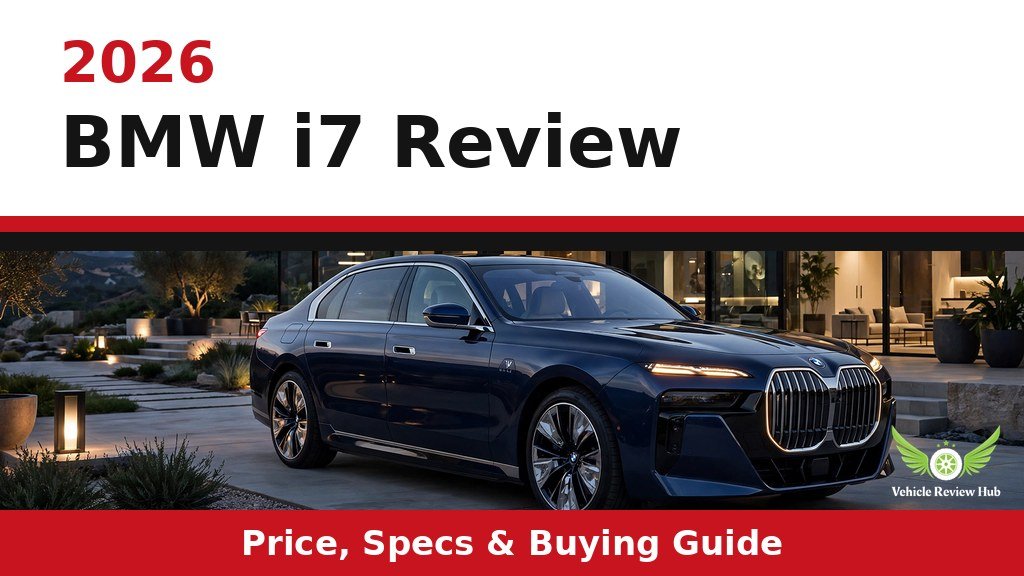
The 2026 BMW i7 is BMW’s electric flagship — a full-size luxury sedan that pairs limousine-grade rear-seat comfort with up to 650 horsepower and 314 miles of EPA-estimated range. Starting at $105,700 for the eDrive50 and topping out at $168,500 for the M70 xDrive, it competes directly with the Mercedes-Benz EQS and Lucid Air for the title of America’s best electric luxury sedan. With its 31.3-inch Theater Screen, executive lounge rear seats, and whisper-quiet cabin, the BMW i7 is less a car than a private jet for the road. This guide covers BMW i7 trims, pricing, specs, interior luxury, competitors, and buying advice so you know exactly which i7 deserves your money.
BMW i7 Trims, Pricing & Model Comparison
The 2026 BMW i7 comes in three trims — eDrive50, xDrive60, and M70 xDrive — spanning $62,800 from base to flagship. Each trim shares the same 101.7 kWh usable battery and the same limousine body, but power, drivetrain, and standard equipment differ meaningfully. Real-world transaction data shows buyers paying roughly $10,700 below MSRP on average, with BMW offering promotional financing as low as 0.9 percent for qualified buyers.
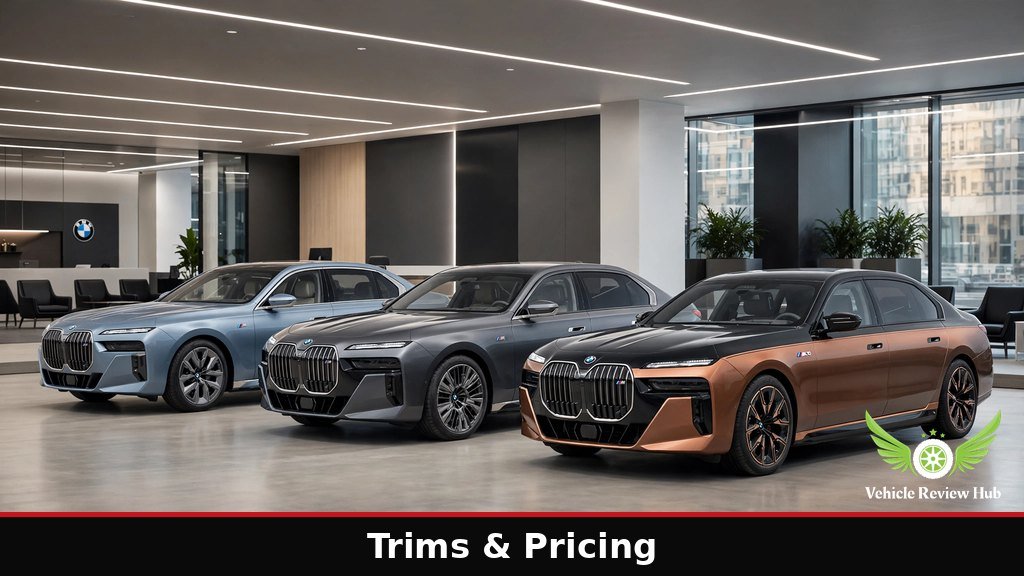
BMW i7 eDrive50 vs xDrive60 vs M70
The eDrive50 is the entry point at $105,700. Its single rear motor produces 449 horsepower and 479 lb-ft of torque, driving the rear wheels for up to 314 miles of EPA-estimated range — the best range figure in the lineup. The xDrive60 adds a second motor for 536 horsepower, 549 lb-ft, and all-wheel drive at $124,200, with range barely affected at 311 miles. The M70 is the flagship: 650 horsepower, 749 lb-ft of torque, a 3.5-second 0–60 sprint, and 285 miles of range at $168,500.
For most buyers, the trim decision comes down to drivetrain and performance. The eDrive50’s rear-wheel drive keeps it lighter and more efficient, and 449 horsepower is ample for a car this size. The xDrive60 adds all-weather traction and stronger acceleration for $18,500 more. The M70 is a different animal entirely — M-tuned suspension, standard rear-axle steering, and active anti-roll bars make this flagship feel surprisingly agile, but its price pushes past $190,000 with options.
Features, Options & Which BMW i7 Offers the Best Value?
Standard equipment across the BMW i7 lineup is generous: Merino leather, an 18-speaker Bowers & Wilkins surround sound system, panoramic Sky Lounge roof, automatic soft-close doors, and BMW’s Highway Assistant hands-free driving system. The Executive Lounge seating package — reclining rear seats with footrests, ventilation, and massage — transforms the back seat into a first-class cabin, while the optional 31.3-inch Theater Screen folds down from the headliner for rear passengers.
The best value depends on your priorities. The eDrive50 offers the most for the money: the longest range, the lowest price, and nearly all the luxury of the range-topper. The xDrive60 is the sweet spot for buyers who want all-wheel drive and stronger performance without M70 money. The M70 justifies its premium only if you want the ultimate performance flagship — at $168,500 before options, it competes with the Mercedes-AMG EQS 53 and Lucid Air Sapphire on emotion rather than logic.
BMW i7 Electric Powertrain, Battery & Performance Specs
Every trim uses the same 101.7 kWh usable battery pack, but the three powertrains extract very different personalities from it. Here is how the BMW i7 performs, how far it goes, and how fast it charges.
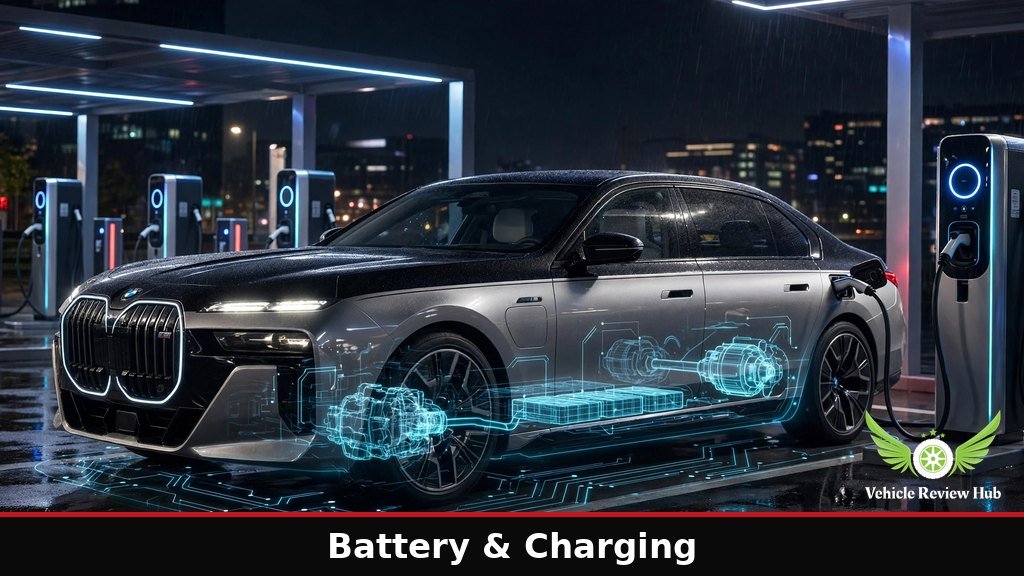
Horsepower, Rear-Wheel Drive vs xDrive AWD & Acceleration
The eDrive50’s single rear motor delivers 449 horsepower and 479 lb-ft of torque, good for a 0–60 mph sprint in about 5.5 seconds — brisk for a 6,000-pound luxury sedan. The xDrive60’s dual-motor all-wheel-drive system raises output to 536 horsepower and 549 lb-ft, trimming the sprint to roughly 4.5 seconds while adding all-weather confidence. The M70 xDrive’s 650 horsepower and 749 lb-ft launch it to 60 mph in 3.5 seconds, matching dedicated sports sedans.
Power delivery is silent and seamless across all three, with no gear changes and instant torque. The M70 adds M-specific tuning — sportier steering, firmer air suspension, and rear-axle steering — that makes the flagship feel smaller than its 212.2-inch length suggests. Even the base eDrive50 rides on standard air suspension with adaptive dampers, so every trim glides over rough pavement with limousine composure. For the efficiency side of the story, see our BMW i7 mileage and MPGe guide.
Battery, Electric Range & Key BMW i7 Specifications
The 101.7 kWh battery delivers EPA-estimated range of 314 miles for the eDrive50, 311 miles for the xDrive60, and 285 miles for the M70 xDrive. MPGe ratings run 88 combined for the eDrive50 and xDrive60 on 19-inch wheels, dropping slightly with larger wheels. DC fast charging peaks at 195 kW, taking the battery from 10 to 80 percent in about 34 minutes; an 11 kW home charger fills it overnight in roughly 10 to 11 hours.
Key dimensions tell the flagship story: 212.2 inches long on a 126.6-inch wheelbase — longer than a Chevrolet Tahoe — with 17.7 cubic feet of trunk space and seating for five. Curb weight runs from about 5,900 to over 6,100 pounds depending on trim. BMW backs every i7 with a four-year/50,000-mile basic warranty, an eight-year/100,000-mile high-voltage battery warranty, and three years or 36,000 miles of complimentary scheduled maintenance.
BMW i7 Interior, Luxury & Executive-Class Comfort
The i7 interior is where the car justifies its flagship billing. BMW designed the cabin as a lounge first and a driver’s cockpit second, and the rear seat is the best seat in the house. No review of this flagship is complete without spending time in the back.
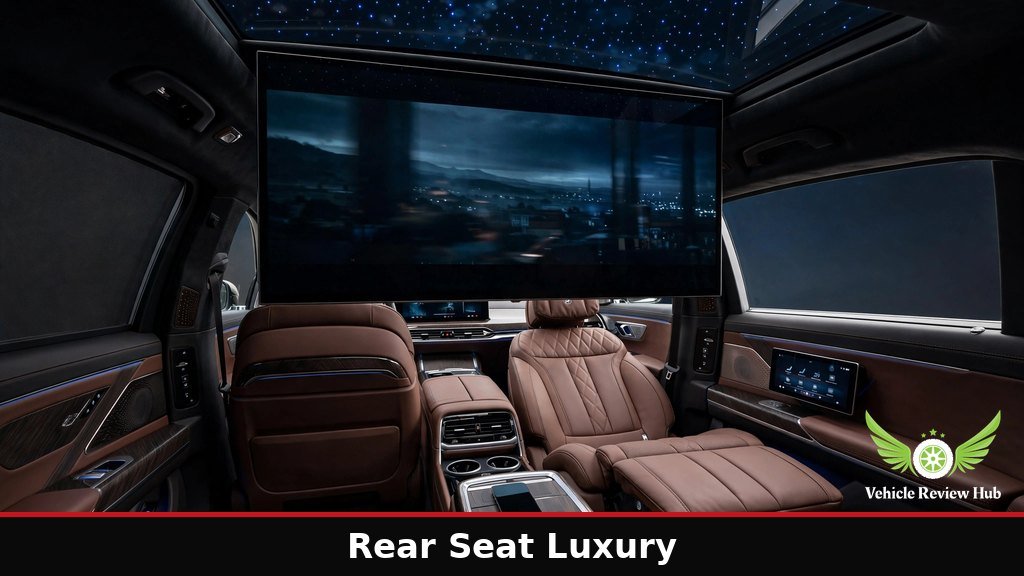
Rear Seat Space, Passenger Comfort & Chauffeur Experience
The 126.6-inch wheelbase translates into limousine rear legroom, and the Executive Lounge option adds power-reclining rear seats with leg rests, ventilation, and massage functions. Rear passengers get their own climate controls, and the optional Theater Screen — a 31.3-inch, 8K display that folds down from the headliner — turns the back seat into a private cinema with built-in Amazon Fire TV. Soft-close automatic doors open and close at the touch of a button, and the available cashmere headliner and crystal glass controls complete the first-class atmosphere.
For chauffeur-driven buyers, it is arguably the best car in its class. The rear doors’ automatic operation, the quiet cabin, and the lounge seating make it a genuine alternative to a Mercedes S-Class for executive transport — with the added benefit of silent electric running. Front-seat passengers are hardly neglected: heated, ventilated, and massaging seats are available up front, and the curved display keeps the driver oriented without clutter.
Infotainment, BMW Theater Screen & Premium Technology Features
The dashboard centers on BMW’s curved display — a 12.3-inch instrument cluster flowing into a 14.9-inch touchscreen running iDrive 8.5 — with crisp graphics and natural voice control. The standard 18-speaker, 655-watt Bowers & Wilkins system is excellent, and the optional 39-speaker, 1,965-watt Diamond system is among the best car audio systems available at any price. The Theater Screen remains the headline act: rear passengers can stream video, join video calls, or game on the 31.3-inch display while the car drives itself down the highway.
Driver assistance is equally advanced. Highway Assistant enables hands-free driving on mapped highways with automatic lane changes, and the available Parking Assistant Professional can park the car remotely from outside via smartphone. Over-the-air software updates keep the tech current, and the My BMW app handles charging, pre-conditioning, and remote functions. For long-term running costs of all this technology, our BMW i7 maintenance cost guide covers service and reliability.
BMW i7 vs Mercedes-Benz EQS, Lucid Air & Other Luxury EVs
The BMW i7 does not compete in a vacuum. The Mercedes-Benz EQS, Lucid Air, and Tesla Model S all chase the same wealthy buyer, and each takes a different approach to electric luxury. Here is how the BMW i7 stacks up.
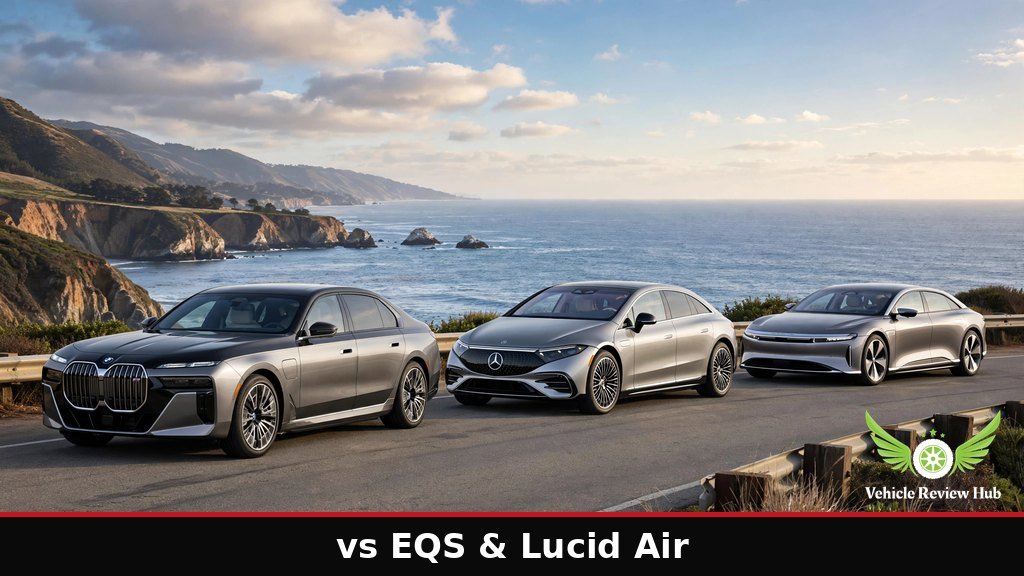
Range, Performance, Luxury & Technology Comparison
On range, the Lucid Air leads decisively — up to 512 miles in Grand Touring trim, far beyond the BMW i7’s 314-mile best. The Mercedes-Benz EQS 450+ counters with about 352 miles of EPA range and a lower starting price around $105,000, while the Tesla Model S offers strong range and performance but a less luxurious cabin. The i7 splits the difference: competitive range, the most opulent interior of the group, and BMW’s signature driving dynamics.
On luxury, the BMW i7 arguably sets the standard. The Theater Screen, executive lounge rear seats, and automatic doors give it a sense of occasion the EQS’s tech-heavy cabin and the Lucid’s minimalist interior cannot quite match. On driving dynamics, the i7 feels more composed and driver-focused than the comfort-tuned EQS, while the Lucid Air counters with sharper handling and greater efficiency. Charging speeds are similar across the class at around 200 kW peak — adequate rather than class-leading.
Which Electric Luxury Sedan Is the Better Buy?
The answer depends on what you value. Choose the BMW i7 if rear-seat luxury and overall opulence are the priorities — nothing in the class coddles passengers like this sedan with the Executive Lounge package. Choose the Lucid Air if maximum range and driving engagement matter most; its efficiency advantage is enormous. Choose the Mercedes-Benz EQS if you want the most advanced driver-assistance tech and a slightly lower entry price, or the Tesla Model S if performance-per-dollar is the metric.
For most luxury buyers, the BMW i7 is the best all-rounder: it does everything well, from the 314-mile eDrive50 to the 650-horsepower M70, and its interior is the one rivals are measured against. Our BMW i7 ownership cost analysis covers insurance, depreciation, and long-term costs to complete the financial picture before you decide.
BMW i7 Buying Guide
With three trims spanning $62,800 and real-world discounts averaging around roughly $10,700 below MSRP on average, there is a BMW i7 for several kinds of buyers — but the right choice depends on how you will actually use this flagship.
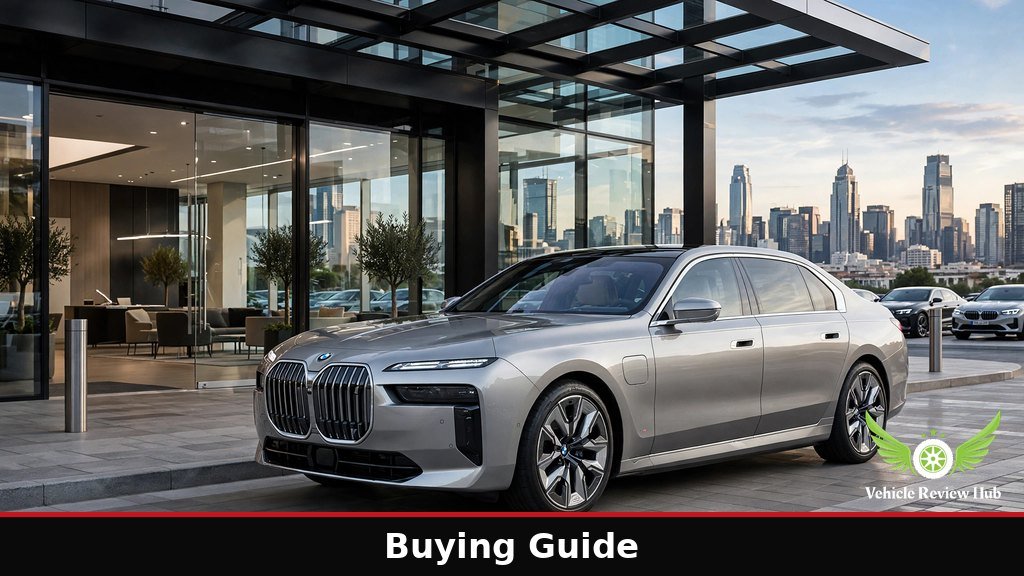
Best BMW i7 Model for Different Types of Buyers
The eDrive50 suits the rational luxury buyer: the longest range, the lowest price, and 90 percent of the flagship experience. It is also the smartest choice for chauffeur duty, where rear-seat comfort matters more than horsepower. The xDrive60 fits buyers in snow-belt states or anyone who wants stronger acceleration without M70 excess — its 311-mile range barely trails the base car.
The M70 xDrive is for the buyer who wants the ultimate statement: 650 horsepower, M-tuned dynamics, and every option ticked. At $168,500 before options — and over $190,000 as tested by reviewers — it is an emotional purchase, but it delivers an experience no other electric BMW can match. Given thin inventory and slow turnover, shoppers should cast a wide net and be ready to act when the right car appears — and consider BMW’s 0.9 percent promotional financing, which can be worth more than an extra discount.
Pros, Cons & Is the BMW i7 Worth Buying in 2026?
Pros: the most luxurious interior in its class, led by the Theater Screen and executive lounge seating; strong range up to 314 miles; silent, composed driving manners; generous standard equipment; and meaningful real-world discounts below MSRP. This BMW flagship is also one of the most comfortable long-distance cars sold in America, electric or otherwise.
Cons: it is enormously expensive, especially the M70; depreciation on luxury EVs is steep; the 195 kW charging speed trails the fastest-charging rivals; and its sheer size makes city parking a chore. The i7 is worth buying in 2026 if rear-seat luxury is the priority and you buy smart — target the eDrive50 or xDrive60, negotiate hard on the $10,700 average discount, and consider the promotional financing. For the ultimate flagship experience regardless of cost, the M70 is unmatched.
BMW i7 FAQs
These are the questions American shoppers ask most about this flagship sedan.
How much does the 2026 BMW i7 cost?
The 2026 BMW i7 starts at $105,700 for the eDrive50, $124,200 for the xDrive60, and $168,500 for the M70 xDrive, before the $1,175 destination charge. Real-world transaction data shows buyers paying roughly $10,700 below MSRP on average, and BMW has offered promotional financing as low as 0.9 percent.
What is the range of the 2026 BMW i7?
EPA-estimated range is 314 miles for the eDrive50, 311 miles for the xDrive60, and 285 miles for the M70 xDrive. All three share the same 101.7 kWh usable battery; larger wheels reduce each figure slightly.
How fast does the i7 charge?
The sedan DC fast-charges at up to 195 kW, going from 10 to 80 percent in about 34 minutes. At home on an 11 kW Level 2 charger, a full charge takes roughly 10 to 11 hours — an easy overnight fill.
What is the BMW Theater Screen?
The BMW Theater Screen is an optional 31.3-inch, 8K display that folds down from the headliner for rear passengers, with built-in Amazon Fire TV streaming. Paired with the Executive Lounge rear seats, it turns the back seat into a private cinema.
Is the BMW i7 better than the Mercedes-Benz EQS?
It depends on priorities. The BMW i7 offers a more opulent interior, better driving dynamics, and the unique Theater Screen, while the EQS counters with longer range (about 352 miles), more advanced driver-assistance tech, and a lower starting price. Most reviewers give it the edge on luxury feel.
Which BMW i7 trim is the best buy?
The eDrive50 is the best value: the longest range (314 miles), the lowest price, and nearly all the flagship luxury. The xDrive60 adds all-wheel drive and stronger performance for buyers who want it. The M70 is the emotional flagship choice, not the rational one.