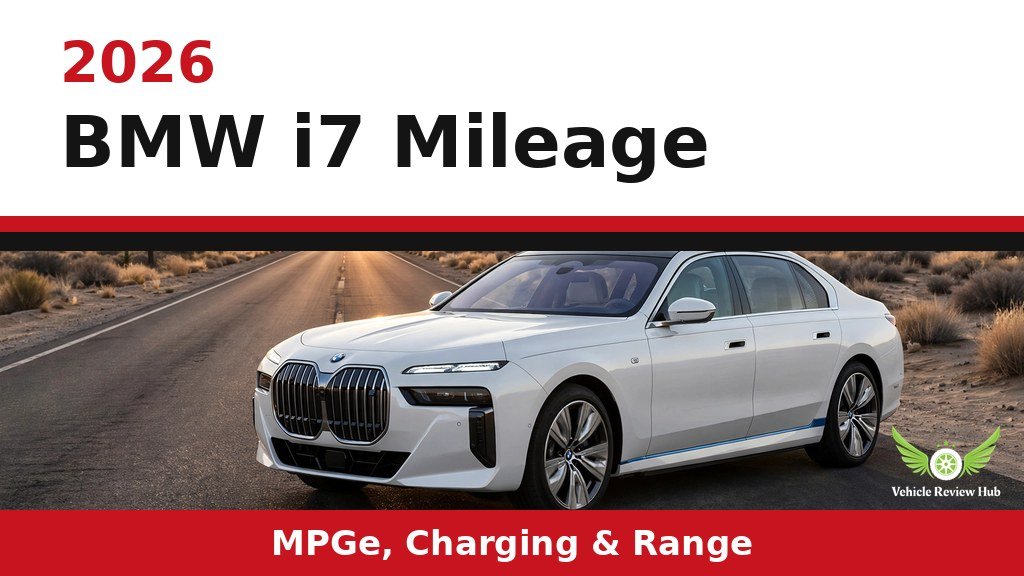
BMW i7 mileage is one of the first questions luxury EV shoppers ask — and the honest answer is that this flagship sedan is about average for its class, not exceptional. EPA ratings run from 285 to 314 miles of BMW i7 mileage depending on trim, with MPGe figures around 88 combined for the most efficient versions. Real-world testing shows the number moves quite a bit with wheels, weather, and driving style: one long-term test of the M70 averaged just 2.3 miles per kWh, translating to roughly 233 miles of real BMW i7 mileage on a full charge. This guide breaks down official BMW i7 mileage and MPGe by model, real-world range, charging times, and what the i7 is actually like to drive and live with every day.
BMW i7 Range, MPGe & Electricity Efficiency
BMW i7 mileage starts with the EPA’s official numbers, but the real story is how those numbers change with trim, wheels, and conditions. Understanding both sides helps you set realistic expectations for daily driving and road trips.

Official Range and Efficiency by BMW i7 Model
The eDrive50 leads the lineup with 314 miles of EPA-estimated range and MPGe ratings of 85 city, 93 highway, and 88 combined on its standard 19-inch wheels. The xDrive60 is close behind at 311 miles of range with 85/91/88 MPGe. The performance flagship M70 xDrive trades efficiency for power, dropping to 285 miles of range and roughly 76–79 combined MPGe depending on configuration.
Wheel size matters more than many buyers expect. Stepping from 19-inch to 20-inch wheels costs about 15 miles of range, and the M70’s standard 21-inch wheels contribute to its lower rating. For context, the i7’s rivals frame the picture: the Lucid Air Touring reaches up to 512 miles and averages a class-leading 4 miles per kWh, while the Mercedes-Benz EQS 450+ manages about 352 miles of EPA range. BMW i7 mileage sits squarely in the middle of the luxury EV pack on efficiency — neither the leader nor an outlier.
Real-World BMW i7 Range and Energy Consumption
Independent testing paints a more nuanced picture than the window sticker. MotorTrend’s testing found the xDrive60 needed 4.3 seconds to reach 60 mph while returning efficiency consistent with its EPA rating in mixed driving. Tom’s Guide drove an M70 for 290.9 miles across a week of mixed use and averaged 2.3 miles per kWh — notably below the car’s rated figure, which would project to only about 233 miles of real-world range from the 101.7 kWh battery.
That tester attributed much of the shortfall to frigid winter conditions during a blizzard, which brings us to an important point: real-world BMW i7 mileage depends heavily on conditions. In mild weather at steady highway speeds, owners report BMW i7 mileage figures much closer to — and sometimes above — the EPA estimates. Long-distance highway cruising in the M70 returned 2.7 miles per kWh in that same test, versus 2.2 in short-trip city driving. For the full model overview, see our 2026 BMW i7 review with pricing and specs.
BMW i7 Charging Time & Charging Experience
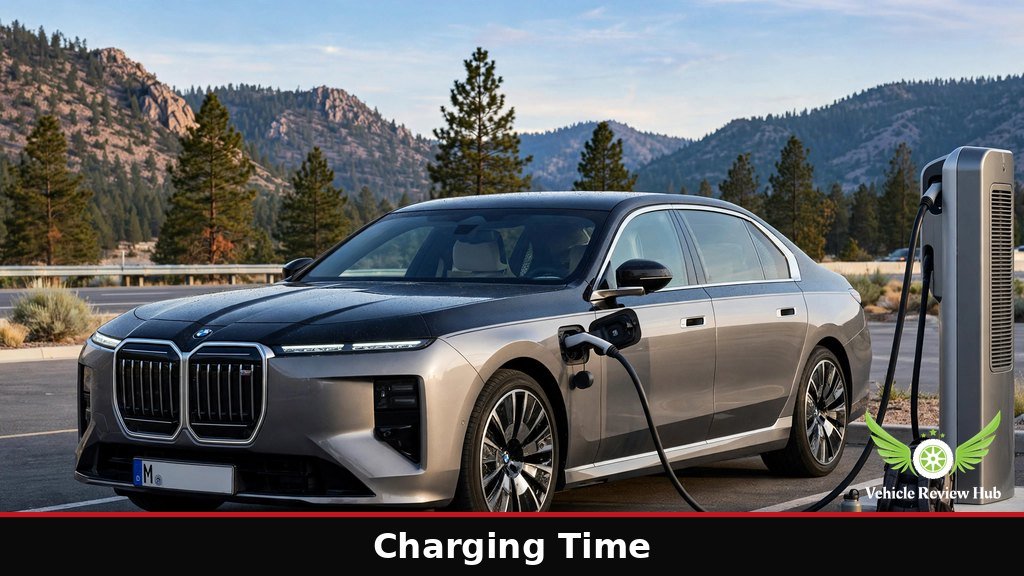
BMW i7 mileage is only half the equation — how the car charges determines how usable your BMW i7 mileage is in daily life. The i7 supports every charging scenario from a standard wall outlet to 195 kW DC fast charging, but some are far more practical than others.
Home Charging with Level 1 and Level 2 Chargers
Level 1 charging from a standard 120V household outlet is technically possible but painfully slow. In real-world testing, the i7 recovered just 2.31 miles of range per hour on Level 1 — about 29 miles over a 12.5-hour overnight session. For a car with a 101.7 kWh battery and 285–314 miles of range, that is emergency-only territory.
A 240V Level 2 home charger is effectively mandatory. The i7’s 11 kW onboard AC charger fills the battery from empty in roughly 10 to 11 hours — an easy overnight session that restores a full tank of BMW i7 mileage while you sleep. Most owners charge to 80–90 percent daily for battery health and only fill to 100 percent before long trips. A Level 2 charger costs $400–$700 plus installation, and many utilities offer off-peak rates that make home charging — the cheapest way to replenish your BMW i7 mileage — cost just three to four cents per mile.
DC Fast Charging, Charging Speed & Road Trip Planning
On the road, the i7 DC fast-charges at up to 195 kW, taking the battery from 10 to 80 percent in about 34 minutes. That peak rate is competitive but not class-leading — rivals like the Lucid Air and Porsche Taycan charge faster. In practice, a 30-minute charging stop every two to three hours of highway driving keeps the i7 moving on long trips.
Road trip planning is straightforward with the My BMW app and in-car navigation, which route you through charging stops and pre-condition the battery for maximum charging speed on approach. The 2026 model’s native NACS port opens Tesla Superchargers for road trips, dramatically expanding the charging network. Plan on stopping every 200–250 miles of real-world highway range — a natural rhythm that lines up well with rest breaks anyway.
BMW i7 Performance & Real-World Driving Experience
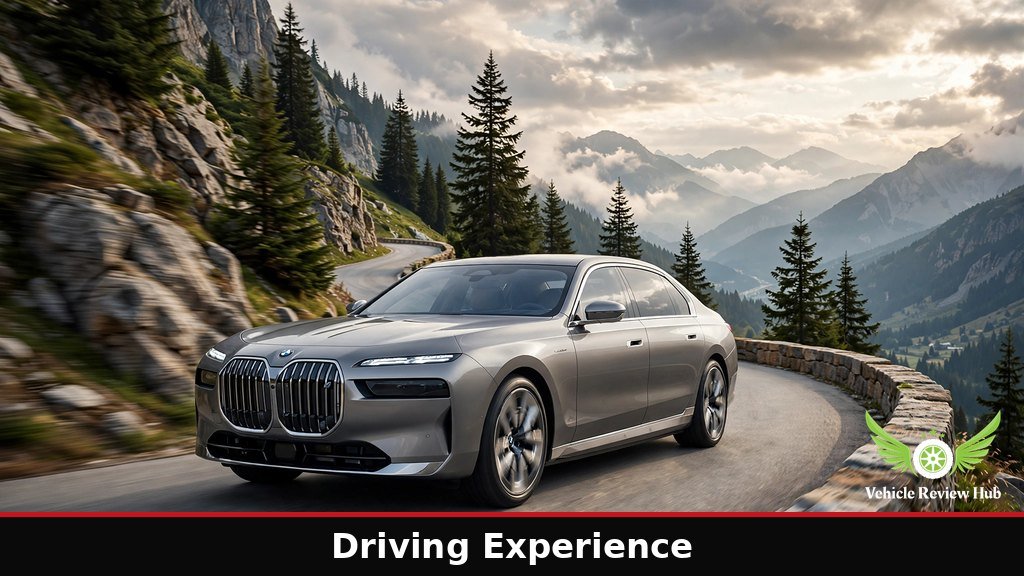
BMW i7 mileage tells you how far it goes; the driving experience tells you how it feels getting there. Across all three trims, the i7 delivers the silent, effortless performance that defines modern luxury EVs.
eDrive50 vs xDrive60 vs M70 Acceleration and Power Delivery
The eDrive50’s single rear motor produces 449 horsepower and 479 lb-ft of torque, good for a BMW-claimed 0–60 mph in 5.3 seconds — brisk for a 6,000-pound sedan. MotorTrend tested the xDrive60 at 4.3 seconds to 60 mph, its 536 horsepower and 549 lb-ft of torque delivering authoritative passing power. The M70’s 650 horsepower and 749 lb-ft launch it to 60 in 3.5 seconds, matching an M3 Competition despite weighing over a ton more.
Power delivery is seamless and silent in every trim, and the way you use that power directly shapes your BMW i7 mileage, with instant torque and no gear changes. The M70 adds M-specific tuning — heftier steering, sportier suspension calibration, and standard rear-axle steering — that testers praised for making the big sedan feel composed and confident. Even the base car rides on standard air suspension with adaptive dampers, so every i7 glides over broken pavement with limousine calm. For ownership costs beyond the driving experience, our BMW i7 ownership cost guide covers insurance, depreciation, and long-term expenses.
Ride Comfort, Handling & Regenerative Braking Feel
Ride comfort is the i7’s defining trait. The air suspension absorbs bumps with a softness that rivals the Mercedes S-Class, and the cabin stays library-quiet even at highway speed thanks to acoustic glass and extensive sound insulation. Handling is surprisingly capable for the size — the M70’s active anti-roll bars and rear-axle steering keep body motions in check, though no i7 will feel nimble the way the smaller i5 does.
Regenerative braking is well-calibrated. The default adaptive mode blends regen with the friction brakes invisibly, and the B driving mode enables strong one-pedal driving for city use. Unlike some EVs, the transition between regen and mechanical braking is seamless — passengers never feel the handoff. Reviewers consistently rate the i7’s brake feel among the best in the electric luxury class.
BMW i7 Long-Distance Driving & Executive Comfort
The i7 was designed for the long haul, and nowhere does that show more than on a highway run. This is a car built to devour miles in silence while its passengers work, stream, or sleep.
Highway Refinement, Cabin Quietness & Passenger Comfort
At a steady 70 mph cruise, the i7’s cabin is remarkably hushed — wind and road noise are suppressed to levels that embarrass many gasoline flagships. Highway Assistant enables hands-free driving on mapped interstates with automatic lane changes, reducing fatigue on long stints. The front seats offer heating, ventilation, and massage, while rear passengers get the full executive treatment.
For rear-seat passengers, long-distance travel in the i7 is genuinely first-class. The Executive Lounge seating package adds reclining seats with leg rests, and the optional 31.3-inch Theater Screen turns the back seat into a private cinema. Soft-close automatic doors, four-zone climate control, and the available Bowers & Wilkins Diamond sound system complete an environment designed for cross-country comfort. Few cars — electric or otherwise — are better long-distance machines.
Winter Range and Factors That Affect Real-World Range
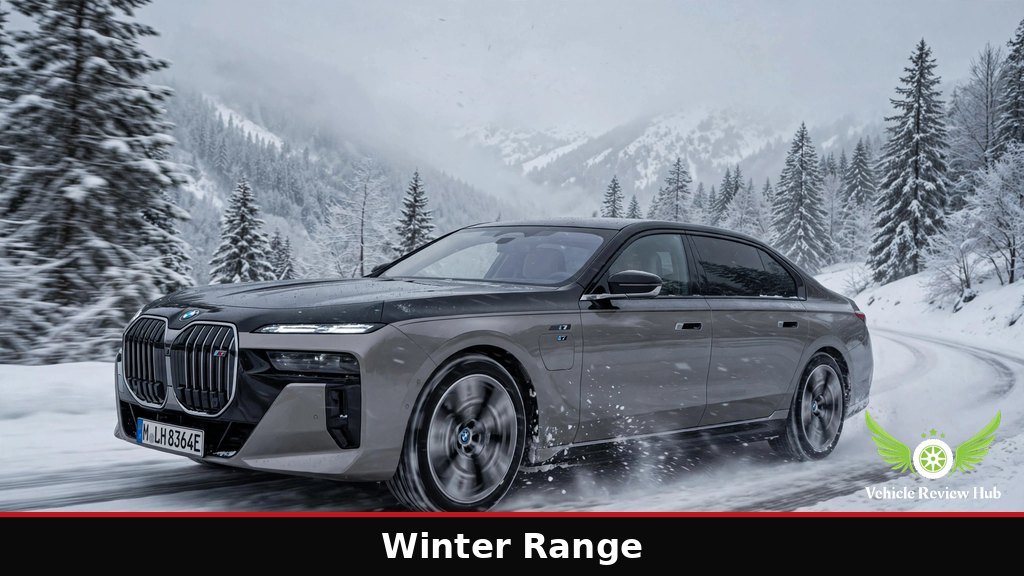
Cold weather is the single biggest enemy of BMW i7 mileage. That Tom’s Guide winter test — 2.3 miles per kWh and a projected 233-mile range versus the 285-mile rating — shows how much a blizzard can cost. Expect 20–30 percent range loss in freezing conditions, driven by battery heating, denser air, winter tires, and cabin heating. Pre-conditioning the car while plugged in helps preserve BMW i7 mileage, since the battery and cabin reach temperature on wall power rather than battery power.
Other factors matter too: sustained speeds above 75 mph drain BMW i7 mileage fast thanks to the car’s size and weight, and larger wheels cost meaningful miles. On the positive side, the i7’s heat pump (standard) is more efficient than resistive heating, and mild-weather highway cruising can match or beat the EPA figures. Our BMW i7 maintenance cost guide covers long-term care for the battery and drivetrain.
Is the BMW i7 Practical for Daily Driving and Road Trips?
After the numbers and the driving impressions, the practical question remains: does the BMW i7 work as a real car for real life? For most luxury buyers, the answer is yes — with the usual EV caveats.
Long-Distance Range and Charging Convenience
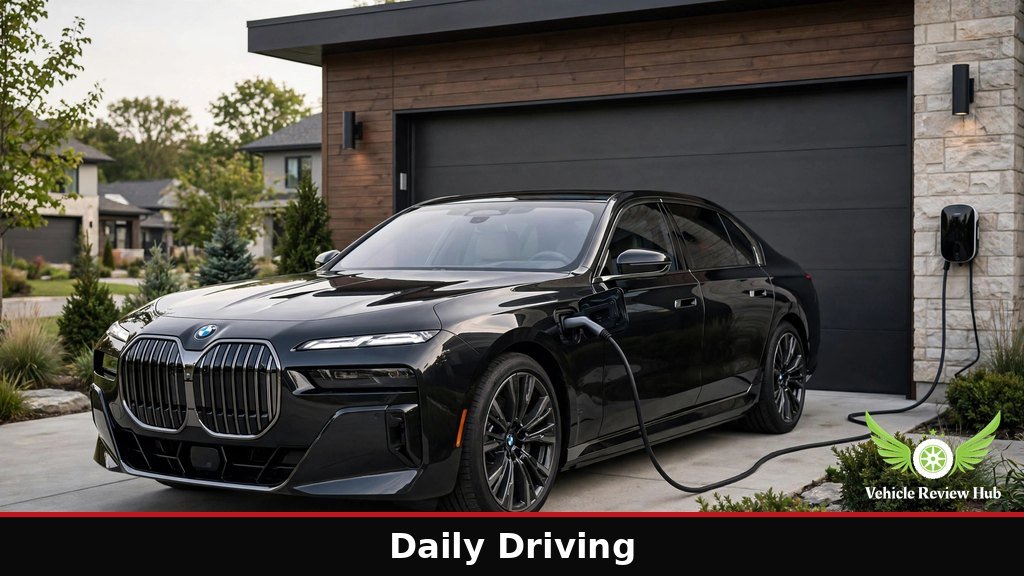
For daily driving, the i7 is effortless. Even the M70’s 285 miles of BMW i7 mileage covers a week of typical commuting on a single charge, and home charging means you start every morning with a full battery. For road trips, the 195 kW charging speed and 34-minute 10–80 percent stops are adequate rather than exceptional — plan charging stops every 200–250 real-world highway miles, and the native NACS port opens the Tesla Supercharger network for maximum convenience.
The i7’s size is the main practical compromise. At 212.2 inches long, it is longer than a Chevrolet Tahoe, which makes tight parking garages and narrow city streets a chore — though surround-view cameras and remote parking assist help. Trunk space of 17.7 cubic feet is decent but not generous for the class. For families who need maximum cargo flexibility, an electric SUV may fit better; for everyone else, the i7’s practicality is a non-issue.
Which BMW i7 Offers the Best Balance of Luxury and Performance?
The xDrive60 is the sweet spot for most buyers: 311 miles of range (barely behind the eDrive50), 536 horsepower, all-wheel drive for all-weather confidence, and a 4.3-second 0–60 time — at $124,200, well under M70 money. It delivers 95 percent of the flagship experience with the best blend of BMW i7 mileage, performance, and price.
The eDrive50 suits efficiency-minded buyers and chauffeur duty, with the longest range and lowest price. The M70 is the emotional choice — 650 horsepower and M dynamics for buyers who want the ultimate statement regardless of cost or efficiency. Whichever you choose, the i7’s combination of BMW i7 mileage, charging, and executive comfort makes it one of the most complete luxury EVs on sale in 2026.
BMW i7 Mileage FAQs
These are the questions American shoppers ask most about BMW i7 mileage, MPGe, and charging.
What is the BMW i7 mileage range?
EPA-estimated BMW i7 mileage is 314 miles for the eDrive50, 311 miles for the xDrive60, and 285 miles for the M70 xDrive. Real-world range varies with wheels, weather, and driving style — expect 230–300 miles in typical mixed use.
What is the BMW i7 MPGe?
The eDrive50 is rated 85 city / 93 highway / 88 combined MPGe on 19-inch wheels, and the xDrive60 manages 85/91/88 MPGe. The M70 xDrive is rated around 76–79 combined MPGe. Larger wheels reduce each figure by a few MPGe.
How long does it take to charge a BMW i7?
DC fast charging at up to 195 kW takes the battery from 10 to 80 percent in about 34 minutes. At home, an 11 kW Level 2 charger fills the 101.7 kWh battery in roughly 10–11 hours overnight. Level 1 charging from a standard outlet adds only about 2.3 miles per hour — not practical for regular use.
How does cold weather affect BMW i7 mileage?
Expect 20–30 percent range loss in freezing conditions. One winter test of the M70 averaged 2.3 miles per kWh for a projected 233-mile range versus its 285-mile EPA rating. Pre-conditioning while plugged in and using the heated seats instead of blasting cabin heat help preserve range.
Is the BMW i7 good for road trips?
Yes. With 285–314 miles of range, 195 kW fast charging, native NACS port access to Tesla Superchargers, and one of the quietest, most comfortable cabins in the industry, the i7 is an excellent long-distance car. Plan charging stops every 200–250 highway miles.
Which BMW i7 has the best mileage?
The eDrive50 has the best BMW i7 mileage: 314 miles of EPA range and 88 combined MPGe, thanks to its single rear motor and lighter weight. Stick with the standard 19-inch wheels to maximize efficiency.