BMW i7 ownership cost is a tale of two ledgers. On one side, running expenses are surprisingly gentle for a six-figure flagship: cheap home charging, minimal maintenance, and three years of free scheduled service. On the other side, depreciation is brutal — analysts estimate a typically equipped i7 loses roughly $79,721 in value over five years, and one study found five-year-old i7s retaining just 26.4 percent of their original price. Put together, the average five-year BMW i7 ownership cost lands around $152,108 according to CarEdge’s data, with depreciation alone accounting for 52 percent. This guide breaks down every piece of BMW i7 ownership cost — running expenses, insurance, resale value, and the long-term verdict — so you can buy, lease, or buy used with total confidence.
BMW i7 Total Ownership Cost
Total BMW i7 ownership cost is dominated by depreciation and insurance, which together account for more than 80 percent of the five-year bill. Everything else — charging, maintenance, repairs — is comparatively small. Understanding this split is the key to managing BMW i7 ownership cost, because the buying strategy you choose matters more than any coupon or charging hack.
Electricity, Maintenance, Repairs & Other Running Expenses
Day-to-day running costs are where the i7 shines against gasoline flagships. Home charging on off-peak electricity costs roughly $1,000 to $1,500 over five years for a typical 12,000-mile-per-year driver — three to four cents per mile versus 12–15 cents for a gas 7 Series. CarEdge estimates five-year “fuel” costs of just $2,685, and Edmunds’ True Cost to Own data puts five-year fuel at $5,000 for the eDrive50.
Maintenance is equally gentle. CarEdge pegs five-year maintenance at $3,419, rising from $524 in year one to $890 in year five as the major-repair probability climbs. Edmunds estimates $5,253 in maintenance plus $2,655 in repairs over five years for the eDrive50, with costs heavily back-loaded after the free maintenance period ends. Tires are the biggest recurring expense at $1,200–$2,000 per set every 25,000–35,000 miles. All in, the running-cost side of BMW i7 ownership cost is among the lowest for any flagship sedan — the strongest argument in the BMW i7 ownership cost debate.
Home Charging Equipment and Long-Term EV Ownership Costs
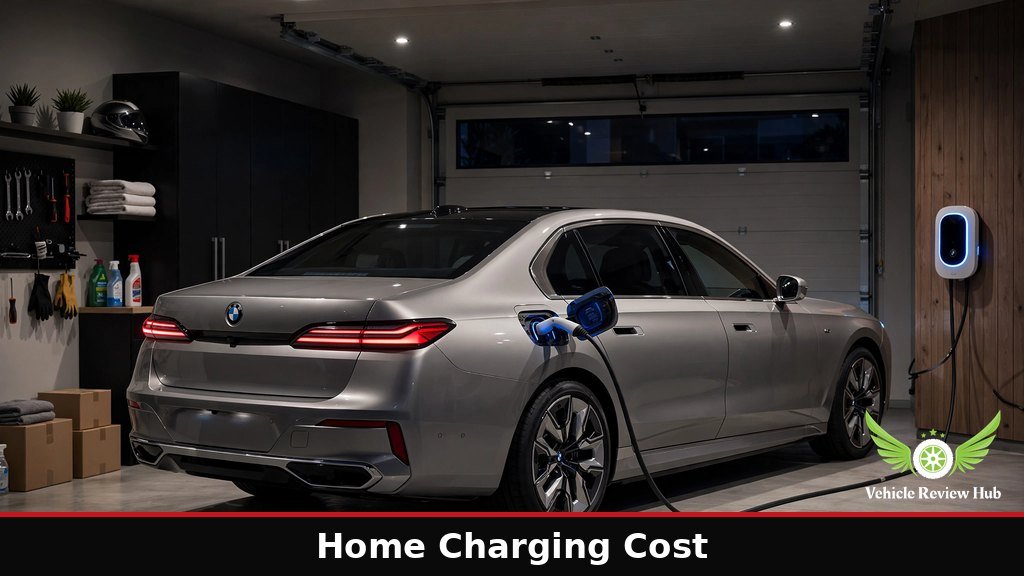
A home Level 2 charger is the single best investment for lowering BMW i7 ownership cost. A good 240V charger costs $400–$700 with installation running $500–$1,500 — a one-time expense that pays for itself through cheap off-peak electricity. Many utilities offer time-of-use rates and rebates that cut charging costs further, and the My BMW app schedules charging for the cheapest hours automatically.
Long-term, the EV’s structural advantage compounds: no oil changes, no transmission service, no exhaust or emissions repairs — ever. Over a decade, that gap versus a gas 7 Series grows enormous. Battery degradation is the main long-term unknown, but BMW’s eight-year/100,000-mile battery warranty covers abnormal capacity loss, and real-world data shows well-cared-for packs holding up well. For drivers who keep cars a decade, long-term BMW i7 ownership cost bends decisively in the EV’s favor.
BMW i7 Insurance Cost
Insurance is the second-largest line item in BMW i7 ownership cost, and it is substantially higher than for mainstream EVs. The i7’s six-figure price, expensive repair parts, and complex electronics all push premiums up — though its strong safety ratings and standard driver-assistance tech earn discounts with many carriers.

Factors That Affect BMW i7 Insurance Rates
CarEdge estimates the average cost to insure a BMW i7 at about $8,702 per year — roughly $43,510 over five years — based on national averages for a 40-year-old driver with full coverage, a good record, and good credit. Edmunds’ model is gentler, estimating $6,988 over five years for the eDrive50 ($1,303–$1,495 per year) and $9,556 for the xDrive60. Your actual premium depends on driving record, annual mileage, deductible, coverage limits, credit history, and bundling.
EV-specific factors matter too. Insurers price in expensive battery and electronics repairs — even minor collisions can generate five-figure bills on a flagship EV. On the other hand, the i7’s standard Highway Assistant, strong crash performance, and theft-deterrent tech earn discounts. Shopping quotes from at least three insurers is the single most effective way to manage this slice of BMW i7 ownership cost, since premiums for identical coverage can vary by thousands per year between companies.
How Vehicle Value, Location & Driver Profile Affect Premiums
The i7’s price is the primary premium driver: the $168,500 M70 costs far more to insure than the $105,700 eDrive50, which is why trim choice is one of the biggest variables in BMW i7 ownership cost. Location moves the needle almost as much — dense coastal cities with high repair costs and theft rates charge dramatically more than rural areas, and state regulations on credit scoring and telematics reshape pricing entirely.
Driver profile completes the picture. Younger drivers and those with recent claims pay the most; mature drivers with clean records and low annual mileage get the best rates. If insurance is a concern, the eDrive50 is the cheapest i7 to own across the board — lower purchase price, lower charging and tire expenses, and the lowest premiums, giving you the lowest BMW i7 ownership cost of any trim.
BMW i7 Resale Value & Depreciation
Depreciation is the elephant in the room for BMW i7 ownership cost — the single largest expense by far. Luxury EVs depreciate faster than almost any vehicle category, and the i7’s numbers are stark even by those standards.
Expected Depreciation and Used Luxury EV Market Trends
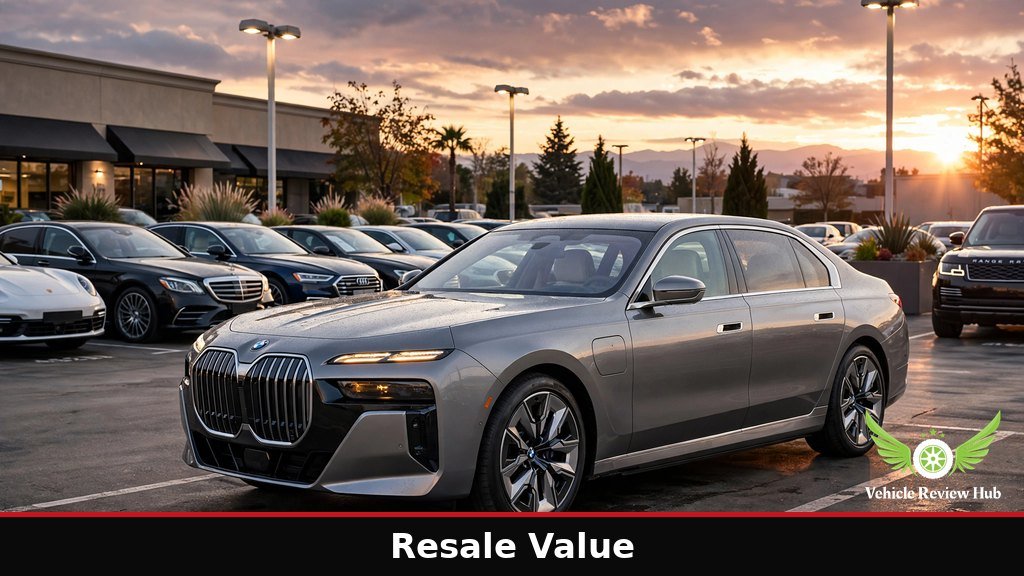
CarEdge estimates a typically equipped i7 (average price $145,875) loses $79,721 over five years, retaining a residual value of $66,154 — roughly 45 percent of its original price. Edmunds’ year-by-year model for the eDrive50 shows $32,029 in year-one depreciation alone, then $12,787, $10,447, $11,714, and $10,234 in years two through five. An iSeeCars study found five-year-old i7s retaining just 26.4 percent of original value — about $88,000 in lost value, or $48.20 per day.
The silver lining is enormous for used buyers. A two- or three-year-old i7 with low miles can sell for barely half its original sticker while carrying most of its battery warranty and modern tech. For budget-conscious buyers, a certified pre-owned i7 is arguably the smartest way to own one. The depreciation curve also strongly favors leasing, which lets the finance company absorb residual-value risk while you pay only for the years you drive — a smart way to cap your BMW i7 ownership cost.
How Battery Health and New EV Technology Can Affect Resale Value
Battery health is the new mileage in used EV values. Buyers increasingly demand battery state-of-health reports, and an i7 with a well-maintained pack commands a premium over one with heavy fast-charging history. Your charging habits directly affect resale: charging to 80–90 percent daily, avoiding constant DC fast charging, and garaging the car all protect long-term battery health.
Technology shifts cut both ways. Newer battery tech and longer-range rivals push older i7 values down, while BMW’s over-the-air updates keep older cars feeling current, supporting values. When selling, a full service history, completed recall work, and a battery health report maximize your price. And remember: steep depreciation is precisely why buying a two-year-old i7 is such a strong deal — someone else already paid the worst part of the curve.
BMW i7 Long-Term Ownership Experience
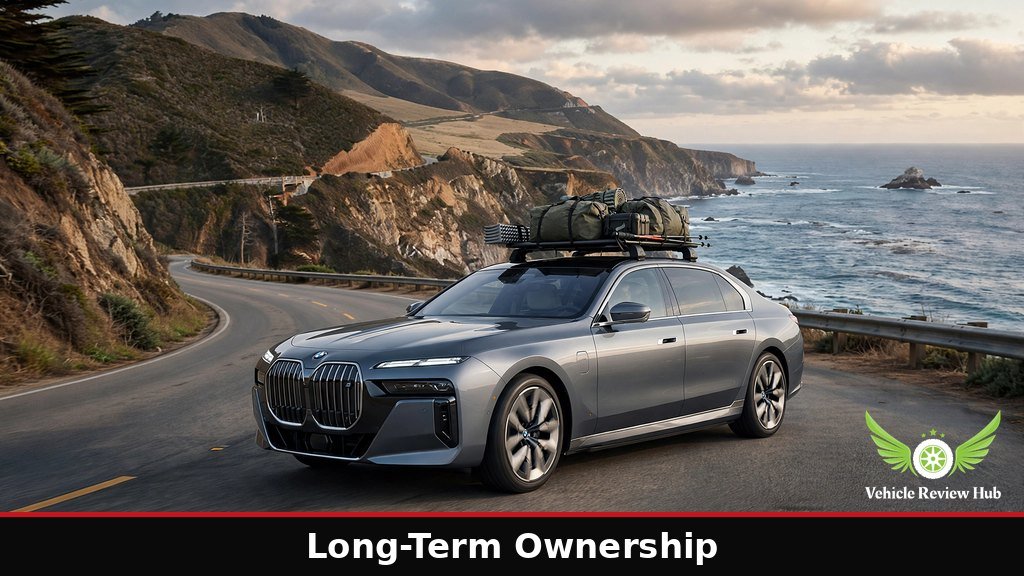
Beyond the spreadsheet, long-term i7 ownership is easy to live with: cheap to run, quiet, and generally trouble-free — with a few long-term considerations to plan for.
Battery Warranty, Battery Degradation & Post-Warranty Considerations
BMW’s eight-year/100,000-mile battery warranty is the safety net. It covers defects and abnormal capacity loss below roughly 70 percent, transfers to subsequent owners, and real-world data shows well-cared-for packs retaining mid-90s percent capacity after two to three years. Most owners will never need a warranty claim.
After the warranty expires, a full battery replacement would cost five figures — but complete pack failures are rare, so this worst case rarely enters real BMW i7 ownership cost. More realistic post-warranty expenses are the 12V battery, air suspension components, and aging electronics. Owners planning to keep an i7 past 100,000 miles should budget a repair reserve. For the full maintenance picture, see our BMW i7 maintenance cost and reliability guide.
High-Mileage BMW i7 Ownership and Potential Repair Risks
High-mileage i7s are still uncommon, but early signals are good: the electric motors are proven units shared across BMW’s EV lineup, and battery thermal management protects against premature aging. The realistic risks at high mileage are familiar luxury-car items — air suspension, wheel bearings, and electronics — rather than EV-specific failures. Independent shops are increasingly comfortable servicing BMW EVs, which helps post-warranty costs.
Our BMW i7 mileage and MPGe guide covers the efficiency side of high-mileage ownership. Overall, the i7 shapes up as a car you can confidently keep for a decade — the BMW i7 ownership cost advantage over gas rivals only grows with time, making decade-long BMW i7 ownership cost genuinely attractive.
Is the BMW i7 Worth Buying in 2026?
After accounting for every dollar, the verdict depends on how you buy. The i7 is a genuinely superb car — but its depreciation curve means the buying strategy matters as much as the car itself.

Who Should Buy or Lease the BMW i7?
Leasing is the strongest play for most buyers. It locks in total cost, sidesteps the steepest depreciation, and hands residual-value risk to the finance company — while you still enjoy cheap charging and included maintenance. If you drive 10,000–12,000 miles a year and like a new car every three years, leasing an i7 is close to a no-brainer.
Buying new makes sense only if you keep the car eight to ten years, where low running costs compound and depreciation becomes irrelevant. Buying used — ideally a two- to three-year-old certified pre-owned i7 — is the value champion: you skip the brutal first-year depreciation, keep most of the battery warranty, and get a flagship luxury EV for roughly half its original price. Who should skip it? Anyone who needs strong resale after a short ownership period.
Final Long-Term Ownership Verdict
The BMW i7 is worth buying in 2026 — with the right strategy. Its BMW i7 ownership cost for running expenses is among the lowest in the flagship class: cheap electricity, minimal maintenance, and reasonable insurance. The depreciation hit is real, but it is a known quantity you can plan around through leasing or buying used. For the full model rundown, see our 2026 BMW i7 review with pricing and specs.
Choose the eDrive50 for the lowest BMW i7 ownership cost, the xDrive60 for the best balance, or the M70 if performance justifies the premium. Keep it charged at home, maintain it on schedule, and the i7 rewards you with one of the most refined and economical flagship ownership experiences available — proof that smart BMW i7 ownership cost management pays off.
BMW i7 Ownership Cost FAQs
These are the questions American shoppers ask most about BMW i7 ownership cost, insurance, and resale value.
How much does it cost to own a BMW i7 for 5 years?
CarEdge estimates the average five-year BMW i7 ownership cost at $152,108, including $79,721 in depreciation, $43,510 in insurance, $22,773 in interest, $3,419 in maintenance, and $2,685 in fuel. Depreciation alone accounts for 52 percent of the total.
How much is insurance for a BMW i7?
The average BMW i7 insurance cost is about $8,702 per year, or roughly $43,510 over five years. Premiums vary widely by location, driver profile, and trim — the M70 costs the most, the eDrive50 the least. Shopping multiple quotes is the best way to lower this cost.
Does the BMW i7 hold its value?
Not well. The i7 loses roughly $79,721 over five years per CarEdge, retaining about 45 percent of its original price — and one study found five-year-old i7s keeping just 26.4 percent. That steep curve makes used and certified pre-owned i7s excellent values and makes leasing attractive.
Is it better to lease or buy a BMW i7?
Leasing is the strongest option for most buyers: it avoids the steep depreciation curve, locks in total cost, and sidesteps long-term battery and repair risks. Buying new works for 8–10 year keepers; buying a two- to three-year-old used i7 offers the best value.
How much does it cost to charge a BMW i7 at home?
Home charging on off-peak electricity costs three to four cents per mile, or roughly $1,000–$1,500 over five years. A Level 2 home charger costs $400–$700 plus $500–$1,500 for installation — a one-time investment that quickly pays for itself.
What is the BMW i7 battery warranty?
BMW covers the i7’s high-voltage battery for eight years or 100,000 miles against defects and abnormal capacity loss below roughly 70 percent. The warranty transfers to subsequent owners, and real-world data shows well-cared-for packs retaining mid-90s percent capacity after two to three years.