BMW iX3 mileage is the headline story of the 2027 model: up to 434 miles of EPA-rated range and 118 MPGe combined efficiency from a 463-horsepower dual-motor SUV. Those figures put the BMW iX3 at the top of the premium electric SUV class for efficiency — ahead of the Tesla Model Y, Audi Q6 e-tron, and Porsche Macan EV. But official ratings only tell part of the story. Real-world BMW iX3 mileage depends on wheels, weather, speed, and charging habits, and reviewers have recorded everything from 3.17 miles per kWh in normal driving to over 600 miles on a single hypermiling charge. This guide covers official BMW iX3 mileage and MPGe ratings, real-world BMW iX3 mileage in different conditions, 800V charging times, driving experience, and winter range — everything American drivers need to know about BMW iX3 mileage before buying.
BMW iX3 Range, MPGe & Electricity Efficiency
The BMW iX3 50 xDrive’s efficiency comes from sixth-generation eDrive technology: cylindrical-cell batteries, an 800-volt architecture, and the Heart of Joy controller that manages energy with remarkable precision. Here is what the BMW iX3 mileage numbers look like on paper and on the road.
Official BMW iX3 Range and Energy Efficiency
The EPA rates the BMW iX3 50 xDrive at up to 434 miles on 20-inch wheels with summer tires — the maximum configuration. Other setups rate lower: 383 miles on 20-inch all-season tires, 398–399 miles on 21-inch wheels, and 392 miles on 22-inch wheels. For the most efficient configuration, 2027 efficiency data lists the iX3 at 118 MPGe combined — 125 city and 110 highway — with an estimated annual charging cost of about $650. The 20-inch all-season configuration is rated at 102 combined MPGe, or 33.0 kWh per 100 miles.
The 108.7-kWh battery pack is the enabler: large enough for 434 miles yet efficient enough to deliver it. Energy losses are 40 percent lower than BMW’s previous-generation eDrive, and the 800-volt system runs cooler and more efficiently at high loads. For the full model overview, see our 2027 BMW iX3 review with pricing and specs.
Real-World Range and Factors That Affect Electric Driving Distance
Independent testing confirms the iX3’s efficiency claims. One reviewer recorded 3.17 miles per kWh in mixed real-world driving — right on the EPA rating — while a comparison test returned 4.0 miles per kWh in favorable conditions. BMW’s own engineers demonstrated the ceiling: a development team drove 1,007.7 km (626 miles) from Debrecen to Munich on a single charge with 2 percent remaining, and a Canadian dealer later managed 1,011 km at an average of 10.8 kWh/100 km.
Your real-world BMW iX3 mileage will vary with five factors: speed (highway cruising above 75 mph drains range fastest), temperature (cold is the biggest enemy), wheel and tire choice (up to 51 miles of EPA range separates the best and worst setups), driving style (smooth acceleration and regen use pay off), and payload (extra weight and roof cargo hurt). The 621-mile single-charge demonstration proves the hardware’s potential; sensible driving gets you most of the way there. For shoppers comparing BMW iX3 mileage against rivals, these real-world figures matter more than any lab test.
BMW iX3 Charging Time & 800V Fast-Charging Experience
Range is only half the EV equation — charging speed determines how that range fits real life. The iX3’s 800-volt architecture makes it one of the fastest-charging electric SUVs you can buy.
Home Charging with Level 1 and Level 2 Chargers
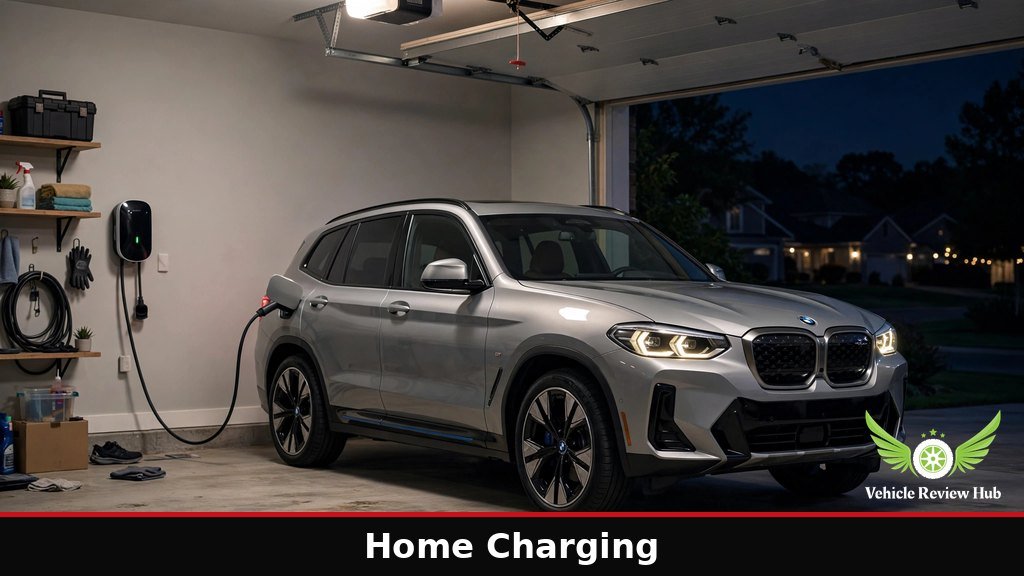
Home charging is where the iX3 makes the most sense. On a standard 120-volt Level 1 outlet (about 1.4 kW), a full charge takes several days — fine only as emergency backup. A 240-volt Level 2 home charger is the real solution: the iX3 accepts up to 15.4 kW AC, filling the 108.7-kWh battery overnight in roughly 8–9 hours from empty. Most owners will top up from 20–80 percent in 5–6 hours, easily done while sleeping.
At average US residential electricity rates, a full charge costs roughly $15–$20 — versus $60+ for a tank of premium gas in a comparable X3. BMW’s app schedules charging for off-peak hours automatically, and battery preconditioning warms the pack before departure when plugged in, preserving BMW iX3 mileage on cold mornings. For long-term battery care, our BMW iX3 maintenance cost guide covers charging best practices.
DC Fast Charging Speed, Charging Time & Road Trip Planning
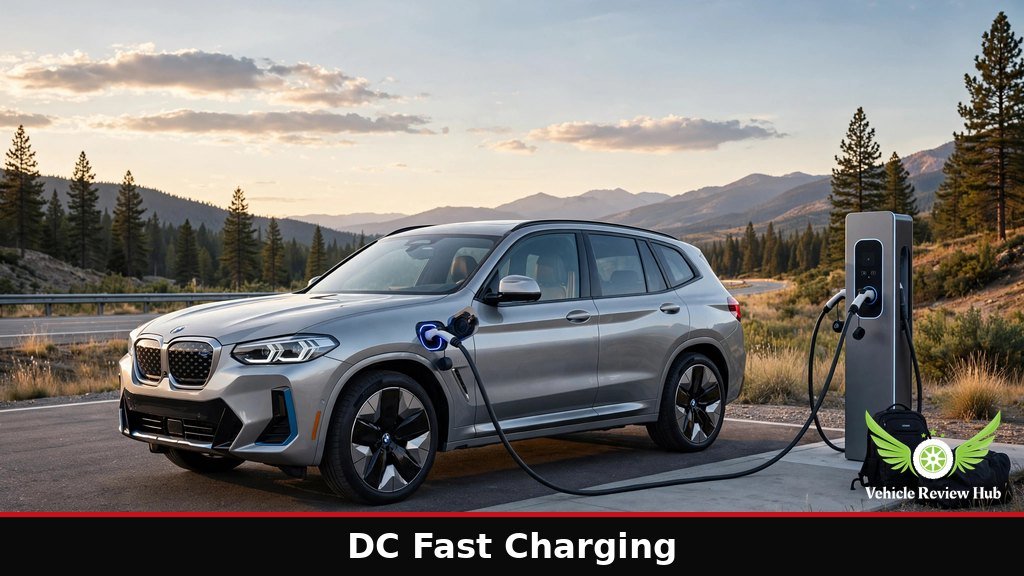
On the road, the iX3 is exceptional. Peak DC fast charging of 400 kW adds around 185 miles of range in 10 minutes, with 10–80 percent taking approximately 21 minutes at a compatible charger via the standard NACS port. That charging performance transforms road trips: a 20-minute coffee stop adds over 200 miles of real range.
Road-trip planning is straightforward. The navigation system routes through chargers automatically, preconditions the battery en route for maximum speed, and the native NACS port opens the Tesla Supercharger network plus all major CCS networks via adapter. A 434-mile range means most legs need just one short stop — Los Angeles to Las Vegas, for example, is doable with a single 15-minute charge. Arrive with 10–15 percent, charge to 80, and keep moving: that is the fast-charging rhythm the iX3 was built for, and it keeps effective BMW iX3 mileage high on long trips by minimizing time spent at low charging speeds.
BMW iX3 Performance & Real-World Driving Experience
Efficiency means little if the driving experience disappoints. The iX3 pairs its range with genuine BMW driving dynamics — this is no appliance.
Acceleration, Power Delivery & All-Wheel-Drive Performance
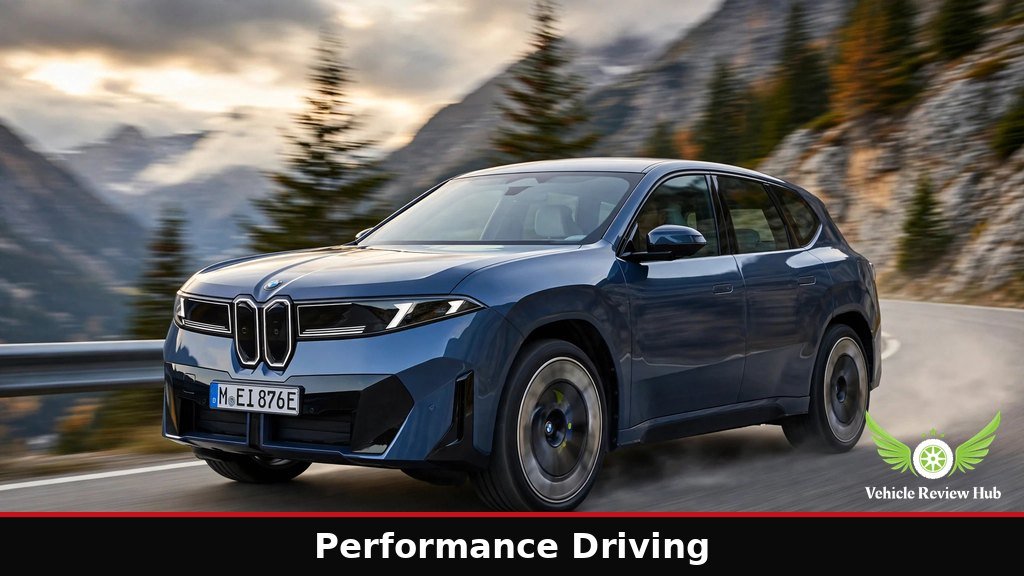
Two motors deliver 463 horsepower and 476 lb-ft of torque to all four wheels, launching the iX3 to 60 mph in 4.7 seconds. Power delivery is instant and linear — no gears, no lag, just silent thrust. The xDrive system biases power rearward for a sporty feel, shuffling torque in milliseconds when traction demands it.
The Heart of Joy controller is the secret weapon: by unifying drivetrain, braking, and stability systems into one processor, it delivers throttle calibration and torque distribution that reviewers call the best in any BMW EV. Sport mode sharpens responses without ruining efficiency, and the 130-mph top speed keeps autobahn credibility intact. Real-world BMW iX3 mileage barely suffers in spirited driving thanks to the efficient motors — though sustained high speeds will always cost range.
Ride Comfort, Handling & Regenerative Braking Experience
Despite weighing over 5,100 pounds, the iX3 handles with BMW’s trademark composure: sharp steering, flat cornering, and body control that masks the mass. Passive dampers are well-tuned for broken pavement, and the low-mounted battery keeps the center of gravity planted. Reviewers praise the ride-handling balance as class-leading.
Regenerative braking is the smoothest of any BMW EV to date. The Heart of Joy handles 98 percent of everyday braking through regeneration alone, blending to friction seamlessly when needed. D mode offers adaptive regen that coasts when efficient and brakes when traffic demands; B mode delivers strong one-pedal driving. The handover is nearly imperceptible — a genuine achievement that makes the iX3 relaxing to drive.
BMW iX3 Daily Driving & Long-Distance Practicality
Beyond the spec sheet, the iX3 is designed to disappear into daily life: quiet, comfortable, and easy to live with for years.

City Driving, Highway Comfort & Cabin Quietness
Around town, the iX3 is effortless: instant torque for gaps in traffic, a tight turning circle for its size, and excellent visibility. The 434-mile range means city drivers may charge only once a week. On the highway, the cabin is notably quiet — minimal wind and road noise, comfortable seats, and the full-width Panoramic Vision display keeping key info in view without distraction.
Long-distance comfort is a strength: supportive seats, a calm ride, and driver-assistance tech that reduces fatigue. The 30 cubic feet of cargo space (65 with seats folded) plus a 2-cubic-foot frunk swallow family gear. Our BMW iX3 ownership cost analysis covers what years of this daily use cost in insurance and depreciation.
Winter Range and Weather Conditions That Affect EV Performance
Cold weather is the biggest threat to real-world BMW iX3 mileage. Like all EVs, the iX3 can lose 20–40 percent of its range in freezing temperatures: the battery chemistry is less efficient, cabin heating draws significant power, and winter tires add rolling resistance. A 434-mile rating can mean 260–350 real miles in a cold snap.
Mitigation is built in. Precondition the battery and cabin while plugged in — warming up on wall power instead of battery power. Use the heated seats and steering wheel rather than blasting cabin heat. Park in a garage when possible, keep tires properly inflated, and plan charging stops with a buffer in winter. The heat pump (standard on modern BMW EVs) cuts heating energy dramatically versus resistive heaters. Even in worst-case winter conditions, the iX3’s huge range buffer keeps it practical where shorter-range EVs struggle.
Is the BMW iX3 Practical for Daily Driving and Road Trips?
After the numbers and the driving impressions, the practical question: does the iX3 work as an only car for American life?
Long-Distance Range and Charging Convenience
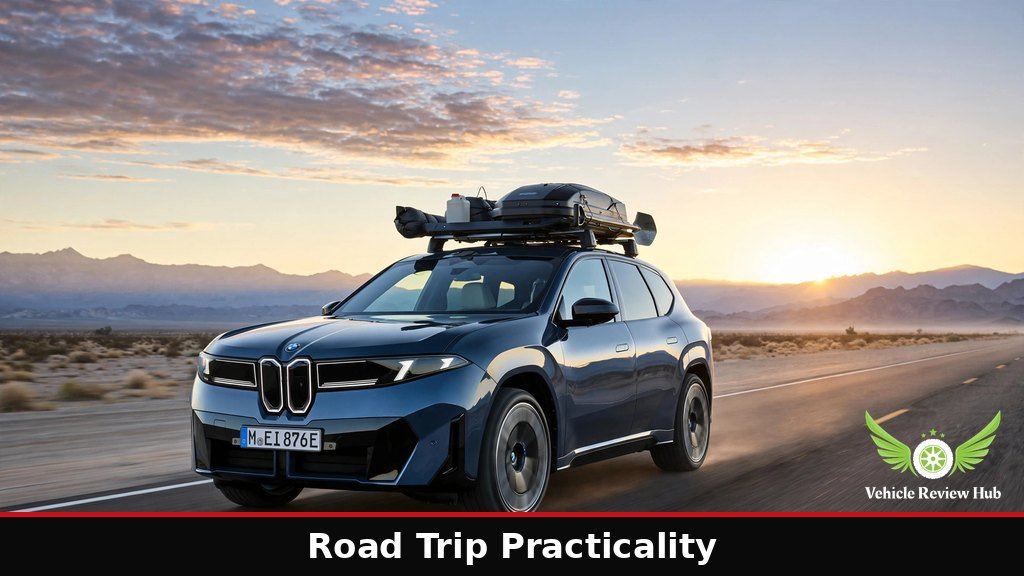
Yes — more convincingly than any electric SUV before it. The 434-mile range covers nearly every daily scenario without thinking about charging, and the 400 kW charging speed makes road trips genuinely easy. With the NACS port and automatic route planning with preconditioning, long-distance travel needs minimal planning: the car handles the logistics.
The math favors the iX3 over rivals. A Tesla Model Y Performance needs roughly 40 percent more charging stops on the same trip; the iX3’s combination of longest range and fastest charging means less total trip time. When you compare BMW iX3 mileage per charging minute against any competitor, the 400 kW architecture wins decisively — more miles added per minute of waiting than any rival in the class. For families, that is the difference between EV road trips feeling normal versus feeling like a compromise.
Real-World Performance vs Electric Efficiency
The iX3’s real achievement is refusing the usual tradeoff: 463 horsepower and 4.7-second acceleration alongside 118 MPGe and 434 miles of range. You do not choose between fun and frugal — the sixth-generation eDrive delivers both. Real-world BMW iX3 mileage of 3.2–4.0 miles per kWh in normal driving confirms the efficiency is real, not just lab numbers.
For buyers comparing running costs, BMW iX3 mileage translates directly into savings: electricity at 3–4 cents per mile versus 15+ cents for a gas X3 adds up to thousands saved per year. Over 60,000 miles, strong BMW iX3 mileage can save roughly $7,000 in energy costs alone compared with a gasoline X3 — before counting the EV’s lower maintenance. The iX3 is practical for daily driving, comfortable for road trips, and efficient enough to keep running costs minimal — the complete package.
BMW iX3 Mileage FAQs
These are the questions American shoppers ask most about BMW iX3 mileage, MPGe, and charging.
What is the range of the 2027 BMW iX3?
The EPA rates the BMW iX3 50 xDrive at up to 434 miles on 20-inch summer tires. Other configurations range from 383 to 399 miles depending on wheels and tires. Real-world BMW iX3 mileage typically delivers 3.2–4.0 miles per kWh.
What is the BMW iX3’s MPGe rating?
The most efficient configuration is rated at 118 MPGe combined (125 city / 110 highway). The 20-inch all-season setup is rated at 102 combined MPGe, or 33.0 kWh per 100 miles, with about $650 in annual charging costs for typical BMW iX3 mileage needs.
How long does it take to charge a BMW iX3?
DC fast charging at up to 400 kW takes 10–80 percent in about 21 minutes, adding roughly 185 miles in 10 minutes. Home Level 2 charging at 15.4 kW fills the battery overnight in about 8–9 hours from empty.
How much does it cost to charge a BMW iX3 at home?
At average US residential rates, a full charge costs roughly $15–$20, or about 3–4 cents per mile. The EPA estimates around $650 per year in charging costs for typical driving.
Does the BMW iX3 lose range in winter?
Yes, like all EVs. Cold weather can cut range by 20–40 percent. Preconditioning while plugged in, using heated seats instead of cabin heat, and keeping a charging buffer preserve the most BMW iX3 mileage. Even in winter, the iX3’s 434-mile rating leaves a comfortable buffer.
Is the BMW iX3 good for road trips?
Excellent — arguably the best electric SUV for road trips in 2026. The 434-mile range plus 400 kW charging means short, infrequent stops, and the native NACS port with automatic route planning makes long-distance travel nearly as easy as a gasoline car.