Short answer: Honda CB350 H’ness performance is modest, smooth, and honest — a 348.36cc air-cooled single making a manufacturer-claimed 21.07 PS (20.8 bhp) at 5,500 rpm and 30 Nm at 3,000 rpm, reaching 100 km/h in 12.69 seconds on Autocar India’s instruments, with an indicated top speed just over 130 km/h and a claimed 45.8 km/l (about 107.7 US mpg by conversion only). But this Honda CB350 H’ness performance guide starts with the fact that frames everything else: the H’ness has never been sold in the USA, and no US launch has been announced as of November 2026. There is no US price, no US 0-60 mph test, and no US dealer — every figure here is Indian or British, labelled by tester and units.
One more framing fact belongs up front: the H’ness badge itself ended in September 2026. Honda India dropped the name and the same motorcycle continues as the plain CB350, with zero mechanical changes. So when this Honda CB350 H’ness performance guide says “2026”, it means the lineage current into 2026 — not a distinct “2026 H’ness” model, which does not exist.
Honda CB350 H’ness Engine Performance and Power Delivery
The engine defines Honda CB350 H’ness performance: a long-stroke, air-cooled single built for smoothness and torque feel rather than headline power.
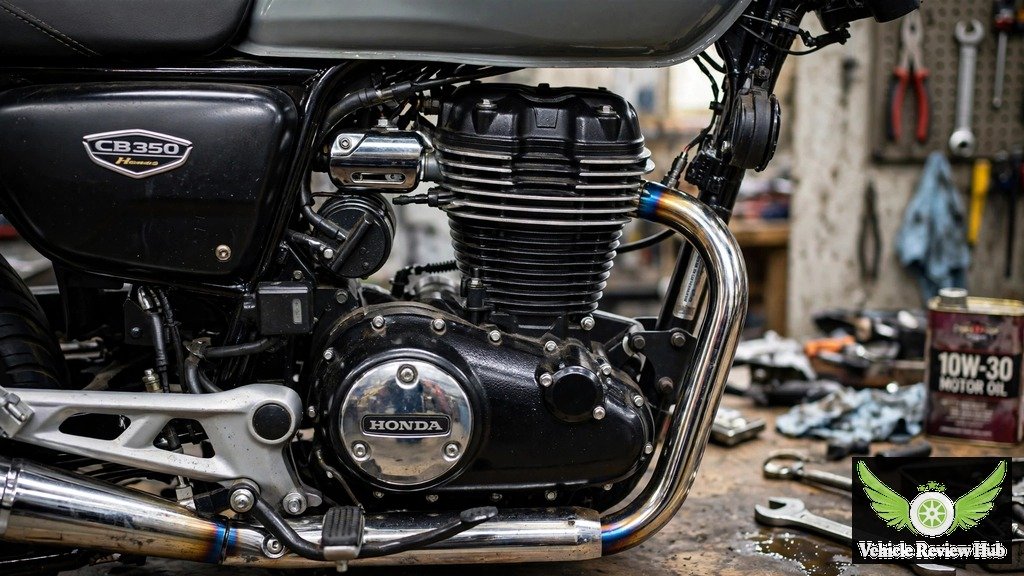
Long-Stroke 70 by 90.5mm Engine Tuned for Low-End Torque
The long-stroke 70 by 90.5 mm engine is the heart of Honda CB350 H’ness performance: a 348.36cc air-cooled four-stroke single, overhead cam, fuel-injected, with a 9.5:1 compression ratio, a balancer shaft to kill vibration, and a five-speed gearbox with an assist-and-slipper clutch. Honda claims 21.07 PS (20.8 bhp) at 5,500 rpm and 30 Nm at 3,000 rpm, and that low torque peak tells you where this engine wants to live: between 3,000 and 5,500 rpm, in third and fourth gear, at 60 to 100 km/h. That is the sweet spot of Honda CB350 H’ness performance — the balancer shaft keeps the single smooth where rivals shake, and the assist clutch keeps the lever light in traffic. For the full model story behind this engine, see our Honda CB350 H’ness review.
No Dyno Figure Exists in Any Source: Do Not Publish One
No dyno figure exists in any source for the Honda CB350 H’ness, and this Honda CB350 H’ness performance guide refuses to invent one. There is no measured rear-wheel horsepower number from any magazine, test house, or owner dyno sheet — only Honda’s crank claims of 21.07 PS and 30 Nm. That matters because crank and wheel figures differ: drivetrain losses typically eat 10 to 15 percent, so a naive conversion would land near 18 to 19 PS at the wheel — but that is arithmetic, not a measurement, and this Honda CB350 H’ness performance guide will not print it as a fact. The honest Honda CB350 H’ness performance sentence is: 21.07 PS and 30 Nm at the crank, claimed by Honda, unmeasured at the wheel anywhere in print.
| Power figure | Value | What it actually is |
|---|---|---|
| Honda claimed power | 21.07 PS (20.8 bhp) @ 5,500 rpm | Manufacturer crank claim, not a measurement |
| Honda claimed torque | 30 Nm @ 3,000 rpm (India spec) | Crank claim; UK GB350S is rated 29 Nm |
| Rear-wheel dyno figure | None exists in any source | Do not publish, convert, or guess one |
| Engine basics | 348.36cc single, 70 x 90.5 mm, 9.5:1 | Air-cooled, balancer shaft, 5-speed, slipper clutch |
Honda CB350 H’ness Top Speed and Acceleration
Top speed and acceleration are where Honda CB350 H’ness performance gets argued about most. This Honda CB350 H’ness performance section leads with Autocar India’s instrumented figures, then shows the full spread.
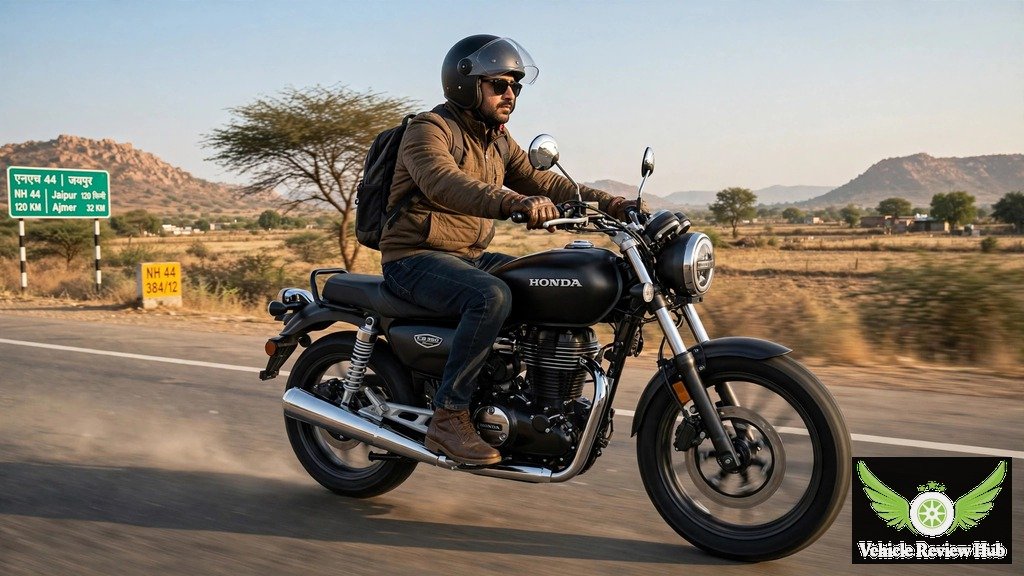
Autocar India: 0-100 km/h in 12.69 Seconds, 0-60 in 4.32
Autocar India measured 0-100 km/h in 12.69 seconds and 0-60 km/h in 4.32 seconds for the Honda CB350 H’ness and those are the headline Honda CB350 H’ness performance acceleration figures — instrumented, on a VBox, by India’s most established test team. But the spread matters, and this Honda CB350 H’ness performance guide reports it: MotorBeam measured around 14 seconds to 100 km/h, ZigWheels recorded 12.55 seconds to 100 km/h and 4.39 seconds to 60 km/h, and one IB Times test claimed 10.3 seconds — a figure no other outlet has repeated. The honest reading is roughly 12.5 to 14 seconds to 100 km/h depending on conditions, with Autocar’s 12.69 seconds in the middle of that band.
Top Speed Just Over 130 km/h Indicated in Indian Testing
Top speed just over 130 km/h indicated in Indian testing is the Autocar review-text figure for Honda CB350 H’ness performance, and it needs its qualifiers stated in full. “Indicated” means the speedometer reading, which on most motorcycles over-reads by several percent, so the true speed was likely a few km/h lower. Autocar’s own spec table lists 125 km/h, conflicting with its review text — this Honda CB350 H’ness performance guide reports both and picks no winner. Put together, the realistic Honda CB350 H’ness performance top speed is about 120 to 130 km/h indicated (roughly 75 to 81 mph). The video below is HT Auto’s road test review of the real H’ness, honestly labelled as an Indian road test — not an American test, and not a top-speed run.
Honda CB350 H’ness Mileage and Fuel Economy
Fuel economy is the strongest card in the Honda CB350 H’ness performance hand, and also the easiest to misquote. This Honda CB350 H’ness performance section keeps every figure in its own labelled box, with units attached every time.
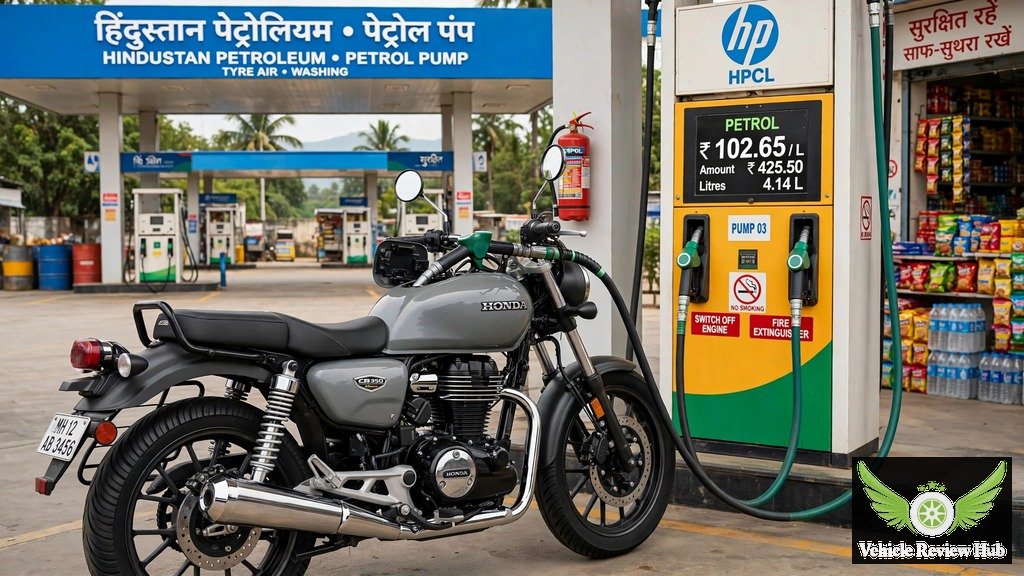
Indian Tested 45.8 km/l Equals About 107.7 US MPG Equivalent
Indian tested 45.8 km/l equals about 107.7 US mpg equivalent — and that sentence needs its warning label read aloud, because it is the most misquoted figure in Honda CB350 H’ness performance coverage. The 45.8 km/l figure is the ARAI-certified claim for the Indian bike, and it also appears as ZigWheels’ highway test result; multiplied by 2.352 (the km/l to US mpg conversion factor) it gives 107.7 US mpg. But 107.7 US mpg is a conversion, never a tested American figure: no American agency has tested this bike. Quoting “107.7 mpg” without “by conversion only” would mislead an American reader. From the 15-litre tank (3.96 US gallons), the claimed 45.8 km/l implies about 687 km of range — arithmetic from a claim, not a tested range, and this Honda CB350 H’ness performance guide labels it as such. Autocar India’s H’ness review remains the best single source for the instrumented context behind these economy claims.
Owners Cluster at 32 to 38 km/l and MCN UK Tested 52.5 US MPG
Owners cluster at 32 to 38 km/l and MCN UK tested 52.5 US mpg — those are the two reality checks on the 45.8 km/l claim, and Honda CB350 H’ness performance buyers should weight them heaviest. Indian owners cluster at 32 to 38 km/l (about 75 to 89 US mpg by conversion), with 6Pistons reporting roughly 35 km/l in the city and 38 to 40 km/l on the highway, and ZigWheels’ user average at 36 km/l. The MCN figure is different again: MCN UK tested the GB350S, the British version, at 52.5 US mpg — a different spec (29 Nm, not 30 Nm) and a different test cycle — so it must never be averaged with the Indian figures. For the servicing costs behind that economy, see our Honda CB350 H’ness reliability guide.
| Mileage figure | Value | Source and label |
|---|---|---|
| ARAI claimed | 45.8 km/l (= 107.7 US mpg by conversion only) | Indian certification claim; conversion, never a US test |
| ZigWheels highway test | 45.8 km/l; city test 42.17 km/l | Indian road test, labelled by outlet |
| Owner band | 32–38 km/l (75–89 US mpg converted) | Real-world owner reports; use this band for planning |
| MCN UK tested (GB350S) | 52.5 US mpg | British bike, British cycle — never averaged with Indian figures |
| Range maths (15 L tank) | Claim ~687 km; owner band ~480–570 km | Arithmetic, not tested range |
Honda CB350 H’ness Real-World Riding Performance
On the road, Honda CB350 H’ness performance is better than the acceleration table suggests and worse than the brochure implies — a motorcycle tuned for the city and the back road.
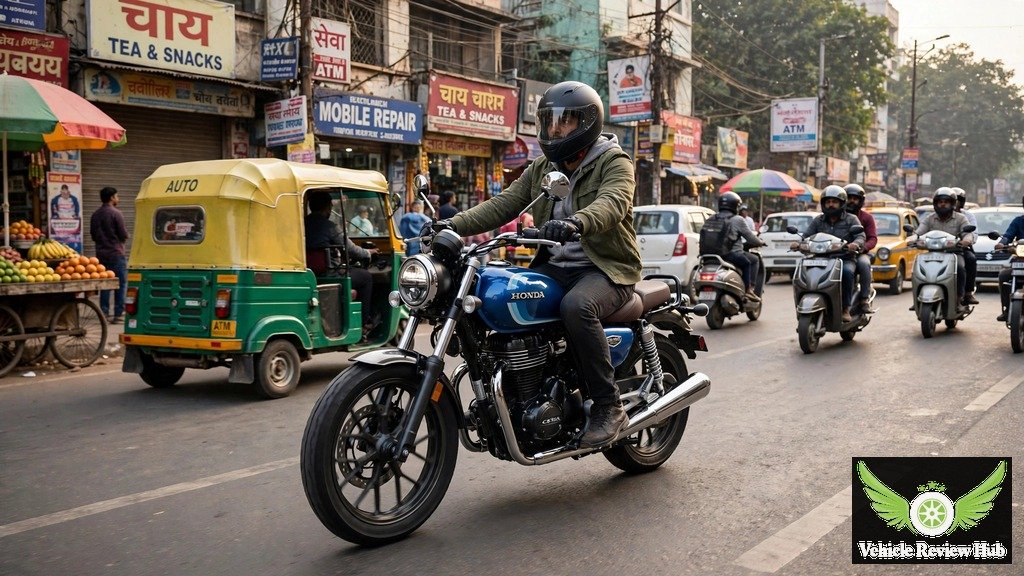
City Riding, Traffic Performance and Everyday Acceleration
City riding is where Honda CB350 H’ness performance shines brightest, and it is the use case the engine was tuned for. In traffic, the long-stroke single pulls cleanly from low revs, the balancer shaft kills vibration, the assist clutch keeps the lever light, and the 800 mm seat lets most riders flat-foot at lights. The caveats are consistent: a soft bottom end, reluctant below 2,500 rpm and needing a downshift to wake up, and tall gearing that hurts in stop-start traffic, where first and second gear do most of the work. The ZigWheels H’ness road test review captures that split verdict well — brisk once rolling, slightly sleepy off the very bottom, and superbly smooth throughout. For an American reader, the translation is simple: this is a bike built for the commute and the town run, not the drag strip, and its Honda CB350 H’ness performance in the city is its best argument.
Highway Riding, Pillion Use and the 15 Litre Tank’s Range
Highway riding, pillion use, and the 15-litre tank’s range form the second half of Honda CB350 H’ness performance in daily use, and here the verdict is more qualified. At 80 to 100 km/h the bike is relaxed and smooth, cruising at 100 to 120 km/h comfortably. Above 100 km/h, though, overtakes need planning: dropping to fourth (or even third) for a decisive pass, and the modest 21 PS shows its limit against faster traffic. The 15-litre tank is the saving grace: even at 32 to 38 km/l, it delivers roughly 480 to 570 km between fills. That combination — relaxed cruise, patient overtaking, long range — is the real Honda CB350 H’ness performance highway story, suiting a rider who tours at 90 km/h far better than one who chases 130.
Honda CB350 H’ness Handling, Braking and Stability
Handling and braking are where Honda CB350 H’ness performance most exceeds its price: a stable frame, a 19-inch front wheel, and brakes with genuine feel.
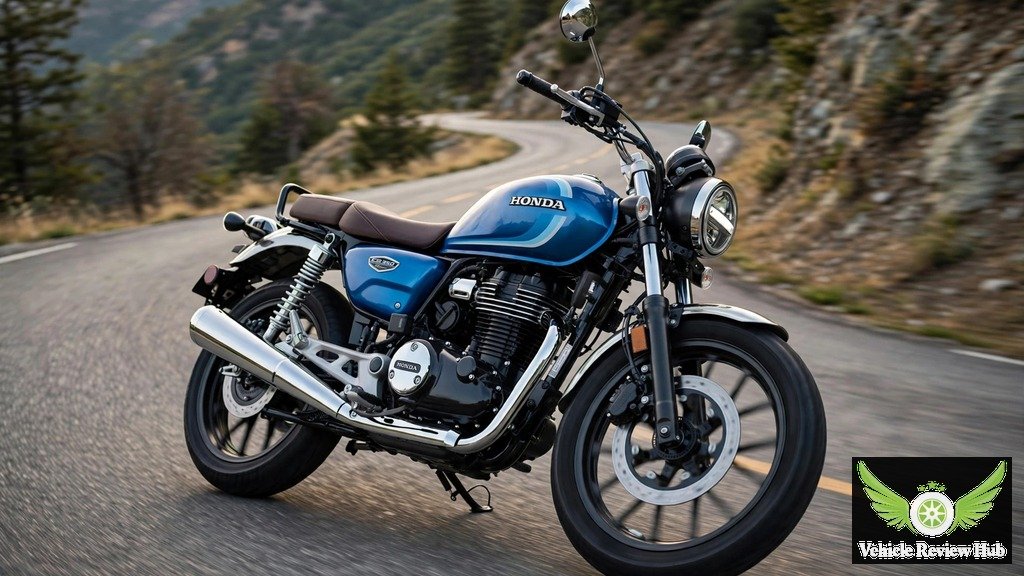
Steel Cradle Frame, 19-Inch Front Wheel and 181 kg Weight
The steel cradle frame, 19-inch front wheel, and 181 kg weight are the three numbers that define Honda CB350 H’ness performance in corners. The half-duplex cradle frame is conventional but well-judged: stiff enough to feel planted, forgiving enough on rough roads. The 19-inch front wheel (100/90-19 tyre) gives the classic stance and rolls over potholes with less drama than a 17-inch wheel, while the 130/70-18 rear keeps the back end stable. At 181 kg kerb (399 lb), the H’ness is lighter than the Classic 350 — it changes direction easily and feels manageable at parking speeds. That is the trade at the heart of Honda CB350 H’ness performance handling: plush over bumps, slightly wallowy when pushed hard, and honest about which matters more to its buyers.
310mm Front and 240mm Rear Discs With Dual-Channel ABS
The 310 mm front and 240 mm rear discs with dual-channel ABS are a genuine headline in Honda CB350 H’ness performance, because this level of braking hardware is rare at this price in India — and because the traction control that comes with it is rarer still. The front disc is gripped by a two-piston Nissin caliper, the rear by a single-piston caliper, and dual-channel ABS watches both wheels; Autocar measured 60-0 km/h in 16.01 metres, a respectable stop for a 181 kg bike. But the bigger story is HSTC traction control, standard on a 350cc retro single where most rivals offer none, and switchable. Combined with ABS, it makes the H’ness one of the safest bikes in its class — a real Honda CB350 H’ness performance advantage that has nothing to do with speed and everything to do with staying upright. The MCN GB350S review covers the British version’s chassis and braking in the same terms, and its 52.5 US mpg test figure is the one quoted in the mileage section above.
Honda CB350 H’ness Performance Compared With Royal Enfield Rivals
Comparisons are where Honda CB350 H’ness performance either makes sense or falls apart: the bike was launched in India to steal buyers from Royal Enfield.
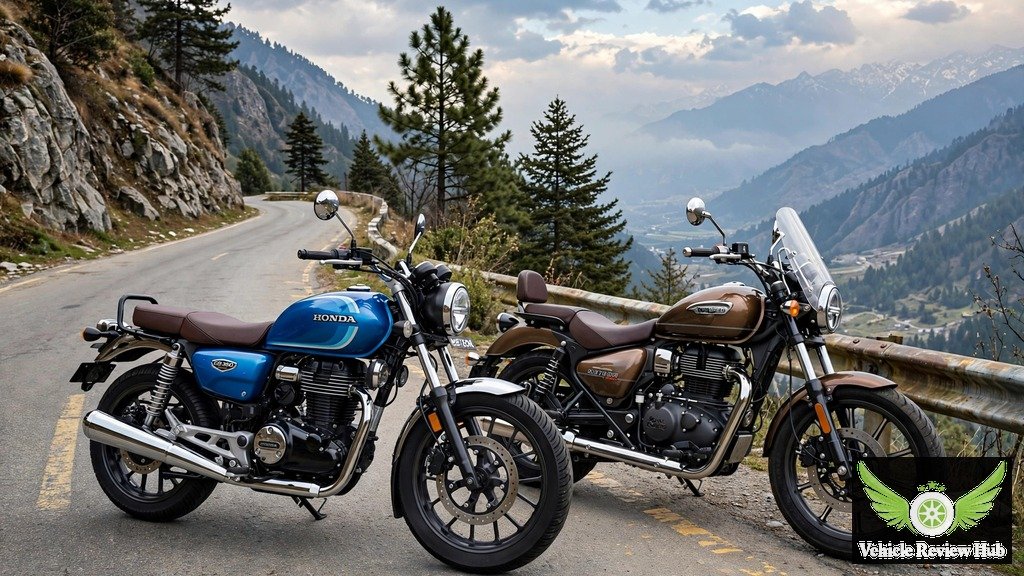
Faster to 100 km/h Than the Meteor 350 and Classic 350
Faster to 100 km/h than the Meteor 350 and Classic 350 — that is the doc’s headline comparison, and on Autocar India’s test figures it holds: the H’ness’s 12.69-second run beats both Royal Enfields, which carry similar power but more weight and lazier gearing. Where the Honda’s Honda CB350 H’ness performance advantage is clearer is refinement and economy: the balancer-shaft single is smoother than either Enfield single, the gearbox shifts more cleanly, and the owner band of 32 to 38 km/l beats the Enfields’ real-world figures. For an American reader, the honest translation is through the alternatives: the Meteor 350 is sold in the USA for $4,899 (2026), so it is the rival you can actually buy — and the Honda’s advantages over it are smoothness, traction control, and dual-channel ABS, while the Meteor’s are availability, dealer support, and price. For the buying decision in full, see our Honda CB350 H’ness buying guide.
| Bike | Engine | 0-100 km/h (Autocar India) | Honda CB350 H’ness performance verdict |
|---|---|---|---|
| Honda CB350 H’ness (India) | 348.36cc single, 21.07 PS claimed | 12.69 s | Quickest of the trio on Autocar figures; smoothest engine |
| Royal Enfield Meteor 350 (India) | 349cc single | Slower than the H’ness on Autocar figures | US price $4,899 (2026) — the rival you can actually buy |
| Royal Enfield Classic 350 (India) | 349cc single | Slower than the H’ness on Autocar figures | More character and heritage; heavier and thirstier |
| US alternatives anchor | Honda CB300R $4,499 + $600 | No US test exists for the H’ness | Real US options start at $4,499 per the doc |
Is the Honda CB350 H’ness Suitable for Beginner Riders?
Yes, with one reservation, and this is one of the least controversial claims in the Honda CB350 H’ness performance story. The case for beginners is strong: a low 800 mm seat, 181 kg weight, light assist clutch, predictable linear power, standard dual-channel ABS, and traction control — a safety package no rival at this price matches. The reservation is the soft bottom end and tall fifth gear: a new rider will find the bike sleepy below 2,500 rpm and must learn downshifting for overtakes. The other reservation is not about the bike: an American beginner cannot buy one, so the US recommendation points at the Meteor 350 at $4,899, the Rebel 300 at $4,849, or the Honda CB300R at $4,499 plus $600 — all verified US prices, all buyable today. That is the honest close of the Honda CB350 H’ness performance beginner case: a superb first big bike in India, and a useful yardstick for what an American beginner should demand from the bike they actually buy.
Honda CB350 H’ness Performance FAQs
Direct answers to the Honda CB350 H’ness performance questions buyers ask most, with every figure labelled by tester and units.
How much horsepower does the Honda CB350 H’ness make?
21.07 PS (20.8 bhp) at 5,500 rpm, says this Honda CB350 H’ness performance guide — a Honda crank claim, not a measured figure. No rear-wheel dyno number exists.
What is the top speed of the Honda CB350 H’ness?
About 120 to 130 km/h indicated, says this Honda CB350 H’ness performance guide — Autocar’s text says just over 130 km/h, its table says 125 km/h. No US test exists.
How fast is the Honda CB350 H’ness from 0 to 100 km/h?
12.69 seconds on Autocar India’s instruments, says this Honda CB350 H’ness performance guide — roughly 12.5 to 14 seconds across testers. No US 0-60 mph test exists.
What mileage does the Honda CB350 H’ness get?
45.8 km/l claimed (ARAI), says this Honda CB350 H’ness performance guide — about 107.7 US mpg by conversion only. Owners report 32 to 38 km/l; MCN UK tested the GB350S at 52.5 US mpg.
How far can the Honda CB350 H’ness go on a full tank?
About 480 to 570 km on the owner band, says this Honda CB350 H’ness performance guide — the claimed 45.8 km/l would imply about 687 km, but that is arithmetic from a claim, not a tested range.
Is the CB350 H’ness faster than the Royal Enfield Meteor 350?
Yes to 100 km/h on Autocar India’s figures, says this Honda CB350 H’ness performance guide — 12.69 seconds beats both Enfields on that test.
Does the Honda CB350 H’ness have traction control?
Yes, says this Honda CB350 H’ness performance guide — HSTC traction control is standard, alongside dual-channel ABS, rare at this price and class.
Can the Honda CB350 H’ness go off-road?
Light gravel only, says this Honda CB350 H’ness performance guide — a retro roadster on road tyres with a 19-inch front wheel, not a dual-sport; ground clearance 166 mm.
Does the CB350 H’ness have good brakes?
Yes, says this Honda CB350 H’ness performance guide — a 310 mm front disc, two-piston caliper, 240 mm rear disc, and dual-channel ABS stopped 60-0 km/h in 16.01 metres on Autocar’s test.
What is the engine size of the Honda CB350 H’ness?
348.36cc, says this Honda CB350 H’ness performance guide — a long-stroke air-cooled single, 70 by 90.5 mm, 9.5:1 compression, balancer shaft, five-speed gearbox.
Is the Honda CB350 H’ness good for beginners?
Yes, says this Honda CB350 H’ness performance guide — a low seat, light weight, ABS, and traction control make it approachable, though the tall fifth gear needs downshifts.
Is the 2026 Honda CB350 H’ness sold in the USA?
No, says this Honda CB350 H’ness performance guide — never sold in the USA, no US launch announced, and the H’ness badge ended in September 2026, with the same bike continuing as the plain CB350 in India.