Short answer: Honda CBR1000RR reliability is strong for a literbike, with two honest warnings attached. The 999cc inline-four has been in production in its current SC77 form since 2017, owners rate the 2017-on bike 4.8 out of 5 for reliability, and the service schedule asks for oil every 8,000 miles and a valve check every 16,000 — but certain model years carry fuel-pump and fuel-cap recalls that must be checked by VIN before any money changes hands, and the earliest SC59 bikes have a documented oil-consumption watch item with no recall behind it.
That separation matters because Honda CBR1000RR reliability is easy to misreport in both directions. Sellers quote the Honda badge as if it were a warranty, while alarmist coverage merges three different fuel-system campaigns into one scary headline and sometimes drags in recalls that belong to the CBR1000RR-R Fireblade SP or even the CBR600RR.
Honda CBR1000RR Reliability Overview
The short version of Honda CBR1000RR reliability: a simple, understressed inline-four, a strong dealer network, and long service intervals. The SC77 generation has run since 2017, and Honda still lists the base bike new for 2027 at $17,099 plus a $775 destination charge. That long production run is itself part of Honda CBR1000RR reliability, because parts, manuals, and dealer familiarity are all deep.
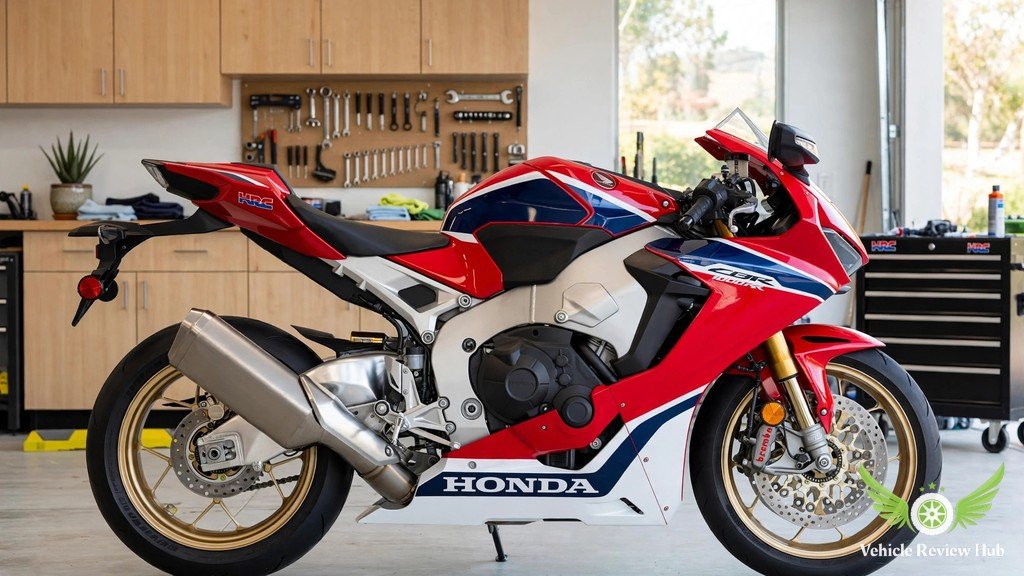
MCN Owners: 2017-On Reliability 4.8 Out of 5 From 11 Reviews
Owner evidence is where Honda CBR1000RR reliability starts, and the numbers come with their sample sizes attached, because every one of these samples is small. MCN’s owner reviews for the 2017-on Fireblade give the base bike reliability of 4.8 out of 5 and an overall rating of 4.7 out of 5, from 11 owners. That is a strong result, but 11 owners is a small panel, and this Honda CBR1000RR reliability guide treats it as encouraging rather than conclusive. Do not borrow the SP page’s numbers for the base bike: the SP’s 5 out of 5 reliability from 8 owners describes a different, much rarer trim. For the full model story, see our Honda CBR1000RR review, and for tested power and economy, see our Honda CBR1000RR performance guide.
How Mileage, Track Use and Previous Care Affect Reliability
Mileage alone tells a buyer very little about Honda CBR1000RR reliability, and this guide says so plainly. A 30,000-mile bike with full dealer history beats a 6,000-mile bike that sat for three years on original tires and a dead battery. What matters is the pattern: oil, chain, fluid, and valve work done on time, with receipts. Previous use matters even more on a literbike than on any other class. A track-day bike may hide crash damage behind fresh fairings, while a commuter shows finish wear but gentler mechanical use. Honda CBR1000RR reliability rewards the buyer who reads the history, not the odometer.
Honda CBR1000RR Common Problems and Wear Items
Honest Honda CBR1000RR reliability coverage names the watch items with their evidence level attached. The list below comes from owner reports, test coverage, and official recall documents, and it is short.

2008 Oil Consumption: NHTSA Complaints, No Recall, Honda Said in Spec
The one chronic complaint in Honda CBR1000RR reliability history belongs to the 2008 SC59: multiple 2008 owners filed NHTSA complaints about heavy oil burning, with one reporting a quart every 300 to 400 miles and another reporting 4 litres in roughly 2,000 miles with smoke above 7,000 rpm. Dealers quoted owners that consumption of a quart per 1,000 miles was within specification, which is the “Honda said in spec” framing in this guide’s heading. Critically, no safety recall was ever issued for 2008 oil consumption. It is an owner-documented watch item, not a recall, and a buyer of any early SC59 should check oil history and consumption, with 2008 as the worst year. Owner reports say 2009 got revised internals, but that is owner-reported, not Honda-confirmed.
Chain, Sprockets, Tires, Fork Seals, Brakes and Electrical Checks
The wear items on a CBR1000RR are the same ones that wear on every chain-drive sport bike, and all are cheap if caught on schedule, which is the first rule of Honda CBR1000RR reliability. Check the #530 O-ring chain (16T front, 43T rear on the current bike) for adjustment and tight spots, and replace chain and sprockets as a set when adjustment runs out. Check tires for pressure, tread, and age: the manual label gives 36 psi front and 42 psi rear for a solo rider, and old rubber on a low-mileage bike is a common used-buy trap. Brakes need pad and fluid discipline for Honda CBR1000RR reliability, plus an ABS light self-test check on ABS bikes. Check fairing fit for crash repairs: mismatched fasteners and overspray are the usual tells.
Honda CBR1000RR Maintenance Schedule and Servicing
This section is the core of Honda CBR1000RR reliability: the schedule Honda has fully published is generous for a literbike. Oil every 8,000 miles, valves every 16,000, chain care every 500 miles. Generous intervals are a big part of Honda CBR1000RR reliability.

First Service at 600 Miles, Oil and Filter Every 8,000 Miles
Honda’s schedule for the CBR1000RR starts with a first service at 600 miles, then engine oil and filter every 8,000 miles or 12 months, whichever comes first, verified in the owner’s manual schedule. Recommended oil is SAE 10W-30 meeting JASO MA, and capacity on the SC77 is 2.6 US quarts for a drain alone and 2.9 US quarts with a filter change. The 2017 Fireblade owner’s manual is the reference for the SC77 schedule. The video below is an owner oil-change video on a CBR1000RR, not a dealer service tutorial, and this guide labels it as such.
Valve-Clearance Inspection Every 16,000 Miles and Plug Schedule
The 16,000-mile valve-clearance inspection is the big-ticket item in Honda CBR1000RR reliability. The owner’s manual marks valve clearance for inspection at the 16,000-mile service, and Honda rates valve work as dealer-recommended, so most owners pay a dealer for this one. The CBR1000RR uses shim-under-bucket adjustment, so a tight valve means a camshaft-out job with new shims. The plug schedule is now pinned down from the manual: spark plugs are inspected every 16,000 miles and replaced every 32,000 miles. Price the valve service into any used deal near 16,000 miles, because that is where Honda CBR1000RR reliability meets its largest single bill.
| Service item | CBR1000RR interval | Note |
|---|---|---|
| First service | 600 miles | Oil + checks |
| Engine oil + filter | Every 8,000 miles / 12 months | SAE 10W-30, JASO MA; 2.9 qt with filter |
| Valve clearance | Inspect every 16,000 miles | Dealer-recommended, shim-under-bucket |
| Spark plugs | Inspect every 16,000 mi / replace every 32,000 mi | NGK IMR9E-9HES, gap 0.8–0.9 mm |
| Drive chain | Check, clean + lubricate every 500 miles | #530 O-ring, 16T/43T, slack 25–35 mm |
| Brake fluid | Replace every 2 years | Calendar item, Honda DOT 4 |
| Coolant | Check level cold; replace per manual interval | Pro Honda HP premixed, 50/50 |
| Summary | 8,000-mile oil, 16,000-mile valves | Long intervals for a literbike |
Honda CBR1000RR Tires, Brakes and Suspension Maintenance
Tires, brakes, and suspension are where Honda CBR1000RR reliability meets the road. Good rubber and brakes are non-negotiable for Honda CBR1000RR reliability. Stock setup on the base SC77: a 43mm Showa Big Piston Fork, a Showa Balance Free Rear Cushion shock, dual 320mm front discs with radial four-piston Tokico calipers, and a single 220mm rear disc.

Air Cleaner, Coolant, Brake Fluid and Chain Care Intervals
Air cleaner service follows the manual’s dusty-conditions rule. Coolant is a check-level item first: check the reserve tank level cold, between the upper and lower marks, and top up only from the reserve tank cap with Pro Honda HP premixed coolant, a 50/50 mix of antifreeze and distilled water. Replacement follows the manual’s scheduled interval for your model year. Brake fluid is replaced every two years regardless of mileage, using Honda DOT 4 from a sealed container. Chain care is the highest-value routine in Honda CBR1000RR reliability: clean and lubricate every 500 miles, check slack at several points, and replace chain and sprockets as a set when adjustment runs out.
Brake Pads, Fork Seals, Shock Checks and SP Öhlins Servicing
Brake pads are consumables: check thickness before every ride and replace before they score the discs. The ABS system needs its own health check: a warning light that stays lit means dealer diagnosis, not a home bleed. Fork and shock checks follow the same Honda CBR1000RR reliability discipline: seals, stanchions, linkage bearings, and steering-head bearings. Treat weeping fork seals on a high-mileage bike as a wear item to price in, not a reason to walk away. The SP Öhlins servicing note in this heading covers SP bikes only: the 2017–2019 SP carries an Öhlins NIX30 fork and TTX36 shock with semi-active adjustment, and its suspension servicing is a specialist dealer item with different parts and prices from the standard Showa setup.
Honda CBR1000RR Maintenance and Ownership Costs
Ownership costs are where Honda CBR1000RR reliability becomes a budget question, reassuring only if the buyer prices the 16,000-mile service and the tire bill honestly. That honesty is part of Honda CBR1000RR reliability planning. It is one of the cheaper literbikes to keep, but tires, chains, and dealer valve work are the three bills that surprise owners.

Fuel, Routine Servicing, Tires and Replacement Parts
Fuel is modest for a literbike: the tank runs 4.2 gallons on the 2017 page and 4.3 gallons on the 2024 page, a small year-by-year drift this guide reports rather than blending into one figure. No published US servicing-cost figure was found to quote. Budget a tire set per hard season. Parts availability is excellent: the platform has run since 2004, dealers stock consumables, and aftermarket support is deep, which is a quiet pillar of Honda CBR1000RR reliability.
Repair Expenses, Parts Availability and Long-Term Ownership Costs
The big repair expense on any faired literbike is crash damage, but no evidence marks the SC77 engine a weak point for Honda CBR1000RR reliability outside the specific recalls below. A bike near a valve interval should be priced accordingly. For the buying picture, see our Honda CBR1000RR buying guide. The titanium question belongs here too: the brief’s claim that titanium tank and muffler appear on all SC77s is not supported by Honda’s own material listings, which tie the lightweight titanium Akrapovic exhaust to the SP. The base bike’s standard muffler is not listed as titanium by Honda, and tank material is unresolved in Honda’s published pages, so this Honda CBR1000RR reliability guide states the conflict openly and asserts neither version for the base bike.
How to Keep a Honda CBR1000RR Reliable
Keeping a CBR1000RR reliable is disciplined, not complicated: treat the 500-mile chain routine as a habit, keep the service book complete, and check the VIN before you buy. That is the simplest summary of Honda CBR1000RR reliability in practice.

Preventive Maintenance, Service Records and Regular Inspections
Start with the chain, the highest-value job in Honda CBR1000RR reliability: clean and lubricate every 500 miles, check slack at several points, and replace chain and sprockets as a set when adjustment runs out. The manual specifies slack of 25 to 35 mm, measured in the lower half of the chain midway between the sprockets, and states plainly: do not ride if slack exceeds 50 mm. Before every ride, inspect tires, brakes, chain, lights, and controls. Store it right and Honda CBR1000RR reliability improves for free: a battery tender, a wash, and a cover. That 500-mile habit is the cheapest Honda CBR1000RR reliability insurance there is.
Fuel Pump Recalls Split by Year: 24V-113 for 2018-19, 24V-864 for Others
Exactly three bike recalls name the base CBR1000RR, plus one parts stop sale, and this Honda CBR1000RR reliability guide keeps them separate, never merged. First, 17V706: all 2017 CBR1000RR, RA, and S1 bikes, 2,443 US units, effective December 4, 2017. The fuel-cap seal can swell and leave a gap that lets water into the tank, which can stall the engine. Second, 24V-113, Honda campaigns KP8 and KP9: certain 2018–2019 CBR1000RR, RA, and S1 bikes only. The fuel-pump impeller can warp and swell, starving the engine and stalling the bike. Honda issued a stop sale on February 9, 2024, with owner letters in April 2024, as part of a 17,374-unit multi-model campaign. A CBR1000RR-only count was never published separately, and this guide invents none. Third, 24V-864, Honda campaigns KR2 through KR5, the expansion of 24V-113: certain 2008–2017 and 2021 CBR1000RR bikes, 40,481 units multi-model total, with owner letters on January 3, 2025. Note the heading’s shorthand carefully: 2019 is in 24V-113, not in 24V-864; no 2020 model exists; and 2022-on base bikes are in neither fuel-pump recall. Separately, a November 2024 parts stop sale covers replacement fuel pumps, part number 16700-MFL-013, for 2008–2016 bikes, with owner letters in January 2025. That is a parts stop sale, not a fourth bike recall. What is not on the list matters too: the CBR1000RR is not in the CBR600RR-only 25V-891 campaign, and the RR-R-only 22V-061 oil-cooler-pipe campaign and 20V289 connecting-rod campaign never apply to the base bike. Press coverage that calls the RR-R simply “CBR1000RR” is a naming trap: verify the model code, SC82 means RR-R, before quoting any recall. Before buying, run the VIN through Honda’s own recall lookup and get the status in writing, and cross-check on NHTSA’s recall pages. There is no 2020 US base model, so verify the year by the VIN 10th digit (2017 is H, 2018 is J, 2019 is K, 2021 is M, 2026 is T, 2027 is V), because the same SC77 bodywork has run since 2017 and a seller’s claimed year is not proof.
| Recall | Bikes covered | Fix |
|---|---|---|
| 17V706 — fuel-cap seal | ALL 2017 CBR1000RR/RA/S1 (2,443 units) | Free fuel-cap replacement |
| 24V-113 / KP8-KP9 — fuel pump | Certain 2018–2019 only; stop sale Feb 9, 2024 | Free fuel-pump replacement |
| 24V-864 / KR2-KR5 — fuel pump expansion | Certain 2008–2017 + 2021; letters Jan 3, 2025 | Free fuel-pump replacement |
| Parts stop sale Nov 2024 — pump P/N 16700-MFL-013 | Replacement pumps for 2008–2016 (parts only) | Do not sell; not a bike recall |
| Summary | 2022-on base bikes in neither fuel-pump recall | Always VIN-check before buying |
Honda CBR1000RR Reliability FAQs
Direct answers to the questions buyers and owners ask most about Honda CBR1000RR reliability.
Is the Honda CBR1000RR reliable?
Yes. Honda CBR1000RR reliability is backed by MCN owner scores of 4.7 out of 5 overall and 4.8 out of 5 for reliability from 11 owners for the 2017-on base bike. It is maintained reliability: skip the schedule and wear catches up.
How often should I change the oil?
For Honda CBR1000RR reliability, change engine oil and filter at 600 miles first, then every 8,000 miles or 12 months. Use SAE 10W-30 meeting JASO MA, 2.9 quarts with a filter change.
When does it need a valve check?
For Honda CBR1000RR reliability, valve clearance is inspected every 16,000 miles. It is a dealer-recommended job with shim-under-bucket adjustment.
When do the spark plugs need replacing?
For Honda CBR1000RR reliability, spark plugs are inspected every 16,000 miles and replaced every 32,000 miles. Standard plugs are NGK IMR9E-9HES or DENSO VUH27ES, gapped at 0.8 to 0.9 mm.
How often should I clean the chain?
For Honda CBR1000RR reliability, clean and lubricate the drive chain every 500 miles, checking slack at several points, and replace chain and sprockets as a set when adjustment runs out.
What is the correct chain slack?
For Honda CBR1000RR reliability, drive-chain slack is 25 to 35 mm, measured in the lower half of the chain midway between the sprockets. Do not ride if slack exceeds 50 mm.
Has the CBR1000RR been recalled?
Yes. For Honda CBR1000RR reliability checks, exactly three bike recalls name the base bike: 17V706 for all 2017 bikes (fuel-cap seal), 24V-113 for certain 2018–2019 bikes (fuel pump), and 24V-864 for certain 2008–2017 and 2021 bikes (fuel-pump expansion). Always run the VIN.
What is the 24V-113 recall?
For Honda CBR1000RR reliability, 24V-113 covers certain 2018–2019 bikes whose fuel-pump impeller can warp and swell, starving the engine. Honda issued a stop sale on February 9, 2024, and the repair is a free fuel-pump replacement.
What is the 24V-864 recall?
For Honda CBR1000RR reliability, 24V-864 is the expansion of the fuel-pump campaign to certain 2008–2017 and 2021 bikes, 40,481 units multi-model total, with owner letters on January 3, 2025. Note that 2019 is in 24V-113, not in 24V-864.
Does the 2020 CBR1000RR exist?
No. For Honda CBR1000RR reliability and buying checks, there is no 2020 US base model. Verify the year by the VIN 10th digit, because SC77 bodywork has been unchanged since 2017.
Does the CBR1000RR burn oil?
For Honda CBR1000RR reliability, the documented oil-consumption issue is a 2008 SC59 item: NHTSA complaints describe heavy burning, dealers quoted a quart per 1,000 miles as in specification, and no recall was ever issued.
Do the RR-R recalls apply to the base CBR1000RR?
No. For Honda CBR1000RR reliability, the RR-R-only campaigns (22V-061 oil-cooler pipe and the connecting-rod campaign) never apply to the base bike, and the CBR600RR-only 25V-891 campaign does not touch any CBR1000RR.
What is the titanium tank and muffler claim?
For Honda CBR1000RR reliability readers, the all-SC77 titanium tank and muffler claim is not supported by Honda’s own listings, which tie the titanium Akrapovic exhaust to the SP. Tank material is unresolved, so this guide asserts neither version for the base bike.
What are the common problems?
For Honda CBR1000RR reliability, the watch list is short: chain and tire wear, fork seal weeping on high-mileage bikes, battery drain on stored bikes, fairing damage hiding crash repairs, 2008 oil consumption, and the three recalls above.
What should I check first on a used CBR1000RR?
For Honda CBR1000RR reliability, check VIN recall status in writing, oil history (especially on 2008–2011 bikes), chain slack, tire age, fork seals, pads, ABS health, fairing fit, battery health, and proof of the 16,000-mile service.