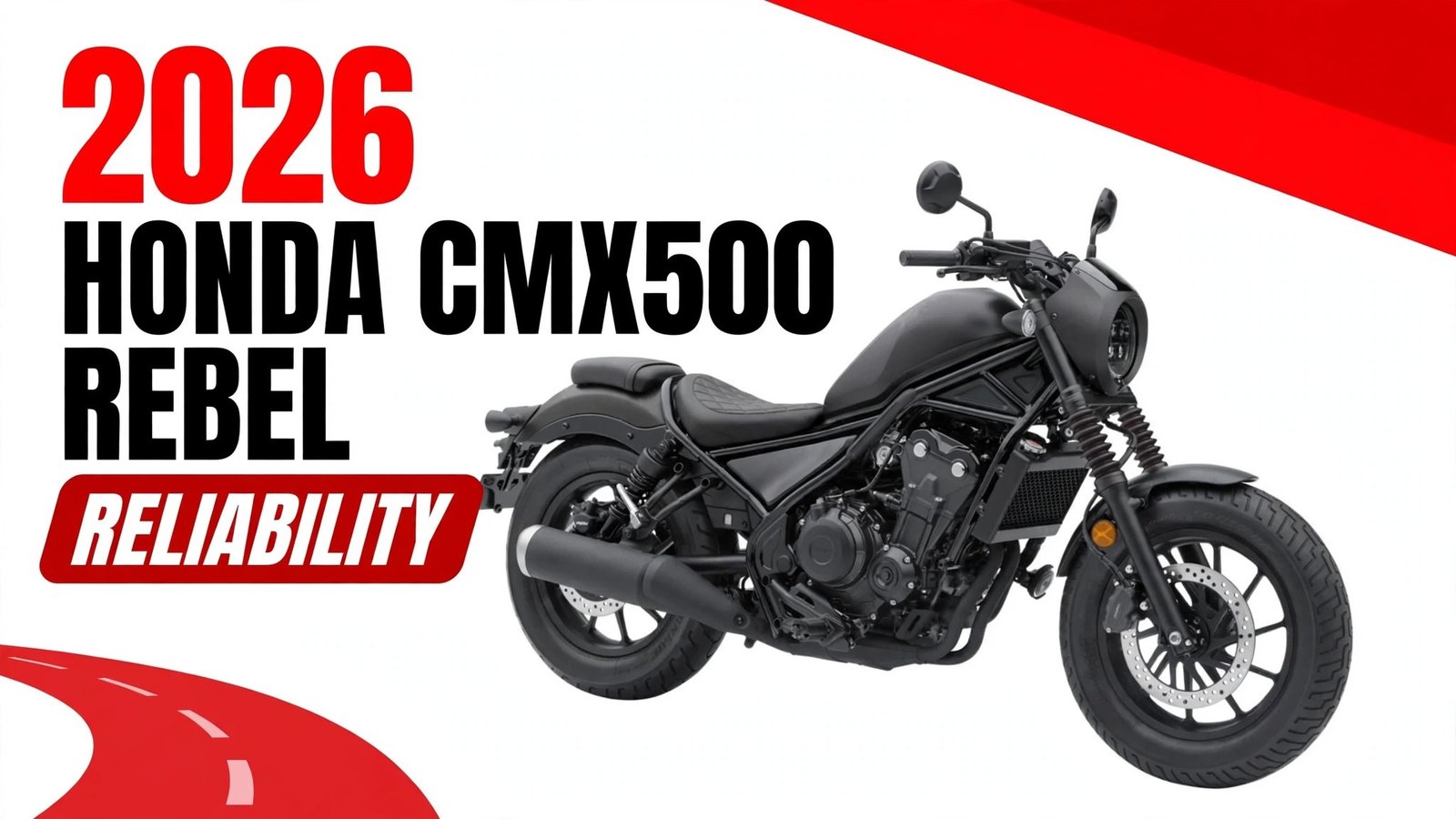
The short answer is yes: Honda CMX500 Rebel reliability is among the best in the middleweight cruiser class, provided you check its recall status by VIN and follow a short service routine. Honda CMX500 Rebel reliability rests on a proven 471cc parallel-twin shared with Honda’s CB500 family, a six-speed gearbox, and almost no electronics to go wrong. One identity point first: CMX500 is the model code for the Rebel 500, so this is the same motorcycle — not a separate model. Honda CMX500 Rebel reliability is therefore the Rebel 500’s reliability record, judged on the same bikes, recalls, and service schedule.
Honda CMX500 Rebel Reliability Overview
Honda CMX500 Rebel reliability starts with simplicity: a liquid-cooled 471cc parallel twin, six-speed gearbox, chain drive, and a low, light chassis.
MCN Owners: 2017-19 Bikes at 4.6 Out of 5 and 2020-On at 4.1
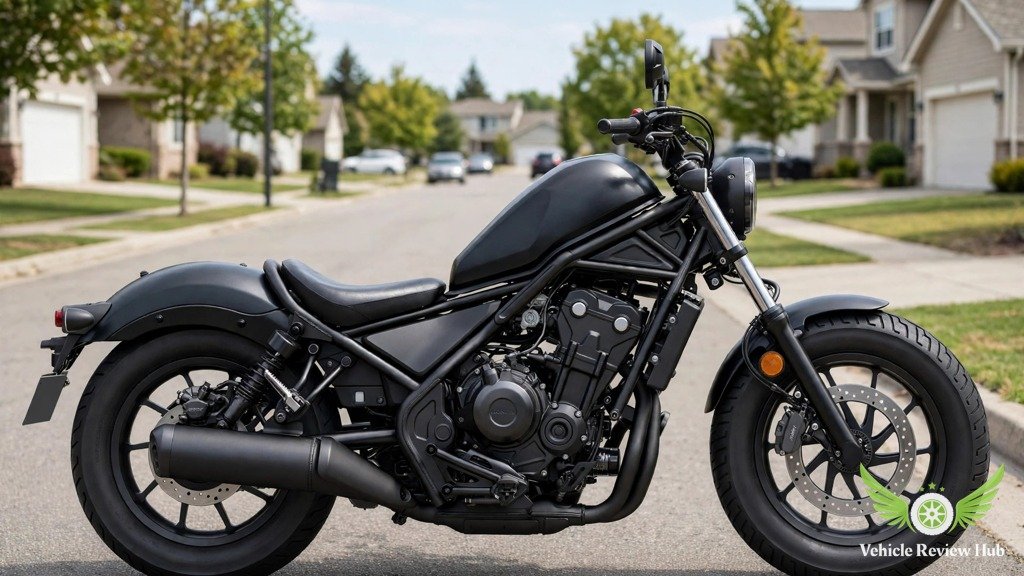
The most quoted owner figures for Honda CMX500 Rebel reliability come from MCN, and they need careful handling. MCN’s owners’ reliability rating for the 2017–2019 CMX500 Rebel is 4.6 out of 5, while the 2020-on bike rates 4.1 out of 5. Those two numbers look like a decline, but the samples behind them are small, and that limit matters more than the half-point gap. MCN’s 2020-on page states that seven owners had reviewed that bike, and the 2017–2019 page describes a handful of very happy owners rather than a large survey. A seven-owner sample can swing on a single unhappy bike, so Honda CMX500 Rebel reliability should not be judged on the 4.6-to-4.1 move alone. Both MCN pages agree on the engine: a CB500-range parallel twin, retuned for low-end torque, with no major mechanical woes reported. The 2020-on complaints that pull the score down are not engine failures — MCN records paint chipping and corrosion among a couple of less-than-happy owners, then notes the bike appears to be a sound purchase, with the only real complaints surrounding light corrosion on select components. That distinction — cosmetic complaints versus mechanical failure — is the honest summary of Honda CMX500 Rebel reliability in the owner data.
How Mileage, Maintenance History and Previous Use Affect Reliability
Mileage alone tells you little about a CMX500 Rebel. For Honda CMX500 Rebel reliability, service history beats mileage every time. A 40,000-mile bike with a folder of receipts, fresh oil, a clean and correctly tensioned chain, and completed recall work is a better bet than a 6,000-mile bike that sat outside for three winters with a flat battery and a dry, rusted chain. When inspecting a used CMX500 Rebel, ask for the service history first and the mileage second, and weigh three things above all for Honda CMX500 Rebel reliability: whether the recall work is done, whether the fluids and chain are fresh, and whether the bike starts cleanly from cold. Honda CMX500 Rebel reliability is mostly maintenance done on time, not parts failing on their own.
Honda CMX500 Rebel Common Problems and Wear Items
Honda CMX500 Rebel reliability has a short list of genuine weak points, most of them cosmetic, age-related, or recall-related — and all are checkable before you buy, which is the practical side of Honda CMX500 Rebel reliability.
Paint Chipping and Corrosion Reports on 2020-On Owner Bikes
Paint chipping and corrosion are the most repeated owner complaints about the 2020-on CMX500 Rebel, and Honda CMX500 Rebel reliability discussions should keep them in proportion. MCN’s 2020-on owners’ reviews detail a couple of less-than-happy owners reporting paint chipping and corrosion, while the same page stresses that the engine itself is proven. The recurring cosmetic themes are chipped paint on exposed edges, light corrosion on fasteners and select components, and exhaust discoloration on the blacked-out pipes — not cracked frames or failing gearboxes. None of that makes a used bike a bad buy, but it does change what to look for: check the paint on tank edges, fenders, and fork lowers, and look at fasteners, the exhaust, and the underside for corrosion, especially on bikes from coastal or winter-salt areas. A garaged bike with clean paint and a straight service record is the Honda CMX500 Rebel reliability sweet spot. One related warning: no-start complaints on used bikes are usually electrical basics — corroded kill-switch contacts or loose battery connections — so test any used CMX500 Rebel from cold.
Chain, Sprockets, Tires, Battery, Brakes and Electrical Checks
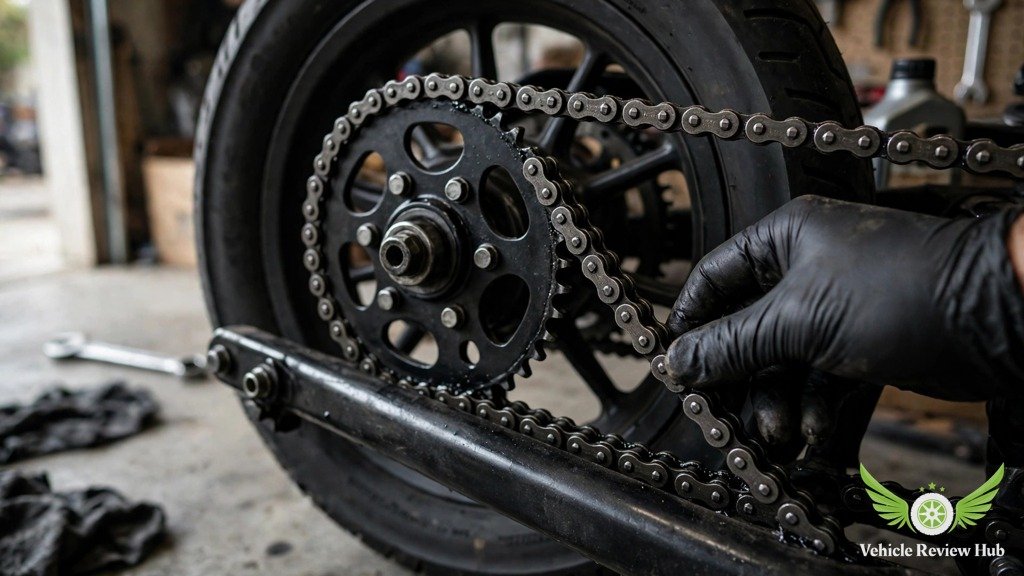
The chain is the CMX500 Rebel’s most maintenance-hungry part, and therefore the best single indicator of Honda CMX500 Rebel reliability on a used bike. This is a chain-drive motorcycle, and a neglected chain announces itself: rust, stiff links, and hooked sprocket teeth mean the previous owner skipped the 600-mile chain routine. Check the chain slack in the lower half of the run midway between the sprockets — the manual figure is 25 to 35 mm, and the manual warns not to ride if slack exceeds 50 mm — and look at both sprockets for hooked or worn teeth. A clean, correctly tensioned chain is Honda CMX500 Rebel reliability made visible. Tires are the next check: stock sizes 130/90-16 front and 150/80-16 rear, usually Dunlop D404s; age matters as much as tread, so replace any tire older than five or six years. The battery deserves attention on low-mileage bikes, because a bike that sits goes flat; a bike that needs a jump is a bargaining chip, not a disaster. Brakes are simple and durable — a 296mm front disc and 240mm rear disc on 2020-on bikes — but check pad thickness, disc condition, and brake-fluid colour, since fluid is a two-year item. Electrical checks are quick: every switch, the LCD dash, and the lights should work crisply. None of these items threatens Honda CMX500 Rebel reliability in a serious way, but together they are the difference between a bike that costs almost nothing to run and a bike that needs a full catch-up service on day one.
Honda CMX500 Rebel Maintenance Schedule and Servicing
The CMX500 Rebel’s service schedule is short and cheap, and following it protects Honda CMX500 Rebel reliability.

First Service at 600 Miles, Oil Every 8,000 Miles or One Year
The first service falls at 600 miles, flushing out break-in debris. Skipping the first service is the fastest way to damage Honda CMX500 Rebel reliability. After that, Honda’s schedule calls for an engine oil and filter change every 8,000 miles or one year, whichever comes first. The manual’s service table runs at 600-mile, then 4,000-mile steps, with the oil change falling on the 8,000-mile rhythm. Use a motorcycle-specific JASO oil, because the same oil feeds the wet clutch, and car oil with friction modifiers can make it slip. A documented 8,000-mile oil history is a strong green flag for Honda CMX500 Rebel reliability, and a bike with no oil history at all should be priced as if it needs a full service immediately. The drive chain is checked and lubricated every 600 miles, and that short interval is the single most skipped item on used Rebels.
Valve-Clearance Inspection and Major Service at 16,000 Miles
The major service is the valve-clearance inspection at 16,000 miles, and it is the most expensive routine job on the bike. The manual’s table places valve clearance on the 16,000-mile column, with spark-plug replacement at 32,000 miles — the standard plug is the NGK CPR8EA-9, gapped at 0.8 to 0.9 mm. Valve work is flagged as dealer work unless you have the proper tools and service data, so most owners budget for a shop visit at 16,000 miles. That visit is also the moment for air cleaner service, coolant condition, and brake fluid if due. The 16,000-mile service is where Honda CMX500 Rebel reliability is either confirmed or exposed: a bike that has had it done, with a receipt, is a bike whose engine has been properly looked after — that receipt is proof of Honda CMX500 Rebel reliability — while a high-mileage bike that has never had a valve check should be bought only with the cost of that service in mind. For the running-cost picture, see our CMX500 Rebel buying guide.
| Service item | Interval | Notes |
|---|---|---|
| First service | 600 miles | Break-in check |
| Engine oil and filter | Every 8,000 miles or 1 year | JASO oil; feeds the wet clutch |
| Drive chain | Check and lubricate every 600 miles | Slack 25–35 mm |
| Valve clearance | Inspect at 16,000 miles | Dealer-flagged job |
| Spark plugs | Replace at 32,000 miles | NGK CPR8EA-9 |
| Brake fluid | Replace every 2 years | Honda DOT 4 |
| Coolant | Replace every 3 years | Pro Honda HP Coolant |
Honda CMX500 Rebel Tires, Brakes and Suspension Maintenance
The rolling chassis needs the same rhythm: tires and brakes at every service, suspension once a season — chassis neglect undermines Honda CMX500 Rebel reliability just as surely as engine neglect.
Air Cleaner Service, Tire Condition, Sizes and Replacement
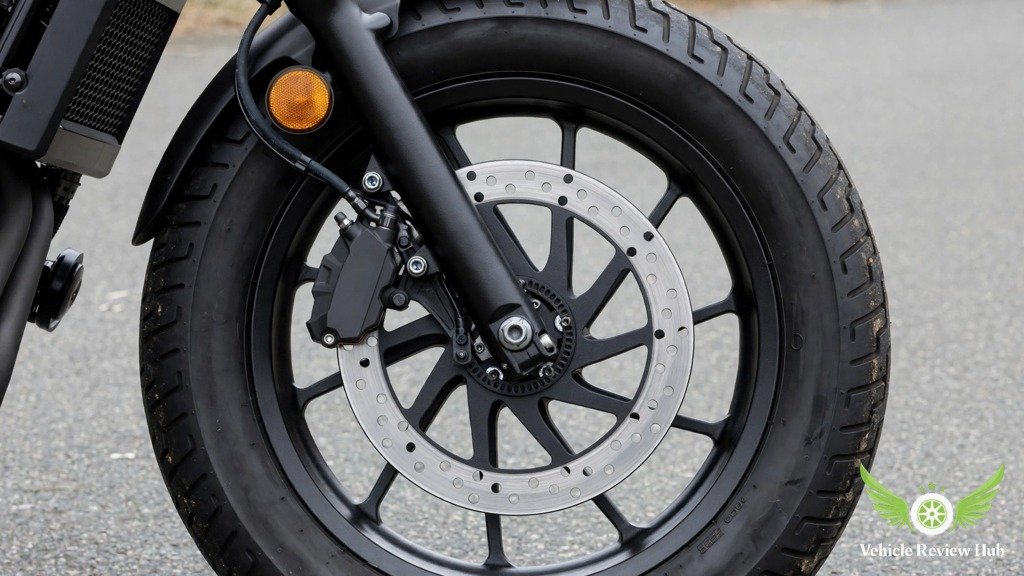
Tire condition is a safety item and a reliability item at once. The CMX500 Rebel has run the same tire sizes since its 2017 launch: 130/90-16 front and 150/80-16 rear, with Dunlop D404s as the standard fitment. That stability helps Honda CMX500 Rebel reliability — replacements are easy to find. Check pressures against the manual and swingarm sticker (29 psi front, 36 psi rear) and check tread, sidewalls, and date codes at every service. A tire older than five or six years should be replaced even if the tread looks fine. Service the air cleaner more frequently when riding in unusually wet or dusty areas, as the manual advises. Small spends here are Honda CMX500 Rebel reliability in its simplest form.
Brake Pads, Brake Fluid Every Two Years, Forks and Shock Checks
For Honda CMX500 Rebel reliability, know which brakes your bike has. On 2020-on bikes the setup is a 296mm front disc and 240mm rear disc; earlier bikes used a smaller 264mm front disc. Check pad thickness at every service, look at the discs for scoring or warping, and replace the brake fluid every two years with Honda DOT 4 — the manual flags fluid replacement as requiring mechanical skill, so many owners leave it to a dealer. Inspect the 41mm fork for seal weep and the twin rear shocks for leaks and correct preload; the rear shocks are basic units, so a harsh or wallowy ride usually means worn shocks rather than a setting problem. None of this is expensive, and all of it keeps Honda CMX500 Rebel reliability intact past the point where neglected bikes start to feel tired. That is Honda CMX500 Rebel reliability in the chassis: small checks, no surprises.
Honda CMX500 Rebel Maintenance and Ownership Costs
The CMX500 Rebel is cheap to keep, and that low running cost is a genuine part of Honda CMX500 Rebel reliability.

Fuel, Routine Servicing, Tires and Replacement Parts
Routine servicing uses inexpensive parts, and all but the valve check are home jobs. Tires are the largest recurring expense: a fitted pair costs more than a year’s worth of oil changes. Brake pads, air cleaners, batteries, and chains are commodity items shared with other Honda models, which keeps prices down, and the 500 twin’s long production run means used parts are plentiful. That parts-sharing helps Honda CMX500 Rebel reliability stay affordable. MCN’s UK servicing figures (£130 a year for 2017–2019, £300 for 2020-on) give a rough scale only, not US quotes. Budget for tires and a chain-and-sprocket set as the big items, oil and filters as the small ones, and one dealer visit at 16,000 miles, and Honda CMX500 Rebel reliability will cost you very little year after year.
Repair Expenses, Parts Availability and Long-Term Ownership Costs
When something does break, the bill is usually small, except the dealer valve-clearance check, which costs labour rather than parts. Chains and sprockets, brake pads, fork seals, wheel bearings, batteries, and regulators are all affordable, and the 471cc twin’s long production run across the CB500 family means independent shops can service everything without dealer-only tools. Long-term costs stay low, which is Honda CMX500 Rebel reliability in financial form, because the engine rarely needs internal work. The one cost risk is heavy customisation: a bike with DIY wiring can cost more to put right than a stock bike costs to maintain.
How to Keep a Honda CMX500 Rebel Reliable
Keeping a CMX500 Rebel reliable is about rhythm: small jobs on time, proper storage, recall checks — and Honda CMX500 Rebel reliability takes care of itself.

Preventive Maintenance, Chain Care Every 600 Miles and Inspections
Preventive maintenance means the schedule above, done on the calendar as well as the odometer: oil every 8,000 miles or one year, brake fluid every two years, coolant every three years, chain care every 600 miles, and tires and brakes at every service. That routine is Honda CMX500 Rebel reliability in practice. Chain care deserves emphasis because it is the most skipped job: clean, lubricate, check slack at several points, and inspect sprockets every time. Storage care matters: connect a battery tender, clean the bike before covering, store under a breathable cover, and change the oil before storage. The video below shows a chain adjustment on a 2017 Rebel — the exact 600-mile job described above.
Recall Checks: Reflector 21V-382 and Handlebar Screw Campaigns by VIN
Recall checks are the single most valuable step for Honda CMX500 Rebel reliability on any used bike, because the campaigns are free to fix and easy to miss. Run the VIN through the NHTSA recalls lookup before you pay anything, and check three campaigns. First, 21V-382 (Honda KM3): certain 2020–2021 CMX500 and CMX300 bikes, inside a 28,528-unit multi-model campaign, for a dim rear reflector lens that may not meet FMVSS 108. Dealers replace the rear reflector free of charge. Note the scope carefully: 21V-382 covers only certain 2020–2021 bikes, not every Rebel, and its unit count is a multi-model total, not a CMX500-only figure. Second, 26V-146 (Honda KUO): certain 2023–2025 CMX300, CMX500, and SCL500 bikes, inside a 19,406-unit campaign, for a handlebar lock screw that may loosen, detach, and interfere with steering. Dealers replace the lock screw and apply thread lock free of charge, and Honda issued a stop-sale notice on certain 2023–2025 bikes until repaired. Third, 26V-500 (Honda KU8): certain 2017–2023 and 2025 CMX500 bikes, inside a 43,913-unit multi-model campaign, expanding 26V-146 to earlier years for the same defect, with the same free remedy. The doc’s 2026 note is confirmed by the scope lists: 2024 CMX500 bikes do not appear in 26V-500’s year ranges, so a 2024 sits outside 26V-500 — but a 2024 can still sit inside 26V-146, so check every bike by VIN rather than by year alone. A VIN result beats any article, including this one, and that habit is the real secret of Honda CMX500 Rebel reliability. The CMX500 Rebel review covers the bike’s full history and pricing, and the CMX500 Rebel performance figures explain what the engine actually delivers.
Honda CMX500 Rebel Reliability FAQs
Direct answers to the questions CMX500 Rebel buyers and owners ask most about Honda CMX500 Rebel reliability, covering recalls, service intervals, and long-term ownership — the facts behind Honda CMX500 Rebel reliability, in one place.
Is the Honda CMX500 Rebel reliable?
Yes. Honda CMX500 Rebel reliability ranks among the best in the middleweight cruiser class thanks to a proven 471cc twin, simple electronics, and a short service schedule. Check the three recalls by VIN and keep the schedule.
Is the CMX500 Rebel the same bike as the Rebel 500?
Yes. CMX500 is the Rebel 500’s model code, so Honda CMX500 Rebel reliability is the Rebel 500’s reliability record — no separate CMX500 motorcycle exists.
How often should I change the oil on a Honda CMX500 Rebel?
Every 8,000 miles or one year, after the first service at 600 miles. Use a motorcycle-specific JASO oil — it also feeds the wet clutch — and that discipline protects Honda CMX500 Rebel reliability.
What is the valve clearance interval on a Honda CMX500 Rebel?
Inspect the valve clearance at 16,000 miles. The job is dealer-flagged, so most owners budget for a shop visit.
How often should I clean and lubricate the chain?
Every 600 miles. Slack is 25 to 35 mm, and the manual warns not to ride if it exceeds 50 mm. Chain care is the most skipped job, and the best single sign of Honda CMX500 Rebel reliability on a used bike.
Is my CMX500 Rebel affected by the handlebar screw recall?
Only certain bikes are included, and only your VIN can confirm it: 26V-146 covers certain 2023–2025 bikes, and 26V-500 covers certain 2017–2023 and 2025 bikes. A 2024 sits outside 26V-500 but can sit inside 26V-146, so check by VIN.
What about the reflector recall 21V-382?
It covers certain 2020–2021 CMX500 bikes inside a 28,528-unit multi-model campaign, for a dim rear reflector that may not meet FMVSS 108. Dealers replace it free, so check the VIN on any 2020–2021 bike for Honda CMX500 Rebel reliability.
Are 2020-on Honda CMX500 Rebels less reliable than earlier ones?
Not mechanically. MCN’s rating fell from 4.6 out of 5 (2017–2019) to 4.1 (2020-on), but the 2020-on sample is only seven owners, and the complaints are paint and corrosion, not engine failure.
Should I buy a high-mileage Honda CMX500 Rebel?
Yes, if the history is right: prioritize a documented service record, completed recall work, a healthy chain and sprockets, fresh fluids, and a clean cold start over a low odometer reading — and that is Honda CMX500 Rebel reliability in practice.
What are the most common Honda CMX500 Rebel problems?
Paint chipping and light corrosion on 2020-on bikes, chain and sprocket wear from skipped 600-mile care, battery issues on bikes that sit, and the three recalls above. Engine and gearbox failures are rare, which is why Honda CMX500 Rebel reliability rates so highly overall.
Does the Honda CMX500 Rebel have a shaft drive?
No. The CMX500 Rebel uses chain final drive. Budget for chain cleaning, lubrication, and eventual chain-and-sprocket replacement as part of Honda CMX500 Rebel reliability.