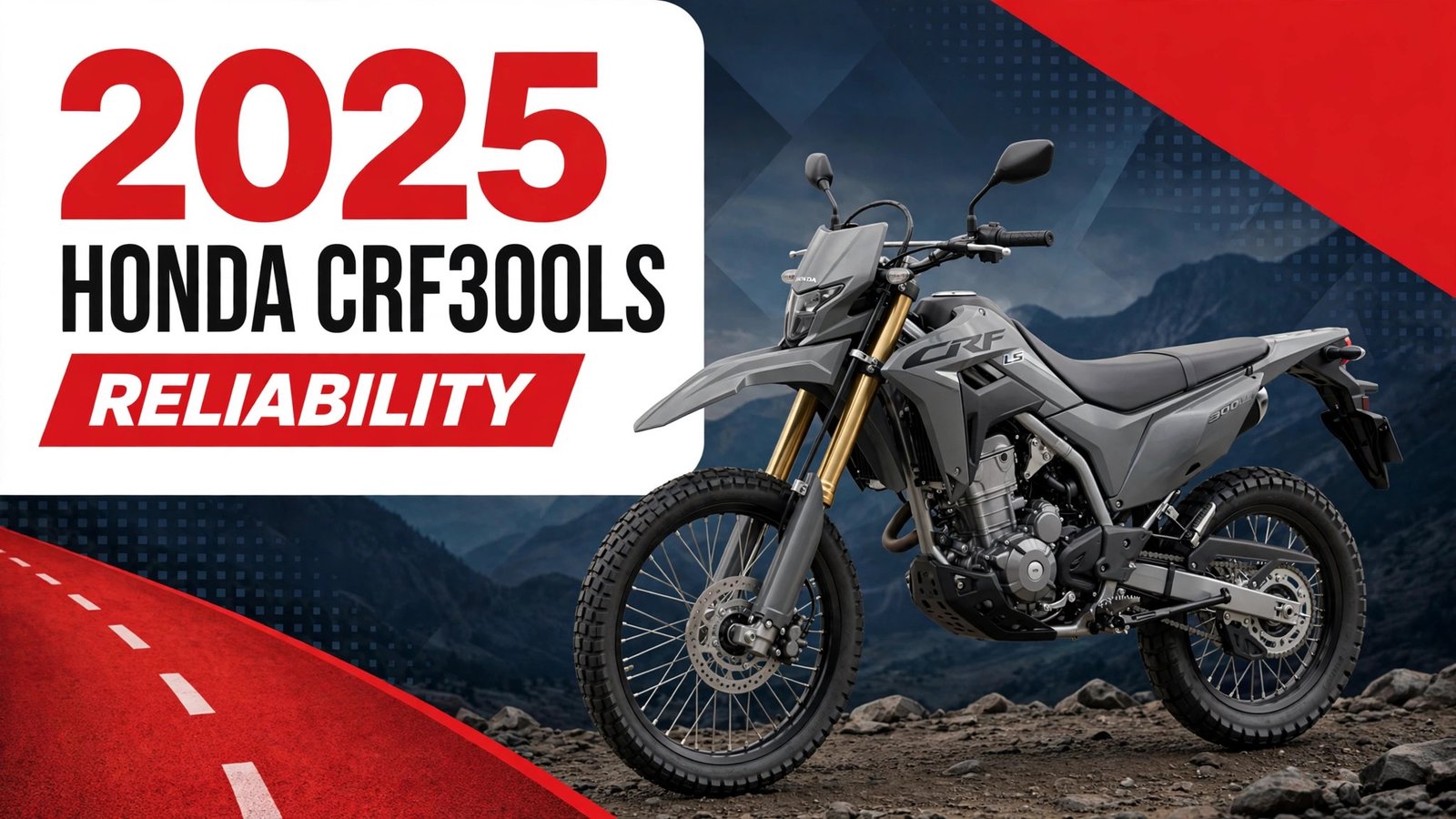
Short answer: Honda CRF300LS reliability is strong where it matters most — the engine, gearbox, and basic chassis are proven, low-stress parts shared with the standard CRF300L — but this Honda CRF300LS reliability guide comes with one warning no buyer can skip. The low-seat LS is inside Honda’s October 8, 2025 emissions stop-sale covering all 2021–2025 CRF300L, LA, and LDA motorcycles, so dealers cannot sell a new or used LS until it is repaired, and every purchase must start with a VIN check. Beyond that campaign, Honda CRF300LS reliability means long service intervals, cheap routine maintenance, and a short list of wear items caused by the bike’s reduced suspension travel.
Honda CRF300LS Reliability Overview
Honda CRF300LS reliability starts with a simple identity fact: the LS is not a separate motorcycle. It is the standard CRF300L with a lower seat, shorter suspension travel, and a different side stand, built on the same 286cc liquid-cooled single, six-speed gearbox, and steel frame. That shared DNA is good news for Honda CRF300LS reliability, because the platform has been in production since 2021 and its strengths and faults are well documented. It also means the LS inherits the platform’s problems, including the stop-sale; no part of this Honda CRF300LS reliability guide treats the LS as exempt from anything naming the L, LA, or LDA codes.
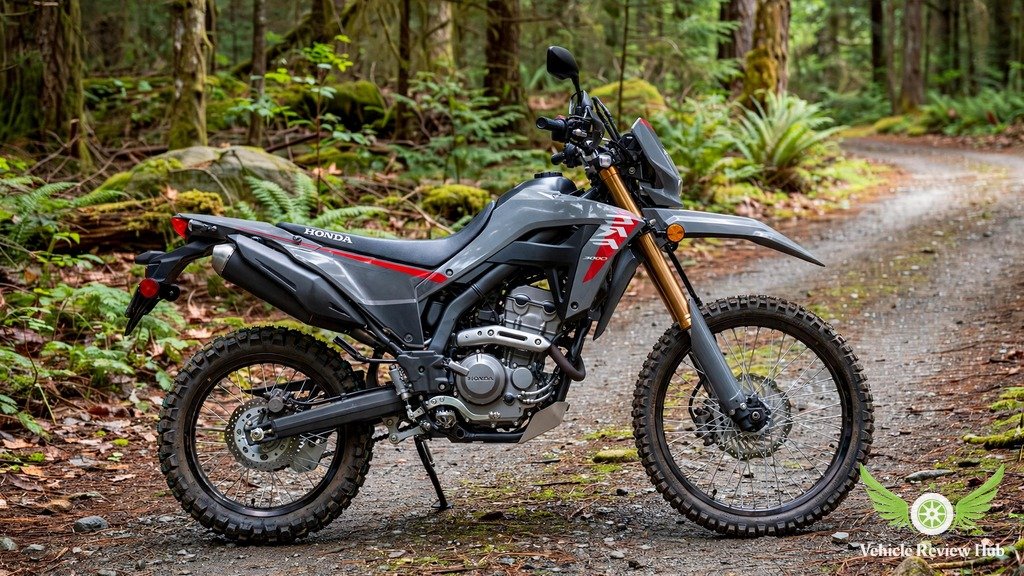
One Combined Manual for L, LA and LDA: the LS Schedule Is the Platform
The LS runs on the platform’s maintenance schedule, and that is the most useful fact in this Honda CRF300LS reliability overview. Honda treats the CRF300L, ABS-equipped LA, and low-seat LDA (the LS) as one family, so the manual’s intervals apply to the LS exactly as to the standard bike, except suspension and chain figures. The result for Honda CRF300LS reliability is a schedule unusually gentle for a dual-sport: a first service at 600 miles, engine oil every 8,000 miles or 12 months, and a valve-clearance inspection only every 16,000 miles. The engine is a low-stress, long-stroke single — 76.0mm bore by 63.0mm stroke, 10.7:1 compression, fuel-injected through a 38mm throttle body — and Honda CRF300LS reliability benefits directly from that relaxed tune. For the full specification story, see our companion CRF300LS review, and check the figures against Honda’s 2025 CRF300LS specifications.
How Mileage, Maintenance History and Previous Use Affect Reliability
On a CRF300LS, mileage alone is a weak guide to condition, and Honda CRF300LS reliability judgements must weigh maintenance history and previous use alongside the odometer. Ask three questions before judging any used example: was the 600-mile first service done, are the 8,000-mile oil services documented, and has the VIN been checked against the stop-sale campaign. The video below is a one-year ownership review of the CRF300LS itself, after 1,700 miles, and it shows the lowered bike’s real-world behaviour that sits behind Honda CRF300LS reliability.
Honda CRF300LS Common Problems and Wear Items
Honda CRF300LS reliability has no headline engine defect, and that is worth saying plainly before listing the wear items. The complaints that do exist cluster around the consequences of lowering the bike and the consumables any lightweight dual-sport eats quickly. This section separates those two groups.
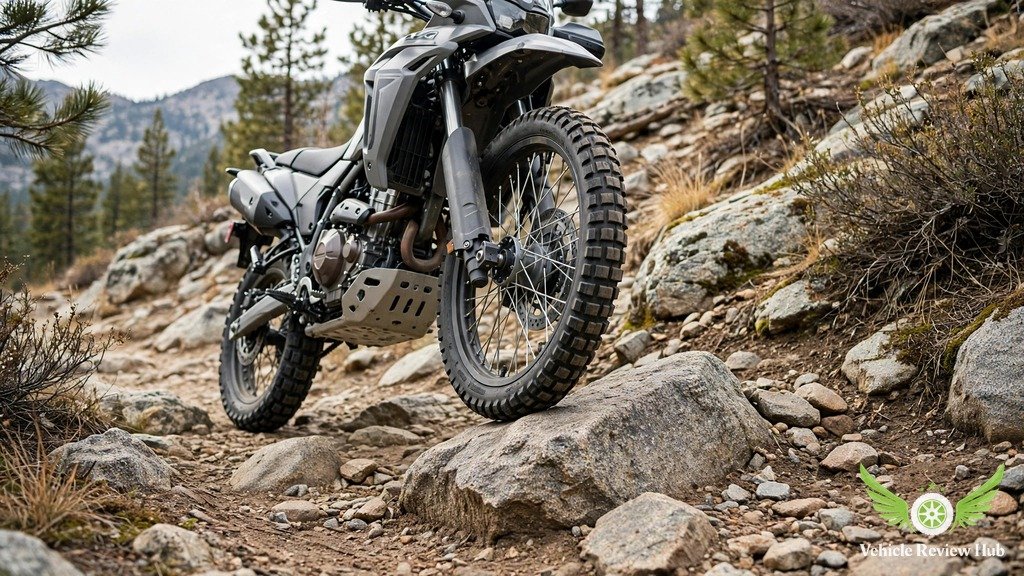
Bottoming and Clearance Wear Items From Reduced Suspension Travel
The LS gives up travel to gain its 32.7-inch seat: fork travel falls to 9.3 inches and rear travel to 9.0 inches, and ground clearance drops from 11.2 inches to 9.6 inches. That trade is the heart of Honda CRF300LS reliability for trail riders, because a bike that bottoms more often wears its underside faster. Testers agree on the consequence: a skid plate is the first accessory to buy, with all three testers cited in the doc recommending one before serious trail use. Expedition Portal’s LS test found the same lesson, calling a skid pan the first accessory it would buy. The 2025 model helps — stiffer springs, reworked internals, and a bearing in the upper shock mount — but no spring change restores the lost 1.6 inches of clearance. Inspect the skid plate, engine cases, and frame rails on any used LS, and treat heavy underside scarring as evidence of hard trail use.
Chain, Sprockets, Tires, Battery, Brakes and Electrical Checks
Beyond bottoming, Honda CRF300LS reliability comes down to consumables that wear fast because the bike is light, ridden hard, and often stored outdoors. The chain needs cleaning, lubrication, and slack checks every 600 miles, and the LS has its own tighter slack figure: 45–50mm, with a do-not-ride limit of 52mm, against the standard L’s 50–55mm and 57mm limit. Replace chain and sprockets as a set, and check sprocket teeth for hooking. Tires are IRC Trails GP rubber, 100/80-21 front and 120/80-18 rear, and they wear fast on pavement: Expedition Portal’s test machine needed a new rear tire at 2,500 miles. That is the price of soft dual-sport rubber; budget a rear tire roughly every riding season for a regular commuter. Brakes are discs front and rear, with switchable ABS standard. Electrical checks: the 2025 bike’s new LED headlight and turn signals improve on the earlier halogen lighting Expedition Portal called the bike’s weakest part — check all LEDs work, and note the locking storage box is handy but not waterproof.
Honda CRF300LS Maintenance Schedule and Servicing
The service schedule is the most reassuring part of Honda CRF300LS reliability. The intervals are long because the engine is unstressed, and the schedule is shared with the standard L, which means dealer familiarity and parts availability are both strong. One warning: your own model-year manual governs if any figure below differs.
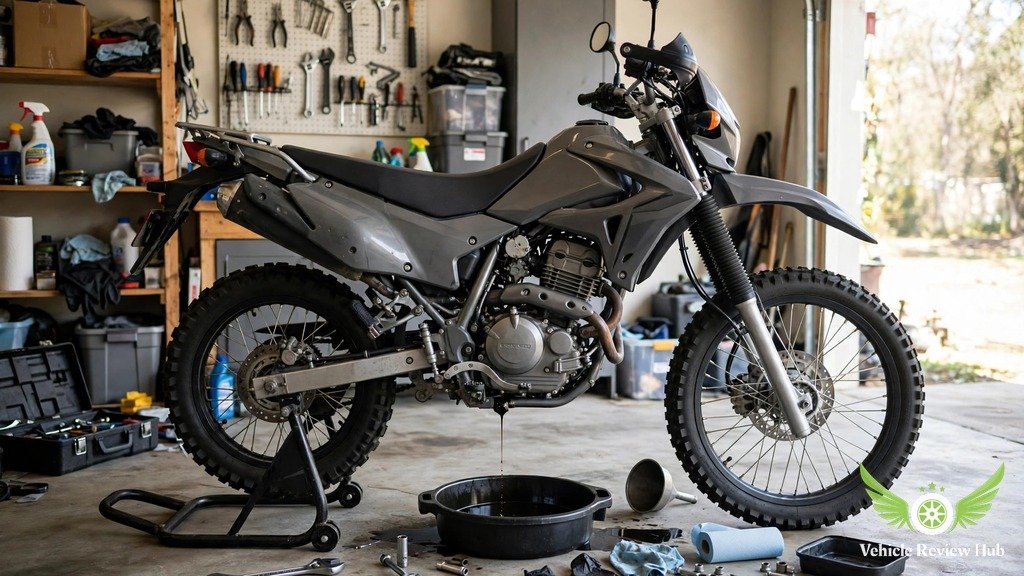
First Service at 600 Miles, Oil Every 8,000 Miles or 12 Months
The first service falls at 600 miles, and it is the most important service in Honda CRF300LS reliability: the break-in oil and filter come out, the chain is checked, and the bike gets its first full inspection. After that, oil and filter changes fall every 8,000 miles or 12 months, confirmed in the owner’s manual schedule and the independent CRF300L maintenance schedule summary. Recommended oil is Pro Honda GN4 10W-30 meeting API SJ or higher and JASO MA standard, with a capacity of 1.5 litres (1.6 US quarts) including the filter change. That 8,000-mile interval is the single most important number in Honda CRF300LS reliability for commuters: an 8,000-mile rider faces one oil service a year. Do not stretch it: the 12-month limit exists because oil ages even when mileage is low, and short trips contaminate oil faster than highway miles.
Valve Inspection at 16,000 Miles, Plugs and Air Cleaner Intervals
Valve-clearance inspection falls every 16,000 miles, with spark-plug replacement at the same visit, and this is where Honda CRF300LS reliability rewards patience rather than spending. The engine is a DOHC four-valve single with shim adjustment, and the factory service-manual figures are intake 0.16 ± 0.03mm (0.006 ± 0.001 inches) and exhaust 0.27 ± 0.03mm (0.011 ± 0.001 inches), measured with the engine cold. The air cleaner is inspected at the 4,000-mile services and replaced as condition demands, sooner in dust. Brake fluid replacement falls every two years, and coolant on a multi-year cycle, so both are easy to forget on a bike whose oil schedule is so undemanding. The power and fuel-economy story behind these numbers is in our companion CRF300LS performance coverage.
| Service item | Interval | Notes |
|---|---|---|
| First service (oil and filter) | 600 miles | Break-in service; full inspection included |
| Engine oil and filter | Every 8,000 miles or 12 months | Pro Honda GN4 10W-30, JASO MA; 1.5 L with filter |
| Valve clearance inspection | Every 16,000 miles | Cold engine; intake 0.16mm, exhaust 0.27mm |
| Spark plug | Every 16,000 miles | Same visit as the valve inspection |
| Chain clean, lubricate, check | Every 600 miles | LS slack 45–50mm; do not ride past 52mm |
| Brake fluid | Every 2 years | Honda DOT 4; inspect level at every service |
| Summary | Long, cheap, simple | The schedule is the reliability case |
Honda CRF300LS Tires, Brakes and Suspension Maintenance
Honda CRF300LS reliability extends beyond the engine to the chassis, and the checks here keep a light, low dual-sport safe as well as reliable.
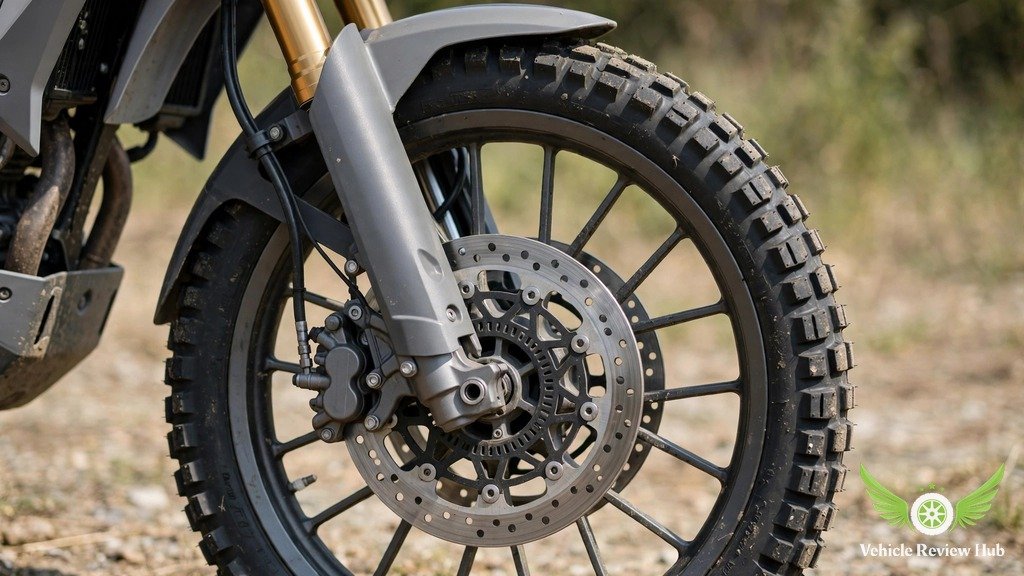
The LS Side Stand Is a Different Part From the Standard L
The LS side stand is a different part from the standard L’s, and that small fact matters more than it looks for Honda CRF300LS reliability. Because the bike sits lower, the stand is shorter, and fitting a standard L stand leaves the bike leaning too far or standing too upright, with a real risk of a tip-over in a car park. When buying used, check the stand is the LS part and that it springs back cleanly. This is also the place to note the lowering trap in reverse: a standard L lowered with an aftermarket link is not an LS, and it will not have the LS’s factory-matched fork internals, shock, seat, and stand. The factory lowering is the LS’s whole point, and Honda CRF300LS reliability includes that matched set working together.
Brake Pads, Brake Fluid Every Two Years, Forks and Shock Checks
Braking is a 256mm front disc and 220mm rear disc, ABS standard and switchable off for dirt, and worn pads should never reach the backing plate. Brake fluid replacement falls every two years, and it is the easiest item to forget on a bike whose oil schedule dominates attention — old fluid absorbs water, softens the lever, and corrodes caliper internals. Suspension checks cover the inverted fork with 9.3 inches of travel and the Pro-Link rear shock with 9.0 inches and preload-only adjustment: look for leaking fork seals, dented stanchions, a tired shock, and loose linkage bearings, , noting the 2025 stiffer springs and shock-mount bearing when judging a used bike. Tires are IRC Trails GP rubber in stock form; check age as well as tread on any used bike. For Honda CRF300LS reliability, the suspension and brake check is also a safety check.
Honda CRF300LS Maintenance and Ownership Costs
Honda CRF300LS reliability is cheap to buy into and cheap to keep. The costs below are estimates from typical parts and shop rates, not Honda-published figures,

Fuel, Routine Servicing, Tires and Replacement Parts
Fuel is the most frequent running cost but modest in absolute terms: the 2.1-gallon tank keeps every fill-up small, and tester economy in the mid-60s to low-70s mpg range means a practical range around 135–150 miles. Routine servicing is where Honda CRF300LS reliability really shows its value: one oil service a year for an 8,000-mile rider, each little more than the cost of oil, a filter, and half an hour, plus a valve inspection roughly every second year. Budget tires separately: the soft IRC rear can be done at 2,500 miles of mixed use. The cost trap is deferral: a skipped chain service that wears sprockets and risks a thrown chain, or a dirty filter that dulls fuelling, costs more than years of routine care. For the buying side of these numbers, see our companion CRF300LS buying guide.
Repair Expenses, Parts Availability and Long-Term Ownership Costs
Parts availability is a genuine long-term strength of Honda CRF300LS reliability. Honda’s dealer network stocks common wear parts, the aftermarket is deep, and most parts fit a wide range of years — except LS-specific parts like the side stand. The expensive repairs follow neglect or hard trail use: a bent fork or damaged engine case without a skid plate, a gearbox or clutch job after abused oil, and suspension work after ignored seals. All three are avoidable or at least predictable, and each costs more than years of routine service. That is the whole argument for Honda CRF300LS reliability as a long-term proposition: the bike is not expensive to maintain, it is expensive to crash or ignore. Insurance and registration are generally modest for a 286cc single, and a well-kept LS holds its price — subject, right now, to the stop-sale covered next.
How to Keep a Honda CRF300LS Reliable
Honda CRF300LS reliability is not a mystery; it is a checklist plus one campaign check. Owners who get long service from these bikes do the same few things, on time, every time.

Preventive Maintenance, Chain Care Every 600 Miles and Inspections
The preventive routine that protects Honda CRF300LS reliability fits on a single card. Change the oil every 8,000 miles or 12 months after the 600-mile first service, check the valves every 16,000 miles, clean and lubricate the chain every 600 miles at 45–50mm slack, clean the air filter on schedule and sooner in dust, and walk around the bike before riding. Keep the service record, because on this bike the record is worth money: a buyer who can see every oil service will pay more than a buyer who must guess. The discipline behind Honda CRF300LS reliability is unglamorous, but it is why a well-kept example is one of the safer used small dual-sport purchases available.
Stop-Sale Campaign KT1: Parts Delayed Until March 2027, Check by VIN
One campaign check belongs in every Honda CRF300LS reliability assessment, and it must be verified by VIN rather than assumed. On October 8, 2025, Honda issued a stop-sale notice on ALL 2021–2025 CRF300L, LA, and LDA motorcycles, because a fuel permeation test showed the fuel system did not meet regulatory standards. The notice states plainly that dealers must not sell any new or used 2021–2025 CRF300L, LA, or LDA motorcycle until it is repaired, and it expressly does not apply to the Rally models. The LS, model code CRF300LDA, is inside that scope — it is not exempt, and this Honda CRF300LS reliability guide does not treat it as exempt. The doc names the campaign KT1 with parts delayed until March 2027, and that framing is kept here. One dated update must be reported honestly alongside it: a revised Honda bulletin dated February 2026 said parts for the repair were expected in August 2026, with owner letters planned for April 2026. That later bulletin does not, on its own, prove the stop-sale has been lifted, and no verified record of a lifting was found for this Honda CRF300LS reliability article — so the only safe position is to check the exact VIN with a Honda dealer before paying, and to treat any seller assurance as worthless without that check. Run the VIN through the NHTSA recalls lookup and Honda’s own recall tool, and read the Honda stop-sale notice itself before buying. Second, do not accept a standard-L recall printout as LS clearance. For Honda CRF300LS reliability, that VIN check is the cheapest insurance in this entire article.
Honda CRF300LS Reliability FAQs
Direct answers to the questions buyers and owners ask most about Honda CRF300LS reliability, drawn from the manual, the stop-sale record, and tester experience.
Is the Honda CRF300LS reliable?
Yes, with one campaign caveat: Honda CRF300LS reliability is strong on the shared platform — long intervals, a low-stress engine, cheap maintenance — but every LS is inside the October 2025 stop-sale until repaired, so check by VIN first.
How often should I change the oil on a CRF300LS?
After the 600-mile first service, every 8,000 miles or 12 months, with the filter — the core of Honda CRF300LS reliability for commuters.
How often do CRF300LS valves need checking?
Every 16,000 miles, with spark-plug replacement at the same visit; confirm against your own model-year manual.
What are the CRF300LS valve clearance specifications?
Intake 0.16 ± 0.03mm (0.006 ± 0.001 inches) and exhaust 0.27 ± 0.03mm (0.011 ± 0.001 inches), measured with the engine cold, per the factory service-manual figures.
What is the CRF300LS chain slack specification?
For Honda CRF300LS reliability, keep 45–50mm for the LS (model code LDA), tighter than the standard L’s 50–55mm. Do not ride the LS if slack exceeds 52mm.
What is the stop-sale on the CRF300LS?
Honda’s October 8, 2025 stop-sale covers all 2021–2025 CRF300L, LA, and LDA motorcycles, including the LS, over a fuel-system permeation failure; dealers must not sell bikes in scope until repaired. The doc names campaign KT1 with parts delayed until March 2027; a February 2026 revised bulletin said parts were expected in August 2026. Check the exact VIN with a dealer — no lifting has been verified for this Honda CRF300LS reliability article.
Does the stop-sale apply to the CRF300L Rally?
No. The notice expressly excludes Rally models; the LS is not a Rally and is inside the scope.
Is the LS exempt because it is a different model?
No. The LS is model code CRF300LDA, named in the scope alongside L and LA. Honda CRF300LS reliability planning must treat the LS as affected until a VIN check proves otherwise.
What wears out first on a CRF300LS?
For Honda CRF300LS reliability, watch the rear tire and the chain first, then underside protection without a skid plate. Testers report a rear tire due around 2,500 miles, and the reduced 9.6-inch clearance makes bottoming the LS-specific wear item.
Should I fit a skid plate to a CRF300LS?
Yes, before serious trail riding. All three testers cited in the doc recommend one first, and Honda CRF300LS reliability on rocky trails depends on protecting the engine cases.
Is the LS side stand the same as the standard L?
No. The LS side stand is a different, shorter part. Fitting a standard L stand leaves the bike leaning wrong and risks a tip-over.
Does the CRF300LS have ABS?
Yes. ABS is standard on the LS and can be switched off for dirt riding, per Honda’s own LS features page.
What oil does the CRF300LS use?
For Honda CRF300LS reliability, use Pro Honda GN4 10W-30, meeting API SJ or higher and JASO MA standard, 1.5 litres including the filter change.
What should I check before buying a used CRF300LS?
For Honda CRF300LS reliability, check VIN stop-sale status first, then the 600-mile first service and 8,000-mile oil records, chain slack at 45–50mm, underside and skid-plate condition, the LS side stand, tires, brakes, fork seals, and a cold start.