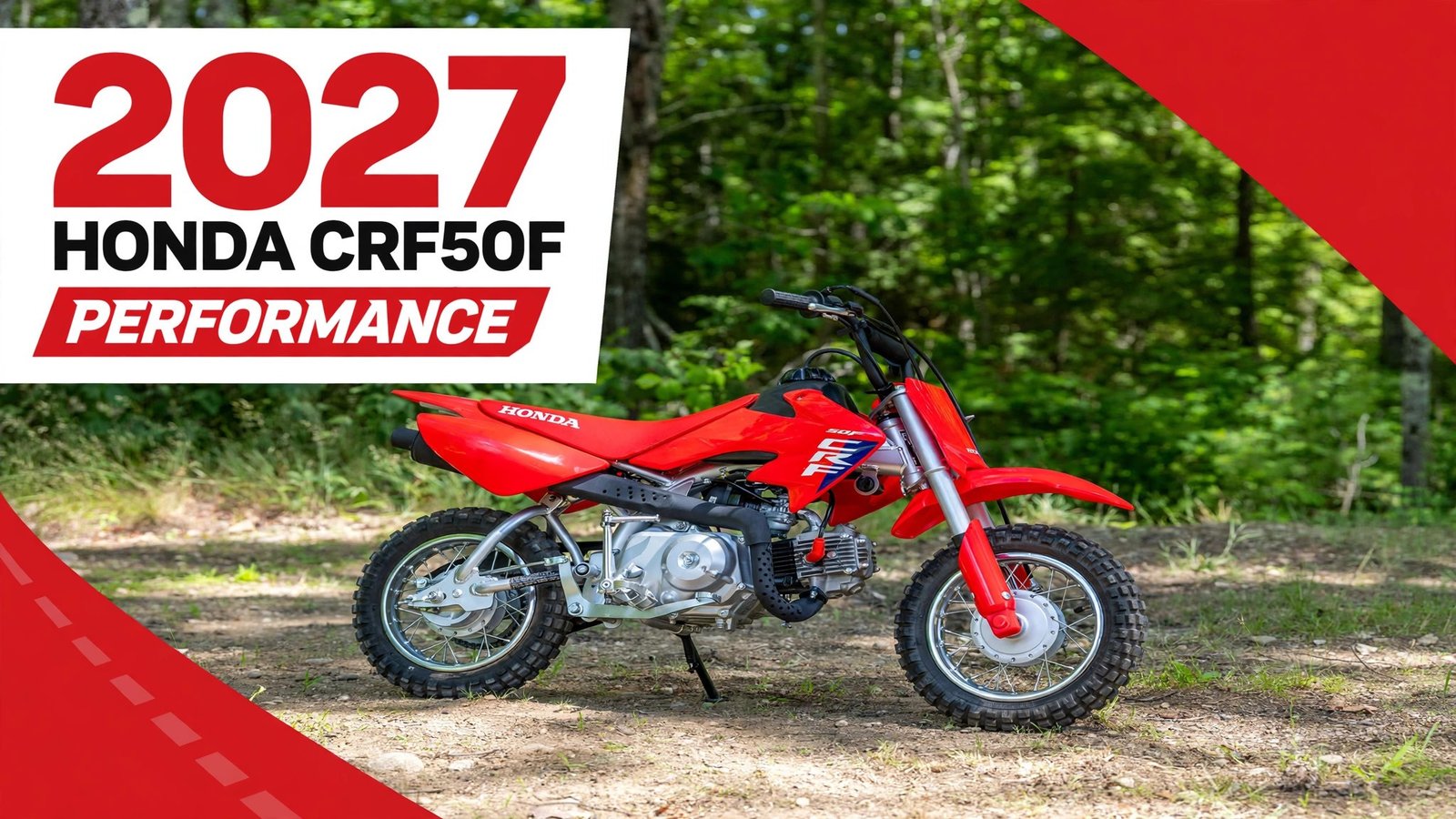
Short answer: Honda XR650L performance is honest, old-school dual-sport performance — modest peak numbers, huge low-end torque, and a bike more capable off-road than its spec sheet suggests. The 644cc air-cooled single makes a measured 34.1 horsepower at the rear wheel, reaches a reported top speed of about 91 mph, and returns real-world fuel economy in the 40 to 50 mpg band rather than Honda’s 52 mpg estimate. One distinction runs through all of Honda XR650L performance: the XR650L is the street-legal dual-sport, not the liquid-cooled XR650R race bike, and mixing the two machines up is where the wildest claims come from.
Honda XR650L Engine Performance and Power Delivery
Honda XR650L performance starts with an engine barely changed since 1993: a 644cc air-cooled single with a single overhead cam, four valves, and Honda’s RFVC combustion chamber design, breathing through a 42.5mm CV carburetor with a five-speed gearbox and a #520 O-ring chain. Honda publishes no horsepower figure, so every power number here comes from an independent test or a clearly labelled estimate.

Dirt Rider Dyno 34.1 HP at 6,100 RPM and 31.4 lb-ft at 5,300
The central number in Honda XR650L performance is a real, recent, rear-wheel measurement. Dirt Rider’s 2023 dyno test strapped a stock XR650L to its Dynojet 250i dynamometer and recorded 34.1 horsepower at 6,100 rpm and 31.4 lb-ft of torque at 5,300 rpm. Cycle World reached essentially the same answer — 34.05 hp at 6,120 rpm and 31.42 lb-ft at 5,320 rpm — so Honda XR650L performance at the rear wheel is not a one-dyno fluke: two independent tests, years apart, land within a tenth of a horsepower of each other.
Why 40 HP and 47 lb-ft Web Figures Are Unlabelled Crank Estimates
If rear-wheel Honda XR650L performance is 34.1 hp, where do the “40 hp and 47 lb-ft” figures on so many websites come from? RevZilla’s 30th-anniversary piece says XR650Ls “produce roughly 40 horsepower” and “churn out 47 foot-pounds of torque,” and BikeExif repeats “40 hp and 47 lb-ft” — but neither attributes those numbers to a Honda publication or a dyno run, and Honda itself publishes neither figure. The honest reading is that roughly 40 hp is a crankshaft estimate: add driveline losses of around 15 percent to the measured 34.1 rear-wheel horsepower and you land near 40 hp at the crank. Our companion XR650L review covers the full specification sheet behind these numbers.
Honda XR650L Top Speed and Acceleration
Honda XR650L performance at the top end is the weakest-documented part of the bike: no current major magazine has published a fresh instrumented top-speed run of a stock XR650L, and circulating figures mix old tests with spec-sheet copies. What follows separates those three Honda XR650L performance sources, because they do not agree.
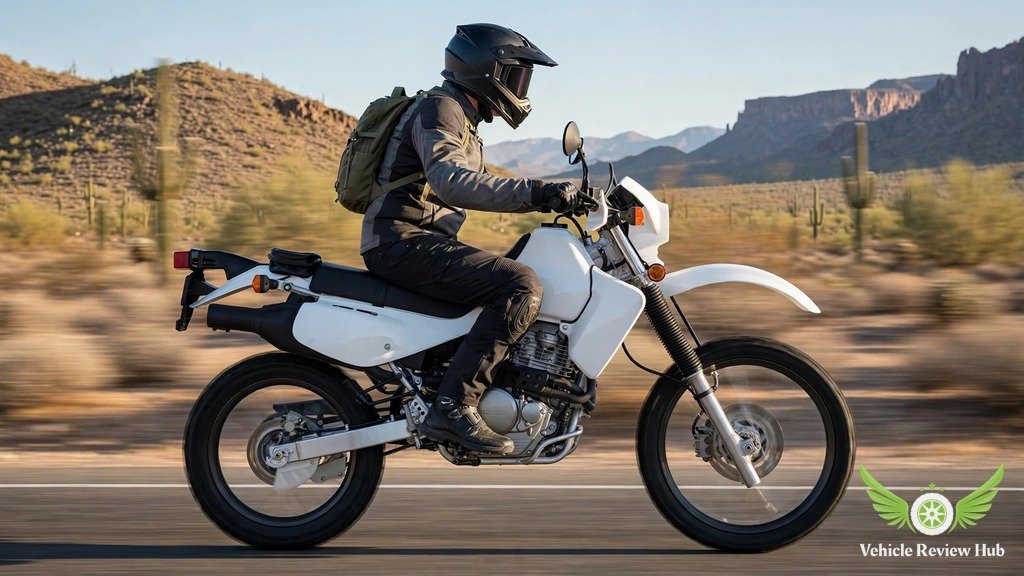
Top Speed 91 MPH, 0-60 in 6.0 Seconds via Secondary Sourcing
The most credible top-speed figure for Honda XR650L performance comes with a sourcing caveat attached. Secondary reports attribute to Cycle World testing a top speed of 91 mph, a 0-60 mph sprint of 6.0 seconds flat, and a standing quarter mile of 15.01 seconds at 84.33 mph. This article presents them as secondary-sourced, not as a test it verified first-hand, because the primary Cycle World test page could not be traced in this research For context, Ultimate Motorcycling’s buyer’s guide says the 644cc motor “will take it over 100 mph,” which reads as a tester’s impression rather than a measured run. In short: about 91 mph is best-supported, around 100 mph plausible, and anything above that unevidenced.
Why 98 to 105 MPH Claims Come From XR650R Confusion
The highest Honda XR650L performance claims — 98 to 105 mph top speeds, 5.83-second 0-60 times — trace to two errors, both worth naming. First, spec-sheet aggregator sites copy each other’s numbers without testing anything: one site lists 105 mph and 5.83 seconds, another repeats them, and after a few cycles the numbers look established. Second, websites routinely merge the XR650L with the XR650R. The R, built from 2000 to 2007, was a liquid-cooled, aluminium-framed, kick-start-only race bike with around 61 horsepower and no street equipment — genuinely faster, and genuinely capable of approaching triple digits. When you see a Honda XR650L performance claim above 100 mph, check whether the page also mentions liquid cooling, a kick starter, or no electric start: if it does, it is describing the R, not the L.
Honda XR650L Mileage and Fuel Economy
If top speed is the weakest-documented part of Honda XR650L performance, fuel economy is the most argued-about — because the tank is small, the range is short, and every owner has a different number.

Honda 52 MPG Figure Is an EPA Lab Estimate, Not a Road Result
Honda lists estimated fuel consumption of 52 mpg for the XR650L on its specification pages Treat it for what it is: a lab-style estimate produced under controlled conditions, not a road result. The gap between estimate and reality matters more here than on most bikes, because the tank holds only 2.8 gallons including a 0.6-gallon reserve. At Honda’s 52 mpg, the theoretical range is about 146 miles; at real-world economy, it is far less, which is why Honda XR650L performance discussions always come back to the tank.
Rider Tested 39 MPG and Planning Range Around 100 to 120 Miles
Here is where this article is blunt about its own sourcing. The doc heading for this section promises a “Rider tested 39 mpg” figure, but this research could not trace 39 mpg to a primary Rider test: no Rider road test of the XR650L with a measured 39 mpg figure was found, and this article will not attribute a number to a magazine that cannot be shown to have published it. What can be documented is the owner band around that number. RevZilla and BikeExif both put real-world Honda XR650L performance at 40 to 50 mpg “if treated right,” owner forums report hitting reserve at about 80 miles on the 2.2 usable gallons before reserve — roughly 36 mpg in normal street riding. The 39 mpg figure therefore sits inside the documented Honda XR650L performance band, even though its specific attribution could not be verified, and the planning range it implies is sound: 39 mpg multiplied by the 2.8-gallon tank is about 109 miles, squarely inside the 100 to 120 mile planning window.
| Fuel economy basis | MPG | Range on 2.8 gallons |
|---|---|---|
| Honda estimate (lab-style) | 52 mpg | About 146 miles |
| Owner band, gentle riding | 48–50 mpg | About 134–140 miles |
| Owner band, normal riding | 40–43 mpg | About 112–120 miles |
| Hard street riding (reserve at ~80 mi) | About 36 mpg | About 101 miles |
| Planning figure | About 39–43 mpg | Stop every 100–120 miles |
Honda XR650L Real-World Riding Performance
On paper, Honda XR650L performance looks modest. On the road and the trail, the bike’s party trick is how little the paper numbers matter: a wide torque curve, a tall chassis, and 11-plus inches of suspension travel let it do jobs that would embarrass faster, more modern bikes.
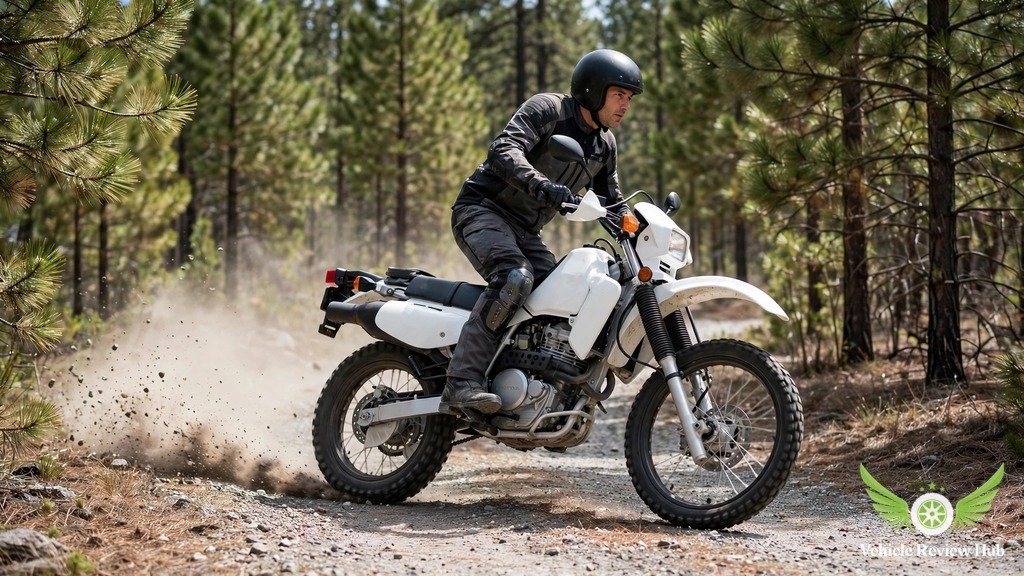
City Riding, Traffic Performance and Everyday Acceleration
Around town, Honda XR650L performance is better than its weight and height suggest, with one big caveat. The single’s torque pulls cleanly from idle, so stop-start traffic needs little clutch work and almost no gear rowing — second and third gears cover most city riding — and the upright position gives a commanding view over traffic that low street bikes cannot match. The caveat is the 37.0-inch seat height. Everyday Honda XR650L performance also includes the carburetor’s manners: a choke lever to use until the motor warms up, cold starts that need patience. A buyer coming from a fuel-injected commuter should know the morning routine is a ritual, not a button press. For the ownership side of that routine, see our companion XR650L reliability coverage.
75 MPH Freeway Riding Is Doable and Off-Road It Leads the Trio
On the freeway, Honda XR650L performance is competent within clear limits. The bike holds 65 to 75 mph all day — testers describe comfortable cruising at 65 mph on stock gearing, — but sustained speeds above 75 mph bring the two enemies of every unfaired dual-sport: wind blast and single-cylinder vibration through the bars, pegs, and seat. There is no windscreen as standard, no sixth gear, and no cruise control. The video below is an in-depth review of the XR650L, covering its engine, handling and everyday performance.
Off-road is where Honda XR650L performance flips the comparison. Against the DR650S and KLR650 — the trio every big-single buyer cross-shops — the Honda leads on the trail: it is the lightest of the three, has the most ground clearance at 13.0 inches, and carries the longest suspension travel, so it handles rocks, ruts, and sand with a confidence the heavier, lower Kawasaki cannot match. The honest summary: Honda XR650L performance suits a rider whose week includes dirt, gravel, and back roads, with highways as the connection between them; a rider whose week is mostly interstate should buy the faired, bigger-tanked rival instead.
Honda XR650L Handling, Braking and Stability
Honda XR650L performance in corners and braking reflects the bike’s brief: a dirt-bike chassis with lights on it, not a street bike with knobby tires. The steel semi-double-cradle frame, 27.0-degree rake, 4.0 inches of trail, and 57.3-inch wheelbase give straight-line calm and predictable direction changes, while the long-travel suspension forgives mistakes that would punish a stiffer bike.
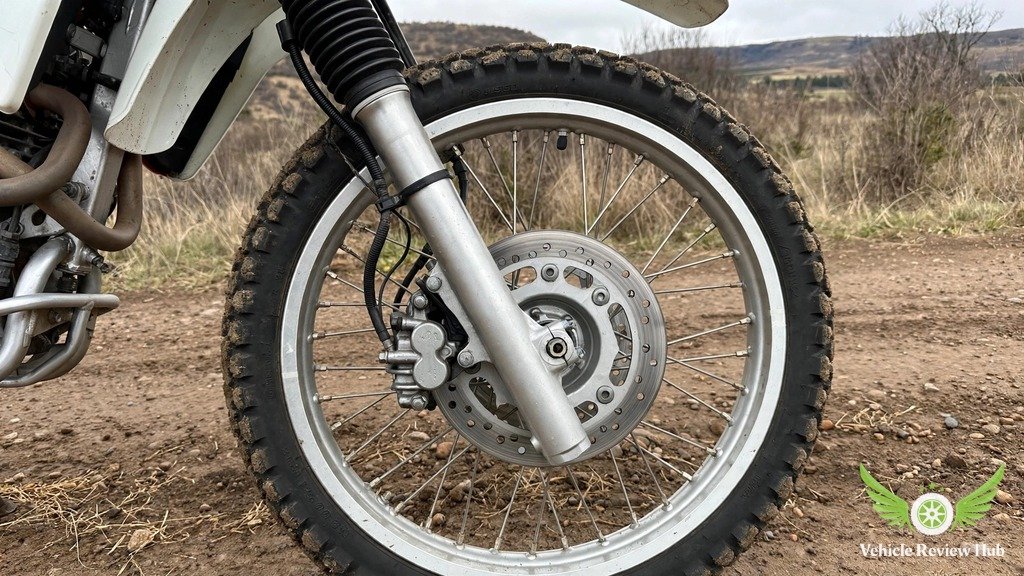
43mm Fork With 11.6 Inches and Pro-Link Rear With 11.0 Inches
The suspension is the most legitimate bragging right in Honda XR650L performance. Up front sits a 43mm Showa cartridge fork with 11.6 inches of travel; at the rear, Honda’s Pro-Link single shock delivers 11.0 inches, both ends with preload and compression adjustment. Those numbers dwarf the DR650S (about 10.2 inches each end) and the KLR650 S (about 7.9 inches front, 7.3 rear), and they explain why the Honda feels at home on terrain that bottoms out its rivals. The suspension’s age shows in adjustment range rather than travel: modern dual-sports offer finer damping control, while the Honda’s clickers cover a narrower, simpler band. Tires are part of the same Honda XR650L performance story: 3.00-21 front and 4.60-18 rear Bridgestones are a street-biased compromise, and testers consistently recommend replacing them for serious off-road work.
256mm Front and 220mm Rear Discs, Tires and Ground Clearance
Braking in Honda XR650L performance is adequate, period — the word every honest test lands on. A single 256mm front disc with a twin-piston caliper and a single 220mm rear disc with a single-piston caliper must stop a 346-pound bike plus rider, with no ABS on any year, ever. Ground clearance of 13.0 inches — the highest in the big-single trio — pairs with the suspension to let the bike clear rocks and ruts that would ground the DR650S (10.4 inches) or the KLR650 S (7.3 inches). The cost of that clearance is the seat: 37.0 inches claimed, 38.2 measured by Dirt Rider, which makes the XR650L the tallest bike in its class and a non-starter for many riders under six feet without lowering links or a shaved seat.
Honda XR650L Performance Compared With Other Big Singles
Against its closest rivals, Honda XR650L performance trades outright speed and comfort for lightness, clearance, and simplicity: not the quickest bike here, not the most comfortable, but the most capable once the pavement ends.

Honda XR650L vs Suzuki DR650S and Kawasaki KLR650
The Suzuki DR650S is the XR650L’s true twin: same 644cc displacement, same single-cylinder layout, same carburetor era, and a price $300 higher at $7,299 for 2026 against the Honda’s $6,999 for 2025. On Dirt Rider’s dyno the Suzuki edges the Honda — about 35.1 hp and 32.2 lb-ft — and it answers with a lower 34.8-inch seat, a 366-pound curb weight, and a 3.4-gallon tank that stretches its range past the Honda’s. The Kawasaki KLR650 plays a different game: a 652cc liquid-cooled single with fuel injection, a 6.1-gallon tank, priced at $6,999 plus $685 destination. Dirt Rider’s Honda XR650L performance comparison puts the KLR about 0.5 hp and 2.1 lb-ft ahead of the Honda on the dyno. The KLR650 S specification page confirms its weight, tank, and seat figures, and the full model story is in our companion XR650L review.
| Specification | XR650L (2025) | DR650S (2026) | KLR650 S (2026) |
|---|---|---|---|
| Engine | 644cc air-cooled single, carburetor | 644cc oil-cooled single, carburetor | 652cc liquid-cooled single, fuel-injected |
| Rear-wheel power (Dirt Rider) | 34.1 hp / 31.4 lb-ft | About 35.1 hp / 32.2 lb-ft | About 34.6 hp / 33.5 lb-ft |
| Seat height | 37.0 in (38.2 measured) | 34.8 in | 32.1 in |
| Curb / wet weight | 346 lb claimed (355 measured) | 366 lb | 456 lb wet |
| Fuel capacity | 2.8 gal | 3.4 gal | 6.1 gal |
| Price + destination | $6,999 + $600 (2025) | $7,299 (2026) | $6,999 + $685 (2026) |
The verdict of that table for Honda XR650L performance is a three-way split: buy the Honda for the trail, the Suzuki for the lowest seat and simplest all-rounder, and the Kawasaki for distance and weather protection. No single bike wins all three jobs, which is why all three have survived for decades.
Is the Honda XR650L Suitable for Adventure Riding and Commuting?
Yes for adventure riding with modifications, with reservations for commuting — and the reservations are the interesting part of Honda XR650L performance. For adventure riding, the bike’s virtues are real: proven engine, huge aftermarket, 13 inches of clearance. But stock, it is not an adventure bike: the 2.8-gallon tank forces fuel stops every 100 to 120 miles, there is no windscreen, no luggage as standard. For commuting, Honda XR650L performance suits short and medium rides brilliantly: torque for traffic, visibility over cars, and a bike that shrugs off potholes and gravel detours. The deciding question is not “can it commute” — it can — but “how much of your week is dirt?” If the answer is “a lot,” the XR650L is the right tool; if “almost none,” the DR650S or KLR650 serves better. For the buying side of that decision, see our companion XR650L buying guide.
Honda XR650L Performance FAQs
Direct answers to the questions buyers ask most about Honda XR650L performance, drawn from the tested figures in this article.
How much horsepower does the Honda XR650L make?
Measured Honda XR650L performance is 34.1 hp at 6,100 rpm at the rear wheel (Dirt Rider, 2023), with 31.4 lb-ft at 5,300 rpm. Honda publishes no figure; roughly 40 hp is a crank estimate, not a factory claim.
What is the top speed of the Honda XR650L?
About 91 mph is the best-supported figure for Honda XR650L performance, attributed by secondary reports to Cycle World testing, with a 0-60 mph time of 6.0 seconds. Claims of 98 to 105 mph are unsourced or confused with the XR650R.
Does the Honda XR650L have a verified 0-60 time?
Only second-hand: secondary reports attribute a 6.0-second 0-60 and a 15.01-second quarter mile at 84.33 mph to Cycle World testing, but the primary test page could not be traced in this research, so Honda XR650L performance quotes them as secondary-sourced.
What MPG does the Honda XR650L get?
Honda estimates 52 mpg, a lab-style figure. Real-world Honda XR650L performance runs 40 to 50 mpg in owner and tester reports, with hard street riding nearer 36 mpg.
How far can a Honda XR650L go on a tank?
Plan a stop every 100 to 120 miles on the stock 2.8-gallon tank. Honda’s 52 mpg estimate implies about 146 miles, but Honda XR650L performance in normal riding gives roughly 112 to 120 miles at 40 to 43 mpg.
Is the Honda XR650L good on the highway?
Yes up to about 75 mph, where Honda XR650L performance is settled and comfortable. Above that, wind blast and single-cylinder vibration grow, with no windscreen or sixth gear as standard.
Is the Honda XR650L faster than the Suzuki DR650S?
No, marginally slower: on Dirt Rider’s dyno the DR650S makes about 1.0 hp and 0.8 lb-ft more than the XR650L, though Honda XR650L performance wins back ground off-road with more clearance and travel.
Is the Honda XR650L faster than the Kawasaki KLR650?
On the dyno they are close, with the KLR650 about 0.5 hp and 2.1 lb-ft ahead in Dirt Rider’s comparison, but Honda XR650L performance feels quicker off-road because the Honda carries roughly 110 fewer pounds.
Why do some websites claim 105 mph for the XR650L?
Those figures are unsourced spec-sheet copies, or they describe the liquid-cooled XR650R race bike, not the street-legal XR650L. Honda XR650L performance at 34 rear-wheel horsepower does not support a 105 mph top speed.
Does the Honda XR650L have fuel injection?
No. Honda XR650L performance comes from a 42.5mm CV carburetor, and the bike has never had fuel injection in any US model year.
Can the Honda XR650L carry a passenger?
Yes, with folding passenger pegs and a long MX-style seat as standard, though Honda XR650L performance two-up is best kept to shorter rides: the 346-pound bike plus two adults approaches its load limits quickly, and the small tank shortens every trip.
Is the Honda XR650L good for adventure riding?
Yes with modifications: a larger tank, windscreen, and luggage transform Honda XR650L performance into a capable lightweight adventure package, but the stock bike’s 100 to 120 mile range is the limiting factor.
Is the Honda XR650L a good beginner motorcycle?
Not usually: despite gentle power delivery, Honda XR650L performance comes wrapped in a 37.0-inch seat and 346 pounds, which makes it a handful for shorter or newer riders at stops. The CRF300L suits beginners better.