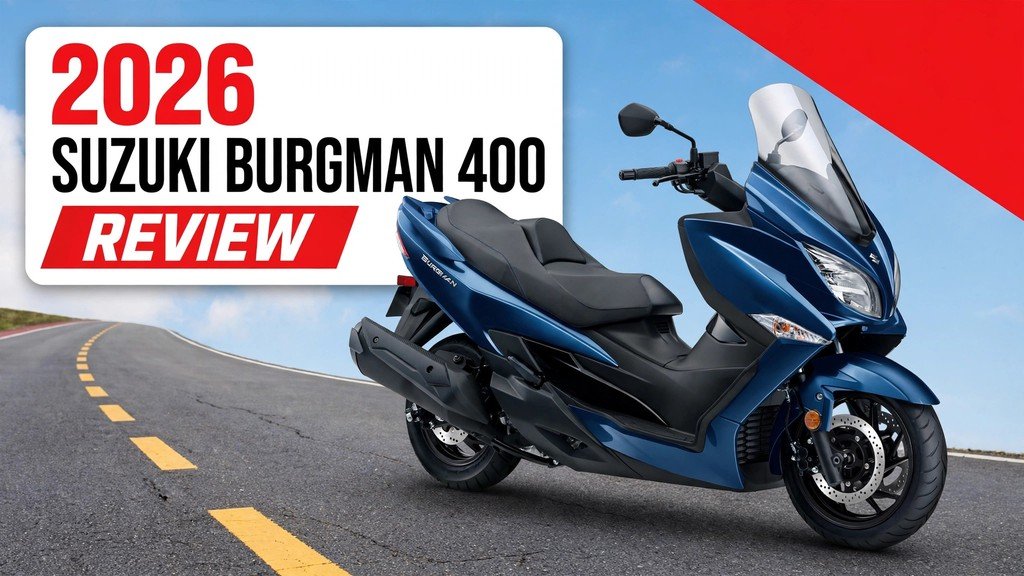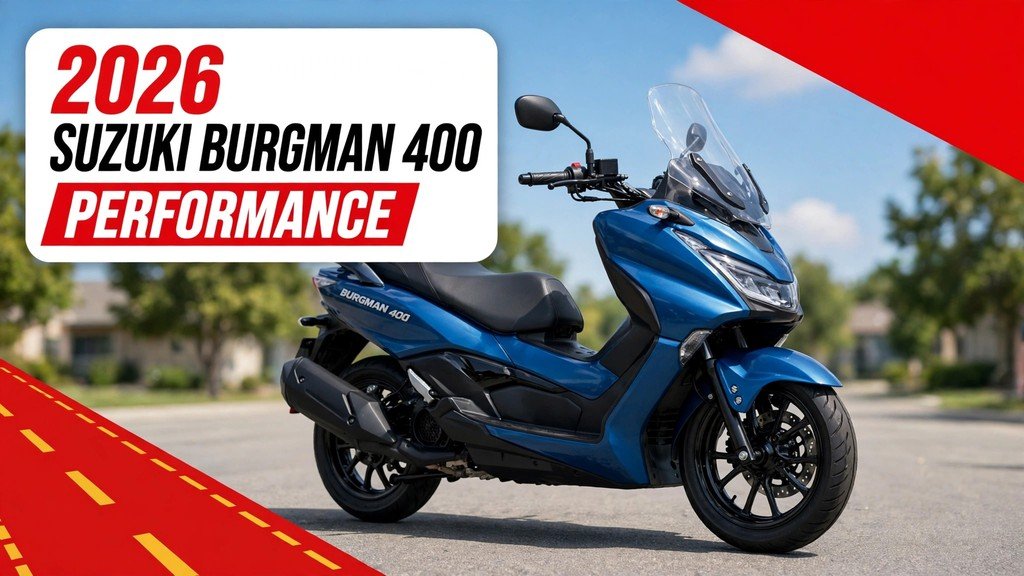
The short answer to this Suzuki Burgman 400 performance question is that the bike is a calm, steady highway scooter, not a fast one: 90 mph on the speedometer with two riders aboard, about 50 mpg in real-world riding, and a passing reserve that thins out above 65 mph. Suzuki USA publishes no power or torque figure, and no named US outlet has ever put one on a dyno, so this guide prints only what named testers actually measured — every global claim labelled as such.
Suzuki Burgman 400 Engine Performance and Power Delivery
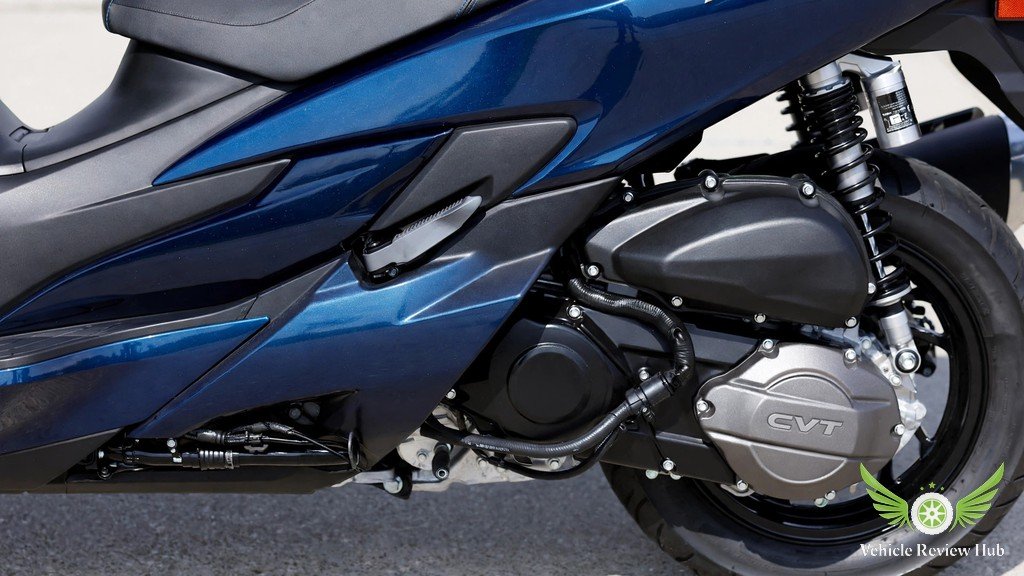
This Suzuki Burgman 400 performance section starts with the engine, because the numbers buyers ask about first are the ones Suzuki USA does not publish. The 399cc liquid-cooled single makes its power low in the rev range and hands it to the rear wheel through a CVT, so the riding feel is smooth, quiet and unhurried rather than sharp.
The video below is a Japanese-language deep-dive on the Burgman 400 ABS. There is no English narration, but the walkaround and the on-screen figures cover the 399cc engine, the traction control and the touring range in detail. The figures it shows are the Japanese specification — 21 kW (29 PS) at 6,300 rpm, 35 N·m at 4,900 rpm, WMTC 25.2 km/L (about 59 US mpg) — and it quotes the Japanese 13-litre tank, not the US 13.5-litre one.
Global Claims Near 29 HP, Labelled as Such
Suzuki USA publishes no horsepower or torque figure for the Burgman 400 — the Suzuki USA page lists the engine, the bore and stroke and the compression ratio, but the power line is simply absent. That leaves the global claims, and they need their labels attached. For the 2022-and-later Euro 5 bike, MCN quotes 28.6 bhp at 6,300 rpm, and the Japanese specification is 21 kW (29 PS) at 6,300 rpm with 35 N·m at 4,900 rpm. Note that 29 PS is 28.6 hp, not 29 hp — so this guide says “near 29 hp” and keeps the PS figure beside it. Earlier bikes made a little more on paper: 2018–2021 bikes were quoted at 30 to 30.5 bhp, and the second generation at around 33 bhp. The 2022 Euro 5 retune traded a little peak power for better low- and mid-range torque.
No Dyno Test by Any US Outlet
There is no dyno test of the Burgman 400 by any named US outlet. Searches across Motorcycle.com, Cycle World, Ultimate Motorcycling, Motorcyclist, RevZilla, webBikeWorld and TopSpeed return no dyno run and no measured torque curve — so this Suzuki Burgman 400 performance guide prints no rear-wheel figure at all. That matters because crankshaft figures always read higher than what reaches the rear wheel through a CVT and a V-belt — a buyer who sees a “rear-wheel horsepower” number for a Burgman 400 anywhere is looking at an invented figure. The honest position is the one this guide takes: the engine is a 399cc single with strong low- to mid-range delivery, the global claims sit near 29 hp at the crankshaft, and nobody has measured what it makes at the wheel.
| Item | Suzuki Burgman 400 |
|---|---|
| Engine | 399cc liquid-cooled DOHC single, 4 valves, dual spark plugs (2022+) |
| Bore × stroke | 81.0 × 77.6 mm |
| Compression ratio | 10.6:1 |
| Power — Suzuki USA | Not published |
| Power — global claim, 2022+ | 28.6 bhp @ 6,300 rpm (MCN); Japan 21 kW (29 PS) @ 6,300 rpm |
| Torque — global claim, 2022+ | 35 N·m @ 4,900 rpm (Japan) |
| Power — 2018–2021 | 30–30.5 bhp; 26.5–26.55 lb-ft @ 4,800 rpm |
| Transmission | CVT, V-belt final drive |
| Dyno figure (rear wheel) | None exists from any named outlet |
Notes for this Suzuki Burgman 400 performance table: Suzuki USA publishes no power or torque figure for the Burgman 400, so every power and torque number here is a labelled global claim, not a US figure. The 29 PS figure equals 28.6 hp — the two are not the same number. No dyno test by any named US outlet exists, so no rear-wheel horsepower figure can be printed — and this Suzuki Burgman 400 performance table prints none.
Suzuki Burgman 400 Top Speed and Acceleration
The top speed of the Burgman 400 is one of the few performance numbers that was actually measured by a named tester — but it was measured on a speedometer, with two people aboard, and that is exactly how this Suzuki Burgman 400 performance guide prints it. There is no GPS-measured top speed, no 0–60 time and no quarter-mile time from any named outlet, so the acceleration story is told the way the testers told it: steady at highway speed, patient getting there.
90 MPH on the Speedometer, Two-Up
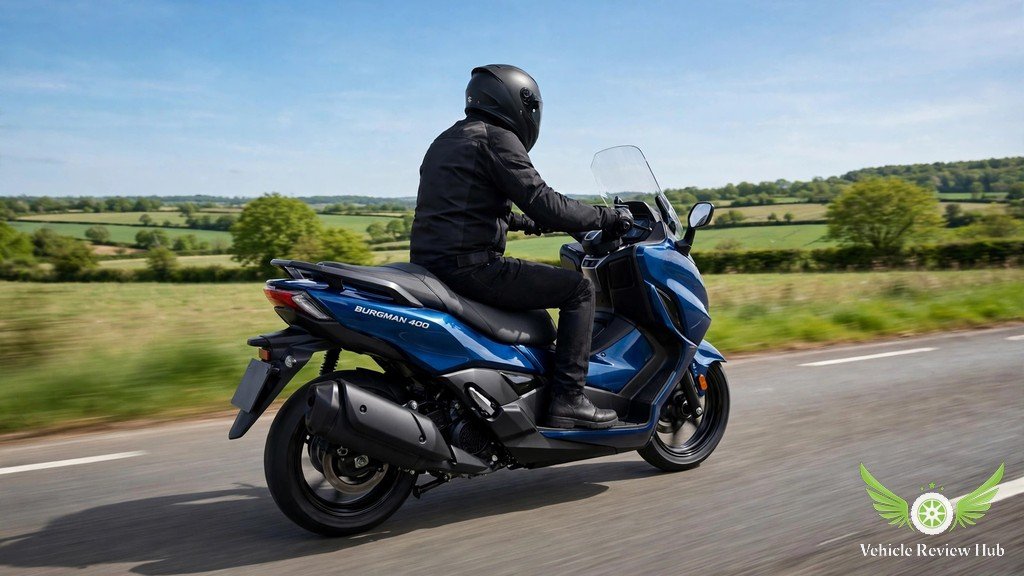
The best-measured top-speed figure for the Burgman 400 comes from Motorcycle.com’s 2020 “SoCal Distancing” ride, where two testers rode a 2020 Burgman 400 about 220 miles and recorded 90 mph on the speedometer on level ground with about a 350-pound payload aboard. That is the figure this Suzuki Burgman 400 performance guide prints, with all three labels attached: indicated, two-up, level ground. A 2007 test recorded an indicated 103 mph for the older bike — a different, heavier motorcycle with a different tune, so do not carry the figure over. Motorcycle speedometers typically read 5 to 10 percent high, so 90 mph indicated is likely around 81 to 86 mph true — arithmetic on a general rule, not a measured GPS figure.
Acceleration Scarce Above 65 MPH
The Burgman 400 gets to highway speed without fuss and then runs out of urgency. The CVT keeps the single-cylinder engine in its useful range, so pulling away and merging onto a freeway feel easy. Above 65 mph, though, the passing reserve thins out: the bike holds 70 to 75 mph comfortably, but getting to 90 mph takes patience and a clear stretch of road. That is the consistent characterisation from the named first rides, and it is the one this Suzuki Burgman 400 performance guide repeats, because no instrumented acceleration time exists to say it more precisely. No 0–60 mph time, no 0–100 km/h time and no quarter-mile time has been published by any named outlet, so none is printed here. A buyer who needs quick 70-to-90 mph overtakes should know this before buying.
| Item | Suzuki Burgman 400 |
|---|---|
| Top speed — indicated, two-up | 90 mph (Motorcycle.com 2020, ~350 lb payload, level ground) |
| Top speed — indicated, 2018 first ride | 90+ mph (MotorcycleDaily 2018) |
| Top speed — GPS measured | None exists |
| Top speed — true speed estimate | About 81–86 mph (arithmetic on 5–10% speedometer optimism, not measured) |
| 0–60 mph | No time published by any named outlet |
| Quarter-mile | No time published by any named outlet |
| Passing reserve | Thins above 65–70 mph; holds 70–75 mph comfortably |
| Second-generation top speed (2007) | 103 mph indicated — does NOT apply to the current bike |
Notes for this Suzuki Burgman 400 performance table: the 90 mph figure is speedometer-indicated, two-up, from Motorcycle.com’s 2020 test — it is not a GPS figure and not a solo figure. No GPS-measured top speed and no acceleration time exists from any named outlet, and this Suzuki Burgman 400 performance table prints only measured or explicitly labelled figures. The 103 mph figure belongs to the 2007 second-generation bike and must not be applied to the current generation.
Suzuki Burgman 400 Mileage and Fuel Economy
Fuel economy is the one performance area where the Burgman 400 has a proper long-term measurement behind it, and this Suzuki Burgman 400 performance section puts that number first. A three-fill-up test over 619 miles is worth more than any brochure claim.
Rider’s Long-Term Average: 50.2 MPG
The best US economy figure for the Burgman 400 comes from Rider Magazine’s 2018 long-term test: 50.2 mpg averaged over three fill-ups, with a high of 61.4 mpg and a low of 45.1 mpg, and 180-plus miles of range from the 3.6-gallon tank. The maths checks out: 50.2 mpg times 3.6 gallons is about 181 miles. An older MotorcycleDaily test found the same territory: 50 to 52.5 mpg on the dashboard and 51 to 54 mpg by pump maths. The low-fuel warning arrives early on a 3.6-gallon tank, and the last gallon is a reserve the rider may not realise is there. Suzuki claims 200-plus miles, which implies about 55 mpg or better — reachable on a gentle ride. For a commuter, the honest working number in this Suzuki Burgman 400 performance guide is 50 mpg: plan on 180 miles per tank, and treat anything above that as a bonus.
The UK 70.6 Figure Is Imperial Gallons
Suzuki’s UK dealer specification lists 70.62 mpg for the Burgman 400. It is Imperial gallons. Converted, 70.62 Imperial mpg equals 58.8 US mpg — a real figure, but smaller than the headline suggests. MCN’s 2022 review put it plainly: Suzuki’s 70.6 mpg claim “would require very controlled riding, but it’s easy to nudge 60 mpg in normal use.” One unattributed economy claim in the high 60s has no source behind it and matches neither the UK figure nor the tester figures, so this Suzuki Burgman 400 performance guide does not print it. The Japanese WMTC figure from the video above, 25.2 km/L, converts to about 59 US mpg — right in line with the UK figure once the units are straight.
| Figure | Value | Source |
|---|---|---|
| Long-term average | 50.2 mpg | Rider Magazine 2018, three fill-ups |
| Long-term high / low | 61.4 / 45.1 mpg | Rider Magazine 2018 |
| Range at 50.2 mpg | About 181 miles (3.6-gal tank) | Derived: 50.2 × 3.6 |
| Suzuki range claim | 200+ miles | Suzuki, via MotorcycleDaily 2018 |
| UK claim | 70.62 Imperial mpg = 58.8 US mpg | Suzuki UK dealer specification |
| WMTC figure | 25.2 km/L, about 59 US mpg | Japanese specification |
| Suzuki USA figure | None published | Suzuki USA |
| Fuel tank | 13.5 L (3.6 US gal) | Suzuki USA |
Notes for this Suzuki Burgman 400 performance table: the 50.2 mpg average is tester-measured over three fill-ups — the only long-term US figure, and the one this guide recommends. The 70.62 mpg figure is Imperial gallons and equals 58.8 US mpg; never print it as a US figure. Suzuki USA publishes no fuel-economy figure, and the unattributed high-60s claim is not used.

Suzuki Burgman 400 Real-World Riding Experience
On the road, the Burgman 400 is at its best doing exactly what a maxi scooter is for: long, steady, weather-protected miles at interstate speed. This Suzuki Burgman 400 performance section sticks to what named testers actually rode — two testers, 220 miles, four gallons, and no comfort complaints at the end of the day.
Steady 75 MPH on the Interstate
The Burgman 400 settles into interstate speed and stays there. Motorcycle.com’s 2020 two-up test cruised at 80 to 85 mph and found no vibration and no comfort complaints after two hours on the freeway. The tall windscreen and leg shield keep the wind off, and the 62.2-inch wheelbase gives the bike a planted feel smaller scooters do not have. The smaller Burgman 200, covered in the Burgman 200 performance guide, holds freeway pace at about 80 mph indicated — so the 400’s extra 200cc buys roughly 10 mph of headroom and far more passing confidence.
Content at 70 All Day, Say Testers
Seventy miles per hour is the Burgman 400’s happy place: the engine is turning well below its peak, and the bike will hold that speed all day without asking anything of the rider. With about 350 pounds of payload aboard, the bike still reached 90 mph indicated on level ground and cruised at 80 to 85 mph without strain. That is the touring case for this Suzuki Burgman 400 performance guide — a scooter that carries a passenger at highway speed without drama. The trade-off is the one already named: above 65 mph the passing reserve thins, so overtakes need planning.
Suzuki Burgman 400 Handling, Braking and Stability
Handling is where the Burgman 400’s weight and wheelbase show up most clearly — and this Suzuki Burgman 400 performance section is honest about both sides of that trade. The same 481 pounds and 62.2-inch wheelbase that make the bike steady on the interstate make it a deliberate machine at parking speed.
Handling, Braking and Stability on Tour
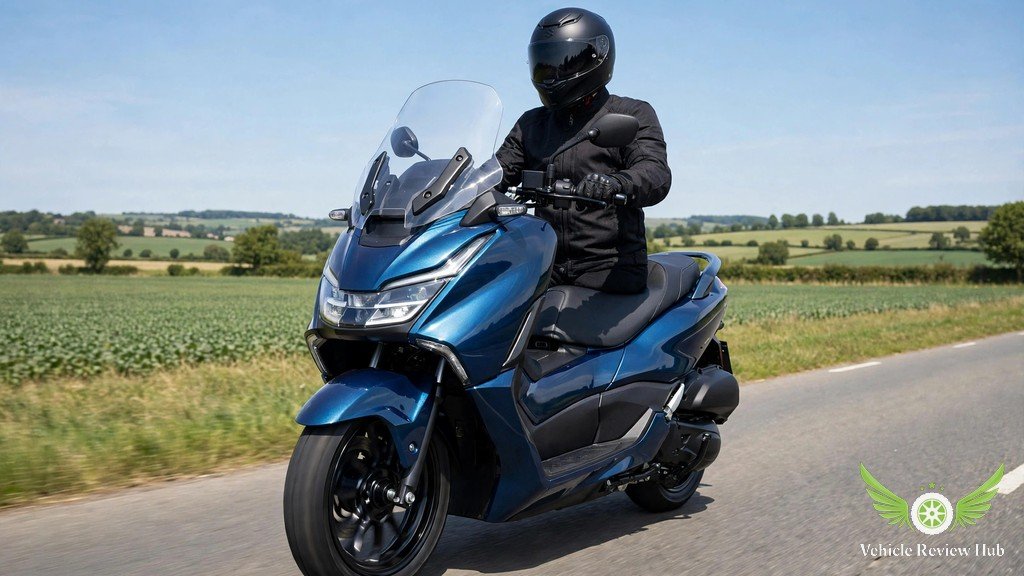
The Burgman 400 steers like a tourer, not like a city scooter. Its 15-inch front and 13-inch rear wheels are larger than the Burgman 200’s 13- and 12-inch pair, and the long wheelbase keeps the bike tracking straight through crosswinds. At 481 lb curb, the bike is planted on the freeway in a way lighter scooters are not. The cost is low-speed agility — the bike is slower to turn in, and pushing it around a garage with the engine off is a two-handed job, which is also one of the two points the Japanese deep-dive video flags. The suspension is simple: a telescopic front fork with 4.3 inches of travel and a link-type single rear shock. Braking is a strength: twin 260 mm front discs and a single 210 mm rear disc, with ABS standard on both wheels, and traction control on 2022-and-later bikes. No instrumented braking-distance test exists from a named outlet, so this Suzuki Burgman 400 performance guide prints no stopping distance.
Check Features by Year Before Buying Used
A used Burgman 400 is not one bike — it is three feature sets wearing the same badge, and the year matters more than the mileage. Traction control arrived only with the 2022 update, so a 2018–2021 bike has ABS but no traction control. Anything before 2018 is a different generation entirely — the second-generation bike ran from 2007 to 2016. A listing that claims a 2017 US Burgman 400 is a UK import or a mislabelled 2016 or 2018 bike — check the VIN before paying. The Burgman 400 review covers the price history and the model-year traps in full — and this Suzuki Burgman 400 performance section repeats the warning because the fastest way to overpay is to pay a 2022 price for a 2021 bike’s features.
Suzuki Burgman 400 Performance Compared With Other Maxis
The Burgman 400 does not race its rivals — it out-carries them and out-comforts them while charging more for the privilege. This Suzuki Burgman 400 performance section compares it with the one rival that matters most on performance, the Yamaha XMAX, and then answers the beginner question honestly.
Suzuki Burgman 400 vs Yamaha XMAX
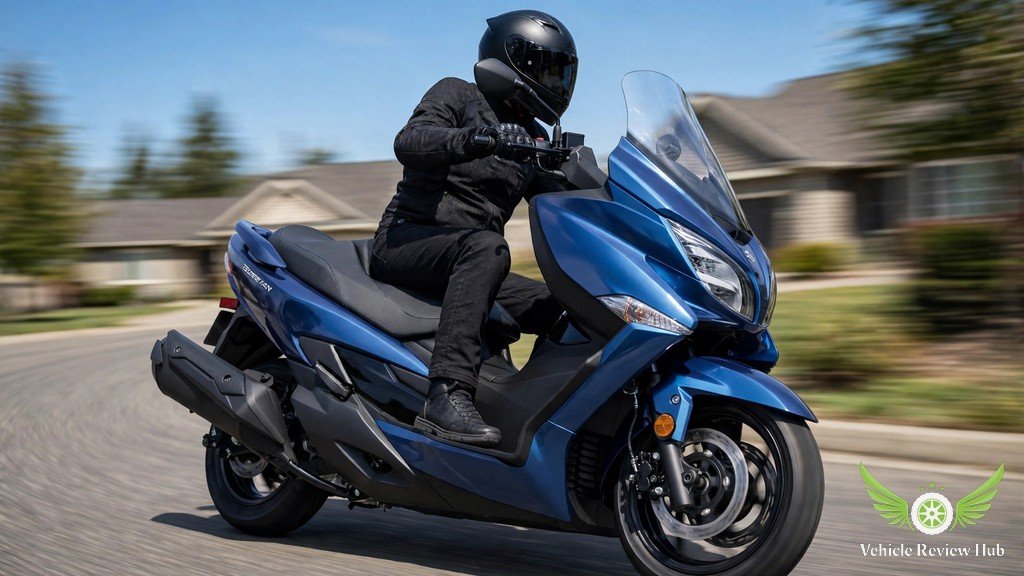
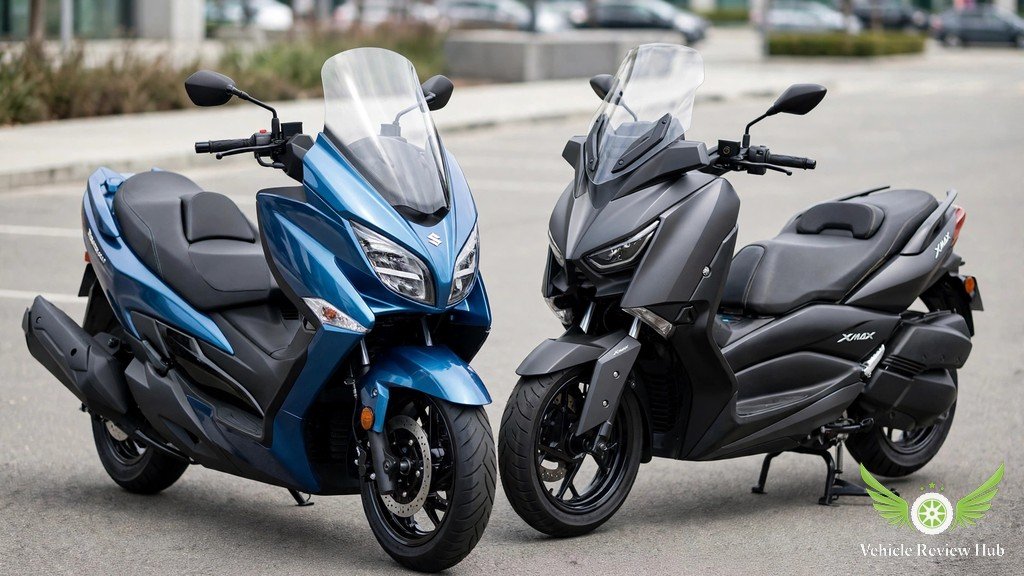
The XMAX is the lighter, cheaper, more agile maxi, and the Burgman is the roomier, more comfortable tourer. The XMAX runs a 292cc single against the Burgman’s 399cc, weighs 403 lb wet against the Burgman’s 481 lb curb, and sits 31.3 inches high against the Burgman’s 29.7. On power the two are close — the European XMAX claim is about 27.6 hp, near the Burgman’s 28.6 bhp global claim — so the Burgman’s extra 107cc buys torque and comfort, not speed. On price the gap is wide: the Yamaha XMAX costs $6,399 plus $650 destination, or $7,049 delivered, against the Burgman’s $9,549 — exactly $2,500 less all-in. The MCN mega test ranked the XMAX ahead overall while praising the Burgman’s comfort and storage — the fair summary for this Suzuki Burgman 400 performance comparison: the XMAX is the better performance buy, the Burgman the better touring buy.
Is the Suzuki Burgman 400 Suitable for Beginner Riders?
Yes, with caveats — and the caveats are the point of this Suzuki Burgman 400 performance answer. On the beginner’s side: twist-and-go with no clutch and no shifting, the class-lowest 29.7-inch seat, a low centre of gravity, ABS on both wheels and traction control on 2022-and-later bikes. Against it: 481 lb is heavy for a first scooter, $8,949 is a lot of money for a beginner bike, the passing reserve above 65 mph is thin, and at 88 inches long with a 62.2-inch wheelbase the bike is harder to manoeuvre at walking speed than a 150cc scooter. The honest verdict: a good first big scooter, not a good first scooter outright. A rider who has never ridden anything should start smaller and cheaper, then step up when the weight and the price stop being intimidating — that balance is the honest answer this Suzuki Burgman 400 performance guide gives every new rider who asks.
Suzuki Burgman 400 Performance: Frequently Asked Questions
Direct answers to the Suzuki Burgman 400 performance questions buyers ask most.
How fast is the Suzuki Burgman 400?
It reaches 90 mph on the speedometer with two riders aboard, on level ground, according to Motorcycle.com’s 2020 test. Solo it will do the same and a little more. This Suzuki Burgman 400 performance guide prints the indicated figure only, labelled as such.
Does the Suzuki Burgman 400 have enough power for the highway?
Yes. The 399cc single holds 70 to 75 mph comfortably and cruises at 80 to 85 mph two-up without strain. The limit is not cruising speed but passing reserve: above 65 mph, overtakes take patience — the finding this Suzuki Burgman 400 performance guide repeats from the named tests.
What is the fuel economy of the Suzuki Burgman 400?
Rider Magazine’s long-term test averaged 50.2 mpg over three fill-ups, with a high of 61.4 and a low of 45.1 mpg. That gives about 180 miles from the 3.6-gallon tank. The UK claim of 70.6 mpg is Imperial gallons, which equals 58.8 US mpg — a conversion this Suzuki Burgman 400 performance guide spells out because listings so often leave the unit off.
Is there a dyno test for the Burgman 400?
No — no named US outlet has ever put a Burgman 400 on a dyno, so no rear-wheel horsepower figure exists. Only the labelled global claims exist — 28.6 bhp at 6,300 rpm for the 2022-and-later bike — and they are crankshaft figures, not measured rear-wheel figures.
What is the top speed of the Burgman 400?
The verified figure is 90 mph on the speedometer, two-up, from Motorcycle.com’s 2020 test — the only top-speed number this Suzuki Burgman 400 performance guide prints. No GPS-measured top speed exists, and the 2007 second-generation figure of 103 mph indicated does not apply to the current bike.
How far can the Burgman 400 go on a tank?
About 180 miles at the tester-measured 50.2 mpg, from the 3.6-gallon tank — the planning figure this Suzuki Burgman 400 performance guide uses. Suzuki claims 200-plus miles, which implies about 55 mpg or better and is reachable on a gentle ride.
Is the Burgman 400 faster than the Yamaha XMAX?
Not meaningfully — and this Suzuki Burgman 400 performance comparison is blunt about why: the Burgman has 107cc more and a similar power claim, but it carries 78 lb more weight, so the two are close on outright speed. This Suzuki Burgman 400 performance comparison calls the XMAX the better performance buy and the Burgman the better touring buy.
Does the Burgman 400 have traction control?
Yes, but only on 2022-and-later bikes. The 2018–2021 models have ABS but no traction control, so a used buyer should check the model year before paying a premium — the year check this Suzuki Burgman 400 performance guide repeats because listings still get it wrong.
Is the Burgman 400 good for two-up riding?
Yes. The 90 mph indicated top-speed figure was recorded two-up with about a 350-pound payload, and the bike cruised at 80 to 85 mph with two riders aboard without strain. That two-up ability is a core strength in this Suzuki Burgman 400 performance guide.
How does the Burgman 400 handle at low speed?
Deliberately — at 481 lb with a 62.2-inch wheelbase, it is steady on the highway and slow to turn in at parking speed. That steadiness is the trade this Suzuki Burgman 400 performance guide describes: stability on the interstate, patience in the car park.
Is the Burgman 400 suitable for beginner riders?
Yes, with caveats. Twist-and-go, the lowest seat in its class, ABS and traction control make it approachable, but 481 lb and $8,949 make it a big, expensive first scooter. This Suzuki Burgman 400 performance guide calls it a good first big scooter rather than a good first scooter outright.
What changed in the 2022 Burgman 400 update?
Traction control arrived, along with a dual-spark cylinder head, a revised camshaft, Euro 5 compliance, a lighter ABS unit and an updated ECM. Power dipped slightly, from 30–30.5 bhp to 28.6 bhp, in exchange for better low- and mid-range torque and cleaner throttle control — the update this Suzuki Burgman 400 performance guide calls the one that matters when buying used.