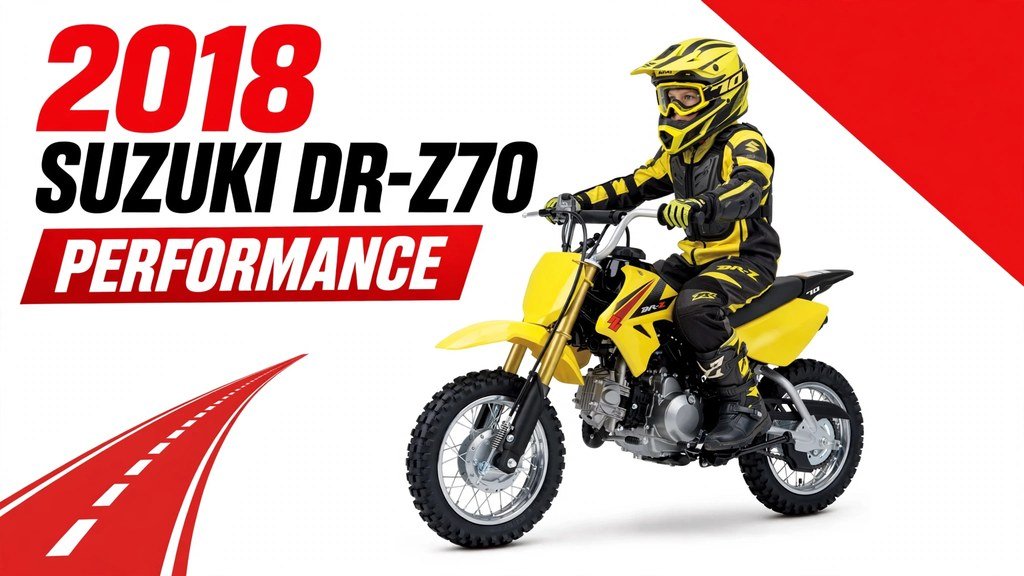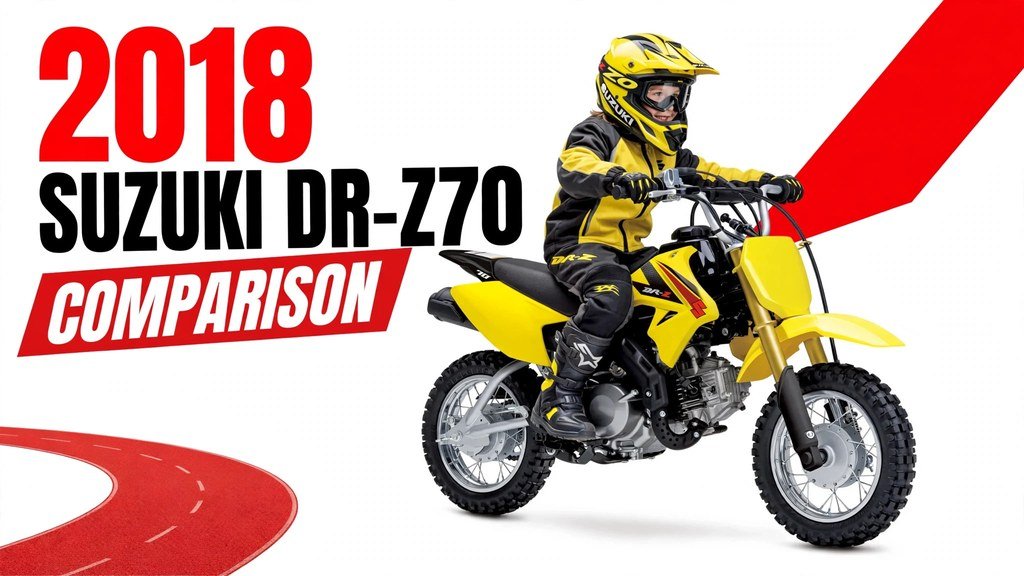
The short answer to this Suzuki DR-Z70 comparison is that the DR-Z70 was the in-between bike: bigger than the 50s, smaller than the 110s, and the only youth trainer of its era with both electric and kick starting. This Suzuki DR-Z70 comparison puts the four bikes side by side on verified specs and year-tagged prices, so a parent shopping used and new can see exactly where the 67cc Suzuki fits.
Suzuki DR-Z70 Overview and Its Closest Rivals
The DR-Z70’s rivals are not a random set. Three bikes define its place: the Honda CRF50F and Yamaha TT-R50E it competed against when new, and the Suzuki DR-Z50 that replaced it in 2019. Every figure in this Suzuki DR-Z70 comparison comes from the manufacturers’ own specifications, and every price is year-tagged — the DR-Z70’s prices are from when it was new, because the bike is used-only today.
Why These Three Rivals: Era and Today
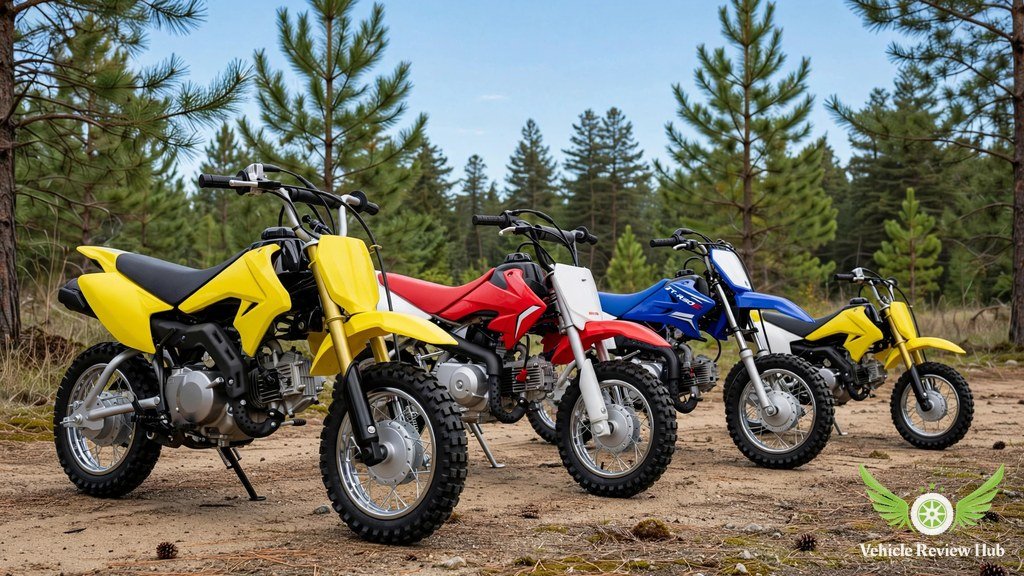
The CRF50F and the TT-R50E are the era rivals. When the DR-Z70 was on sale in 2008–2009 and again in 2015–2018, a parent shopping a first bike for a child aged 7 and up looked at exactly these three: the kick-only Honda, the electric-start Yamaha, and the Suzuki that offered both starters and 18cc more than either 50. The DR-Z50 is the today rival: the smaller 49cc bike that replaced the DR-Z70 in 2019 and the one a parent buys new today. This Suzuki DR-Z70 comparison keeps the two groups separate — era rivals for what the 70 was, the DR-Z50 for what a buyer does now.
How the Four Bikes Differ at a Glance
At a glance in this Suzuki DR-Z70 comparison, the DR-Z70 is the biggest and the oldest bike here. It has the largest engine at 67cc, the joint-tallest seat at 22.0 inches, and the only used-only price — every other bike in this Suzuki DR-Z70 comparison is a 2026 new bike with a current delivered price.
| Item | Suzuki DR-Z70 (2018) | Honda CRF50F (2026) | Yamaha TT-R50E (2026) | Suzuki DR-Z50 (2026) |
|---|---|---|---|---|
| Engine | 67cc single | 49cc single | 49cc single | 49cc single |
| Bore and stroke | 48.0 x 37.0 mm | 39.0 x 41.4 mm | 36.0 x 48.6 mm | 39.0 x 41.8 mm |
| Compression | 9.5:1 | 10.0:1 | 9.5:1 | 9.7:1 |
| Carburetor | Mikuni VM13 | 13.0 mm piston-valve | Mikuni VM11 | Mikuni VM13 |
| Starter | Electric + kick | Kick only | Electric only | Electric + kick |
| Transmission | 3-speed, auto clutch | 3-speed, auto clutch | 3-speed, auto clutch | 3-speed, auto clutch |
| Seat height | 22.0 in | 21.6 in | 21.9 in | 22.0 in |
| Weight | 121 lb curb | 111 lb curb | 126 lb wet (manual) | 119 lb curb |
| Fuel tank | 0.8 gal | 0.7 gal | 0.8 gal | 0.8 gal |
| Rider weight limit | 88 lb | 88 lb | 88 lb | 88 lb |
| Warranty when new | 6 mo | 6 mo | 90 days | 6 mo |
| Delivered when new | $2,001 (2018) | $2,199 (2026) | $2,149 (2026) | $2,899 (2026) |
Notes for this Suzuki DR-Z70 comparison table: DR-Z70 figures from Suzuki’s 2018 one-sheet; CRF50F figures from Honda’s published specifications; TT-R50E figures from Yamaha’s published specifications; DR-Z50 figures from Suzuki’s 2026 specifications. The TT-R50E weight is the manual’s 126 lb wet — US dealer listings show 128 lb wet for the same bike. The DR-Z70 is used-only today, so its $2,001 is the delivered price when new in 2018, not a current price.
The video below compares the DR-Z70 against the Honda CRF50, a doc rival in this guide. The TT-R50E and DR-Z50 comparisons in this Suzuki DR-Z70 comparison are not in the video.
Suzuki DR-Z70 vs Honda CRF50F
The Honda CRF50F is the DR-Z70’s closest era rival and the bike most parents compare it with. The Honda is the lighter, lower and cheaper bike; the Suzuki is the bigger-engined one with two ways to start. This Suzuki DR-Z70 comparison takes the Honda on its own terms.
Engine, Specs and Performance Side by Side
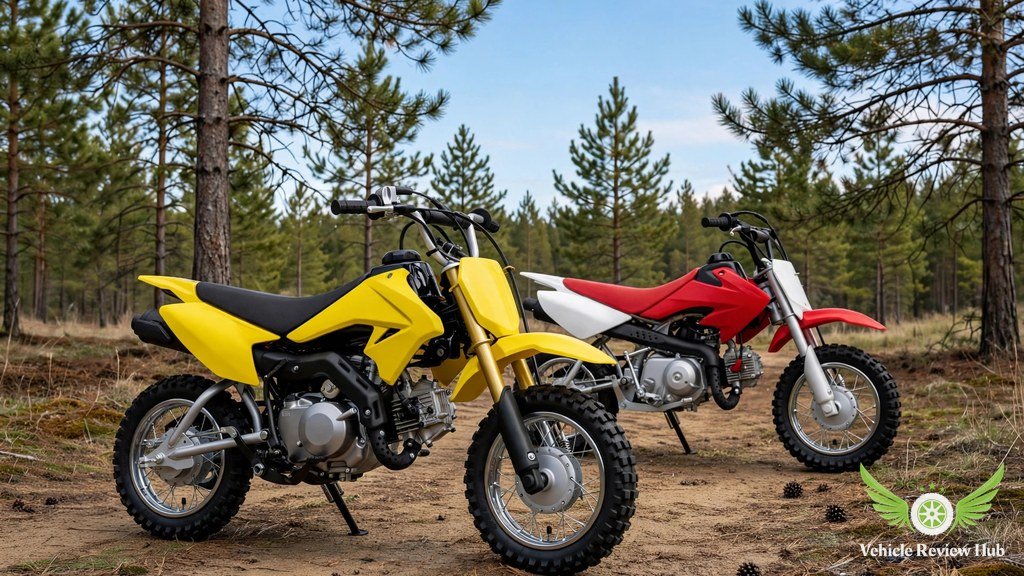
The engine is the whole story here. The DR-Z70’s 67cc single is 18cc bigger than the CRF50F’s 49cc, and Dirt Rider’s 2008 test felt it as “extra steam that 70cc puts out compared to 50cc” with “actually has some torque”. No power figure exists for either bike, and no top-speed figure exists for either one, so this Suzuki DR-Z70 comparison judges them on torque, size and starting — the things a rider actually feels.
| Item | Suzuki DR-Z70 (2018) | Honda CRF50F (2026) |
|---|---|---|
| Engine | 67cc single | 49cc single |
| Bore and stroke | 48.0 x 37.0 mm | 39.0 x 41.4 mm |
| Compression | 9.5:1 | 10.0:1 |
| Carburetor | Mikuni VM13 | 13.0 mm piston-valve |
| Starter | Electric + kick | Kick only |
| Transmission | 3-speed, auto clutch | 3-speed, auto clutch |
| Seat height | 22.0 in | 21.6 in |
| Curb weight | 121 lb | 111 lb |
| Fuel tank | 0.8 gal | 0.7 gal |
| Rider weight limit | 88 lb | 88 lb |
| Warranty when new | 6 mo | 6 mo |
| Delivered when new | $2,001 (2018) | $2,199 (2026) |
Notes for this Suzuki DR-Z70 comparison table: DR-Z70 figures from Suzuki’s 2018 one-sheet; CRF50F figures from Honda’s published specifications (three-speed with automatic clutch, 39.0 x 41.4 mm, 10.0:1, 21.6-in seat, 111 lb curb, 0.7-gal tank, $1,899 + $300 destination). No power or top-speed figure exists for either bike, so this table prints none.
Price, Equipment and Which Suits Which Rider
On price, the used DR-Z70 undercuts a new CRF50F by a wide margin: used listings run roughly $1,102–$1,799, while a new 2026 CRF50F is $2,199 delivered. On equipment, the Suzuki’s advantage is starting — electric start with a kick backup, both standard, against the Honda’s kick-only setup — and the inverted fork, which Dirt Rider rated the best of the 10-inch bikes. This Suzuki DR-Z70 comparison calls it a stage decision, not a winner — the 67cc Suzuki is the step up from the 50, and the Honda is the first step itself.
Suzuki DR-Z70 vs Yamaha TT-R50E
The Yamaha TT-R50E is the other era rival, and it is the electric-start 50. A parent who wanted push-button starting in 2015 bought the Yamaha; a parent who wanted push-button starting AND a kick backup bought the Suzuki.

Engine, Specs and Performance Side by Side
The TT-R50E’s 49cc single is smaller and longer-stroked than the DR-Z70’s 67cc — 36.0 x 48.6 mm against 48.0 x 37.0 mm — with the same 9.5:1 compression and a smaller Mikuni VM11 carburetor against the Suzuki’s VM13. The Yamaha is the heavier bike here at 126 lb wet by its manual against the Suzuki’s 121 lb curb, though the two weights are measured differently — curb weight against wet weight — so the gap is smaller than the numbers suggest. This Suzuki DR-Z70 comparison finds the same story as against the Honda: the 67cc Suzuki pulls harder, and the only test ever run on it said so.
| Item | Suzuki DR-Z70 (2018) | Yamaha TT-R50E (2026) |
|---|---|---|
| Engine | 67cc single | 49cc single |
| Bore and stroke | 48.0 x 37.0 mm | 36.0 x 48.6 mm |
| Compression | 9.5:1 | 9.5:1 |
| Carburetor | Mikuni VM13 | Mikuni VM11 |
| Starter | Electric + kick | Electric only |
| Transmission | 3-speed, auto clutch | 3-speed, auto clutch |
| Seat height | 22.0 in | 21.9 in |
| Weight | 121 lb curb | 126 lb wet (manual) |
| Fuel tank | 0.8 gal | 0.8 gal |
| Rider weight limit | 88 lb | 88 lb |
| Warranty when new | 6 mo | 90 days |
| Delivered when new | $2,001 (2018) | $2,149 (2026) |
Notes for this Suzuki DR-Z70 comparison table: DR-Z70 figures from Suzuki’s 2018 one-sheet; TT-R50E figures from Yamaha’s published specifications (bore 36.0 x 48.6 mm, compression 9.5:1, Mikuni VM11, 3-speed with automatic clutch, electric start only, 21.9-in seat, 0.8-gal tank, $1,899 + $250 destination). The TT-R50E weight is the manual’s 126 lb wet — US dealer listings show 128 lb wet for the same bike.
Price, Equipment and Which Suits Which Rider
The Yamaha’s weakness against the Suzuki is the missing kick starter. The TT-R50E is electric-only, so a flat battery after winter storage means no ride until the battery is charged — the DR-Z70’s kick starter is the backup that keeps the day going. Against a used DR-Z70 at roughly $1,102–$1,799, the new Yamaha costs more but brings a warranty and zero age on tyres, seals and battery. This Suzuki DR-Z70 comparison puts the Yamaha as the electric-start 50 for a frequent rider, and the Suzuki as the bigger, tougher bike for a child who has outgrown the 50s.
Suzuki DR-Z70 vs Suzuki DR-Z50
The DR-Z50 is the bike that replaced the DR-Z70 in 2019, and it is smaller — a 49cc bike took the place of a 67cc one, because the first-bike market is the 50cc class. The two bikes share almost everything else: the same 22.0-inch seat, the same 88-lb rider limit, the same Mikuni VM13 carburetor, the same 0.8-gallon tank, the same 3-speed automatic clutch and the same inverted fork. This Suzuki DR-Z70 comparison is the used-70-versus-new-50 decision.
Engine, Specs and Performance Side by Side
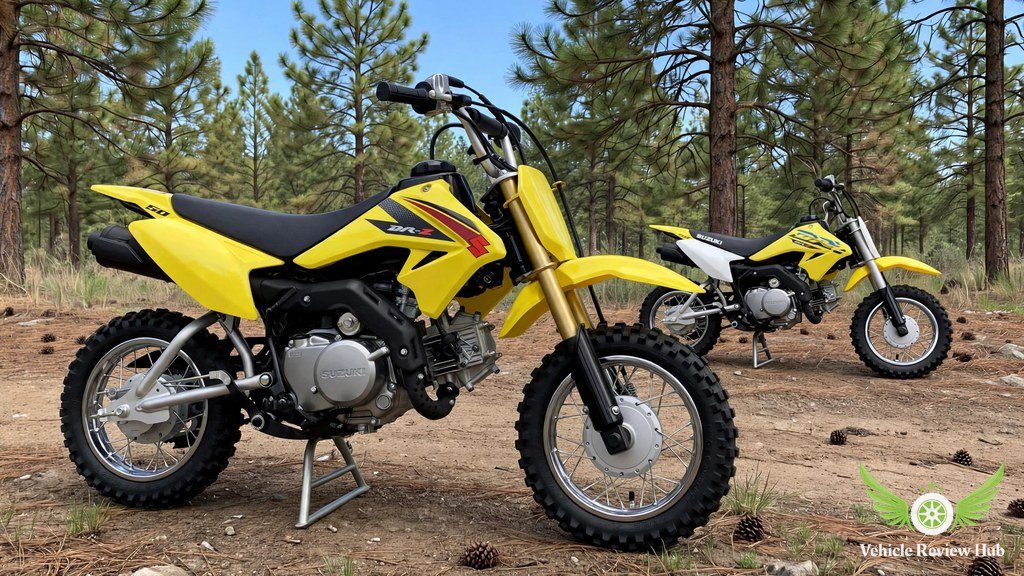
The engine is the only real difference. The DR-Z70’s 67cc single (48.0 x 37.0 mm, 9.5:1) is 18cc bigger than the DR-Z50’s 49cc (39.0 x 41.8 mm, 9.7:1), and Dirt Rider’s testers felt that difference as “extra steam” and “actually has some torque” — the 70 pulls up a steep bit of trail where the 50 has to be worked harder. No power figure exists for either bike, so this Suzuki DR-Z70 comparison does not invent one — the torque advantage is the testers’ words, not a number.
| Item | Suzuki DR-Z70 (2018) | Suzuki DR-Z50 (2026) |
|---|---|---|
| Engine | 67cc single | 49cc single |
| Bore and stroke | 48.0 x 37.0 mm | 39.0 x 41.8 mm |
| Compression | 9.5:1 | 9.7:1 |
| Carburetor | Mikuni VM13 | Mikuni VM13 |
| Starter | Electric + kick | Electric + kick |
| Transmission | 3-speed, auto clutch | 3-speed, auto clutch |
| Seat height | 22.0 in | 22.0 in |
| Curb weight | 121 lb | 119 lb |
| Fuel tank | 0.8 gal | 0.8 gal |
| Rider weight limit | 88 lb | 88 lb |
| Warranty when new | 6 mo | 6 mo |
| Delivered when new | $2,001 (2018) | $2,899 (2026) |
Notes for this Suzuki DR-Z70 comparison table: DR-Z70 figures from Suzuki’s 2018 one-sheet; DR-Z50 figures from Suzuki’s 2026 specifications (49cc, bore 39.0 x 41.8 mm, compression 9.7:1, Mikuni VM13, electric start with kick backup, 119 lb curb, 22.0-in seat, $2,599 + $300 destination). The DR-Z50 is a new 49cc model that replaced the 67cc DR-Z70 in the US lineup in 2019 — it is not a rebored 70.
Price, Equipment and Which Suits Which Rider
On price the used 70 wins by a wide margin: used listings run roughly $1,102–$1,799, while a new 2026 DR-Z50 is $2,899 delivered — $1,100 to $1,797 more. What the extra money buys is newness: a 6-month warranty, fresh tyres and seals, a battery that holds a charge, and parts that are still in production. This Suzuki DR-Z70 comparison frames it as money against age: the 70 is the better bike for the money, the 50 is the safer buy for a parent who does not want a project.
Suzuki DR-Z70 Price and Value Compared
Price is where this Suzuki DR-Z70 comparison turns into a buying decision. The DR-Z70 is the cheapest way into a 67cc youth bike, and the only way in — it has not been sold new since 2018.

Used 70 Versus a New 50 Today
A clean used DR-Z70 today costs roughly what a new one cost in 2015–2017. Listings show a 2015 example at $1,102 in Roswell, Georgia, two 2015 examples at $1,550 and $1,799 in Plano, Texas, and a 2017 example at $1,199 in Macon, Georgia in September 2024 — a range of roughly $1,102–$1,799. The catch is age: the youngest DR-Z70 is eight years old, so the buyer must budget for tyres, fork seals, carb rubber and a battery — the age items the DR-Z70 reliability guide lists. This Suzuki DR-Z70 comparison puts the value case plainly: the used 70 is the better bike for the money, but only for a buyer who can inspect it first.
Running Costs and Resale Value Compared
Running costs are small on all four bikes and barely differ. The DR-Z70’s advantage is parts sharing: it shares bodywork, seat, tank, 10-inch wheels and drum brakes with the DR-Z50, which Suzuki still sells, so wear parts are not a problem. A new 50 loses value the day it leaves the dealer, while a used DR-Z70 bought at $1,102–$1,799 has already done its depreciating. This Suzuki DR-Z70 comparison treats resale as a wash in the 70’s favour, with one condition: buy clean, because a neglected 70 costs its savings back in catch-up work.
| Bike | Delivered when new | Price today | What you get |
|---|---|---|---|
| Suzuki DR-Z70 (used) | $2,001 (2018) | $1,102–$1,799 used listings | 67cc, electric + kick, used-only |
| Honda CRF50F (2026 new) | $2,199 | $2,199 new | 49cc, kick only, cheapest new bike |
| Yamaha TT-R50E (2026 new) | $2,149 | $2,149 new | 49cc, electric only, $50 under the Honda |
| Suzuki DR-Z50 (2026 new) | $2,899 | $2,899 new | 49cc, electric + kick, new-bike warranty |
| Yamaha PW50 (2026 new) | $2,114 | $2,114 new | 49cc 2-stroke, smallest, kick only |
| Kawasaki KLX110R (2026 new) | $3,314 | $3,314 new | 110cc step-up, not a like-for-like rival |
Notes for this Suzuki DR-Z70 comparison table: DR-Z70 delivered total $2,001 is 2018 ($1,849 MSRP + $152 destination); CRF50F $2,199 is 2026 ($1,899 + $300); TT-R50E $2,149 is 2026 ($1,899 + $250); DR-Z50 $2,899 is 2026 ($2,599 + $300); PW50 $2,114 is 2026 ($1,899 + $215); KLX110R $3,314 is 2026 ($2,999 + $315). Used DR-Z70 listings are date-tagged in the text above — they are listings, not market values.
Suzuki DR-Z70 Comparison Verdict and US Alternatives
The verdict in this Suzuki DR-Z70 comparison is simple: the DR-Z70 was the right bike in the gap between the 50s and the 110s, and time passed it by. It was discontinued after 2018 and replaced by a smaller bike, because the first-bike market is the 50cc class.
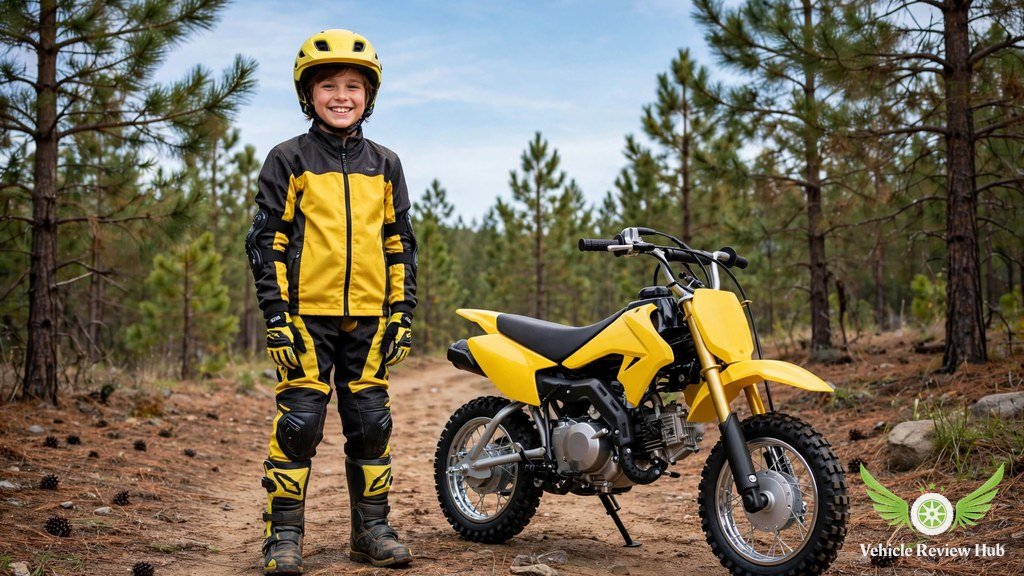
Verdict: the Step-Up That Time Passed
Cycle World’s 2018 buyer’s guide called the DR-Z70 “a nice midpoint between 50cc and 110cc learner bikes”, and that is the verdict in one line. Time passed it because Suzuki replaced it with the 49cc DR-Z50 in 2019 — a smaller bike for a market that buys 50s first. Buy a used DR-Z70 if the child has outgrown a 50 but is too small or too young for a 110, the budget is under $1,800, and the buyer can check the spokes, the carburetor, the tyres and the battery. This Suzuki DR-Z70 comparison ends where the bike itself ends: a step-up that time passed, still the best value in the gap for the right child.
KLX110R and PW50 Alternatives
Two alternatives bracket the DR-Z70 from either side, and neither is a like-for-like rival. The Kawasaki KLX110R is the step up: 110cc, $2,999 MSRP plus $315 destination for $3,314 delivered in 2026, a bigger bike for a child who has genuinely outgrown the 70. The Yamaha PW50 is the step down: a 49cc two-stroke at $1,899 plus $215 destination for $2,114 delivered in 2026, shaft drive, kick-only, an 18.7-inch seat and a 55-lb rider limit — a smaller bike for a younger first rider, roughly ages 4 to 7. The DR-Z70 sits between them — the middle bike, where a growing child belongs.
Suzuki DR-Z70 Comparison: Frequently Asked Questions
Direct answers to the Suzuki DR-Z70 comparison questions parents ask most.
Is the Suzuki DR-Z70 better than the Honda CRF50F?
It is bigger and better equipped, not better in every way. The DR-Z70 has 18cc more engine, electric start with a kick backup against the Honda’s kick-only setup, and the inverted fork Dirt Rider rated best of the 10-inch bikes. This Suzuki DR-Z70 comparison calls it a stage decision: the 70 is the step up, the 50 is the first step.
Is the Suzuki DR-Z70 faster than the Honda CRF50F?
It pulls harder, which is what a rider feels — the full torque story is in the DR-Z70 performance guide. The DR-Z70’s 67cc single is 18cc bigger than the CRF50F’s 49cc, and Dirt Rider’s testers found “extra steam that 70cc puts out compared to 50cc” with “actually has some torque”. No top-speed figure exists for either bike, so there is no measured speed comparison.
Should I buy a used Suzuki DR-Z70 or a new Honda CRF50F?
Buy the used 70 if the child has outgrown a 50 and the budget is under $1,800 — used listings run roughly $1,102–$1,799, against $2,199 delivered for a new 2026 CRF50F. Buy the new Honda for a first rider. This Suzuki DR-Z70 comparison favours the used 70 for a growing rider and the new Honda for a first rider.
Is the Suzuki DR-Z70 better than the Yamaha TT-R50E?
It is bigger, and it has the kick backup the Yamaha lacks. The DR-Z70’s 67cc single out-pulls the TT-R50E’s 49cc, and its kick starter keeps the day going when the battery is flat — the Yamaha is electric-only. This Suzuki DR-Z70 comparison puts the Yamaha as the electric-start 50 for a frequent rider, and the Suzuki as the tougher bike for a child who has outgrown the 50s.
What is the difference between the Suzuki DR-Z70 and the DR-Z50?
The engine, and almost nothing else. The DR-Z70 is 67cc (48.0 x 37.0 mm, 9.5:1) and the DR-Z50 is 49cc (39.0 x 41.8 mm, 9.7:1). Both share the same seat, rider limit, carburetor, tank, clutch, starters, fork and brakes. This Suzuki DR-Z70 comparison treats them as the same bike in two engine sizes — the 70 is the bigger, discontinued one, and the 50 is the smaller, current one.
Should I buy a used Suzuki DR-Z70 or a new Suzuki DR-Z50?
Buy the used 70 if the budget is under $1,800 and the buyer can inspect the bike — used listings run roughly $1,102–$1,799, against $2,899 delivered for a new 2026 DR-Z50. Buy the new 50 for warranty and zero age. This Suzuki DR-Z70 comparison frames it as money against age: the 70 is the better bike for the money, the 50 is the safer buy.
How much does a used Suzuki DR-Z70 cost?
Roughly $1,102–$1,799, from used listings — a 2015 example at $1,102 in Roswell, Georgia, two 2015 examples at $1,550 and $1,799 in Plano, Texas, and a 2017 example at $1,199 in Macon, Georgia in September 2024. Every one needs the same checks: carburetor, tyres, spokes and battery. This Suzuki DR-Z70 comparison uses the range as a guide, not a price promise.
Is the Suzuki DR-Z70 good for a beginner?
Yes, for a beginner who has already outgrown a 50. Dirt Rider’s verdict, quoted in the DR-Z70 review, is the beginner case in four words: “perfect first motorcycle”. The limits are the ones this Suzuki DR-Z70 comparison has already named: the engine runs lean and stalls when cold, the bike must be in neutral to start, and the 88-pound rider limit rules out adults.
Which is the cheapest youth dirt bike to buy new?
Of the bikes in this Suzuki DR-Z70 comparison, the Yamaha PW50 at $2,114 delivered in 2026 is the cheapest new bike. Among the three main rivals, the Yamaha TT-R50E at $2,149 delivered is the cheapest, $50 under the Honda CRF50F at $2,199, and both are well under the DR-Z50 at $2,899.
Does the Suzuki DR-Z70 have electric start?
Yes — electric start with a backup kick starter, both standard. That is the DR-Z70’s edge over the kick-only CRF50F and the electric-only TT-R50E: it is the only bike in this Suzuki DR-Z70 comparison with both starters. The DR-Z50 shares the same setup.
What age is the Suzuki DR-Z70 for?
Children aged 7 and up, roughly 7 to 12, within the 88-pound rider weight limit. The seat is 22.0 inches and the bike weighs 121 lb. This Suzuki DR-Z70 comparison sizes it as the step between the 50s and the 110s, and an adult cannot ride it.
What should I buy after my child outgrows the Suzuki DR-Z70?
The next step is a 110, and the Kawasaki KLX110R is the one named in this Suzuki DR-Z70 comparison: 110cc, $2,999 plus $315 destination for $3,314 delivered in 2026. A child who has outgrown the 70’s 22.0-inch seat and 88-lb limit is ready for the bigger bike.