The short answer first: the Suzuki GSX-R600 is a reliable bike because it is a simple one. The 2027 bike is the same 2011 platform Suzuki has sold for sixteen years. MCN’s six owners gave it 4.3 out of 5 for reliability and build quality, and 5 out of 5 overall. Five NHTSA recalls name the GSX-R600, all from 1997 to 2013, and none since 2014. The known weak points are narrow: charging trouble on 2006–07 bikes and thin paint. This Suzuki GSX-R600 reliability guide works through the owner evidence, the full service chart, the complete recall list and what it costs to keep one going.
Suzuki GSX-R600 Reliability Overview
The owner evidence is good, though thin. The GSX-R600 review covers the full specification sheet; this Suzuki GSX-R600 reliability guide is about what breaks, what wears and what the service book asks of an owner.
MCN UK: 4.3 Reliability From Just Six Owners
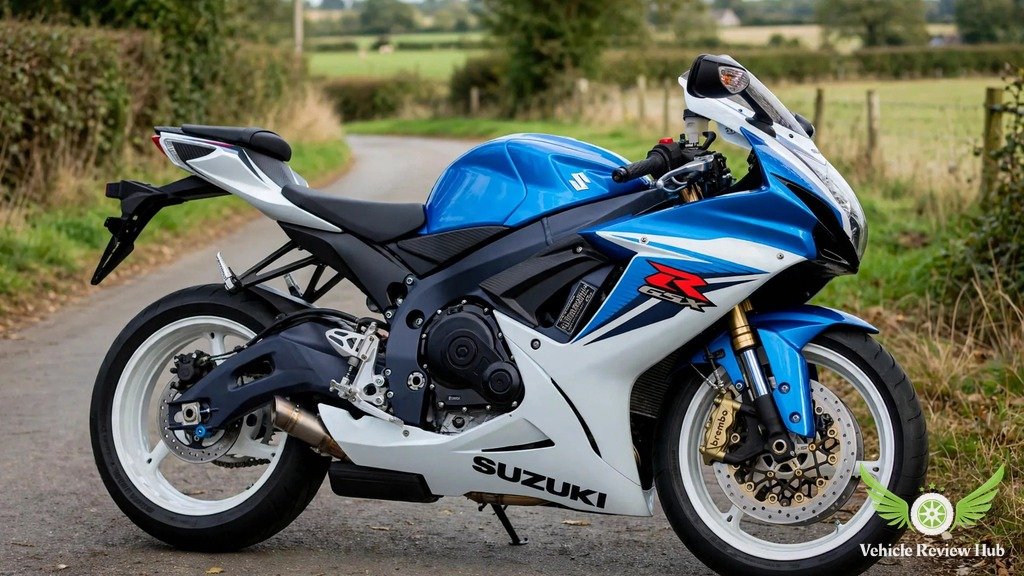
MCN’s owners’ review page for the 2011–2018 GSX-R600 gives the bike 4.3 out of 5 for reliability and build quality, based on six owners. Those same six owners gave the bike 5 out of 5 overall, 5 out of 5 for the engine and 4.8 out of 5 for ride quality and brakes. The sample is thin — six owners is not a survey — and this guide says so rather than dressing it up. The only recurring complaint they raised was thin paint, covered in the next section.
How Mileage, Storage and Previous Care Affect Reliability
On a bike that has been mechanically unchanged since 2011, the previous owner matters more than the odometer. A GSX-R600 with 30,000 miles and a full service history — oil changes on schedule, the 14,500-mile valve check done and recorded, brake fluid changed every two years — is a safer buy than a 5,000-mile bike that sat in a damp garage for four years with old fuel, a dead battery and a dry chain. Check the records first, then the bike. The service milestones to look for in the paperwork are the 600-mile first service, the oil-filter changes at 600 and 11,000 miles, and the valve inspection at 14,500 miles — a bike that has passed 14,500 miles without a recorded valve check is a bike with a service bill waiting. Parts are not a worry after sixteen years of the same platform.
Suzuki GSX-R600 Common Problems and Wear Items
The list of things that actually go wrong on a GSX-R600 is short, and it splits cleanly by generation: the 2011-on bike’s only recurring complaint is cosmetic, while the real mechanical weak point belongs to the 2006–07 bikes — and sits outside the recall system.

Regulator and Stator Failures on 2006-07 Bikes
MCN’s 2006–2007 GSX-R600 review lists the charging system as the known fault to look for: “Regulator/rectifier & stator issues: Like other GSX-Rs of this era, the charging system can be a weak point. Component failure can lead to battery drain, non-starting issues, leave you stranded at the roadside.” Here is the trap a buyer must not fall into: the regulator/rectifier recalls do not cover these years. Campaign 11V108 covers 2008–2009 bikes and campaign 16V018 covers 2008–2010 bikes — the 2006–07 bikes fall outside both, and owner complaints to NHTSA confirm that 2006–07 owners were refused recall repairs. So a 2006 or 2007 GSX-R600 with charging trouble is an owner-paid repair, not a free recall fix. Anyone looking at a 2006–07 bike should start it cold, ride it, and check that the charging voltage holds — and budget for a regulator/rectifier and stator if it does not. That generation’s owners still rated it 4.4 out of 5 for reliability on MCN — a known weak point on an otherwise solid bike.
Thin Paint and Finish Complaints, MCN Owners
MCN’s 2011–2018 review is blunt about the finish: “The paint was quite thin when new and liable to stone chips”, and its owners’ reviews echo the complaint. It is the only recurring reliability complaint those owners raised about the 2011-on bike — “there’s nothing else to concern you about the reliability of this bike”, in MCN’s words. Look at the leading edges of the fairing, the front of the fuel tank where a rider’s jacket rubs, and the lower fairing behind the front wheel, where road grit hits hardest. Stone chips there are normal wear on this bike, not crash damage — but a bike with heavy chipping and no paint protection has probably spent its life on fast roads without much care, and the rest of the bike deserves a closer look. Price the finish into the offer rather than treating it as a deal-breaker.
Suzuki GSX-R600 Maintenance Schedule and Servicing
Suzuki’s owner’s manual gives five service columns — 600, 4,000, 7,500, 11,000 and 14,500 miles — and only a handful of jobs that ever change. The GSX-R600 performance guide explains why this bike needs revs; this section is about what those revs cost in maintenance. The table below is the manual’s chart, and the two headings after it deal with the two items owners most often get wrong.

| Item | 600 mi | 4,000 mi | 7,500 mi | 11,000 mi | 14,500 mi |
|---|---|---|---|---|---|
| Engine oil | R | R | R | R | R |
| Engine oil filter | R | – | – | R | – |
| Valve clearance | – | – | – | – | I |
| Spark plugs | – | I | R | I | R |
| Drive chain | Clean + lube | Clean + lube | Clean + lube | Clean + lube | Clean + lube |
R means replace, I means inspect; the columns are also 1,000, 6,000, 12,000, 18,000 and 24,000 kilometres, at 2, 12, 24, 36 and 48 months. The chain is cleaned and lubricated every 600 miles, and its slack is a pre-ride check, not a service-column item.
Oil at 600, 4,000, 7,500, 11,000 and 14,500
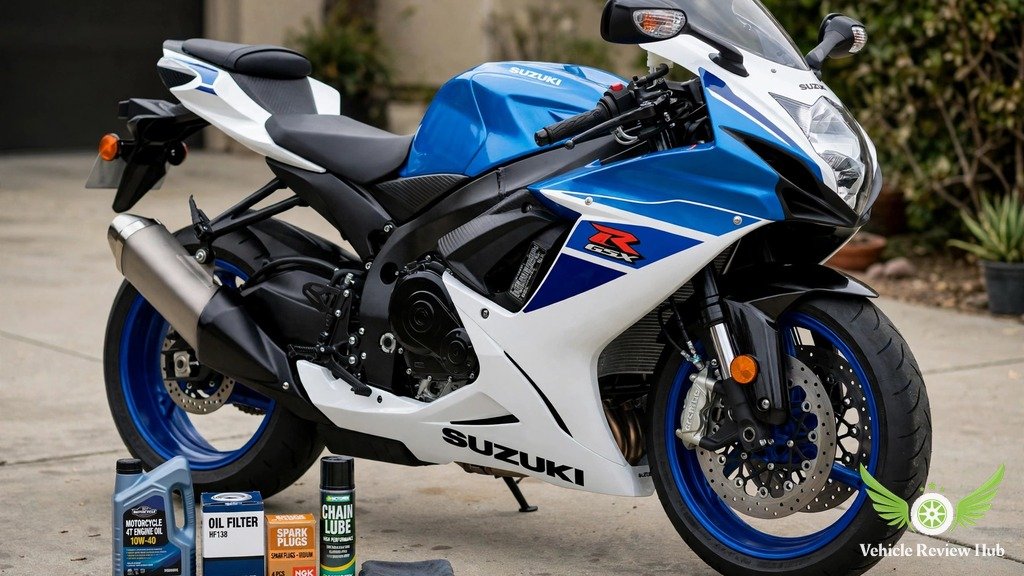
Engine oil is replaced at every interval in the chart — 600, 4,000, 7,500, 11,000 and 14,500 miles — with no exception. The oil filter is the item owners get wrong: the manual’s chart shows it replaced at 600 miles and at 11,000 miles only, and nowhere else. Some secondary FAQs claim a filter change every 4,000 miles, and that contradicts the manual chart — this Suzuki GSX-R600 reliability guide follows the manual, not the FAQs. The 600-mile first service matters most — it is the running-in service, when the oil carries the wear particles from the engine’s first miles. After that the pattern is simple: fresh oil at every service, a new filter at the first service and again at 11,000 miles, and the grade Suzuki’s manual calls for.
The video below is a step-by-step oil and filter change on a 2011–2020 GSX-R600 — the exact scheduled job described above, on the same platform as the 2027 bike.
Valve Inspection at 14,500 Miles
Valve clearance is inspected at 14,500 miles only — once, at the last column of the chart, and never before. That single inspection is the most expensive routine service this bike asks for, because checking clearances means removing the tank and airbox, taking the cam cover off and measuring every valve, with adjustment if any clearance is out of specification. The owner’s manual chart puts the inspection at 14,500 miles and the service manual lists 15,000 — both are the same service, since the chart’s last column is 24,000 kilometres, which is 14,913 miles, and the two manuals round it differently. What matters for a buyer is simpler: a used GSX-R600 approaching or past 14,500 miles should have a valve-check record, and a bike past that mileage without one is a bike with a service bill waiting. Clearances are usually still in specification at the first check on a well-kept bike — but “usually” is not a substitute for the measurement.
Suzuki GSX-R600 Tires, Brakes and Suspension Maintenance
Tyres, brakes and suspension are where a used GSX-R600 shows its history fastest. The hardware is good — Brembo monobloc calipers on 310 mm floating discs, a Showa Big Piston Fork, a fully adjustable rear shock — but all of it depends on consumables that age whether the bike is ridden or not. The brake-fluid interval below is the one no owner should stretch.

Plugs Follow an Inspect-Replace Pattern
The spark plugs follow an alternating pattern in the manual’s chart: inspect at 4,000 miles and at 11,000 miles, replace at 7,500 miles and at 14,500 miles. The plug is the NGK CR9EIA-9 or the DENSO IU27D, gapped at 0.8–0.9 mm. At the 7,500- and 14,500-mile replacements, use the specified iridium plug and the specified gap rather than a cheaper copper plug with a guessed gap; the engine revs past 13,000 rpm, and plug performance at those speeds is not the place to save money. A misfire on a used GSX-R600 is worth checking the plugs first — the cheapest fix on the list.
Coolant Four Years, Brake Fluid Two, Chain 600
Three time-based jobs sit outside the mileage columns, and the manual is specific about each. Coolant is replaced every four years or 48,000 kilometres (29,000 miles) with Suzuki Super Long Life Coolant — the blue coolant. An older manual for the 1997–2000 bike said two years, but that was the old coolant, not the current Super Long Life coolant. Brake fluid is replaced every two years with DOT4 from a sealed container, and the brake hoses every four years. The brake-fluid interval is the one that matters most for safety and for this bike’s history: the master-cylinder recall was caused by brake-piston corrosion combined with old brake fluid generating gas, which reduced front-brake pressure — fresh fluid on schedule is the owner’s half of preventing the same failure. The drive chain is the most frequent job of all: clean and lubricate every 600 miles, with slack checked before every ride at 20–30 mm at its loosest point. The chain is a 114-link RK525, and a dry or over-tight chain dulls the bike’s responses and wears the sprockets fast. Fork oil has no chart interval, but weeping seals or a harsh front end on a used bike mean the seals and oil need attention.
Suzuki GSX-R600 Maintenance and Ownership Costs
Owning a GSX-R600 is cheap for a supersport, and the reason is the same as the reliability story: a simple bike with no electronics, a platform unchanged since 2011, and parts that are easy to find. The purchase price comes first, then the running costs.
| Trim / year | MSRP | Destination | Delivered total |
|---|---|---|---|
| 2027 GSX-R600 | $12,499 | $650 (dealer-verified) | $13,149 |
| 2027 GSX-R600Z 40th Anniversary | $12,699 | $650 (dealer-verified) | $13,349 |
| 2026 GSX-R600 | $12,199 | $600 (motorcycle.com database) | $12,799 |
All totals are before tax, title, registration and dealer fees. The $650 destination charge for 2027 is dealer-verified and unanimous across dealer listings — Suzuki’s own press release publishes MSRP only, never a destination figure. The 2027 base is $300 more than the 2026 bike.
Fuel, Routine Servicing, Tires and Replacement Parts
Fuel is the smallest running cost and the easiest to estimate: the only mileage figure in circulation is a compiled 43.3 US mpg, and the 4.5-gallon tank gives about 195 miles as a labelled estimate, not a tested range — hard riding above 8,000 rpm will shorten it. Routine servicing follows the chart above, with the valve inspection at 14,500 miles as the one big bill. No fixed dealer labour figure is published for these jobs, so this Suzuki GSX-R600 reliability guide prints none — labour rates vary by dealer and region, and any single figure would be invented. The jobs themselves are simple — no ride-by-wire, no IMU — so a competent independent shop can do everything a dealer can. Tyres are a 120/70ZR17 front and a 180/55ZR17 rear, and a set of quality sport tyres is the single most effective money a GSX-R600 owner spends — squared-off or aged rubber undoes everything the chassis does well. Replacement parts are plentiful because the platform has not changed since 2011: filters, plugs, chains, sprockets, brake pads and body panels are all still in production, and used parts are everywhere. The warranty is 12 months with unlimited mileage, with Suzuki Extended Protection available for longer cover.
Five Recalls Total: the Complete Verified List
Five NHTSA campaigns name the GSX-R600, covering model years 1997 to 2013. No recall touches a 2014–2027 bike. The table below is the complete list, and one caveat about the count belongs with it: NHTSA’s own API, queried for every model year from 1997 to 2027, returns only four campaigns — it returns no results at all for model year 1999, missing the 1999 cam-chain-tensioner campaign entirely. The five-campaign total rests on NHTSA’s flat-file data, as carried by VINDecoder360 and OEMDTC, not on the API alone. Only one campaign publishes a GSX-R600-only unit count; the rest publish campaign-wide totals across all models involved, and this Suzuki GSX-R600 reliability guide never presents a campaign-wide total as the GSX-R600 count.
| Campaign | Model years | Component / defect | Units affected |
|---|---|---|---|
| 98V133000 (Jun 1998) | 1997 | Fuel system — tank/pump gasket loses seal, fuel drip, fire risk | 17,007 across all models |
| 99V132000 (May 1999) | 1999 | Engine — cam chain tension adjuster, inconsistent tension, possible chain breakage | 7,828 across GSX-R600 + GSX-R750 |
| 11V108000 (Feb 2011) | 2008–2009 | Electrical — regulator/rectifier, battery drain, stall, no-start | 73,426 across 12 Suzuki models |
| 13V449000 (Oct 2013) | 2004–2013 | Service brakes — front brake master cylinder, reduced pressure | 210,228 total, of which 99,493 GSX-R600s |
| 16V018000 (Jan 2016) | 2008–2010 | Electrical — regulator/rectifier, insufficient charge, stall; supersedes 11V108 | 68,344 across many Suzuki models |
The 2016 regulator campaign supersedes the 2011 one, so a 2008–2010 bike needs both campaign numbers checked. The master-cylinder campaign is the one that matters for buyers of the current-generation bike, and its full story is in the last section. The NHTSA recalls page is where any buyer can check a VIN.
How to Keep a Suzuki GSX-R600 Reliable
Keeping a GSX-R600 reliable is mostly a matter of doing the small jobs on time and keeping the paperwork. The two headings below are the whole Suzuki GSX-R600 reliability programme: the routine that prevents problems, and the one recall check that every buyer of a 2004–2013 bike must do.

Preventive Maintenance, Records and Regular Inspections
Follow the chart, keep the receipts, and inspect the bike before every ride. The chart is the programme: oil at every interval, a filter at 600 and 11,000 miles, plugs on the inspect-replace pattern, the valve check at 14,500 miles, coolant every four years, brake fluid every two. Records turn the programme into resale value — a stamped service book and a folder of receipts prove the valve check was done. The pre-ride inspection takes two minutes: chain slack at 20–30 mm, tyre condition and pressures, brake lever feel, coolant and oil levels, and a look for leaks under the bike. Watch the age of the consumables, not just their mileage: brake fluid absorbs water sitting in a garage, tyres harden with age, and a chain left dry over winter will be stiff in spring. Riders cross-shopping the modern alternative should read the GSX-8R review, and the GSX-R600 comparison sets the 600 against its three rivals. The honest summary for Suzuki GSX-R600 reliability is that this bike asks little and gives a lot back.
Master Cylinder Recall: 210,228 Bikes, Check the VIN
Campaign 13V449, issued in October 2013, is the biggest recall in this bike’s history and the only one that touches the 2011-on platform. The defect was in the front brake master cylinder: corrosion of the brake piston, combined with old brake fluid, generated gas inside the system and reduced front-brake pressure. The campaign covered 210,228 bikes in total — 99,493 GSX-R600s, 55,572 GSX-R750s and 55,163 GSX-R1000s — across model years 2004 to 2013. The remedy was a free master-cylinder replacement under Suzuki campaigns 2A31 to 2A36, and the recall began on 18 November 2013. Check the VIN of any 2004–2013 GSX-R600 before buying and confirm the replacement was done — recalls do not expire, so the work can still be done free, but not after you have paid.
Suzuki GSX-R600 Reliability: Frequently Asked Questions
Direct answers to the questions riders ask about Suzuki GSX-R600 reliability and maintenance.
Is the Suzuki GSX-R600 reliable?
Yes. MCN’s six owners gave the 2011–2018 bike 4.3 out of 5 for reliability and build quality, and 5 out of 5 overall. The platform is simple — no ABS, no traction control, no IMU — so there is very little electronic equipment to fail.
How many recalls does the Suzuki GSX-R600 have?
Five NHTSA campaigns name the GSX-R600, covering model years 1997 to 2013. No recall touches a 2014–2027 bike. Note that NHTSA’s own API returns only four campaigns — it misses the 1999 cam-chain-tensioner campaign — so the five-campaign total rests on NHTSA’s flat-file data.
What is the master cylinder recall?
Campaign 13V449 from October 2013: brake-piston corrosion plus old brake fluid generated gas and reduced front-brake pressure. It covered 210,228 bikes, of which 99,493 were GSX-R600s from 2004–2013. The remedy is a free master-cylinder replacement — check the VIN before buying.
How often does the Suzuki GSX-R600 need an oil change?
At every service interval in the manual: 600, 4,000, 7,500, 11,000 and 14,500 miles. The oil filter is replaced at 600 and 11,000 miles only — not at every oil change, despite what some secondary FAQs claim.
When do the valves need checking on a Suzuki GSX-R600?
Valve clearance is inspected at 14,500 miles only. The service manual lists 15,000 miles for the same service — 24,000 kilometres is 14,913 miles, and the two manuals round it differently. A used bike past that mileage should have a valve-check record.
What spark plugs does the Suzuki GSX-R600 use?
The NGK CR9EIA-9 or the DENSO IU27D, gapped at 0.8–0.9 mm. The manual inspects them at 4,000 and 11,000 miles and replaces them at 7,500 and 14,500 miles.
What is the regulator problem on 2006-07 GSX-R600s?
The charging system — regulator/rectifier and stator — is a known weak point on 2006–07 bikes, causing battery drain and non-starting. Those years fall outside both regulator recalls, which cover 2008–2010 bikes only, so the repair is owner-paid.
Does the Suzuki GSX-R600 have ABS?
No. The GSX-R600 has no ABS in any year, not even as an option. Its only rider aids are the two S-DMS engine maps and a slipper clutch. Fresh brake fluid every two years matters all the more without ABS to mask a soft lever.
How long is the Suzuki GSX-R600 warranty?
Twelve months with unlimited mileage, per Suzuki’s 2027 brochure. Longer cover is available through Suzuki Extended Protection, which is an extra-cost option, not standard cover.
How much does a 2027 Suzuki GSX-R600 cost?
$12,499 MSRP, or $13,149 delivered with the $650 destination charge per dealer listings — Suzuki publishes MSRP only. The 40th Anniversary Z is $12,699, or $13,349 delivered.
Is the 2027 Suzuki GSX-R600 the same bike as the 2011 model?
Mechanically, yes. The 2027 bike is the 2011 (L1) platform — same 599cc engine, Showa BPF fork and Brembo brakes — with colours and trim changes only. That is why sixteen years of parts and knowledge still fit the bike on sale today.
What should I check when buying a used Suzuki GSX-R600?
Check the VIN for the master-cylinder recall, read the service records for the 14,500-mile valve check, test the charging system on a 2006–07 bike, and inspect the paint, chain, brake fluid age, fork seals and tyre date codes.