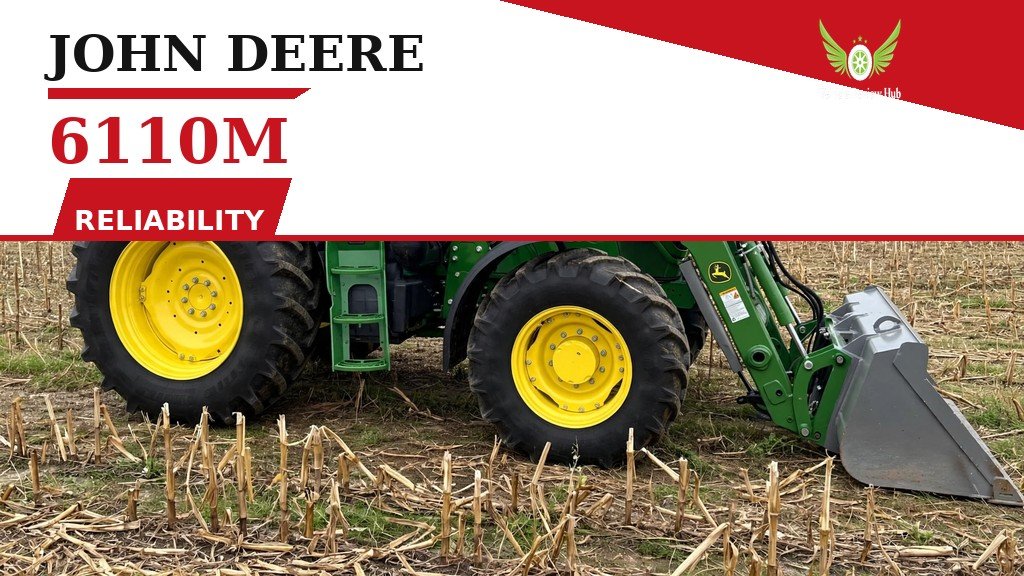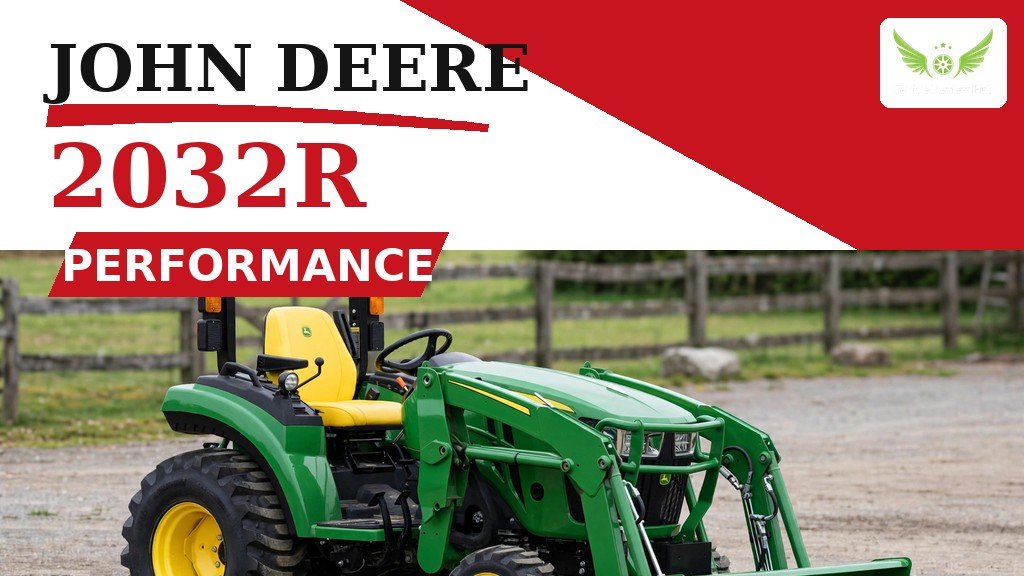
The John Deere 2032R performance story is about a meaningful step up from the sub-compact class: a 30.7-horsepower Yanmar diesel in a true compact frame that burns roughly 1 to 1.3 gallons of diesel per hour while mowing, runs six to eight hours on its 8.5-gallon tank, and handles heavier property work — 6-foot rotary cutters, serious loader cycles, 5-foot tillers — that would strain a 1 Series machine. Owners describe a tractor that feels planted and unhurried where smaller machines feel busy, with 24.2 PTO horsepower and a 1,120-pound-capacity 220R loader. For five-to-twenty-acre owners, John Deere 2032R performance hits the sweet spot between capability and maneuverability.
Under the hood sits the Yanmar 3TNV88C-NJT2, a three-cylinder, 1.642-liter naturally aspirated diesel rated at 30.7 gross horsepower at 2,500 rpm, with direct injection and Final Tier 4 emissions compliance via a diesel oxidation catalyst and particulate filter with automatic regeneration. Rear PTO output is 24.2 horsepower, and the two-range hydrostatic transmission with Twin Touch pedals drives all four wheels through a standard differential lock. Those numbers shape every part of the John Deere 2032R performance picture below, from fuel burn to what the 220R loader can realistically lift.
John Deere 2032R Fuel Consumption and Runtime
One quiet strength of John Deere 2032R performance is fuel economy. The 1.6-liter Yanmar is bigger than the 1 Series mills, but direct injection and a modest 2,500-rpm rated speed keep it frugal at part load. Deere’s published spec puts the tank at 8.5 U.S. gallons, a meaningful jump over the 1 Series’ 6.3 gallons, and owner reports consistently describe full working days between fill-ups.
Fuel Usage During Mowing, Loader Work and Idling
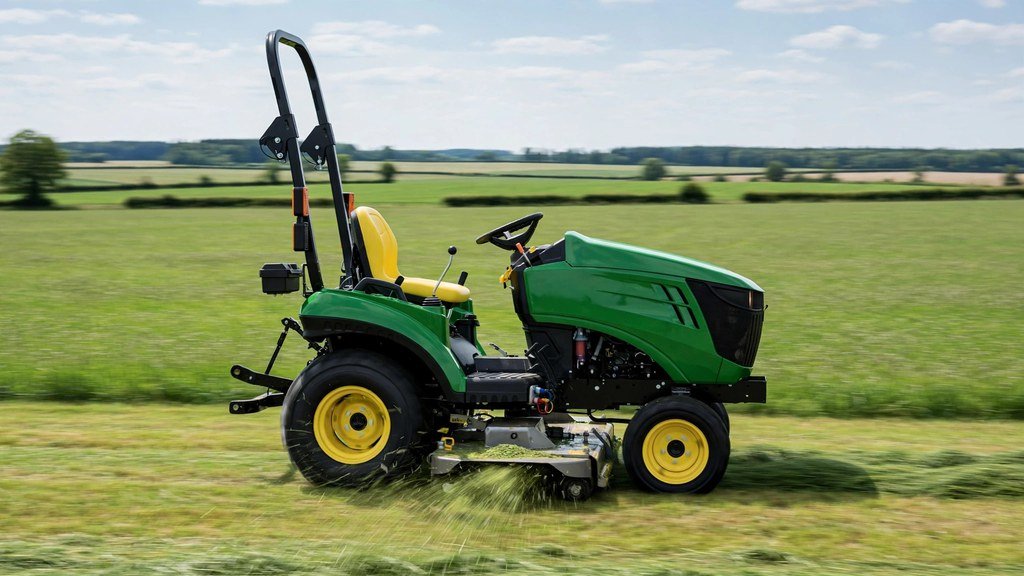
Mowing is the most documented workload for John Deere 2032R performance, and owner-reported figures cluster in a sensible band. With the 72D AutoConnect deck engaged at PTO speed, owners in the 30-horsepower class typically report about 1.0 to 1.3 gallons per hour in normal grass — a touch more than a 1025R’s roughly-a-gallon, which is the price of the bigger engine and wider deck. Tall or wet grass, dull blades, and constant uphill passes push consumption toward the top of that range.
Loader work is harder to pin down because engine load swings constantly: digging into a pile spikes demand while carrying and dumping barely sips. Across owner reports for this size class, productive loader sessions land around 1.2 to 1.8 gallons per hour, with light chores closer to mowing figures. Heavy, sustained PTO work is the thirstiest duty — a 5-foot rotary cutter in thick material or a 60-inch tiller in hard ground can push burn toward 1.5 to 2.0 gallons per hour, while idling barely registers at roughly 0.5 to 0.7.
With the 8.5-gallon tank, those numbers translate into relaxed range: about six to eight hours of typical mowing per fill, or a full working day of mixed chores — one of the most praised aspects of John Deere 2032R performance in owner forums.
Factors Affecting Fuel Economy and Runtime per Tank
How you run the 2032R matters more than the spec sheet suggests. Engine speed is the biggest lever: the rated 2,500 rpm is there for PTO work, but light loader chores and transport don’t need it — backing off to 1,800–2,000 rpm for easy work trims consumption noticeably. Conversely, chronic light-load idling works against the DPF, so the particulate filter regenerates best under genuine load at proper operating temperature.
Maintenance condition is the other half of the equation. A restricted air or fuel filter quietly robs efficiency on any diesel, dull mower blades force the engine to work harder for the same cut, and under-inflated tires add rolling resistance. Our 2032R maintenance and reliability guide covers the service schedule that keeps John Deere 2032R performance — and consumption — where they should be.
| Task | Typical fuel use (gal/hr) | Notes |
|---|---|---|
| Idling / warm-up | 0.5–0.7 | Warm engine, no PTO load |
| Mowing with 72D deck | 1.0–1.3 | At PTO speed; tall/wet grass toward the top |
| Typical loader work | 1.2–1.8 | Digging and carrying cycles; light chores lower |
| Heavy PTO work (cutter, tiller) | 1.5–2.0 | Sustained high load; owner-reported ranges |
| Transport / light chores | 0.8–1.1 | Reduced rpm, no PTO load |
Figures are typical owner-reported and size-class ranges, not laboratory test data. Fuel remains one of the smaller budget lines even at these rates — our 2032R ownership cost guide puts the five-year cost numbers together.
John Deere 2032R Performance for Everyday Work
This is where the 2032R earns its keep over the 1 Series. The extra PTO horsepower, the heavier frame, and the 1,120-pound loader capacity move the machine from “capable homeowner tractor” into “genuine small-property workhorse” territory. Across owner reports and dealer demos, the verdict on John Deere 2032R performance is consistent: it covers mowing, material handling, grading, and light ground-engaging work on five to twenty acres with power in reserve.
Mowing, Landscaping, Grading and Property Maintenance
With the 72D AutoConnect 7-Iron deck, John Deere 2032R performance as a mower is a clear step above the 1 Series: six feet of cutting width instead of five, and 24.2 PTO horsepower holding blade speed in conditions that would bog a smaller machine. Owners mowing five-plus acres report meaningfully shorter mowing days as the wider deck and higher ground speed compound into tangible John Deere 2032R performance. The drive-over AutoConnect system makes deck removal a minutes-long job, so the tractor converts to loader or grading duty easily.
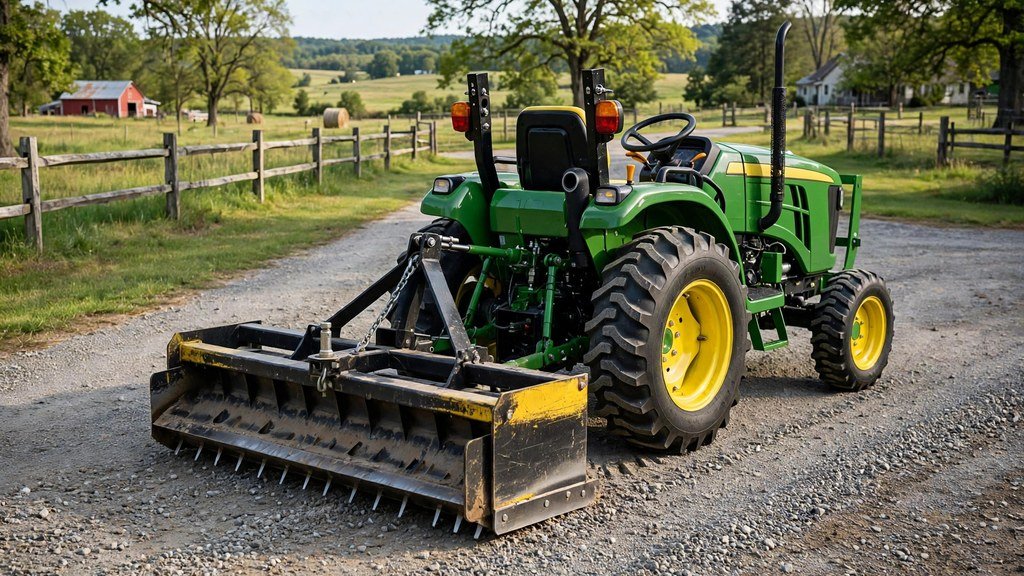
For landscaping and grading, the Category 1 three-point hitch lifts 1,356 lb at 24 inches behind the link arms — enough for 6-foot box blades, landscape rakes, and rear blades that would overwhelm a sub-compact. Position control on the rockshaft comes standard on the R, making grading passes repeatable: set the height and the hitch holds it. The 9.3-gpm hydraulic system (5.3 gpm to implements) runs these attachments without sluggishness, and a dealer spec sheet for the 2032R and 2038R confirms the hydraulic and hitch figures side by side. Rear PTO implements up to 6-foot rotary cutters and 5-foot tillers are squarely in the comfort zone of John Deere 2032R performance.
Loader Work, Material Handling and Light Tilling
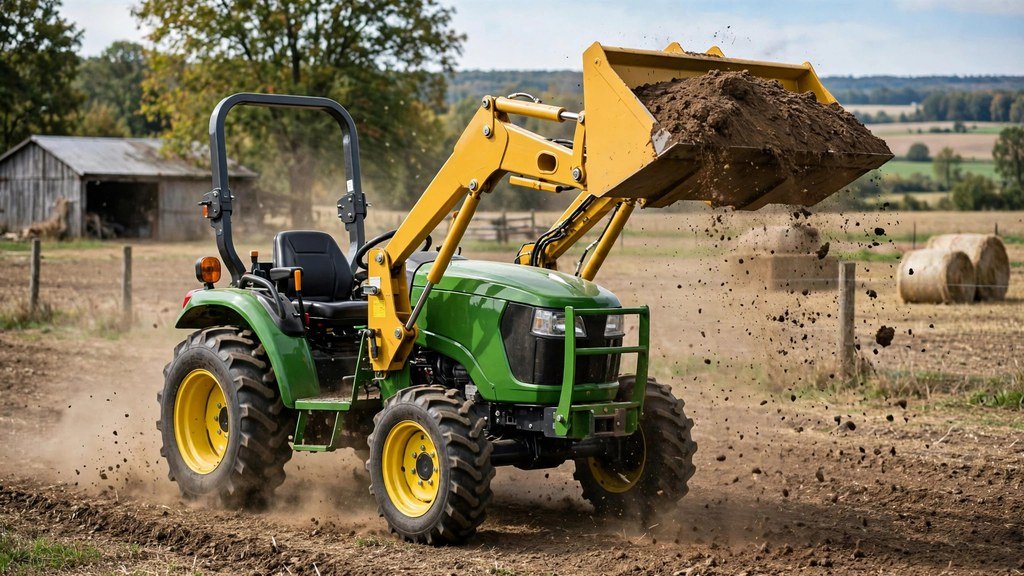
The 220R front-end loader is the attachment that defines John Deere 2032R performance for most buyers: 1,120 lb of lift capacity at full height with 85 inches of lift — roughly double what the 1 Series 120R manages. Quik-Park mounting keeps removal tool-free, and the 2,495-psi hydraulic system gives the loader the crisp, responsive feel at the heart of John Deere 2032R performance.
Owners move soil, gravel, mulch, firewood, and palletized material by the bucketful, and the Twin Touch hydrostatic pedals make inching up to a pile or feathering a dump second nature. The heavier 2,879-lb shipping weight is a genuine asset here: the tractor stays planted during loader work in a way lighter machines can’t match, though dealers still insist on rear ballast for maximum loads. For tilling, the 24.2-hp PTO handles 5-foot rotary tillers in normal soil without complaint — strong, steady John Deere 2032R performance — and the 270B backhoe option adds trenching and stump work.
John Deere 2032R Handling, Comfort and Operating Limitations
The 2R Series was designed to feel like a bigger tractor from the operator station while staying nimble enough for property work, and owners say Deere hit the mark on John Deere 2032R performance. The wide platform, tilt steering, and cruise control make long days shorter, though the larger frame asks for a bit more room than a 1 Series. For full specifications and pricing, see our 2032R review and buying guide.
Maneuverability, Operator Comfort and Ease of Use
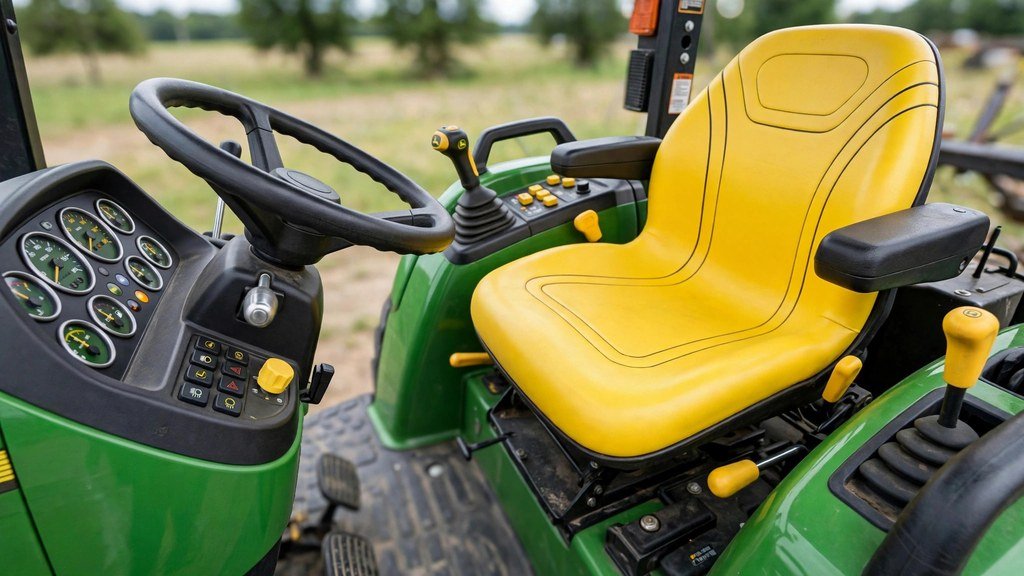
The two-range hydrostatic transmission with Twin Touch pedals works like an automatic: select a range, set the throttle, press and go. Cruise control comes standard and owners call it essential on long mowing passes, while the tilt steering wheel and wide, flat operator platform give the station a big-tractor feel. Power steering is standard, and at 67.8 inches of wheelbase with an 8.07-foot turning radius, the 2032R threads gates and landscaping that would stop a utility tractor — tight enough for property work, stable enough to feel secure.
Ease of use is a consistent theme in John Deere 2032R performance reviews: new operators report feeling confident within the first hour, PTO engagement is straightforward, and the AutoConnect deck removes the worst chore of mower ownership. The instrument panel includes a soot-level display for the DPF, so regeneration status is never a mystery.
Traction, Stability, Terrain and Workload Limitations
Standard MFWD plus the foot-operated differential lock gives sure-footed traction in mud, snow, and on slopes, and the nearly 2,900-lb shipping weight is the real story in tough going: owners moving up from the 1 Series consistently cite stability as the biggest perceived difference in John Deere 2032R performance. The machine feels planted on side slopes and during loader work, and 12.5 inches of ground clearance clears obstacles that would high-center a sub-compact.
The limitations are honest ones. The 2032R is wider and longer than a 1 Series, so very tight landscaping beds and narrow gates need measuring first. The DPF adds a maintenance dimension the 1 Series avoids: chronic light-load operation and excessive idling can force parked regenerations, so the tractor wants to be worked. And while the loader is strong for the class, continuous commercial-scale material handling belongs to a utility tractor with a bigger hydraulic system and heavier axles. Buyers who respect these limits report years of dependable John Deere 2032R performance.
John Deere 2032R Real-World Owner Experience
Spec sheets tell you what a tractor can do; owners tell you what it’s like to live with. The 2032R has been in production for over a decade with a large installed base, and the owner record is deep enough to separate genuine patterns from one-off complaints. The consensus: buyers who needed more than a 1 Series love the John Deere 2032R performance they got, while buyers who only mow two flat acres sometimes wonder if they bought too much tractor.
Owner-Reported Benefits, Complaints and Practical Trade-Offs
The benefits owners cite most read like a capability checklist: the 24.2-hp PTO running 6-foot implements without strain, the 1,120-lb loader that genuinely replaces rental equipment, stability that inspires confidence on slopes, and fuel economy owners describe as excellent for the output. The hydrostatic transmission earns constant praise for making loader work and mowing far less tiring than gear machines, and long-term owners report 4,000 to 6,000 hours of service life with disciplined maintenance.
Complaints exist and a fair guide lists them. The seat draws the most consistent criticism — owners describe it as adequate but under-padded for all-day sessions, with several upgrading to aftermarket suspension seats. PTO engagement is more abrupt than the famously gentle 1 Series engagement, which owners notice when starting heavy rotary cutters. The DPF regeneration system needs understanding: ignored warnings or endless light-load idling lead to parked regens that interrupt work. Some owners report clunky-feeling loader hydraulics, usually traced to quick-coupler or adjustment issues rather than design flaws, and a few wish for a factory cab option. This owner-perspective comparison walks through how the 2032R stacks up against its smaller siblings in real use:
Choosing the Right Setup for Your Property
Match the tractor to the workload, not the wishlist. For five to twenty acres mixing mowing, loader work, grading, snow removal, and material handling, John Deere 2032R performance covers the list with margin — the classic 2032R buyer. The core package most owners land on: the 220R loader, the 72D AutoConnect deck, a 6-foot box blade or land plane for the driveway, and rear ballast (a ballast box or heavy rear implement) which dealers call non-negotiable for serious loader work.
If your property is two to five acres of mostly mowing with light loader chores, the 1025R performance and fuel usage guide is worth reading first — the smaller machine burns less fuel, costs less to buy, and fits tighter spaces. If you regularly run 6-foot-plus PTO implements at their limit or want a turbocharged engine, price the 2038R performance and fuel usage guide before you buy — the 2038R shares the 2032R’s frame and 8.5-gallon tank but adds 36.7 turbocharged horsepower and 30.4 PTO horsepower. A TractorByNet thread on moving from a 1025R to a 2032R captures the real-world reasoning owners go through at exactly this decision point. Buy the tractor for the work you actually do, and John Deere 2032R performance will not disappoint.
Frequently Asked Questions About the John Deere 2032R Performance
These are the questions buyers ask once they move past the brochure numbers and want to know how the 2032R behaves in a working yard. Answers draw on published specifications and recurring patterns in owner reports of John Deere 2032R performance.
How much fuel does a John Deere 2032R use per hour?
Expect roughly 1.0 to 1.3 gallons per hour for typical mowing with the 72D deck — the heart of John Deere 2032R performance for most owners. Typical loader work runs about 1.2 to 1.8 gallons per hour, sustained heavy PTO work can reach 1.5 to 2.0, and idling uses roughly 0.5 to 0.7. These are owner-reported ranges for the 30-horsepower class, not laboratory test figures.
How long will a tank of diesel last on a 2032R?
The 8.5-gallon tank delivers roughly six to eight hours of typical mowing per fill. For mixed property work — some mowing, some loader time, some idling between tasks — most owners find a single tank covers a full working day, which owners consistently cite as one of the most practical strengths of John Deere 2032R performance.
What is the difference between the 2032R and the 1025R?
The 2032R is a true compact, not a sub-compact: 30.7 gross horsepower versus 23.9, 24.2 PTO horsepower versus 17.2, an 8.5-gallon tank versus 6.3, a 1,120-lb-capacity 220R loader versus the 726-lb 120R, and roughly 1,400 lb more operating weight. In real work the 2032R handles 6-foot implements and serious loader cycles the 1025R can’t, at the cost of a bigger footprint, higher purchase price, and a DPF the 1 Series avoids. Fuel burn is modestly higher — about 1.0 to 1.3 versus about 1.0 gallons per hour mowing.
What is the difference between the 2032R and the 2038R?
Same frame, same 8.5-gallon tank, same 220R loader — different engines. The 2038R uses a turbocharged 1.568-liter Yanmar making 36.7 gross horsepower and 30.4 PTO horsepower against the 2032R’s naturally aspirated 30.7 and 24.2. Owners describe the 2038R as the choice for constant heavy PTO work; the 2032R is the value pick when the workload doesn’t demand the turbo. A MachineFinder’s overview of the 2R Series lays out how the three 2R models compare.
Can the 2032R handle a 6-foot rotary cutter and a loader at the same time?
Yes — this is squarely in the comfort zone of John Deere 2032R performance. The 24.2-hp PTO runs 6-foot rotary cutters in normal conditions, and the 220R loader stays mounted without overwhelming the chassis the way it can on smaller machines. Owners do note the combination is long and needs room to maneuver, and rear ballast becomes even more important with both attached.
Does the 2032R have DPF regeneration issues?
The 2032R uses a diesel particulate filter with automatic regeneration, and owner reports show problems cluster around one cause: chronic light-load operation. Owners who work the tractor under genuine load rarely think about the DPF; owners who idle extensively see more frequent parked-regeneration requests. The dash displays soot level, so the system telegraphs its needs — letting active regenerations complete and avoiding unnecessary idling keeps things trouble-free.