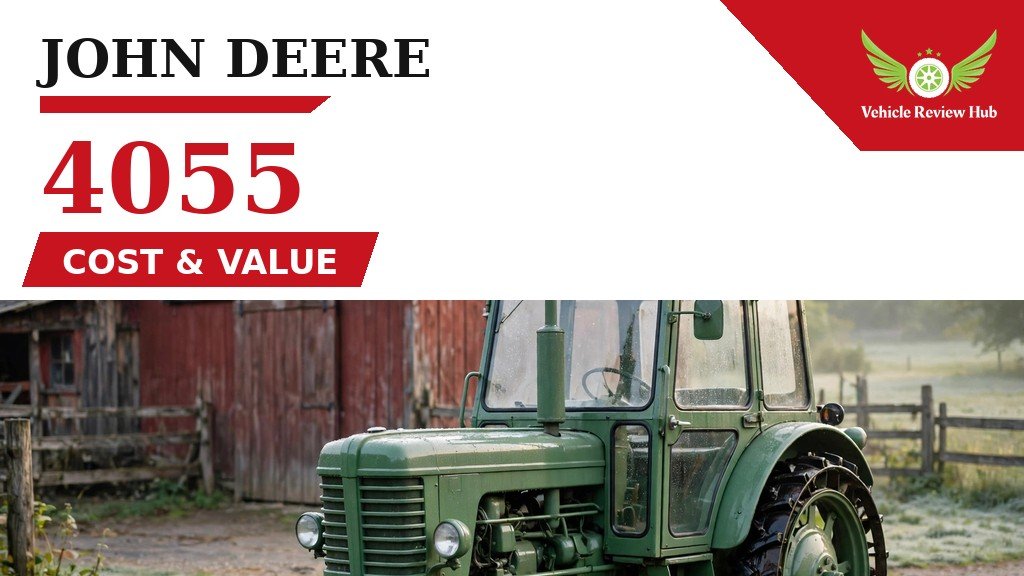
The short answer on John Deere 4055 ownership cost is that this is a genuinely affordable big tractor to own — and an expensive one to buy badly. A working 4055 typically costs roughly $6,500 to $8,500 a year to run for a 300-hour season when you do routine service yourself, or roughly $7,500 to $11,000 a year with dealer servicing, before any major repair. The purchase price is where John Deere 4055 ownership cost swings widest: most working examples trade in a broad planning band, while low-hour, well-kept MFWD PowerShift tractors command strong premiums at auction. This guide to John Deere 4055 ownership cost covers fuel, maintenance, repairs, parts, resale value, and the used-buying checks that protect you from the one repair that can swallow a year’s savings.
One framing note: John Deere 4055 ownership cost depends far more on hours, transmission, and condition than on model year. Every 4055 is now 34-plus years old, built from 1988 to 1992, so a 1992 tractor with 12,000 hard hours is a worse buy than a 1989 tractor with 5,000 documented hours and a rebuilt clutch. Every price band here is a planning estimate — current dealer listings sit behind login walls and auction results vary by the day.
John Deere 4055 Total Cost of Ownership
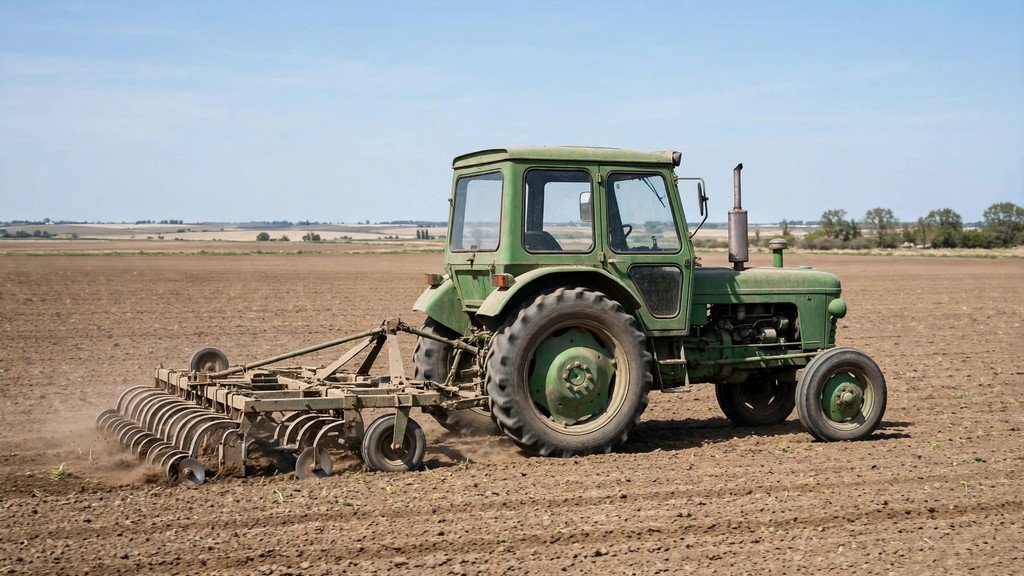
The 4055 is a 55 Series row-crop tractor: a 7.6-liter (466-cubic-inch) turbocharged six-cylinder diesel, a 65-gallon fuel tank, a 12,130-pound base weight, and a Sound-Gard cab, offered in 2WD or MFWD with a 15-speed PowerShift or 16-speed Quad-Range transmission. That simple, pre-electronics specification is the best news in John Deere 4055 ownership cost: no DEF, no DPF, no engine computer, and almost any diesel shop can work on it. The full specification sheet is in the 4055 review.
Fuel, Routine Maintenance and Repair Expenses
Fuel is the largest single annual running cost in any John Deere 4055 ownership cost budget. Test-derived figures put full-load consumption around 6.6 to 6.8 gallons per hour, and a 65-gallon tank therefore gives roughly 10 hours of hard work between fills. Those full-load figures match the Nebraska test record for the Quad-Range 4055. Most farms do not run at full load all day, so roughly 4.5 gallons per hour is a more realistic mixed-work planning figure. At a planning diesel price near $3.50 a gallon, a 300-hour mixed season burns roughly 1,350 gallons, or about $4,700 in fuel — toward $6,900 at full load.
Routine maintenance is cheap by big-tractor standards, and it is the cheapest decision in John Deere 4055 ownership cost. Oil capacity is about 19 quarts, so a DIY oil and filter change runs roughly $120 to $200, while a dealer service visit with filters and inspection typically runs $400 to $800. Hydraulic and transmission fluid changes are less frequent but bigger: the closed-center system holds about 13.5 gallons, so a full service is a few hundred dollars in fluid alone. The full schedule is in the maintenance schedule, and following it is what keeps John Deere 4055 ownership cost predictable instead of lumpy.
Major Repairs, Downtime and Annual Ownership Budget
The major repair to fear — and to price before you buy — is PowerShift transmission work. General PowerShift guidance, used here as a planning estimate rather than a 4055-specific quote, puts a partial clutch-pack rebuild at roughly $2,500 to $5,000 and a complete transmission rebuild at roughly $8,000 to $15,000 or more, plus the cost of splitting the tractor. A Quad-Range overhaul is a similar-scale job. Engine work is the second big ticket: an in-frame overhaul of the 6466T is a several-thousand-dollar job, and a full remanufactured engine is more again. Neither bill is unusual at 10,000-plus hours, which is why John Deere 4055 ownership cost planning must include a repair reserve.
Downtime is the hidden line in John Deere 4055 ownership cost. A transmission split takes a shop days, not hours, and a tractor down during planting or harvest costs far more than the repair invoice. The defense is boring: buy the best-documented tractor you can afford, and schedule big preventive work for winter. A $300 winter inspection that finds a weeping seal or slipping clutch is the cheapest money in John Deere 4055 ownership cost — it moves the repair to your calendar instead of the crop’s.
Here is a realistic annual John Deere 4055 ownership cost budget for a 300-hour farm season:
| Annual cost item | DIY owner (planning estimate) | Dealer supported (planning estimate) |
|---|---|---|
| Fuel (mixed work, ~1,350 gallons) | ~$4,700 | ~$4,700 |
| Routine service (oil, filters, fluids) | $400–$800 | $1,200–$2,000 |
| Wear items (belts, hoses, batteries, AC) | $300–$800 | $500–$1,200 |
| Tires (amortized over tire life) | $300–$600 | $300–$600 |
| Repair reserve (transmission/engine fund) | $800–$1,600 | $800–$1,600 |
| Total per year (planning estimates) | ~$6,500–$8,500 | ~$7,500–$11,000 |
Over five years, total John Deere 4055 ownership cost is roughly $32,000 to $55,000 before the purchase price and any catastrophic repair.
John Deere 4055 Used Prices and Resale Value
Used 4055 values are remarkably strong for a 30-plus-year-old tractor, because the 55 Series is simple, powerful, and repairable without a laptop. Prices below in this John Deere 4055 ownership cost guide are planning bands from market summaries and public auction and forum records, not a single verified listing — current dealer inventory sits behind login-walled marketplaces.
How Model Year, Hours, Transmission and Condition Affect Price
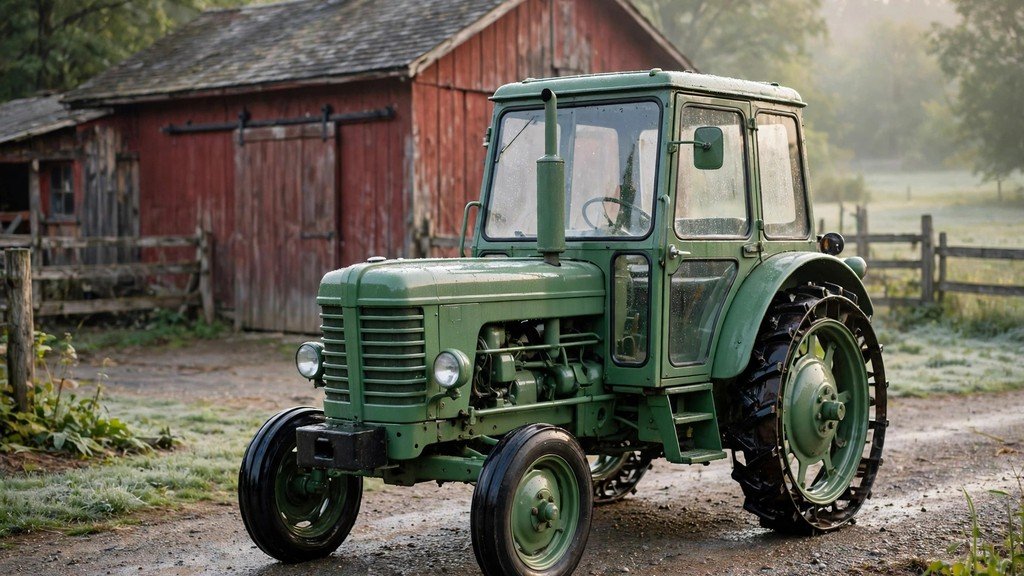
Hours matter more than model year in John Deere 4055 ownership cost at resale, because the hour meter is the honest record of wear. A 4055 with under 5,000 hours and documented service is a different asset from a 10,000-hour tractor with no records, even if both wear the same year badge. Transmission matters nearly as much: PowerShift generally brings more than Quad-Range, and MFWD more than 2WD, because front-wheel assist is worth real money on soft ground and with loaders.
Public records illustrate the spread behind John Deere 4055 ownership cost bands. A 1992 4055 MFWD PowerShift with a remanufactured engine was listed at $34,500 in a forum sale post — a useful anchor for a clean mid-life tractor, though dated, not a current asking price. A May 2025 export record shows a used 4055 changing hands at $25,324, an export value rather than a US retail price, but a reminder that rough or high-hour tractors trade well below clean ones. At the other extreme, Machinery Pete reported a 1992 4055 selling for $275,000 at auction in 2024 — a collector-grade outlier, not ordinary John Deere 4055 ownership cost. Plan on the bands below, not the headlines.
| Used 4055 condition (planning bands) | Typical hours | Planning price band |
|---|---|---|
| Rough or high-hour 2WD, Quad-Range | 10,000+ | Under $20,000 |
| Average working tractor, mixed condition | 6,000–10,000 | $20,000–$35,000 |
| Clean, documented, MFWD PowerShift | 4,000–7,000 | $35,000–$55,000 |
| Exceptional low-hour collector examples | Under 3,000 | $55,000 and up (outliers far higher) |
| Rule for buyers | Pay for records, not paint | A cheap tractor with a bad transmission is the most expensive one |
Dealer Listings, Private Sales and Auction Results
Where you buy changes John Deere 4055 ownership cost at the margin. Dealer listings usually cost more, but a reputable dealer has typically serviced and inspected the tractor, sometimes with a 30- to 90-day warranty — worth real money at this age. Private sales are cheaper and often come with the tractor’s real history straight from the owner, including the honest answer to “what does it need?” Auctions are where the bargains and the traps both live: a 1990 4055 MFWD PowerShift with only 1,493 hours appeared in a 2025 fall auction listing, exactly the kind of low-hour offering that draws fierce bidding, and auction fever routinely pushes clean 55 Series tractors past private-sale prices. Set your walk-away price before the auction starts, and include transport, new fluids, and a first service in your total.
Resale preparation is cheap and pays directly in John Deere 4055 ownership cost recovery: wash the tractor, change the oil and filters, fix small leaks, inflate tires, charge both batteries, and gather the manual, service receipts, and overhaul invoices — then price inside the hours band with service history in the first line of the listing.
John Deere 4055 Parts Availability and Ownership Risks
Parts availability is a genuine strength of the 4055 and a major reason John Deere 4055 ownership cost stays manageable decades after production ended. The 6466T engine family was built in huge numbers, the transmissions share parts with the 4255 and 4455, and Deere dealers still stock most common wear parts. That shared-parts story is the backbone of long-term John Deere 4055 ownership cost.
Sourcing Engine, Transmission, Hydraulic and Cab Parts
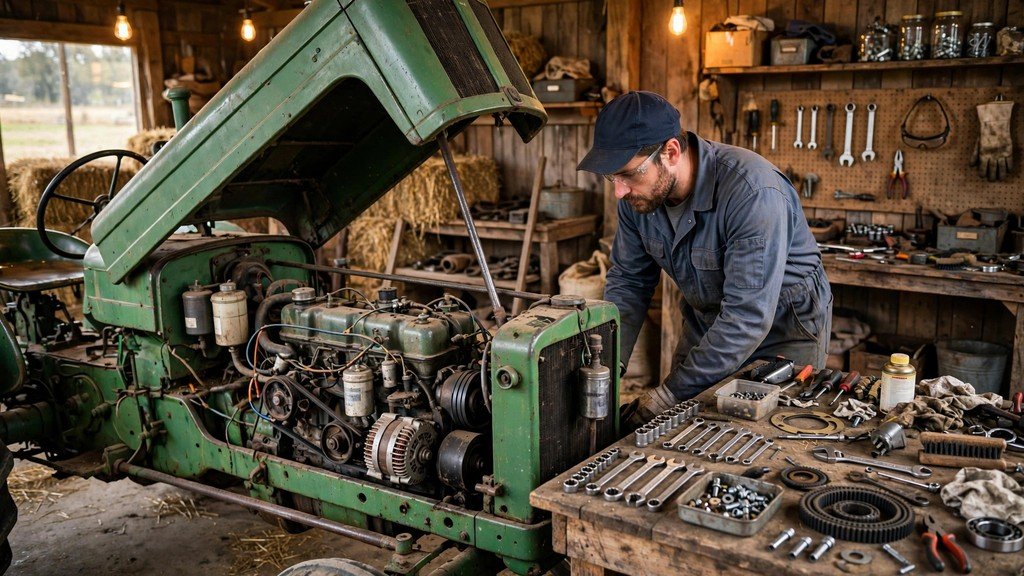
Start with your Deere dealer for filters, seals, gaskets, water pumps, injectors, and hydraulic components: genuine parts cost more, but fitment is certain and serial-number lookup removes guesswork from John Deere 4055 ownership cost planning. For bigger items — a clutch pack, a hydraulic pump, a remanufactured injector pump — get dealer and independent-shop quotes side by side; the gap is often large. Salvage yards are the third leg: 55 Series tractors are common in salvage, so used cab doors, hydraulic valves, or a complete Quad-Range transmission often cost a fraction of new — a legitimate way to hold John Deere 4055 ownership cost down.
Cab parts deserve a special note in John Deere 4055 ownership cost. Sound-Gard cabs are comfortable for their era, but 35-year-old seals, latches, and AC components wear out. Budget for an AC service and seal refresh on any newly bought 4055, and check for conversion to modern refrigerant — an unconverted system is a negotiating point, not a deal-breaker. Aftermarket suppliers cover most cab glass, seals, and interior parts, so cab condition should affect John Deere 4055 ownership cost negotiations, not scare you off a mechanically sound tractor.
Repair History, Tire Replacement and Long-Term Maintenance Planning
Repair history is worth more than a fresh paint job in John Deere 4055 ownership cost terms. Ask for receipts for transmission work, engine overhaul, injector-pump rebuild, or clutch replacement, and check dates and hours against the meter: a clutch pack replaced 500 hours ago is nearly new; one replaced 4,000 hours ago is halfway through its life again. Watch for the known 55 Series watch items: water-pump seal leaks that can put coolant in the oil (check for milky discoloration, keep the weep hole clear), PowerShift linkage and detent wear that shows up as a lever popping out of reverse (often a linkage fix — but price it as a rebuild until a shop proves otherwise), and hydraulic pump wear that shows up as slow hitch response at idle. None of these is a reason to avoid the model; all of them move John Deere 4055 ownership cost by thousands if missed at inspection.
Tires are the single biggest consumable in long-term John Deere 4055 ownership cost after fuel. Common rear sizes like 18.4-38 are widely available, but a pair of quality rear tires, mounted, is a $2,000 to $4,000-plus planning estimate, and MFWD front tires add more. Measure tread depth and check sidewalls on any used tractor, and deduct replacement from your offer if the rubber is tired. Long-term John Deere 4055 ownership cost planning should assume one full tire set per decade, one major transmission or engine event per 10,000 hours if the tractor was not freshly rebuilt, and a winter service habit that catches small problems early.
Buying a Used John Deere 4055
Buying used is the only way into a 4055 in 2026, and the smartest way: its value is fully depreciated, its weaknesses fully documented, and a careful buyer gets 100-plus horsepower of simple, repairable tractor for the price of a new compact. The goal of this section of the John Deere 4055 ownership cost guide is simple: pay a fair price for a machine with no expensive surprises.
Pre-Purchase Inspection, Test Drive and Service Records
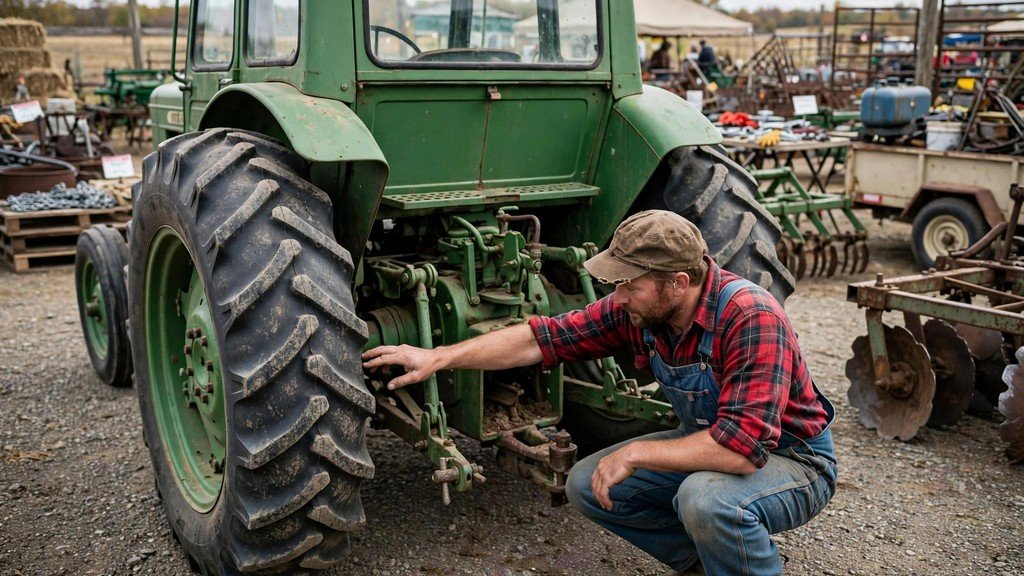
Start every used inspection cold, before the seller has warmed the engine, because a cold start reveals hard starting, smoke, and rattles that a warm engine hides. Check the oil — milky oil means coolant intrusion, a walk-away or steep discount — look for leaks around the engine, transmission, and valves, and read the hour meter, then cross-check it against wear: pedals, seat, and tires older than the meter suggests are a warning sign. Engage the PTO, drive through the gears, and test tracking and brakes. Those thirty minutes are the cheapest insurance in John Deere 4055 ownership cost.
Service history is worth money, so ask for it directly: oil-change receipts, filter purchases, transmission work, injector-pump rebuilds, and any dealer visits. A seller with a folder of receipts is selling a maintained machine; a seller with no records is selling a story. Use every genuine defect as a negotiating point: a weeping water pump is a few hundred dollars, tired rear tires a few thousand, a slipping PowerShift clutch a rebuild quote, and missing records a risk discount. That arithmetic is the practical side of John Deere 4055 ownership cost.
The video below is Machinery Pete’s auction report on a 4055 with only 3,537 hours selling at a Gilman, Iowa farm auction — a useful real-world anchor for what low-hour 55 Series tractors actually bring under the hammer, and a reminder of why clean, documented tractors command the premiums in this John Deere 4055 ownership cost guide:
Choosing Between 2WD, MFWD, PowerShift and Quad-Range
The configuration choice is the last big decision in John Deere 4055 ownership cost, and it should follow your ground, not your budget alone. MFWD costs more to buy and maintain — front-axle seals, U-joints, front tires — but it transforms traction on soft ground, with loaders, and on hills, and holds value better at resale. 2WD is cheaper, simpler, and perfectly adequate for flat, dry tillage and PTO work, and its lower John Deere 4055 ownership cost makes it the value pick for the right farm. PowerShift suits loader work and frequent direction changes; Quad-Range suits steady drawbar and PTO work. Buy the configuration that matches your work, and let the inspection — not the paint — set the price.
John Deere 4055 Ownership Cost: Frequently Asked Questions
These are the questions buyers and owners actually ask about John Deere 4055 ownership cost, answered directly from the budgets, price bands, and buying checks in this John Deere 4055 ownership cost guide.

What is the total John Deere 4055 ownership cost per year?
For a typical 300-hour farm season, John Deere 4055 ownership cost runs roughly $6,500 to $8,500 a year doing routine service yourself, or roughly $7,500 to $11,000 a year with dealer support, covering fuel, filters, fluids, wear items, tires, and a repair reserve — before the purchase price.
How much does a used John Deere 4055 cost?
As a planning guide, most working 4055 tractors trade roughly between $20,000 and $45,000, with clean, documented MFWD PowerShift examples at $35,000 to $55,000, rough or high-hour 2WD tractors under $20,000, and exceptional low-hour examples higher. Those bands are planning estimates, not a single verified listing, which is why John Deere 4055 ownership cost planning should always start with an inspection, not an asking price.
How much fuel does a 4055 use?
Test-derived figures put full-load consumption around 6.6 to 6.8 gallons per hour, with mixed farm work closer to 4.5 gallons per hour for John Deere 4055 ownership cost planning. A 65-gallon tank gives roughly 10 hours at full load, and a 300-hour mixed season burns roughly 1,350 gallons.
Is a 4055 expensive to maintain?
No, by big-tractor standards. Routine service is a few hundred dollars a year in parts, the engine and transmissions are widely understood by independent shops, and parts sharing with the 4255 and 4455 keeps John Deere 4055 ownership cost down. The expensive exceptions are transmission rebuilds and engine overhauls, which is why service history matters so much.
What is the most expensive 4055 repair?
A complete PowerShift transmission rebuild is typically the costliest single repair, with general PowerShift guidance putting it at roughly $8,000 to $15,000 or more plus the cost of splitting the tractor. An engine overhaul is the second big ticket. Both are planning estimates, not quotes, and both are why John Deere 4055 ownership cost includes a repair reserve.
Are parts still available for the John Deere 4055?
Yes. Deere dealers still stock or can order most common wear parts, the 6466T engine family was built in huge numbers, and salvage yards commonly carry 55 Series components. Parts availability is a genuine strength in John Deere 4055 ownership cost, though some cab trim and cosmetic items are harder to find than mechanical parts.
Should I buy a 2WD or MFWD 4055?
Buy MFWD if you work soft ground, run a loader, or farm hills — the traction and resale advantage outweigh the higher John Deere 4055 ownership cost. Buy 2WD if your ground is flat and dry and your work is mostly tillage and PTO, where the simpler, cheaper tractor is the value pick.
Should I buy PowerShift or Quad-Range?
PowerShift suits loader work and frequent direction changes, because it shifts under load without clutching, and it generally brings more at resale. Quad-Range suits steady drawbar and PTO work and is simpler to service. Either choice affects John Deere 4055 ownership cost at purchase and at resale, so match the transmission to your work.
Is a 4055 cheaper to own than a new tractor?
Usually by a wide margin. A new tractor of similar capability depreciates thousands of dollars a year and often requires dealer-only diagnostics, while John Deere 4055 ownership cost is dominated by fuel and routine service. The trade-off is comfort, emissions compliance for some operations, and the risk of a major repair on an older machine.