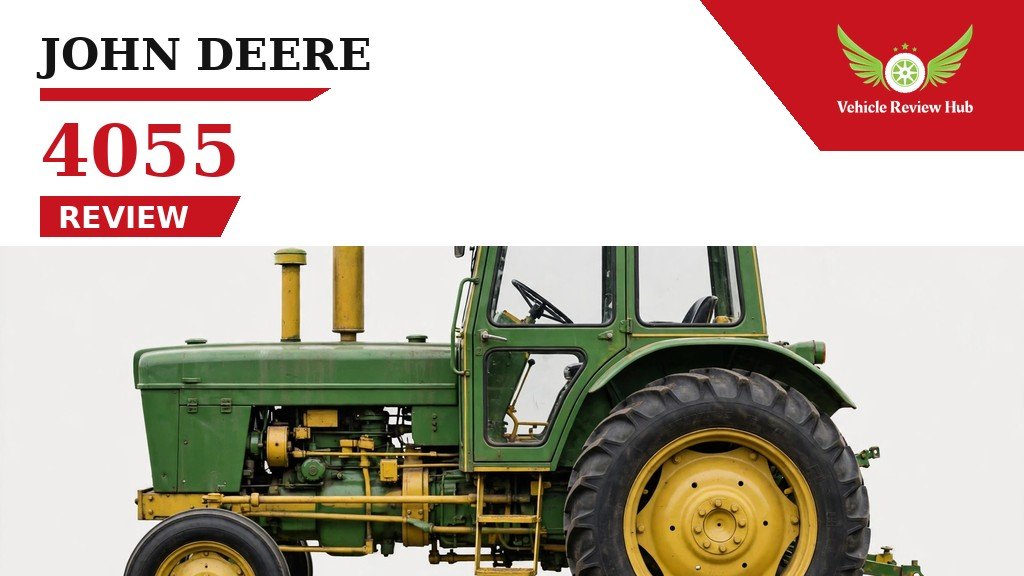
The short answer in this John Deere 4055 review is that the smallest tractor in Deere’s 55 Series is also one of the smartest used buys in the 100-horsepower class: a 1988–1992 row-crop tractor with a 7.6-litre turbocharged diesel, a quiet Sound-Gard cab, and Nebraska-tested PTO power of about 109 horsepower, still earning its keep on working farms more than 30 years after it left the Waterloo line. This John Deere 4055 review covers the engine, the two transmission choices, hydraulics and hitch, honest used prices, and how the 4055 compares with its bigger 4255 and 4455 brothers.
One framing note for this John Deere 4055 review: the 4055 is a pre-electronics farm tractor, not a modern precision machine. There is no touchscreen, no GPS steering, and no emissions aftertreatment to maintain — which is exactly why many buyers want one. What you get instead is a mechanical diesel, a closed-centre hydraulic system, and a parts network that still supports the model. This John Deere 4055 review judges it on that basis: as a working tool for tillage, planting, hay, and loader chores, not as a collector’s showpiece.
John Deere 4055 Review, Features and Used Price
The 4055 sits at the bottom of the 55 Series ladder, below the 4255, 4455, 4755, and 4955, and that position defines its appeal. This section of the John Deere 4055 review covers what the tractor is, what it was built to do, and what clean examples actually trade for in late 2026.
Production Years, Row-Crop Applications and Main Features
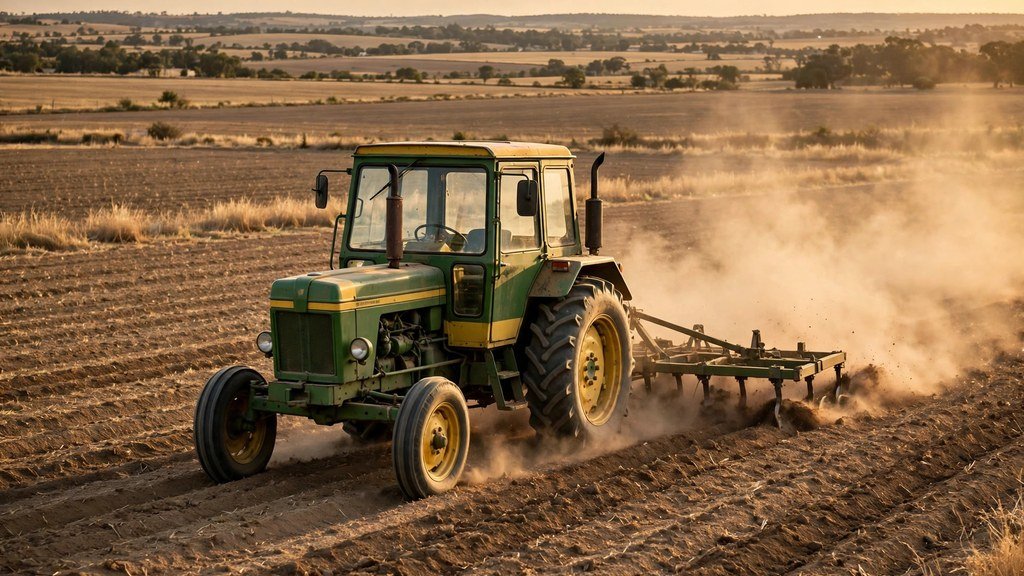
John Deere built the 4055 from 1988 to 1992 in Waterloo, Iowa, as the entry point of the 55 Series row-crop line. It replaced the 4050 and carried over the formula that made the series popular: a big six-cylinder diesel in a mid-weight chassis, a full Sound-Gard cab as standard equipment on most examples, and a choice of two transmissions. This John Deere 4055 review notes that the model was sold in two-wheel-drive form as standard, with mechanical front-wheel drive (MFWD) as the option buyers should look for if soft ground or loader work is on the list.
As a row-crop tractor, the 4055 was aimed at farms running 4- to 6-row planters, medium tillage tools, hay equipment, and grain carts — the middle of the row-crop workload where a 100-horsepower-class tractor is the right size rather than overkill. Its headline features in this John Deere 4055 review are the 7.6-litre turbo diesel, the 15-speed full PowerShift or 16-speed Quad-Range transmission, the closed-centre hydraulic system with two or three selective control valves, and a Category II three-point hitch. Power steering, differential hydraulic wet-disc brakes, and the Sound-Gard cab round out a specification that still feels complete today.
The video below shows a 1991 4055 at work spreading fertilizer — period footage of the tractor doing the row-crop job it was built for, which gives a better sense of its size and pace than any specification table in this John Deere 4055 review:
Current Used Prices by Condition, Hours and Equipment
Used 4055 prices move more on condition, hours, and transmission than on model year, because the whole production run spans just five years. This John Deere 4055 review frames prices as planning bands, not as quotes from a single listing: check current TractorHouse and Machinery Pete asking prices before making an offer, since clean low-hour tractors move fast and rough ones linger. That spread is why this John Deere 4055 review insists on inspecting the individual tractor rather than trusting an average price. MFWD examples and full PowerShift tractors consistently command a premium over two-wheel-drive Quad-Range machines, and a loader adds value only if it is the correct series fitment.
| Used 4055 condition | Typical hours | Planning price band |
|---|---|---|
| Rough or high hours, needs work | 8,000+ | $15,000–$25,000 |
| Average working tractor | 5,000–8,000 | $25,000–$40,000 |
| Clean, low hours, MFWD or PowerShift | Under 5,000 | $40,000–$55,000+ |
| Planning note | Bands are estimates, not listings | Verify against live asking prices |
Two buying notes close this section of the John Deere 4055 review. First, hours matter less than evidence: a 6,000-hour tractor with service records and a straight, rust-free cab is a better buy than a 3,500-hour tractor with a tired transmission and no history. Second, the full running-cost math behind these prices is what decides whether a cheap tractor stays cheap.
John Deere 4055 Engine, Horsepower and Specifications
The engine is the reason the 4055 still has a following: a large, understressed six-cylinder diesel that owners describe as hard to kill when serviced. This section of the John Deere 4055 review separates tested power from brochure power, because the two differ and buyers should know why.
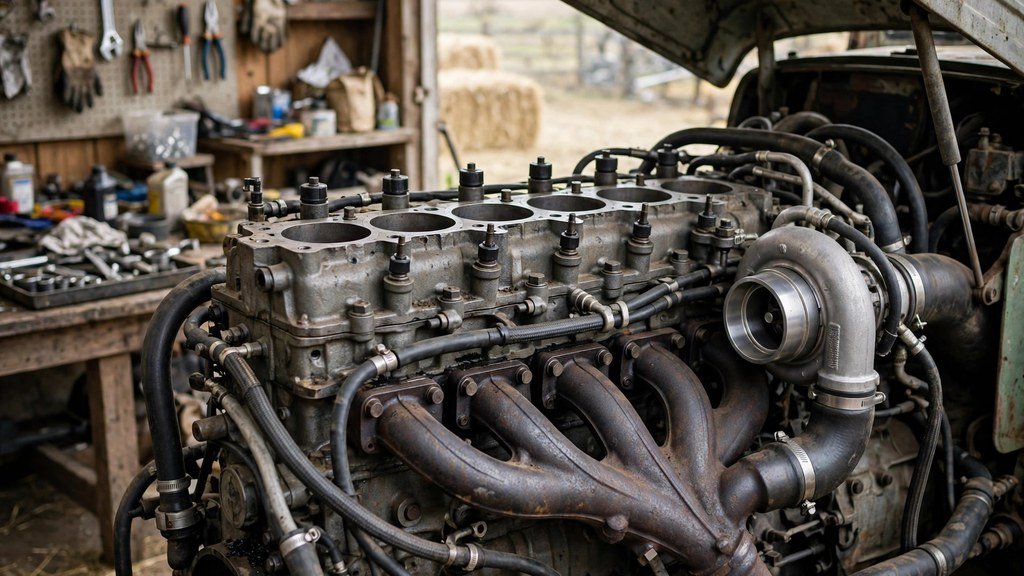
7.6L Turbocharged Diesel Engine and Rated Power
The 4055 runs a John Deere 7.6-litre (466 cubic inch) six-cylinder turbocharged diesel with direct injection, a 16:1 compression ratio, a 4.56-inch bore and a 4.75-inch stroke, rated at 2,200 rpm. European specification tables for the 55 Series list the 4055’s maximum engine power at 128 horsepower at 2,200 rpm with peak torque of 550 Nm at 1,210 rpm. This John Deere 4055 review quotes that figure with its source, because American test data tells a slightly different story — and the test data is what matters at the drawbar.
The Nebraska Tractor Test Laboratory tested the Quad-Range 4055 as Test 1626, and its results are the honest numbers for this John Deere 4055 review: claimed PTO power of 106 horsepower, tested PTO power of 108.70 horsepower, tested drawbar power of 100.07 horsepower, and maximum drawbar pull of 13,378 pounds. Tested fuel consumption was 6.8 gallons per hour at maximum PTO power and 6.6 gallons per hour at maximum drawbar power. The gap between the 128-horsepower maximum engine figure and the roughly 109-horsepower tested PTO figure is normal: one is a flywheel rating under one standard, the other is power actually delivered through the PTO shaft on a test course. When comparing tractors, this John Deere 4055 review recommends using PTO and drawbar figures, since those are what pull implements.
Fuel Capacity, Weight, Hydraulics and Three-Point Hitch
Fuel capacity is 65 gallons, which at the Nebraska-tested drawbar burn rate gives roughly 10 hours of heavy work per tank — a full day in the field without a fuel run. That range is one reason this John Deere 4055 review rates the 4055 as a genuine all-day tractor rather than a short-shift machine. Operating weight for the two-wheel-drive tractor is 12,130 pounds, with an overall length of 158.6 inches, width of 96 inches, height of 116.5 inches, and a wheelbase of 105.3 inches. Standard ag tires are 10.00-16 front and 18.4-38 rear on two-wheel-drive machines; MFWD tractors wear 16.9-28 fronts and 20.8-38 rears. This John Deere 4055 review notes that MFWD tractors weigh more and turn wider, a trade worth making only if traction demands it.
Hydraulics are closed-centre, with a main pump flow of 26.5 gallons per minute, selective control valve flow of 20.6 gallons per minute, system pressure of 2,530 psi, and a 13.5-gallon hydraulic tank. The rear hitch is Category II. One honest caveat in this John Deere 4055 review: published hitch-lift figures vary by measurement point, from about 5,504 pounds in one specification table to roughly 9,833 pounds in another, so buyers should confirm lift capacity for the specific hitch configuration rather than trusting a single number. Engine oil capacity is 19 quarts, coolant capacity about 25.6 litres, and the electrical system uses two 12-volt batteries with 925 cold-cranking amps and a 120-amp alternator.
| Specification | John Deere 4055 figure |
|---|---|
| Production years | 1988–1992, Waterloo, Iowa |
| Engine | 7.6L (466 cu in) 6-cylinder turbo diesel, direct injection |
| Bore × stroke / compression | 4.56 × 4.75 in, 16:1, rated 2,200 rpm |
| Max engine power (spec table) | 128 hp @ 2,200 rpm; torque 550 Nm @ 1,210 rpm |
| Nebraska-tested PTO / drawbar | 108.70 hp PTO (claimed 106); 100.07 hp drawbar; 13,378 lb max pull |
| Transmissions | 15F/4R full PowerShift or 16F/6R Quad-Range |
| Fuel tank | 65 gallons |
| Weight (2WD) | 12,130 lb |
| Hydraulics | Closed-centre, 26.5 gpm pump, 20.6 gpm SCV, 2,530 psi |
| Hitch | Category II (lift figures vary by measurement point) |
| PTO | Independent, 540 rpm standard, 1,000 rpm available |
| Cab | Sound-Gard cab, power steering, wet-disc brakes |
Nebraska test results and real-world fuel use are covered in more detail in the performance figures.
John Deere 4055 Transmission and Implement Compatibility
Transmission choice is the single biggest decision when buying a 4055, because it changes how the tractor feels every day. This section of the John Deere 4055 review compares the two gearboxes honestly and covers what the tractor will run.
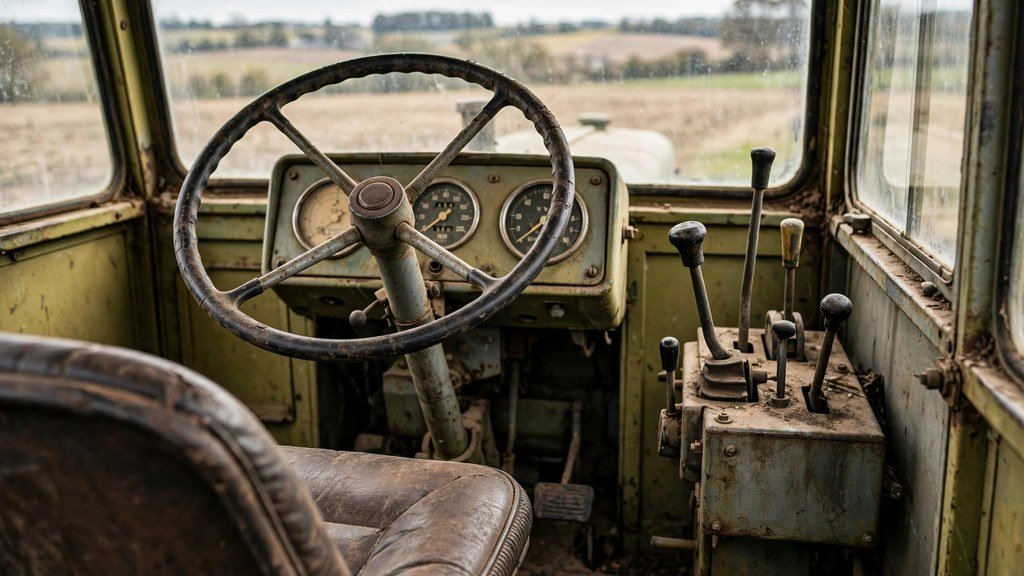
15-Speed PowerShift vs. 16-Speed Quad-Range
The full PowerShift gives 15 forward and 4 reverse speeds with clutchless shifting under load — the gearbox to choose for loader work, frequent direction changes, and operators who shift often. The Quad-Range gives 16 forward and 6 reverse speeds as a partial powershift: four synchronized ranges, each with four powershift steps, shifted with the clutch for range changes. This John Deere 4055 review rates the Quad-Range as the simpler, cheaper-to-maintain box and the PowerShift as the more convenient one; neither is a weak point when serviced, and the Nebraska test tractor itself was a Quad-Range machine.
Speed range for the series is roughly 2.4 to 31.5 km/h, which works out to a road speed near 20 mph — adequate for moving between fields, though nobody buys a 4055 for road transport. In the field, the practical difference in this John Deere 4055 review is shift effort: PowerShift owners change speed without touching the clutch, while Quad-Range owners plan their range before entering the pass. For tillage at a steady speed, both work equally well; for loader and yard work, PowerShift earns its premium.
PTO, Rear Remotes, Hitch and Front-End Loader Compatibility
The rear PTO is independent with a hydraulic clutch, 540 rpm as standard and 1,000 rpm available on the series table, which covers mowers, balers, augers, and spreaders in the 4055’s power class. Two or three selective control valves feed the rear remotes, enough for a planter with markers and a hydraulic-fold implement, though buyers running multi-function air seeders should check valve count on the specific tractor. This John Deere 4055 review stresses one check above all: engage the PTO under load on any test drive, since a slipping PTO clutch is an expensive repair hiding behind a cheap asking price.
Front-end loader fitment deserves care. John Deere offered the 280 and 840 loaders across the 55 Series, and a correctly fitted loader transforms the 4055 into a capable yard and feeding tractor — but loader brackets and hydraulic plumbing are series-specific, so verify fitment by model and serial rather than assuming any 55 Series loader bolts on. That checklist is the practical core of this John Deere 4055 review for anyone shopping with a loader in mind. The transmission, hydraulic, and PTO checks that matter most on a pre-purchase inspection are listed in the maintenance checklist.
John Deere 4055 vs. Similar John Deere Row-Crop Tractors
The 4055 never competed alone: it shared its block, cab, and transmissions with its bigger brothers, and the differences are mostly tuning and displacement-era detail. This section of the John Deere 4055 review puts the three most-shopped models side by side.
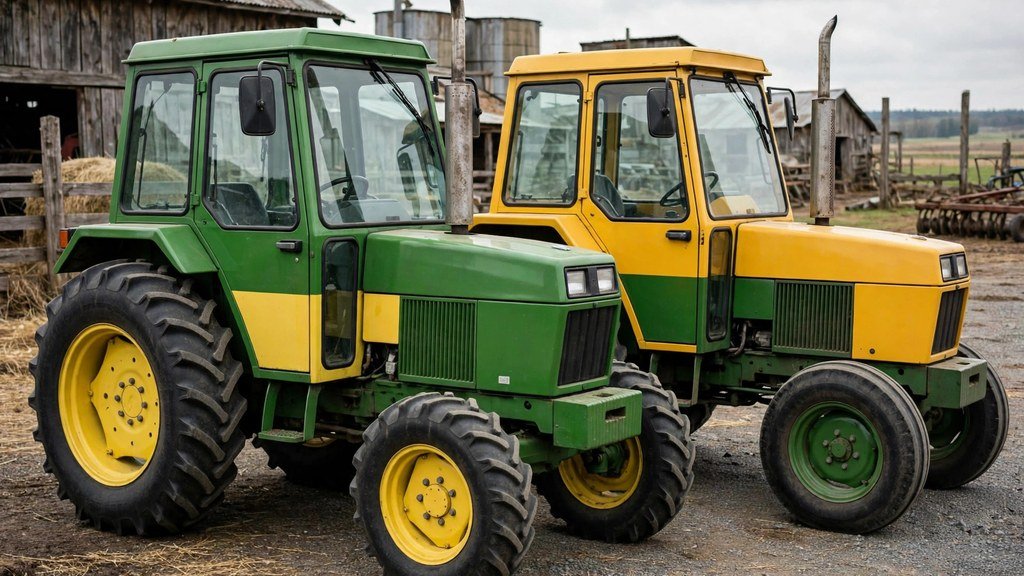
4055 vs. 4255 and 4455: Power and Configuration Differences
All three models use the same 7.6-litre six-cylinder turbo diesel block and the same transmission choices, but Deere tuned them to different outputs: maximum engine power of 128 horsepower for the 4055, 144 for the 4255, and 160 for the 4455, with peak torque of 550, 610, and 690 Nm respectively, all at 1,210 rpm. Hydraulic pump capacity is the same 105 litres per minute across the three, and hitch lift ratings are identical in the series table. In practice, this John Deere 4055 review finds the 4055 gives up about 16 horsepower to the 4255 and 32 to the 4455 — noticeable on a large disk or a fully loaded grain cart, irrelevant on a 4-row planter or a round baler.
| Model | Max engine power | Peak torque | Same 7.6L block |
|---|---|---|---|
| John Deere 4055 | 128 hp @ 2,200 rpm | 550 Nm @ 1,210 rpm | Yes |
| John Deere 4255 | 144 hp @ 2,200 rpm | 610 Nm @ 1,210 rpm | Yes |
| John Deere 4455 | 160 hp @ 2,200 rpm | 690 Nm @ 1,210 rpm | Yes |
| Shared hardware | 15F/4R PowerShift or 16F/6R Quad-Range | 105 L/min hydraulics | Sound-Gard cab |
Which Tractor Fits Your Farm and Implements?
Choose the 4055 when the implement list tops out around a 4- to 6-row planter, a medium disk, a round baler, and a grain cart on flat to rolling ground — the work this John Deere 4055 review sees it doing most. For buyers deciding between siblings, this John Deere 4055 review puts it simply: match the tractor to the largest implement you run every week, not the largest one you own. Step up to the 4255 for a 6-row planter with fertilizer attachments, a larger disk, or hilly ground where the extra torque keeps ground speed up. The 4455 suits 8-row planters, heavy tillage, and big grain carts, but it costs more to buy and more to fuel for the same light jobs. For most mixed farms under about 500 acres, this John Deere 4055 review calls the 4055 the value pick of the three: same cab, same parts network, same reliability, and the lowest purchase price.
One final cross-shop note in this John Deere 4055 review: buyers comparing eras should also weigh purchase price against repair risk on a 30-year-old machine.
John Deere 4055 Review: Frequently Asked Questions
These are the questions buyers actually ask before choosing a 4055, answered directly from the specifications, test results, and prices in this John Deere 4055 review.
When was the John Deere 4055 made?
This John Deere 4055 review lists production from 1988 to 1992 in Waterloo, Iowa, as part of the 55 Series row-crop line.
What engine does the John Deere 4055 have?
This John Deere 4055 review lists a 7.6-litre (466 cubic inch) six-cylinder turbocharged diesel with direct injection, a 16:1 compression ratio, and a rated speed of 2,200 rpm.
How much horsepower does the John Deere 4055 have?
This John Deere 4055 review gives both figures: maximum engine power of 128 horsepower in specification tables, and Nebraska-tested PTO power of 108.70 horsepower with drawbar power of 100.07 horsepower.
What transmissions were available on the 4055?
This John Deere 4055 review lists two: a 15-forward, 4-reverse full PowerShift and a 16-forward, 6-reverse Quad-Range partial powershift.
Is the John Deere 4055 two-wheel drive or four-wheel drive?
This John Deere 4055 review notes two-wheel drive as standard, with mechanical front-wheel drive (MFWD) as the factory option — MFWD tractors are worth a premium for soft ground and loader work.
How much fuel does a 4055 hold?
This John Deere 4055 review lists a 65-gallon fuel tank, good for roughly 10 hours of heavy work at the Nebraska-tested drawbar burn rate.
How much does a John Deere 4055 weigh?
This John Deere 4055 review lists 12,130 pounds for the two-wheel-drive tractor; MFWD tractors weigh more.
What is the hydraulic flow on a 4055?
This John Deere 4055 review lists a closed-centre system with a 26.5-gallon-per-minute main pump, 20.6-gallon-per-minute selective control valve flow, and 2,530 psi system pressure.
What implements can a 4055 run?
This John Deere 4055 review puts it on 4- to 6-row planters, medium tillage tools, hay equipment, grain carts, and loaders with the correct series fitment.
What is the difference between the 4055, 4255, and 4455?
This John Deere 4055 review lists the same 7.6-litre block, cab, and transmissions, with maximum engine power of 128, 144, and 160 horsepower and torque of 550, 610, and 690 Nm respectively.
How much does a used John Deere 4055 cost?
This John Deere 4055 review uses planning bands: roughly $15,000–$25,000 for rough or high-hour tractors, $25,000–$40,000 for average working tractors, and $40,000–$55,000 or more for clean low-hour MFWD or PowerShift examples.
Are parts still available for the 4055?
This John Deere 4055 review notes strong parts support through Deere dealers and the aftermarket, since the 55 Series sold in large numbers and shares components across models.
What should I check before buying a used 4055?
This John Deere 4055 review recommends checking the transmission under load, PTO clutch engagement, hydraulic pressure and leaks, engine blow-by, cab condition, and service records before agreeing a price.
Can a 4055 handle a front-end loader?
Yes, with the correct series fitment: this John Deere 4055 review notes the 280 and 840 loaders were offered across the 55 Series, but brackets and plumbing must be verified by model and serial.
Is the 4055 a good tractor for a small farm?
For a mixed farm under about 500 acres running mid-size implements, this John Deere 4055 review calls it an excellent value: mechanical simplicity, a comfortable cab, and a deep parts network at a fraction of a new tractor’s price.