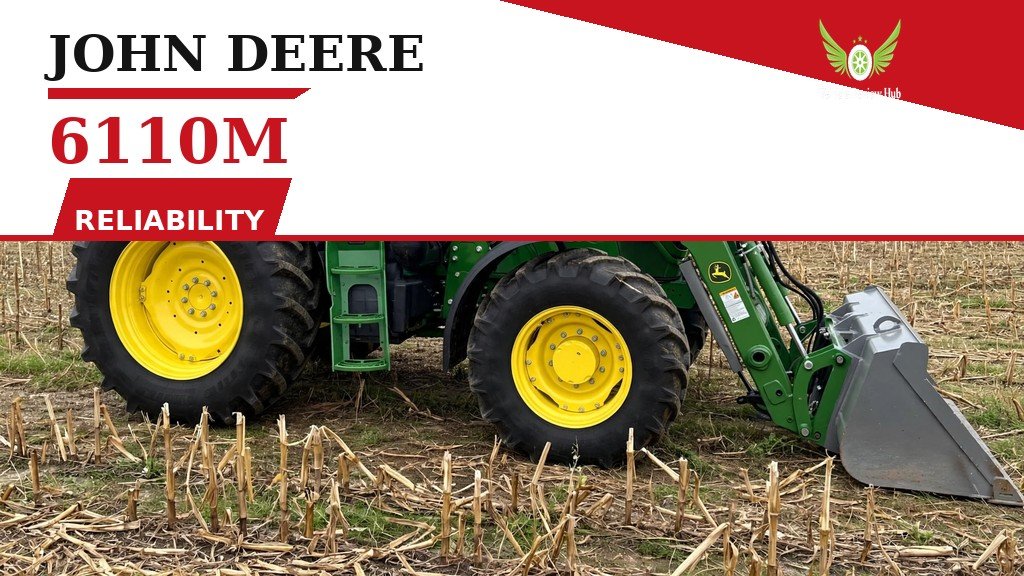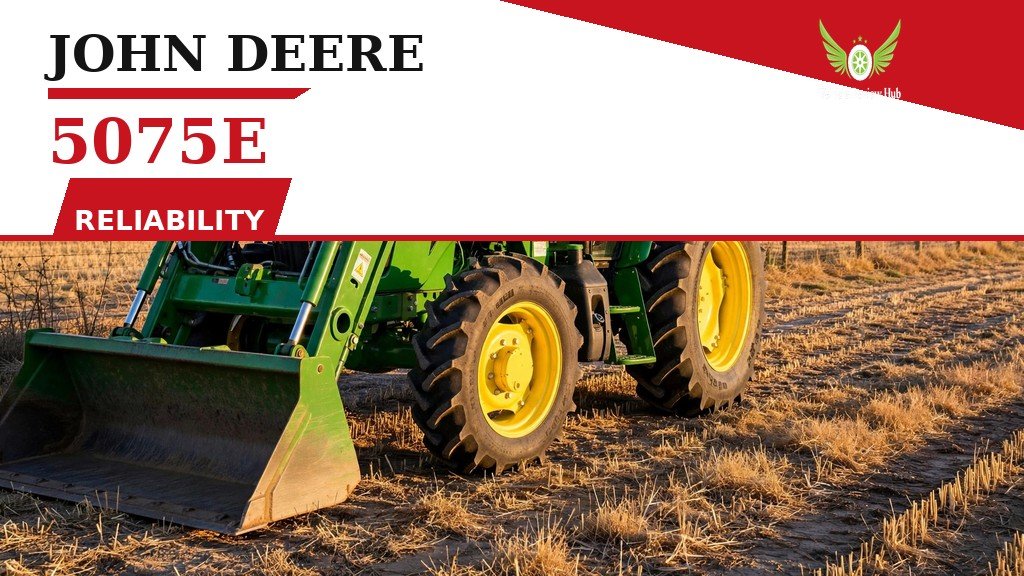
The short answer: John Deere 5075E maintenance is straightforward and affordable for a 75-horsepower utility tractor. The PowerTech 3029 diesel calls for engine oil and filter after the first 100 hours, then every 250 hours or annually, with fuel filters, air filters, and transmission-hydraulic service on longer intervals. There is no DPF, no DEF, and no regeneration to manage — the 5075E meets Final Tier 4 with DOC and EGR only — which removes the most expensive aftertreatment headaches found on bigger tractors. Deere backs the 5E line with a 24-month/2,000-hour base warranty and a 60-month/2,000-hour powertrain warranty, and dated service records routinely mean a decade or more of dependable farm work.
This guide covers the full John Deere 5075E maintenance schedule from Deere’s operator manual, the 5E platform’s reliability record, the most commonly reported problems and warning signs from owner forums and dealer guides, recall checks, and a safety checklist for used buyers.
John Deere 5075E Maintenance Schedule and Service Costs
John Deere 5075E maintenance follows Deere’s utility-tractor rhythm: daily fluid and safety checks, a break-in service at 100 hours, then repeating 250-hour and 500-hour cycles plus annual and longer-interval items. Deere’s operator manual for the 5045E–5075E family (OMSU31337) lays out every service by hour count. Dated John Deere 5075E maintenance records protect both warranties and resale value.
Engine Oil, Filters, Cooling System and Routine Service
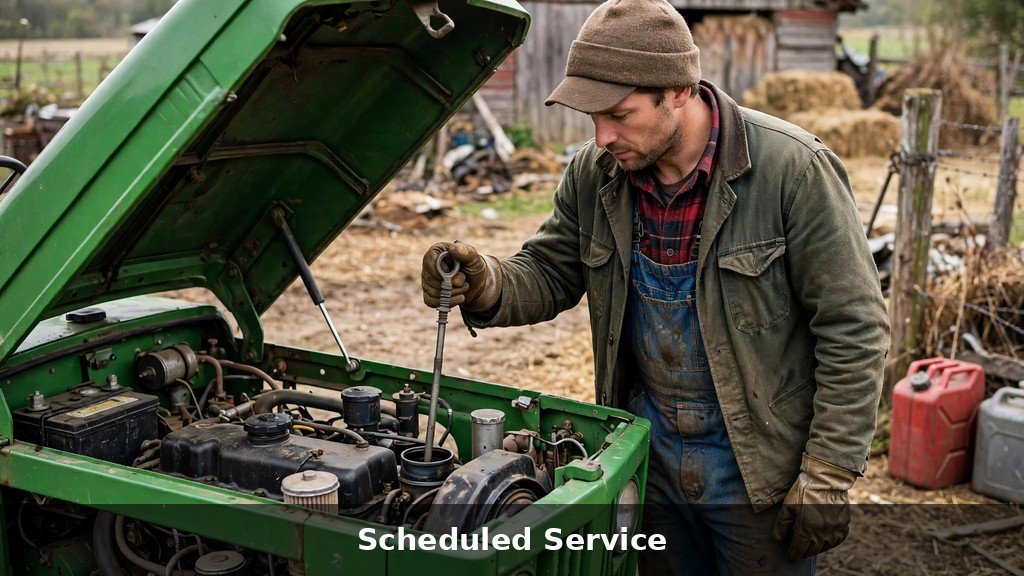
Engine oil and filter are due after the first 100 hours (break-in service), then every 250 hours or annually, whichever comes first. Deere’s manual notes the 250-hour interval can stretch to 375 hours when using John Deere Plus-50 II or equivalent ACEA E4–E7 oil. Use the oil filter specified for your serial number — dealers commonly list RE519626 for the 3029 engine family, but confirm against your machine before ordering, since filter numbers vary by configuration.
The video below walks through the 5075E’s 100-hour break-in service — oil, filters, and the checks that set the tone for the tractor’s whole service life:
Fuel filters are due every 500 hours — contaminated diesel is the most common cause of hard starting and power loss, so drain water and sediment from the filter bowl regularly. The dual-element air cleaner gets serviced at 250 hours and replaced annually, more often in dusty work. A detailed 5075E repair and parts guide recommends keeping OEM filter numbers with your service log so you never have to re-check them at the counter.
Cooling system service is simple: inspect the radiator screens and clean chaff daily during heavy work, flush and refill with John Deere COOL-GARD II every 6 years or 6,000 hours, and check the alternator/fan belt tension at 250 hours. A clogged radiator is the most common cause of overheating on any utility tractor — and overheating is one of the most reported 5075E complaints, so this simple John Deere 5075E maintenance habit matters more than it looks. Key intervals are in the table below.
| Service Interval | What to Do | Notes |
|---|---|---|
| Daily / every 10 hours | Check engine oil, coolant, and fuel; clean radiator screens; inspect for leaks; test lights and safety interlocks | Clean cooling screens before every hot day |
| Every 50 hours | Check transmission-hydraulic oil level and MFWD axle oil; clean battery; inspect tires; grease front axle pivot pins and steering spindles | Grease zerks often overlooked — set a timer |
| First 100 hours (break-in) | Change engine oil and filter; replace transmission-hydraulic filter element | One-time break-in — do not skip |
| Every 250 hours or annually | Change engine oil and filter; service air cleaner; inspect/adjust alternator and fan belt; lubricate 3-point hitch; check neutral-start system and clutch free play | Extendable to 375 hrs with Plus-50 II oil |
| Every 500 hours | Replace fuel filter; lubricate rear axle bearings; check engine and cab ground connections; clean cab air filters | Fuel filter sooner if fuel quality is suspect |
| Every 750 hours | Change front axle differential and final drive oil (4WD); change transmission-hydraulic oil filters; clean crankcase vent hose | MFWD machines only |
| Every 1,500 hours | Change transmission-hydraulic oil and filter; test injection nozzles | Dealer-level for nozzle testing |
| Every 2,000 hours or 2 years | Check A/C system; check automatic fan belt tensioner; adjust engine valve clearance | Valve adjustment is dealer work |
| Typical annual service cost | Roughly $150–$300 in parts for DIY oil, filters, and grease, or $500–$900 at a dealer for the full 250-hour service (estimates; vary by region) | |
Transmission, Hydraulic Oil, Axles and Lubrication
The transmission-hydraulic system shares one oil supply, so John Deere 5075E maintenance treats them together. The transmission-hydraulic filter element is replaced after the first 100 hours, then again at 750 hours, and the full oil and filter change comes at 1,500 hours per Deere’s manual. Use Hy-Gard or equivalent — the open-center system runs about 18 gpm of pump output feeding the hitch, remotes, and steering.
Low or overdue hydraulic oil is the usual suspect behind slow loader response, weak hitch lift, or a whining pump. One well-documented owner fix — topping up Hy-Gard on a 5075E to cure a power steering whine — shows how often the simplest John Deere 5075E maintenance step is the right one. Check the sight glass or dipstick before assuming a component failed.
Axle service depends on your front axle: 4WD machines need differential and final-drive oil changes at 750 hours, and Dana-axle machines have their own oil specs — confirm by serial at the parts counter. Grease every fitting on the loader arms, bucket linkage, steering spindles, front axle pivots, and 3-point hitch at 50-hour intervals. That greasing discipline is the cheapest John Deere 5075E maintenance there is, and the most commonly skipped. For the bigger picture on running costs, see our 5075E ownership cost guide.
John Deere 5075E Reliability and Long-Term Durability
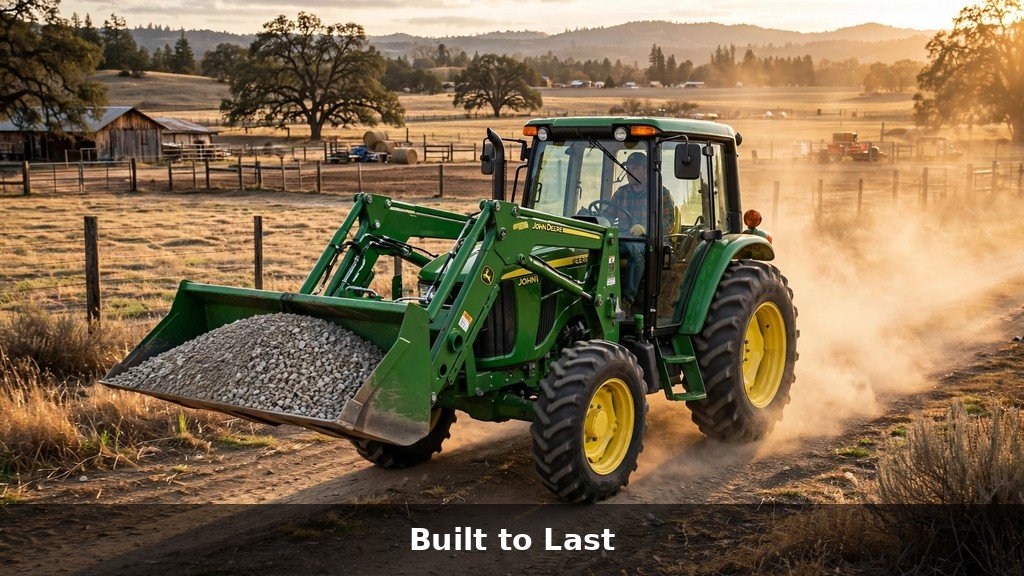
The 5075E’s reliability record is one reason the 5E line dominates small-farm utility sales: a proven 2.9-liter PowerTech diesel, simple mechanical transmissions, and a roughly 6,000-pound frame built for daily farm work. Most owner complaints are minor annoyances or wear items, and tractors with several thousand hours of documented John Deere 5075E maintenance still do daily chores.
PowerTech Engine, Transmission and Hydraulic System
The John Deere PowerTech 3029 EWR sits at the core of John Deere 5075E maintenance discussions: a three-cylinder, 2.9-liter (179-cubic-inch) turbocharged diesel with wet cylinder liners, rated at 75 horsepower at 2,100 rpm, with 60.3 PTO horsepower on open-station machines and 57.6 on cab models. Wet-sleeved liners mean the block can be rebuilt in-frame — a long-term durability advantage that keeps high-hour 5Es in service instead of in the scrap line.
Emissions are Final Tier 4 with DOC and EGR aftertreatment — no DPF, no DEF fluid, no regeneration cycles. Koenig Equipment’s 5-series FAQ lists the 5075E as “no regen required,” and Deere’s own spec sheets mark the DEF tank “Not Applicable.” That simplicity is a genuine John Deere 5075E maintenance advantage over bigger Tier 4 machines: no parked regens, no derate faults, no ash service.
The transmissions are deliberately simple: the standard 9F/3R SyncShuttle with dry clutch, or the optional 12F/12R PowrReverser with wet clutch and clutch-free direction changes. Hydraulic wet-disc brakes, mechanical rear differential lock, and a Category 2 rear hitch (convertible to Category 1) round out a drivetrain with few failure points. With John Deere 5075E maintenance done on schedule, drivetrain complaints are rare — most trace to low fluid or an overdue filter rather than a failed pump. Our 5075E performance and fuel usage guide covers how the drivetrain behaves under load.
Factors Affecting Reliability, Downtime and Service Life
How a 5075E is used matters as much as how it is serviced. Machines run regularly under moderate load keep seals supple, batteries charged, and fuel fresh; tractors that sit for months between jobs see the classic storage complaints — dead batteries, stale fuel, flat-spotted tires, and varnished injectors. A battery tender and fuel stabilizer are cheap John Deere 5075E maintenance insurance for seasonal machines.
Load discipline is the other half of John Deere 5075E maintenance longevity: proper rear ballast for loader work, implements sized to the 60-horsepower PTO, and clean cooling air. The 5E is a utility tractor, not a row-crop machine — work it within its design limits and it holds up. A 2026 TractorByNet discussion summed up the platform well: the Tier 4 5E three-cylinders are well-built, reliable machines — with a few known quirks worth knowing before you buy.
John Deere 5075E Common Problems and Warning Signs
The 5075E has a well-documented set of owner-reported quirks — most diagnosable with basic tools and cheap to fix early. Below are the problems owners report most often and the warning signs that separate a five-minute fix from a dealer visit during John Deere 5075E maintenance.
Engine, Electrical, Hydraulic and Transmission Symptoms
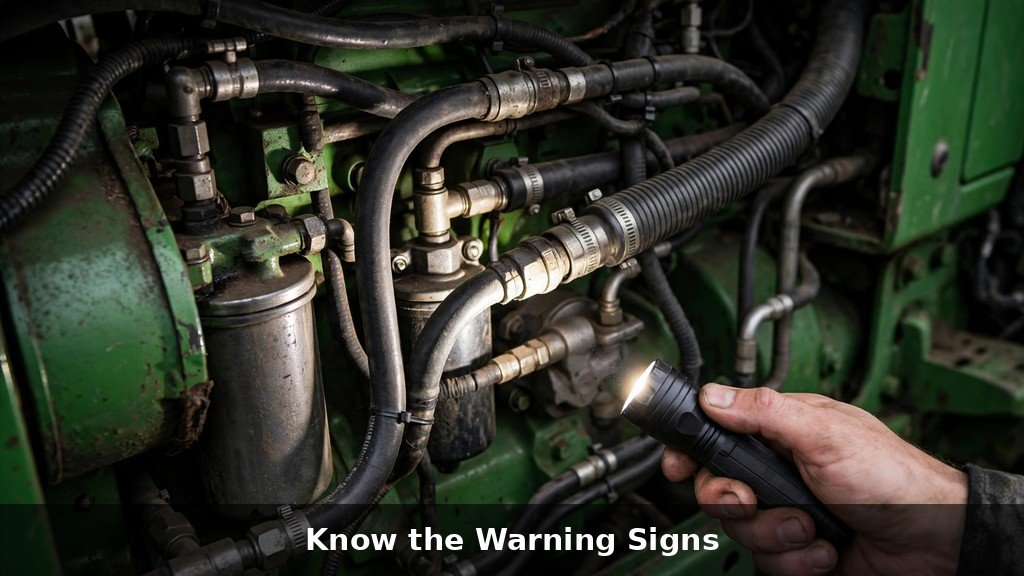
Slow cranking and weak starting top owner discussions of John Deere 5075E maintenance. The factory Bosch starter (RE533976) on the 2.9-liter three-cylinder is widely described as weak and slow-turning even when new, and failure-prone with age. The widely reported owner fix is an aftermarket OE-replacement starter (roughly $100–$150) that spins the engine with noticeably more authority than the $570 dealer unit. Before replacing anything, rule out the basics: weak battery, corroded terminals, and — in cold weather — glow plug function and winter-blend fuel.
Overheating is the next most reported complaint. The causes are almost always simple: a radiator clogged with chaff, low coolant, or a worn or loose fan belt. If the temperature gauge climbs, shut down, let it cool, clean the screens and radiator fins, and check coolant level before assuming a thermostat or water pump failure. Fuel gauge problems — gauges reading full or empty regardless of level — appear after several hundred hours; check for clogged fuel filters and loose or corroded wiring before replacing the sender.
Hydraulic complaints follow a familiar pattern: slow or unresponsive loader and hitch functions, pressure inconsistencies, or visible fluid leaks. Owners report the usual causes: low oil, a clogged filter, air in the system, or worn seals. Transmission slippage has been reported on some 2018 machines — check fluid level and condition first, then service before assuming internal damage. Electrical niggles in John Deere 5075E maintenance are mostly small: PTO solenoid faults (check connections for corrosion), blown fuses, and tired batteries.
Two quirks worth knowing: cab-and-loader machines sometimes develop a stretched throttle cable that lets the throttle vibrate back down from its set position — the fix is adjusting or replacing the cable. And 2013–2015 5E owners reported brake pedals with excessive first-pump travel; Deere dealers described it as within spec, but used buyers should test the brakes carefully on those model years.
Diagnosing Problems and Evaluating Repair Needs
Smart John Deere 5075E maintenance troubleshooting is symptom-first: start with what you actually see — no crank, slow crank, hard start, overheating, hydraulic weakness, warning lights, unusual noise — and work from the simplest cause outward. Deere’s operator manual has separate troubleshooting charts for the engine, electrical system, and machine — the 5045E–5075E operator’s manual is the reference every owner should bookmark.
DIY-safe jobs: oil and filter changes, greasing, air and fuel filters, batteries, belts, starter replacement, and throttle cable adjustment; fuel injection, transmission internals, and complex electrical diagnosis belong to the dealer. Stop using the tractor immediately for fuel or hydraulic leaks under pressure, overheating, loss of braking, or major driveline noise.
John Deere 5075E Recalls and Safety Checks
The honest recall picture for John Deere 5075E maintenance: we could not verify any model-specific CPSC safety recall covering the 5075E in the records we checked. The widely covered September 2024 brake-linkage recall applied to the 1023E, 1025R, and 2025R only — not the 5E series. Early 5E brake complaints (2013–2015 model years) were owner-reported and handled by dealers, not a federal recall. Still, checking costs nothing, and used buyers should always run the serial number.
Verifying Recall Status by Serial Number
To check any 5075E, find the serial number on the frame, enter it in the recall lookup under Parts & Service on Deere’s website, or call 800-537-8233. Ask the seller directly whether any campaigns were completed and keep recall paperwork with the service folder — documented completion protects resale value. When buying used, make the recall check part of your John Deere 5075E maintenance checklist before money changes hands.
Our 2032R maintenance and reliability guide covers the same verification routine for the compact line. A clean serial check plus dated service records is the strongest signal a used 5075E was cared for.
Inspecting Brakes, ROPS, Service History and Safety Components
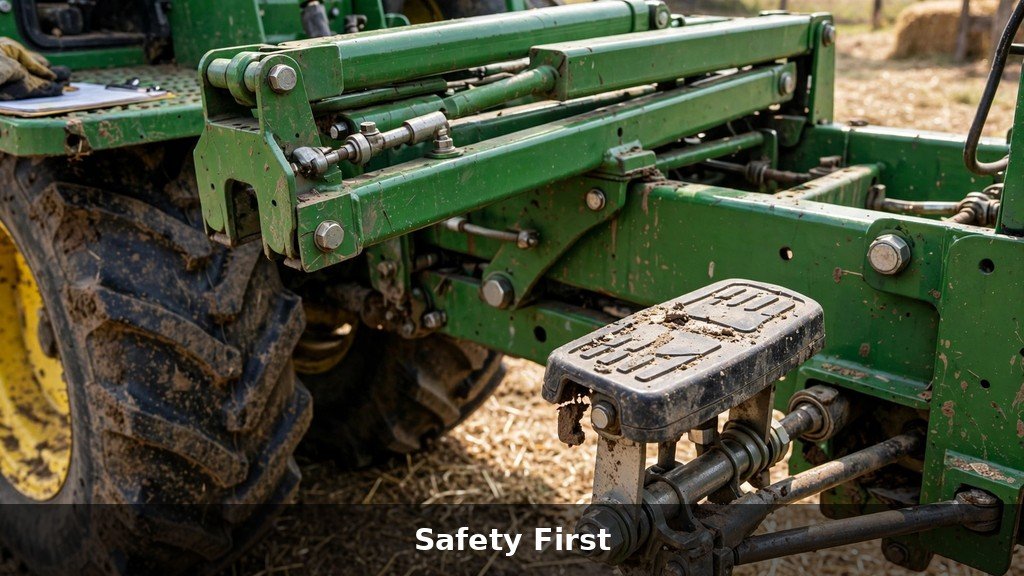
Check the brakes on every used 5075E. Test both pedals individually on a gentle slope, confirm it stops straight, and verify the park brake holds — pay special attention on 2013–2015 machines given the owner-reported first-pump travel issue. Spongy travel, pulling to one side, or a creeping park brake all call for service before hard work.
Walk the safety hardware per Deere’s pre-operation checklist: confirm the foldable ROPS is upright with locking pins in place (or the cab structure is sound), test the seat safety interlock and neutral-start system, and check every light, reflector, and warning device. Inspect the PTO shield, drawbar hardware, and loader mounting pins, plus tire pressure and wheel bolt torque. Ask for the service folder — oil change receipts, filter records, and any dealer work — because documented John Deere 5075E maintenance is what separates a good used buy from a gamble. Ten minutes of inspection is the foundation of safe ownership.
Frequently Asked Questions About John Deere 5075E Maintenance
The John Deere 5075E maintenance questions owners ask most, answered from Deere service documentation and documented owner experience.
How often should I change the oil in my John Deere 5075E?
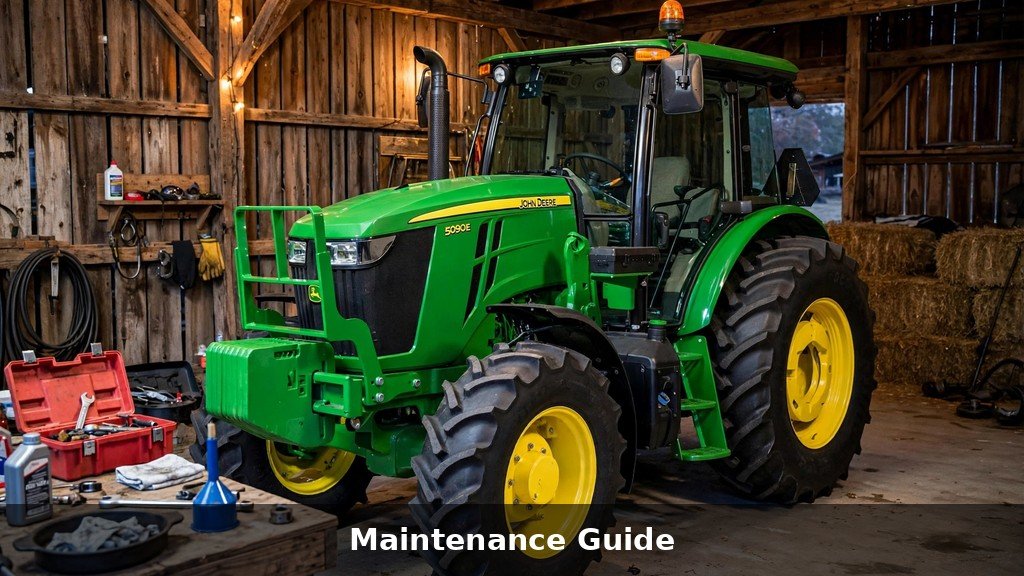
Change the engine oil and filter after the first 100 hours (break-in), then every 250 hours or annually, whichever comes first. The interval can extend to 375 hours with John Deere Plus-50 II oil. This is the single most important item in John Deere 5075E maintenance — do not stretch the interval on conventional oil.
Does the John Deere 5075E have a DPF or need DEF?
No. The 5075E meets Final Tier 4 with a diesel oxidation catalyst (DOC) and exhaust gas recirculation (EGR) only — no diesel particulate filter, no DEF fluid, and no regeneration cycles. That is one of the biggest John Deere 5075E maintenance advantages: no parked regens, no derate faults, and no ash service to budget for.
When is the hydraulic filter due on a 5075E?
The transmission-hydraulic filter element is replaced after the first 100 hours, then again at 750 hours, with a full transmission-hydraulic oil and filter change at 1,500 hours. Check the oil level every 50 hours — low fluid is the most common cause of slow hydraulics, and the fix is a top-up, not a repair.
Why does my 5075E crank slowly or struggle to start?
Slow cranking is the most reported 5075E quirk: the factory Bosch starter is weak even when new, and failure-prone with age. Rule out the battery, corroded terminals, and fuel issues first. Many owners replace the OE starter with an aftermarket unit (roughly $100–$150) that spins the engine noticeably faster — a well-documented John Deere 5075E maintenance upgrade on owner forums.
What warranty does the John Deere 5075E have?
Per Deere’s agricultural warranty statement, 5E tractors carry a 24-month/2,000-hour base warranty and a 60-month/2,000-hour powertrain warranty, whichever comes first. Dated John Deere 5075E maintenance records — receipts and hour logs — protect your coverage, so keep a service folder from day one.
Has the John Deere 5075E been recalled?
We could not verify any model-specific CPSC safety recall covering the 5075E in the records we checked. The September 2024 brake-linkage recall covered the 1023E, 1025R, and 2025R only. Early 5E brake complaints were owner-reported, not a federal recall. Verify any used machine through Deere’s recall lookup or by calling 800-537-8233.