The short answer: John Deere 6R Series maintenance follows Deere’s long-interval 6-cylinder schedule — engine oil and filter every 500 hours with Plus-50 II, fuel filters every 500 hours, hydraulic and transmission oil filters every 750 hours, and transmission-hydraulic oil every 1,500 hours or two years. The Final Tier 4 6R engines run DOC, DPF, and SCR aftertreatment with DEF, so keeping DEF fresh and letting parked regenerations finish are part of routine care. Deere backs the 6R with a 24-month/2,000-hour basic warranty (whichever comes first), with paid PowerGard extended plans available.
This John Deere 6R Series maintenance guide covers the full service schedule and costs for the 6145R through 6250R, the reliability of the PowerTech engines and AutoPowr IVT, the common problems owners actually report, and a used-tractor inspection checklist — every figure drawn from Deere operator manuals, dealer service data, or documented owner experience.
John Deere 6R Series Maintenance Schedule and Service Costs
The 6R rewards owners who service by the hour meter, not the calendar. The John Deere 6R Series maintenance program below comes from Deere’s 6-series operator-manual schedule and the published 6140R maintenance procedures — daily checks at 10 hours, filter services at 750, and the big fluid service at 1,500 hours or two years. Costs are labeled estimates from current dealer labor rates and parts pricing.
Engine Oil, Filters, Cooling System and Routine Service
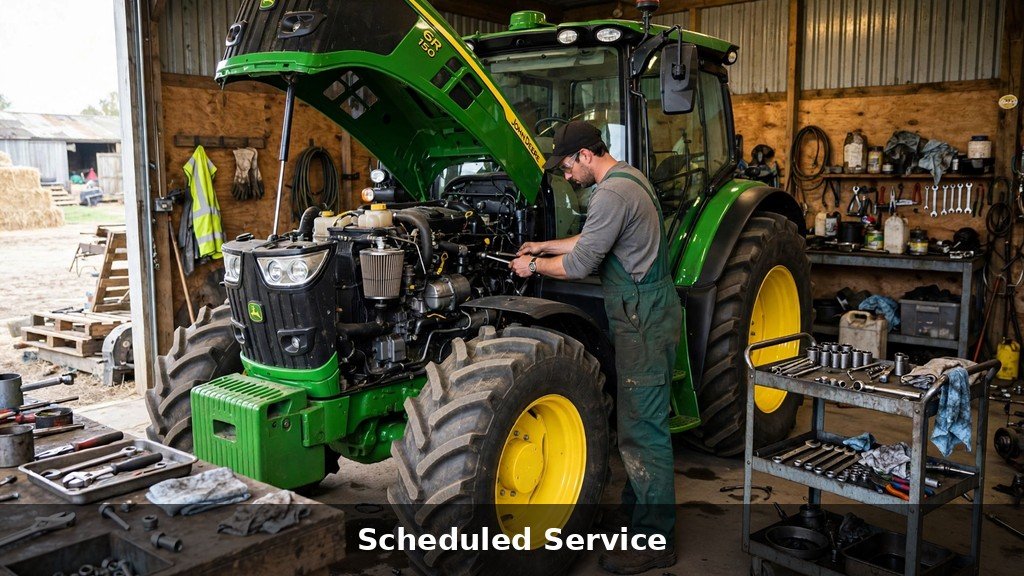
Engine oil and filter go every 500 hours with Plus-50 II (or annually, whichever comes first) on the John Deere 6R Series maintenance schedule — the 4.5L four-cylinder in the 6145R/6155R and the 6.8L and 9.0L six-cylinders above them all share this interval. Fuel filters are also a 500-hour item; drain water and sediment from the fuel filter daily, because water in the high-pressure common-rail system is one of the fastest ways to a four-figure repair bill. The PowerCore air filter gets serviced as indicated and replaced annually in dusty work, and the cab fresh-air filters are 500-hour items that directly affect operator comfort.
In John Deere 6R Series maintenance, cooling-system care matters more than most owners expect. Check the coolant level daily and clean the radiator, condenser, and screens of chaff — the 6R’s sloping hood and stacked radiator pack can run hot in heavy draft work if the screens plug. Flush and replace the coolant with COOL-GARD every two years or 2,000 hours, and check hoses and clamps at every 750-hour service. A DIY annual service (oil, all filters, grease) runs roughly $500–$700 in parts; a dealer full service runs $1,100–$1,800 depending on the model. Those are estimates — your dealer’s labor rate decides the top end. For the bigger-picture costs of keeping a 6R, see our 6R Series ownership cost guide.
Transmission, Hydraulic Oil, Axles and Lubrication
The 750-hour service is the transmission and hydraulics appointment in the John Deere 6R Series maintenance schedule: replace the hydraulic oil filter and the transmission oil filter, check the transmission-hydraulic oil level, and clean the intake screens (the AutoPowr/IVT uses additional screens). At 1,500 hours or two years, change the transmission-hydraulic oil itself, change the front-wheel-drive axle and final-drive oils, replace the crankcase vent (oil separator) filter, and have the dealer check the nitrogen pressure in the TLS front-axle accumulator. The 6R’s closed-center, pressure-and-flow-compensated hydraulics run at up to 41 gpm on the 60-cc pump — clean oil is what keeps the electronic SCVs and the hitch sensing working precisely.
Lubrication is a 10-hour habit on the John Deere 6R Series maintenance routine: grease the lift links and rockshaft, check the MFWD axle oil level, and walk the machine for leaks before the day starts. The video below shows a full hydraulic and transmission filter change on a 6R — the exact 750-hour service in the John Deere 6R Series maintenance program:
Brake checks belong in the John Deere 6R Series maintenance routine too: check the brakes daily and verify the park-brake holding ability, and check front-axle thrust-bolt torque at the 1,500-hour service. Full John Deere 6R Series maintenance intervals by hour band are in the table below, and our 6M Series maintenance guide covers the smaller-frame sibling for comparison.
John Deere 6R Series Reliability and Long-Term Durability
The 6R has a strong reliability reputation in the row-crop class — owners in published reviews describe machines that pull hard, shift cleanly, and go back to work after warranty fixes without drama. Longevity comes from the same formula as every Deere: wet-sleeve cylinder liners for rebuildability, conservative rated speeds (2,100 rpm), and service intervals the engine was actually designed around.
Engine, Transmission and Hydraulic System Reliability
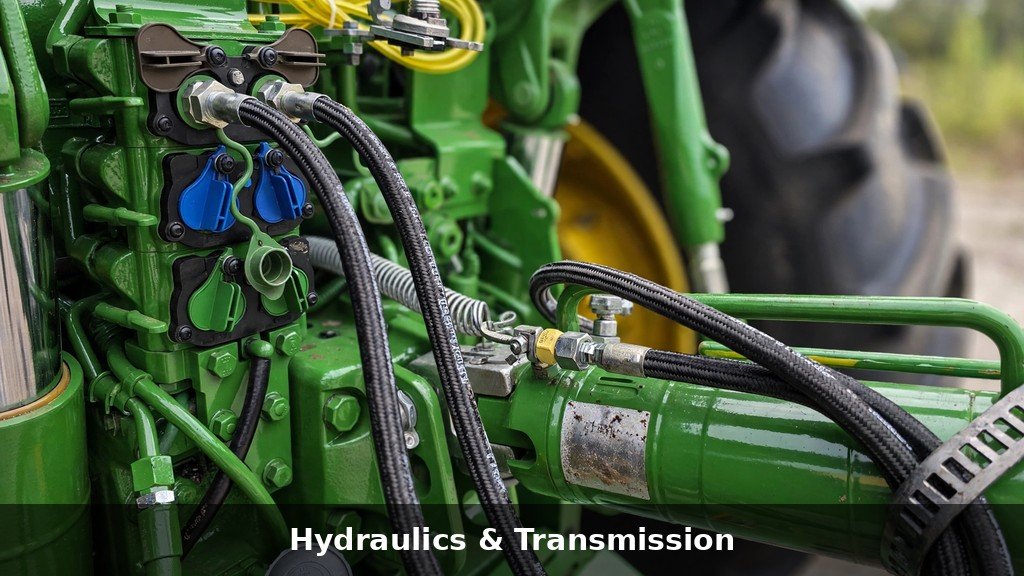
The PowerTech engines are the durable core of John Deere 6R Series reliability. The 4.5L PSS four-cylinder (6145R/6155R) and the 6.8L six-cylinder (6175R/6195R/6215R) share wet-sleeve construction, four valves per head, and dual-stage turbocharging with cooled EGR — a combination Deere has refined across three 6R generations. The Final Tier 4 aftertreatment (DOC + DPF + SCR with DEF) is a lifetime-DPF design: owners who work the tractor under real load report few aftertreatment complaints, while short-trip, light-duty use is what generates parked-regen requests and derate warnings.
The AutoPowr IVT is a proven unit with hundreds of thousands of field hours behind it; the most common transmission complaints are calibration quirks (creep settings, shuttle aggressiveness) rather than mechanical failures, and most are fixed with a software update. The AutoQuad Plus option is mechanically simpler and popular with buyers who want fewer electronics. The closed-center PFC hydraulics are robust provided the oil stays clean — the John Deere 6R Series maintenance schedule’s 750-hour filter interval is not optional on a machine with up to six electronic rear SCVs.
Factors Affecting Reliability, Downtime and Service Life
Three things decide John Deere 6R Series maintenance outcomes over 8,000–10,000 hours: fuel quality, DEF quality, and software currency. Water or contamination in the fuel attacks the high-pressure pump and injectors; stale or contaminated DEF triggers SCR fault codes and derates; outdated transmission and engine software causes drivability complaints that feel mechanical but aren’t. Run the serial number through the dealer at purchase and at every major service to confirm all software updates and product improvement programs are applied — it costs nothing and prevents the most common “mystery” problems.
Duty cycle matters too. A 6R doing tillage and PTO work at rated load will outlast one doing loader chores and road transport at light load, because the aftertreatment stays hot enough to regenerate passively. If your work is light, schedule a monthly worked session or accept occasional parked regens as normal. That operational habit is the single biggest factor in John Deere 6R Series maintenance costs after the service schedule itself.
John Deere 6R Series Common Problems and Warning Signs
No tractor is trouble-free, and the 6R’s problems cluster in predictable places: the aftertreatment system, the electronics, and the hydraulics. Every John Deere 6R Series maintenance issue below is owner- or reviewer-reported — patterns from forums and published owner reviews, not engineering claims.
Fuel-System Leaks, Electrical and Hydraulic Symptoms
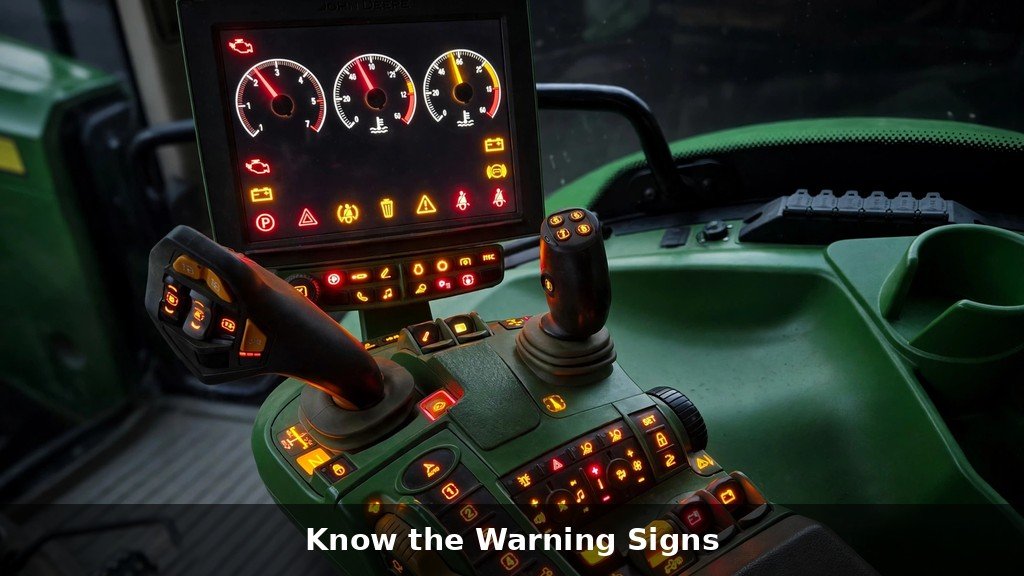
Electrical gremlins are the most reported John Deere 6R Series maintenance complaint family: sensor faults, display cluster warnings, and the occasional computer programming fault that a dealer corrects with a reflash. One published owner review documented a hydraulic check-valve failure that required a dealer warranty repair — handled satisfactorily, and the tractor went back to work. Warning signs to watch: intermittent fault codes that clear and return, SCVs that drift or respond slowly (often a filter or calibration issue, not a pump failure), and any hydraulic line touching the cab or frame, which one owner traced as the source of an unusual noise.
In John Deere 6R Series maintenance experience, fuel-system symptoms usually start at the filters: hard starting, power loss under load, or white smoke point to water or restriction before they point to injectors. Change fuel filters on schedule, drain the separator daily, and buy fuel from high-turnover sources. The 6R’s common-rail system runs at extreme pressure — a $60 filter is cheap insurance against a $3,000 injector set.
Transmission, Emissions-System and Starting Issues
Emissions-system symptoms are the most misunderstood John Deere 6R Series maintenance topic. A parked-regen request after weeks of light-duty work is normal — park safely and let the cycle complete. Frequent regen requests, derate warnings, or a DPF warning light point to a real problem: usually a failed sensor, a stuck EGR valve, or contaminated DEF. SCR/DEF fault codes almost always trace to stale or contaminated DEF, not the catalyst itself. Never ignore a derate warning — continued operation can force a dealer-level reset.
In John Deere 6R Series maintenance practice, transmission complaints are usually calibration, not wear: harsh shuttle shifts, creep that doesn’t feel right, or IVT response that changed after a software update. Ask the dealer to check for the latest transmission software before authorizing any mechanical diagnosis. Starting issues beyond batteries and fuel usually mean the neutral-start circuit — confirm the range lever is neutral and the PTO is disengaged. If the starter won’t engage on an IVT machine, the electronic park-brake interlock is the next check.
John Deere 6R Series Safety Checks and Used-Tractor Inspection
A used 6R is one of the best values in the row-crop market — but only with verified John Deere 6R Series maintenance history. The inspection below is the same checklist a dealer’s own used-equipment manager runs, and it catches the expensive surprises before money changes hands.
Checking Service History, Software Updates and Applicable Recalls
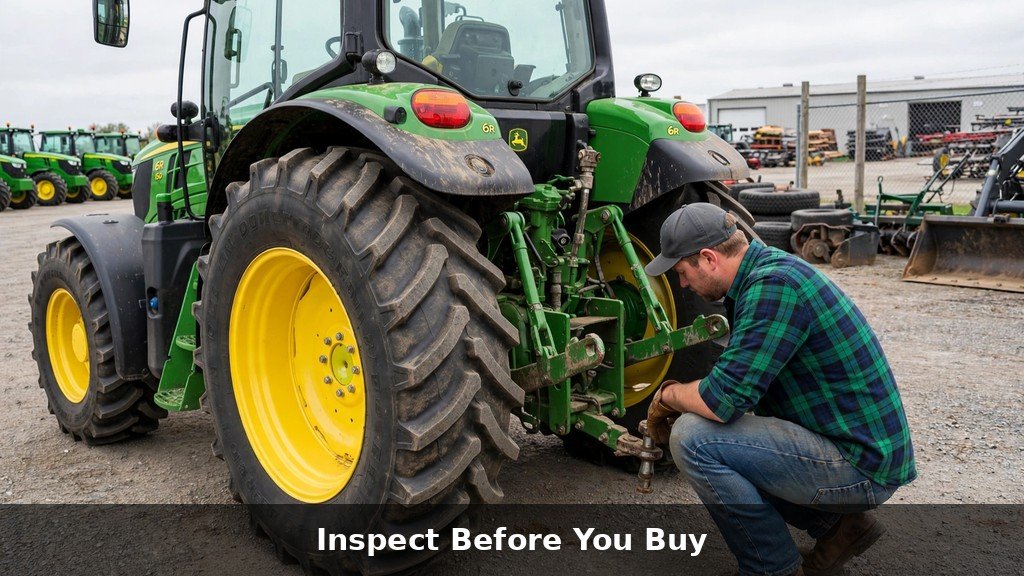
Start with the hour meter and service records. A 6R with 4,000 documented hours and dealer service history is a better buy than a 2,500-hour machine with no records. Ask for receipts for oil changes, fuel-filter replacements, transmission-hydraulic service, and any aftertreatment or DEF-system work — DPF ash-service history matters on high-hour machines. Then run the serial number through the recall lookup under Parts & Service on Deere’s website, or call 800-537-8233.
This John Deere 6R Series maintenance guide could not verify any 6R-specific CPSC safety recall — the widely reported September 2024 brake-linkage recall covered the 1023E, 1025R, and 2025R compacts only, not the 6R line — but the check costs nothing, and a dealer can confirm all applicable campaigns, software updates, and product improvements were applied. Confirm the transmission and engine software are current; outdated software is the most common cause of used-6R drivability complaints. Our 6R Series review covers model-year differences that affect what to look for.
Inspecting Brakes, Hydraulics, Tires and Transmission Operation
Test-drive with a checklist. Brakes: the 6R should stop straight with a firm pedal; check the park brake holds on a slope. Hydraulics: run every SCV through its full stroke, check the three-point hitch for drift under load, and look for weeping at couplers and cylinder seals. Tires: measure tread and check for sidewall cracking and uneven wear that signals alignment or ballast issues — a set of 6R rubber is a five-figure expense.
Transmission: on an IVT, drive through the full speed range in both directions and test the shuttle at working speeds; shifts should be smooth with no flare or harshness. On an AutoQuad, shift through every range. Engage the PTO at 540 and 1,000 rpm and listen for bearing noise. Check the TLS front axle for leaks and test the diff lock and MFWD engagement. Finally, scan for stored fault codes — a seller who won’t allow a code read is telling you something. The 6R Series performance guide explains what normal operation should feel like, so deviations stand out.
| Service interval | John Deere 6R Series maintenance items |
|---|---|
| Daily / 10 hours | Engine oil, coolant, trans-hyd oil levels; drain fuel filter water/sediment; clean radiator screens; check brakes, lights, tires |
| 100 hours | Check diagnostic codes; cab-mount and drawbar torque; air-intake hose inspection |
| 250 hours | Check diagnostic codes; neutral-start circuit check |
| 500 hours / annually | Engine oil + filter (Plus-50 II); fuel filters; cab fresh-air filters |
| 750 hours | Hydraulic oil filter; transmission oil filter; hose/clamp inspection |
| 1,500 hours / 2 years | Transmission-hydraulic oil change; FWD axle + final-drive oil; crankcase vent filter; TLS accumulator check |
| 2 years / 2,000 hours | Coolant flush (COOL-GARD); fuel-injector nozzle service |
| Key takeaway | 750-hour filter services and the 1,500-hour fluid service are the backbone — plus daily fuel-water drains and fresh DEF |
Frequently Asked Questions About John Deere 6R Series Maintenance
These are the questions 6R owners and buyers ask most often about keeping these tractors running — answered from Deere’s published service schedule, dealer data, and documented owner experience.
How often does a John Deere 6R need an oil change?
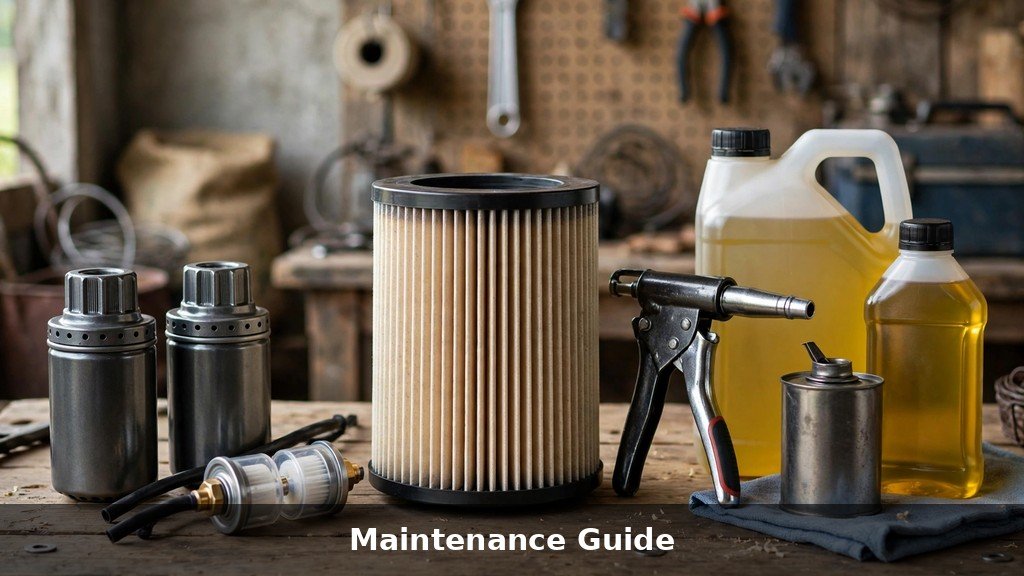
Every 500 hours with Plus-50 II oil, or annually if hours are low — the same interval covers the 4.5L four-cylinder and the 6.8L and 9.0L six-cylinders. Fuel filters are also a 500-hour item. Hydraulic and transmission oil filters go every 750 hours, and the transmission-hydraulic oil itself is changed at 1,500 hours or two years. That hour-based rhythm is the core of John Deere 6R Series maintenance.
Does the 6R need DEF, and how does the DPF work?
Yes. The 6R runs DOC, DPF, and SCR aftertreatment with DEF — roughly 2–4 percent of diesel consumption. The DPF is a lifetime design that regenerates automatically during worked cycles; let parked regenerations finish when requested and never ignore a derate warning. Keep DEF fresh from sealed containers and never run the tank dry — contaminated DEF is the most common cause of SCR fault codes.
What are the most common 6R problems?
Owner-reported patterns cluster around the aftertreatment system (regen issues from light-duty use, DEF/SCR sensor faults), electronics (sensor and display faults, usually fixed by software updates), and hydraulics (check-valve failures, SCV drift). Mechanical engine and transmission failures are rare on maintained machines — most “transmission problems” turn out to be calibration issues resolved with current software.
What does John Deere 6R Series maintenance cost per year?
At 500–800 hours a year, budget roughly $1,500–$3,000 annually for routine John Deere 6R Series maintenance (estimates): a DIY annual service runs $500–$700 in parts, dealer full services run $1,100–$1,800, DEF adds $150–$300, and tires and unexpected repairs sit on top. The full five-year picture is in our 6R Series ownership cost guide.
Is there a recall on the John Deere 6R?
This John Deere 6R Series maintenance guide could not verify any 6R-specific CPSC safety recall. The widely reported September 2024 brake-linkage recall covered the 1023E, 1025R, and 2025R compact tractors only. Run the serial number through Deere’s recall lookup or call 800-537-8233 to confirm all campaigns and updates are applied to any machine you’re considering.
What should I check when buying a used 6R?
John Deere 6R Series maintenance records first — documented dealer history beats low hours with no paperwork. Check DPF/DEF service history, confirm transmission and engine software are current, test every SCV and the PTO, inspect brakes and the TLS axle for leaks, measure tire tread, and scan for stored fault codes. A pre-purchase inspection by a Deere dealer is the best money in the transaction.